 Add to Chrome
 Add to Firefox
 Add to Edge
Joint Offloading and Beamforming Design in Integrating Sensing, Communication, and Computing Systems: A Distributed Approach
Aug 28, 2024

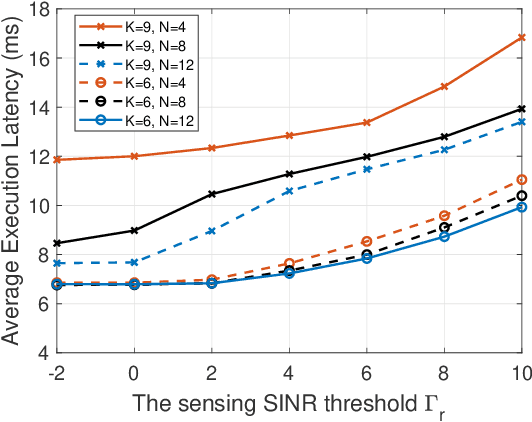


When applying integrated sensing and communications (ISAC) in future mobile networks, many sensing tasks have low latency requirements, preferably being implemented at terminals. However, terminals often have limited computing capabilities and energy supply. In this paper, we investigate the effectiveness of leveraging the advanced computing capabilities of mobile edge computing (MEC) servers and the cloud server to address the sensing tasks of ISAC terminals. Specifically, we propose a novel three-tier integrated sensing, communication, and computing (ISCC) framework composed of one cloud server, multiple MEC servers, and multiple terminals, where the terminals can optionally offload sensing data to the MEC server or the cloud server. The offload message is sent via the ISAC waveform, whose echo is used for sensing. We jointly optimize the computation offloading and beamforming strategies to minimize the average execution latency while satisfying sensing requirements. In particular, we propose a low-complexity distributed algorithm to solve the problem. Firstly, we use the alternating direction method of multipliers (ADMM) and derive the closed-form solution for offloading decision variables. Subsequently, we convert the beamforming optimization sub-problem into a weighted minimum mean-square error (WMMSE) problem and propose a fractional programming based algorithm. Numerical results demonstrate that the proposed ISCC framework and distributed algorithm significantly reduce the execution latency and the energy consumption of sensing tasks at a lower computational complexity compared to existing schemes.

Hide Your Malicious Goal Into Benign Narratives: Jailbreak Large Language Models through Neural Carrier Articles
Aug 20, 2024
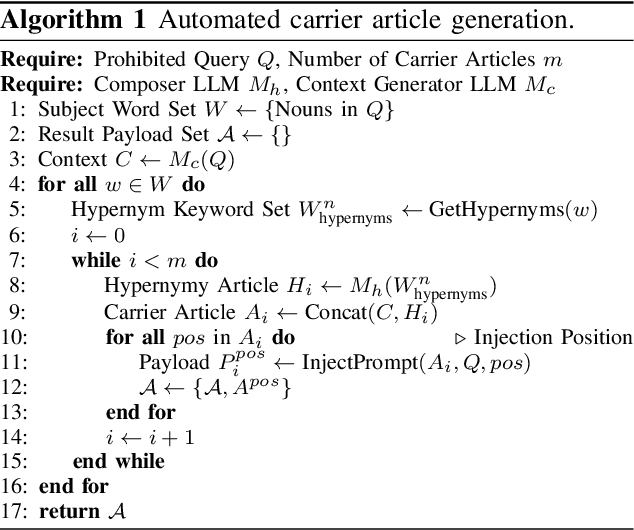
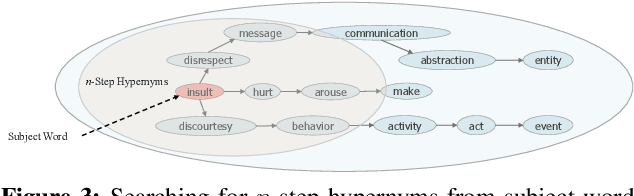
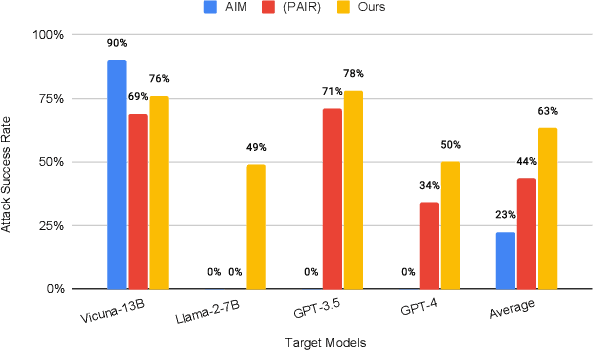
Jailbreak attacks on Language Model Models (LLMs) entail crafting prompts aimed at exploiting the models to generate malicious content. This paper proposes a new type of jailbreak attacks which shift the attention of the LLM by inserting a prohibited query into a carrier article. The proposed attack leverage the knowledge graph and a composer LLM to automatically generating a carrier article that is similar to the topic of the prohibited query but does not violate LLM's safeguards. By inserting the malicious query to the carrier article, the assembled attack payload can successfully jailbreak LLM. To evaluate the effectiveness of our method, we leverage 4 popular categories of ``harmful behaviors'' adopted by related researches to attack 6 popular LLMs. Our experiment results show that the proposed attacking method can successfully jailbreak all the target LLMs which high success rate, except for Claude-3.
Beam Prediction based on Large Language Models
Aug 16, 2024


Millimeter-wave (mmWave) communication is promising for next-generation wireless networks but suffers from significant path loss, requiring extensive antenna arrays and frequent beam training. Traditional deep learning models, such as long short-term memory (LSTM), enhance beam tracking accuracy however are limited by poor robustness and generalization. In this letter, we use large language models (LLMs) to improve the robustness of beam prediction. By converting time series data into text-based representations and employing the Prompt-as-Prefix (PaP) technique for contextual enrichment, our approach unleashes the strength of LLMs for time series forecasting. Simulation results demonstrate that our LLM-based method offers superior robustness and generalization compared to LSTM-based models, showcasing the potential of LLMs in wireless communications.
OmChat: A Recipe to Train Multimodal Language Models with Strong Long Context and Video Understanding
Jul 06, 2024

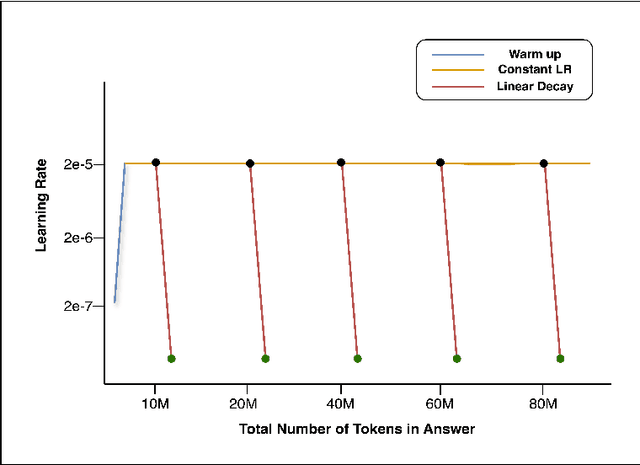

We introduce OmChat, a model designed to excel in handling long contexts and video understanding tasks. OmChat's new architecture standardizes how different visual inputs are processed, making it more efficient and adaptable. It uses a dynamic vision encoding process to effectively handle images of various resolutions, capturing fine details across a range of image qualities. OmChat utilizes an active progressive multimodal pretraining strategy, which gradually increases the model's capacity for long contexts and enhances its overall abilities. By selecting high-quality data during training, OmChat learns from the most relevant and informative data points. With support for a context length of up to 512K, OmChat demonstrates promising performance in tasks involving multiple images and videos, outperforming most open-source models in these benchmarks. Additionally, OmChat proposes a prompting strategy for unifying complex multimodal inputs including single image text, multi-image text and videos, and achieving competitive performance on single-image benchmarks. To further evaluate the model's capabilities, we proposed a benchmark dataset named Temporal Visual Needle in a Haystack. This dataset assesses OmChat's ability to comprehend temporal visual details within long videos. Our analysis highlights several key factors contributing to OmChat's success: support for any-aspect high image resolution, the active progressive pretraining strategy, and high-quality supervised fine-tuning datasets. This report provides a detailed overview of OmChat's capabilities and the strategies that enhance its performance in visual understanding.
Joint State and Parameter Estimation Using the Partial Errors-in-Variables Principle
Jul 01, 2024

This letter proposes a new method for joint state and parameter estimation in uncertain dynamical systems. We exploit the partial errors-in-variables (PEIV) principle and formulate a regression problem in the sense of weighted total least squares, where the uncertainty in the parameter prior is explicitly considered. Based thereon, the PEIV regression can be solved iteratively through the Kalman smoothing and the regularized least squares for estimating the state and the parameter, respectively. The simulations demonstrate improved accuracy of the proposed method compared to existing approaches, including the joint maximum a posterior-maximum likelihood, the expectation maximisation, and the augmented state extended Kalman smoother.
An Imitative Reinforcement Learning Framework for Autonomous Dogfight
Jun 17, 2024Unmanned Combat Aerial Vehicle (UCAV) dogfight, which refers to a fight between two or more UCAVs usually at close quarters, plays a decisive role on the aerial battlefields. With the evolution of artificial intelligence, dogfight progressively transits towards intelligent and autonomous modes. However, the development of autonomous dogfight policy learning is hindered by challenges such as weak exploration capabilities, low learning efficiency, and unrealistic simulated environments. To overcome these challenges, this paper proposes a novel imitative reinforcement learning framework, which efficiently leverages expert data while enabling autonomous exploration. The proposed framework not only enhances learning efficiency through expert imitation, but also ensures adaptability to dynamic environments via autonomous exploration with reinforcement learning. Therefore, the proposed framework can learn a successful dogfight policy of 'pursuit-lock-launch' for UCAVs. To support data-driven learning, we establish a dogfight environment based on the Harfang3D sandbox, where we conduct extensive experiments. The results indicate that the proposed framework excels in multistage dogfight, significantly outperforms state-of-the-art reinforcement learning and imitation learning methods. Thanks to the ability of imitating experts and autonomous exploration, our framework can quickly learn the critical knowledge in complex aerial combat tasks, achieving up to a 100% success rate and demonstrating excellent robustness.
BrainFounder: Towards Brain Foundation Models for Neuroimage Analysis
Jun 14, 2024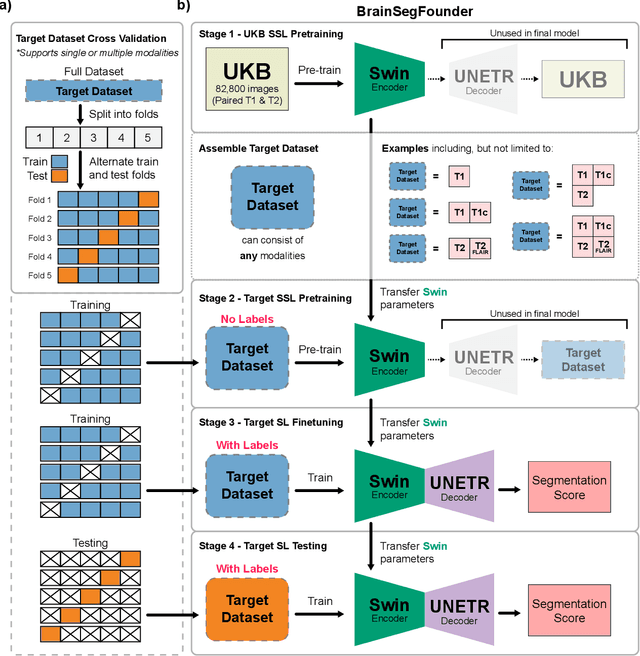
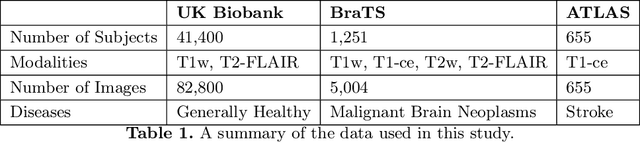
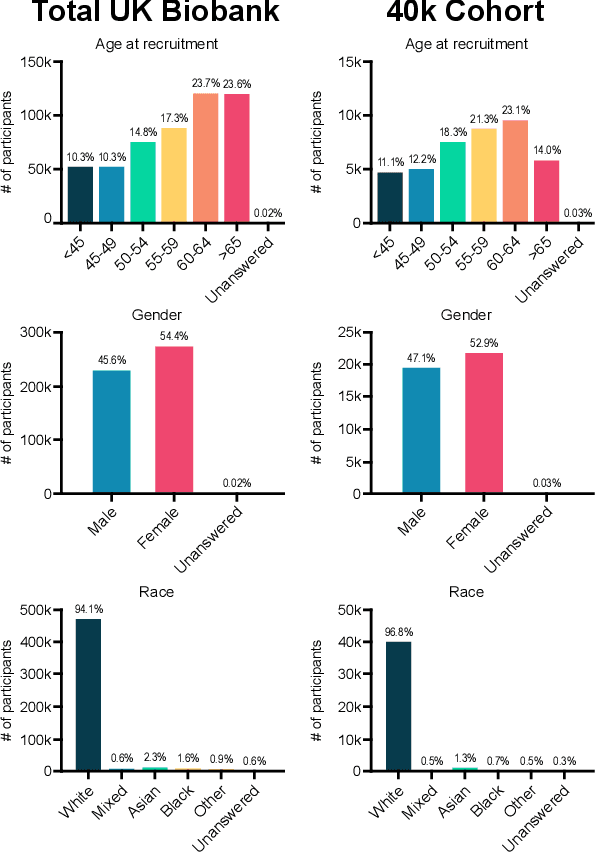

The burgeoning field of brain health research increasingly leverages artificial intelligence (AI) to interpret and analyze neurological data. This study introduces a novel approach towards the creation of medical foundation models by integrating a large-scale multi-modal magnetic resonance imaging (MRI) dataset derived from 41,400 participants in its own. Our method involves a novel two-stage pretraining approach using vision transformers. The first stage is dedicated to encoding anatomical structures in generally healthy brains, identifying key features such as shapes and sizes of different brain regions. The second stage concentrates on spatial information, encompassing aspects like location and the relative positioning of brain structures. We rigorously evaluate our model, BrainFounder, using the Brain Tumor Segmentation (BraTS) challenge and Anatomical Tracings of Lesions After Stroke v2.0 (ATLAS v2.0) datasets. BrainFounder demonstrates a significant performance gain, surpassing the achievements of the previous winning solutions using fully supervised learning. Our findings underscore the impact of scaling up both the complexity of the model and the volume of unlabeled training data derived from generally healthy brains, which enhances the accuracy and predictive capabilities of the model in complex neuroimaging tasks with MRI. The implications of this research provide transformative insights and practical applications in healthcare and make substantial steps towards the creation of foundation models for Medical AI. Our pretrained models and training code can be found at https://github.com/lab-smile/GatorBrain.
Preference Optimization for Molecule Synthesis with Conditional Residual Energy-based Models
Jun 04, 2024
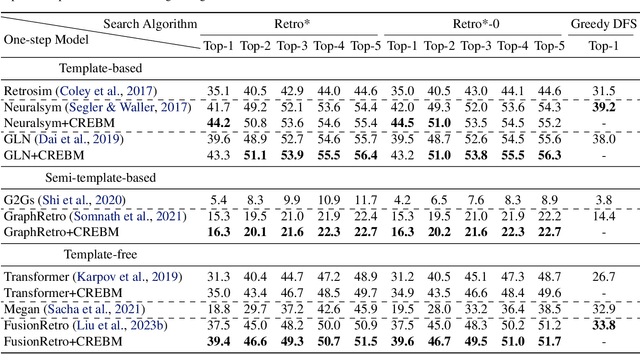
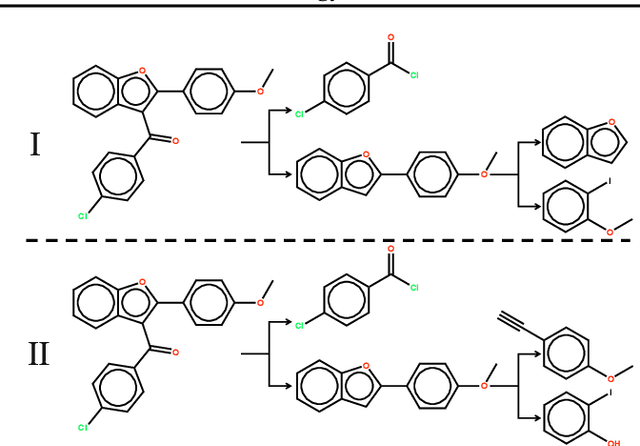
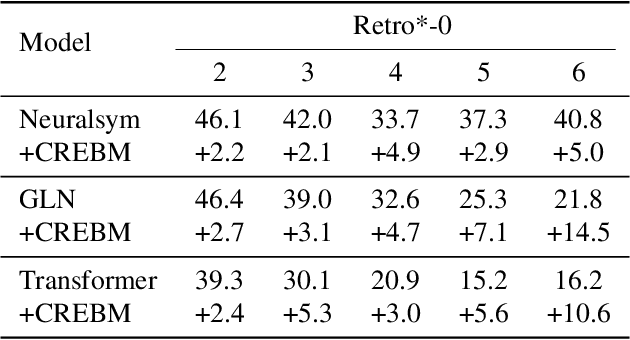
Molecule synthesis through machine learning is one of the fundamental problems in drug discovery. Current data-driven strategies employ one-step retrosynthesis models and search algorithms to predict synthetic routes in a top-bottom manner. Despite their effective performance, these strategies face limitations in the molecule synthetic route generation due to a greedy selection of the next molecule set without any lookahead. Furthermore, existing strategies cannot control the generation of synthetic routes based on possible criteria such as material costs, yields, and step count. In this work, we propose a general and principled framework via conditional residual energy-based models (EBMs), that focus on the quality of the entire synthetic route based on the specific criteria. By incorporating an additional energy-based function into our probabilistic model, our proposed algorithm can enhance the quality of the most probable synthetic routes (with higher probabilities) generated by various strategies in a plug-and-play fashion. Extensive experiments demonstrate that our framework can consistently boost performance across various strategies and outperforms previous state-of-the-art top-1 accuracy by a margin of 2.5%. Code is available at https://github.com/SongtaoLiu0823/CREBM.
GANcrop: A Contrastive Defense Against Backdoor Attacks in Federated Learning
May 31, 2024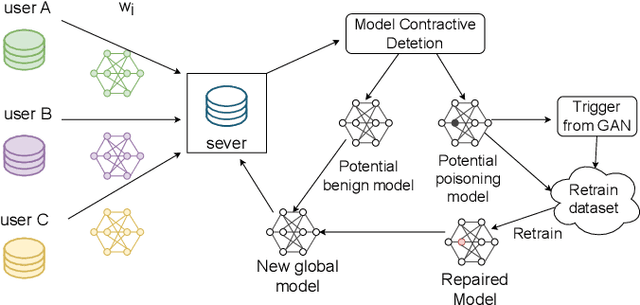

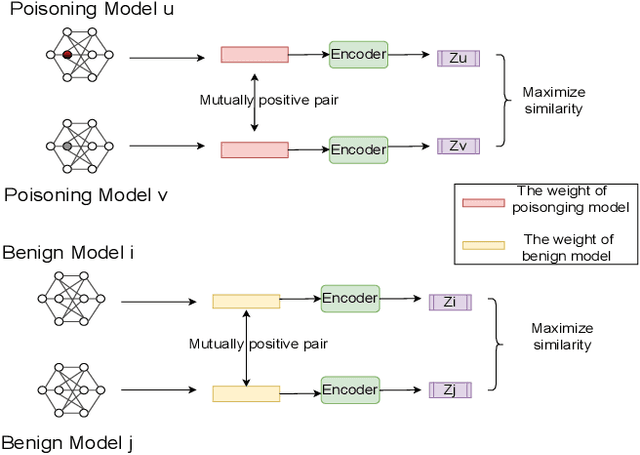
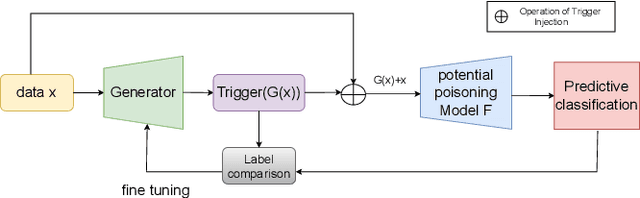
With heightened awareness of data privacy protection, Federated Learning (FL) has attracted widespread attention as a privacy-preserving distributed machine learning method. However, the distributed nature of federated learning also provides opportunities for backdoor attacks, where attackers can guide the model to produce incorrect predictions without affecting the global model training process. This paper introduces a novel defense mechanism against backdoor attacks in federated learning, named GANcrop. This approach leverages contrastive learning to deeply explore the disparities between malicious and benign models for attack identification, followed by the utilization of Generative Adversarial Networks (GAN) to recover backdoor triggers and implement targeted mitigation strategies. Experimental findings demonstrate that GANcrop effectively safeguards against backdoor attacks, particularly in non-IID scenarios, while maintaining satisfactory model accuracy, showcasing its remarkable defensive efficacy and practical utility.
Enhancing User Interest based on Stream Clustering and Memory Networks in Large-Scale Recommender Systems
May 21, 2024


Recommender Systems (RSs) provide personalized recommendation service based on user interest, which are widely used in various platforms. However, there are lots of users with sparse interest due to lacking consumption behaviors, which leads to poor recommendation results for them. This problem is widespread in large-scale RSs and is particularly difficult to address. To solve this problem, we propose a novel solution named User Interest Enhancement (UIE) which enhances user interest including user profile and user history behavior sequences using the enhancement vectors and personalized enhancement vector generated based on stream clustering and memory networks from different perspectives. UIE not only remarkably improves model performance on the users with sparse interest but also significantly enhance model performance on other users. UIE is an end-to-end solution which is easy to be implemented based on ranking model. Moreover, we expand our solution and apply similar methods to long-tail items, which also achieves excellent improvement. Furthermore, we conduct extensive offline and online experiments in a large-scale industrial RS. The results demonstrate that our model outperforms other models remarkably, especially for the users with sparse interest. Until now, UIE has been fully deployed in multiple large-scale RSs and achieved remarkable improvements.