 Add to Chrome
 Add to Firefox
 Add to Edge
Feedback Favors the Generalization of Neural ODEs
Oct 14, 2024
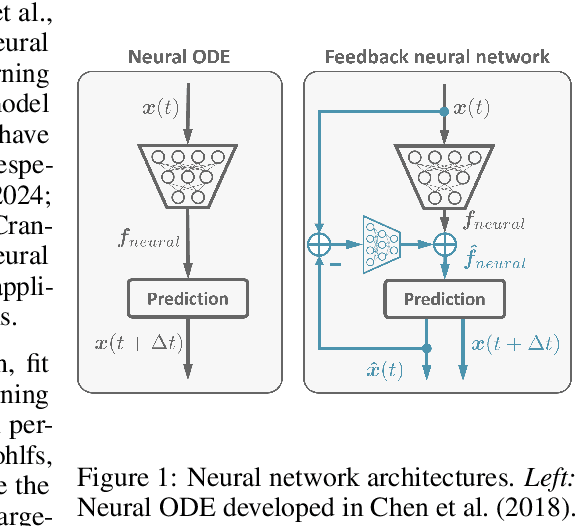
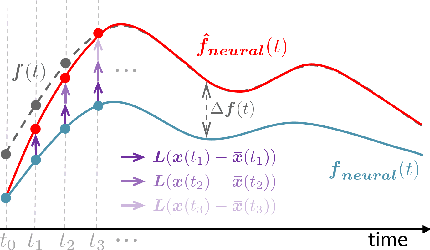
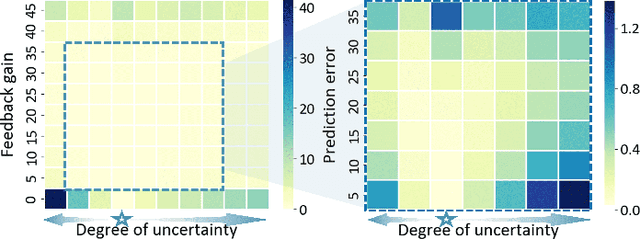
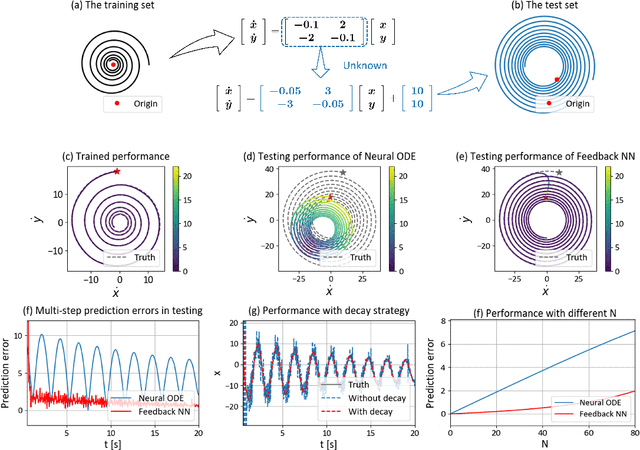
The well-known generalization problem hinders the application of artificial neural networks in continuous-time prediction tasks with varying latent dynamics. In sharp contrast, biological systems can neatly adapt to evolving environments benefiting from real-time feedback mechanisms. Inspired by the feedback philosophy, we present feedback neural networks, showing that a feedback loop can flexibly correct the learned latent dynamics of neural ordinary differential equations (neural ODEs), leading to a prominent generalization improvement. The feedback neural network is a novel two-DOF neural network, which possesses robust performance in unseen scenarios with no loss of accuracy performance on previous tasks. A linear feedback form is presented to correct the learned latent dynamics firstly, with a convergence guarantee. Then, domain randomization is utilized to learn a nonlinear neural feedback form. Finally, extensive tests including trajectory prediction of a real irregular object and model predictive control of a quadrotor with various uncertainties, are implemented, indicating significant improvements over state-of-the-art model-based and learning-based methods.

DAT: Dialogue-Aware Transformer with Modality-Group Fusion for Human Engagement Estimation
Oct 11, 2024

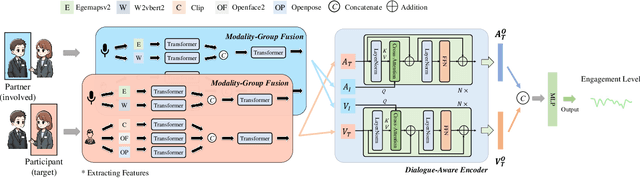

Engagement estimation plays a crucial role in understanding human social behaviors, attracting increasing research interests in fields such as affective computing and human-computer interaction. In this paper, we propose a Dialogue-Aware Transformer framework (DAT) with Modality-Group Fusion (MGF), which relies solely on audio-visual input and is language-independent, for estimating human engagement in conversations. Specifically, our method employs a modality-group fusion strategy that independently fuses audio and visual features within each modality for each person before inferring the entire audio-visual content. This strategy significantly enhances the model's performance and robustness. Additionally, to better estimate the target participant's engagement levels, the introduced Dialogue-Aware Transformer considers both the participant's behavior and cues from their conversational partners. Our method was rigorously tested in the Multi-Domain Engagement Estimation Challenge held by MultiMediate'24, demonstrating notable improvements in engagement-level regression precision over the baseline model. Notably, our approach achieves a CCC score of 0.76 on the NoXi Base test set and an average CCC of 0.64 across the NoXi Base, NoXi-Add, and MPIIGI test sets.
Training Nonlinear Transformers for Chain-of-Thought Inference: A Theoretical Generalization Analysis
Oct 03, 2024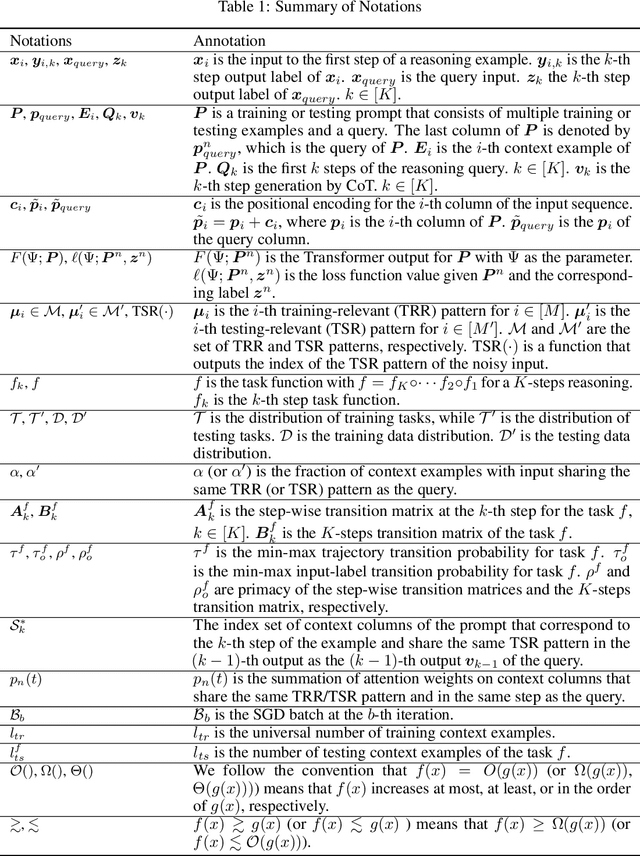
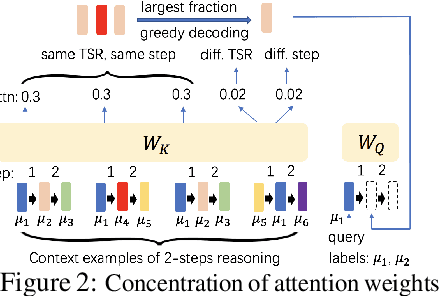
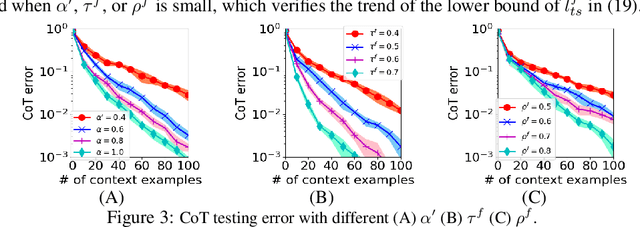
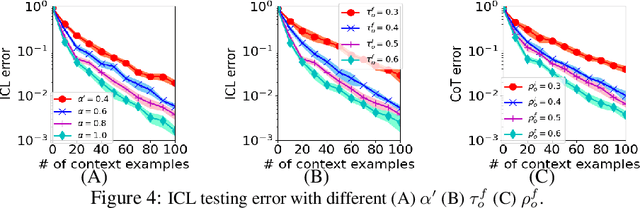
Chain-of-Thought (CoT) is an efficient prompting method that enables the reasoning ability of large language models by augmenting the query using multiple examples with multiple intermediate steps. Despite the empirical success, the theoretical understanding of how to train a Transformer to achieve the CoT ability remains less explored. This is primarily due to the technical challenges involved in analyzing the nonconvex optimization on nonlinear attention models. To the best of our knowledge, this work provides the first theoretical study of training Transformers with nonlinear attention to obtain the CoT generalization capability so that the resulting model can inference on unseen tasks when the input is augmented by examples of the new task. We first quantify the required training samples and iterations to train a Transformer model towards CoT ability. We then prove the success of its CoT generalization on unseen tasks with distribution-shifted testing data. Moreover, we theoretically characterize the conditions for an accurate reasoning output by CoT even when the provided reasoning examples contain noises and are not always accurate. In contrast, in-context learning (ICL), which can be viewed as one-step CoT without intermediate steps, may fail to provide an accurate output when CoT does. These theoretical findings are justified through experiments.
Global-Local Medical SAM Adaptor Based on Full Adaption
Sep 26, 2024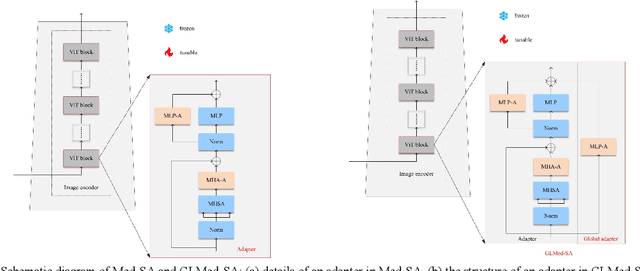
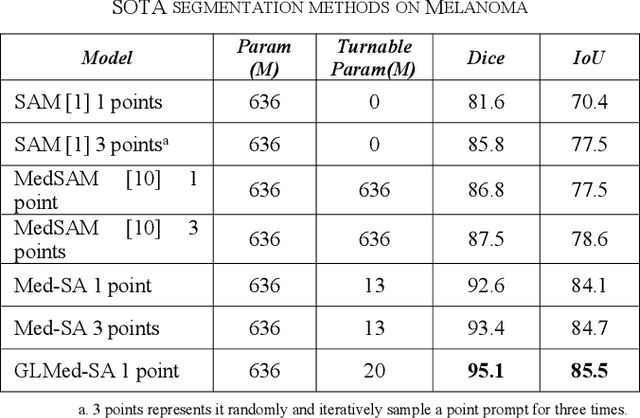
Emerging of visual language models, such as the segment anything model (SAM), have made great breakthroughs in the field of universal semantic segmentation and significantly aid the improvements of medical image segmentation, in particular with the help of Medical SAM adaptor (Med-SA). However, Med-SA still can be improved, as it fine-tunes SAM in a partial adaption manner. To resolve this problem, we present a novel global medical SAM adaptor (GMed-SA) with full adaption, which can adapt SAM globally. We further combine GMed-SA and Med-SA to propose a global-local medical SAM adaptor (GLMed-SA) to adapt SAM both globally and locally. Extensive experiments have been performed on the challenging public 2D melanoma segmentation dataset. The results show that GLMed-SA outperforms several state-of-the-art semantic segmentation methods on various evaluation metrics, demonstrating the superiority of our methods.
Thinking in Granularity: Dynamic Quantization for Image Super-Resolution by Intriguing Multi-Granularity Clues
Sep 22, 2024Dynamic quantization has attracted rising attention in image super-resolution (SR) as it expands the potential of heavy SR models onto mobile devices while preserving competitive performance. Existing methods explore layer-to-bit configuration upon varying local regions, adaptively allocating the bit to each layer and patch. Despite the benefits, they still fall short in the trade-off of SR accuracy and quantization efficiency. Apart from this, adapting the quantization level for each layer individually can disturb the original inter-layer relationships, thus diminishing the representation capability of quantized models. In this work, we propose Granular-DQ, which capitalizes on the intrinsic characteristics of images while dispensing with the previous consideration for layer sensitivity in quantization. Granular-DQ conducts a multi-granularity analysis of local patches with further exploration of their information densities, achieving a distinctive patch-wise and layer-invariant dynamic quantization paradigm. Specifically, Granular-DQ initiates by developing a granularity-bit controller (GBC) to apprehend the coarse-to-fine granular representations of different patches, matching their proportional contribution to the entire image to determine the proper bit-width allocation. On this premise, we investigate the relation between bit-width and information density, devising an entropy-to-bit (E2B) mechanism that enables further fine-grained dynamic bit adaption of high-bit patches. Extensive experiments validate the superiority and generalization ability of Granular-DQ over recent state-of-the-art methods on various SR models. Code will be available at \url{https://github.com/MmmingS/Granular-DQ.git}.
Scene-Text Grounding for Text-Based Video Question Answering
Sep 22, 2024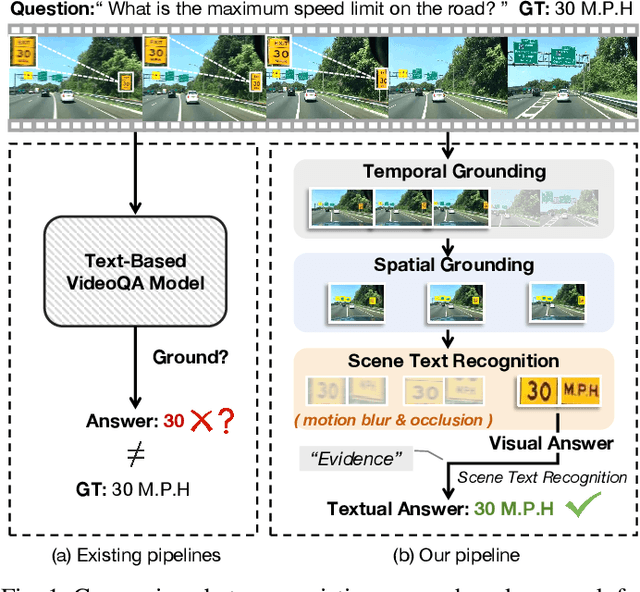

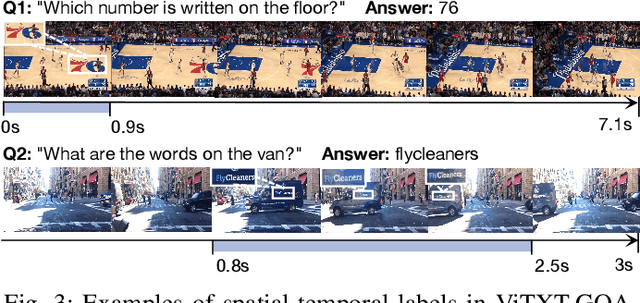
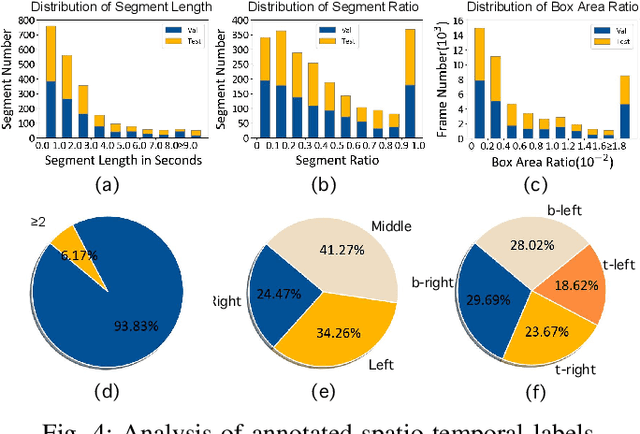
Existing efforts in text-based video question answering (TextVideoQA) are criticized for their opaque decisionmaking and heavy reliance on scene-text recognition. In this paper, we propose to study Grounded TextVideoQA by forcing models to answer questions and spatio-temporally localize the relevant scene-text regions, thus decoupling QA from scenetext recognition and promoting research towards interpretable QA. The task has three-fold significance. First, it encourages scene-text evidence versus other short-cuts for answer predictions. Second, it directly accepts scene-text regions as visual answers, thus circumventing the problem of ineffective answer evaluation by stringent string matching. Third, it isolates the challenges inherited in VideoQA and scene-text recognition. This enables the diagnosis of the root causes for failure predictions, e.g., wrong QA or wrong scene-text recognition? To achieve Grounded TextVideoQA, we propose the T2S-QA model that highlights a disentangled temporal-to-spatial contrastive learning strategy for weakly-supervised scene-text grounding and grounded TextVideoQA. To facilitate evaluation, we construct a new dataset ViTXT-GQA which features 52K scene-text bounding boxes within 2.2K temporal segments related to 2K questions and 729 videos. With ViTXT-GQA, we perform extensive experiments and demonstrate the severe limitations of existing techniques in Grounded TextVideoQA. While T2S-QA achieves superior results, the large performance gap with human leaves ample space for improvement. Our further analysis of oracle scene-text inputs posits that the major challenge is scene-text recognition. To advance the research of Grounded TextVideoQA, our dataset and code are at \url{https://github.com/zhousheng97/ViTXT-GQA.git}
Unleashing the Potential of Mamba: Boosting a LiDAR 3D Sparse Detector by Using Cross-Model Knowledge Distillation
Sep 17, 2024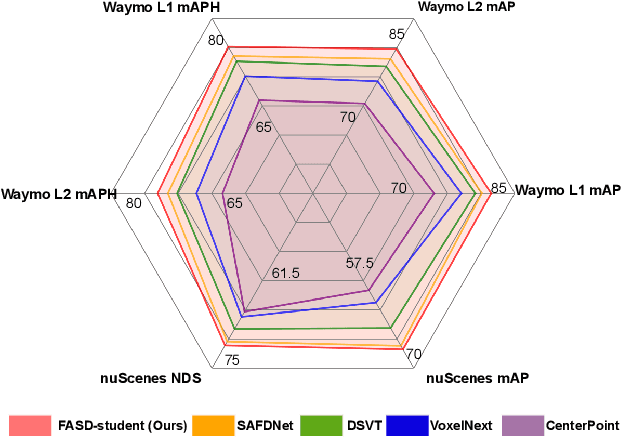
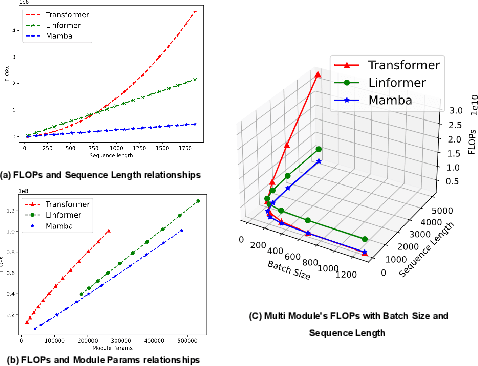
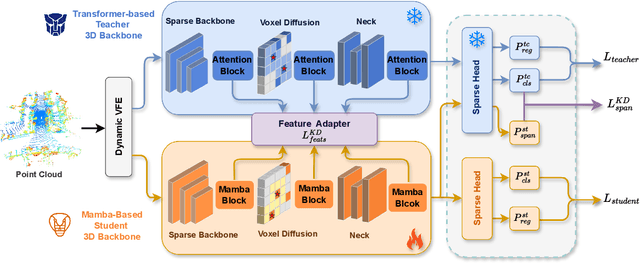
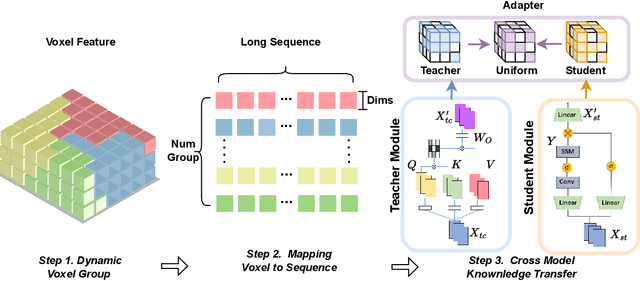
The LiDAR-based 3D object detector that strikes a balance between accuracy and speed is crucial for achieving real-time perception in autonomous driving and robotic navigation systems. To enhance the accuracy of point cloud detection, integrating global context for visual understanding improves the point clouds ability to grasp overall spatial information. However, many existing LiDAR detection models depend on intricate feature transformation and extraction processes, leading to poor real-time performance and high resource consumption, which limits their practical effectiveness. In this work, we propose a Faster LiDAR 3D object detection framework, called FASD, which implements heterogeneous model distillation by adaptively uniform cross-model voxel features. We aim to distill the transformer's capacity for high-performance sequence modeling into Mamba models with low FLOPs, achieving a significant improvement in accuracy through knowledge transfer. Specifically, Dynamic Voxel Group and Adaptive Attention strategies are integrated into the sparse backbone, creating a robust teacher model with scale-adaptive attention for effective global visual context modeling. Following feature alignment with the Adapter, we transfer knowledge from the Transformer to the Mamba through latent space feature supervision and span-head distillation, resulting in improved performance and an efficient student model. We evaluated the framework on the Waymo and nuScenes datasets, achieving a 4x reduction in resource consumption and a 1-2\% performance improvement over the current SoTA methods.
UniLearn: Enhancing Dynamic Facial Expression Recognition through Unified Pre-Training and Fine-Tuning on Images and Videos
Sep 10, 2024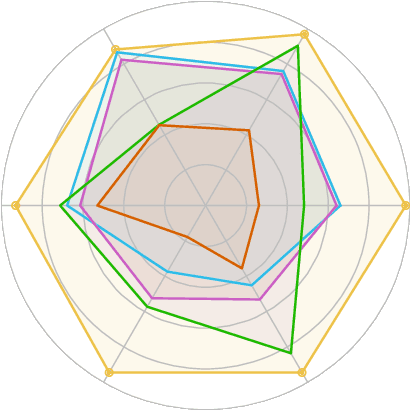
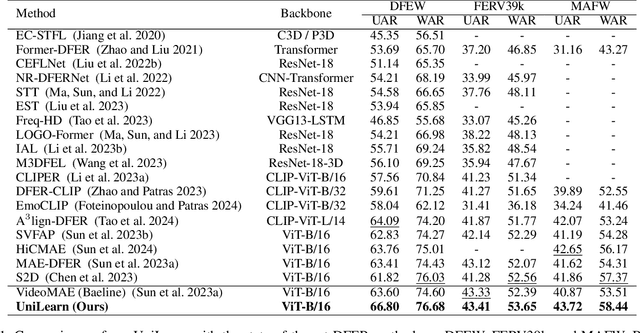
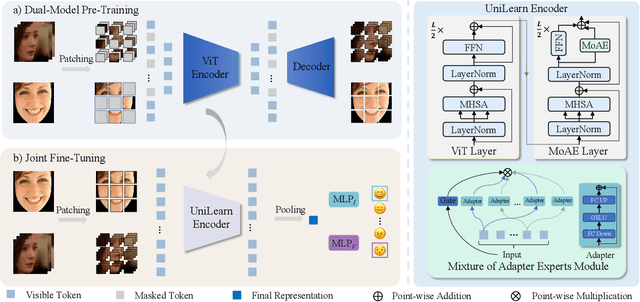
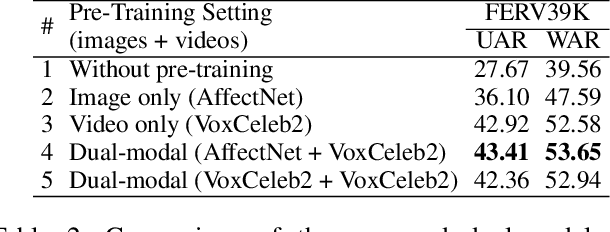
Dynamic facial expression recognition (DFER) is essential for understanding human emotions and behavior. However, conventional DFER methods, which primarily use dynamic facial data, often underutilize static expression images and their labels, limiting their performance and robustness. To overcome this, we introduce UniLearn, a novel unified learning paradigm that integrates static facial expression recognition (SFER) data to enhance DFER task. UniLearn employs a dual-modal self-supervised pre-training method, leveraging both facial expression images and videos to enhance a ViT model's spatiotemporal representation capability. Then, the pre-trained model is fine-tuned on both static and dynamic expression datasets using a joint fine-tuning strategy. To prevent negative transfer during joint fine-tuning, we introduce an innovative Mixture of Adapter Experts (MoAE) module that enables task-specific knowledge acquisition and effectively integrates information from both static and dynamic expression data. Extensive experiments demonstrate UniLearn's effectiveness in leveraging complementary information from static and dynamic facial data, leading to more accurate and robust DFER. UniLearn consistently achieves state-of-the-art performance on FERV39K, MAFW, and DFEW benchmarks, with weighted average recall (WAR) of 53.65\%, 58.44\%, and 76.68\%, respectively. The source code and model weights will be publicly available at \url{https://github.com/MSA-LMC/UniLearn}.
Future Does Matter: Boosting 3D Object Detection with Temporal Motion Estimation in Point Cloud Sequences
Sep 06, 2024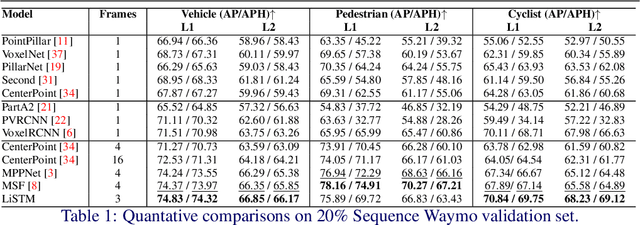

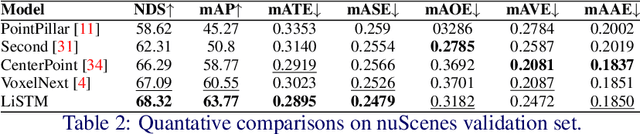

Accurate and robust LiDAR 3D object detection is essential for comprehensive scene understanding in autonomous driving. Despite its importance, LiDAR detection performance is limited by inherent constraints of point cloud data, particularly under conditions of extended distances and occlusions. Recently, temporal aggregation has been proven to significantly enhance detection accuracy by fusing multi-frame viewpoint information and enriching the spatial representation of objects. In this work, we introduce a novel LiDAR 3D object detection framework, namely LiSTM, to facilitate spatial-temporal feature learning with cross-frame motion forecasting information. We aim to improve the spatial-temporal interpretation capabilities of the LiDAR detector by incorporating a dynamic prior, generated from a non-learnable motion estimation model. Specifically, Motion-Guided Feature Aggregation (MGFA) is proposed to utilize the object trajectory from previous and future motion states to model spatial-temporal correlations into gaussian heatmap over a driving sequence. This motion-based heatmap then guides the temporal feature fusion, enriching the proposed object features. Moreover, we design a Dual Correlation Weighting Module (DCWM) that effectively facilitates the interaction between past and prospective frames through scene- and channel-wise feature abstraction. In the end, a cascade cross-attention-based decoder is employed to refine the 3D prediction. We have conducted experiments on the Waymo and nuScenes datasets to demonstrate that the proposed framework achieves superior 3D detection performance with effective spatial-temporal feature learning.
StyleTokenizer: Defining Image Style by a Single Instance for Controlling Diffusion Models
Sep 04, 2024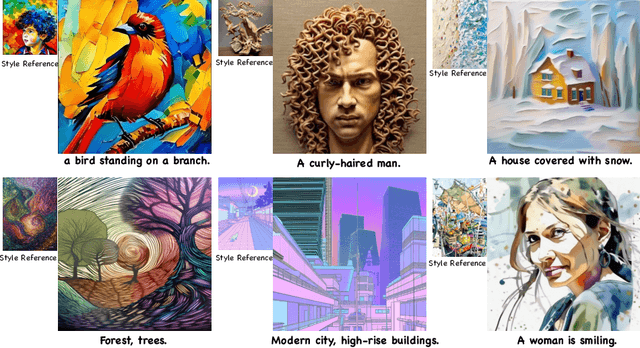

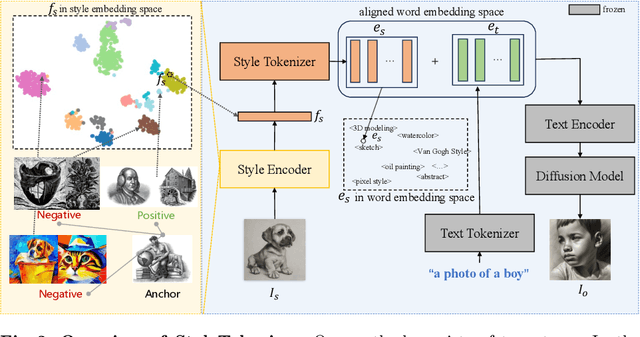

Despite the burst of innovative methods for controlling the diffusion process, effectively controlling image styles in text-to-image generation remains a challenging task. Many adapter-based methods impose image representation conditions on the denoising process to accomplish image control. However these conditions are not aligned with the word embedding space, leading to interference between image and text control conditions and the potential loss of semantic information from the text prompt. Addressing this issue involves two key challenges. Firstly, how to inject the style representation without compromising the effectiveness of text representation in control. Secondly, how to obtain the accurate style representation from a single reference image. To tackle these challenges, we introduce StyleTokenizer, a zero-shot style control image generation method that aligns style representation with text representation using a style tokenizer. This alignment effectively minimizes the impact on the effectiveness of text prompts. Furthermore, we collect a well-labeled style dataset named Style30k to train a style feature extractor capable of accurately representing style while excluding other content information. Experimental results demonstrate that our method fully grasps the style characteristics of the reference image, generating appealing images that are consistent with both the target image style and text prompt. The code and dataset are available at https://github.com/alipay/style-tokenizer.