 Add to Chrome
 Add to Firefox
 Add to Edge
DocRes: A Generalist Model Toward Unifying Document Image Restoration Tasks
May 07, 2024
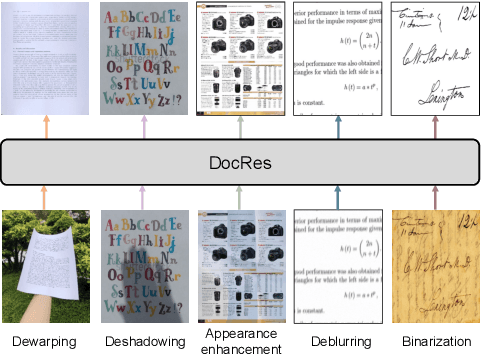
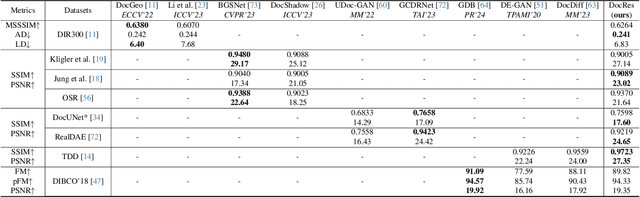
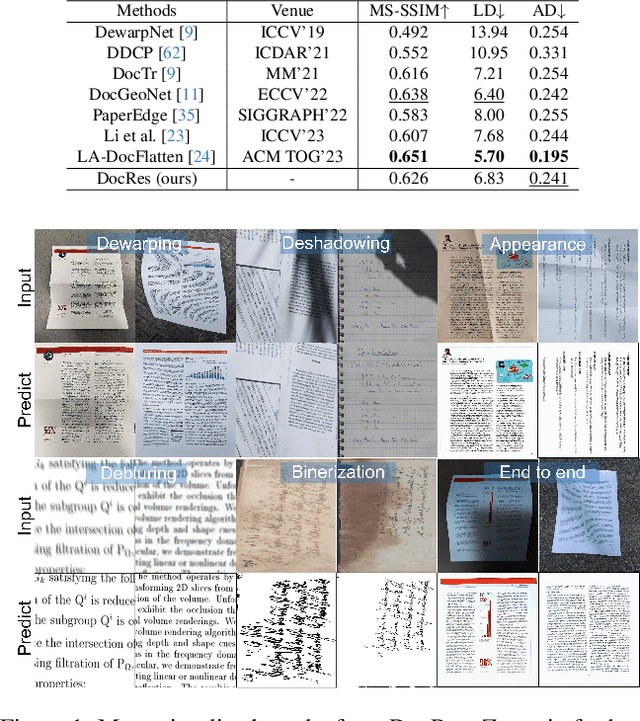
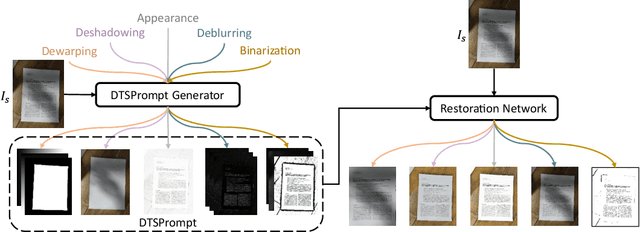
Document image restoration is a crucial aspect of Document AI systems, as the quality of document images significantly influences the overall performance. Prevailing methods address distinct restoration tasks independently, leading to intricate systems and the incapability to harness the potential synergies of multi-task learning. To overcome this challenge, we propose DocRes, a generalist model that unifies five document image restoration tasks including dewarping, deshadowing, appearance enhancement, deblurring, and binarization. To instruct DocRes to perform various restoration tasks, we propose a novel visual prompt approach called Dynamic Task-Specific Prompt (DTSPrompt). The DTSPrompt for different tasks comprises distinct prior features, which are additional characteristics extracted from the input image. Beyond its role as a cue for task-specific execution, DTSPrompt can also serve as supplementary information to enhance the model's performance. Moreover, DTSPrompt is more flexible than prior visual prompt approaches as it can be seamlessly applied and adapted to inputs with high and variable resolutions. Experimental results demonstrate that DocRes achieves competitive or superior performance compared to existing state-of-the-art task-specific models. This underscores the potential of DocRes across a broader spectrum of document image restoration tasks. The source code is publicly available at https://github.com/ZZZHANG-jx/DocRes

VimTS: A Unified Video and Image Text Spotter for Enhancing the Cross-domain Generalization
Apr 30, 2024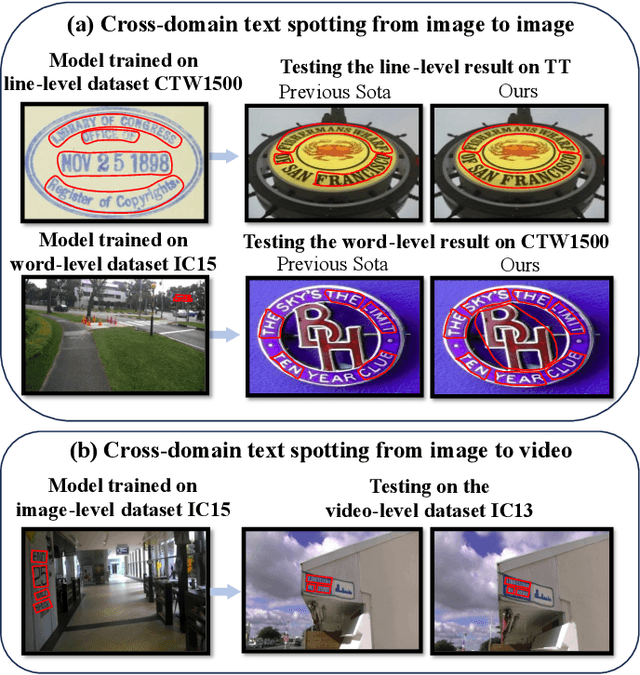


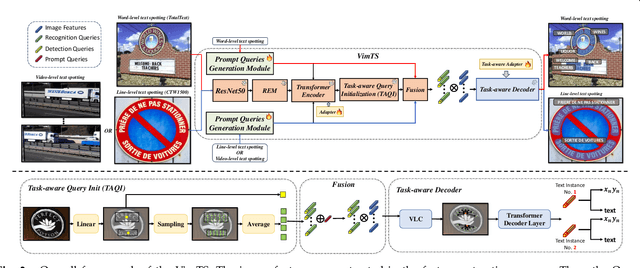
Text spotting, a task involving the extraction of textual information from image or video sequences, faces challenges in cross-domain adaption, such as image-to-image and image-to-video generalization. In this paper, we introduce a new method, termed VimTS, which enhances the generalization ability of the model by achieving better synergy among different tasks. Typically, we propose a Prompt Queries Generation Module and a Tasks-aware Adapter to effectively convert the original single-task model into a multi-task model suitable for both image and video scenarios with minimal additional parameters. The Prompt Queries Generation Module facilitates explicit interaction between different tasks, while the Tasks-aware Adapter helps the model dynamically learn suitable features for each task. Additionally, to further enable the model to learn temporal information at a lower cost, we propose a synthetic video text dataset (VTD-368k) by leveraging the Content Deformation Fields (CoDeF) algorithm. Notably, our method outperforms the state-of-the-art method by an average of 2.6% in six cross-domain benchmarks such as TT-to-IC15, CTW1500-to-TT, and TT-to-CTW1500. For video-level cross-domain adaption, our method even surpasses the previous end-to-end video spotting method in ICDAR2015 video and DSText v2 by an average of 5.5% on the MOTA metric, using only image-level data. We further demonstrate that existing Large Multimodal Models exhibit limitations in generating cross-domain scene text spotting, in contrast to our VimTS model which requires significantly fewer parameters and data. The code and datasets will be made available at the https://VimTextSpotter.github.io.
Bridging the Gap Between End-to-End and Two-Step Text Spotting
Apr 06, 2024Modularity plays a crucial role in the development and maintenance of complex systems. While end-to-end text spotting efficiently mitigates the issues of error accumulation and sub-optimal performance seen in traditional two-step methodologies, the two-step methods continue to be favored in many competitions and practical settings due to their superior modularity. In this paper, we introduce Bridging Text Spotting, a novel approach that resolves the error accumulation and suboptimal performance issues in two-step methods while retaining modularity. To achieve this, we adopt a well-trained detector and recognizer that are developed and trained independently and then lock their parameters to preserve their already acquired capabilities. Subsequently, we introduce a Bridge that connects the locked detector and recognizer through a zero-initialized neural network. This zero-initialized neural network, initialized with weights set to zeros, ensures seamless integration of the large receptive field features in detection into the locked recognizer. Furthermore, since the fixed detector and recognizer cannot naturally acquire end-to-end optimization features, we adopt the Adapter to facilitate their efficient learning of these features. We demonstrate the effectiveness of the proposed method through extensive experiments: Connecting the latest detector and recognizer through Bridging Text Spotting, we achieved an accuracy of 83.3% on Total-Text, 69.8% on CTW1500, and 89.5% on ICDAR 2015. The code is available at https://github.com/mxin262/Bridging-Text-Spotting.
HierCode: A Lightweight Hierarchical Codebook for Zero-shot Chinese Text Recognition
Mar 20, 2024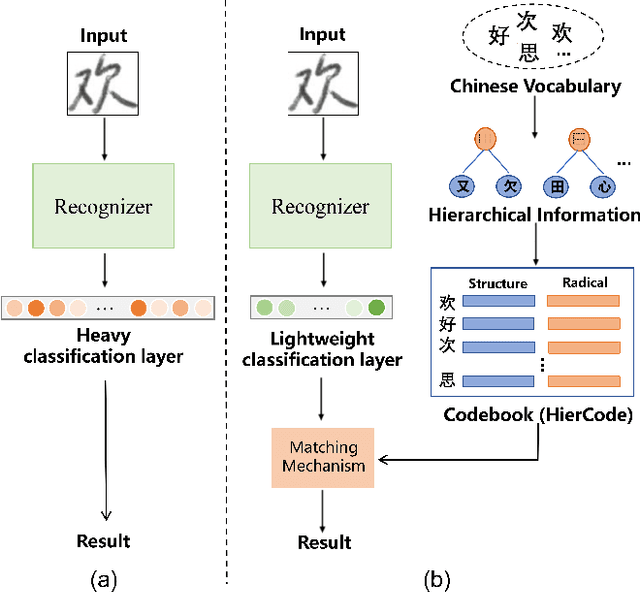
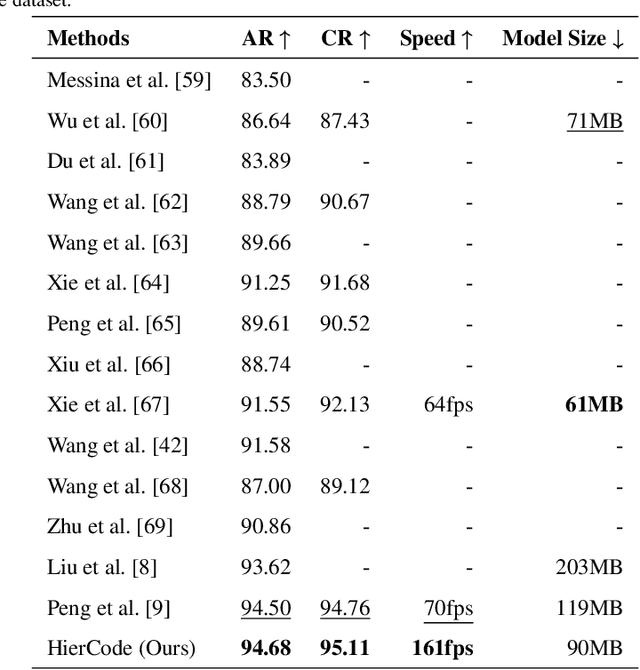
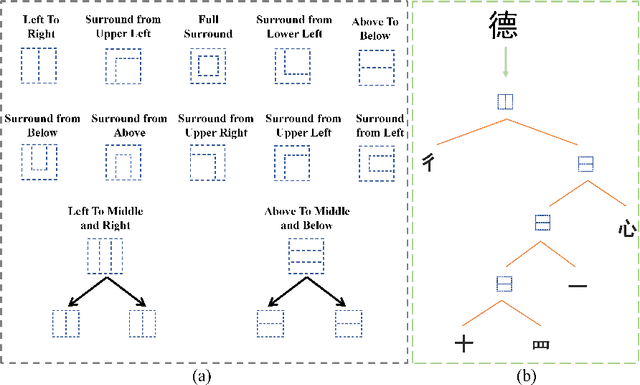
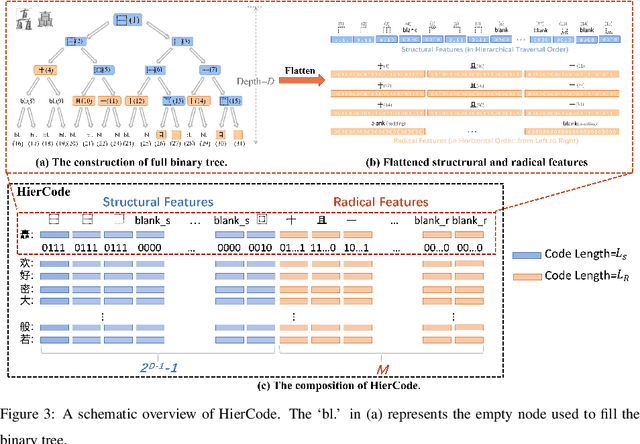
Text recognition, especially for complex scripts like Chinese, faces unique challenges due to its intricate character structures and vast vocabulary. Traditional one-hot encoding methods struggle with the representation of hierarchical radicals, recognition of Out-Of-Vocabulary (OOV) characters, and on-device deployment due to their computational intensity. To address these challenges, we propose HierCode, a novel and lightweight codebook that exploits the innate hierarchical nature of Chinese characters. HierCode employs a multi-hot encoding strategy, leveraging hierarchical binary tree encoding and prototype learning to create distinctive, informative representations for each character. This approach not only facilitates zero-shot recognition of OOV characters by utilizing shared radicals and structures but also excels in line-level recognition tasks by computing similarity with visual features, a notable advantage over existing methods. Extensive experiments across diverse benchmarks, including handwritten, scene, document, web, and ancient text, have showcased HierCode's superiority for both conventional and zero-shot Chinese character or text recognition, exhibiting state-of-the-art performance with significantly fewer parameters and fast inference speed.
DiffChat: Learning to Chat with Text-to-Image Synthesis Models for Interactive Image Creation
Mar 08, 2024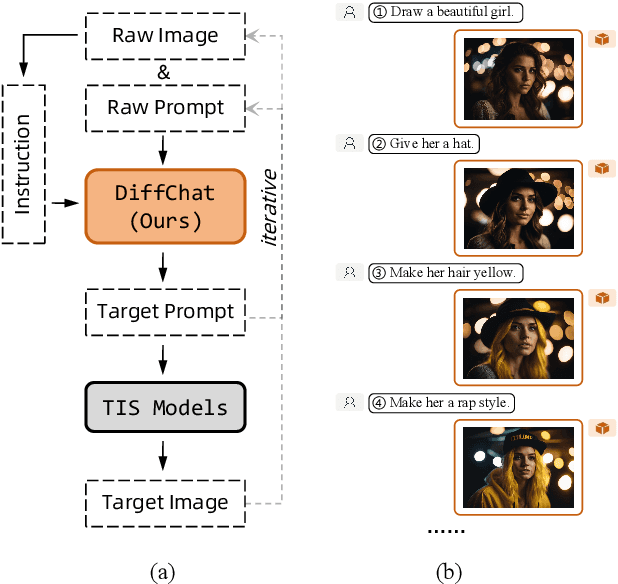

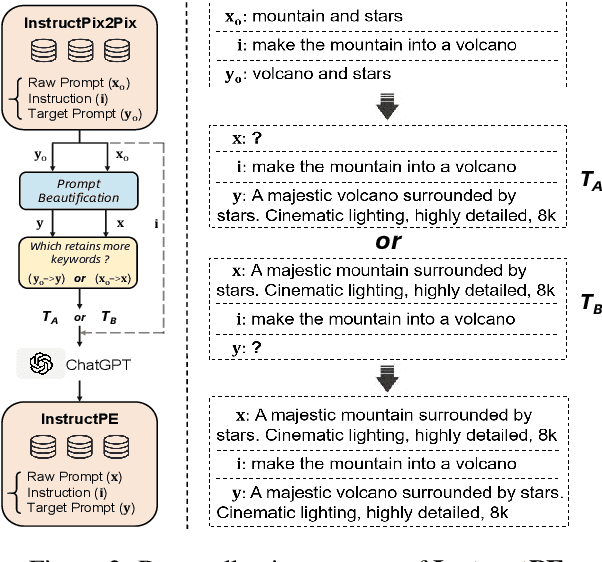
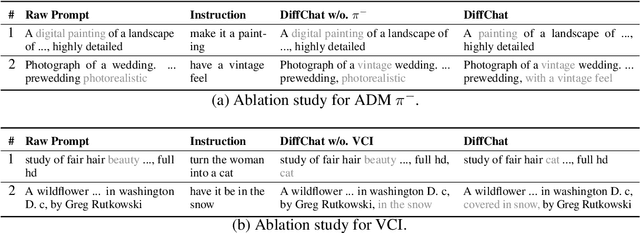
We present DiffChat, a novel method to align Large Language Models (LLMs) to "chat" with prompt-as-input Text-to-Image Synthesis (TIS) models (e.g., Stable Diffusion) for interactive image creation. Given a raw prompt/image and a user-specified instruction, DiffChat can effectively make appropriate modifications and generate the target prompt, which can be leveraged to create the target image of high quality. To achieve this, we first collect an instruction-following prompt engineering dataset named InstructPE for the supervised training of DiffChat. Next, we propose a reinforcement learning framework with the feedback of three core criteria for image creation, i.e., aesthetics, user preference, and content integrity. It involves an action-space dynamic modification technique to obtain more relevant positive samples and harder negative samples during the off-policy sampling. Content integrity is also introduced into the value estimation function for further improvement of produced images. Our method can exhibit superior performance than baseline models and strong competitors based on both automatic and human evaluations, which fully demonstrates its effectiveness.
Datasets for Large Language Models: A Comprehensive Survey
Feb 28, 2024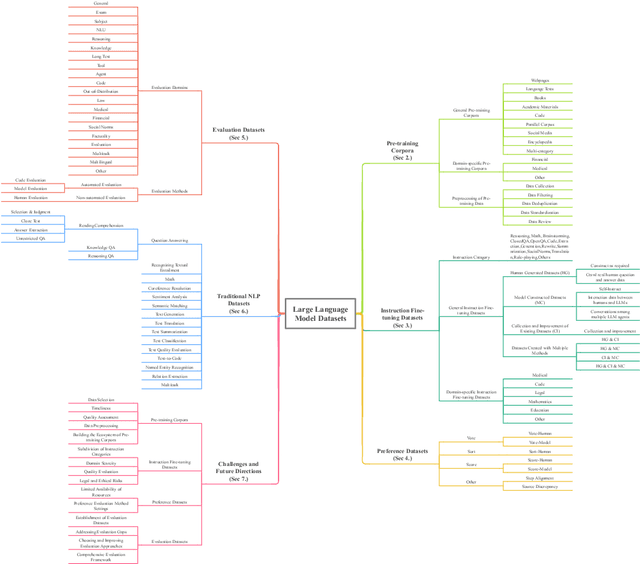
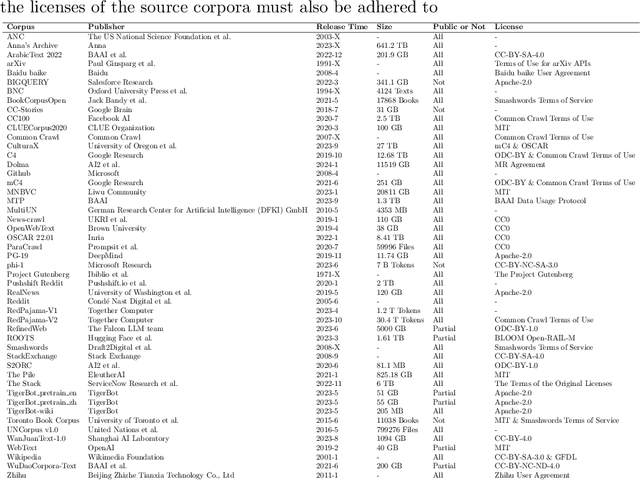
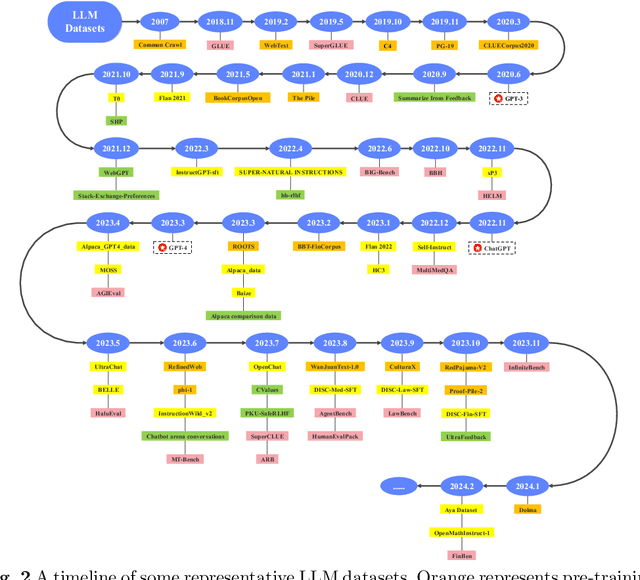
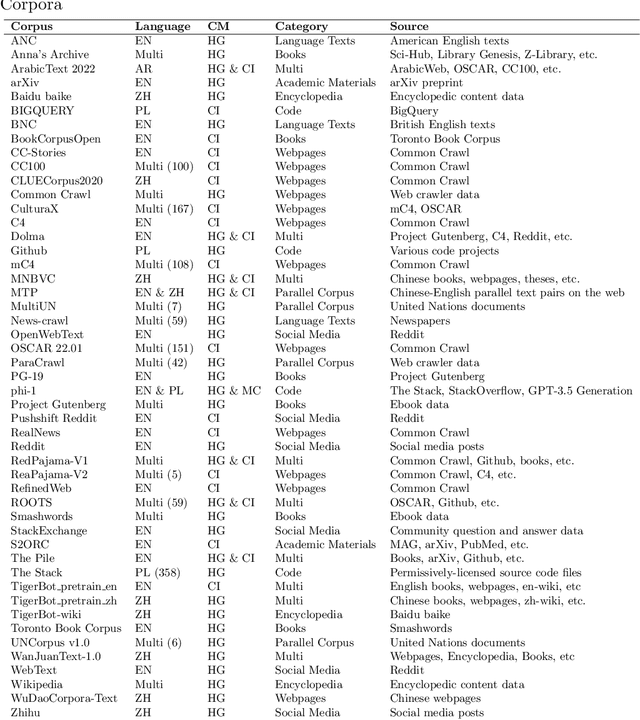
This paper embarks on an exploration into the Large Language Model (LLM) datasets, which play a crucial role in the remarkable advancements of LLMs. The datasets serve as the foundational infrastructure analogous to a root system that sustains and nurtures the development of LLMs. Consequently, examination of these datasets emerges as a critical topic in research. In order to address the current lack of a comprehensive overview and thorough analysis of LLM datasets, and to gain insights into their current status and future trends, this survey consolidates and categorizes the fundamental aspects of LLM datasets from five perspectives: (1) Pre-training Corpora; (2) Instruction Fine-tuning Datasets; (3) Preference Datasets; (4) Evaluation Datasets; (5) Traditional Natural Language Processing (NLP) Datasets. The survey sheds light on the prevailing challenges and points out potential avenues for future investigation. Additionally, a comprehensive review of the existing available dataset resources is also provided, including statistics from 444 datasets, covering 8 language categories and spanning 32 domains. Information from 20 dimensions is incorporated into the dataset statistics. The total data size surveyed surpasses 774.5 TB for pre-training corpora and 700M instances for other datasets. We aim to present the entire landscape of LLM text datasets, serving as a comprehensive reference for researchers in this field and contributing to future studies. Related resources are available at: https://github.com/lmmlzn/Awesome-LLMs-Datasets.
An open dataset for oracle bone script recognition and decipherment
Jan 27, 2024Oracle Bone Script (OBS), one of the earliest known forms of ancient Chinese writing, holds invaluable insights into the humanities and geography of the Shang Dynasty, dating back 3,000 years. The immense historical and cultural significance of these writings cannot be overstated. However, the passage of time has obscured much of their meaning, presenting a significant challenge in deciphering these ancient texts. With the advent of Artificial Intelligence (AI), employing AI to assist in interpreting OBS has become a feasible option. Yet, progress in this area has been hindered by a lack of high-quality datasets. To address this issue, this paper details the creation of the HUST-OBS dataset. This dataset encompasses 77,064 images of 1,588 individual deciphered scripts and 62,989 images of 9,411 undeciphered characters, with a total of 140,053 images, compiled from diverse sources. Additionally, all images and labels have been reviewed and corrected by experts in oracle bone studies. The hope is that this dataset could inspire and assist future research in deciphering those unknown OBS.
An open dataset for the evolution of oracle bone characters: EVOBC
Jan 23, 2024The earliest extant Chinese characters originate from oracle bone inscriptions, which are closely related to other East Asian languages. These inscriptions hold immense value for anthropology and archaeology. However, deciphering oracle bone script remains a formidable challenge, with only approximately 1,600 of the over 4,500 extant characters elucidated to date. Further scholarly investigation is required to comprehensively understand this ancient writing system. Artificial Intelligence technology is a promising avenue for deciphering oracle bone characters, particularly concerning their evolution. However, one of the challenges is the lack of datasets mapping the evolution of these characters over time. In this study, we systematically collected ancient characters from authoritative texts and websites spanning six historical stages: Oracle Bone Characters - OBC (15th century B.C.), Bronze Inscriptions - BI (13th to 221 B.C.), Seal Script - SS (11th to 8th centuries B.C.), Spring and Autumn period Characters - SAC (770 to 476 B.C.), Warring States period Characters - WSC (475 B.C. to 221 B.C.), and Clerical Script - CS (221 B.C. to 220 A.D.). Subsequently, we constructed an extensive dataset, namely EVolution Oracle Bone Characters (EVOBC), consisting of 229,170 images representing 13,714 distinct character categories. We conducted validation and simulated deciphering on the constructed dataset, and the results demonstrate its high efficacy in aiding the study of oracle bone script. This openly accessible dataset aims to digitalize ancient Chinese scripts across multiple eras, facilitating the decipherment of oracle bone script by examining the evolution of glyph forms.
SwinTextSpotter v2: Towards Better Synergy for Scene Text Spotting
Jan 15, 2024End-to-end scene text spotting, which aims to read the text in natural images, has garnered significant attention in recent years. However, recent state-of-the-art methods usually incorporate detection and recognition simply by sharing the backbone, which does not directly take advantage of the feature interaction between the two tasks. In this paper, we propose a new end-to-end scene text spotting framework termed SwinTextSpotter v2, which seeks to find a better synergy between text detection and recognition. Specifically, we enhance the relationship between two tasks using novel Recognition Conversion and Recognition Alignment modules. Recognition Conversion explicitly guides text localization through recognition loss, while Recognition Alignment dynamically extracts text features for recognition through the detection predictions. This simple yet effective design results in a concise framework that requires neither an additional rectification module nor character-level annotations for the arbitrarily-shaped text. Furthermore, the parameters of the detector are greatly reduced without performance degradation by introducing a Box Selection Schedule. Qualitative and quantitative experiments demonstrate that SwinTextSpotter v2 achieved state-of-the-art performance on various multilingual (English, Chinese, and Vietnamese) benchmarks. The code will be available at \href{https://github.com/mxin262/SwinTextSpotterv2}{SwinTextSpotter v2}.
PEneo: Unifying Line Extraction, Line Grouping, and Entity Linking for End-to-end Document Pair Extraction
Jan 07, 2024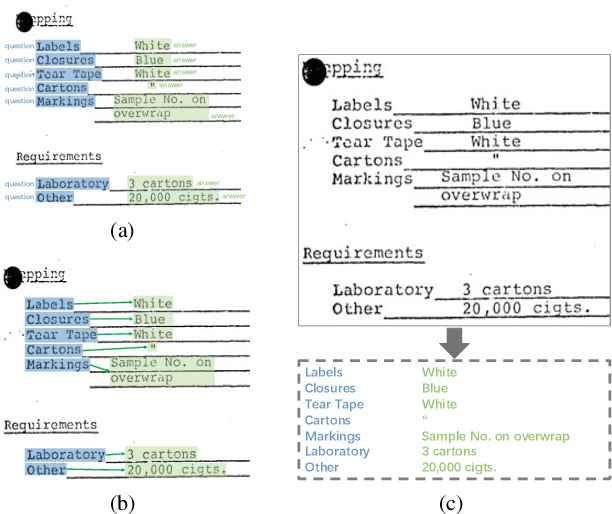
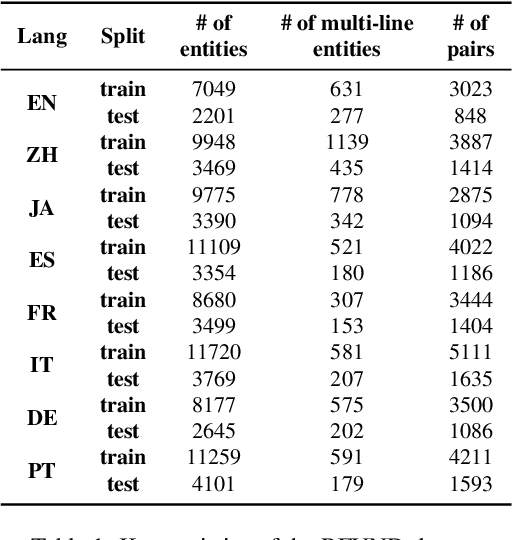
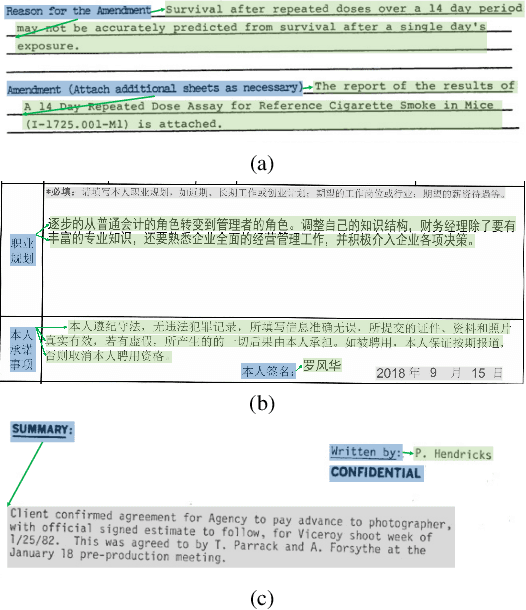
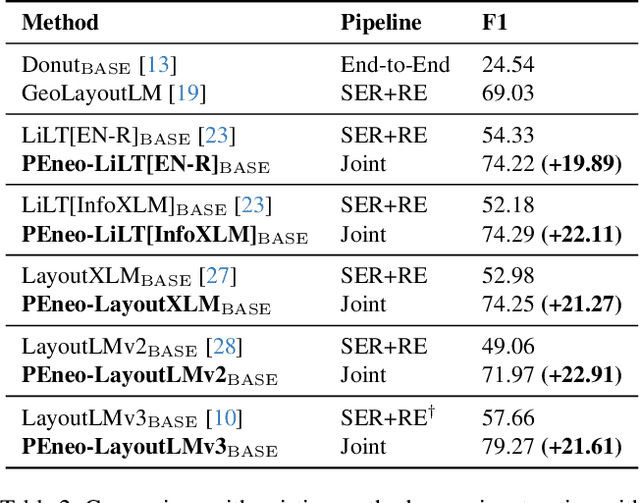
Document pair extraction aims to identify key and value entities as well as their relationships from visually-rich documents. Most existing methods divide it into two separate tasks: semantic entity recognition (SER) and relation extraction (RE). However, simply concatenating SER and RE serially can lead to severe error propagation, and it fails to handle cases like multi-line entities in real scenarios. To address these issues, this paper introduces a novel framework, PEneo (Pair Extraction new decoder option), which performs document pair extraction in a unified pipeline, incorporating three concurrent sub-tasks: line extraction, line grouping, and entity linking. This approach alleviates the error accumulation problem and can handle the case of multi-line entities. Furthermore, to better evaluate the model's performance and to facilitate future research on pair extraction, we introduce RFUND, a re-annotated version of the commonly used FUNSD and XFUND datasets, to make them more accurate and cover realistic situations. Experiments on various benchmarks demonstrate PEneo's superiority over previous pipelines, boosting the performance by a large margin (e.g., 19.89%-22.91% F1 score on RFUND-EN) when combined with various backbones like LiLT and LayoutLMv3, showing its effectiveness and generality. Codes and the new annotations will be open to the public.