 Add to Chrome
 Add to Firefox
 Add to Edge
PDDLEGO: Iterative Planning in Textual Environments
May 30, 2024
Planning in textual environments have been shown to be a long-standing challenge even for current models. A recent, promising line of work uses LLMs to generate a formal representation of the environment that can be solved by a symbolic planner. However, existing methods rely on a fully-observed environment where all entity states are initially known, so a one-off representation can be constructed, leading to a complete plan. In contrast, we tackle partially-observed environments where there is initially no sufficient information to plan for the end-goal. We propose PDDLEGO that iteratively construct a planning representation that can lead to a partial plan for a given sub-goal. By accomplishing the sub-goal, more information is acquired to augment the representation, eventually achieving the end-goal. We show that plans produced by few-shot PDDLEGO are 43% more efficient than generating plans end-to-end on the Coin Collector simulation, with strong performance (98%) on the more complex Cooking World simulation where end-to-end LLMs fail to generate coherent plans (4%).

"Pass the butter": A study on desktop-classic multitasking robotic arm based on advanced YOLOv7 and BERT
May 27, 2024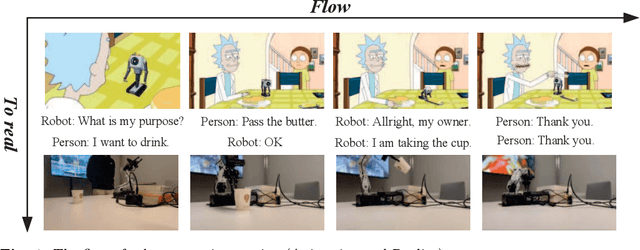
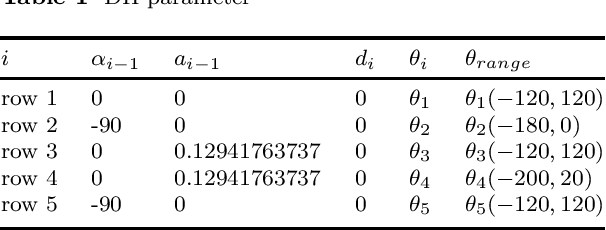
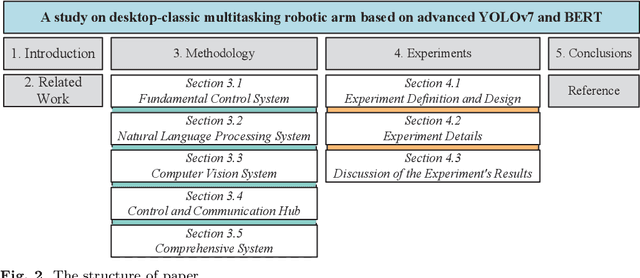
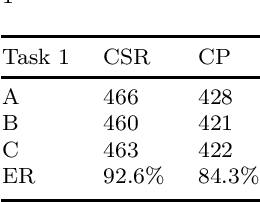
In recent years, various intelligent autonomous robots have begun to appear in daily life and production. Desktop-level robots are characterized by their flexible deployment, rapid response, and suitability for light workload environments. In order to meet the current societal demand for service robot technology, this study proposes using a miniaturized desktop-level robot (by ROS) as a carrier, locally deploying a natural language model (NLP-BERT), and integrating visual recognition (CV-YOLO) and speech recognition technology (ASR-Whisper) as inputs to achieve autonomous decision-making and rational action by the desktop robot. Three comprehensive experiments were designed to validate the robotic arm, and the results demonstrate excellent performance using this approach across all three experiments. In Task 1, the execution rates for speech recognition and action performance were 92.6% and 84.3%, respectively. In Task 2, the highest execution rates under the given conditions reached 92.1% and 84.6%, while in Task 3, the highest execution rates were 95.2% and 80.8%, respectively. Therefore, it can be concluded that the proposed solution integrating ASR, NLP, and other technologies on edge devices is feasible and provides a technical and engineering foundation for realizing multimodal desktop-level robots.
Automating the Diagnosis of Human Vision Disorders by Cross-modal 3D Generation
May 24, 2024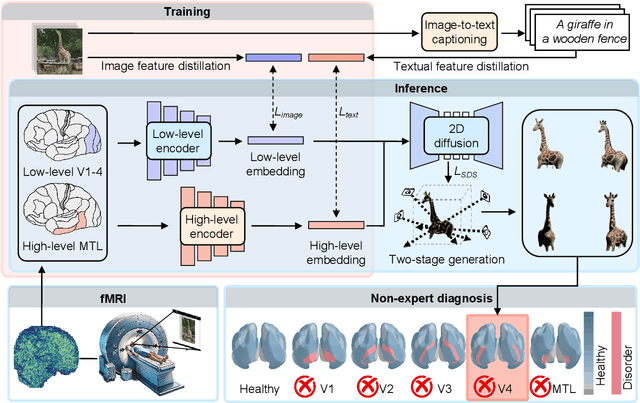
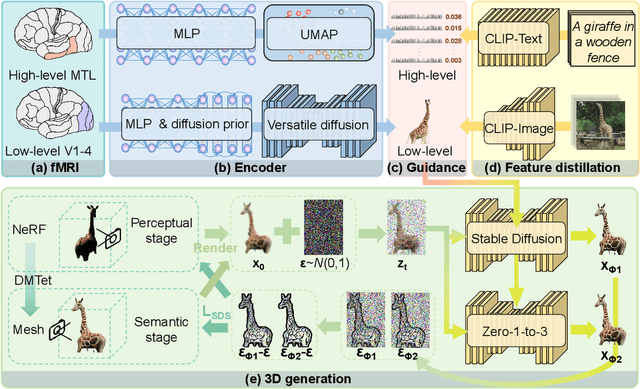
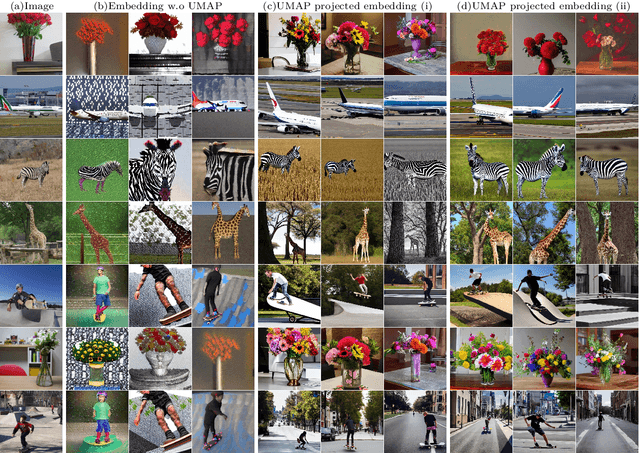
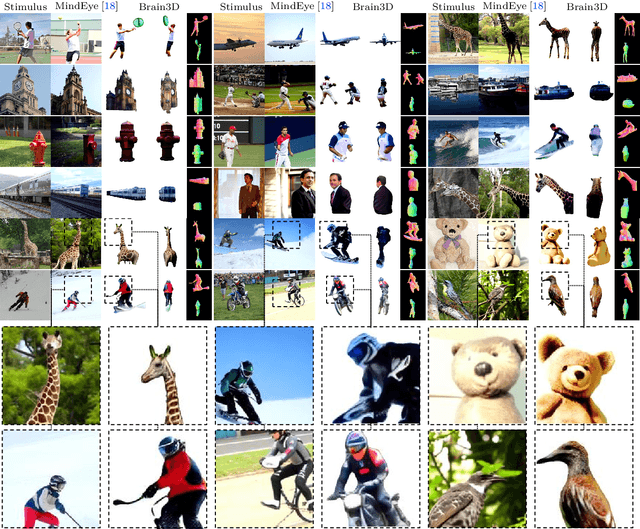
Understanding the hidden mechanisms behind human's visual perception is a fundamental quest in neuroscience, underpins a wide variety of critical applications, e.g. clinical diagnosis. To that end, investigating into the neural responses of human mind activities, such as functional Magnetic Resonance Imaging (fMRI), has been a significant research vehicle. However, analyzing fMRI signals is challenging, costly, daunting, and demanding for professional training. Despite remarkable progress in artificial intelligence (AI) based fMRI analysis, existing solutions are limited and far away from being clinically meaningful. In this context, we leap forward to demonstrate how AI can go beyond the current state of the art by decoding fMRI into visually plausible 3D visuals, enabling automatic clinical analysis of fMRI data, even without healthcare professionals. Innovationally, we reformulate the task of analyzing fMRI data as a conditional 3D scene reconstruction problem. We design a novel cross-modal 3D scene representation learning method, Brain3D, that takes as input the fMRI data of a subject who was presented with a 2D object image, and yields as output the corresponding 3D object visuals. Importantly, we show that in simulated scenarios our AI agent captures the distinct functionalities of each region of human vision system as well as their intricate interplay relationships, aligning remarkably with the established discoveries of neuroscience. Non-expert diagnosis indicate that Brain3D can successfully identify the disordered brain regions, such as V1, V2, V3, V4, and the medial temporal lobe (MTL) within the human visual system. We also present results in cross-modal 3D visual construction setting, showcasing the perception quality of our 3D scene generation.
OpFlowTalker: Realistic and Natural Talking Face Generation via Optical Flow Guidance
May 23, 2024
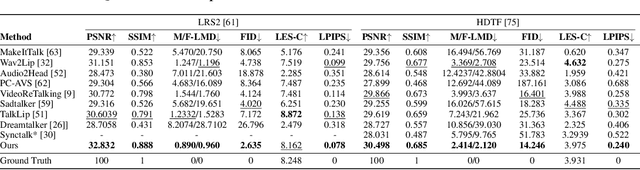
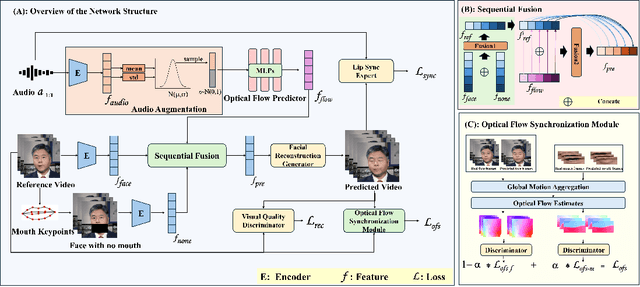
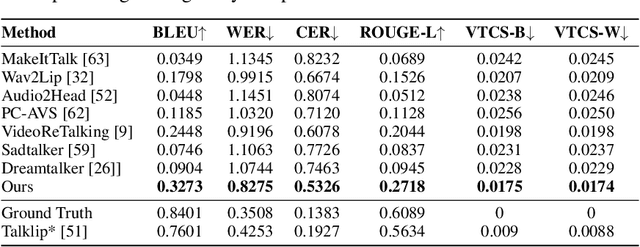
Creating realistic, natural, and lip-readable talking face videos remains a formidable challenge. Previous research primarily concentrated on generating and aligning single-frame images while overlooking the smoothness of frame-to-frame transitions and temporal dependencies. This often compromised visual quality and effects in practical settings, particularly when handling complex facial data and audio content, which frequently led to semantically incongruent visual illusions. Specifically, synthesized videos commonly featured disorganized lip movements, making them difficult to understand and recognize. To overcome these limitations, this paper introduces the application of optical flow to guide facial image generation, enhancing inter-frame continuity and semantic consistency. We propose "OpFlowTalker", a novel approach that utilizes predicted optical flow changes from audio inputs rather than direct image predictions. This method smooths image transitions and aligns changes with semantic content. Moreover, it employs a sequence fusion technique to replace the independent generation of single frames, thus preserving contextual information and maintaining temporal coherence. We also developed an optical flow synchronization module that regulates both full-face and lip movements, optimizing visual synthesis by balancing regional dynamics. Furthermore, we introduce a Visual Text Consistency Score (VTCS) that accurately measures lip-readability in synthesized videos. Extensive empirical evidence validates the effectiveness of our approach.
Survey on Visual Signal Coding and Processing with Generative Models: Technologies, Standards and Optimization
May 23, 2024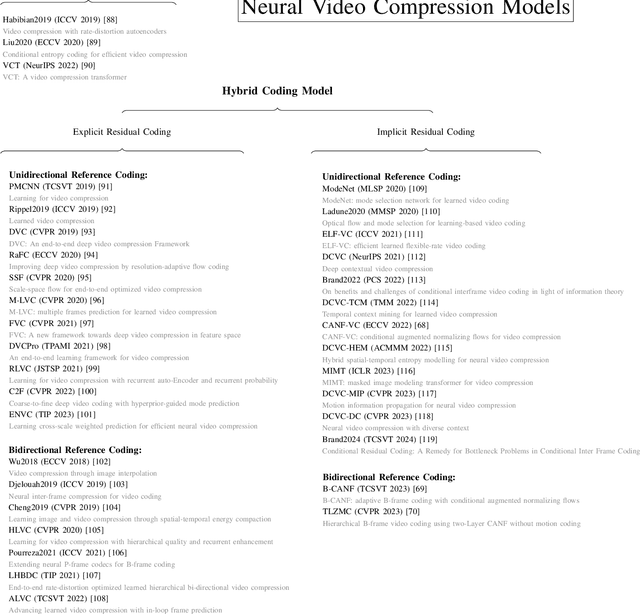
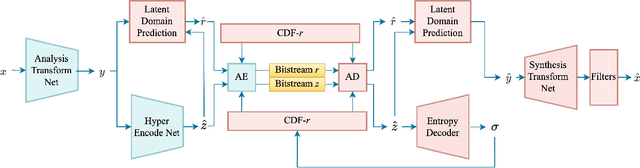
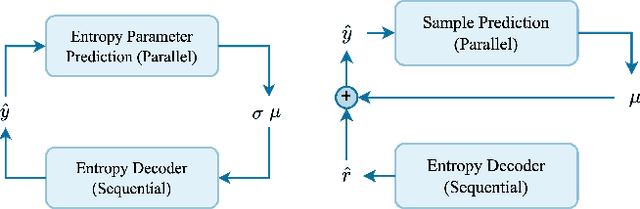
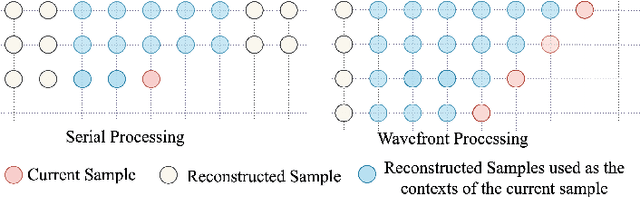
This paper provides a survey of the latest developments in visual signal coding and processing with generative models. Specifically, our focus is on presenting the advancement of generative models and their influence on research in the domain of visual signal coding and processing. This survey study begins with a brief introduction of well-established generative models, including the Variational Autoencoder (VAE) models, Generative Adversarial Network (GAN) models, Autoregressive (AR) models, Normalizing Flows and Diffusion models. The subsequent section of the paper explores the advancements in visual signal coding based on generative models, as well as the ongoing international standardization activities. In the realm of visual signal processing, our focus lies on the application and development of various generative models in the research of visual signal restoration. We also present the latest developments in generative visual signal synthesis and editing, along with visual signal quality assessment using generative models and quality assessment for generative models. The practical implementation of these studies is closely linked to the investigation of fast optimization. This paper additionally presents the latest advancements in fast optimization on visual signal coding and processing with generative models. We hope to advance this field by providing researchers and practitioners a comprehensive literature review on the topic of visual signal coding and processing with generative models.
VMambaCC: A Visual State Space Model for Crowd Counting
May 07, 2024As a deep learning model, Visual Mamba (VMamba) has a low computational complexity and a global receptive field, which has been successful applied to image classification and detection. To extend its applications, we apply VMamba to crowd counting and propose a novel VMambaCC (VMamba Crowd Counting) model. Naturally, VMambaCC inherits the merits of VMamba, or global modeling for images and low computational cost. Additionally, we design a Multi-head High-level Feature (MHF) attention mechanism for VMambaCC. MHF is a new attention mechanism that leverages high-level semantic features to augment low-level semantic features, thereby enhancing spatial feature representation with greater precision. Building upon MHF, we further present a High-level Semantic Supervised Feature Pyramid Network (HS2PFN) that progressively integrates and enhances high-level semantic information with low-level semantic information. Extensive experimental results on five public datasets validate the efficacy of our approach. For example, our method achieves a mean absolute error of 51.87 and a mean squared error of 81.3 on the ShangHaiTech\_PartA dataset. Our code is coming soon.
Optimization of Dark-Field CT for Lung Imaging
May 02, 2024
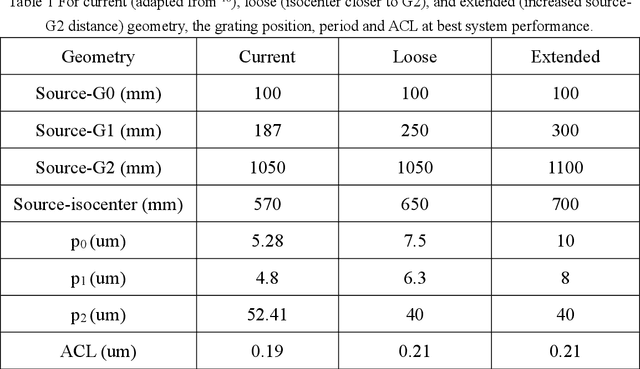
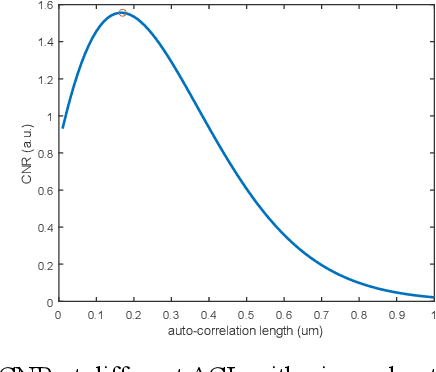
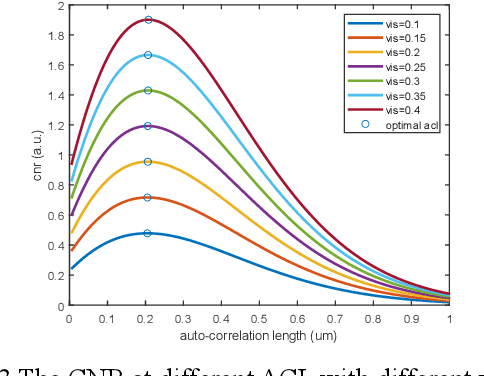
Background: X-ray grating-based dark-field imaging can sense the small angle scattering caused by an object's micro-structure. This technique is sensitive to lung's porous alveoli and is able to detect lung disease at an early stage. Up to now, a human-scale dark-field CT has been built for lung imaging. Purpose: This study aimed to develop a more thorough optimization method for dark-field lung CT and summarize principles for system design. Methods: We proposed a metric in the form of contrast-to-noise ratio (CNR) for system parameter optimization, and designed a phantom with concentric circle shape to fit the task of lung disease detection. Finally, we developed the calculation method of the CNR metric, and analyzed the relation between CNR and system parameters. Results: We showed that with other parameters held constant, the CNR first increases and then decreases with the system auto-correlation length (ACL). The optimal ACL is nearly not influenced by system's visibility, and is only related to phantom's property, i.e., scattering material's size and phantom's absorption. For our phantom, the optimal ACL is about 0.21 {\mu}m. As for system geometry, larger source-detector and isocenter-detector distance can increase the system's maximal ACL, helping the system meet the optimal ACL more easily. Conclusions: This study proposed a more reasonable metric and a task-based process for optimization, and demonstrated that the system optimal ACL is only related to the phantom's property.
PromptCIR: Blind Compressed Image Restoration with Prompt Learning
Apr 26, 2024Blind Compressed Image Restoration (CIR) has garnered significant attention due to its practical applications. It aims to mitigate compression artifacts caused by unknown quality factors, particularly with JPEG codecs. Existing works on blind CIR often seek assistance from a quality factor prediction network to facilitate their network to restore compressed images. However, the predicted numerical quality factor lacks spatial information, preventing network adaptability toward image contents. Recent studies in prompt-learning-based image restoration have showcased the potential of prompts to generalize across varied degradation types and degrees. This motivated us to design a prompt-learning-based compressed image restoration network, dubbed PromptCIR, which can effectively restore images from various compress levels. Specifically, PromptCIR exploits prompts to encode compression information implicitly, where prompts directly interact with soft weights generated from image features, thus providing dynamic content-aware and distortion-aware guidance for the restoration process. The light-weight prompts enable our method to adapt to different compression levels, while introducing minimal parameter overhead. Overall, PromptCIR leverages the powerful transformer-based backbone with the dynamic prompt module to proficiently handle blind CIR tasks, winning first place in the NTIRE 2024 challenge of blind compressed image enhancement track. Extensive experiments have validated the effectiveness of our proposed PromptCIR. The code is available at https://github.com/lbc12345/PromptCIR-NTIRE24.
ResVR: Joint Rescaling and Viewport Rendering of Omnidirectional Images
Apr 25, 2024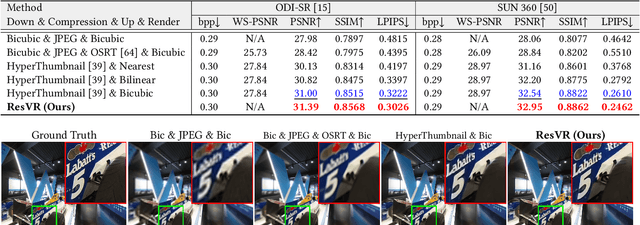
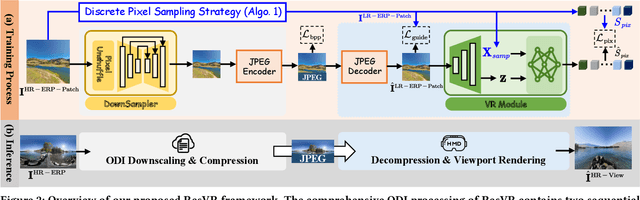
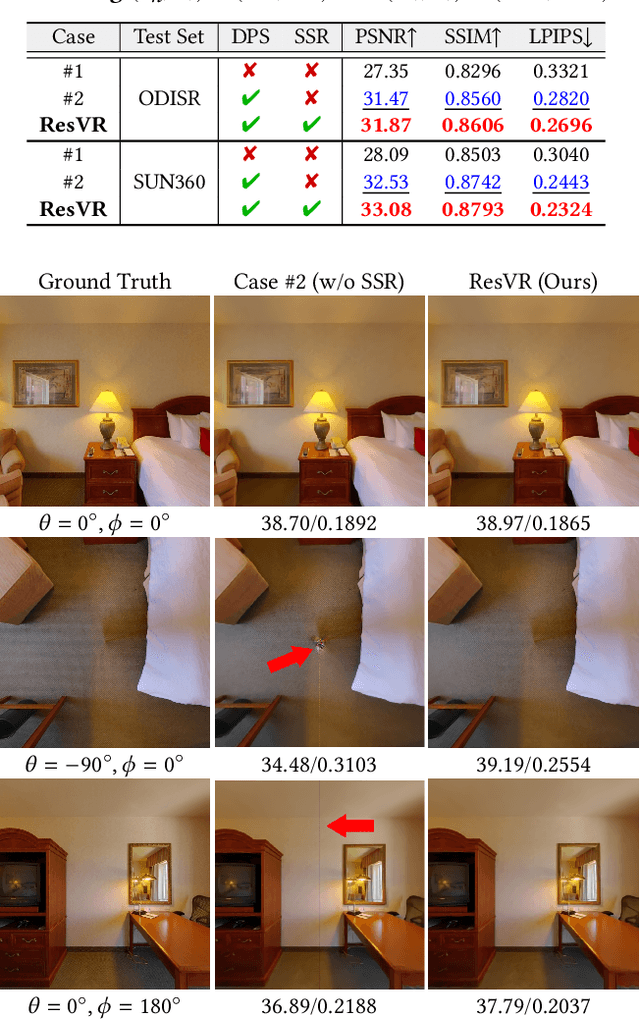
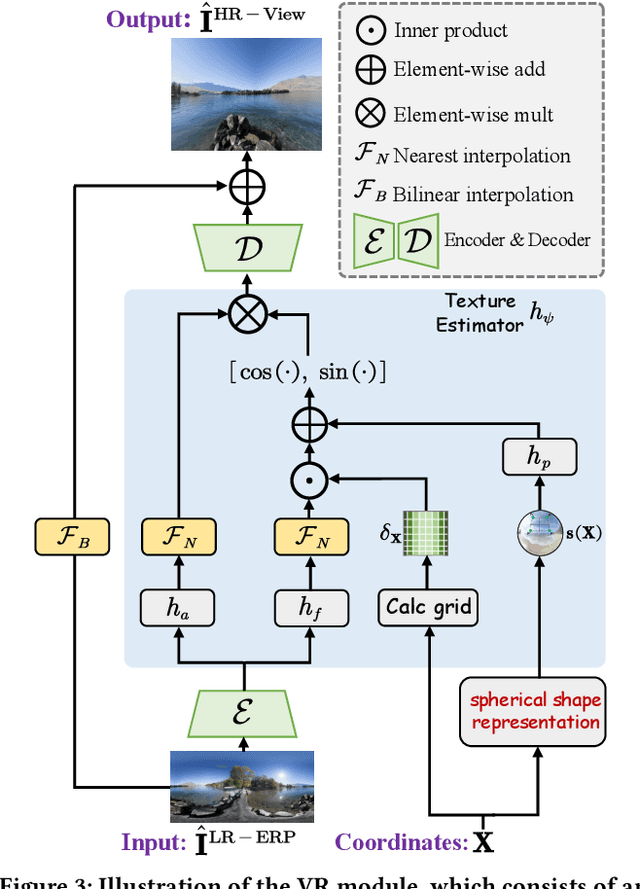
With the advent of virtual reality technology, omnidirectional image (ODI) rescaling techniques are increasingly embraced for reducing transmitted and stored file sizes while preserving high image quality. Despite this progress, current ODI rescaling methods predominantly focus on enhancing the quality of images in equirectangular projection (ERP) format, which overlooks the fact that the content viewed on head mounted displays (HMDs) is actually a rendered viewport instead of an ERP image. In this work, we emphasize that focusing solely on ERP quality results in inferior viewport visual experiences for users. Thus, we propose ResVR, which is the first comprehensive framework for the joint Rescaling and Viewport Rendering of ODIs. ResVR allows obtaining LR ERP images for transmission while rendering high-quality viewports for users to watch on HMDs. In our ResVR, a novel discrete pixel sampling strategy is developed to tackle the complex mapping between the viewport and ERP, enabling end-to-end training of ResVR pipeline. Furthermore, a spherical pixel shape representation technique is innovatively derived from spherical differentiation to significantly improve the visual quality of rendered viewports. Extensive experiments demonstrate that our ResVR outperforms existing methods in viewport rendering tasks across different fields of view, resolutions, and view directions while keeping a low transmission overhead.
MDDD: Manifold-based Domain Adaptation with Dynamic Distribution for Non-Deep Transfer Learning in Cross-subject and Cross-session EEG-based Emotion Recognition
Apr 24, 2024Emotion decoding using Electroencephalography (EEG)-based affective brain-computer interfaces represents a significant area within the field of affective computing. In the present study, we propose a novel non-deep transfer learning method, termed as Manifold-based Domain adaptation with Dynamic Distribution (MDDD). The proposed MDDD includes four main modules: manifold feature transformation, dynamic distribution alignment, classifier learning, and ensemble learning. The data undergoes a transformation onto an optimal Grassmann manifold space, enabling dynamic alignment of the source and target domains. This process prioritizes both marginal and conditional distributions according to their significance, ensuring enhanced adaptation efficiency across various types of data. In the classifier learning, the principle of structural risk minimization is integrated to develop robust classification models. This is complemented by dynamic distribution alignment, which refines the classifier iteratively. Additionally, the ensemble learning module aggregates the classifiers obtained at different stages of the optimization process, which leverages the diversity of the classifiers to enhance the overall prediction accuracy. The experimental results indicate that MDDD outperforms traditional non-deep learning methods, achieving an average improvement of 3.54%, and is comparable to deep learning methods. This suggests that MDDD could be a promising method for enhancing the utility and applicability of aBCIs in real-world scenarios.