 Add to Chrome
 Add to Firefox
 Add to Edge
General Distribution Learning: A theoretical framework for Deep Learning
Jun 12, 2024
There remain numerous unanswered research questions on deep learning (DL) within the classical learning theory framework. These include the remarkable generalization capabilities of overparametrized neural networks (NNs), the efficient optimization performance despite non-convexity of objectives, the mechanism of flat minima for generalization, and the exceptional performance of deep architectures in solving physical problems. This paper introduces General Distribution Learning (GD Learning), a novel theoretical learning framework designed to address a comprehensive range of machine learning and statistical tasks, including classification, regression and parameter estimation. Departing from traditional statistical machine learning, GD Learning focuses on the true underlying distribution. In GD Learning, learning error, corresponding to the expected error in classical statistical learning framework, is divided into fitting errors due to models and algorithms, as well as sampling errors introduced by limited sampling data. The framework significantly incorporates prior knowledge, especially in scenarios characterized by data scarcity, thereby enhancing performance. Within the GD Learning framework, we demonstrate that the global optimal solutions in non-convex optimization can be approached by minimizing the gradient norm and the non-uniformity of the eigenvalues of the model's Jacobian matrix. This insight leads to the development of the gradient structure control algorithm. GD Learning also offers fresh insights into the questions on deep learning, including overparameterization and non-convex optimization, bias-variance trade-off, and the mechanism of flat minima.

Async Learned User Embeddings for Ads Delivery Optimization
Jun 09, 2024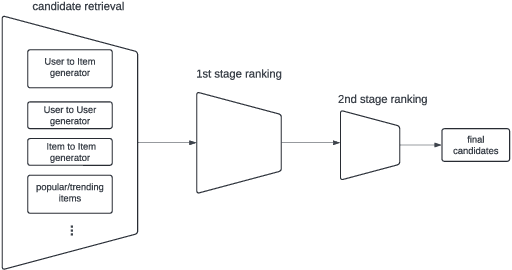
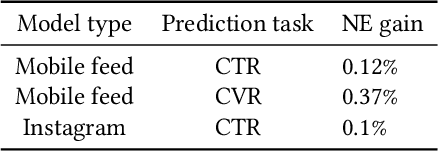
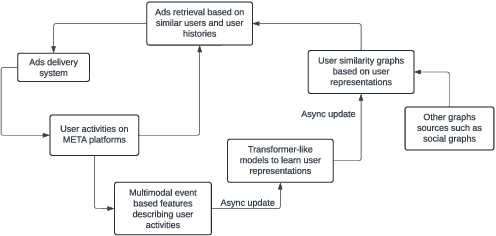
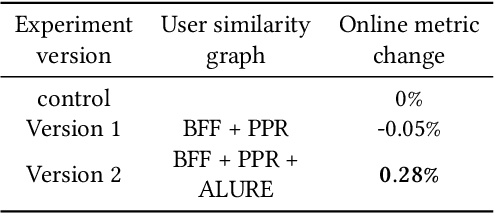
User representation is crucial for recommendation systems as it helps to deliver personalized recommendations by capturing user preferences and behaviors in low-dimensional vectors. High-quality user embeddings can capture subtle preferences, enable precise similarity calculations, and adapt to changing preferences over time to maintain relevance. The effectiveness of recommendation systems depends significantly on the quality of user embedding. We propose to asynchronously learn high fidelity user embeddings for billions of users each day from sequence based multimodal user activities in Meta platforms through a Transformer-like large scale feature learning module. The async learned user representations embeddings (ALURE) are further converted to user similarity graphs through graph learning and then combined with user realtime activities to retrieval highly related ads candidates for the entire ads delivery system. Our method shows significant gains in both offline and online experiments.
Error Bounds of Supervised Classification from Information-Theoretic Perspective
Jun 07, 2024There remains a list of unanswered research questions on deep learning (DL), including the remarkable generalization power of overparametrized neural networks, the efficient optimization performance despite the non-convexity, and the mechanisms behind flat minima in generalization. In this paper, we adopt an information-theoretic perspective to explore the theoretical foundations of supervised classification using deep neural networks (DNNs). Our analysis introduces the concepts of fitting error and model risk, which, together with generalization error, constitute an upper bound on the expected risk. We demonstrate that the generalization errors are bounded by the complexity, influenced by both the smoothness of distribution and the sample size. Consequently, task complexity serves as a reliable indicator of the dataset's quality, guiding the setting of regularization hyperparameters. Furthermore, the derived upper bound fitting error links the back-propagated gradient, Neural Tangent Kernel (NTK), and the model's parameter count with the fitting error. Utilizing the triangle inequality, we establish an upper bound on the expected risk. This bound offers valuable insights into the effects of overparameterization, non-convex optimization, and the flat minima in DNNs.Finally, empirical verification confirms a significant positive correlation between the derived theoretical bounds and the practical expected risk, confirming the practical relevance of the theoretical findings.
Towards Federated Domain Unlearning: Verification Methodologies and Challenges
Jun 05, 2024Federated Learning (FL) has evolved as a powerful tool for collaborative model training across multiple entities, ensuring data privacy in sensitive sectors such as healthcare and finance. However, the introduction of the Right to Be Forgotten (RTBF) poses new challenges, necessitating federated unlearning to delete data without full model retraining. Traditional FL unlearning methods, not originally designed with domain specificity in mind, inadequately address the complexities of multi-domain scenarios, often affecting the accuracy of models in non-targeted domains or leading to uniform forgetting across all domains. Our work presents the first comprehensive empirical study on Federated Domain Unlearning, analyzing the characteristics and challenges of current techniques in multi-domain contexts. We uncover that these methods falter, particularly because they neglect the nuanced influences of domain-specific data, which can lead to significant performance degradation and inaccurate model behavior. Our findings reveal that unlearning disproportionately affects the model's deeper layers, erasing critical representational subspaces acquired during earlier training phases. In response, we propose novel evaluation methodologies tailored for Federated Domain Unlearning, aiming to accurately assess and verify domain-specific data erasure without compromising the model's overall integrity and performance. This investigation not only highlights the urgent need for domain-centric unlearning strategies in FL but also sets a new precedent for evaluating and implementing these techniques effectively.
An Empirical Study of Training State-of-the-Art LiDAR Segmentation Models
May 23, 2024In the rapidly evolving field of autonomous driving, precise segmentation of LiDAR data is crucial for understanding complex 3D environments. Traditional approaches often rely on disparate, standalone codebases, hindering unified advancements and fair benchmarking across models. To address these challenges, we introduce MMDetection3D-lidarseg, a comprehensive toolbox designed for the efficient training and evaluation of state-of-the-art LiDAR segmentation models. We support a wide range of segmentation models and integrate advanced data augmentation techniques to enhance robustness and generalization. Additionally, the toolbox provides support for multiple leading sparse convolution backends, optimizing computational efficiency and performance. By fostering a unified framework, MMDetection3D-lidarseg streamlines development and benchmarking, setting new standards for research and application. Our extensive benchmark experiments on widely-used datasets demonstrate the effectiveness of the toolbox. The codebase and trained models have been publicly available, promoting further research and innovation in the field of LiDAR segmentation for autonomous driving.
FedGCS: A Generative Framework for Efficient Client Selection in Federated Learning via Gradient-based Optimization
May 10, 2024

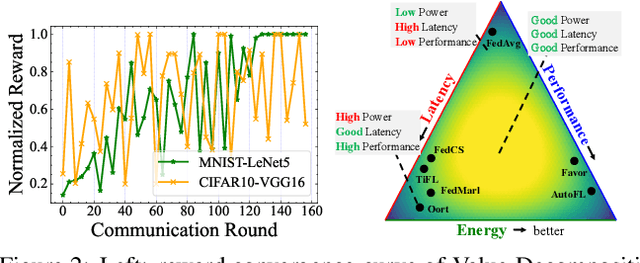
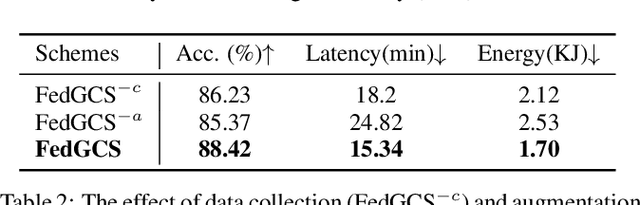
Federated Learning faces significant challenges in statistical and system heterogeneity, along with high energy consumption, necessitating efficient client selection strategies. Traditional approaches, including heuristic and learning-based methods, fall short of addressing these complexities holistically. In response, we propose FedGCS, a novel generative client selection framework that innovatively recasts the client selection process as a generative task. Drawing inspiration from the methodologies used in large language models, FedGCS efficiently encodes abundant decision-making knowledge within a continuous representation space, enabling efficient gradient-based optimization to search for optimal client selection that will be finally output via generation. The framework comprises four steps: (1) automatic collection of diverse "selection-score" pair data using classical client selection methods; (2) training an encoder-evaluator-decoder framework on this data to construct a continuous representation space; (3) employing gradient-based optimization in this space for optimal client selection; (4) generating the final optimal client selection via using beam search for the well-trained decoder. FedGCS outperforms traditional methods by being more comprehensive, generalizable, and efficient, simultaneously optimizing for model performance, latency, and energy consumption. The effectiveness of FedGCS is proven through extensive experimental analyses.
MGS-SLAM: Monocular Sparse Tracking and Gaussian Mapping with Depth Smooth Regularization
May 10, 2024
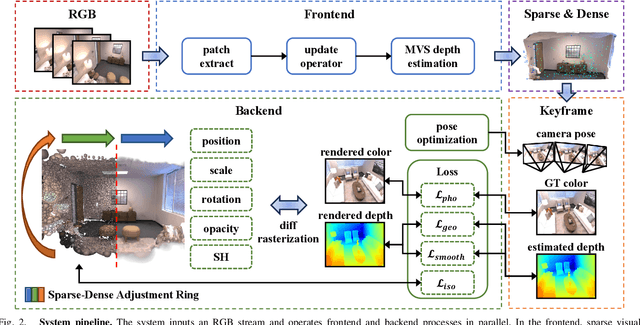
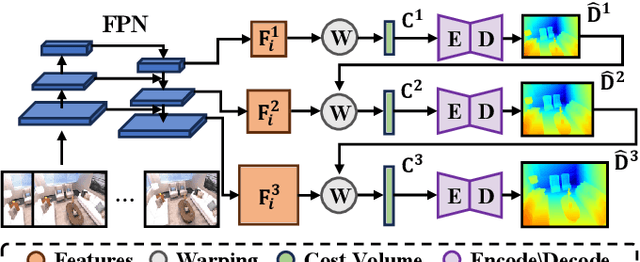
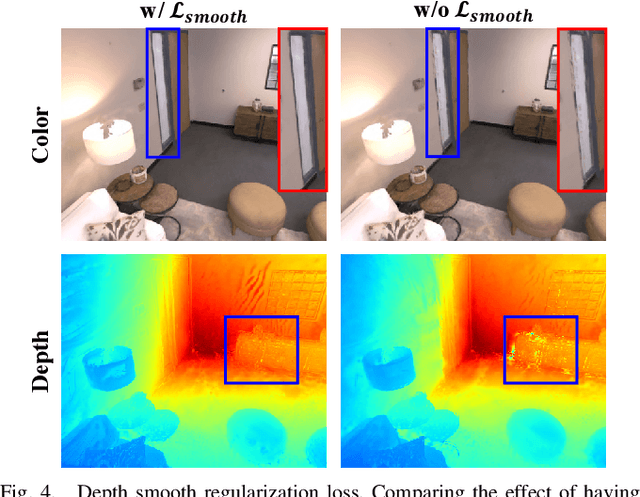
This letter introduces a novel framework for dense Visual Simultaneous Localization and Mapping (VSLAM) based on Gaussian Splatting. Recently Gaussian Splatting-based SLAM has yielded promising results, but rely on RGB-D input and is weak in tracking. To address these limitations, we uniquely integrates advanced sparse visual odometry with a dense Gaussian Splatting scene representation for the first time, thereby eliminating the dependency on depth maps typical of Gaussian Splatting-based SLAM systems and enhancing tracking robustness. Here, the sparse visual odometry tracks camera poses in RGB stream, while Gaussian Splatting handles map reconstruction. These components are interconnected through a Multi-View Stereo (MVS) depth estimation network. And we propose a depth smooth loss to reduce the negative effect of estimated depth maps. Furthermore, the consistency in scale between the sparse visual odometry and the dense Gaussian map is preserved by Sparse-Dense Adjustment Ring (SDAR). We have evaluated our system across various synthetic and real-world datasets. The accuracy of our pose estimation surpasses existing methods and achieves state-of-the-art performance. Additionally, it outperforms previous monocular methods in terms of novel view synthesis fidelity, matching the results of neural SLAM systems that utilize RGB-D input.
DMOFC: Discrimination Metric-Optimized Feature Compression
May 07, 2024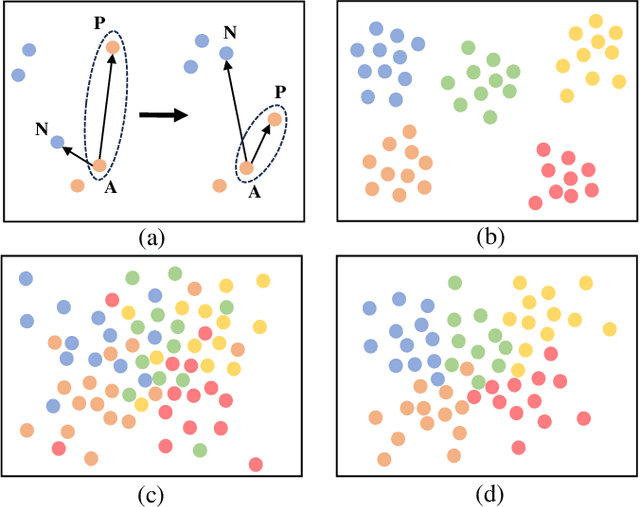
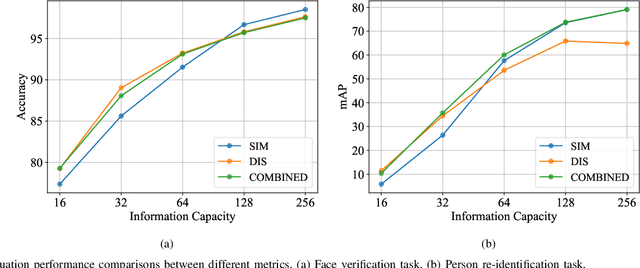
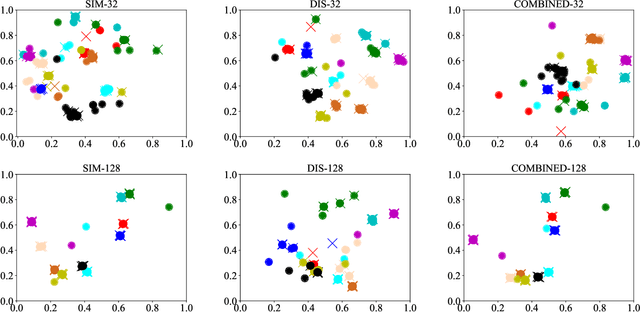
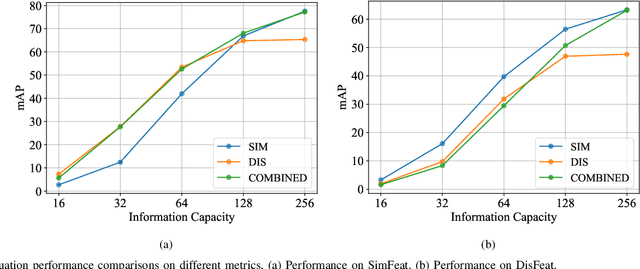
Feature compression, as an important branch of video coding for machines (VCM), has attracted significant attention and exploration. However, the existing methods mainly focus on intra-feature similarity, such as the Mean Squared Error (MSE) between the reconstructed and original features, while neglecting the importance of inter-feature relationships. In this paper, we analyze the inter-feature relationships, focusing on feature discriminability in machine vision and underscoring its significance in feature compression. To maintain the feature discriminability of reconstructed features, we introduce a discrimination metric for feature compression. The discrimination metric is designed to ensure that the distance between features of the same category is smaller than the distance between features of different categories. Furthermore, we explore the relationship between the discrimination metric and the discriminability of the original features. Experimental results confirm the effectiveness of the proposed discrimination metric and reveal there exists a trade-off between the discrimination metric and the discriminability of the original features.
Ranking-based Client Selection with Imitation Learning for Efficient Federated Learning
May 07, 2024


Federated Learning (FL) enables multiple devices to collaboratively train a shared model while ensuring data privacy. The selection of participating devices in each training round critically affects both the model performance and training efficiency, especially given the vast heterogeneity in training capabilities and data distribution across devices. To address these challenges, we introduce a novel device selection solution called FedRank, which is an end-to-end, ranking-based approach that is pre-trained by imitation learning against state-of-the-art analytical approaches. It not only considers data and system heterogeneity at runtime but also adaptively and efficiently chooses the most suitable clients for model training. Specifically, FedRank views client selection in FL as a ranking problem and employs a pairwise training strategy for the smart selection process. Additionally, an imitation learning-based approach is designed to counteract the cold-start issues often seen in state-of-the-art learning-based approaches. Experimental results reveal that \model~ boosts model accuracy by 5.2\% to 56.9\%, accelerates the training convergence up to $2.01 \times$ and saves the energy consumption up to $40.1\%$.
Leverage Multi-source Traffic Demand Data Fusion with Transformer Model for Urban Parking Prediction
May 02, 2024The escalation in urban private car ownership has worsened the urban parking predicament, necessitating effective parking availability prediction for urban planning and management. However, the existing prediction methods suffer from low prediction accuracy with the lack of spatial-temporal correlation features related to parking volume, and neglect of flow patterns and correlations between similar parking lots within certain areas. To address these challenges, this study proposes a parking availability prediction framework integrating spatial-temporal deep learning with multi-source data fusion, encompassing traffic demand data from multiple sources (e.g., metro, bus, taxi services), and parking lot data. The framework is based on the Transformer as the spatial-temporal deep learning model and leverages K-means clustering to establish parking cluster zones, extracting and integrating traffic demand characteristics from various transportation modes (i.e., metro, bus, online ride-hailing, and taxi) connected to parking lots. Real-world empirical data was used to verify the effectiveness of the proposed method compared with different machine learning, deep learning, and traditional statistical models for predicting parking availability. Experimental results reveal that, with the proposed pipeline, the developed Transformer model outperforms other models in terms of various metrics, e.g., Mean Squared Error (MSE), Mean Absolute Error (MAE), and Mean Absolute Percentage Error (MAPE). By fusing multi-source demanding data with spatial-temporal deep learning techniques, this approach offers the potential to develop parking availability prediction systems that furnish more accurate and timely information to both drivers and urban planners, thereby fostering more efficient and sustainable urban mobility.