 Add to Chrome
 Add to Firefox
 Add to Edge
Rethinking Performance Analysis for Configurable Software Systems: A Case Study from a Fitness Landscape Perspective
Dec 22, 2024
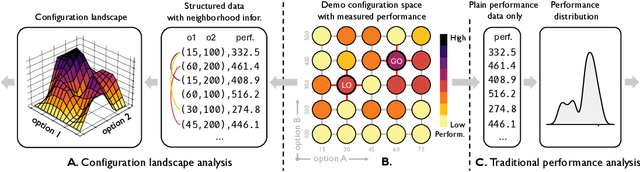


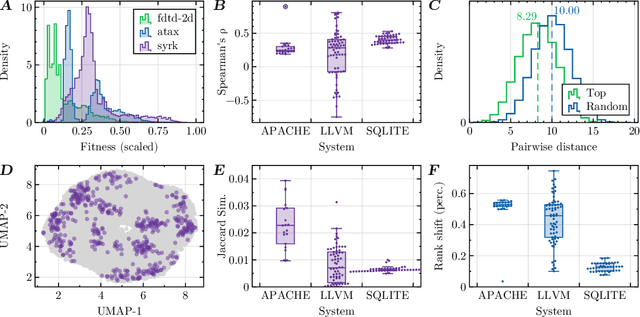
Modern software systems are often highly configurable to tailor varied requirements from diverse stakeholders. Understanding the mapping between configurations and the desired performance attributes plays a fundamental role in advancing the controllability and tuning of the underlying system, yet has long been a dark hole of knowledge due to its black-box nature. While there have been previous efforts in performance analysis for these systems, they analyze the configurations as isolated data points without considering their inherent spatial relationships. This renders them incapable of interrogating many important aspects of the configuration space like local optima. In this work, we advocate a novel perspective to rethink performance analysis -- modeling the configuration space as a structured ``landscape''. To support this proposition, we designed \our, an open-source, graph data mining empowered fitness landscape analysis (FLA) framework. By applying this framework to $86$M benchmarked configurations from $32$ running workloads of $3$ real-world systems, we arrived at $6$ main findings, which together constitute a holistic picture of the landscape topography, with thorough discussions about their implications on both configuration tuning and performance modeling.
* 23 pages, 8 figures, accepted as a conference paper at ISSTA 2025

Transcribing and Translating, Fast and Slow: Joint Speech Translation and Recognition
Dec 19, 2024We propose the joint speech translation and recognition (JSTAR) model that leverages the fast-slow cascaded encoder architecture for simultaneous end-to-end automatic speech recognition (ASR) and speech translation (ST). The model is transducer-based and uses a multi-objective training strategy that optimizes both ASR and ST objectives simultaneously. This allows JSTAR to produce high-quality streaming ASR and ST results. We apply JSTAR in a bilingual conversational speech setting with smart-glasses, where the model is also trained to distinguish speech from different directions corresponding to the wearer and a conversational partner. Different model pre-training strategies are studied to further improve results, including training of a transducer-based streaming machine translation (MT) model for the first time and applying it for parameter initialization of JSTAR. We demonstrate superior performances of JSTAR compared to a strong cascaded ST model in both BLEU scores and latency.
VersaGen: Unleashing Versatile Visual Control for Text-to-Image Synthesis
Dec 17, 2024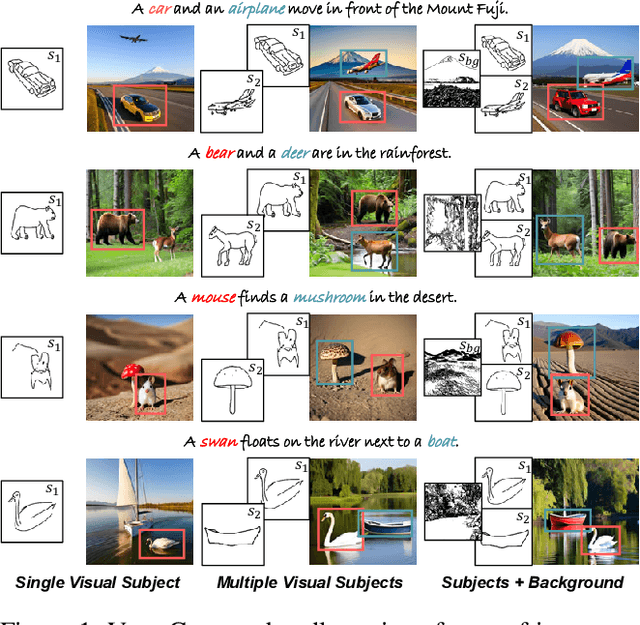

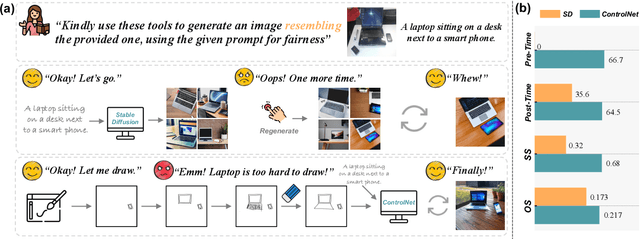
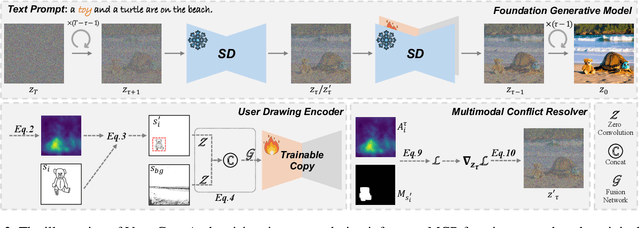
Despite the rapid advancements in text-to-image (T2I) synthesis, enabling precise visual control remains a significant challenge. Existing works attempted to incorporate multi-facet controls (text and sketch), aiming to enhance the creative control over generated images. However, our pilot study reveals that the expressive power of humans far surpasses the capabilities of current methods. Users desire a more versatile approach that can accommodate their diverse creative intents, ranging from controlling individual subjects to manipulating the entire scene composition. We present VersaGen, a generative AI agent that enables versatile visual control in T2I synthesis. VersaGen admits four types of visual controls: i) single visual subject; ii) multiple visual subjects; iii) scene background; iv) any combination of the three above or merely no control at all. We train an adaptor upon a frozen T2I model to accommodate the visual information into the text-dominated diffusion process. We introduce three optimization strategies during the inference phase of VersaGen to improve generation results and enhance user experience. Comprehensive experiments on COCO and Sketchy validate the effectiveness and flexibility of VersaGen, as evidenced by both qualitative and quantitative results.
FD2-Net: Frequency-Driven Feature Decomposition Network for Infrared-Visible Object Detection
Dec 12, 2024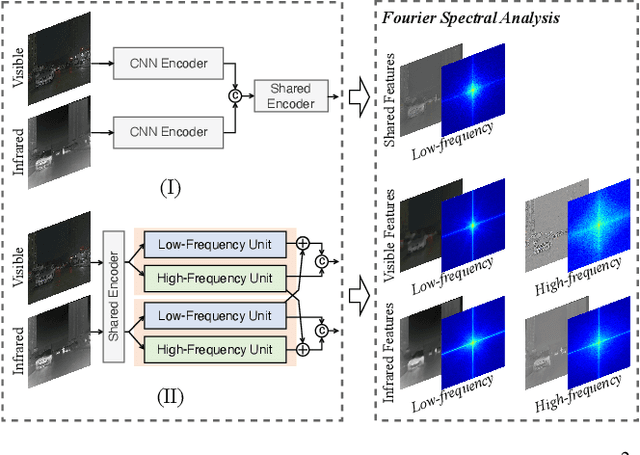
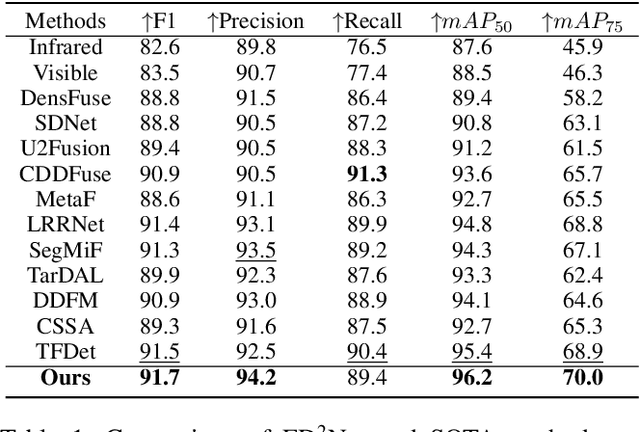
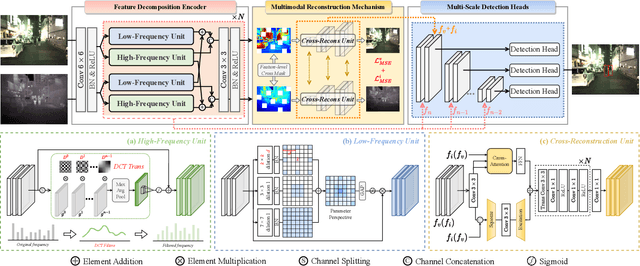
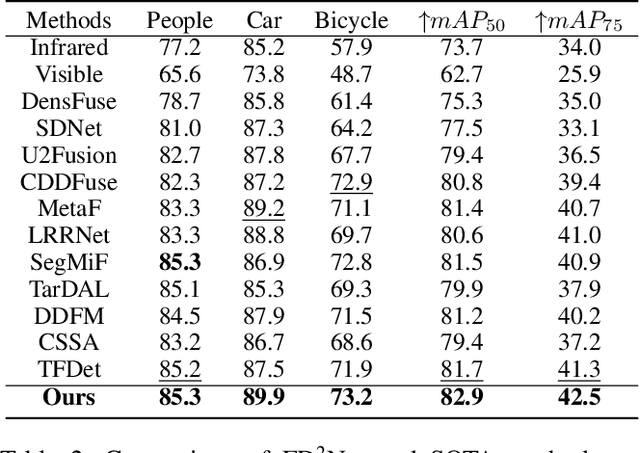
Infrared-visible object detection (IVOD) seeks to harness the complementary information in infrared and visible images, thereby enhancing the performance of detectors in complex environments. However, existing methods often neglect the frequency characteristics of complementary information, such as the abundant high-frequency details in visible images and the valuable low-frequency thermal information in infrared images, thus constraining detection performance. To solve this problem, we introduce a novel Frequency-Driven Feature Decomposition Network for IVOD, called FD2-Net, which effectively captures the unique frequency representations of complementary information across multimodal visual spaces. Specifically, we propose a feature decomposition encoder, wherein the high-frequency unit (HFU) utilizes discrete cosine transform to capture representative high-frequency features, while the low-frequency unit (LFU) employs dynamic receptive fields to model the multi-scale context of diverse objects. Next, we adopt a parameter-free complementary strengths strategy to enhance multimodal features through seamless inter-frequency recoupling. Furthermore, we innovatively design a multimodal reconstruction mechanism that recovers image details lost during feature extraction, further leveraging the complementary information from infrared and visible images to enhance overall representational capacity. Extensive experiments demonstrate that FD2-Net outperforms state-of-the-art (SOTA) models across various IVOD benchmarks, i.e. LLVIP (96.2% mAP), FLIR (82.9% mAP), and M3FD (83.5% mAP).
FlashSloth: Lightning Multimodal Large Language Models via Embedded Visual Compression
Dec 05, 2024

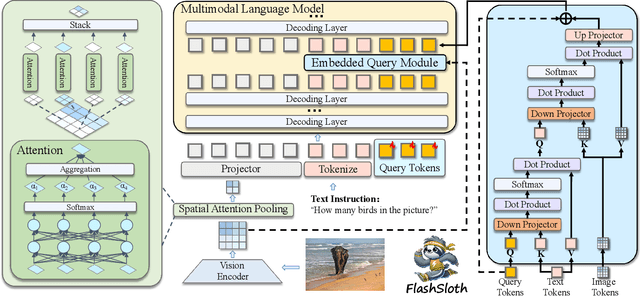

Despite a big leap forward in capability, multimodal large language models (MLLMs) tend to behave like a sloth in practical use, i.e., slow response and large latency. Recent efforts are devoted to building tiny MLLMs for better efficiency, but the plethora of visual tokens still used limit their actual speedup. In this paper, we propose a powerful and fast tiny MLLM called FlashSloth. Different from previous efforts, FlashSloth focuses on improving the descriptive power of visual tokens in the process of compressing their redundant semantics. In particular, FlashSloth introduces embedded visual compression designs to capture both visually salient and instruction-related image information, so as to achieving superior multimodal performance with fewer visual tokens. Extensive experiments are conducted to validate the proposed FlashSloth, and a bunch of tiny but strong MLLMs are also comprehensively compared, e.g., InternVL2, MiniCPM-V2 and Qwen2-VL. The experimental results show that compared with these advanced tiny MLLMs, our FlashSloth can greatly reduce the number of visual tokens, training memory and computation complexity while retaining high performance on various VL tasks.
Scale Contrastive Learning with Selective Attentions for Blind Image Quality Assessment
Nov 13, 2024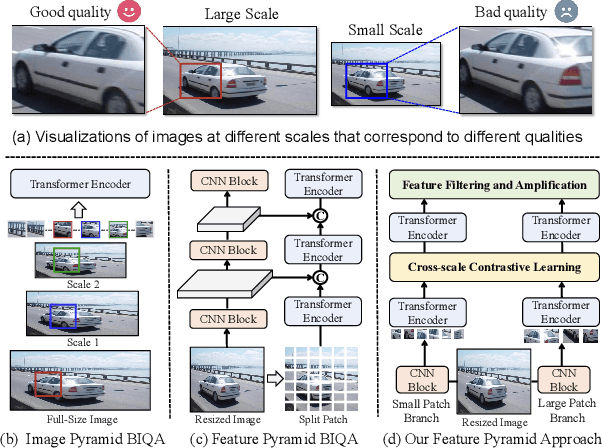
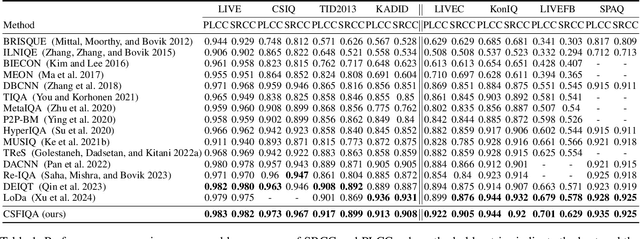
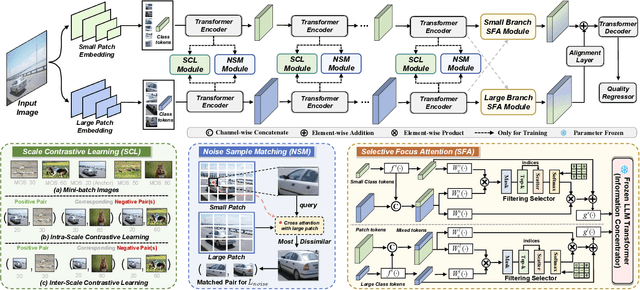
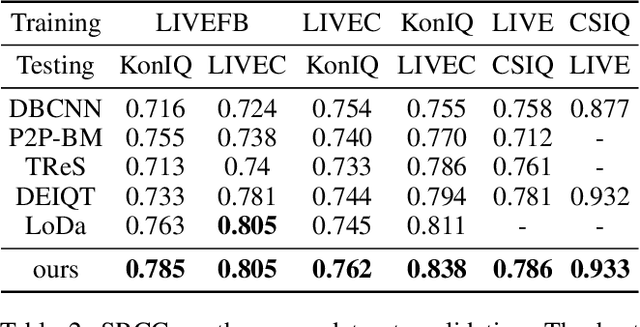
Blind image quality assessment (BIQA) serves as a fundamental task in computer vision, yet it often fails to consistently align with human subjective perception. Recent advances show that multi-scale evaluation strategies are promising due to their ability to replicate the hierarchical structure of human vision. However, the effectiveness of these strategies is limited by a lack of understanding of how different image scales influence perceived quality. This paper addresses two primary challenges: the significant redundancy of information across different scales, and the confusion caused by combining features from these scales, which may vary widely in quality. To this end, a new multi-scale BIQA framework is proposed, namely Contrast-Constrained Scale-Focused IQA Framework (CSFIQA). CSFIQA features a selective focus attention mechanism to minimize information redundancy and highlight critical quality-related information. Additionally, CSFIQA includes a scale-level contrastive learning module equipped with a noise sample matching mechanism to identify quality discrepancies across the same image content at different scales. By exploring the intrinsic relationship between image scales and the perceived quality, the proposed CSFIQA achieves leading performance on eight benchmark datasets, e.g., achieving SRCC values of 0.967 (versus 0.947 in CSIQ) and 0.905 (versus 0.876 in LIVEC).
MBL-CPDP: A Multi-objective Bilevel Method for Cross-Project Defect Prediction via Automated Machine Learning
Nov 10, 2024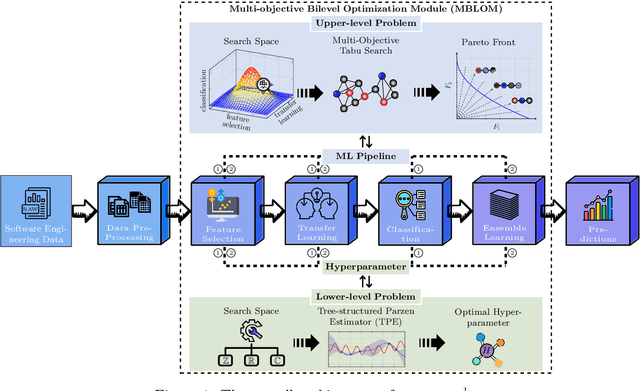

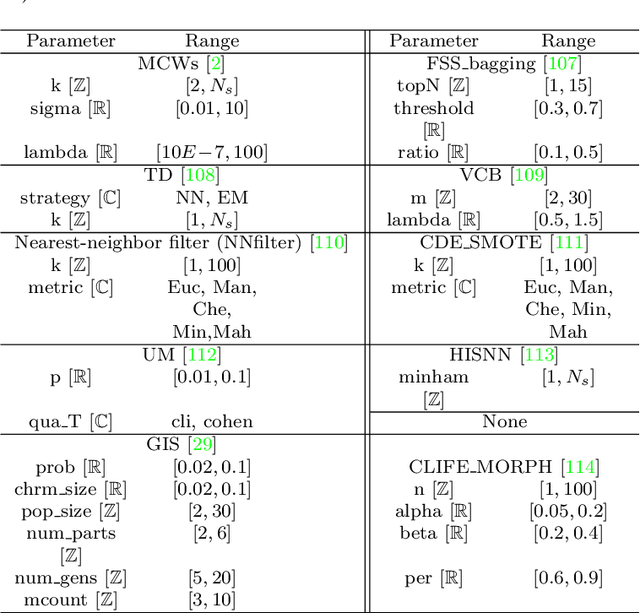

Cross-project defect prediction (CPDP) leverages machine learning (ML) techniques to proactively identify software defects, especially where project-specific data is scarce. However, developing a robust ML pipeline with optimal hyperparameters that effectively use cross-project information and yield satisfactory performance remains challenging. In this paper, we resolve this bottleneck by formulating CPDP as a multi-objective bilevel optimization (MBLO) method, dubbed MBL-CPDP. It comprises two nested problems: the upper-level, a multi-objective combinatorial optimization problem, enhances robustness and efficiency in optimizing ML pipelines, while the lower-level problem is an expensive optimization problem that focuses on tuning their optimal hyperparameters. Due to the high-dimensional search space characterized by feature redundancy and inconsistent data distributions, the upper-level problem combines feature selection, transfer learning, and classification to leverage limited and heterogeneous historical data. Meanwhile, an ensemble learning method is proposed to capture differences in cross-project distribution and generalize across diverse datasets. Finally, a MBLO algorithm is presented to solve this problem while achieving high adaptability effectively. To evaluate the performance of MBL-CPDP, we compare it with five automated ML tools and $50$ CPDP techniques across $20$ projects. Extensive empirical results show that MBL-CPDPoutperforms the comparison methods, demonstrating its superior adaptability and comprehensive performance evaluation capability.
Freeze-Omni: A Smart and Low Latency Speech-to-speech Dialogue Model with Frozen LLM
Nov 01, 2024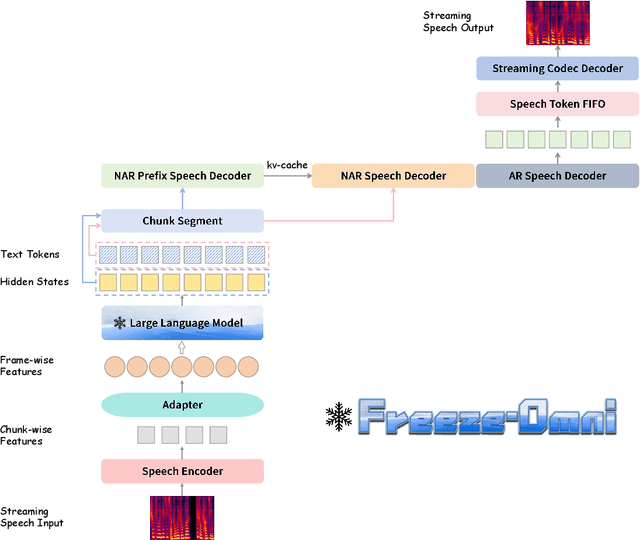
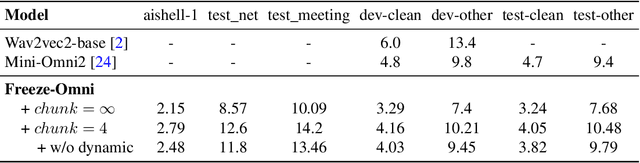
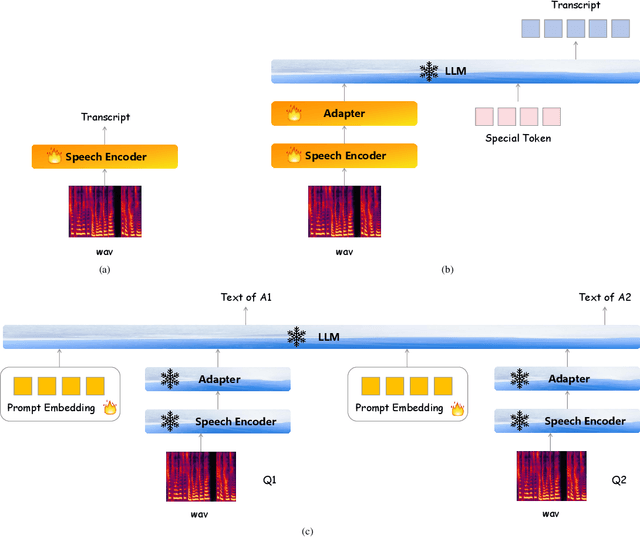
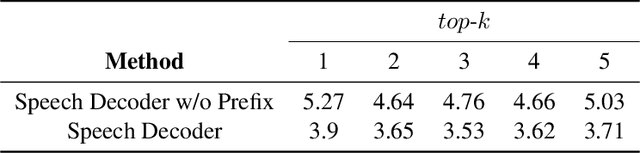
The rapid development of large language models has brought many new smart applications, especially the excellent multimodal human-computer interaction in GPT-4o has brought impressive experience to users. In this background, researchers have proposed many multimodal LLMs that can achieve speech-to-speech dialogue recently. In this paper, we propose a speech-text multimodal LLM architecture called Freeze-Omni. Our main contribution is the speech input and output modalities can connected to the LLM while keeping the LLM frozen throughout the training process. We designed 3-stage training strategies both for the modeling of speech input and output, enabling Freeze-Omni to obtain speech-to-speech dialogue ability using text-speech paired data (such as ASR and TTS data) and only 60,000 multi-round text Q&A data on 8 GPUs. Moreover, we can effectively ensure that the intelligence of the Freeze-Omni in the speech modality is at the same level compared with that in the text modality of its backbone LLM, while the end-to-end latency of the spoken response achieves a low level. In addition, we also designed a method to achieve duplex dialogue ability through multi-task training, making Freeze-Omni have a more natural style of dialogue ability between the users. Freeze-Omni mainly provides a possibility for researchers to conduct multimodal LLM under the condition of a frozen LLM, avoiding various impacts caused by the catastrophic forgetting of LLM caused by fewer data and training resources.
Show Me What and Where has Changed? Question Answering and Grounding for Remote Sensing Change Detection
Oct 31, 2024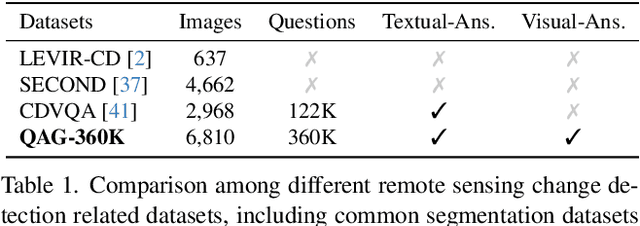
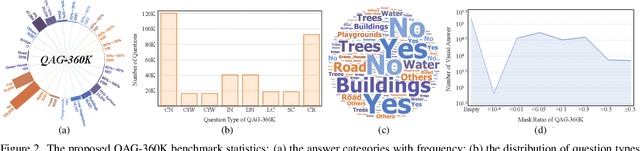
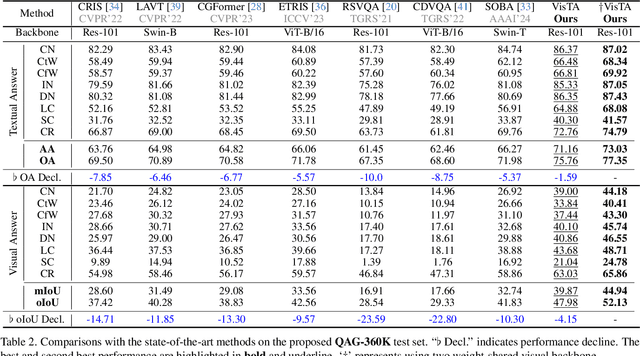
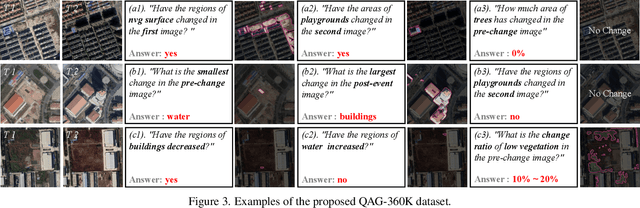
Remote sensing change detection aims to perceive changes occurring on the Earth's surface from remote sensing data in different periods, and feed these changes back to humans. However, most existing methods only focus on detecting change regions, lacking the ability to interact with users to identify changes that the users expect. In this paper, we introduce a new task named Change Detection Question Answering and Grounding (CDQAG), which extends the traditional change detection task by providing interpretable textual answers and intuitive visual evidence. To this end, we construct the first CDQAG benchmark dataset, termed QAG-360K, comprising over 360K triplets of questions, textual answers, and corresponding high-quality visual masks. It encompasses 10 essential land-cover categories and 8 comprehensive question types, which provides a large-scale and diverse dataset for remote sensing applications. Based on this, we present VisTA, a simple yet effective baseline method that unifies the tasks of question answering and grounding by delivering both visual and textual answers. Our method achieves state-of-the-art results on both the classic CDVQA and the proposed CDQAG datasets. Extensive qualitative and quantitative experimental results provide useful insights for the development of better CDQAG models, and we hope that our work can inspire further research in this important yet underexplored direction. The proposed benchmark dataset and method are available at https://github.com/like413/VisTA.
Frozen Large Language Models Can Perceive Paralinguistic Aspects of Speech
Oct 02, 2024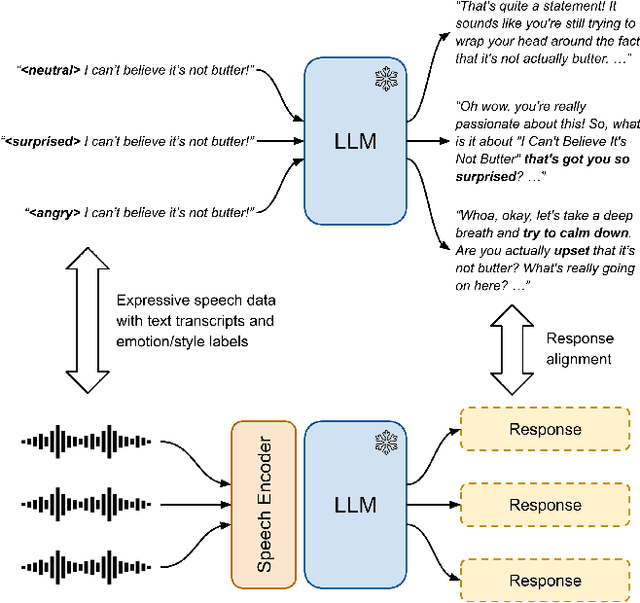
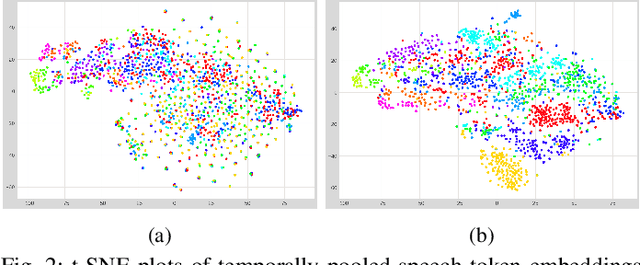
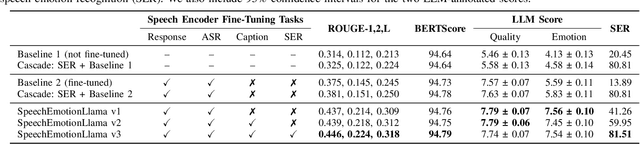
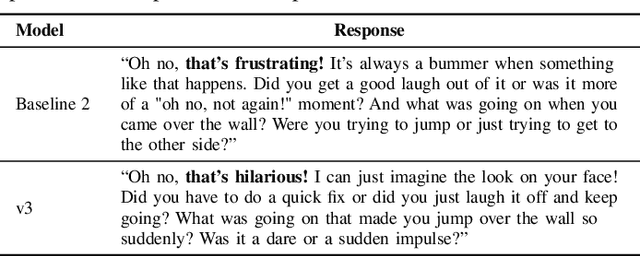
As speech becomes an increasingly common modality for interacting with large language models (LLMs), it is becoming desirable to develop systems where LLMs can take into account users' emotions or speaking styles when providing their responses. In this work, we study the potential of an LLM to understand these aspects of speech without fine-tuning its weights. To do this, we utilize an end-to-end system with a speech encoder; the encoder is trained to produce token embeddings such that the LLM's response to an expressive speech prompt is aligned with its response to a semantically matching text prompt where the speaker's emotion has also been specified. We find that this training framework allows the encoder to generate tokens that capture both semantic and paralinguistic information in speech and effectively convey it to the LLM, even when the LLM remains completely frozen. We also explore training on additional emotion and style-related response alignment tasks, finding that they further increase the amount of paralinguistic information explicitly captured in the speech tokens. Experiments demonstrate that our system is able to produce higher quality and more empathetic responses to expressive speech prompts compared to several baselines.