 Add to Chrome
 Add to Firefox
 Add to Edge
InternLM2.5-StepProver: Advancing Automated Theorem Proving via Expert Iteration on Large-Scale LEAN Problems
Oct 21, 2024
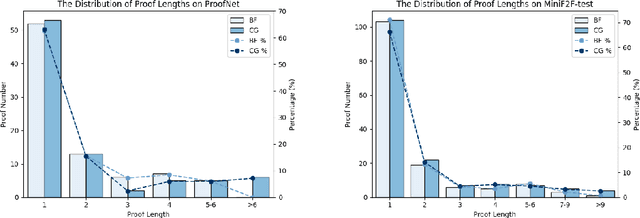

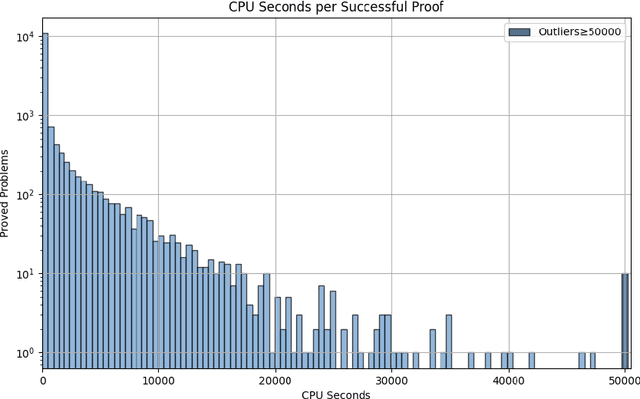

Large Language Models (LLMs) have emerged as powerful tools in mathematical theorem proving, particularly when utilizing formal languages such as LEAN. The major learning paradigm is expert iteration, which necessitates a pre-defined dataset comprising numerous mathematical problems. In this process, LLMs attempt to prove problems within the dataset and iteratively refine their capabilities through self-training on the proofs they discover. We propose to use large scale LEAN problem datasets Lean-workbook for expert iteration with more than 20,000 CPU days. During expert iteration, we found log-linear trends between solved problem amount with proof length and CPU usage. We train a critic model to select relatively easy problems for policy models to make trials and guide the model to search for deeper proofs. InternLM2.5-StepProver achieves open-source state-of-the-art on MiniF2F, Lean-Workbook-Plus, ProofNet, and Putnam benchmarks. Specifically, it achieves a pass of 65.9% on the MiniF2F-test and proves (or disproves) 17.0% of problems in Lean-Workbook-Plus which shows a significant improvement compared to only 9.5% of problems proved when Lean-Workbook-Plus was released. We open-source our models and searched proofs at https://github.com/InternLM/InternLM-Math and https://huggingface.co/datasets/internlm/Lean-Workbook.

Training Language Models to Critique With Multi-agent Feedback
Oct 20, 2024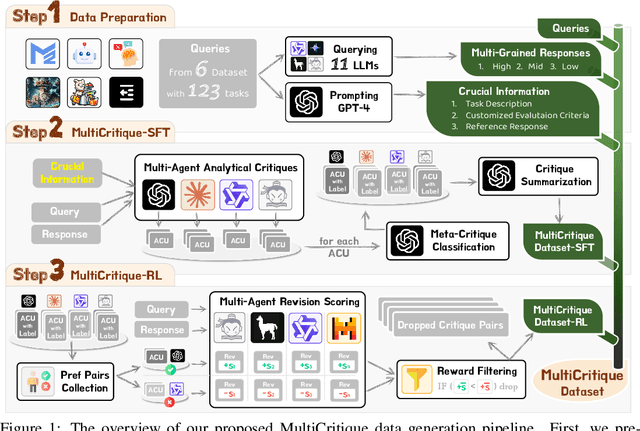
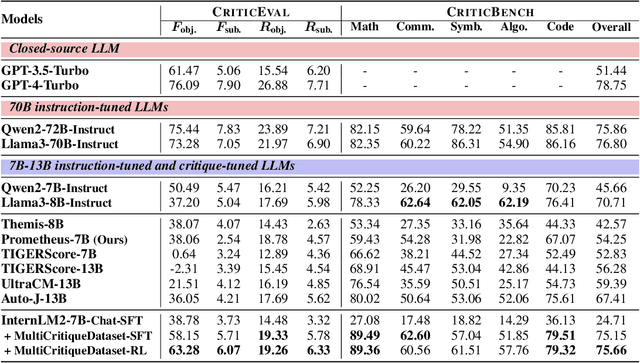
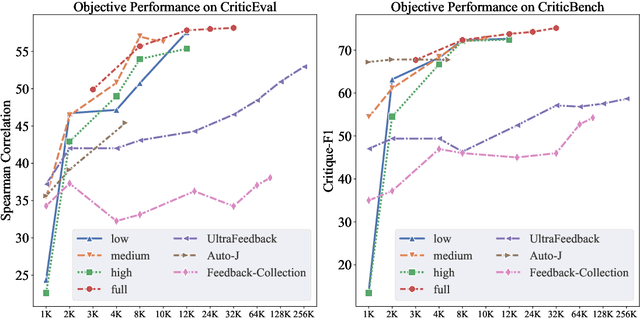
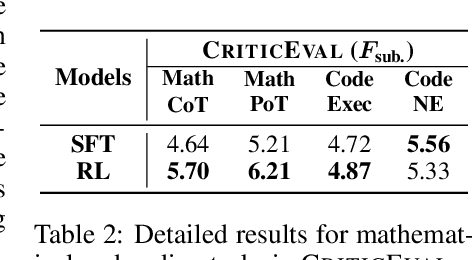
Critique ability, a meta-cognitive capability of humans, presents significant challenges for LLMs to improve. Recent works primarily rely on supervised fine-tuning (SFT) using critiques generated by a single LLM like GPT-4. However, these model-generated critiques often exhibit flaws due to the inherent complexity of the critique. Consequently, fine-tuning LLMs on such flawed critiques typically limits the model's performance and propagates these flaws into the learned model. To overcome these challenges, this paper proposes a novel data generation pipeline, named MultiCritique, that improves the critique ability of LLMs by utilizing multi-agent feedback in both the SFT and reinforcement learning (RL) stages. First, our data generation pipeline aggregates high-quality critiques from multiple agents instead of a single model, with crucial information as input for simplifying the critique. Furthermore, our pipeline improves the preference accuracy of critique quality through multi-agent feedback, facilitating the effectiveness of RL in improving the critique ability of LLMs. Based on our proposed MultiCritique data generation pipeline, we construct the MultiCritiqueDataset for the SFT and RL fine-tuning stages. Extensive experimental results on two benchmarks demonstrate: 1) the superior quality of our constructed SFT dataset compared to existing critique datasets; 2) additional improvements to the critique ability of LLMs brought by the RL stage. Notably, our fine-tuned 7B model significantly surpasses other advanced 7B-13B open-source models, approaching the performance of advanced 70B LLMs and GPT-4. Codes, datasets and model weights will be publicly available.
The Latent Road to Atoms: Backmapping Coarse-grained Protein Structures with Latent Diffusion
Oct 17, 2024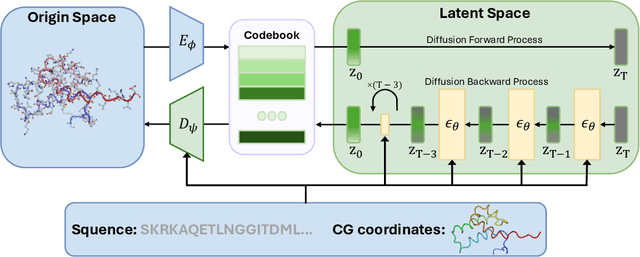
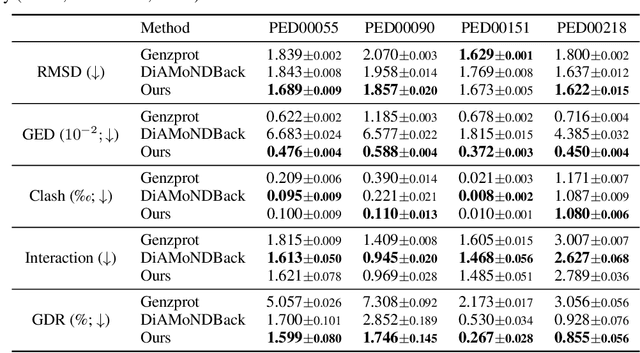
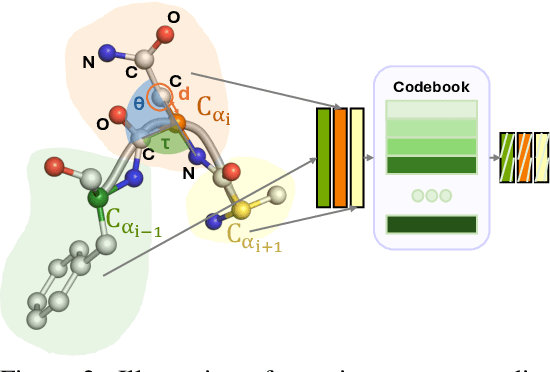
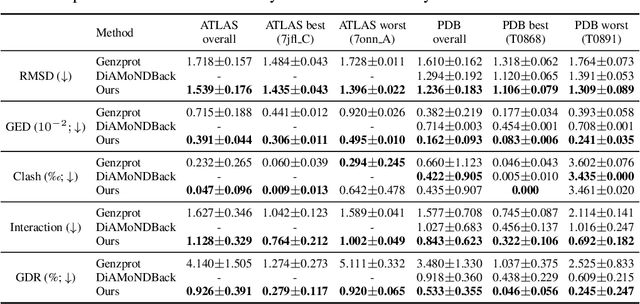
Coarse-grained(CG) molecular dynamics simulations offer computational efficiency for exploring protein conformational ensembles and thermodynamic properties. Though coarse representations enable large-scale simulations across extended temporal and spatial ranges, the sacrifice of atomic-level details limits their utility in tasks such as ligand docking and protein-protein interaction prediction. Backmapping, the process of reconstructing all-atom structures from coarse-grained representations, is crucial for recovering these fine details. While recent machine learning methods have made strides in protein structure generation, challenges persist in reconstructing diverse atomistic conformations that maintain geometric accuracy and chemical validity. In this paper, we present Latent Diffusion Backmapping (LDB), a novel approach leveraging denoising diffusion within latent space to address these challenges. By combining discrete latent encoding with diffusion, LDB bypasses the need for equivariant and internal coordinate manipulation, significantly simplifying the training and sampling processes as well as facilitating better and wider exploration in configuration space. We evaluate LDB's state-of-the-art performance on three distinct protein datasets, demonstrating its ability to efficiently reconstruct structures with high structural accuracy and chemical validity. Moreover, LDB shows exceptional versatility in capturing diverse protein ensembles, highlighting its capability to explore intricate conformational spaces. Our results position LDB as a powerful and scalable approach for backmapping, effectively bridging the gap between CG simulations and atomic-level analyses in computational biology.
ProSA: Assessing and Understanding the Prompt Sensitivity of LLMs
Oct 16, 2024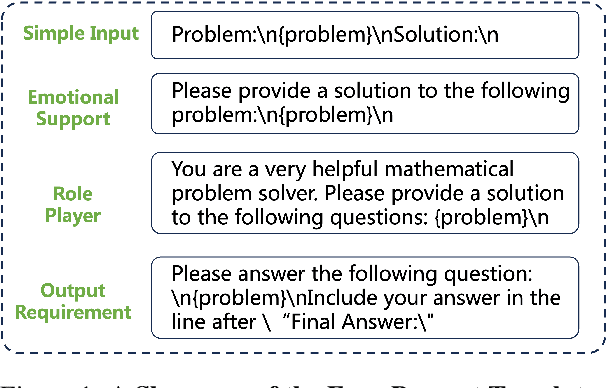
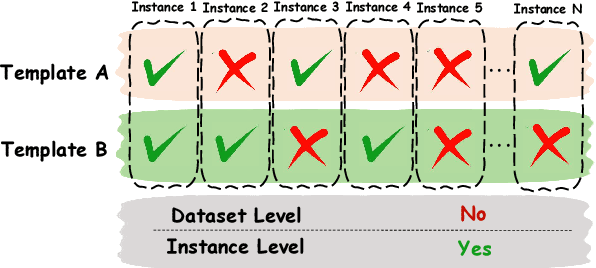
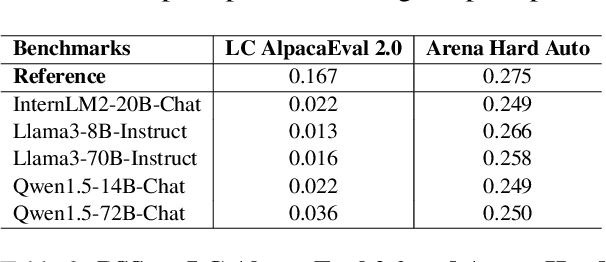
Large language models (LLMs) have demonstrated impressive capabilities across various tasks, but their performance is highly sensitive to the prompts utilized. This variability poses challenges for accurate assessment and user satisfaction. Current research frequently overlooks instance-level prompt variations and their implications on subjective evaluations. To address these shortcomings, we introduce ProSA, a framework designed to evaluate and comprehend prompt sensitivity in LLMs. ProSA incorporates a novel sensitivity metric, PromptSensiScore, and leverages decoding confidence to elucidate underlying mechanisms. Our extensive study, spanning multiple tasks, uncovers that prompt sensitivity fluctuates across datasets and models, with larger models exhibiting enhanced robustness. We observe that few-shot examples can alleviate this sensitivity issue, and subjective evaluations are also susceptible to prompt sensitivities, particularly in complex, reasoning-oriented tasks. Furthermore, our findings indicate that higher model confidence correlates with increased prompt robustness. We believe this work will serve as a helpful tool in studying prompt sensitivity of LLMs. The project is released at: https://github.com/open-compass/ProSA .
Uncertainty-aware t-distributed Stochastic Neighbor Embedding for Single-cell RNA-seq Data
Oct 01, 2024Nonlinear data visualization using t-distributed stochastic neighbor embedding (t-SNE) enables the representation of complex single-cell transcriptomic landscapes in two or three dimensions to depict biological populations accurately. However, t-SNE often fails to account for uncertainties in the original dataset, leading to misleading visualizations where cell subsets with noise appear indistinguishable. To address these challenges, we introduce uncertainty-aware t-SNE (Ut-SNE), a noise-defending visualization tool tailored for uncertain single-cell RNA-seq data. By creating a probabilistic representation for each sample, Our Ut-SNE accurately incorporates noise about transcriptomic variability into the visual interpretation of single-cell RNA sequencing data, revealing significant uncertainties in transcriptomic variability. Through various examples, we showcase the practical value of Ut-SNE and underscore the significance of incorporating uncertainty awareness into data visualization practices. This versatile uncertainty-aware visualization tool can be easily adapted to other scientific domains beyond single-cell RNA sequencing, making them valuable resources for high-dimensional data analysis.
EMOVA: Empowering Language Models to See, Hear and Speak with Vivid Emotions
Sep 26, 2024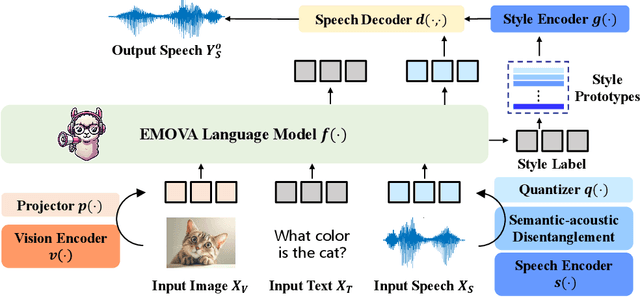
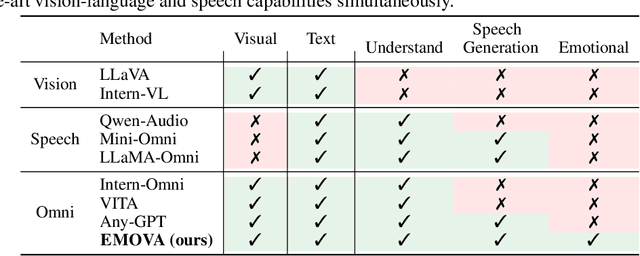
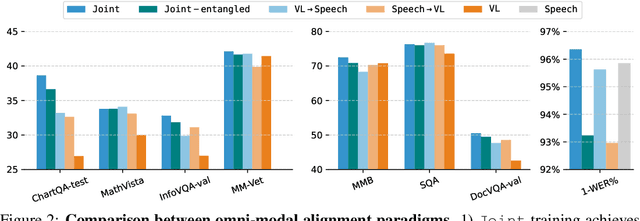
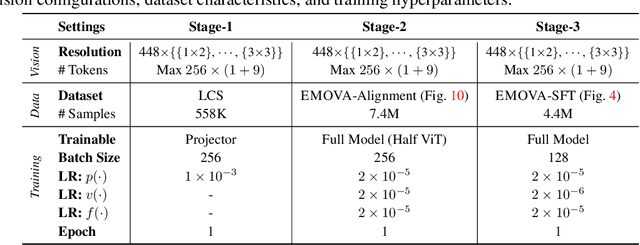
GPT-4o, an omni-modal model that enables vocal conversations with diverse emotions and tones, marks a milestone for omni-modal foundation models. However, empowering Large Language Models to perceive and generate images, texts, and speeches end-to-end with publicly available data remains challenging in the open-source community. Existing vision-language models rely on external tools for the speech processing, while speech-language models still suffer from limited or even without vision-understanding abilities. To address this gap, we propose EMOVA (EMotionally Omni-present Voice Assistant), to enable Large Language Models with end-to-end speech capabilities while maintaining the leading vision-language performance. With a semantic-acoustic disentangled speech tokenizer, we notice surprisingly that omni-modal alignment can further enhance vision-language and speech abilities compared with the corresponding bi-modal aligned counterparts. Moreover, a lightweight style module is proposed for flexible speech style controls (e.g., emotions and pitches). For the first time, EMOVA achieves state-of-the-art performance on both the vision-language and speech benchmarks, and meanwhile, supporting omni-modal spoken dialogue with vivid emotions.
Scaling Behavior for Large Language Models regarding Numeral Systems: An Example using Pythia
Sep 25, 2024Though Large Language Models (LLMs) have shown remarkable abilities in mathematics reasoning, they are still struggling with performing numeric operations accurately, such as addition and multiplication. Numbers can be tokenized into tokens in various ways by different LLMs and affect the numeric operations performance. Currently, there are two representatives: 1) Tokenize into $1$-digit, and 2) Tokenize into $1\sim 3$ digit. The difference is roughly equivalent to using different numeral systems (namely base $10$ or base $10^{3}$). In light of this, we study the scaling behavior of different numeral systems in the context of transformer-based large language models. We empirically show that a base $10$ system is consistently more data-efficient than a base $10^{2}$ or $10^{3}$ system across training data scale, model sizes under from-scratch training settings, while different number systems have very similar fine-tuning performances. We attribute this to higher token frequencies of a base $10$ system. Additionally, we reveal extrapolation behavior patterns on addition and multiplication. We identify that base $100$ and base $1000$ systems struggle on token-level discernment and token-level operations. We also sheds light on the mechanism learnt by the models.
HelloBench: Evaluating Long Text Generation Capabilities of Large Language Models
Sep 24, 2024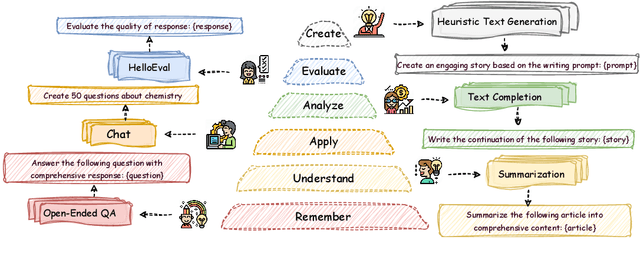
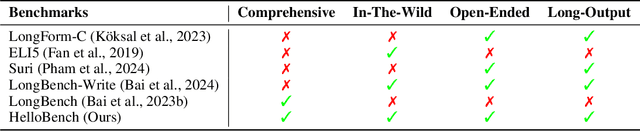
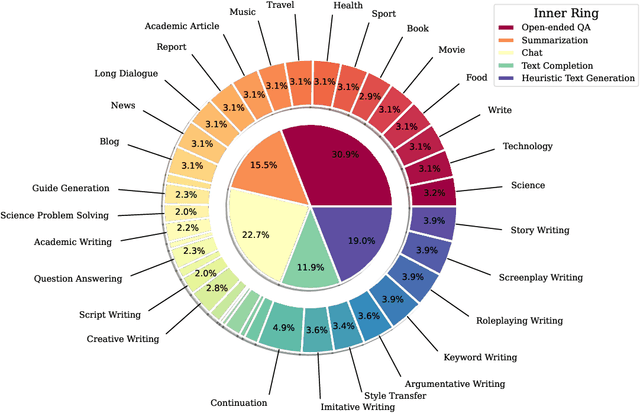
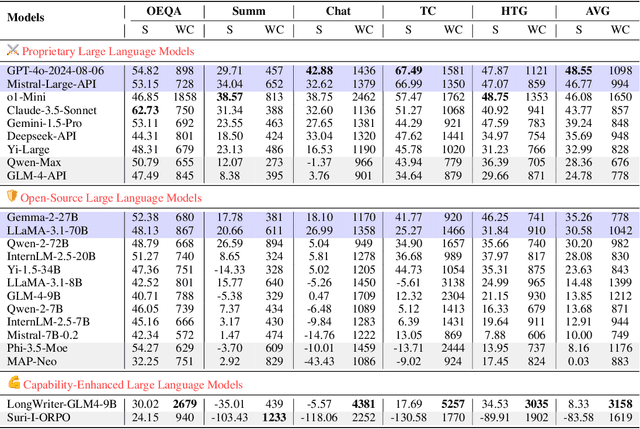
In recent years, Large Language Models (LLMs) have demonstrated remarkable capabilities in various tasks (e.g., long-context understanding), and many benchmarks have been proposed. However, we observe that long text generation capabilities are not well investigated. Therefore, we introduce the Hierarchical Long Text Generation Benchmark (HelloBench), a comprehensive, in-the-wild, and open-ended benchmark to evaluate LLMs' performance in generating long text. Based on Bloom's Taxonomy, HelloBench categorizes long text generation tasks into five subtasks: open-ended QA, summarization, chat, text completion, and heuristic text generation. Besides, we propose Hierarchical Long Text Evaluation (HelloEval), a human-aligned evaluation method that significantly reduces the time and effort required for human evaluation while maintaining a high correlation with human evaluation. We have conducted extensive experiments across around 30 mainstream LLMs and observed that the current LLMs lack long text generation capabilities. Specifically, first, regardless of whether the instructions include explicit or implicit length constraints, we observe that most LLMs cannot generate text that is longer than 4000 words. Second, we observe that while some LLMs can generate longer text, many issues exist (e.g., severe repetition and quality degradation). Third, to demonstrate the effectiveness of HelloEval, we compare HelloEval with traditional metrics (e.g., ROUGE, BLEU, etc.) and LLM-as-a-Judge methods, which show that HelloEval has the highest correlation with human evaluation. We release our code in https://github.com/Quehry/HelloBench.
Dormant: Defending against Pose-driven Human Image Animation
Sep 22, 2024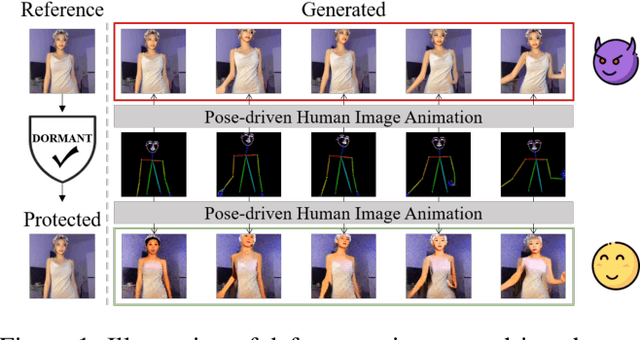
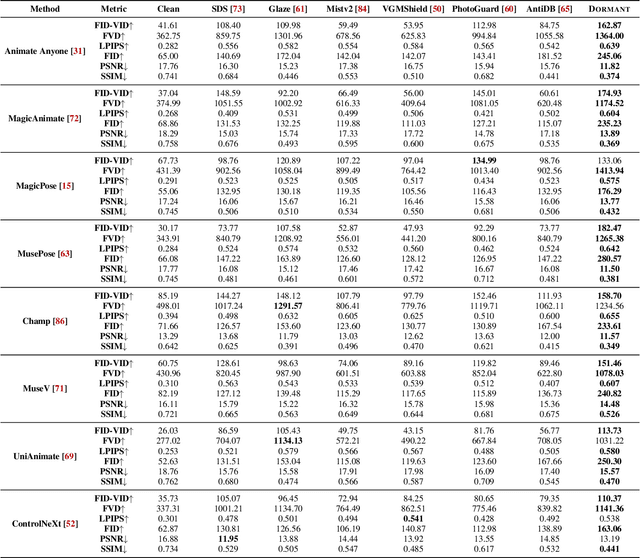
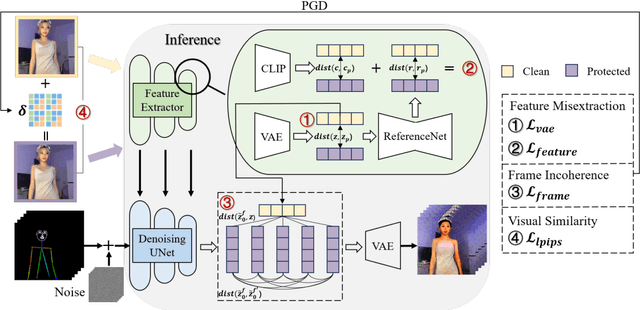
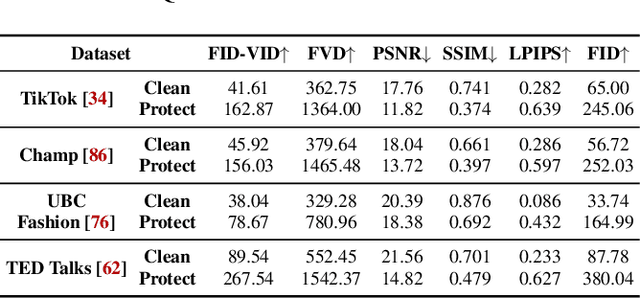
Pose-driven human image animation has achieved tremendous progress, enabling the generation of vivid and realistic human videos from just one single photo. However, it conversely exacerbates the risk of image misuse, as attackers may use one available image to create videos involving politics, violence and other illegal content. To counter this threat, we propose Dormant, a novel protection approach tailored to defend against pose-driven human image animation techniques. Dormant applies protective perturbation to one human image, preserving the visual similarity to the original but resulting in poor-quality video generation. The protective perturbation is optimized to induce misextraction of appearance features from the image and create incoherence among the generated video frames. Our extensive evaluation across 8 animation methods and 4 datasets demonstrates the superiority of Dormant over 6 baseline protection methods, leading to misaligned identities, visual distortions, noticeable artifacts, and inconsistent frames in the generated videos. Moreover, Dormant shows effectiveness on 6 real-world commercial services, even with fully black-box access.
Context Enhancement with Reconstruction as Sequence for Unified Unsupervised Anomaly Detection
Sep 10, 2024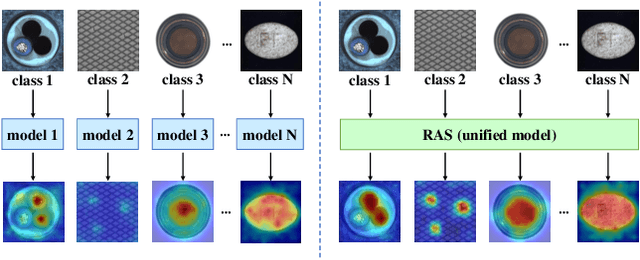
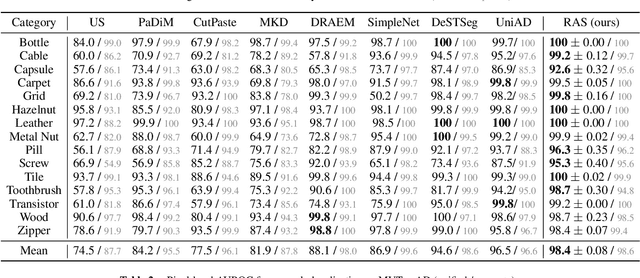
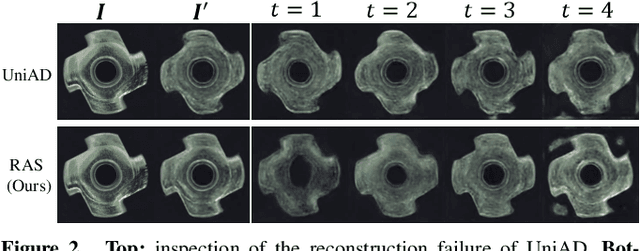
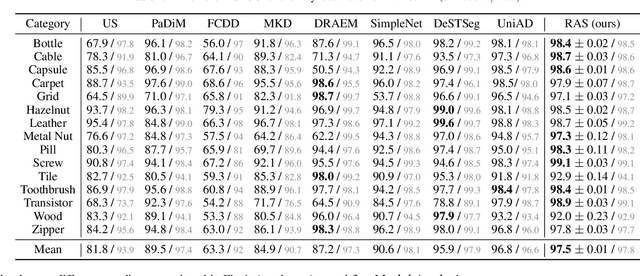
Unsupervised anomaly detection (AD) aims to train robust detection models using only normal samples, while can generalize well to unseen anomalies. Recent research focuses on a unified unsupervised AD setting in which only one model is trained for all classes, i.e., n-class-one-model paradigm. Feature-reconstruction-based methods achieve state-of-the-art performance in this scenario. However, existing methods often suffer from a lack of sufficient contextual awareness, thereby compromising the quality of the reconstruction. To address this issue, we introduce a novel Reconstruction as Sequence (RAS) method, which enhances the contextual correspondence during feature reconstruction from a sequence modeling perspective. In particular, based on the transformer technique, we integrate a specialized RASFormer block into RAS. This block enables the capture of spatial relationships among different image regions and enhances sequential dependencies throughout the reconstruction process. By incorporating the RASFormer block, our RAS method achieves superior contextual awareness capabilities, leading to remarkable performance. Experimental results show that our RAS significantly outperforms competing methods, well demonstrating the effectiveness and superiority of our method. Our code is available at https://github.com/Nothingtolose9979/RAS.