 Add to Chrome
 Add to Firefox
 Add to Edge
Video-based Heart Rate Estimation with Angle-guided ROI Optimization and Graph Signal Denoising
Apr 13, 2026
Remote photoplethysmography (rPPG) enables non-contact heart rate measurement from facial videos, but its performance is significantly degraded by facial motions such as speaking and head shaking. To address this issue, we propose two plug-and-play modules. The Angle-guided ROI Adaptive Optimization module quantifies ROI-Camera angles to refine motion-affected signals and capture global motion, while the Multi-region Joint Graph Signal Denoising module jointly models intra- and inter-regional ROI signals using graph signal processing to suppress motion artifacts. The modules are compatible with reflection model-based rPPG methods and validated on three public datasets. Results show that jointly use markedly reduces MAE, with an average decrease of 20.38\% over the baseline, while ablation studies confirm the effectiveness of each module. The work demonstrates the potential of angle-guided optimization and graph-based denoising to enhance rPPG performance in motion scenarios.

FNF: Functional Network Fingerprint for Large Language Models
Jan 30, 2026The development of large language models (LLMs) is costly and has significant commercial value. Consequently, preventing unauthorized appropriation of open-source LLMs and protecting developers' intellectual property rights have become critical challenges. In this work, we propose the Functional Network Fingerprint (FNF), a training-free, sample-efficient method for detecting whether a suspect LLM is derived from a victim model, based on the consistency between their functional network activity. We demonstrate that models that share a common origin, even with differences in scale or architecture, exhibit highly consistent patterns of neuronal activity within their functional networks across diverse input samples. In contrast, models trained independently on distinct data or with different objectives fail to preserve such activity alignment. Unlike conventional approaches, our method requires only a few samples for verification, preserves model utility, and remains robust to common model modifications (such as fine-tuning, pruning, and parameter permutation), as well as to comparisons across diverse architectures and dimensionalities. FNF thus provides model owners and third parties with a simple, non-invasive, and effective tool for protecting LLM intellectual property. The code is available at https://github.com/WhatAboutMyStar/LLM_ACTIVATION.
Pruning Large Language Models by Identifying and Preserving Functional Networks
Aug 07, 2025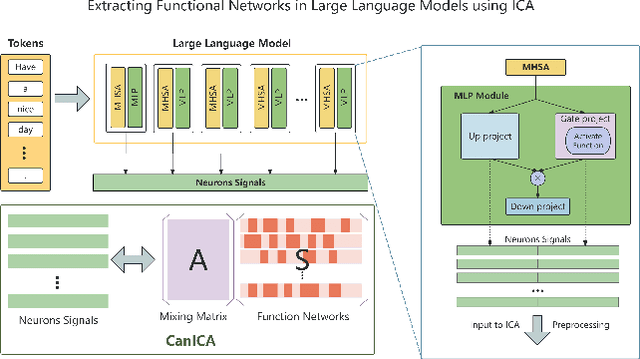
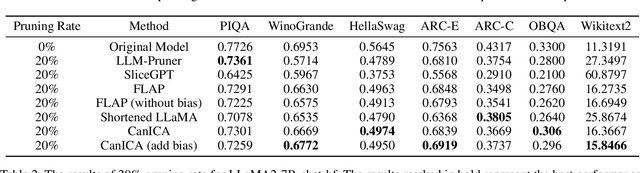
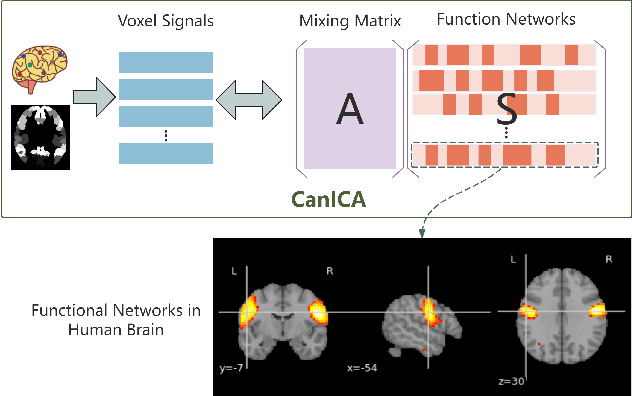
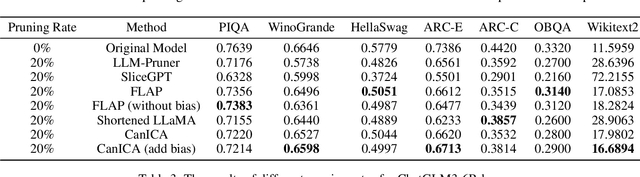
Structured pruning is one of the representative techniques for compressing large language models (LLMs) to reduce GPU memory consumption and accelerate inference speed. It offers significant practical value in improving the efficiency of LLMs in real-world applications. Current structured pruning methods typically rely on assessment of the importance of the structure units and pruning the units with less importance. Most of them overlooks the interaction and collaboration among artificial neurons that are crucial for the functionalities of LLMs, leading to a disruption in the macro functional architecture of LLMs and consequently a pruning performance degradation. Inspired by the inherent similarities between artificial neural networks and functional neural networks in the human brain, we alleviate this challenge and propose to prune LLMs by identifying and preserving functional networks within LLMs in this study. To achieve this, we treat an LLM as a digital brain and decompose the LLM into functional networks, analogous to identifying functional brain networks in neuroimaging data. Afterwards, an LLM is pruned by preserving the key neurons within these functional networks. Experimental results demonstrate that the proposed method can successfully identify and locate functional networks and key neurons in LLMs, enabling efficient model pruning. Our code is available at https://github.com/WhatAboutMyStar/LLM_ACTIVATION.