 Add to Chrome
 Add to Firefox
 Add to Edge
GUICourse: From General Vision Language Models to Versatile GUI Agents
Jun 17, 2024

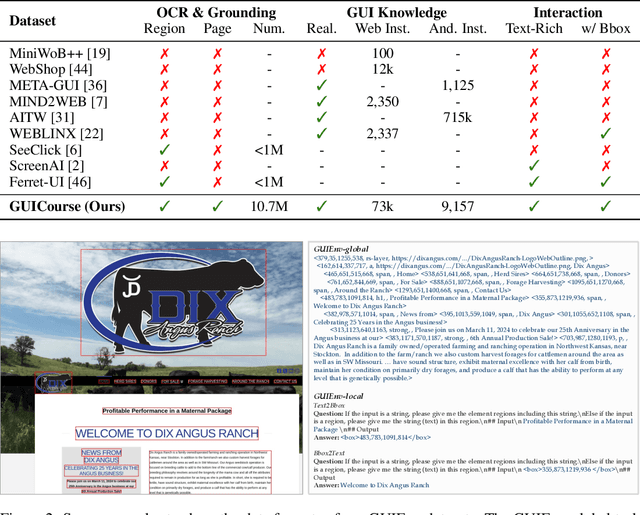


Utilizing Graphic User Interface (GUI) for human-computer interaction is essential for accessing a wide range of digital tools. Recent advancements in Vision Language Models (VLMs) highlight the compelling potential to develop versatile agents to help humans finish GUI navigation tasks. However, current VLMs are challenged in terms of fundamental abilities (OCR and grounding) and GUI knowledge (the functions and control methods of GUI elements), preventing them from becoming practical GUI agents. To solve these challenges, we contribute GUICourse, a suite of datasets to train visual-based GUI agents from general VLMs. First, we introduce the GUIEnv dataset to strengthen the OCR and grounding capabilities of VLMs. Then, we introduce the GUIAct and GUIChat datasets to enrich their knowledge of GUI components and interactions. Experiments demonstrate that our GUI agents have better performance on common GUI tasks than their baseline VLMs. Even the small-size GUI agent (with 3.1B parameters) can still work well on single-step and multi-step GUI tasks. Finally, we analyze the different varieties in the training stage of this agent by ablation study. Our source codes and datasets are released at https://github.com/yiye3/GUICourse.

Interactive Evolution: A Neural-Symbolic Self-Training Framework For Large Language Models
Jun 17, 2024


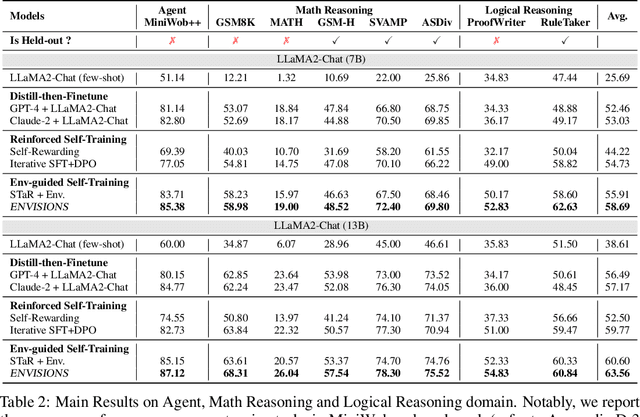
One of the primary driving forces contributing to the superior performance of Large Language Models (LLMs) is the extensive availability of human-annotated natural language data, which is used for alignment fine-tuning. This inspired researchers to investigate self-training methods to mitigate the extensive reliance on human annotations. However, the current success of self-training has been primarily observed in natural language scenarios, rather than in the increasingly important neural-symbolic scenarios. To this end, we propose an environment-guided neural-symbolic self-training framework named ENVISIONS. It aims to overcome two main challenges: (1) the scarcity of symbolic data, and (2) the limited proficiency of LLMs in processing symbolic language. Extensive evaluations conducted on three distinct domains demonstrate the effectiveness of our approach. Additionally, we have conducted a comprehensive analysis to uncover the factors contributing to ENVISIONS's success, thereby offering valuable insights for future research in this area. Code will be available at \url{https://github.com/xufangzhi/ENVISIONS}.
QGEval: A Benchmark for Question Generation Evaluation
Jun 09, 2024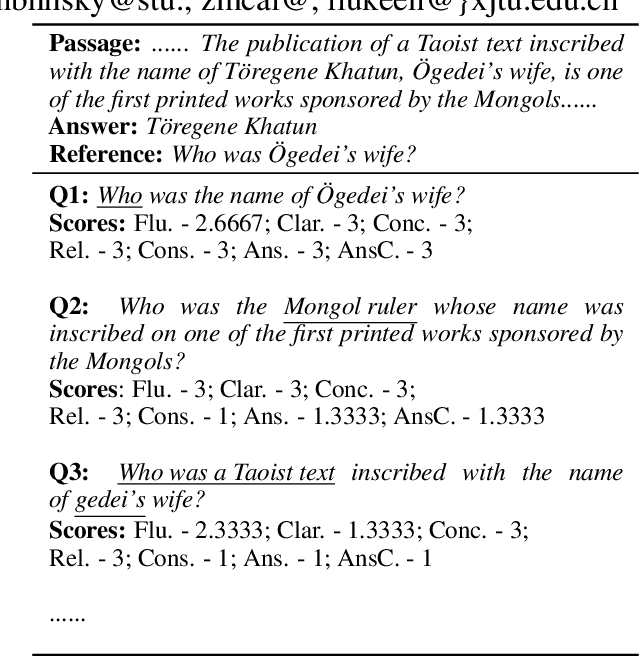
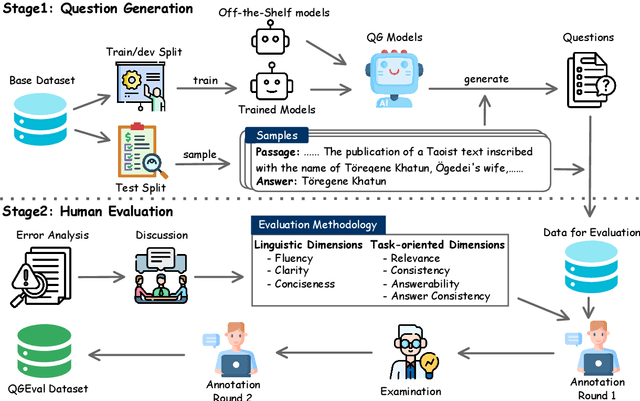
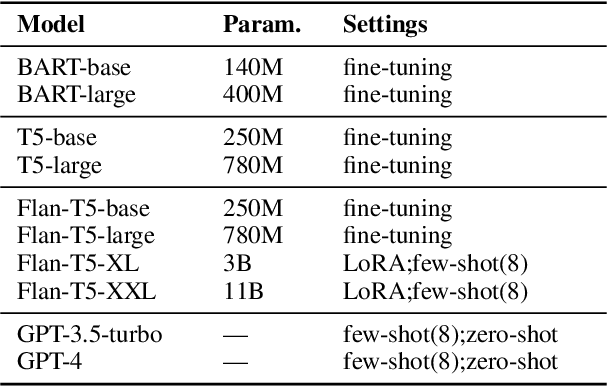
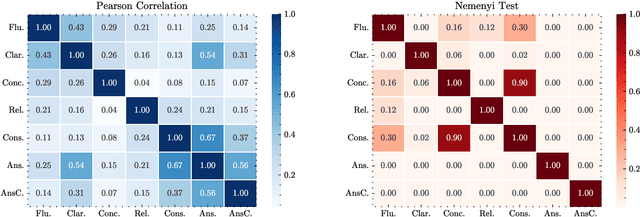
Automatically generated questions often suffer from problems such as unclear expression or factual inaccuracies, requiring a reliable and comprehensive evaluation of their quality. Human evaluation is frequently used in the field of question generation (QG) and is one of the most accurate evaluation methods. It also serves as the standard for automatic metrics. However, there is a lack of unified evaluation criteria, which hampers the development of both QG technologies and automatic evaluation methods. To address this, we propose QGEval, a multi-dimensional Evaluation benchmark for Question Generation, which evaluates both generated questions and existing automatic metrics across 7 dimensions: fluency, clarity, conciseness, relevance, consistency, answerability, and answer consistency. We demonstrate the appropriateness of these dimensions by examining their correlations and distinctions. Analysis with QGEval reveals that 1) most QG models perform unsatisfactorily in terms of answerability and answer consistency, and 2) existing metrics fail to align well with human assessments when evaluating generated questions across the 7 dimensions. We expect this work to foster the development of both QG technologies and automatic metrics for QG.
DifAttack++: Query-Efficient Black-Box Adversarial Attack via Hierarchical Disentangled Feature Space in Cross Domain
Jun 05, 2024


This work investigates efficient score-based black-box adversarial attacks with a high Attack Success Rate (ASR) and good generalizability. We design a novel attack method based on a \textit{Hierarchical} \textbf{Di}sentangled \textbf{F}eature space and \textit{cross domain}, called \textbf{DifAttack++}, which differs significantly from the existing ones operating over the entire feature space. Specifically, DifAttack++ firstly disentangles an image's latent feature into an \textit{adversarial feature} (AF) and a \textit{visual feature} (VF) via an autoencoder equipped with our specially designed \textbf{H}ierarchical \textbf{D}ecouple-\textbf{F}usion (HDF) module, where the AF dominates the adversarial capability of an image, while the VF largely determines its visual appearance. We train such autoencoders for the clean and adversarial image domains respectively, meanwhile realizing feature disentanglement, by using pairs of clean images and their Adversarial Examples (AEs) generated from available surrogate models via white-box attack methods. Eventually, in the black-box attack stage, DifAttack++ iteratively optimizes the AF according to the query feedback from the victim model until a successful AE is generated, while keeping the VF unaltered. Extensive experimental results demonstrate that our method achieves superior ASR and query efficiency than SOTA methods, meanwhile exhibiting much better visual quality of AEs. The code is available at https://github.com/csjunjun/DifAttack.git.
Correlation Matching Transformation Transformers for UHD Image Restoration
Jun 02, 2024This paper proposes UHDformer, a general Transformer for Ultra-High-Definition (UHD) image restoration. UHDformer contains two learning spaces: (a) learning in high-resolution space and (b) learning in low-resolution space. The former learns multi-level high-resolution features and fuses low-high features and reconstructs the residual images, while the latter explores more representative features learning from the high-resolution ones to facilitate better restoration. To better improve feature representation in low-resolution space, we propose to build feature transformation from the high-resolution space to the low-resolution one. To that end, we propose two new modules: Dual-path Correlation Matching Transformation module (DualCMT) and Adaptive Channel Modulator (ACM). The DualCMT selects top C/r (r is greater or equal to 1 which controls the squeezing level) correlation channels from the max-pooling/mean-pooling high-resolution features to replace low-resolution ones in Transformers, which can effectively squeeze useless content to improve the feature representation in low-resolution space to facilitate better recovery. The ACM is exploited to adaptively modulate multi-level high-resolution features, enabling to provide more useful features to low-resolution space for better learning. Experimental results show that our UHDformer reduces about ninety-seven percent model sizes compared with most state-of-the-art methods while significantly improving performance under different training sets on 3 UHD image restoration tasks, including low-light image enhancement, image dehazing, and image deblurring. The source codes will be made available at https://github.com/supersupercong/UHDformer.
PathReasoner: Modeling Reasoning Path with Equivalent Extension for Logical Question Answering
May 29, 2024Logical reasoning task has attracted great interest since it was proposed. Faced with such a task, current competitive models, even large language models (e.g., ChatGPT and PaLM 2), still perform badly. Previous promising LMs struggle in logical consistency modeling and logical structure perception. To this end, we model the logical reasoning task by transforming each logical sample into reasoning paths and propose an architecture \textbf{PathReasoner}. It addresses the task from the views of both data and model. To expand the diversity of the logical samples, we propose an atom extension strategy supported by equivalent logical formulas, to form new reasoning paths. From the model perspective, we design a stack of transformer-style blocks. In particular, we propose a path-attention module to joint model in-atom and cross-atom relations with the high-order diffusion strategy. Experiments show that PathReasoner achieves competitive performances on two logical reasoning benchmarks and great generalization abilities.
DisC-GS: Discontinuity-aware Gaussian Splatting
May 24, 2024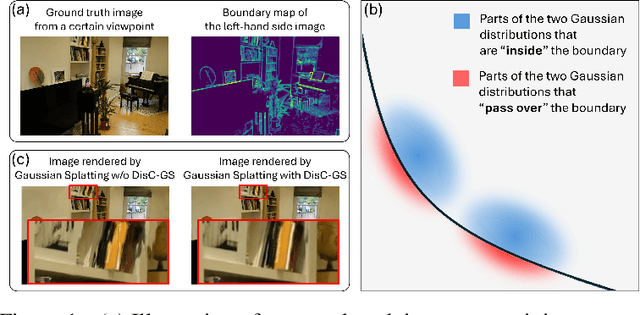
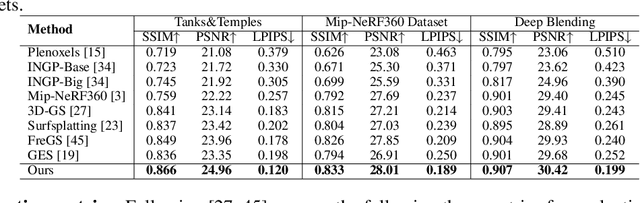

Recently, Gaussian Splatting, a method that represents a 3D scene as a collection of Gaussian distributions, has gained significant attention in addressing the task of novel view synthesis. In this paper, we highlight a fundamental limitation of Gaussian Splatting: its inability to accurately render discontinuities and boundaries in images due to the continuous nature of Gaussian distributions. To address this issue, we propose a novel framework enabling Gaussian Splatting to perform discontinuity-aware image rendering. Additionally, we introduce a B\'ezier-boundary gradient approximation strategy within our framework to keep the ``differentiability'' of the proposed discontinuity-aware rendering process. Extensive experiments demonstrate the efficacy of our framework.
Off-the-shelf ChatGPT is a Good Few-shot Human Motion Predictor
May 24, 2024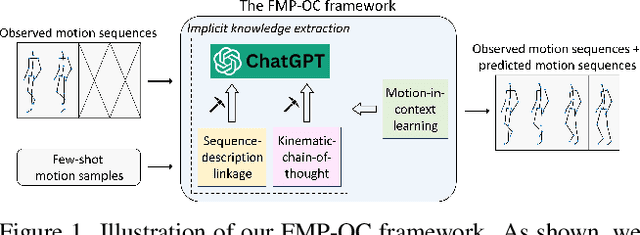
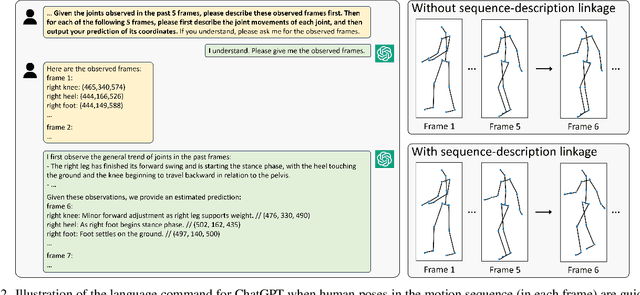
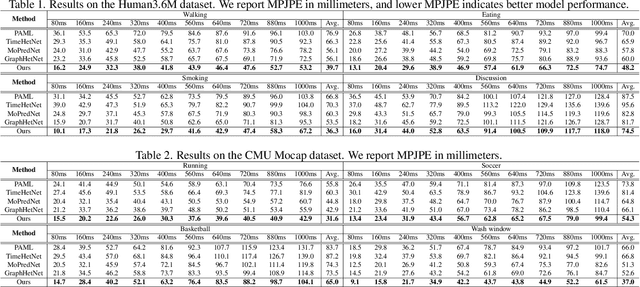
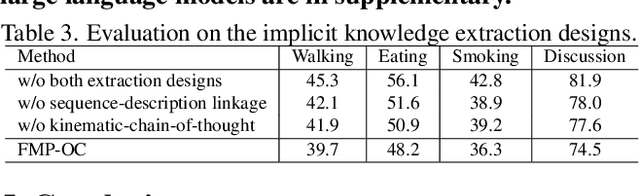
To facilitate the application of motion prediction in practice, recently, the few-shot motion prediction task has attracted increasing research attention. Yet, in existing few-shot motion prediction works, a specific model that is dedicatedly trained over human motions is generally required. In this work, rather than tackling this task through training a specific human motion prediction model, we instead propose a novel FMP-OC framework. In FMP-OC, in a totally training-free manner, we enable Few-shot Motion Prediction, which is a non-language task, to be performed directly via utilizing the Off-the-shelf language model ChatGPT. Specifically, to lead ChatGPT as a language model to become an accurate motion predictor, in FMP-OC, we first introduce several novel designs to facilitate extracting implicit knowledge from ChatGPT. Moreover, we also incorporate our framework with a motion-in-context learning mechanism. Extensive experiments demonstrate the efficacy of our proposed framework.
Large Language Models can Deliver Accurate and Interpretable Time Series Anomaly Detection
May 24, 2024Time series anomaly detection (TSAD) plays a crucial role in various industries by identifying atypical patterns that deviate from standard trends, thereby maintaining system integrity and enabling prompt response measures. Traditional TSAD models, which often rely on deep learning, require extensive training data and operate as black boxes, lacking interpretability for detected anomalies. To address these challenges, we propose LLMAD, a novel TSAD method that employs Large Language Models (LLMs) to deliver accurate and interpretable TSAD results. LLMAD innovatively applies LLMs for in-context anomaly detection by retrieving both positive and negative similar time series segments, significantly enhancing LLMs' effectiveness. Furthermore, LLMAD employs the Anomaly Detection Chain-of-Thought (AnoCoT) approach to mimic expert logic for its decision-making process. This method further enhances its performance and enables LLMAD to provide explanations for their detections through versatile perspectives, which are particularly important for user decision-making. Experiments on three datasets indicate that our LLMAD achieves detection performance comparable to state-of-the-art deep learning methods while offering remarkable interpretability for detections. To the best of our knowledge, this is the first work that directly employs LLMs for TSAD.
LAGA: Layered 3D Avatar Generation and Customization via Gaussian Splatting
May 21, 2024


Creating and customizing a 3D clothed avatar from textual descriptions is a critical and challenging task. Traditional methods often treat the human body and clothing as inseparable, limiting users' ability to freely mix and match garments. In response to this limitation, we present LAyered Gaussian Avatar (LAGA), a carefully designed framework enabling the creation of high-fidelity decomposable avatars with diverse garments. By decoupling garments from avatar, our framework empowers users to conviniently edit avatars at the garment level. Our approach begins by modeling the avatar using a set of Gaussian points organized in a layered structure, where each layer corresponds to a specific garment or the human body itself. To generate high-quality garments for each layer, we introduce a coarse-to-fine strategy for diverse garment generation and a novel dual-SDS loss function to maintain coherence between the generated garments and avatar components, including the human body and other garments. Moreover, we introduce three regularization losses to guide the movement of Gaussians for garment transfer, allowing garments to be freely transferred to various avatars. Extensive experimentation demonstrates that our approach surpasses existing methods in the generation of 3D clothed humans.