 Add to Chrome
 Add to Firefox
 Add to Edge
Towards Communication-efficient Federated Learning via Sparse and Aligned Adaptive Optimization
May 28, 2024
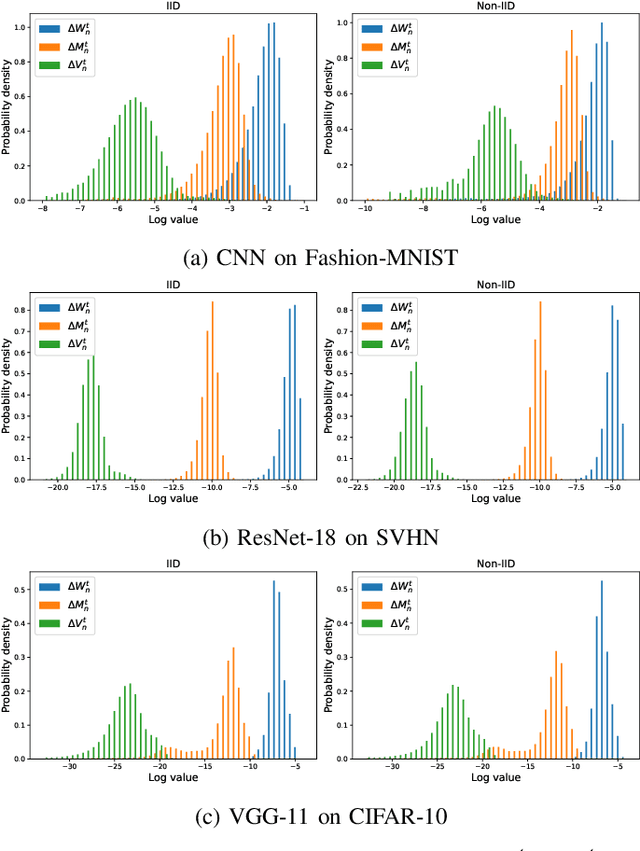
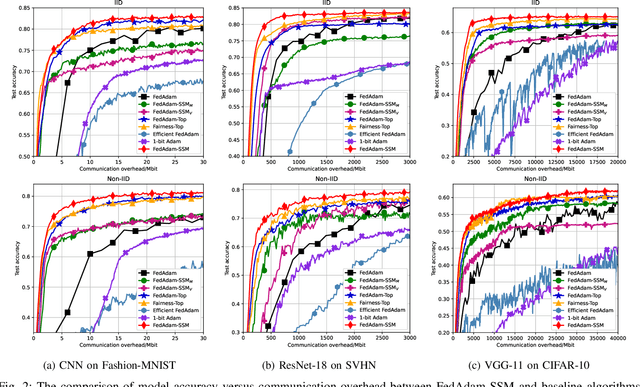
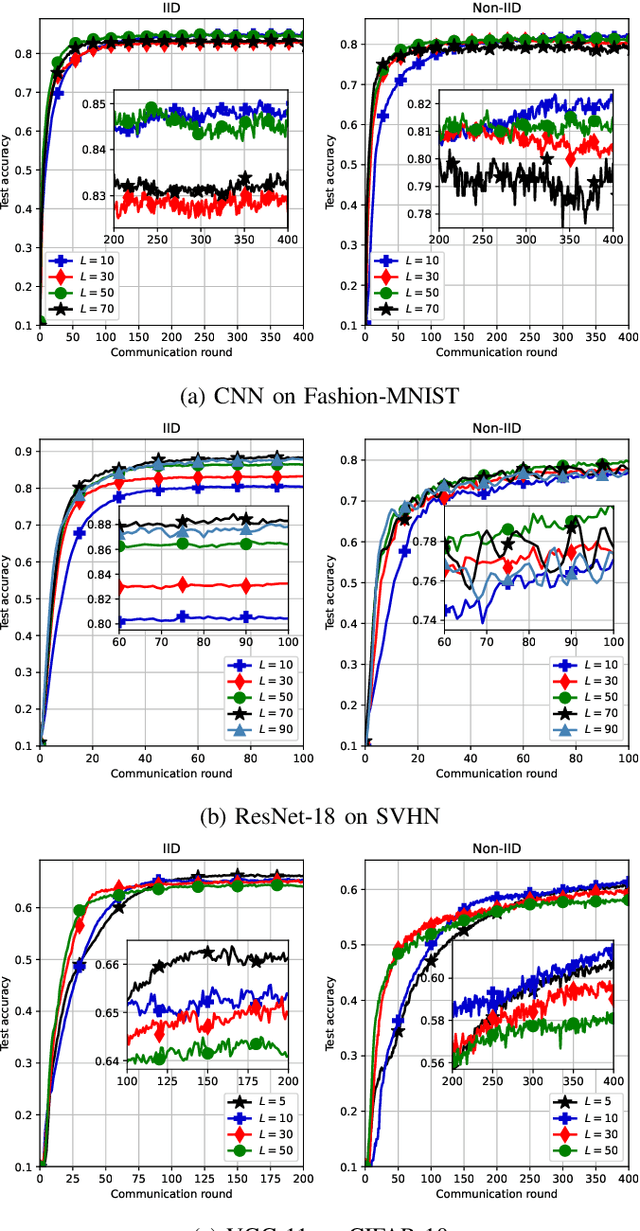
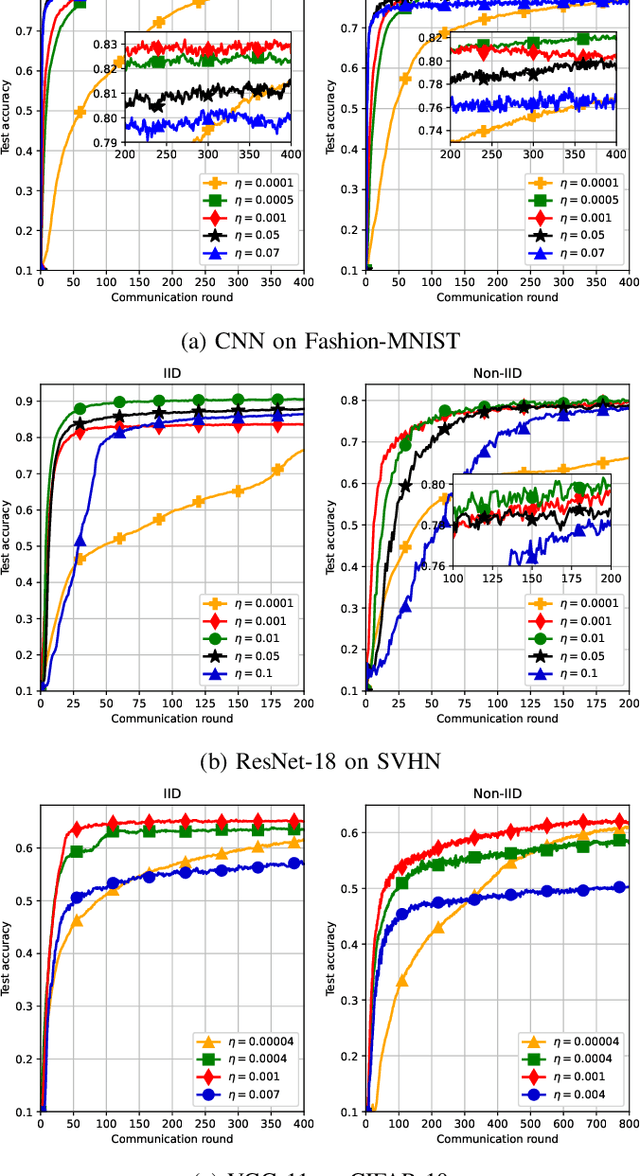
Adaptive moment estimation (Adam), as a Stochastic Gradient Descent (SGD) variant, has gained widespread popularity in federated learning (FL) due to its fast convergence. However, federated Adam (FedAdam) algorithms suffer from a threefold increase in uplink communication overhead compared to federated SGD (FedSGD) algorithms, which arises from the necessity to transmit both local model updates and first and second moment estimates from distributed devices to the centralized server for aggregation. Driven by this issue, we propose a novel sparse FedAdam algorithm called FedAdam-SSM, wherein distributed devices sparsify the updates of local model parameters and moment estimates and subsequently upload the sparse representations to the centralized server. To further reduce the communication overhead, the updates of local model parameters and moment estimates incorporate a shared sparse mask (SSM) into the sparsification process, eliminating the need for three separate sparse masks. Theoretically, we develop an upper bound on the divergence between the local model trained by FedAdam-SSM and the desired model trained by centralized Adam, which is related to sparsification error and imbalanced data distribution. By minimizing the divergence bound between the model trained by FedAdam-SSM and centralized Adam, we optimize the SSM to mitigate the learning performance degradation caused by sparsification error. Additionally, we provide convergence bounds for FedAdam-SSM in both convex and non-convex objective function settings, and investigate the impact of local epoch, learning rate and sparsification ratio on the convergence rate of FedAdam-SSM. Experimental results show that FedAdam-SSM outperforms baselines in terms of convergence rate (over 1.1$\times$ faster than the sparse FedAdam baselines) and test accuracy (over 14.5\% ahead of the quantized FedAdam baselines).

Trustworthy DNN Partition for Blockchain-enabled Digital Twin in Wireless IIoT Networks
May 28, 2024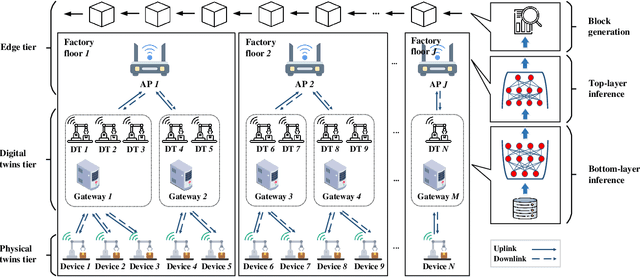

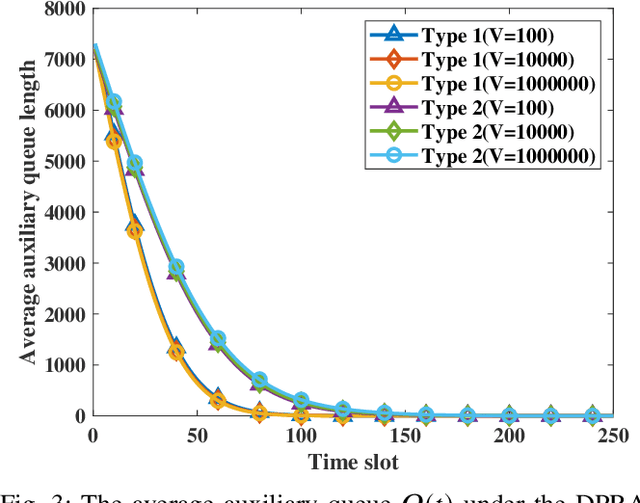
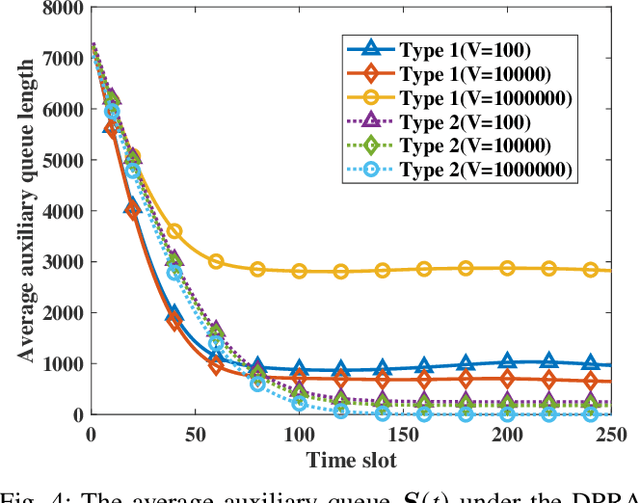
Digital twin (DT) has emerged as a promising solution to enhance manufacturing efficiency in industrial Internet of Things (IIoT) networks. To promote the efficiency and trustworthiness of DT for wireless IIoT networks, we propose a blockchain-enabled DT (B-DT) framework that employs deep neural network (DNN) partitioning technique and reputation-based consensus mechanism, wherein the DTs maintained at the gateway side execute DNN inference tasks using the data collected from their associated IIoT devices. First, we employ DNN partitioning technique to offload the top-layer DNN inference tasks to the access point (AP) side, which alleviates the computation burden at the gateway side and thereby improves the efficiency of DNN inference. Second, we propose a reputation-based consensus mechanism that integrates Proof of Work (PoW) and Proof of Stake (PoS). Specifically, the proposed consensus mechanism evaluates the off-chain reputation of each AP according to its computation resource contributions to the DNN inference tasks, and utilizes the off-chain reputation as a stake to adjust the block generation difficulty. Third, we formulate a stochastic optimization problem of communication resource (i.e., partition point) and computation resource allocation (i.e., computation frequency of APs for top-layer DNN inference and block generation) to minimize system latency under the time-varying channel state and long-term constraints of off-chain reputation, and solve the problem using Lyapunov optimization method. Experimental results show that the proposed dynamic DNN partitioning and resource allocation (DPRA) algorithm outperforms the baselines in terms of reducing the overall latency while guaranteeing the trustworthiness of the B-DT system.
MambaLLIE: Implicit Retinex-Aware Low Light Enhancement with Global-then-Local State Space
May 25, 2024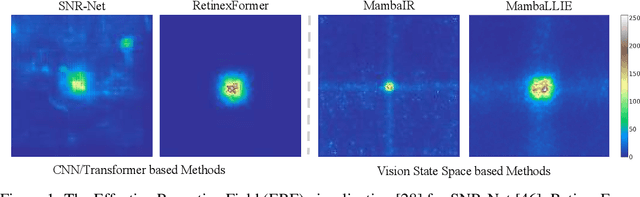
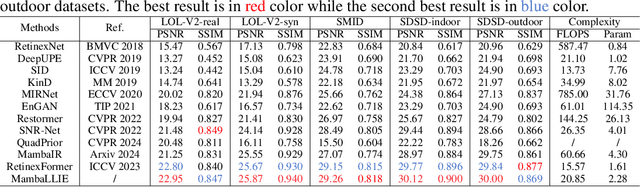
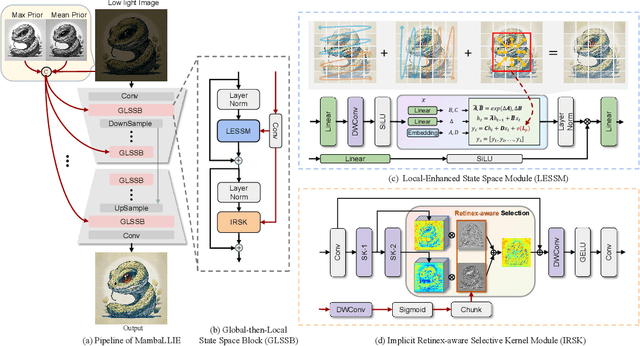
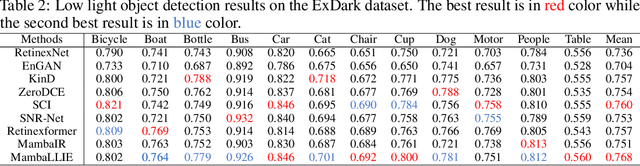
Recent advances in low light image enhancement have been dominated by Retinex-based learning framework, leveraging convolutional neural networks (CNNs) and Transformers. However, the vanilla Retinex theory primarily addresses global illumination degradation and neglects local issues such as noise and blur in dark conditions. Moreover, CNNs and Transformers struggle to capture global degradation due to their limited receptive fields. While state space models (SSMs) have shown promise in the long-sequence modeling, they face challenges in combining local invariants and global context in visual data. In this paper, we introduce MambaLLIE, an implicit Retinex-aware low light enhancer featuring a global-then-local state space design. We first propose a Local-Enhanced State Space Module (LESSM) that incorporates an augmented local bias within a 2D selective scan mechanism, enhancing the original SSMs by preserving local 2D dependency. Additionally, an Implicit Retinex-aware Selective Kernel module (IRSK) dynamically selects features using spatially-varying operations, adapting to varying inputs through an adaptive kernel selection process. Our Global-then-Local State Space Block (GLSSB) integrates LESSM and IRSK with LayerNorm as its core. This design enables MambaLLIE to achieve comprehensive global long-range modeling and flexible local feature aggregation. Extensive experiments demonstrate that MambaLLIE significantly outperforms state-of-the-art CNN and Transformer-based methods. Project Page: https://mamballie.github.io/anon/
3DSS-Mamba: 3D-Spectral-Spatial Mamba for Hyperspectral Image Classification
May 21, 2024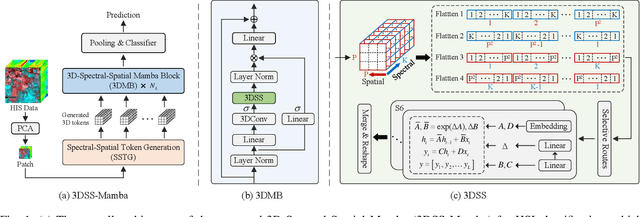
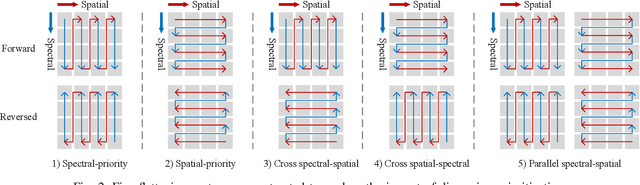
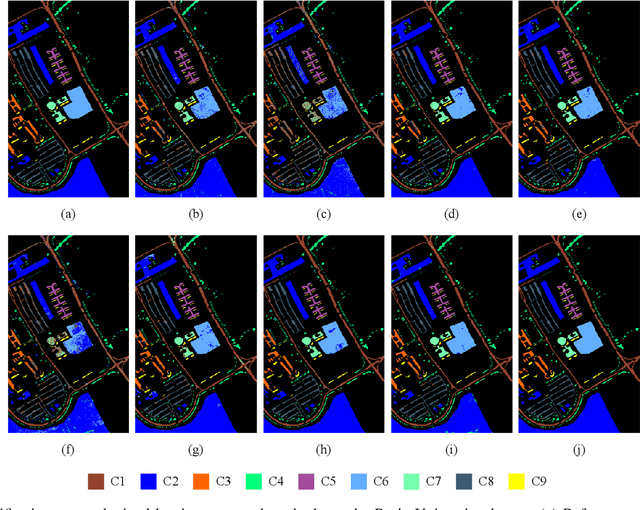
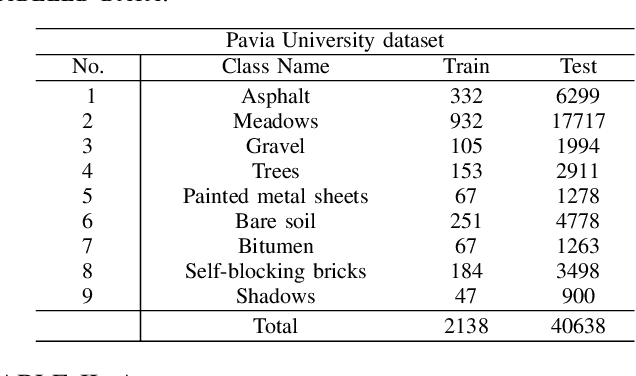
Hyperspectral image (HSI) classification constitutes the fundamental research in remote sensing fields. Convolutional Neural Networks (CNNs) and Transformers have demonstrated impressive capability in capturing spectral-spatial contextual dependencies. However, these architectures suffer from limited receptive fields and quadratic computational complexity, respectively. Fortunately, recent Mamba architectures built upon the State Space Model integrate the advantages of long-range sequence modeling and linear computational efficiency, exhibiting substantial potential in low-dimensional scenarios. Motivated by this, we propose a novel 3D-Spectral-Spatial Mamba (3DSS-Mamba) framework for HSI classification, allowing for global spectral-spatial relationship modeling with greater computational efficiency. Technically, a spectral-spatial token generation (SSTG) module is designed to convert the HSI cube into a set of 3D spectral-spatial tokens. To overcome the limitations of traditional Mamba, which is confined to modeling causal sequences and inadaptable to high-dimensional scenarios, a 3D-Spectral-Spatial Selective Scanning (3DSS) mechanism is introduced, which performs pixel-wise selective scanning on 3D hyperspectral tokens along the spectral and spatial dimensions. Five scanning routes are constructed to investigate the impact of dimension prioritization. The 3DSS scanning mechanism combined with conventional mapping operations forms the 3D-spectral-spatial mamba block (3DMB), enabling the extraction of global spectral-spatial semantic representations. Experimental results and analysis demonstrate that the proposed method outperforms the state-of-the-art methods on HSI classification benchmarks.
Cooperative Visual-LiDAR Extrinsic Calibration Technology for Intersection Vehicle-Infrastructure: A review
May 16, 2024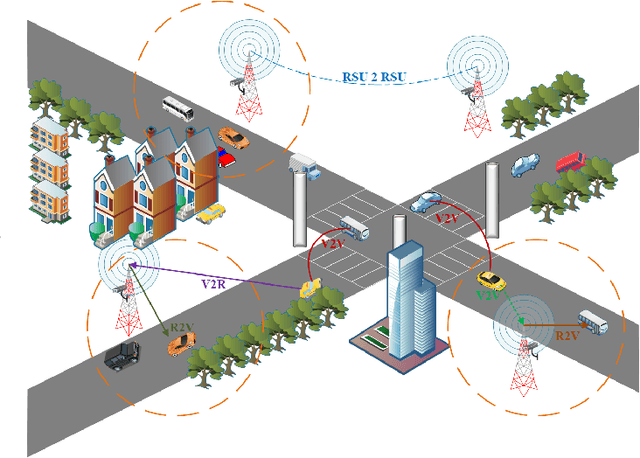
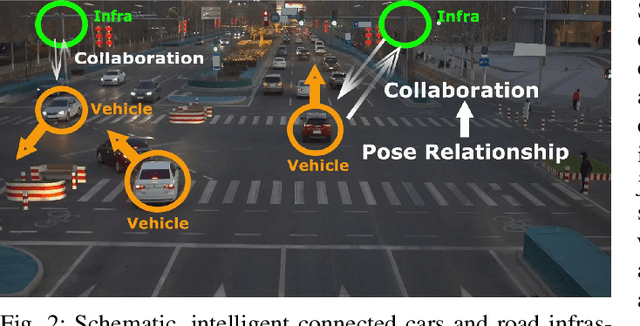
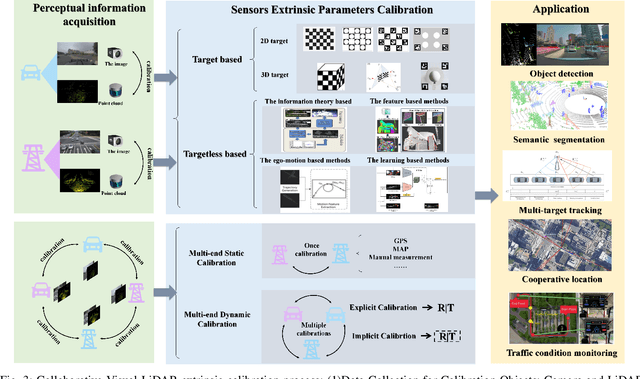
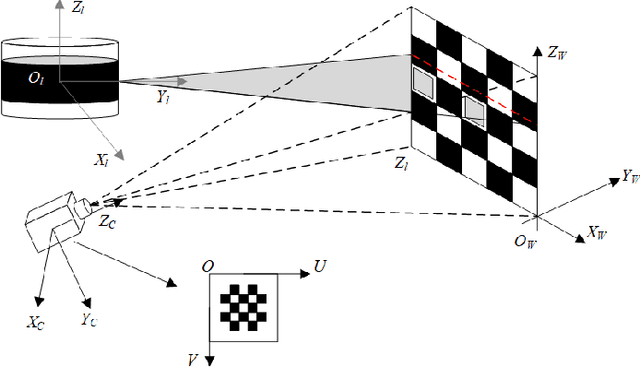
In the typical urban intersection scenario, both vehicles and infrastructures are equipped with visual and LiDAR sensors. By successfully integrating the data from vehicle-side and road monitoring devices, a more comprehensive and accurate environmental perception and information acquisition can be achieved. The Calibration of sensors, as an essential component of autonomous driving technology, has consistently drawn significant attention. Particularly in scenarios involving multiple sensors collaboratively perceiving and addressing localization challenges, the requirement for inter-sensor calibration becomes crucial. Recent years have witnessed the emergence of the concept of multi-end cooperation, where infrastructure captures and transmits surrounding environment information to vehicles, bolstering their perception capabilities while mitigating costs. However, this also poses technical complexities, underscoring the pressing need for diverse end calibration. Camera and LiDAR, the bedrock sensors in autonomous driving, exhibit expansive applicability. This paper comprehensively examines and analyzes the calibration of multi-end camera-LiDAR setups from vehicle, roadside, and vehicle-road cooperation perspectives, outlining their relevant applications and profound significance. Concluding with a summary, we present our future-oriented ideas and hypotheses.
Driving-Video Dehazing with Non-Aligned Regularization for Safety Assistance
May 16, 2024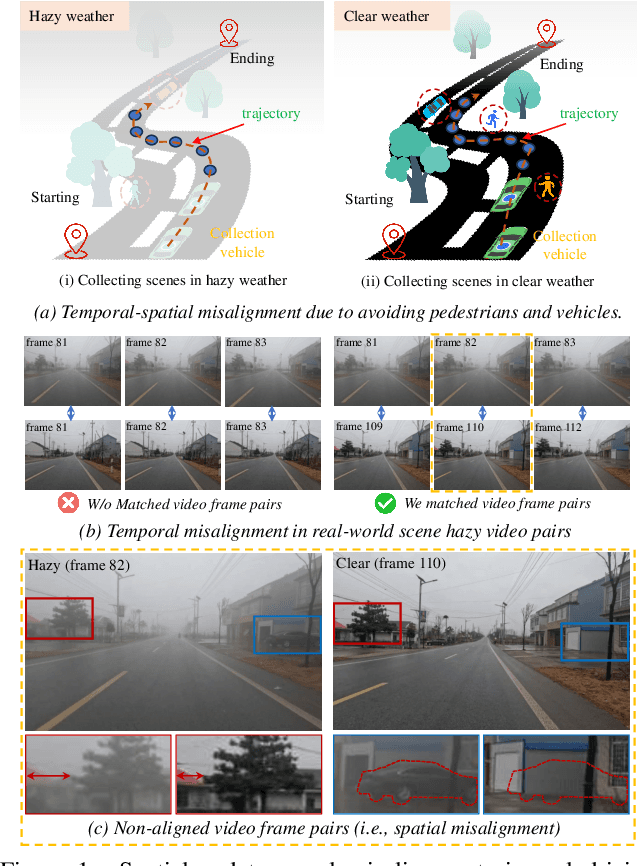
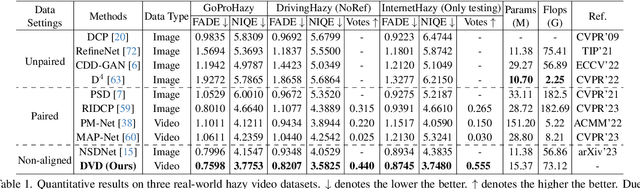
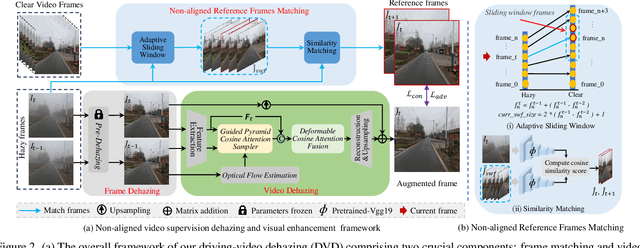
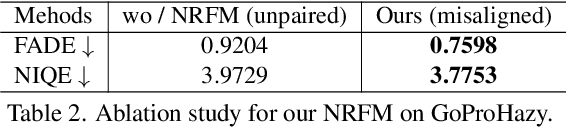
Real driving-video dehazing poses a significant challenge due to the inherent difficulty in acquiring precisely aligned hazy/clear video pairs for effective model training, especially in dynamic driving scenarios with unpredictable weather conditions. In this paper, we propose a pioneering approach that addresses this challenge through a nonaligned regularization strategy. Our core concept involves identifying clear frames that closely match hazy frames, serving as references to supervise a video dehazing network. Our approach comprises two key components: reference matching and video dehazing. Firstly, we introduce a non-aligned reference frame matching module, leveraging an adaptive sliding window to match high-quality reference frames from clear videos. Video dehazing incorporates flow-guided cosine attention sampler and deformable cosine attention fusion modules to enhance spatial multiframe alignment and fuse their improved information. To validate our approach, we collect a GoProHazy dataset captured effortlessly with GoPro cameras in diverse rural and urban road environments. Extensive experiments demonstrate the superiority of the proposed method over current state-of-the-art methods in the challenging task of real driving-video dehazing. Project page.
Robust Model Aggregation for Heterogeneous Federated Learning: Analysis and Optimizations
May 11, 2024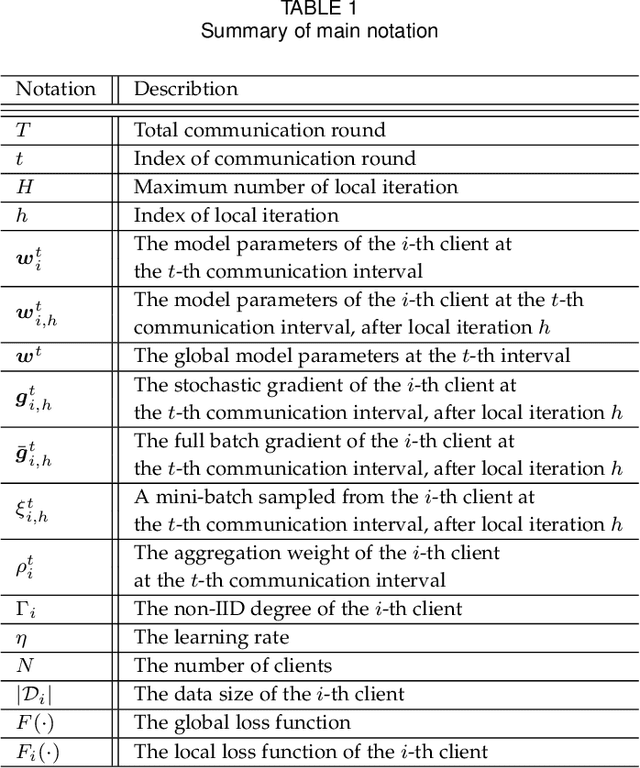
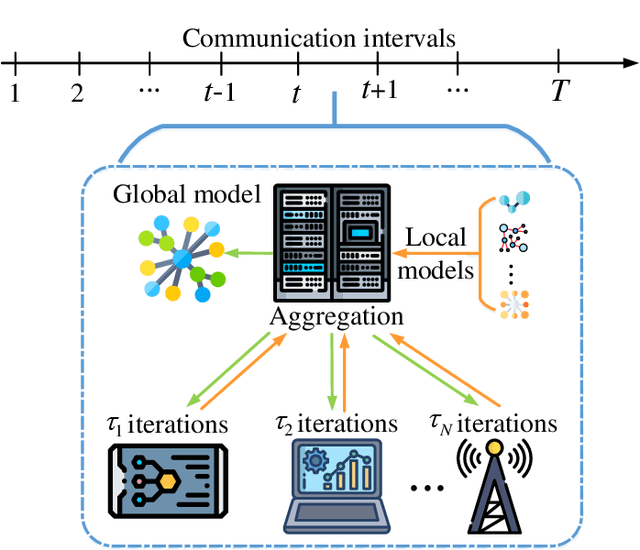
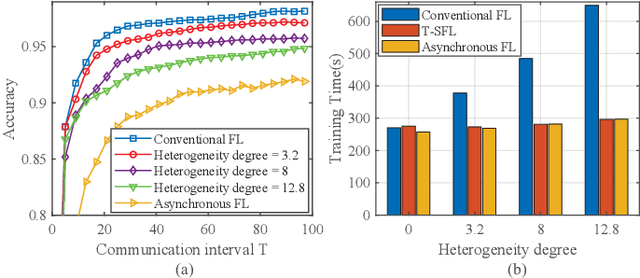

Conventional synchronous federated learning (SFL) frameworks suffer from performance degradation in heterogeneous systems due to imbalanced local data size and diverse computing power on the client side. To address this problem, asynchronous FL (AFL) and semi-asynchronous FL have been proposed to recover the performance loss by allowing asynchronous aggregation. However, asynchronous aggregation incurs a new problem of inconsistency between local updates and global updates. Motivated by the issues of conventional SFL and AFL, we first propose a time-driven SFL (T-SFL) framework for heterogeneous systems. The core idea of T-SFL is that the server aggregates the models from different clients, each with varying numbers of iterations, at regular time intervals. To evaluate the learning performance of T-SFL, we provide an upper bound on the global loss function. Further, we optimize the aggregation weights to minimize the developed upper bound. Then, we develop a discriminative model selection (DMS) algorithm that removes local models from clients whose number of iterations falls below a predetermined threshold. In particular, this algorithm ensures that each client's aggregation weight accurately reflects its true contribution to the global model update, thereby improving the efficiency and robustness of the system. To validate the effectiveness of T-SFL with the DMS algorithm, we conduct extensive experiments using several popular datasets including MNIST, Cifar-10, Fashion-MNIST, and SVHN. The experimental results demonstrate that T-SFL with the DMS algorithm can reduce the latency of conventional SFL by 50\%, while achieving an average 3\% improvement in learning accuracy over state-of-the-art AFL algorithms.
Direct Learning of Mesh and Appearance via 3D Gaussian Splatting
May 11, 2024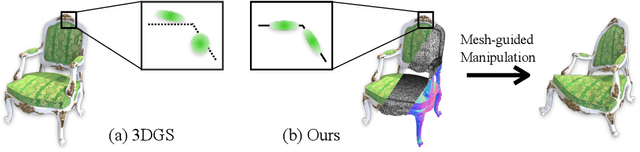
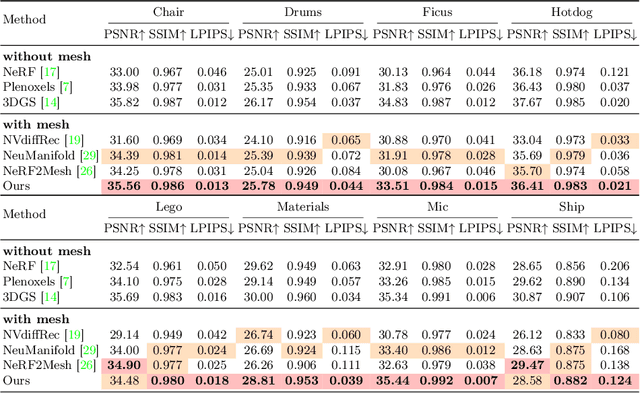
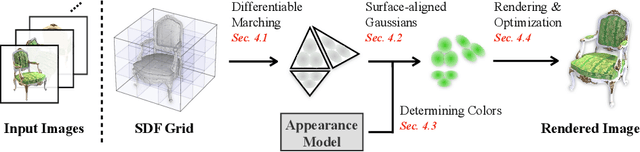
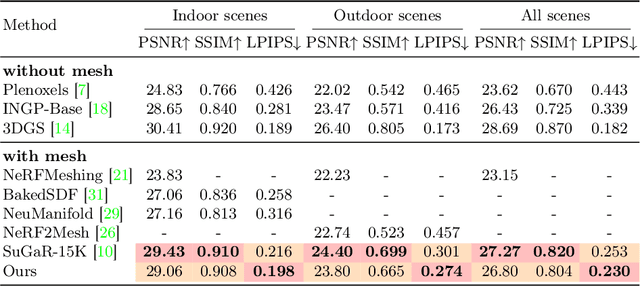
Accurately reconstructing a 3D scene including explicit geometry information is both attractive and challenging. Geometry reconstruction can benefit from incorporating differentiable appearance models, such as Neural Radiance Fields and 3D Gaussian Splatting (3DGS). In this work, we propose a learnable scene model that incorporates 3DGS with an explicit geometry representation, namely a mesh. Our model learns the mesh and appearance in an end-to-end manner, where we bind 3D Gaussians to the mesh faces and perform differentiable rendering of 3DGS to obtain photometric supervision. The model creates an effective information pathway to supervise the learning of the scene, including the mesh. Experimental results demonstrate that the learned scene model not only achieves state-of-the-art rendering quality but also supports manipulation using the explicit mesh. In addition, our model has a unique advantage in adapting to scene updates, thanks to the end-to-end learning of both mesh and appearance.
Deploying Graph Neural Networks in Wireless Networks: A Link Stability Viewpoint
May 09, 2024As an emerging artificial intelligence technology, graph neural networks (GNNs) have exhibited promising performance across a wide range of graph-related applications. However, information exchanges among neighbor nodes in GNN pose new challenges in the resource-constrained scenario, especially in wireless systems. In practical wireless systems, the communication links among nodes are usually unreliable due to wireless fading and receiver noise, consequently resulting in performance degradation of GNNs. To improve the learning performance of GNNs, we aim to maximize the number of long-term average (LTA) communication links by the optimized power control under energy consumption constraints. Using the Lyapunov optimization method, we first transform the intractable long-term problem into a deterministic problem in each time slot by converting the long-term energy constraints into the objective function. In spite of this non-convex combinatorial optimization problem, we address this problem via equivalently solving a sequence of convex feasibility problems together with a greedy based solver. Simulation results demonstrate the superiority of our proposed scheme over the baselines.
Intelligent Reflecting Surface Aided AirComp: Multi-Timescale Design and Performance Analysis
May 09, 2024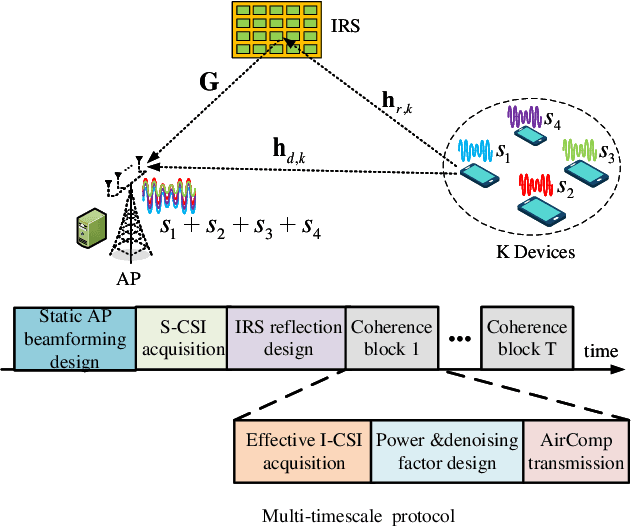
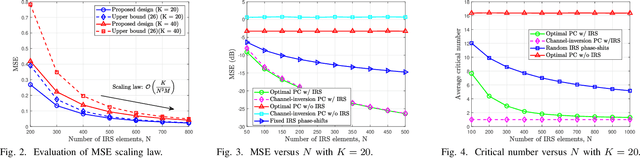
The integration of intelligent reflecting surface (IRS) into over-the-air computation (AirComp) is an effective solution for reducing the computational mean squared error (MSE) via its high passive beamforming gain. Prior works on IRS aided AirComp generally rely on the full instantaneous channel state information (I-CSI), which is not applicable to large-scale systems due to its heavy signalling overhead. To address this issue, we propose a novel multi-timescale transmission protocol. In particular, the receive beamforming at the access point (AP) is pre-determined based on the static angle information and the IRS phase-shifts are optimized relying on the long-term statistical CSI. With the obtained AP receive beamforming and IRS phase-shifts, the effective low-dimensional I-CSI is exploited to determine devices' transmit power in each coherence block, thus substantially reducing the signalling overhead. Theoretical analysis unveils that the achievable MSE scales on the order of ${\cal O}\left( {K/\left( {{N^2}M} \right)} \right)$, where $M$, $N$, and $K$ are the number of AP antennas, IRS elements, and devices, respectively. We also prove that the channel-inversion power control is asymptotically optimal for large $N$, which reveals that the full power transmission policy is not needed for lowering the power consumption of energy-limited devices.