 Add to Chrome
 Add to Firefox
 Add to Edge
MemTrapBench: Benchmarking Cognitive Traps in LLM Memory Use
Aug 20, 2026
Memory has become a key component of large language models, enabling them to retain information and learn from long-term interactions. However, existing memory benchmarks mainly evaluate whether information is correctly extracted, stored, and retrieved, while largely overlooking how retrieved memories reshape model reasoning and affect performance on the current task. We identify memory-induced cognitive traps: even faithfully recorded and semantically relevant memories can distort model reasoning or beliefs and degrade current task performance. To systematically evaluate these failure modes, we introduce MemTrapBench, which covers two forms of cognitive traps: Reasoning Fixation and Belief Distortion. Experiments across two model families and five representative memory frameworks show that MemTrapBench is challenging: all evaluated memory strategies underperform the no-memory setting, with even the strongest methods suffering drops of more than 10%. To mitigate these cognitive traps, we propose AdaptiveMem, a simple yet effective inference-time method that instructs LLMs to avoid memory traps. AdaptiveMem mitigates cognitive traps on MemTrapBench while preserving or improving performance on standard memory benchmarks across diverse memory frameworks.

LightMem-Ego: Your AI Memory for Everyday Life
Jul 13, 2026Personal AI assistants on mobile and wearable devices continuously perceive users' daily lives through visual and audio streams. However, answering queries about past experiences requires lightweight multimodal memory that can continuously accumulate, organize, and retrieve long-term experiences, which remains challenging. To address this challenge, we present LightMem-Ego, a lightweight streaming multimodal memory system for everyday-life assistance. The system continuously captures egocentric visual and audio streams, aligns them on a shared timeline, and organizes them into a hierarchical memory consisting of current, short-term, and long-term memory. Given a user query, LightMem-Ego dynamically routes retrieval to the appropriate memory level and generates answers grounded in multimodal evidence. The demonstration can be deployed on smartphones and AI glasses, supporting object finding, conversation recall, life summarization, routine discovery, and personalized assistance. Code is available at https://github.com/zjunlp/LightMem-Ego.
TokenPilot: Cache-Efficient Context Management for LLM Agents
Jun 15, 2026As LLM agents are deployed in long-horizon sessions, context accumulation drives up inference costs. Existing approaches utilize text pruning or dynamic memory eviction to minimize token footprints; however, their unconstrained sequence mutations alter layouts, introducing prefix mismatches and cache invalidation. This reveals a critical trade-off between text sparsity and prompt cache continuity. To address this, we present TokenPilot, a dual-granularity context management framework. Globally, Ingestion-Aware Compaction acts as a framework harness to stabilize prompt prefixes and eliminate open-world environmental noise at the ingestion gate. Locally, Lifecycle-Aware Eviction monitors the ongoing residual utility of context segments, enforcing a conservative batch-turn schedule to offload content segments only when task relevance expires. Experiments on PinchBench and Claw-Eval under both isolated and continuous modes demonstrate that TokenPilot reduces costs by 61% and 56% in isolated mode, and 61% and 87% in continuous mode, while maintaining competitive performance compared to prior systems. TokenPilot has been integrated into LightMem2 at https://github.com/zjunlp/LightMem2.
MemTrace: Tracing and Attributing Errors in Large Language Model Memory Systems
May 27, 2026Memory is essential for enabling large language models to support long-horizon reasoning, yet existing memory systems remain unreliable and difficult to debug. Tracing memory's dynamic evolution is crucial to understand how information is synthesized, propagated, or corrupted over time. In this work, we study the new problem of error tracing and attribution in LLM memory systems. We propose a novel framework that transforms memory pipelines into executable memory evolution graphs, enabling fine-grained tracing of operational information flow. We then construct MemTraceBench, a benchmark collected from representative memory systems such as Long-Context, RAG, Mem0, and EverMemOS, to systematically study memory failure modes. We further introduce an automatic attribution method that iteratively traces operation subgraphs to pinpoint the root cause of any failed case. Our analysis reveals that memory failures are systematic, stemming from operation-level issues like information loss and retrieval misalignment. Crucially, we leverage these fine-grained attribution signals to guide downstream prompt optimization, establishing a closed-loop system that automatically corrects faults and boosts end-task performance by up to 7.62%. Code will be released at https://github.com/zjunlp/MemTrace.
Rethinking Memory as Continuously Evolving Connectivity
May 27, 2026Existing memory-augmented LLM agents often treat memory as a static repository with pre-defined representations and fixed retrieval pipelines, which is brittle in dynamic agentic environments where feedback, task variation, and heterogeneous signals continuously reshape what should be remembered and how it should be connected. To address this, we propose FluxMem, a connectivity-evolving memory framework that models memory as a heterogeneous graph and progressively refines its topology through three stages: initial connection formation, feedback-driven refinement, and long-term consolidation. During execution, FluxMem repairs missing links, prunes interference, aligns abstraction granularity, and distills recurrent successful trajectories into reusable procedural circuits, guided by one metric for memory generalizability and evolutionary maturity. Across three fundamentally distinct benchmarks including LoCoMo, Mind2Web, and GAIA, FluxMem achieves consistent state-of-the-art performance, demonstrating strong adaptation and generalization in complex agentic environments. The code will be open-sourced in https://github.com/zjunlp/LightMem.
StructMem: Structured Memory for Long-Horizon Behavior in LLMs
Apr 23, 2026Long-term conversational agents need memory systems that capture relationships between events, not merely isolated facts, to support temporal reasoning and multi-hop question answering. Current approaches face a fundamental trade-off: flat memory is efficient but fails to model relational structure, while graph-based memory enables structured reasoning at the cost of expensive and fragile construction. To address these issues, we propose \textbf{StructMem}, a structure-enriched hierarchical memory framework that preserves event-level bindings and induces cross-event connections. By temporally anchoring dual perspectives and performing periodic semantic consolidation, StructMem improves temporal reasoning and multi-hop performance on \texttt{LoCoMo}, while substantially reducing token usage, API calls, and runtime compared to prior memory systems, see https://github.com/zjunlp/LightMem .
LightMem: Lightweight and Efficient Memory-Augmented Generation
Oct 21, 2025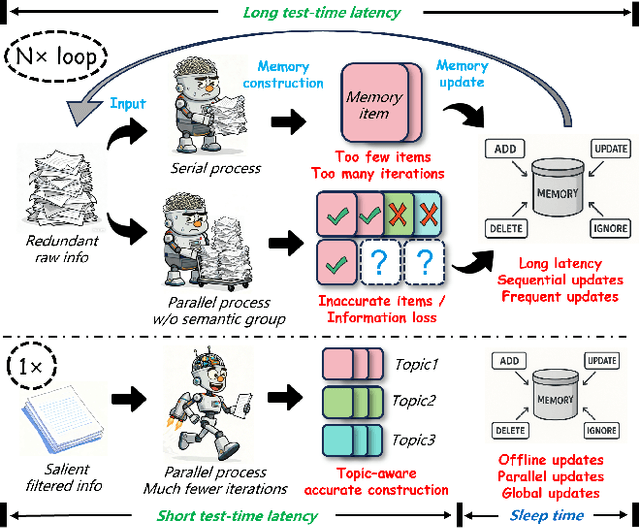
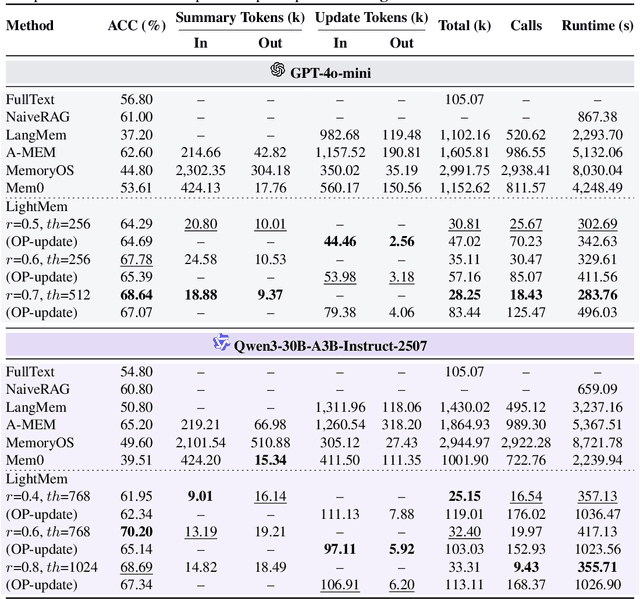
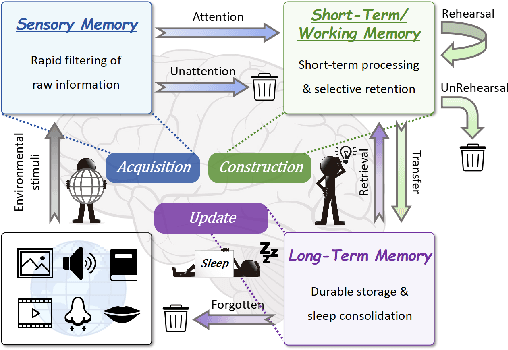
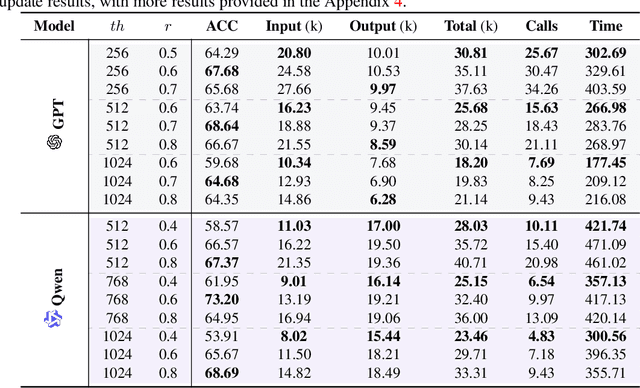
Despite their remarkable capabilities, Large Language Models (LLMs) struggle to effectively leverage historical interaction information in dynamic and complex environments. Memory systems enable LLMs to move beyond stateless interactions by introducing persistent information storage, retrieval, and utilization mechanisms. However, existing memory systems often introduce substantial time and computational overhead. To this end, we introduce a new memory system called LightMem, which strikes a balance between the performance and efficiency of memory systems. Inspired by the Atkinson-Shiffrin model of human memory, LightMem organizes memory into three complementary stages. First, cognition-inspired sensory memory rapidly filters irrelevant information through lightweight compression and groups information according to their topics. Next, topic-aware short-term memory consolidates these topic-based groups, organizing and summarizing content for more structured access. Finally, long-term memory with sleep-time update employs an offline procedure that decouples consolidation from online inference. Experiments on LongMemEval with GPT and Qwen backbones show that LightMem outperforms strong baselines in accuracy (up to 10.9% gains) while reducing token usage by up to 117x, API calls by up to 159x, and runtime by over 12x. The code is available at https://github.com/zjunlp/LightMem.
ADS-Edit: A Multimodal Knowledge Editing Dataset for Autonomous Driving Systems
Mar 26, 2025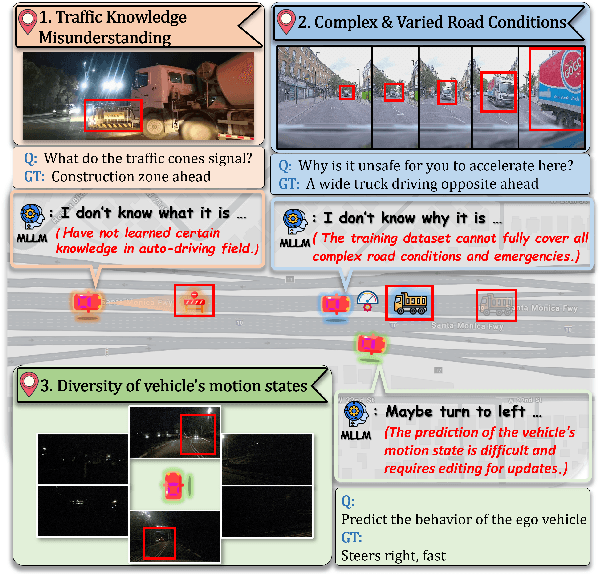
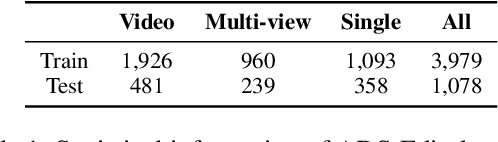
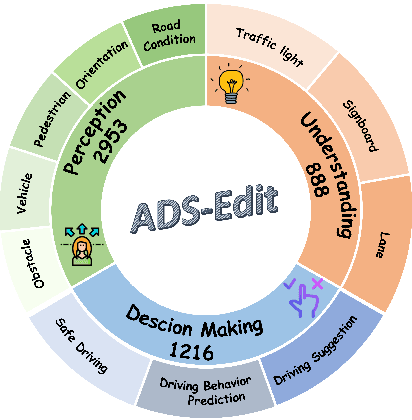
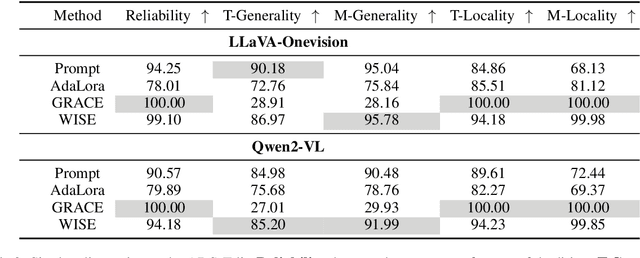
Recent advancements in Large Multimodal Models (LMMs) have shown promise in Autonomous Driving Systems (ADS). However, their direct application to ADS is hindered by challenges such as misunderstanding of traffic knowledge, complex road conditions, and diverse states of vehicle. To address these challenges, we propose the use of Knowledge Editing, which enables targeted modifications to a model's behavior without the need for full retraining. Meanwhile, we introduce ADS-Edit, a multimodal knowledge editing dataset specifically designed for ADS, which includes various real-world scenarios, multiple data types, and comprehensive evaluation metrics. We conduct comprehensive experiments and derive several interesting conclusions. We hope that our work will contribute to the further advancement of knowledge editing applications in the field of autonomous driving. Code and data are available in https://github.com/zjunlp/EasyEdit.
CaKE: Circuit-aware Editing Enables Generalizable Knowledge Learners
Mar 20, 2025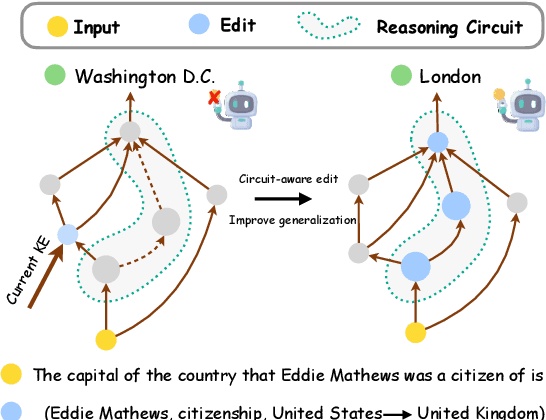
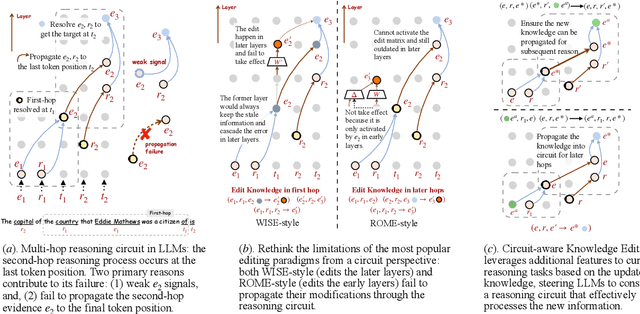
Knowledge Editing (KE) enables the modification of outdated or incorrect information in large language models (LLMs). While existing KE methods can update isolated facts, they struggle to generalize these updates to multi-hop reasoning tasks that depend on the modified knowledge. Through an analysis of reasoning circuits -- the neural pathways LLMs use for knowledge-based inference, we observe that current layer-localized KE approaches, such as MEMIT and WISE, which edit only single or a few model layers, struggle to effectively incorporate updated information into these reasoning pathways. To address this limitation, we propose CaKE (Circuit-aware Knowledge Editing), a novel method that enables more effective integration of updated knowledge in LLMs. CaKE leverages strategically curated data, guided by our circuits-based analysis, that enforces the model to utilize the modified knowledge, stimulating the model to develop appropriate reasoning circuits for newly integrated knowledge. Experimental results show that CaKE enables more accurate and consistent use of updated knowledge across related reasoning tasks, leading to an average of 20% improvement in multi-hop reasoning accuracy on MQuAKE dataset compared to existing KE methods. We release the code and data in https://github.com/zjunlp/CaKE.
OmniThink: Expanding Knowledge Boundaries in Machine Writing through Thinking
Jan 16, 2025Machine writing with large language models often relies on retrieval-augmented generation. However, these approaches remain confined within the boundaries of the model's predefined scope, limiting the generation of content with rich information. Specifically, vanilla-retrieved information tends to lack depth, utility, and suffers from redundancy, which negatively impacts the quality of generated articles, leading to shallow, repetitive, and unoriginal outputs. To address these issues, we propose OmniThink, a machine writing framework that emulates the human-like process of iterative expansion and reflection. The core idea behind OmniThink is to simulate the cognitive behavior of learners as they progressively deepen their knowledge of the topics. Experimental results demonstrate that OmniThink improves the knowledge density of generated articles without compromising metrics such as coherence and depth. Human evaluations and expert feedback further highlight the potential of OmniThink to address real-world challenges in the generation of long-form articles.