 Add to Chrome
 Add to Firefox
 Add to Edge
Brain-Adapter: Enhancing Neurological Disorder Analysis with Adapter-Tuning Multimodal Large Language Models
Jan 27, 2025

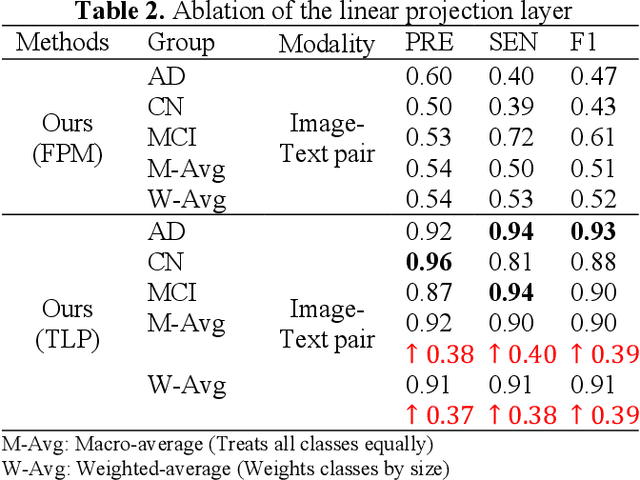
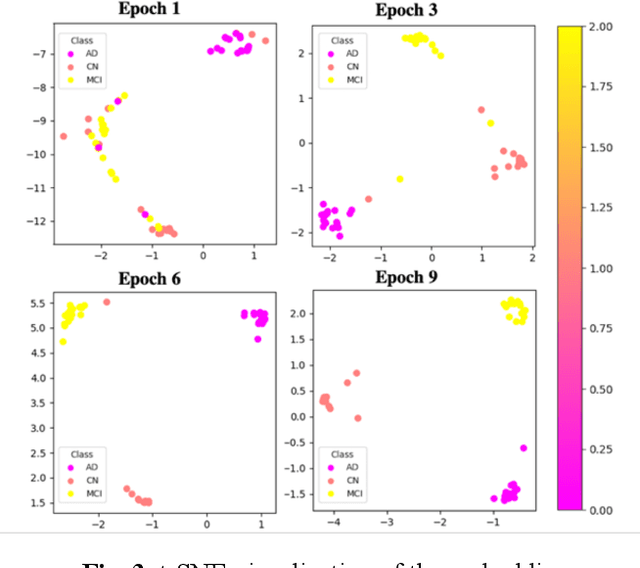
Understanding brain disorders is crucial for accurate clinical diagnosis and treatment. Recent advances in Multimodal Large Language Models (MLLMs) offer a promising approach to interpreting medical images with the support of text descriptions. However, previous research has primarily focused on 2D medical images, leaving richer spatial information of 3D images under-explored, and single-modality-based methods are limited by overlooking the critical clinical information contained in other modalities. To address this issue, this paper proposes Brain-Adapter, a novel approach that incorporates an extra bottleneck layer to learn new knowledge and instill it into the original pre-trained knowledge. The major idea is to incorporate a lightweight bottleneck layer to train fewer parameters while capturing essential information and utilize a Contrastive Language-Image Pre-training (CLIP) strategy to align multimodal data within a unified representation space. Extensive experiments demonstrated the effectiveness of our approach in integrating multimodal data to significantly improve the diagnosis accuracy without high computational costs, highlighting the potential to enhance real-world diagnostic workflows.

SimLabel: Consistency-Guided OOD Detection with Pretrained Vision-Language Models
Jan 20, 2025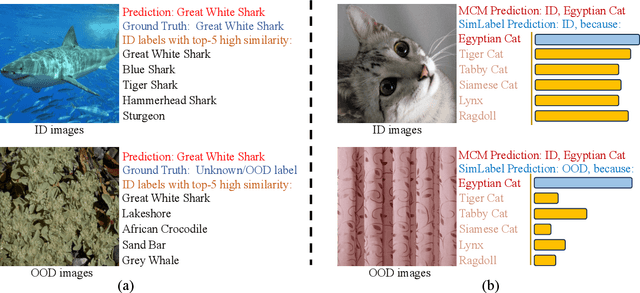
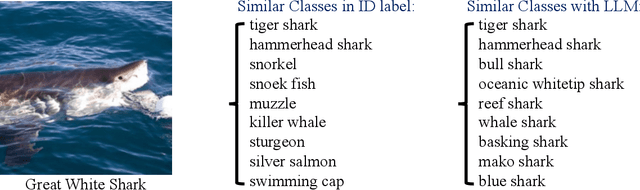
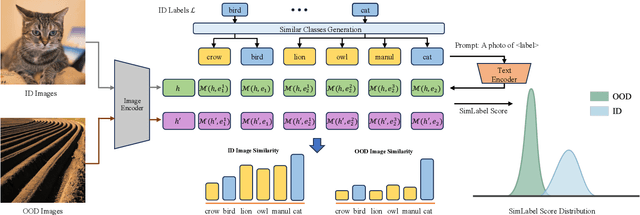
Detecting out-of-distribution (OOD) data is crucial in real-world machine learning applications, particularly in safety-critical domains. Existing methods often leverage language information from vision-language models (VLMs) to enhance OOD detection by improving confidence estimation through rich class-wise text information. However, when building OOD detection score upon on in-distribution (ID) text-image affinity, existing works either focus on each ID class or whole ID label sets, overlooking inherent ID classes' connection. We find that the semantic information across different ID classes is beneficial for effective OOD detection. We thus investigate the ability of image-text comprehension among different semantic-related ID labels in VLMs and propose a novel post-hoc strategy called SimLabel. SimLabel enhances the separability between ID and OOD samples by establishing a more robust image-class similarity metric that considers consistency over a set of similar class labels. Extensive experiments demonstrate the superior performance of SimLabel on various zero-shot OOD detection benchmarks. The proposed model is also extended to various VLM-backbones, demonstrating its good generalization ability. Our demonstration and implementation codes are available at: https://github.com/ShuZou-1/SimLabel.
LoRS: Efficient Low-Rank Adaptation for Sparse Large Language Model
Jan 15, 2025Existing low-rank adaptation (LoRA) methods face challenges on sparse large language models (LLMs) due to the inability to maintain sparsity. Recent works introduced methods that maintain sparsity by augmenting LoRA techniques with additional masking mechanisms. Despite these successes, such approaches suffer from an increased memory and computation overhead, which affects efficiency of LoRA methods. In response to this limitation, we introduce LoRS, an innovative method designed to achieve both memory and computation efficiency when fine-tuning sparse LLMs. To mitigate the substantial memory and computation demands associated with preserving sparsity, our approach incorporates strategies of weight recompute and computational graph rearrangement. In addition, we also improve the effectiveness of LoRS through better adapter initialization. These innovations lead to a notable reduction in memory and computation consumption during the fine-tuning phase, all while achieving performance levels that outperform existing LoRA approaches.
Duplex: Dual Prototype Learning for Compositional Zero-Shot Learning
Jan 13, 2025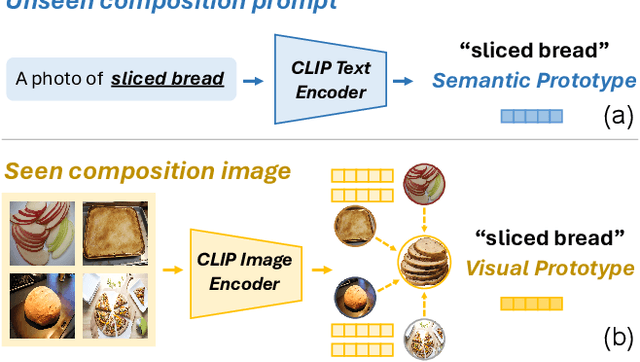

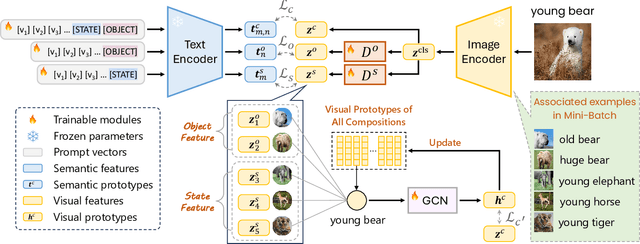

Compositional Zero-Shot Learning (CZSL) aims to enable models to recognize novel compositions of visual states and objects that were absent during training. Existing methods predominantly focus on learning semantic representations of seen compositions but often fail to disentangle the independent features of states and objects in images, thereby limiting their ability to generalize to unseen compositions. To address this challenge, we propose Duplex, a novel dual-prototype learning method that integrates semantic and visual prototypes through a carefully designed dual-branch architecture, enabling effective representation learning for compositional tasks. Duplex utilizes a Graph Neural Network (GNN) to adaptively update visual prototypes, capturing complex interactions between states and objects. Additionally, it leverages the strong visual-semantic alignment of pre-trained Vision-Language Models (VLMs) and employs a multi-path architecture combined with prompt engineering to align image and text representations, ensuring robust generalization. Extensive experiments on three benchmark datasets demonstrate that Duplex outperforms state-of-the-art methods in both closed-world and open-world settings.
Large Language Models for Bioinformatics
Jan 10, 2025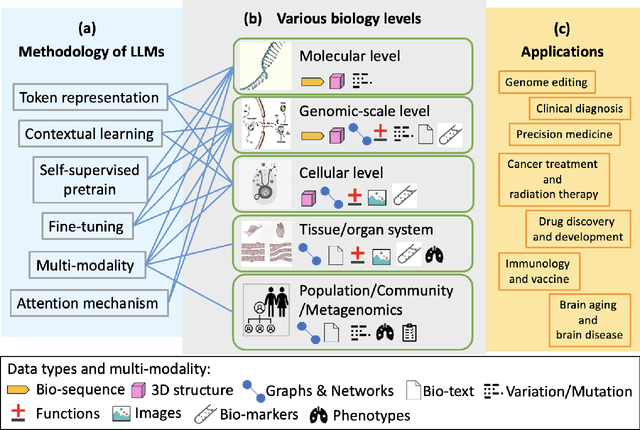
With the rapid advancements in large language model (LLM) technology and the emergence of bioinformatics-specific language models (BioLMs), there is a growing need for a comprehensive analysis of the current landscape, computational characteristics, and diverse applications. This survey aims to address this need by providing a thorough review of BioLMs, focusing on their evolution, classification, and distinguishing features, alongside a detailed examination of training methodologies, datasets, and evaluation frameworks. We explore the wide-ranging applications of BioLMs in critical areas such as disease diagnosis, drug discovery, and vaccine development, highlighting their impact and transformative potential in bioinformatics. We identify key challenges and limitations inherent in BioLMs, including data privacy and security concerns, interpretability issues, biases in training data and model outputs, and domain adaptation complexities. Finally, we highlight emerging trends and future directions, offering valuable insights to guide researchers and clinicians toward advancing BioLMs for increasingly sophisticated biological and clinical applications.
Cosmos World Foundation Model Platform for Physical AI
Jan 07, 2025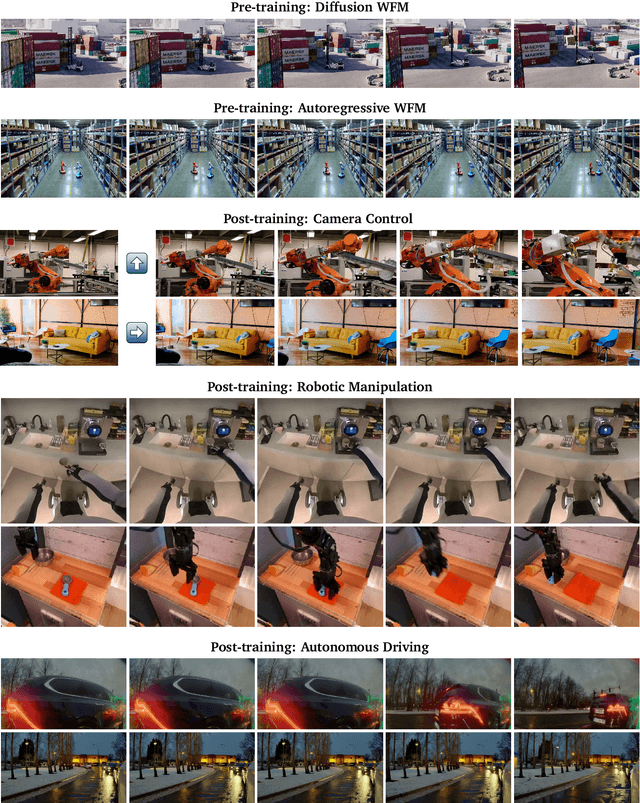
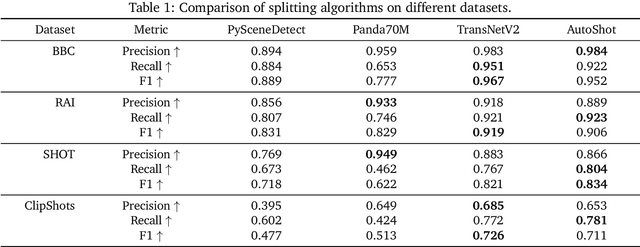
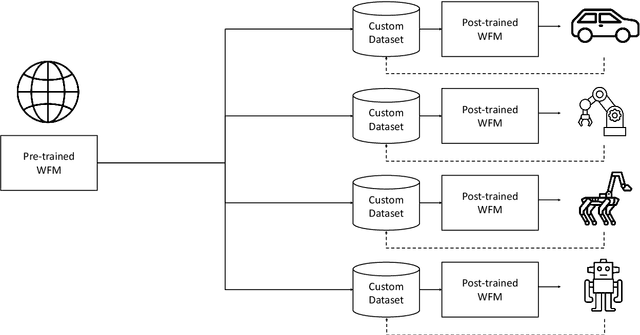

Physical AI needs to be trained digitally first. It needs a digital twin of itself, the policy model, and a digital twin of the world, the world model. In this paper, we present the Cosmos World Foundation Model Platform to help developers build customized world models for their Physical AI setups. We position a world foundation model as a general-purpose world model that can be fine-tuned into customized world models for downstream applications. Our platform covers a video curation pipeline, pre-trained world foundation models, examples of post-training of pre-trained world foundation models, and video tokenizers. To help Physical AI builders solve the most critical problems of our society, we make our platform open-source and our models open-weight with permissive licenses available via https://github.com/NVIDIA/Cosmos.
The Scaling Law for LoRA Base on Mutual Information Upper Bound
Jan 06, 2025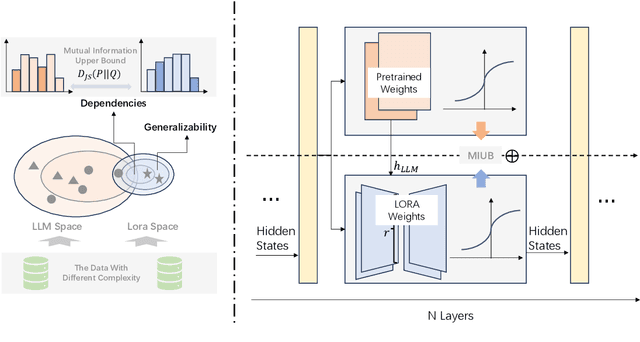


LoRA (Low-Rank Adaptation) is a widely used model fine-tuning method. In fine-tuning, the law among model performance, model parameters, and data complexity has been a focal issue in the field. Existing methods often leverage external metrics (such as cross-entropy or perplexity) to evaluate model performance. In the fine-tuning process for large models, two types of knowledge are typically involved: the frozen, general knowledge acquired by the model during pre-training and the new knowledge learned through the LoRA module from the current data. Generally, the less LoRA's learned knowledge relies on the large model, the more it captures the specific knowledge of new data, thereby enhancing its adaptability to new tasks. However, external metrics do not readily capture the dependency relationship between these two types of knowledge. Therefore, we designed an internal metric based on the Mutual Information Upper Bound (MIUB) theory to investigate the scaling law of large-model LoRA fine-tuning. In our experiments, we validated this approach on benchmark datasets, using the Llama3-8B and Phi3-3B models. The results show that the proposed MIUB metric aligns more accurately and stably with the scaling law of LoRA fine-tuning compared to cross-entropy and perplexity.
CoT-based Synthesizer: Enhancing LLM Performance through Answer Synthesis
Jan 03, 2025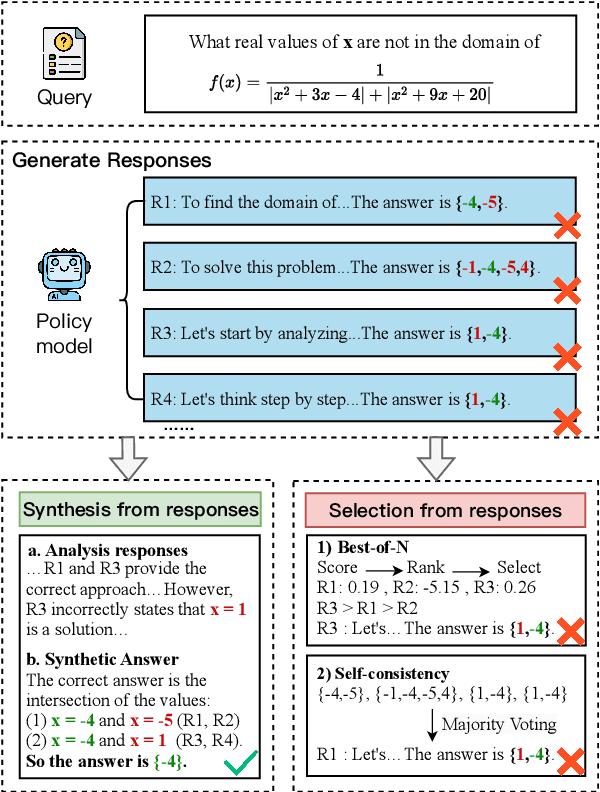
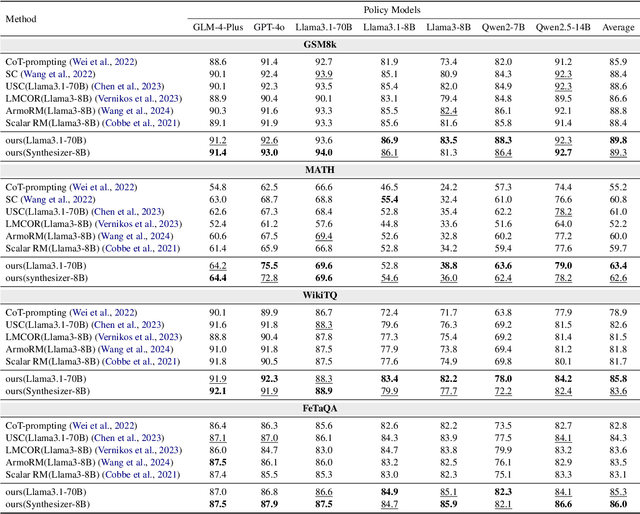
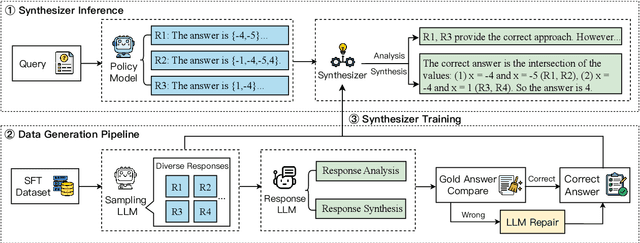
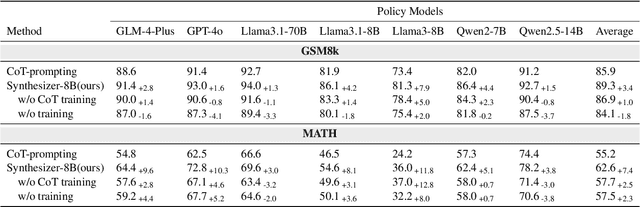
Current inference scaling methods, such as Self-consistency and Best-of-N, have proven effective in improving the accuracy of LLMs on complex reasoning tasks. However, these methods rely heavily on the quality of candidate responses and are unable to produce correct answers when all candidates are incorrect. In this paper, we propose a novel inference scaling strategy, CoT-based Synthesizer, which leverages CoT reasoning to synthesize superior answers by analyzing complementary information from multiple candidate responses, even when all candidate responses are flawed. To enable a lightweight and cost-effective implementation, we introduce an automated data generation pipeline that creates diverse training data. This allows smaller LLMs trained on this data to improve the inference accuracy of larger models, including API-based LLMs. Experimental results across four benchmark datasets with seven policy models demonstrate that our method significantly enhances performance, with gains of 11.8% for Llama3-8B and 10.3% for GPT-4o on the MATH dataset. The corresponding training data and code are publicly available on https://github.com/RUCKBReasoning/CoT-based-Synthesizer.
Dynamic Scaling of Unit Tests for Code Reward Modeling
Jan 02, 2025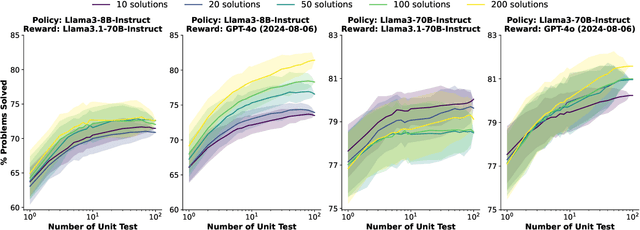
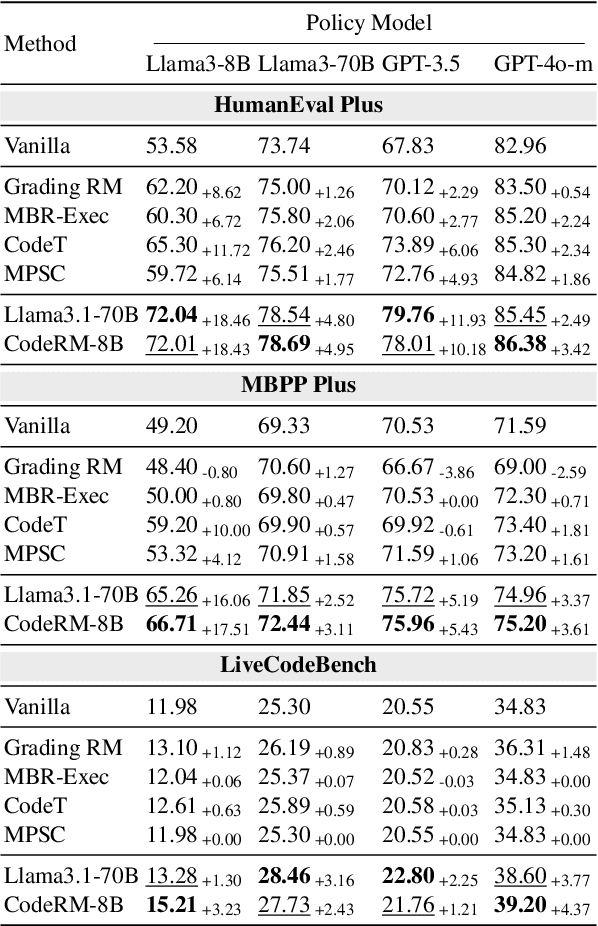
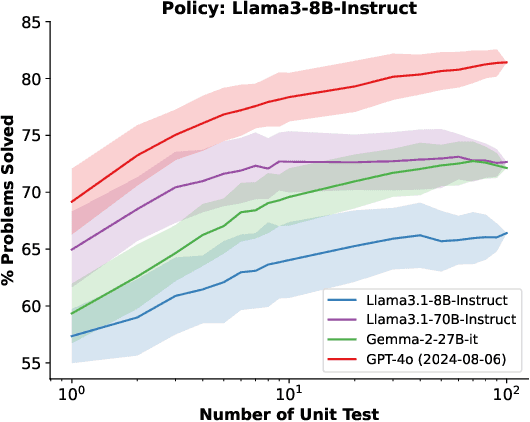
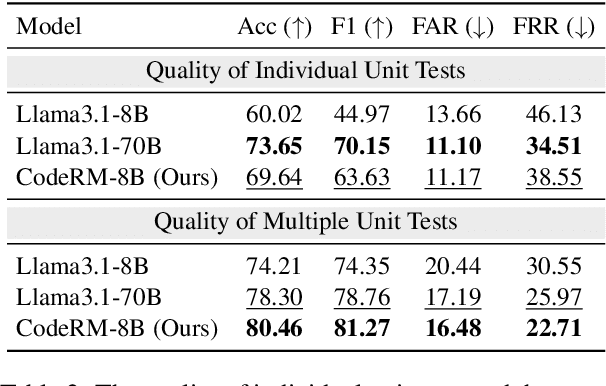
Current large language models (LLMs) often struggle to produce accurate responses on the first attempt for complex reasoning tasks like code generation. Prior research tackles this challenge by generating multiple candidate solutions and validating them with LLM-generated unit tests. The execution results of unit tests serve as reward signals to identify correct solutions. As LLMs always confidently make mistakes, these unit tests are not reliable, thereby diminishing the quality of reward signals. Motivated by the observation that scaling the number of solutions improves LLM performance, we explore the impact of scaling unit tests to enhance reward signal quality. Our pioneer experiment reveals a positive correlation between the number of unit tests and reward signal quality, with greater benefits observed in more challenging problems. Based on these insights, we propose CodeRM-8B, a lightweight yet effective unit test generator that enables efficient and high-quality unit test scaling. Additionally, we implement a dynamic scaling mechanism that adapts the number of unit tests based on problem difficulty, further improving efficiency. Experimental results show that our approach significantly improves performance across various models on three benchmarks (e.g., with gains of 18.43% for Llama3-8B and 3.42% for GPT-4o-mini on HumanEval Plus).
MOL-Mamba: Enhancing Molecular Representation with Structural & Electronic Insights
Dec 21, 2024


Molecular representation learning plays a crucial role in various downstream tasks, such as molecular property prediction and drug design. To accurately represent molecules, Graph Neural Networks (GNNs) and Graph Transformers (GTs) have shown potential in the realm of self-supervised pretraining. However, existing approaches often overlook the relationship between molecular structure and electronic information, as well as the internal semantic reasoning within molecules. This omission of fundamental chemical knowledge in graph semantics leads to incomplete molecular representations, missing the integration of structural and electronic data. To address these issues, we introduce MOL-Mamba, a framework that enhances molecular representation by combining structural and electronic insights. MOL-Mamba consists of an Atom & Fragment Mamba-Graph (MG) for hierarchical structural reasoning and a Mamba-Transformer (MT) fuser for integrating molecular structure and electronic correlation learning. Additionally, we propose a Structural Distribution Collaborative Training and E-semantic Fusion Training framework to further enhance molecular representation learning. Extensive experiments demonstrate that MOL-Mamba outperforms state-of-the-art baselines across eleven chemical-biological molecular datasets. Code is available at https://github.com/xian-sh/MOL-Mamba.