 Add to Chrome
 Add to Firefox
 Add to Edge
The Agent Use of Agent Beings: Agent Cybernetics Is the Missing Science of Foundation Agents
May 11, 2026
LLM-based foundation agents that perceive, reason, and act across thousands of reasoning steps are rapidly becoming the dominant paradigm for deploying artificial intelligence in open-ended, long-horizon complex tasks. Despite this significance, the field remains overwhelmingly engineering-driven. Engineering practice has converged on useful primitives (tool loops, memory banks, harnesses, reflection steps), yet these are assembled by empirical trial and error rather than from first principles. Fundamental questions remain open: under what conditions does a long-running agent remain on-task? How should an agent respond when its environment exceeds its representational capacity? What architectural properties are necessary for safe self-improvement? We argue that cybernetics, the mid-twentieth-century science of control and communication in complex systems, provides the missing theoretical scaffold for foundation agents. By mapping six canonical laws of classical cybernetics onto six agent design principles, and synthesizing those principles into three engineering desiderata (reliability, lifelong running, and self-Improvement), we arrive at a framework termed Agent Cybernetics. Three application domains, code generation, computer use and automated research, exemplify the analytical framework of agent cybernetics by identifying failure modes and concrete engineering recommendations. We hope that agent cybernetics opens a new research venue and establishes the scientific foundation that foundation agents need for principled, reliable real-world deployment.

Towards Brain MRI Foundation Models for the Clinic: Findings from the FOMO25 Challenge
Apr 13, 2026Clinical deployment of automated brain MRI analysis faces a fundamental challenge: clinical data is heterogeneous and noisy, and high-quality labels are prohibitively costly to obtain. Self-supervised learning (SSL) can address this by leveraging the vast amounts of unlabeled data produced in clinical workflows to train robust \textit{foundation models} that adapt out-of-domain with minimal supervision. However, the development of foundation models for brain MRI has been limited by small pretraining datasets and in-domain benchmarking focused on high-quality, research-grade data. To address this gap, we organized the FOMO25 challenge as a satellite event at MICCAI 2025. FOMO25 provided participants with a large pretraining dataset, FOMO60K, and evaluated models on data sourced directly from clinical workflows in few-shot and out-of-domain settings. Tasks covered infarct classification, meningioma segmentation, and brain age regression, and considered both models trained on FOMO60K (method track) and any data (open track). Nineteen foundation models from sixteen teams were evaluated using a standardized containerized pipeline. Results show that (a) self-supervised pretraining improves generalization on clinical data under domain shift, with the strongest models trained \textit{out-of-domain} surpassing supervised baselines trained \textit{in-domain}. (b) No single pretraining objective benefits all tasks: MAE favors segmentation, hybrid reconstruction-contrastive objectives favor classification, and (c) strong performance was achieved by small pretrained models, and improvements from scaling model size and training duration did not yield reliable benefits.
Design Once, Deploy at Scale: Template-Driven ML Development for Large Model Ecosystems
Mar 26, 2026Modern computational advertising platforms typically rely on recommendation systems to predict user responses, such as click-through rates, conversion rates, and other optimization events. To support a wide variety of product surfaces and advertiser goals, these platforms frequently maintain an extensive ecosystem of machine learning (ML) models. However, operating at this scale creates significant development and efficiency challenges. Substantial engineering effort is required to regularly refresh ML models and propagate new techniques, which results in long latencies when deploying ML innovations across the ecosystem. We present a large-scale empirical study comparing model performance, efficiency, and ML technique propagation between a standardized model-building approach and independent per-model optimization in recommendation systems. To facilitate this standardization, we propose the Standard Model Template (SMT) -- a framework that generates high-performance models adaptable to diverse data distributions and optimization events. By utilizing standardized, composable ML model components, SMT reduces technique propagation complexity from $O(n \cdot 2^k)$ to $O(n + k)$ where $n$ is the number of models and $k$ the number of techniques. Evaluating an extensive suite of models over four global development cycles within Meta's production ads ranking ecosystem, our results demonstrate: (1) a 0.63% average improvement in cross-entropy at neutral serving capacity, (2) a 92% reduction in per-model iteration engineering time, and (3) a $6.3\times$ increase in technique-model pair adoption throughput. These findings challenge the conventional wisdom that diverse optimization goals inherently require diversified ML model design.
Graph-based Agent Memory: Taxonomy, Techniques, and Applications
Feb 05, 2026Memory emerges as the core module in the Large Language Model (LLM)-based agents for long-horizon complex tasks (e.g., multi-turn dialogue, game playing, scientific discovery), where memory can enable knowledge accumulation, iterative reasoning and self-evolution. Among diverse paradigms, graph stands out as a powerful structure for agent memory due to the intrinsic capabilities to model relational dependencies, organize hierarchical information, and support efficient retrieval. This survey presents a comprehensive review of agent memory from the graph-based perspective. First, we introduce a taxonomy of agent memory, including short-term vs. long-term memory, knowledge vs. experience memory, non-structural vs. structural memory, with an implementation view of graph-based memory. Second, according to the life cycle of agent memory, we systematically analyze the key techniques in graph-based agent memory, covering memory extraction for transforming the data into the contents, storage for organizing the data efficiently, retrieval for retrieving the relevant contents from memory to support reasoning, and evolution for updating the contents in the memory. Third, we summarize the open-sourced libraries and benchmarks that support the development and evaluation of self-evolving agent memory. We also explore diverse application scenarios. Finally, we identify critical challenges and future research directions. This survey aims to offer actionable insights to advance the development of more efficient and reliable graph-based agent memory systems. All the related resources, including research papers, open-source data, and projects, are collected for the community in https://github.com/DEEP-PolyU/Awesome-GraphMemory.
Large Emotional World Model
Dec 30, 2025World Models serve as tools for understanding the current state of the world and predicting its future dynamics, with broad application potential across numerous fields. As a key component of world knowledge, emotion significantly influences human decision-making. While existing Large Language Models (LLMs) have shown preliminary capability in capturing world knowledge, they primarily focus on modeling physical-world regularities and lack systematic exploration of emotional factors. In this paper, we first demonstrate the importance of emotion in understanding the world by showing that removing emotionally relevant information degrades reasoning performance. Inspired by theory of mind, we further propose a Large Emotional World Model (LEWM). Specifically, we construct the Emotion-Why-How (EWH) dataset, which integrates emotion into causal relationships and enables reasoning about why actions occur and how emotions drive future world states. Based on this dataset, LEWM explicitly models emotional states alongside visual observations and actions, allowing the world model to predict both future states and emotional transitions. Experimental results show that LEWM more accurately predicts emotion-driven social behaviors while maintaining comparable performance to general world models on basic tasks.
Towards Frequency-Adaptive Learning for SAR Despeckling
Nov 08, 2025Synthetic Aperture Radar (SAR) images are inherently corrupted by speckle noise, limiting their utility in high-precision applications. While deep learning methods have shown promise in SAR despeckling, most methods employ a single unified network to process the entire image, failing to account for the distinct speckle statistics associated with different spatial physical characteristics. It often leads to artifacts, blurred edges, and texture distortion. To address these issues, we propose SAR-FAH, a frequency-adaptive heterogeneous despeckling model based on a divide-and-conquer architecture. First, wavelet decomposition is used to separate the image into frequency sub-bands carrying different intrinsic characteristics. Inspired by their differing noise characteristics, we design specialized sub-networks for different frequency components. The tailored approach leverages statistical variations across frequencies, improving edge and texture preservation while suppressing noise. Specifically, for the low-frequency part, denoising is formulated as a continuous dynamic system via neural ordinary differential equations, ensuring structural fidelity and sufficient smoothness that prevents artifacts. For high-frequency sub-bands rich in edges and textures, we introduce an enhanced U-Net with deformable convolutions for noise suppression and enhanced features. Extensive experiments on synthetic and real SAR images validate the superior performance of the proposed model in noise removal and structural preservation.
Resolving Latency and Inventory Risk in Market Making with Reinforcement Learning
May 18, 2025The latency of the exchanges in Market Making (MM) is inevitable due to hardware limitations, system processing times, delays in receiving data from exchanges, the time required for order transmission to reach the market, etc. Existing reinforcement learning (RL) methods for Market Making (MM) overlook the impact of these latency, which can lead to unintended order cancellations due to price discrepancies between decision and execution times and result in undesired inventory accumulation, exposing MM traders to increased market risk. Therefore, these methods cannot be applied in real MM scenarios. To address these issues, we first build a realistic MM environment with random delays of 30-100 milliseconds for order placement and market information reception, and implement a batch matching mechanism that collects orders within every 500 milliseconds before matching them all at once, simulating the batch auction mechanisms adopted by some exchanges. Then, we propose Relaver, an RL-based method for MM to tackle the latency and inventory risk issues. The three main contributions of Relaver are: i) we introduce an augmented state-action space that incorporates order hold time alongside price and volume, enabling Relaver to optimize execution strategies under latency constraints and time-priority matching mechanisms, ii) we leverage dynamic programming (DP) to guide the exploration of RL training for better policies, iii) we train a market trend predictor, which can guide the agent to intelligently adjust the inventory to reduce the risk. Extensive experiments and ablation studies on four real-world datasets demonstrate that \textsc{Relaver} significantly improves the performance of state-of-the-art RL-based MM strategies across multiple metrics.
Nondeterministic Polynomial-time Problem Challenge: An Ever-Scaling Reasoning Benchmark for LLMs
Apr 15, 2025Reasoning is the fundamental capability of large language models (LLMs). Due to the rapid progress of LLMs, there are two main issues of current benchmarks: i) these benchmarks can be crushed in a short time (less than 1 year), and ii) these benchmarks may be easily hacked. To handle these issues, we propose the ever-scalingness for building the benchmarks which are uncrushable, unhackable, auto-verifiable and general. This paper presents Nondeterministic Polynomial-time Problem Challenge (NPPC), an ever-scaling reasoning benchmark for LLMs. Specifically, the NPPC has three main modules: i) npgym, which provides a unified interface of 25 well-known NP-complete problems and can generate any number of instances with any levels of complexities, ii) npsolver: which provides a unified interface to evaluate the problem instances with both online and offline models via APIs and local deployments, respectively, and iii) npeval: which provides the comprehensive and ready-to-use tools to analyze the performances of LLMs over different problems, the number of tokens, the aha moments, the reasoning errors and the solution errors. Extensive experiments over widely-used LLMs demonstrate: i) NPPC can successfully decrease the performances of advanced LLMs' performances to below 10%, demonstrating that NPPC is uncrushable, ii) DeepSeek-R1, Claude-3.7-Sonnet, and o1/o3-mini are the most powerful LLMs, where DeepSeek-R1 outperforms Claude-3.7-Sonnet and o1/o3-mini in most NP-complete problems considered, and iii) the numbers of tokens, aha moments in the advanced LLMs, e.g., Claude-3.7-Sonnet and DeepSeek-R1, are observed first to increase and then decrease when the problem instances become more and more difficult. We believe that NPPC is the first ever-scaling reasoning benchmark, serving as the uncrushable and unhackable testbed for LLMs toward artificial general intelligence (AGI).
Graph-defined Language Learning with LLMs
Jan 20, 2025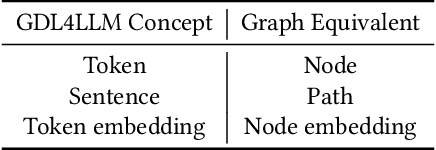
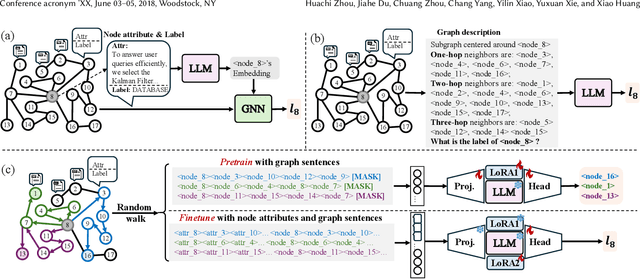
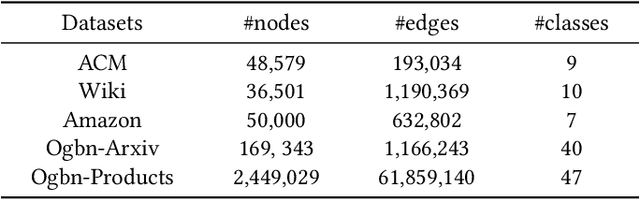

Recent efforts leverage Large Language Models (LLMs) for modeling text-attributed graph structures in node classification tasks. These approaches describe graph structures for LLMs to understand or aggregate LLM-generated textual attribute embeddings through graph structure. However, these approaches face two main limitations in modeling graph structures with LLMs. (i) Graph descriptions become verbose in describing high-order graph structure. (ii) Textual attributes alone do not contain adequate graph structure information. It is challenging to model graph structure concisely and adequately with LLMs. LLMs lack built-in mechanisms to model graph structures directly. They also struggle with complex long-range dependencies between high-order nodes and target nodes. Inspired by the observation that LLMs pre-trained on one language can achieve exceptional performance on another with minimal additional training, we propose \textbf{G}raph-\textbf{D}efined \textbf{L}anguage for \textbf{L}arge \textbf{L}anguage \textbf{M}odel (GDL4LLM). This novel framework enables LLMs to transfer their powerful language understanding capabilities to graph-structured data. GDL4LLM translates graphs into a graph language corpus instead of graph descriptions and pre-trains LLMs on this corpus to adequately understand graph structures. During fine-tuning, this corpus describes the structural information of target nodes concisely with only a few tokens. By treating graphs as a new language, GDL4LLM enables LLMs to model graph structures adequately and concisely for node classification tasks. Extensive experiments on three real-world datasets demonstrate that GDL4LLM outperforms description-based and textual attribute embeddings-based baselines by efficiently modeling different orders of graph structure with LLMs.
The Scaling Law for LoRA Base on Mutual Information Upper Bound
Jan 06, 2025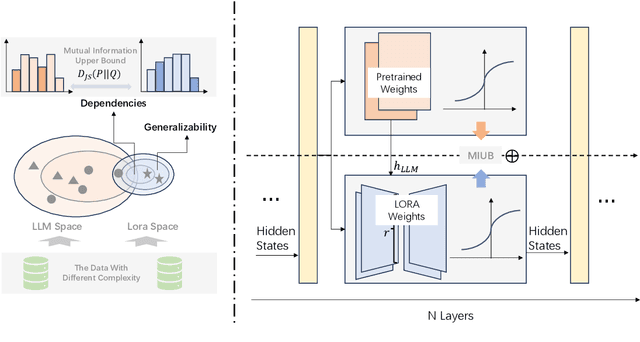


LoRA (Low-Rank Adaptation) is a widely used model fine-tuning method. In fine-tuning, the law among model performance, model parameters, and data complexity has been a focal issue in the field. Existing methods often leverage external metrics (such as cross-entropy or perplexity) to evaluate model performance. In the fine-tuning process for large models, two types of knowledge are typically involved: the frozen, general knowledge acquired by the model during pre-training and the new knowledge learned through the LoRA module from the current data. Generally, the less LoRA's learned knowledge relies on the large model, the more it captures the specific knowledge of new data, thereby enhancing its adaptability to new tasks. However, external metrics do not readily capture the dependency relationship between these two types of knowledge. Therefore, we designed an internal metric based on the Mutual Information Upper Bound (MIUB) theory to investigate the scaling law of large-model LoRA fine-tuning. In our experiments, we validated this approach on benchmark datasets, using the Llama3-8B and Phi3-3B models. The results show that the proposed MIUB metric aligns more accurately and stably with the scaling law of LoRA fine-tuning compared to cross-entropy and perplexity.