 Add to Chrome
 Add to Firefox
 Add to Edge
Is Sarcasm Detection A Step-by-Step Reasoning Process in Large Language Models?
Jul 17, 2024
Elaborating a series of intermediate reasoning steps significantly improves the ability of large language models (LLMs) to solve complex problems, as such steps would evoke LLMs to think sequentially. However, human sarcasm understanding is often considered an intuitive and holistic cognitive process, in which various linguistic, contextual, and emotional cues are integrated to form a comprehensive understanding of the speaker's true intention, which is argued not be limited to a step-by-step reasoning process. To verify this argument, we introduce a new prompting framework called SarcasmCue, which contains four prompting strategies, $viz.$ chain of contradiction (CoC), graph of cues (GoC), bagging of cues (BoC) and tensor of cues (ToC), which elicits LLMs to detect human sarcasm by considering sequential and non-sequential prompting methods. Through a comprehensive empirical comparison on four benchmarking datasets, we show that the proposed four prompting methods outperforms standard IO prompting, CoT and ToT with a considerable margin, and non-sequential prompting generally outperforms sequential prompting.

Beat-It: Beat-Synchronized Multi-Condition 3D Dance Generation
Jul 10, 2024Dance, as an art form, fundamentally hinges on the precise synchronization with musical beats. However, achieving aesthetically pleasing dance sequences from music is challenging, with existing methods often falling short in controllability and beat alignment. To address these shortcomings, this paper introduces Beat-It, a novel framework for beat-specific, key pose-guided dance generation. Unlike prior approaches, Beat-It uniquely integrates explicit beat awareness and key pose guidance, effectively resolving two main issues: the misalignment of generated dance motions with musical beats, and the inability to map key poses to specific beats, critical for practical choreography. Our approach disentangles beat conditions from music using a nearest beat distance representation and employs a hierarchical multi-condition fusion mechanism. This mechanism seamlessly integrates key poses, beats, and music features, mitigating condition conflicts and offering rich, multi-conditioned guidance for dance generation. Additionally, a specially designed beat alignment loss ensures the generated dance movements remain in sync with the designated beats. Extensive experiments confirm Beat-It's superiority over existing state-of-the-art methods in terms of beat alignment and motion controllability.
LGRNet: Local-Global Reciprocal Network for Uterine Fibroid Segmentation in Ultrasound Videos
Jul 08, 2024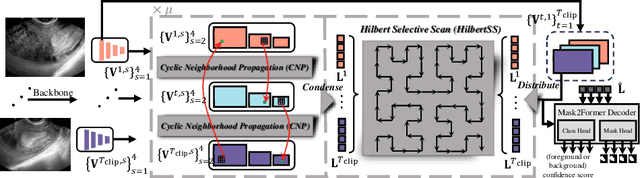
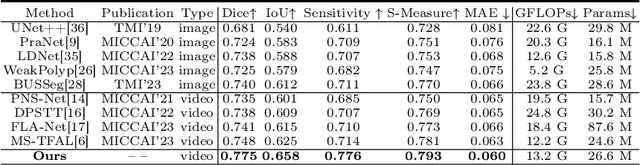
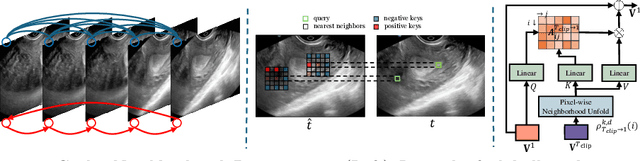
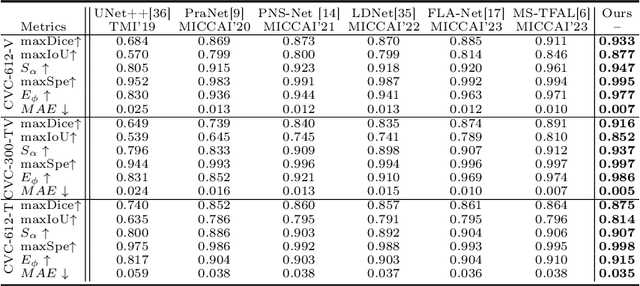
Regular screening and early discovery of uterine fibroid are crucial for preventing potential malignant transformations and ensuring timely, life-saving interventions. To this end, we collect and annotate the first ultrasound video dataset with 100 videos for uterine fibroid segmentation (UFUV). We also present Local-Global Reciprocal Network (LGRNet) to efficiently and effectively propagate the long-term temporal context which is crucial to help distinguish between uninformative noisy surrounding tissues and target lesion regions. Specifically, the Cyclic Neighborhood Propagation (CNP) is introduced to propagate the inter-frame local temporal context in a cyclic manner. Moreover, to aggregate global temporal context, we first condense each frame into a set of frame bottleneck queries and devise Hilbert Selective Scan (HilbertSS) to both efficiently path connect each frame and preserve the locality bias. A distribute layer is then utilized to disseminate back the global context for reciprocal refinement. Extensive experiments on UFUV and three public Video Polyp Segmentation (VPS) datasets demonstrate consistent improvements compared to state-of-the-art segmentation methods, indicating the effectiveness and versatility of LGRNet. Code, checkpoints, and dataset are available at https://github.com/bio-mlhui/LGRNet
MMR-Mamba: Multi-Modal MRI Reconstruction with Mamba and Spatial-Frequency Information Fusion
Jul 07, 2024Multi-modal MRI offers valuable complementary information for diagnosis and treatment; however, its utility is limited by prolonged scanning times. To accelerate the acquisition process, a practical approach is to reconstruct images of the target modality, which requires longer scanning times, from under-sampled k-space data using the fully-sampled reference modality with shorter scanning times as guidance. The primary challenge of this task is comprehensively and efficiently integrating complementary information from different modalities to achieve high-quality reconstruction. Existing methods struggle with this: 1) convolution-based models fail to capture long-range dependencies; 2) transformer-based models, while excelling in global feature modeling, struggle with quadratic computational complexity. To address this, we propose MMR-Mamba, a novel framework that thoroughly and efficiently integrates multi-modal features for MRI reconstruction, leveraging Mamba's capability to capture long-range dependencies with linear computational complexity while exploiting global properties of the Fourier domain. Specifically, we first design a Target modality-guided Cross Mamba (TCM) module in the spatial domain, which maximally restores the target modality information by selectively incorporating relevant information from the reference modality. Then, we introduce a Selective Frequency Fusion (SFF) module to efficiently integrate global information in the Fourier domain and recover high-frequency signals for the reconstruction of structural details. Furthermore, we devise an Adaptive Spatial-Frequency Fusion (ASFF) module, which mutually enhances the spatial and frequency domains by supplementing less informative channels from one domain with corresponding channels from the other.
Depth-Driven Geometric Prompt Learning for Laparoscopic Liver Landmark Detection
Jun 27, 2024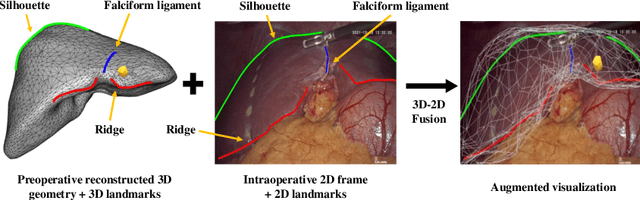


Laparoscopic liver surgery poses a complex intraoperative dynamic environment for surgeons, where remains a significant challenge to distinguish critical or even hidden structures inside the liver. Liver anatomical landmarks, e.g., ridge and ligament, serve as important markers for 2D-3D alignment, which can significantly enhance the spatial perception of surgeons for precise surgery. To facilitate the detection of laparoscopic liver landmarks, we collect a novel dataset called L3D, which comprises 1,152 frames with elaborated landmark annotations from surgical videos of 39 patients across two medical sites. For benchmarking purposes, 12 mainstream detection methods are selected and comprehensively evaluated on L3D. Further, we propose a depth-driven geometric prompt learning network, namely D2GPLand. Specifically, we design a Depth-aware Prompt Embedding (DPE) module that is guided by self-supervised prompts and generates semantically relevant geometric information with the benefit of global depth cues extracted from SAM-based features. Additionally, a Semantic-specific Geometric Augmentation (SGA) scheme is introduced to efficiently merge RGB-D spatial and geometric information through reverse anatomic perception. The experimental results indicate that D2GPLand obtains state-of-the-art performance on L3D, with 63.52% DICE and 48.68% IoU scores. Together with 2D-3D fusion technology, our method can directly provide the surgeon with intuitive guidance information in laparoscopic scenarios.
CMRxRecon2024: A Multi-Modality, Multi-View K-Space Dataset Boosting Universal Machine Learning for Accelerated Cardiac MRI
Jun 27, 2024
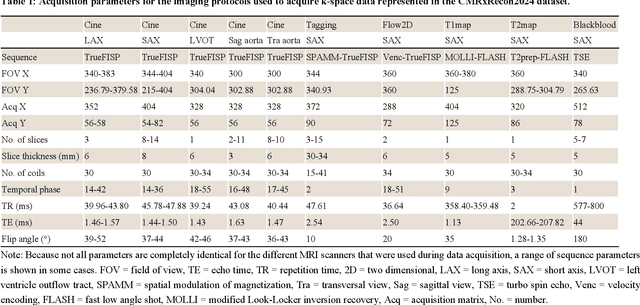

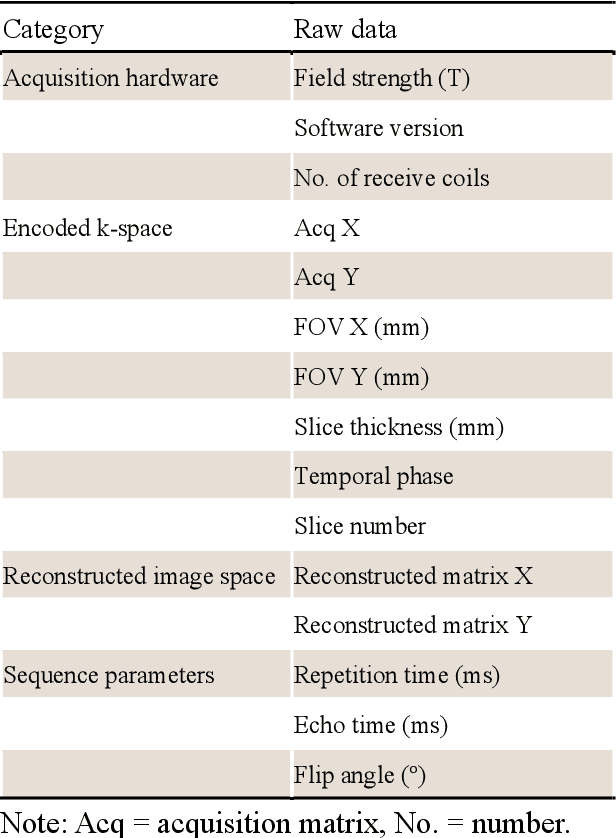
Cardiac magnetic resonance imaging (MRI) has emerged as a clinically gold-standard technique for diagnosing cardiac diseases, thanks to its ability to provide diverse information with multiple modalities and anatomical views. Accelerated cardiac MRI is highly expected to achieve time-efficient and patient-friendly imaging, and then advanced image reconstruction approaches are required to recover high-quality, clinically interpretable images from undersampled measurements. However, the lack of publicly available cardiac MRI k-space dataset in terms of both quantity and diversity has severely hindered substantial technological progress, particularly for data-driven artificial intelligence. Here, we provide a standardized, diverse, and high-quality CMRxRecon2024 dataset to facilitate the technical development, fair evaluation, and clinical transfer of cardiac MRI reconstruction approaches, towards promoting the universal frameworks that enable fast and robust reconstructions across different cardiac MRI protocols in clinical practice. To the best of our knowledge, the CMRxRecon2024 dataset is the largest and most diverse publicly available cardiac k-space dataset. It is acquired from 330 healthy volunteers, covering commonly used modalities, anatomical views, and acquisition trajectories in clinical cardiac MRI workflows. Besides, an open platform with tutorials, benchmarks, and data processing tools is provided to facilitate data usage, advanced method development, and fair performance evaluation.
MMR-Mamba: Multi-Contrast MRI Reconstruction with Mamba and Spatial-Frequency Information Fusion
Jun 27, 2024Multi-contrast MRI acceleration has become prevalent in MR imaging, enabling the reconstruction of high-quality MR images from under-sampled k-space data of the target modality, using guidance from a fully-sampled auxiliary modality. The main crux lies in efficiently and comprehensively integrating complementary information from the auxiliary modality. Existing methods either suffer from quadratic computational complexity or fail to capture long-range correlated features comprehensively. In this work, we propose MMR-Mamba, a novel framework that achieves comprehensive integration of multi-contrast features through Mamba and spatial-frequency information fusion. Firstly, we design the \textit{Target modality-guided Cross Mamba} (TCM) module in the spatial domain, which maximally restores the target modality information by selectively absorbing useful information from the auxiliary modality. Secondly, leveraging global properties of the Fourier domain, we introduce the \textit{Selective Frequency Fusion} (SFF) module to efficiently integrate global information in the frequency domain and recover high-frequency signals for the reconstruction of structure details. Additionally, we present the \textit{Adaptive Spatial-Frequency Fusion} (ASFF) module, which enhances fused features by supplementing less informative features from one domain with corresponding features from the other domain. These innovative strategies ensure efficient feature fusion across spatial and frequency domains, avoiding the introduction of redundant information and facilitating the reconstruction of high-quality target images. Extensive experiments on the BraTS and fastMRI knee datasets demonstrate the superiority of the proposed MMR-Mamba over state-of-the-art MRI reconstruction methods.
Epicardium Prompt-guided Real-time Cardiac Ultrasound Frame-to-volume Registration
Jun 20, 2024


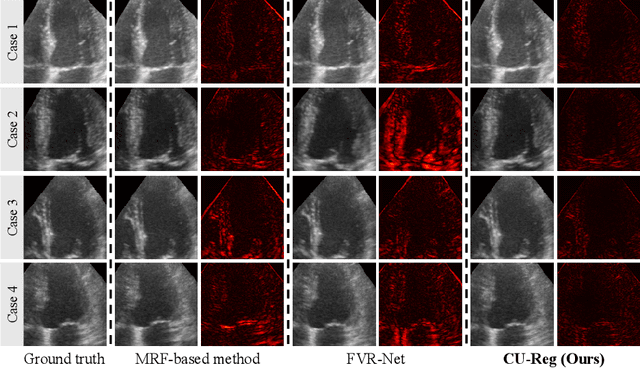
A comprehensive guidance view for cardiac interventional surgery can be provided by the real-time fusion of the intraoperative 2D images and preoperative 3D volume based on the ultrasound frame-to-volume registration. However, cardiac ultrasound images are characterized by a low signal-to-noise ratio and small differences between adjacent frames, coupled with significant dimension variations between 2D frames and 3D volumes to be registered, resulting in real-time and accurate cardiac ultrasound frame-to-volume registration being a very challenging task. This paper introduces a lightweight end-to-end Cardiac Ultrasound frame-to-volume Registration network, termed CU-Reg. Specifically, the proposed model leverages epicardium prompt-guided anatomical clues to reinforce the interaction of 2D sparse and 3D dense features, followed by a voxel-wise local-global aggregation of enhanced features, thereby boosting the cross-dimensional matching effectiveness of low-quality ultrasound modalities. We further embed an inter-frame discriminative regularization term within the hybrid supervised learning to increase the distinction between adjacent slices in the same ultrasound volume to ensure registration stability. Experimental results on the reprocessed CAMUS dataset demonstrate that our CU-Reg surpasses existing methods in terms of registration accuracy and efficiency, meeting the guidance requirements of clinical cardiac interventional surgery.
WundtGPT: Shaping Large Language Models To Be An Empathetic, Proactive Psychologist
Jun 16, 2024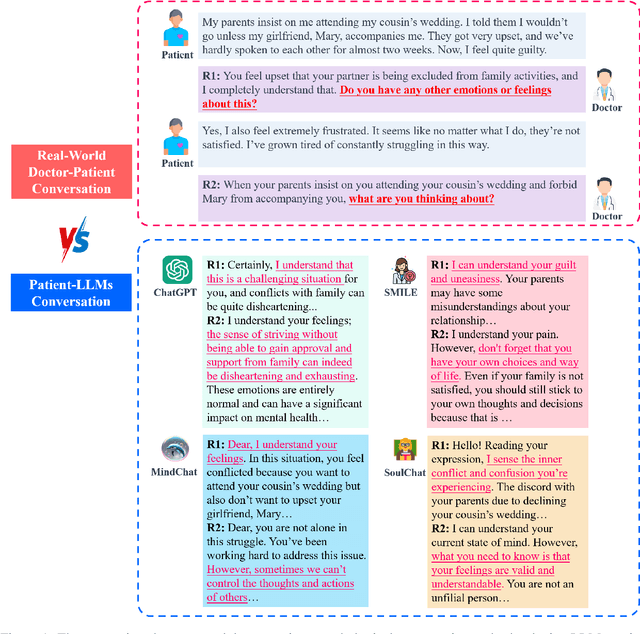
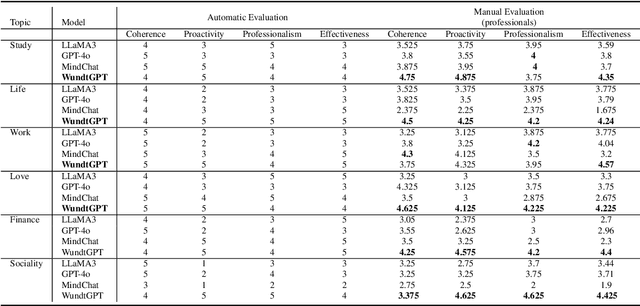
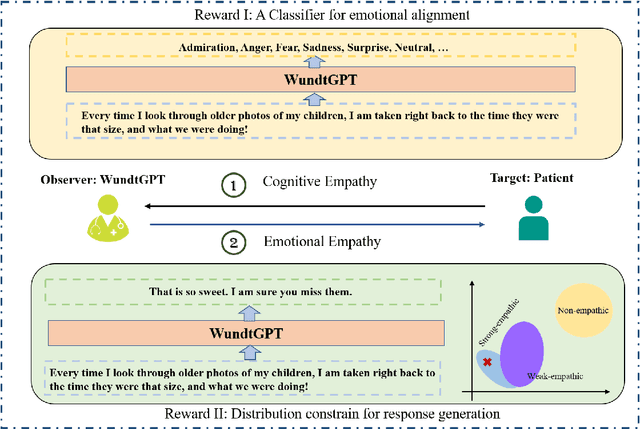
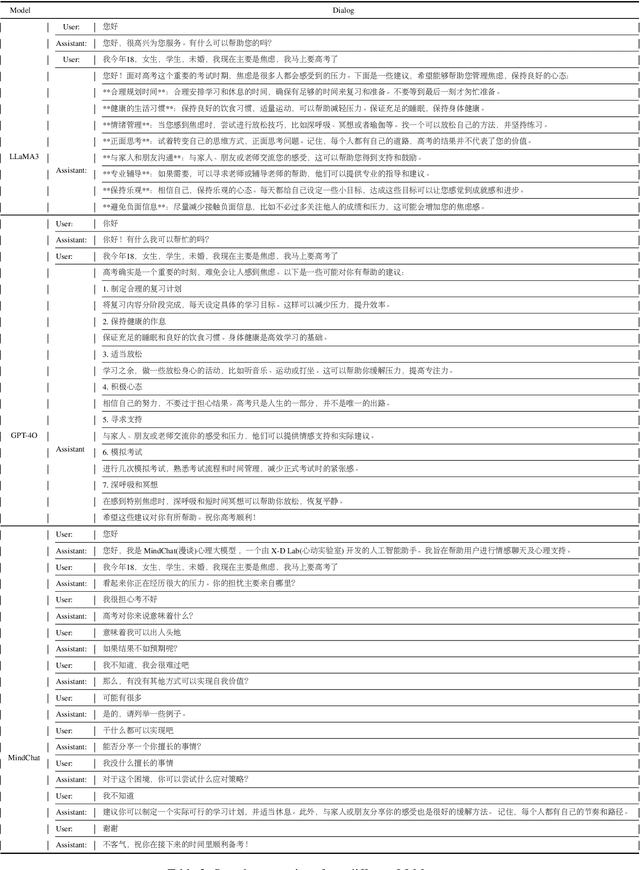
Large language models (LLMs) are raging over the medical domain, and their momentum has carried over into the mental health domain, leading to the emergence of few mental health LLMs. Although such mental health LLMs could provide reasonable suggestions for psychological counseling, how to develop an authentic and effective doctor-patient relationship (DPR) through LLMs is still an important problem. To fill this gap, we dissect DPR into two key attributes, i.e., the psychologist's empathy and proactive guidance. We thus present WundtGPT, an empathetic and proactive mental health large language model that is acquired by fine-tuning it with instruction and real conversation between psychologists and patients. It is designed to assist psychologists in diagnosis and help patients who are reluctant to communicate face-to-face understand their psychological conditions. Its uniqueness lies in that it could not only pose purposeful questions to guide patients in detailing their symptoms but also offer warm emotional reassurance. In particular, WundtGPT incorporates Collection of Questions, Chain of Psychodiagnosis, and Empathy Constraints into a comprehensive prompt for eliciting LLMs' questions and diagnoses. Additionally, WundtGPT proposes a reward model to promote alignment with empathetic mental health professionals, which encompasses two key factors: cognitive empathy and emotional empathy. We offer a comprehensive evaluation of our proposed model. Based on these outcomes, we further conduct the manual evaluation based on proactivity, effectiveness, professionalism and coherence. We notice that WundtGPT can offer professional and effective consultation. The model is available at huggingface.
Time-Varying Graph Signal Recovery Using High-Order Smoothness and Adaptive Low-rankness
May 16, 2024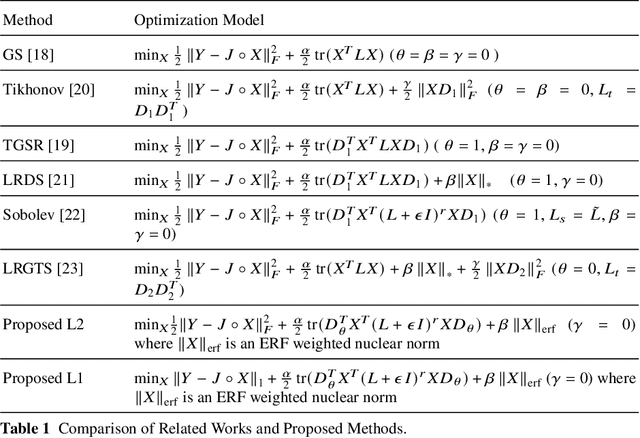

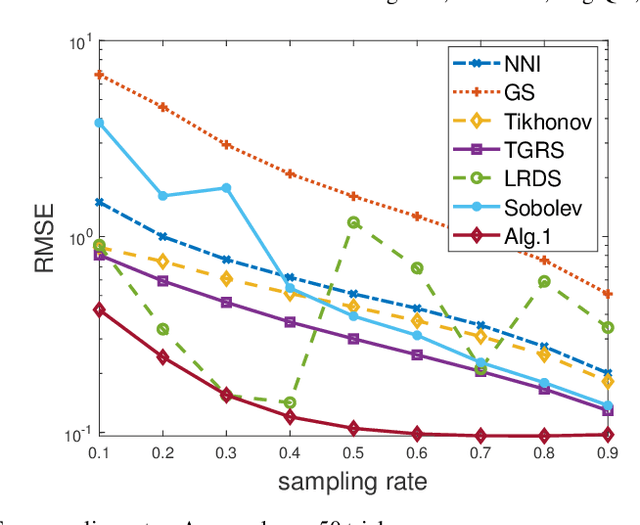
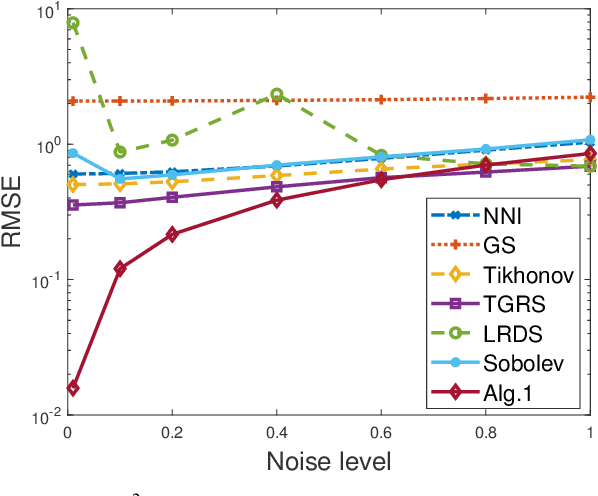
Time-varying graph signal recovery has been widely used in many applications, including climate change, environmental hazard monitoring, and epidemic studies. It is crucial to choose appropriate regularizations to describe the characteristics of the underlying signals, such as the smoothness of the signal over the graph domain and the low-rank structure of the spatial-temporal signal modeled in a matrix form. As one of the most popular options, the graph Laplacian is commonly adopted in designing graph regularizations for reconstructing signals defined on a graph from partially observed data. In this work, we propose a time-varying graph signal recovery method based on the high-order Sobolev smoothness and an error-function weighted nuclear norm regularization to enforce the low-rankness. Two efficient algorithms based on the alternating direction method of multipliers and iterative reweighting are proposed, and convergence of one algorithm is shown in detail. We conduct various numerical experiments on synthetic and real-world data sets to demonstrate the proposed method's effectiveness compared to the state-of-the-art in graph signal recovery.