 Add to Chrome
 Add to Firefox
 Add to Edge
Can Large Language Models Replace Data Scientists in Clinical Research?
Oct 28, 2024
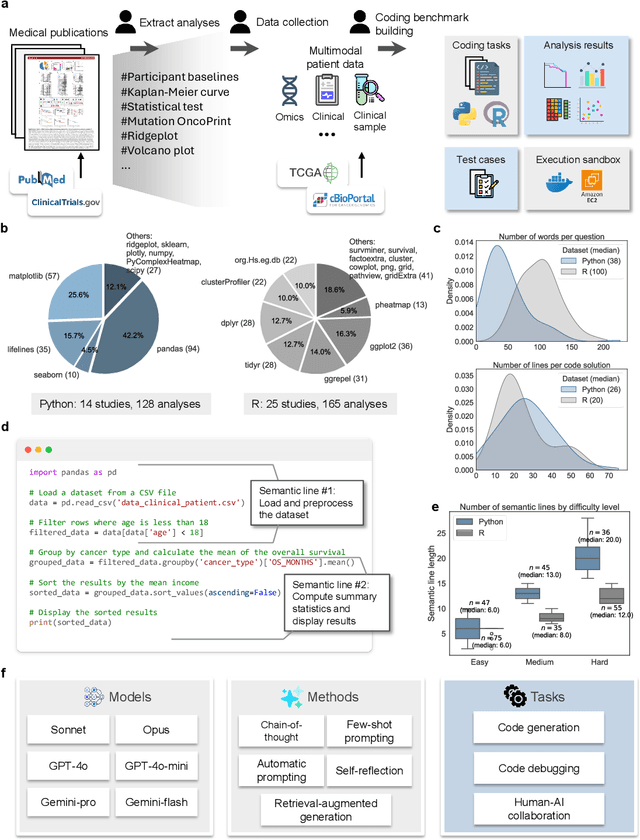
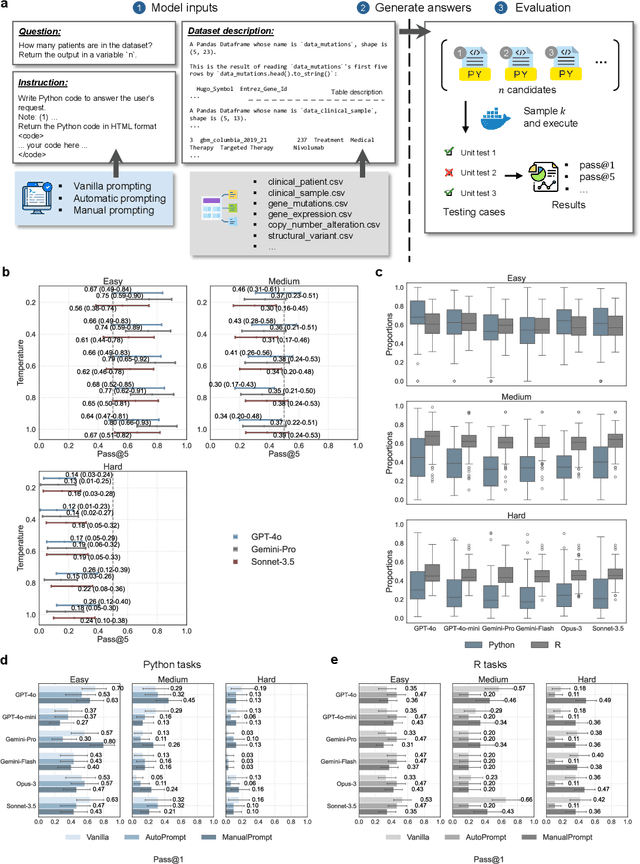
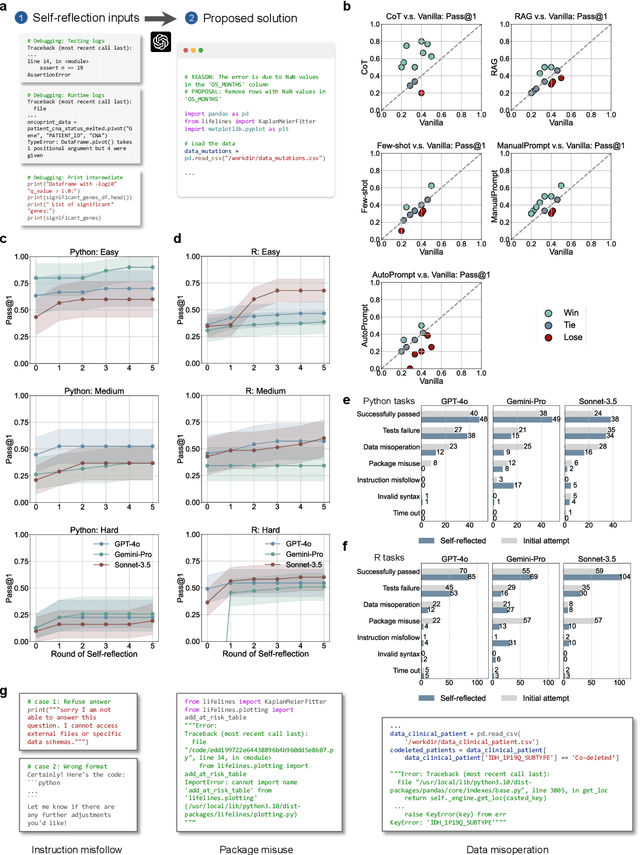
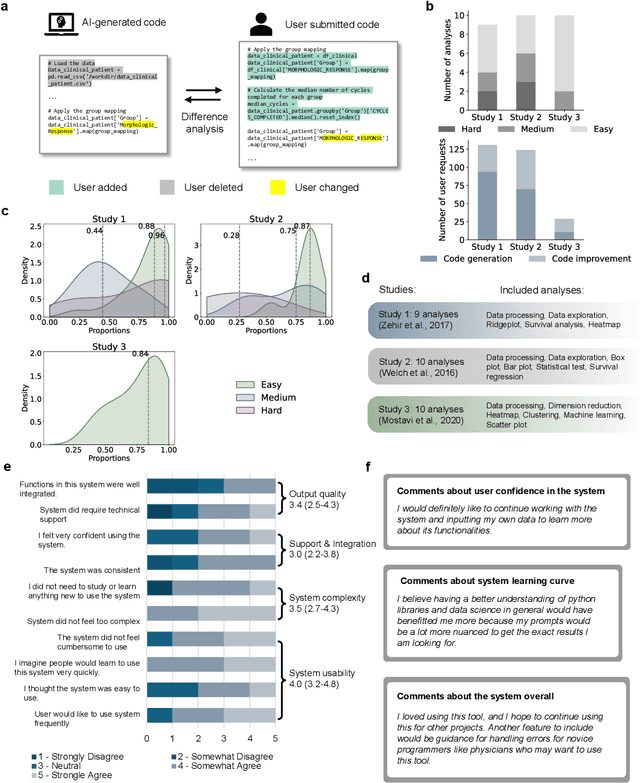
Data science plays a critical role in clinical research, but it requires professionals with expertise in coding and medical data analysis. Large language models (LLMs) have shown great potential in supporting medical tasks and performing well in general coding tests. However, these tests do not assess LLMs' ability to handle data science tasks in medicine, nor do they explore their practical utility in clinical research. To address this, we developed a dataset consisting of 293 real-world data science coding tasks, based on 39 published clinical studies, covering 128 tasks in Python and 165 tasks in R. This dataset simulates realistic clinical research scenarios using patient data. Our findings reveal that cutting-edge LLMs struggle to generate perfect solutions, frequently failing to follow input instructions, understand target data, and adhere to standard analysis practices. Consequently, LLMs are not yet ready to fully automate data science tasks. We benchmarked advanced adaptation methods and found two to be particularly effective: chain-of-thought prompting, which provides a step-by-step plan for data analysis, which led to a 60% improvement in code accuracy; and self-reflection, enabling LLMs to iteratively refine their code, yielding a 38% accuracy improvement. Building on these insights, we developed a platform that integrates LLMs into the data science workflow for medical professionals. In a user study with five medical doctors, we found that while LLMs cannot fully automate coding tasks, they significantly streamline the programming process. We found that 80% of their submitted code solutions were incorporated from LLM-generated code, with up to 96% reuse in some cases. Our analysis highlights the potential of LLMs, when integrated into expert workflows, to enhance data science efficiency in clinical research.

Demystifying Large Language Models for Medicine: A Primer
Oct 24, 2024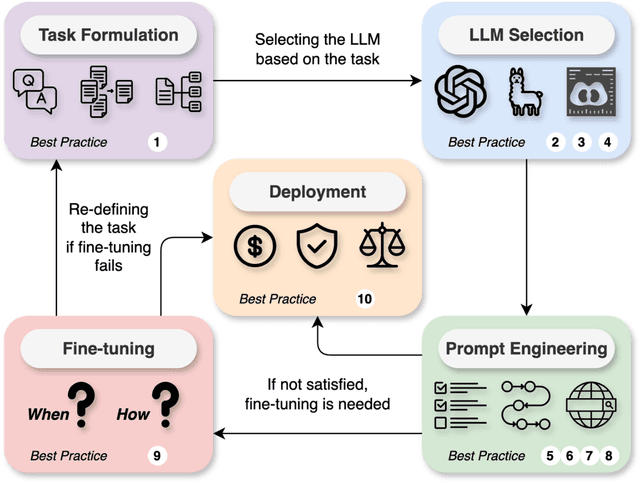
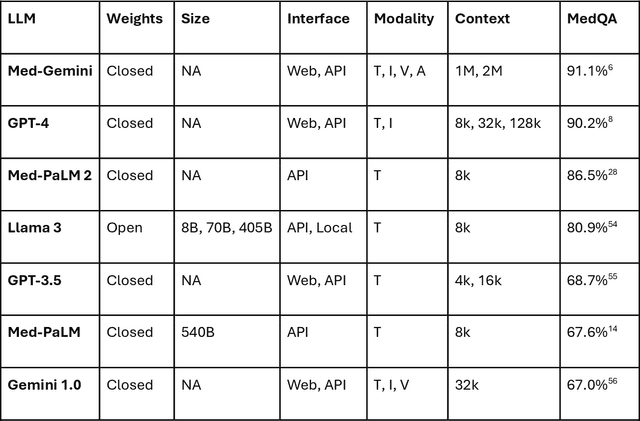
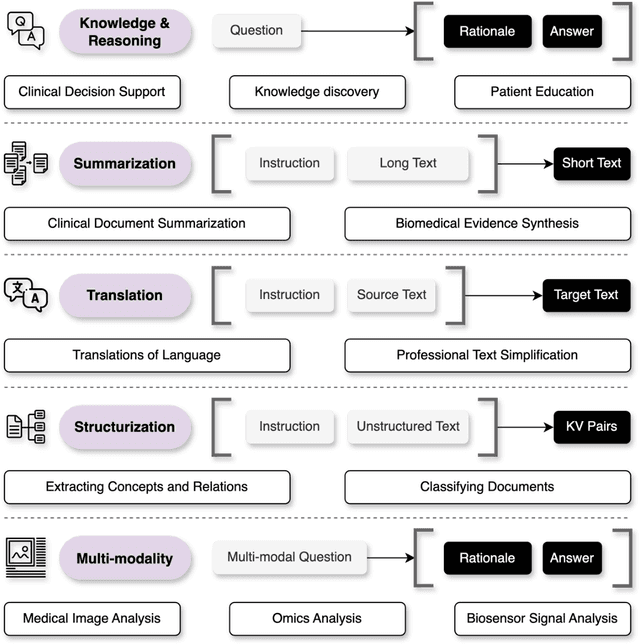
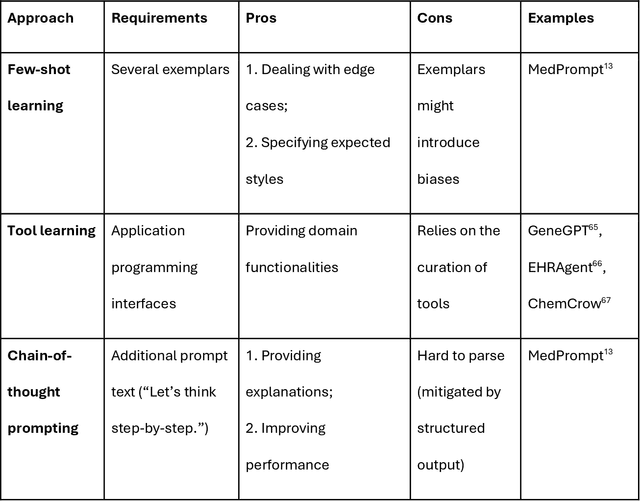
Large language models (LLMs) represent a transformative class of AI tools capable of revolutionizing various aspects of healthcare by generating human-like responses across diverse contexts and adapting to novel tasks following human instructions. Their potential application spans a broad range of medical tasks, such as clinical documentation, matching patients to clinical trials, and answering medical questions. In this primer paper, we propose an actionable guideline to help healthcare professionals more efficiently utilize LLMs in their work, along with a set of best practices. This approach consists of several main phases, including formulating the task, choosing LLMs, prompt engineering, fine-tuning, and deployment. We start with the discussion of critical considerations in identifying healthcare tasks that align with the core capabilities of LLMs and selecting models based on the selected task and data, performance requirements, and model interface. We then review the strategies, such as prompt engineering and fine-tuning, to adapt standard LLMs to specialized medical tasks. Deployment considerations, including regulatory compliance, ethical guidelines, and continuous monitoring for fairness and bias, are also discussed. By providing a structured step-by-step methodology, this tutorial aims to equip healthcare professionals with the tools necessary to effectively integrate LLMs into clinical practice, ensuring that these powerful technologies are applied in a safe, reliable, and impactful manner.
GeSubNet: Gene Interaction Inference for Disease Subtype Network Generation
Oct 17, 2024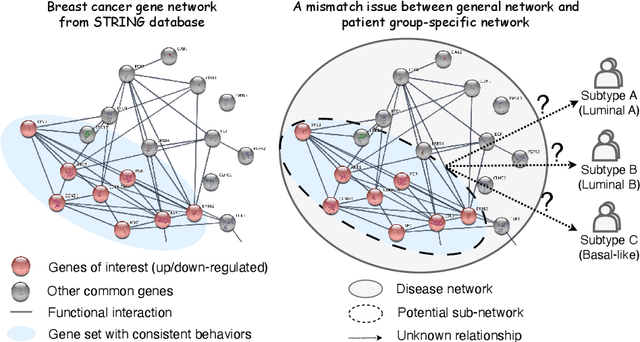

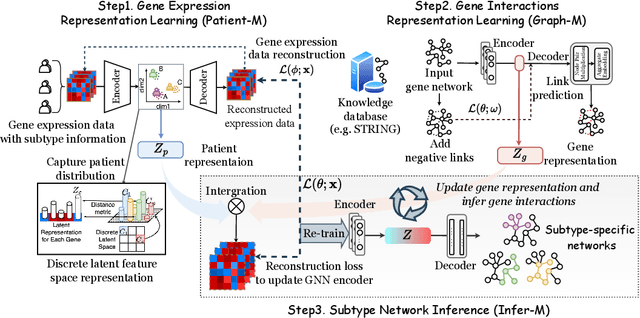

Retrieving gene functional networks from knowledge databases presents a challenge due to the mismatch between disease networks and subtype-specific variations. Current solutions, including statistical and deep learning methods, often fail to effectively integrate gene interaction knowledge from databases or explicitly learn subtype-specific interactions. To address this mismatch, we propose GeSubNet, which learns a unified representation capable of predicting gene interactions while distinguishing between different disease subtypes. Graphs generated by such representations can be considered subtype-specific networks. GeSubNet is a multi-step representation learning framework with three modules: First, a deep generative model learns distinct disease subtypes from patient gene expression profiles. Second, a graph neural network captures representations of prior gene networks from knowledge databases, ensuring accurate physical gene interactions. Finally, we integrate these two representations using an inference loss that leverages graph generation capabilities, conditioned on the patient separation loss, to refine subtype-specific information in the learned representation. GeSubNet consistently outperforms traditional methods, with average improvements of 30.6%, 21.0%, 20.1%, and 56.6% across four graph evaluation metrics, averaged over four cancer datasets. Particularly, we conduct a biological simulation experiment to assess how the behavior of selected genes from over 11,000 candidates affects subtypes or patient distributions. The results show that the generated network has the potential to identify subtype-specific genes with an 83% likelihood of impacting patient distribution shifts. The GeSubNet resource is available: https://anonymous.4open.science/r/GeSubNet/
Unleashing the Power of LLMs as Multi-Modal Encoders for Text and Graph-Structured Data
Oct 15, 2024
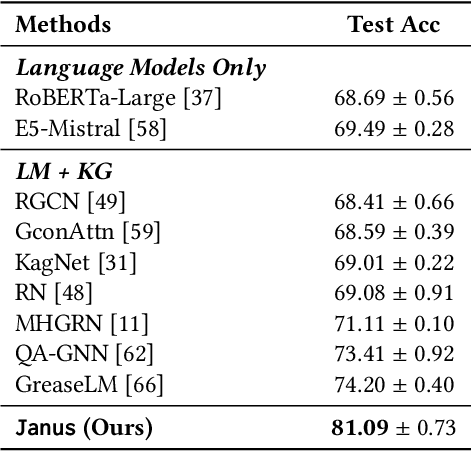

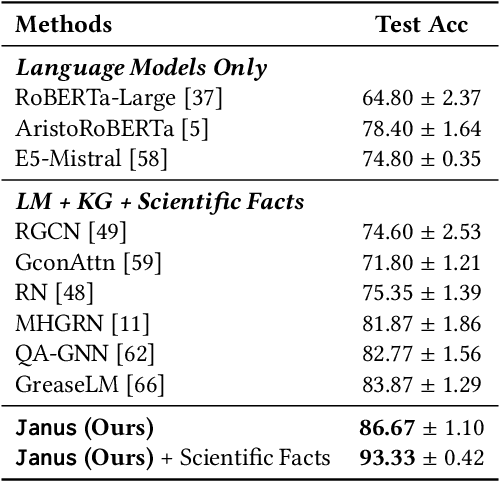
Graph-structured information offers rich contextual information that can enhance language models by providing structured relationships and hierarchies, leading to more expressive embeddings for various applications such as retrieval, question answering, and classification. However, existing methods for integrating graph and text embeddings, often based on Multi-layer Perceptrons (MLPs) or shallow transformers, are limited in their ability to fully exploit the heterogeneous nature of these modalities. To overcome this, we propose Janus, a simple yet effective framework that leverages Large Language Models (LLMs) to jointly encode text and graph data. Specifically, Janus employs an MLP adapter to project graph embeddings into the same space as text embeddings, allowing the LLM to process both modalities jointly. Unlike prior work, we also introduce contrastive learning to align the graph and text spaces more effectively, thereby improving the quality of learned joint embeddings. Empirical results across six datasets spanning three tasks, knowledge graph-contextualized question answering, graph-text pair classification, and retrieval, demonstrate that Janus consistently outperforms existing baselines, achieving significant improvements across multiple datasets, with gains of up to 11.4% in QA tasks. These results highlight Janus's effectiveness in integrating graph and text data. Ablation studies further validate the effectiveness of our method.
Reasoning-Enhanced Healthcare Predictions with Knowledge Graph Community Retrieval
Oct 06, 2024


Large language models (LLMs) have demonstrated significant potential in clinical decision support. Yet LLMs still suffer from hallucinations and lack fine-grained contextual medical knowledge, limiting their high-stake healthcare applications such as clinical diagnosis. Traditional retrieval-augmented generation (RAG) methods attempt to address these limitations but frequently retrieve sparse or irrelevant information, undermining prediction accuracy. We introduce KARE, a novel framework that integrates knowledge graph (KG) community-level retrieval with LLM reasoning to enhance healthcare predictions. KARE constructs a comprehensive multi-source KG by integrating biomedical databases, clinical literature, and LLM-generated insights, and organizes it using hierarchical graph community detection and summarization for precise and contextually relevant information retrieval. Our key innovations include: (1) a dense medical knowledge structuring approach enabling accurate retrieval of relevant information; (2) a dynamic knowledge retrieval mechanism that enriches patient contexts with focused, multi-faceted medical insights; and (3) a reasoning-enhanced prediction framework that leverages these enriched contexts to produce both accurate and interpretable clinical predictions. Extensive experiments demonstrate that KARE outperforms leading models by up to 10.8-15.0% on MIMIC-III and 12.6-12.7% on MIMIC-IV for mortality and readmission predictions. In addition to its impressive prediction accuracy, our framework leverages the reasoning capabilities of LLMs, enhancing the trustworthiness of clinical predictions.
DILA: Dictionary Label Attention for Mechanistic Interpretability in High-dimensional Multi-label Medical Coding Prediction
Sep 16, 2024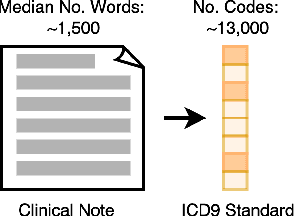
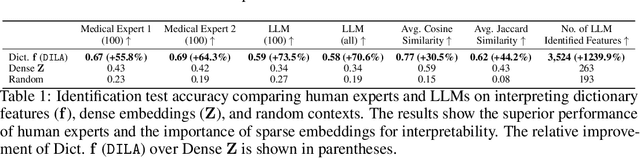

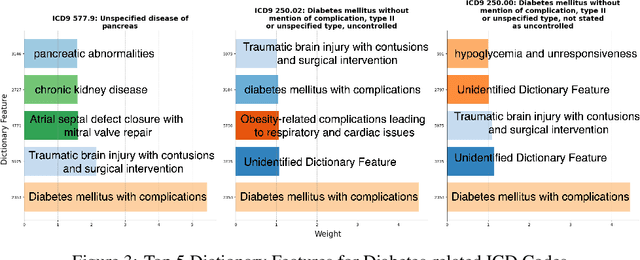
Predicting high-dimensional or extreme multilabels, such as in medical coding, requires both accuracy and interpretability. Existing works often rely on local interpretability methods, failing to provide comprehensive explanations of the overall mechanism behind each label prediction within a multilabel set. We propose a mechanistic interpretability module called DIctionary Label Attention (\method) that disentangles uninterpretable dense embeddings into a sparse embedding space, where each nonzero element (a dictionary feature) represents a globally learned medical concept. Through human evaluations, we show that our sparse embeddings are more human understandable than its dense counterparts by at least 50 percent. Our automated dictionary feature identification pipeline, leveraging large language models (LLMs), uncovers thousands of learned medical concepts by examining and summarizing the highest activating tokens for each dictionary feature. We represent the relationships between dictionary features and medical codes through a sparse interpretable matrix, enhancing the mechanistic and global understanding of the model's predictions while maintaining competitive performance and scalability without extensive human annotation.
TrialSynth: Generation of Synthetic Sequential Clinical Trial Data
Sep 11, 2024
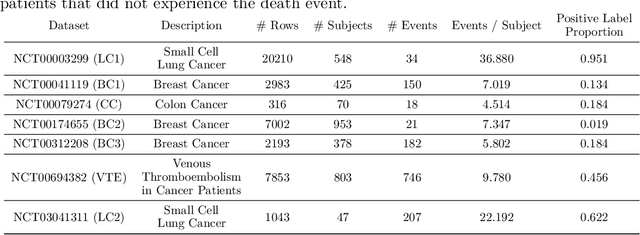
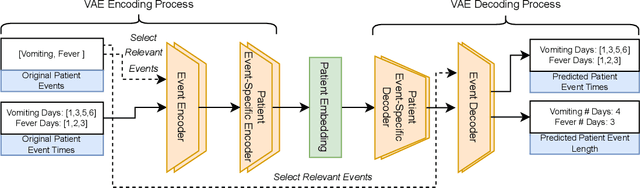

Analyzing data from past clinical trials is part of the ongoing effort to optimize the design, implementation, and execution of new clinical trials and more efficiently bring life-saving interventions to market. While there have been recent advances in the generation of static context synthetic clinical trial data, due to both limited patient availability and constraints imposed by patient privacy needs, the generation of fine-grained synthetic time-sequential clinical trial data has been challenging. Given that patient trajectories over an entire clinical trial are of high importance for optimizing trial design and efforts to prevent harmful adverse events, there is a significant need for the generation of high-fidelity time-sequence clinical trial data. Here we introduce TrialSynth, a Variational Autoencoder (VAE) designed to address the specific challenges of generating synthetic time-sequence clinical trial data. Distinct from related clinical data VAE methods, the core of our method leverages Hawkes Processes (HP), which are particularly well-suited for modeling event-type and time gap prediction needed to capture the structure of sequential clinical trial data. Our experiments demonstrate that TrialSynth surpasses the performance of other comparable methods that can generate sequential clinical trial data, in terms of both fidelity and in enabling the generation of highly accurate event sequences across multiple real-world sequential event datasets with small patient source populations when using minimal external information. Notably, our empirical findings highlight that TrialSynth not only outperforms existing clinical sequence-generating methods but also produces data with superior utility while empirically preserving patient privacy.
Synthetic Patient-Physician Dialogue Generation from Clinical Notes Using LLM
Aug 12, 2024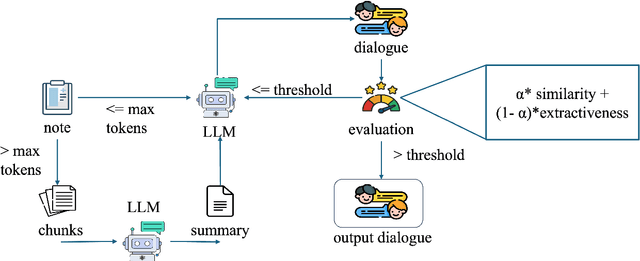
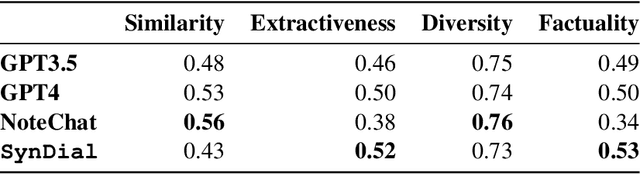
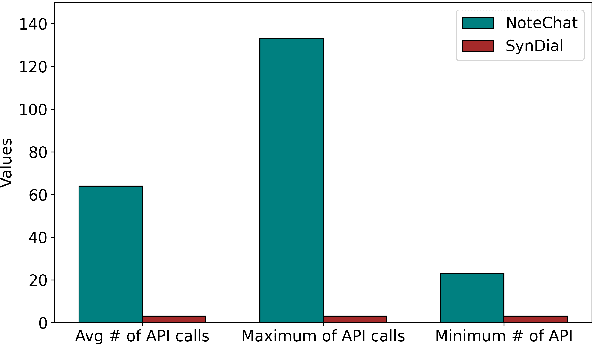
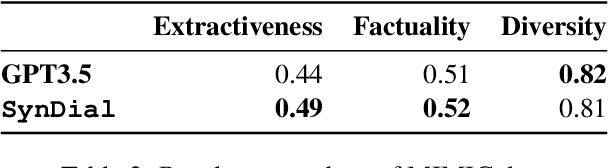
Medical dialogue systems (MDS) enhance patient-physician communication, improve healthcare accessibility, and reduce costs. However, acquiring suitable data to train these systems poses significant challenges. Privacy concerns prevent the use of real conversations, necessitating synthetic alternatives. Synthetic dialogue generation from publicly available clinical notes offers a promising solution to this issue, providing realistic data while safeguarding privacy. Our approach, SynDial, uses a single LLM iteratively with zero-shot prompting and a feedback loop to generate and refine high-quality synthetic dialogues. The feedback consists of weighted evaluation scores for similarity and extractiveness. The iterative process ensures dialogues meet predefined thresholds, achieving superior extractiveness as a result of the feedback loop. Additionally, evaluation shows that the generated dialogues excel in factuality metric compared to the baselines and has comparable diversity scores with GPT4.
Molecule Language Model with Augmented Pairs and Expertise Transfer
Jul 12, 2024Understanding the molecules and their textual descriptions via molecule language models (MoLM) recently got a surge of interest among researchers. However, unique challenges exist in the field of MoLM due to 1) a limited amount of molecule-text paired data and 2) missing expertise that occurred due to the specialized areas of focus among the experts. To this end, we propose AMOLE, which 1) augments molecule-text pairs with structural similarity preserving loss, and 2) transfers the expertise between the molecules. Extensive experiments on various downstream tasks demonstrate the superiority of AMOLE in comprehending molecules and their descriptions, highlighting its potential for application in real-world drug discovery.
TrialBench: Multi-Modal Artificial Intelligence-Ready Clinical Trial Datasets
Jun 30, 2024

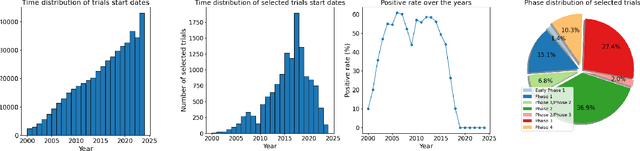

Clinical trials are pivotal for developing new medical treatments, yet they typically pose some risks such as patient mortality, adverse events, and enrollment failure that waste immense efforts spanning over a decade. Applying artificial intelligence (AI) to forecast or simulate key events in clinical trials holds great potential for providing insights to guide trial designs. However, complex data collection and question definition requiring medical expertise and a deep understanding of trial designs have hindered the involvement of AI thus far. This paper tackles these challenges by presenting a comprehensive suite of meticulously curated AIready datasets covering multi-modal data (e.g., drug molecule, disease code, text, categorical/numerical features) and 8 crucial prediction challenges in clinical trial design, encompassing prediction of trial duration, patient dropout rate, serious adverse event, mortality rate, trial approval outcome, trial failure reason, drug dose finding, design of eligibility criteria. Furthermore, we provide basic validation methods for each task to ensure the datasets' usability and reliability. We anticipate that the availability of such open-access datasets will catalyze the development of advanced AI approaches for clinical trial design, ultimately advancing clinical trial research and accelerating medical solution development. The curated dataset, metrics, and basic models are publicly available at https://github.com/ML2Health/ML2ClinicalTrials/tree/main/AI4Trial.