 Add to Chrome
 Add to Firefox
 Add to Edge
Efficient 4D Gaussian Stream with Low Rank Adaptation
Feb 23, 2025
Recent methods have made significant progress in synthesizing novel views with long video sequences. This paper proposes a highly scalable method for dynamic novel view synthesis with continual learning. We leverage the 3D Gaussians to represent the scene and a low-rank adaptation-based deformation model to capture the dynamic scene changes. Our method continuously reconstructs the dynamics with chunks of video frames, reduces the streaming bandwidth by $90\%$ while maintaining high rendering quality comparable to the off-line SOTA methods.

Multi-Class Imbalanced Learning with Support Vector Machines via Differential Evolution
Feb 20, 2025Support vector machine (SVM) is a powerful machine learning algorithm to handle classification tasks. However, the classical SVM is developed for binary problems with the assumption of balanced datasets. Obviously, the multi-class imbalanced classification problems are more complex. In this paper, we propose an improved SVM via Differential Evolution (i-SVM-DE) method to deal with it. An improved SVM (i-SVM) model is proposed to handle the data imbalance by combining cost sensitive technique and separation margin modification in the constraints, which formalize a parameter optimization problem. By using one-versus-one (OVO) scheme, a multi-class problem is decomposed into a number of binary subproblems. A large optimization problem is formalized through concatenating the parameters in the binary subproblems. To find the optimal model effectively and learn the support vectors for each class simultaneously, an improved differential evolution (DE) algorithm is applied to solve this large optimization problem. Instead of the validation set, we propose the fitness functions to evaluate the learned model and obtain the optimal parameters in the search process of DE. A series of experiments are carried out to verify the benefits of our proposed method. The results indicate that i-SVM-DE is statistically superior by comparing with the other baseline methods.
Step-Audio: Unified Understanding and Generation in Intelligent Speech Interaction
Feb 18, 2025Real-time speech interaction, serving as a fundamental interface for human-machine collaboration, holds immense potential. However, current open-source models face limitations such as high costs in voice data collection, weakness in dynamic control, and limited intelligence. To address these challenges, this paper introduces Step-Audio, the first production-ready open-source solution. Key contributions include: 1) a 130B-parameter unified speech-text multi-modal model that achieves unified understanding and generation, with the Step-Audio-Chat version open-sourced; 2) a generative speech data engine that establishes an affordable voice cloning framework and produces the open-sourced lightweight Step-Audio-TTS-3B model through distillation; 3) an instruction-driven fine control system enabling dynamic adjustments across dialects, emotions, singing, and RAP; 4) an enhanced cognitive architecture augmented with tool calling and role-playing abilities to manage complex tasks effectively. Based on our new StepEval-Audio-360 evaluation benchmark, Step-Audio achieves state-of-the-art performance in human evaluations, especially in terms of instruction following. On open-source benchmarks like LLaMA Question, shows 9.3% average performance improvement, demonstrating our commitment to advancing the development of open-source multi-modal language technologies. Our code and models are available at https://github.com/stepfun-ai/Step-Audio.
Hybrid Beamforming Design for Bistatic Integrated Sensing and Communication Systems
Feb 17, 2025Integrated sensing and communication (ISAC) in millimeter wave is a key enabler for next-generation networks, which leverages large bandwidth and extensive antenna arrays, benefiting both communication and sensing functionalities. The associated high costs can be mitigated by adopting a hybrid beamforming structure. However, the well-studied monostatic ISAC systems face challenges related to full-duplex operation. To address this issue, this paper focuses on a three-dimensional bistatic configuration that requires only half-duplex base stations. To intuitively evaluate the error bound of bistatic sensing using orthogonal frequency division multiplexing waveforms, we propose a positioning scheme that combines angle-of-arrival and time-of-arrival estimation, deriving the closed-form expression of the position error bound (PEB). Using this PEB, we develop two hybrid beamforming algorithms for joint waveform design, aimed at maximizing achievable spectral efficiency (SE) while ensuring a predefined PEB threshold. The first algorithm leverages a Riemannian trust-region approach, achieving superior performance in terms of global optima and convergence speed compared to conventional gradient-based methods, but with higher complexity. In contrast, the second algorithm, which employs orthogonal matching pursuit, offers a more computationally efficient solution, delivering reasonable SE while maintaining the PEB constraint. Numerical results are provided to validate the effectiveness of the proposed designs.
Decision Boundary Optimization-Informed Domain Adaptation
Feb 10, 2025


Maximum Mean Discrepancy (MMD) is widely used in a number of domain adaptation (DA) methods and shows its effectiveness in aligning data distributions across domains. However, in previous DA research, MMD-based DA methods focus mostly on distribution alignment, and ignore to optimize the decision boundary for classification-aware DA, thereby falling short in reducing the DA upper error bound. In this paper, we propose a strengthened MMD measurement, namely, Decision Boundary optimization-informed MMD (DB-MMD), which enables MMD to carefully take into account the decision boundaries, thereby simultaneously optimizing the distribution alignment and cross-domain classifier within a hybrid framework, and leading to a theoretical bound guided DA. We further seamlessly embed the proposed DB-MMD measurement into several popular DA methods, e.g., MEDA, DGA-DA, to demonstrate its effectiveness w.r.t different experimental settings. We carry out comprehensive experiments using 8 standard DA datasets. The experimental results show that the DB-MMD enforced DA methods improve their baseline models using plain vanilla MMD, with a margin that can be as high as 9.5.
BFS-Prover: Scalable Best-First Tree Search for LLM-based Automatic Theorem Proving
Feb 05, 2025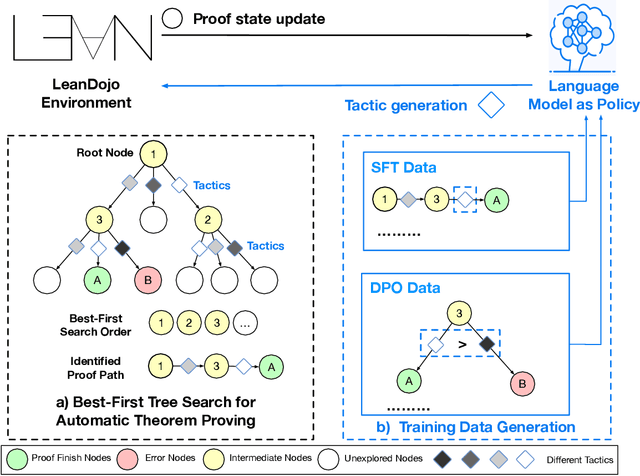
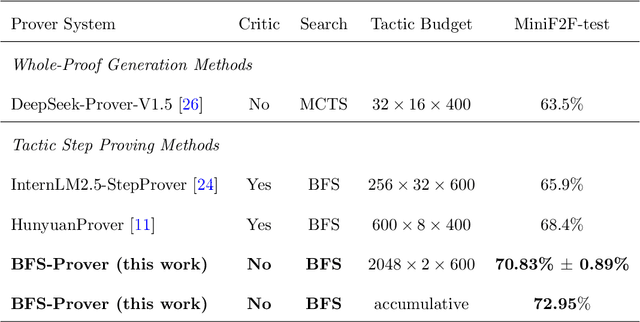
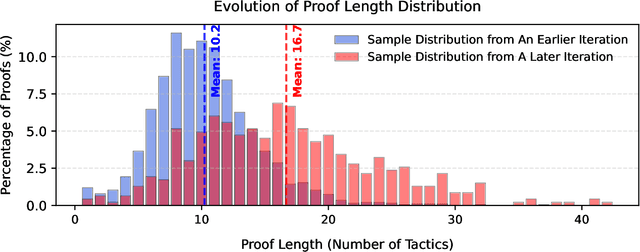
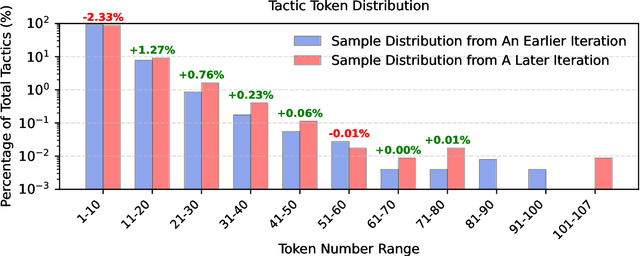
Recent advancements in large language models (LLMs) have spurred growing interest in automatic theorem proving using Lean4, where effective tree search methods are crucial for navigating proof search spaces. While the existing approaches primarily rely on value functions and Monte Carlo Tree Search (MCTS), the potential of simpler methods like Best-First Search (BFS) remains underexplored. This paper investigates whether BFS can achieve competitive performance in large-scale theorem proving tasks. We present \texttt{BFS-Prover}, a scalable expert iteration framework, featuring three key innovations. First, we implement strategic data filtering at each expert iteration round, excluding problems solvable via beam search node expansion to focus on harder cases. Second, we improve the sample efficiency of BFS through Direct Preference Optimization (DPO) applied to state-tactic pairs automatically annotated with compiler error feedback, refining the LLM's policy to prioritize productive expansions. Third, we employ length normalization in BFS to encourage exploration of deeper proof paths. \texttt{BFS-Prover} achieves a score of $71.31$ on the MiniF2F test set and therefore challenges the perceived necessity of complex tree search methods, demonstrating that BFS can achieve competitive performance when properly scaled.
Fine-tuning ChatGPT for Automatic Scoring of Written Scientific Explanations in Chinese
Jan 12, 2025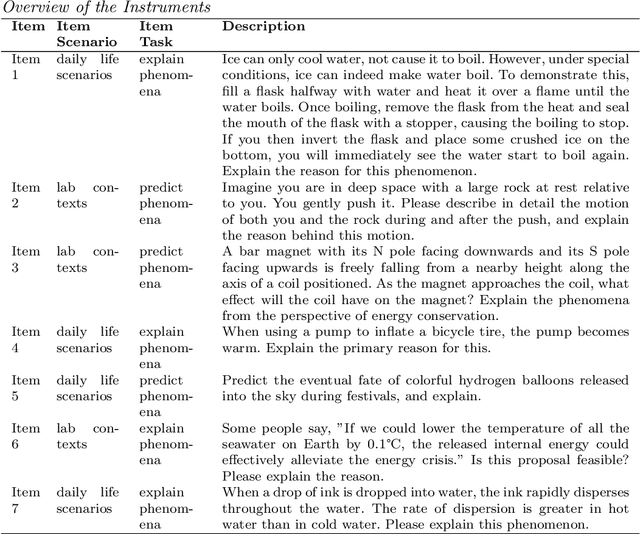
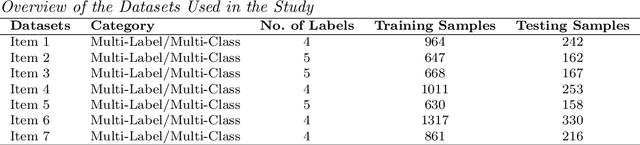

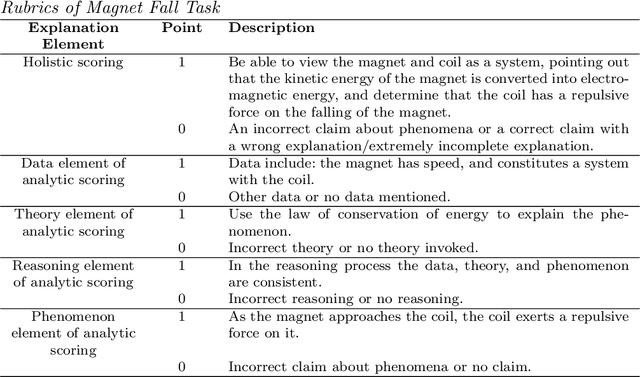
The development of explanations for scientific phenomena is essential in science assessment, but scoring student-written explanations remains challenging and resource-intensive. Large language models (LLMs) have shown promise in addressing this issue, particularly in alphabetic languages like English. However, their applicability to logographic languages is less explored. This study investigates the potential of fine-tuning ChatGPT, a leading LLM, to automatically score scientific explanations written in Chinese. Student responses to seven scientific explanation tasks were collected and automatically scored, with scoring accuracy examined in relation to reasoning complexity using the Kendall correlation. A qualitative analysis explored how linguistic features influenced scoring accuracy. The results show that domain-specific adaptation enables ChatGPT to score Chinese scientific explanations with accuracy. However, scoring accuracy correlates with reasoning complexity: a negative correlation for lower-level responses and a positive one for higher-level responses. The model overrates complex reasoning in low-level responses with intricate sentence structures and underrates high-level responses using concise causal reasoning. These correlations stem from linguistic features--simplicity and clarity enhance accuracy for lower-level responses, while comprehensiveness improves accuracy for higher-level ones. Simpler, shorter responses tend to score more accurately at lower levels, whereas longer, information-rich responses yield better accuracy at higher levels. These findings demonstrate the effectiveness of LLMs in automatic scoring within a Chinese context and emphasize the importance of linguistic features and reasoning complexity in fine-tuning scoring models for educational assessments.
Holistic Semantic Representation for Navigational Trajectory Generation
Jan 06, 2025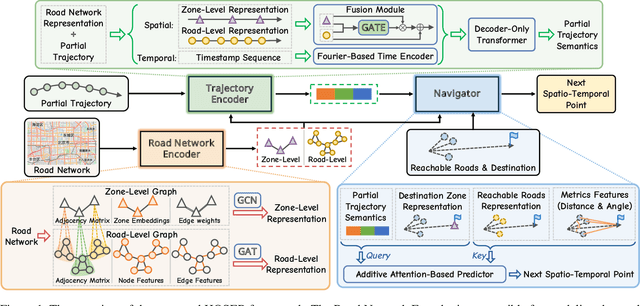
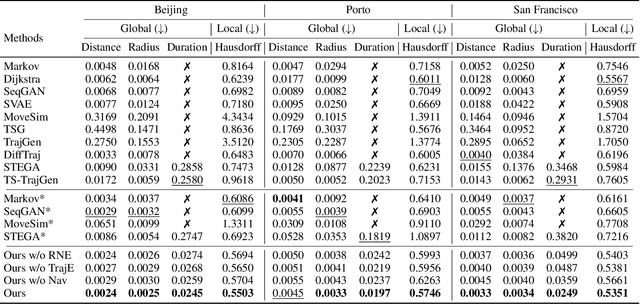
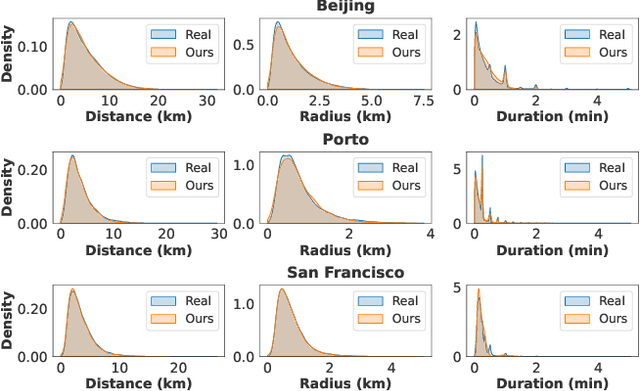
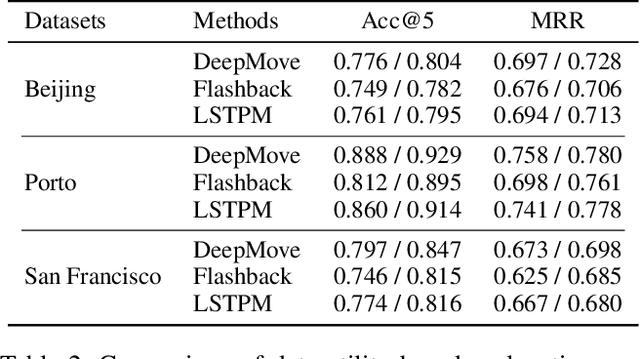
Trajectory generation has garnered significant attention from researchers in the field of spatio-temporal analysis, as it can generate substantial synthesized human mobility trajectories that enhance user privacy and alleviate data scarcity. However, existing trajectory generation methods often focus on improving trajectory generation quality from a singular perspective, lacking a comprehensive semantic understanding across various scales. Consequently, we are inspired to develop a HOlistic SEmantic Representation (HOSER) framework for navigational trajectory generation. Given an origin-and-destination (OD) pair and the starting time point of a latent trajectory, we first propose a Road Network Encoder to expand the receptive field of road- and zone-level semantics. Second, we design a Multi-Granularity Trajectory Encoder to integrate the spatio-temporal semantics of the generated trajectory at both the point and trajectory levels. Finally, we employ a Destination-Oriented Navigator to seamlessly integrate destination-oriented guidance. Extensive experiments on three real-world datasets demonstrate that HOSER outperforms state-of-the-art baselines by a significant margin. Moreover, the model's performance in few-shot learning and zero-shot learning scenarios further verifies the effectiveness of our holistic semantic representation.
RainGaugeNet: CSI-Based Sub-6 GHz Rainfall Attenuation Measurement and Classification for ISAC Applications
Jan 04, 2025


Rainfall impacts daily activities and can lead to severe hazards such as flooding. Traditional rainfall measurement systems often lack granularity or require extensive infrastructure. While the attenuation of electromagnetic waves due to rainfall is well-documented for frequencies above 10 GHz, sub-6 GHz bands are typically assumed to experience negligible effects. However, recent studies suggest measurable attenuation even at these lower frequencies. This study presents the first channel state information (CSI)-based measurement and analysis of rainfall attenuation at 2.8 GHz. The results confirm the presence of rain-induced attenuation at this frequency, although classification remains challenging. The attenuation follows a power-law decay model, with the rate of attenuation decreasing as rainfall intensity increases. Additionally, rainfall onset significantly increases the delay spread. Building on these insights, we propose RainGaugeNet, the first CSI-based rainfall classification model that leverages multipath and temporal features. Using only 20 seconds of CSI data, RainGaugeNet achieved over 90% classification accuracy in line-of-sight scenarios and over 85% in non-lineof-sight scenarios, significantly outperforming state-of-the-art methods.
CAD-GPT: Synthesising CAD Construction Sequence with Spatial Reasoning-Enhanced Multimodal LLMs
Dec 27, 2024
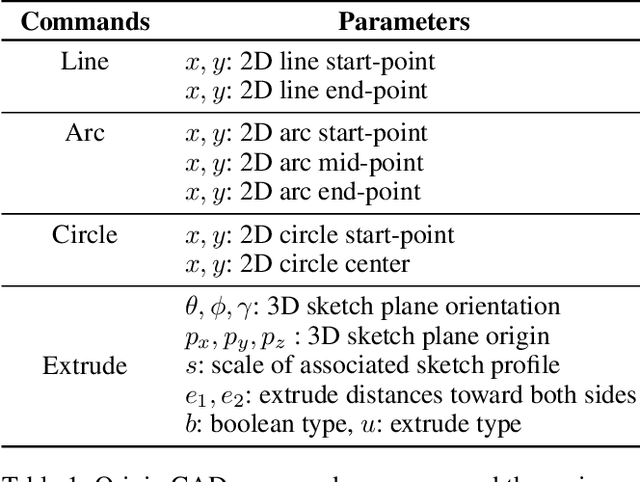
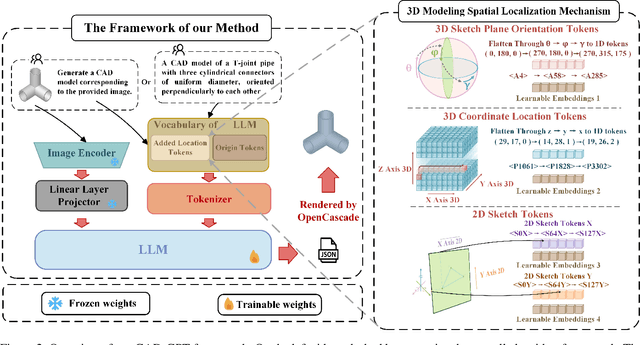
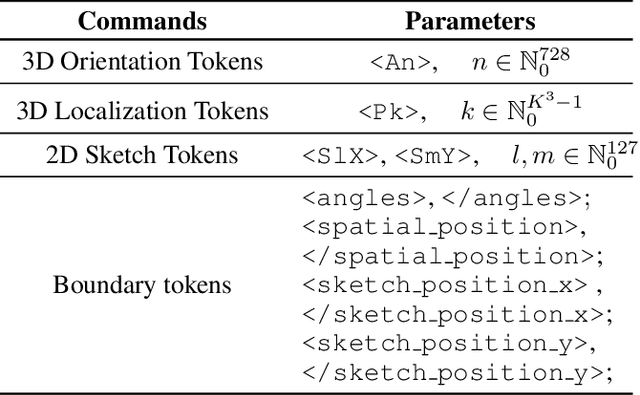
Computer-aided design (CAD) significantly enhances the efficiency, accuracy, and innovation of design processes by enabling precise 2D and 3D modeling, extensive analysis, and optimization. Existing methods for creating CAD models rely on latent vectors or point clouds, which are difficult to obtain and costly to store. Recent advances in Multimodal Large Language Models (MLLMs) have inspired researchers to use natural language instructions and images for CAD model construction. However, these models still struggle with inferring accurate 3D spatial location and orientation, leading to inaccuracies in determining the spatial 3D starting points and extrusion directions for constructing geometries. This work introduces CAD-GPT, a CAD synthesis method with spatial reasoning-enhanced MLLM that takes either a single image or a textual description as input. To achieve precise spatial inference, our approach introduces a 3D Modeling Spatial Mechanism. This method maps 3D spatial positions and 3D sketch plane rotation angles into a 1D linguistic feature space using a specialized spatial unfolding mechanism, while discretizing 2D sketch coordinates into an appropriate planar space to enable precise determination of spatial starting position, sketch orientation, and 2D sketch coordinate translations. Extensive experiments demonstrate that CAD-GPT consistently outperforms existing state-of-the-art methods in CAD model synthesis, both quantitatively and qualitatively.