 Add to Chrome
 Add to Firefox
 Add to Edge
Internet of Agents: Fundamentals, Applications, and Challenges
May 12, 2025
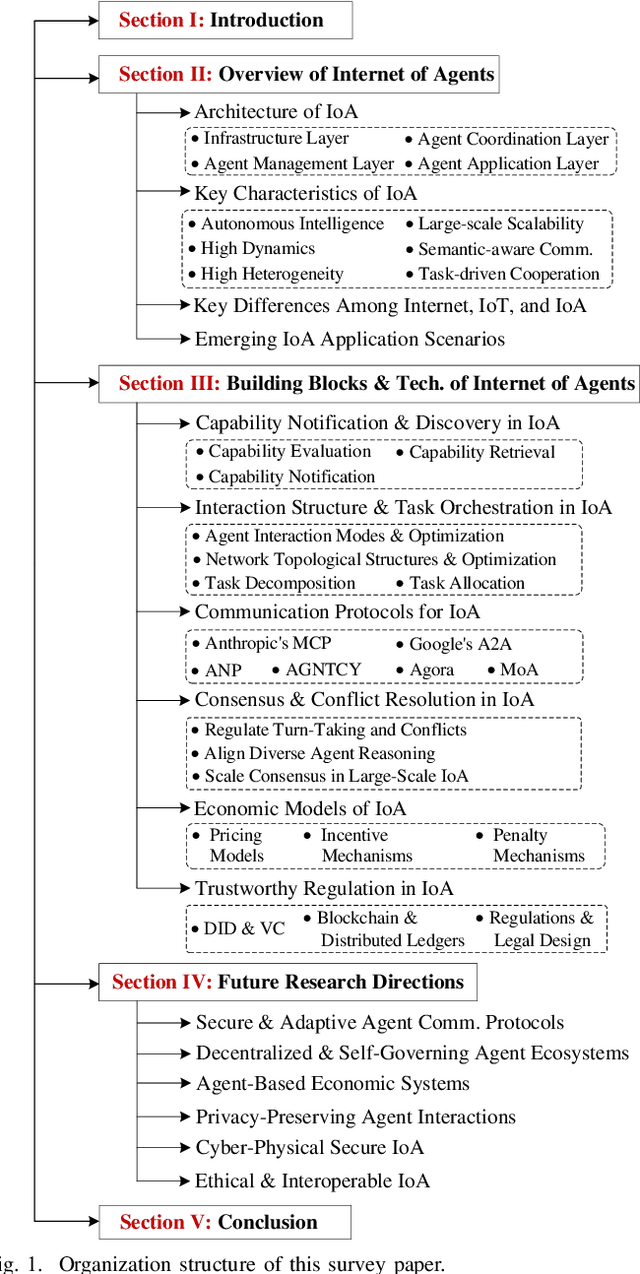
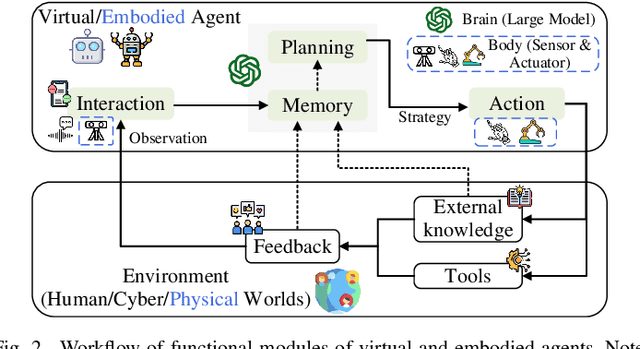
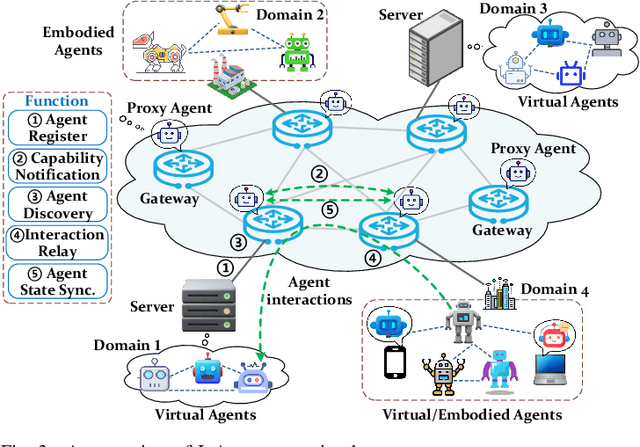
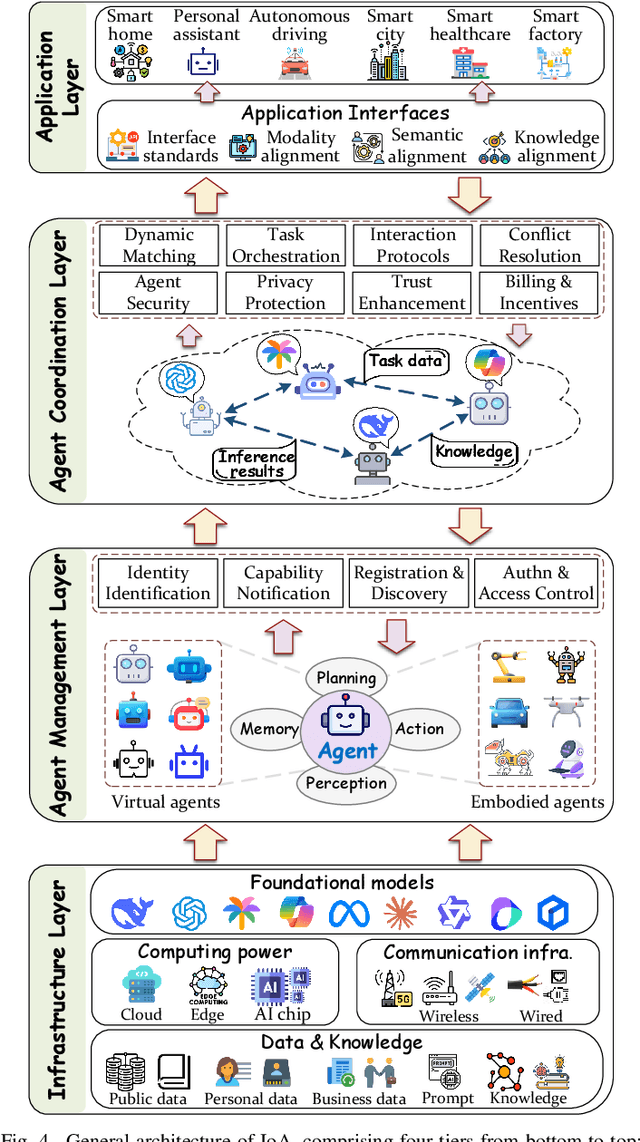
With the rapid proliferation of large language models and vision-language models, AI agents have evolved from isolated, task-specific systems into autonomous, interactive entities capable of perceiving, reasoning, and acting without human intervention. As these agents proliferate across virtual and physical environments, from virtual assistants to embodied robots, the need for a unified, agent-centric infrastructure becomes paramount. In this survey, we introduce the Internet of Agents (IoA) as a foundational framework that enables seamless interconnection, dynamic discovery, and collaborative orchestration among heterogeneous agents at scale. We begin by presenting a general IoA architecture, highlighting its hierarchical organization, distinguishing features relative to the traditional Internet, and emerging applications. Next, we analyze the key operational enablers of IoA, including capability notification and discovery, adaptive communication protocols, dynamic task matching, consensus and conflict-resolution mechanisms, and incentive models. Finally, we identify open research directions toward building resilient and trustworthy IoA ecosystems.

Bi-LSTM based Multi-Agent DRL with Computation-aware Pruning for Agent Twins Migration in Vehicular Embodied AI Networks
May 09, 2025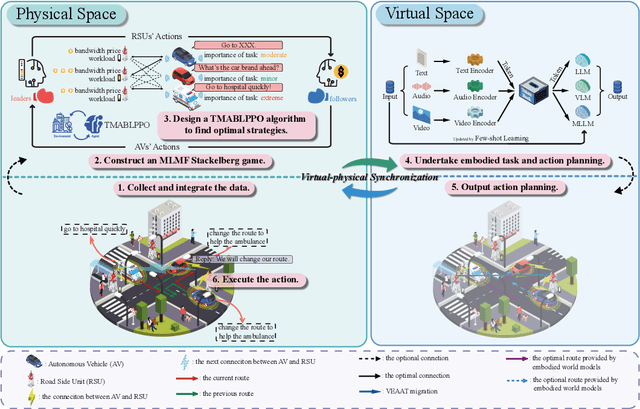
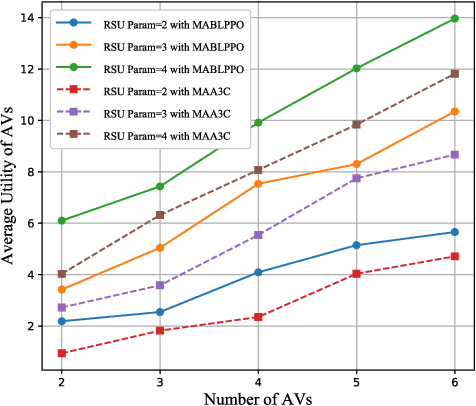
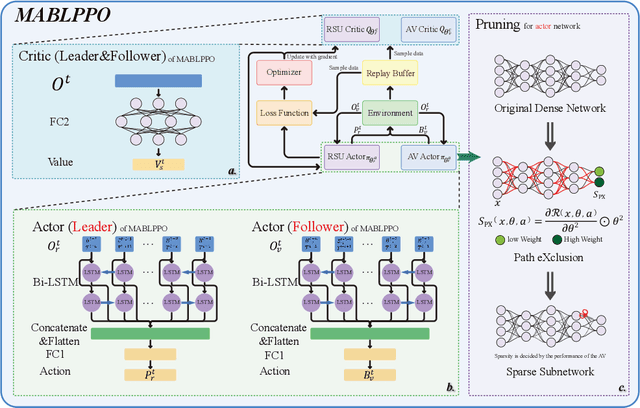
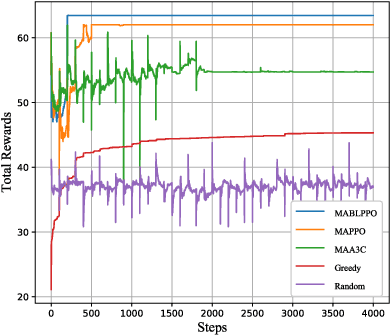
With the advancement of large language models and embodied Artificial Intelligence (AI) in the intelligent transportation scenarios, the combination of them in intelligent transportation spawns the Vehicular Embodied AI Network (VEANs). In VEANs, Autonomous Vehicles (AVs) are typical agents whose local advanced AI applications are defined as vehicular embodied AI agents, enabling capabilities such as environment perception and multi-agent collaboration. Due to computation latency and resource constraints, the local AI applications and services running on vehicular embodied AI agents need to be migrated, and subsequently referred to as vehicular embodied AI agent twins, which drive the advancement of vehicular embodied AI networks to offload intensive tasks to Roadside Units (RSUs), mitigating latency problems while maintaining service quality. Recognizing workload imbalance among RSUs in traditional approaches, we model AV-RSU interactions as a Stackelberg game to optimize bandwidth resource allocation for efficient migration. A Tiny Multi-Agent Bidirectional LSTM Proximal Policy Optimization (TMABLPPO) algorithm is designed to approximate the Stackelberg equilibrium through decentralized coordination. Furthermore, a personalized neural network pruning algorithm based on Path eXclusion (PX) dynamically adapts to heterogeneous AV computation capabilities by identifying task-critical parameters in trained models, reducing model complexity with less performance degradation. Experimental validation confirms the algorithm's effectiveness in balancing system load and minimizing delays, demonstrating significant improvements in vehicular embodied AI agent deployment.
Decentralization of Generative AI via Mixture of Experts for Wireless Networks: A Comprehensive Survey
Apr 28, 2025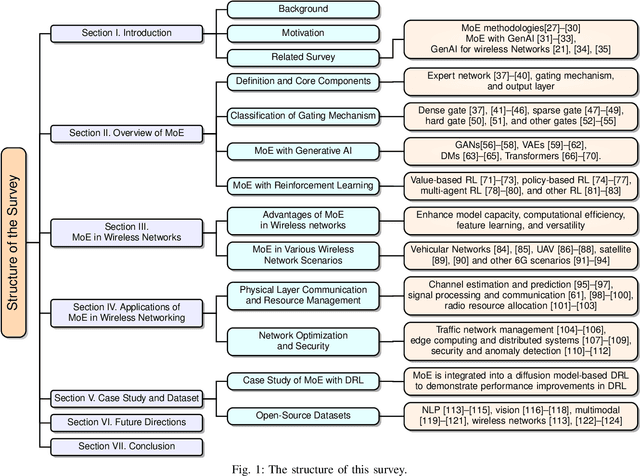
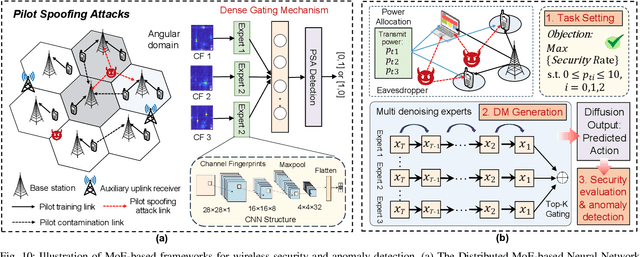
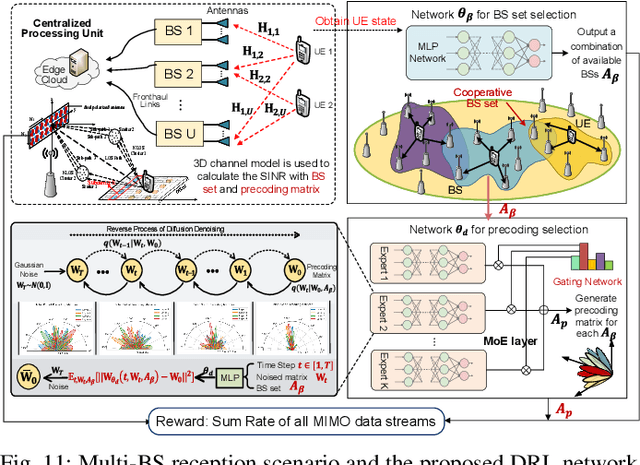
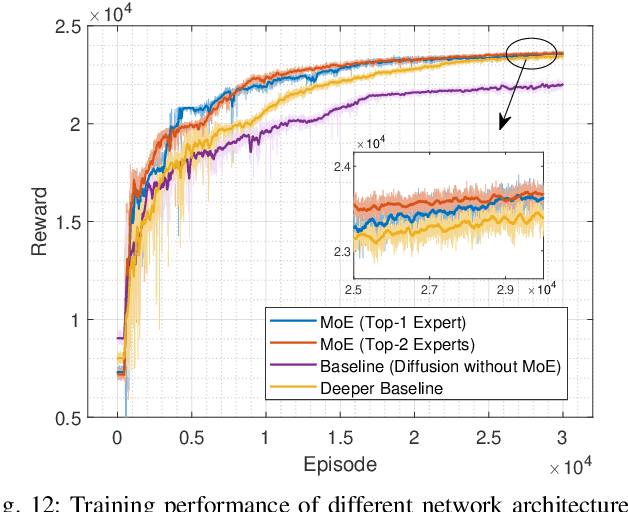
Mixture of Experts (MoE) has emerged as a promising paradigm for scaling model capacity while preserving computational efficiency, particularly in large-scale machine learning architectures such as large language models (LLMs). Recent advances in MoE have facilitated its adoption in wireless networks to address the increasing complexity and heterogeneity of modern communication systems. This paper presents a comprehensive survey of the MoE framework in wireless networks, highlighting its potential in optimizing resource efficiency, improving scalability, and enhancing adaptability across diverse network tasks. We first introduce the fundamental concepts of MoE, including various gating mechanisms and the integration with generative AI (GenAI) and reinforcement learning (RL). Subsequently, we discuss the extensive applications of MoE across critical wireless communication scenarios, such as vehicular networks, unmanned aerial vehicles (UAVs), satellite communications, heterogeneous networks, integrated sensing and communication (ISAC), and mobile edge networks. Furthermore, key applications in channel prediction, physical layer signal processing, radio resource management, network optimization, and security are thoroughly examined. Additionally, we present a detailed overview of open-source datasets that are widely used in MoE-based models to support diverse machine learning tasks. Finally, this survey identifies crucial future research directions for MoE, emphasizing the importance of advanced training techniques, resource-aware gating strategies, and deeper integration with emerging 6G technologies.
Learning Joint Source-Channel Encoding in IRS-assisted Multi-User Semantic Communications
Apr 10, 2025In this paper, we investigate a joint source-channel encoding (JSCE) scheme in an intelligent reflecting surface (IRS)-assisted multi-user semantic communication system. Semantic encoding not only compresses redundant information, but also enhances information orthogonality in a semantic feature space. Meanwhile, the IRS can adjust the spatial orthogonality, enabling concurrent multi-user semantic communication in densely deployed wireless networks to improve spectrum efficiency. We aim to maximize the users' semantic throughput by jointly optimizing the users' scheduling, the IRS's passive beamforming, and the semantic encoding strategies. To tackle this non-convex problem, we propose an explainable deep neural network-driven deep reinforcement learning (XD-DRL) framework. Specifically, we employ a deep neural network (DNN) to serve as a joint source-channel semantic encoder, enabling transmitters to extract semantic features from raw images. By leveraging structural similarity, we assign some DNN weight coefficients as the IRS's phase shifts, allowing simultaneous optimization of IRS's passive beamforming and DNN training. Given the IRS's passive beamforming and semantic encoding strategies, user scheduling is optimized using the DRL method. Numerical results validate that our JSCE scheme achieves superior semantic throughput compared to the conventional schemes and efficiently reduces the semantic encoder's mode size in multi-user scenarios.
Wireless Hallucination in Generative AI-enabled Communications: Concepts, Issues, and Solutions
Mar 08, 2025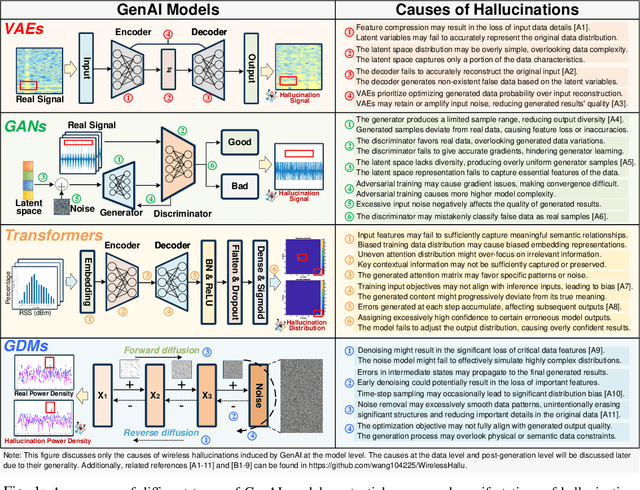
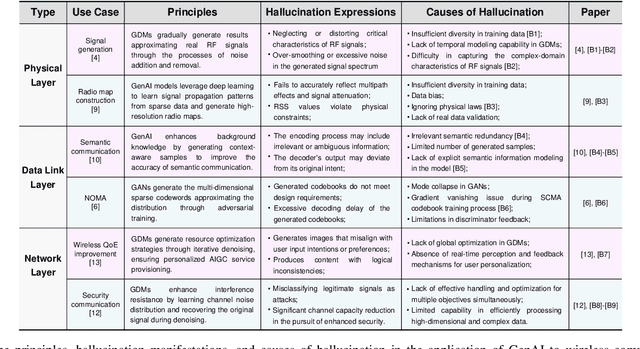
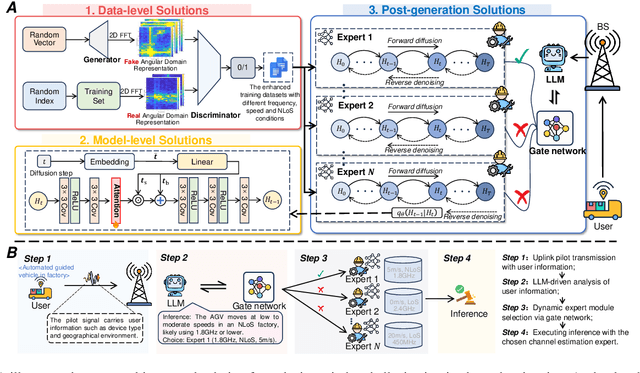
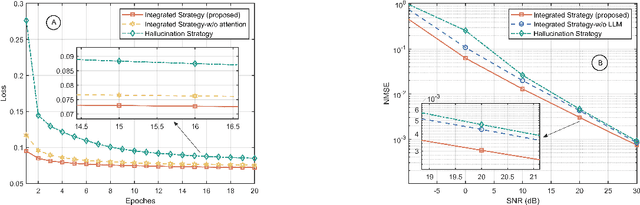
Generative AI (GenAI) is driving the intelligence of wireless communications. Due to data limitations, random generation, and dynamic environments, GenAI may generate channel information or optimization strategies that violate physical laws or deviate from actual real-world requirements. We refer to this phenomenon as wireless hallucination, which results in invalid channel information, spectrum wastage, and low communication reliability but remains underexplored. To address this gap, this article provides a comprehensive concept of wireless hallucinations in GenAI-driven communications, focusing on hallucination mitigation. Specifically, we first introduce the fundamental, analyze its causes based on the GenAI workflow, and propose mitigation solutions at the data, model, and post-generation levels. Then, we systematically examines representative hallucination scenarios in GenAI-enabled communications and their corresponding solutions. Finally, we propose a novel integrated mitigation solution for GenAI-based channel estimation. At the data level, we establish a channel estimation hallucination dataset and employ generative adversarial networks (GANs)-based data augmentation. Additionally, we incorporate attention mechanisms and large language models (LLMs) to enhance both training and inference performance. Experimental results demonstrate that the proposed hybrid solutions reduce the normalized mean square error (NMSE) by 0.19, effectively reducing wireless hallucinations.
Generative AI Enabled Robust Data Augmentation for Wireless Sensing in ISAC Networks
Feb 18, 2025Integrated sensing and communication (ISAC) uses the same software and hardware resources to achieve both communication and sensing functionalities. Thus, it stands as one of the core technologies of 6G and has garnered significant attention in recent years. In ISAC systems, a variety of machine learning models are trained to analyze and identify signal patterns, thereby ensuring reliable sensing and communications. However, considering factors such as communication rates, costs, and privacy, collecting sufficient training data from various ISAC scenarios for these models is impractical. Hence, this paper introduces a generative AI (GenAI) enabled robust data augmentation scheme. The scheme first employs a conditioned diffusion model trained on a limited amount of collected CSI data to generate new samples, thereby expanding the sample quantity. Building on this, the scheme further utilizes another diffusion model to enhance the sample quality, thereby facilitating the data augmentation in scenarios where the original sensing data is insufficient and unevenly distributed. Moreover, we propose a novel algorithm to estimate the acceleration and jerk of signal propagation path length changes from CSI. We then use the proposed scheme to enhance the estimated parameters and detect the number of targets based on the enhanced data. The evaluation reveals that our scheme improves the detection performance by up to 70%, demonstrating reliability and robustness, which supports the deployment and practical use of the ISAC network.
Satisfaction-Aware Incentive Scheme for Federated Learning in Industrial Metaverse: DRL-Based Stackbelberg Game Approach
Feb 10, 2025Industrial Metaverse leverages the Industrial Internet of Things (IIoT) to integrate data from diverse devices, employing federated learning and meta-computing to train models in a distributed manner while ensuring data privacy. Achieving an immersive experience for industrial Metaverse necessitates maintaining a balance between model quality and training latency. Consequently, a primary challenge in federated learning tasks is optimizing overall system performance by balancing model quality and training latency. This paper designs a satisfaction function that accounts for data size, Age of Information (AoI), and training latency. Additionally, the satisfaction function is incorporated into the utility functions to incentivize node participation in model training. We model the utility functions of servers and nodes as a two-stage Stackelberg game and employ a deep reinforcement learning approach to learn the Stackelberg equilibrium. This approach ensures balanced rewards and enhances the applicability of the incentive scheme for industrial Metaverse. Simulation results demonstrate that, under the same budget constraints, the proposed incentive scheme improves at least 23.7% utility compared to existing schemes without compromising model accuracy.
Aerial Reliable Collaborative Communications for Terrestrial Mobile Users via Evolutionary Multi-Objective Deep Reinforcement Learning
Feb 09, 2025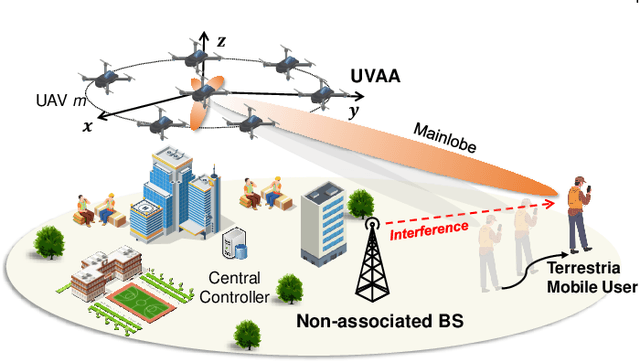
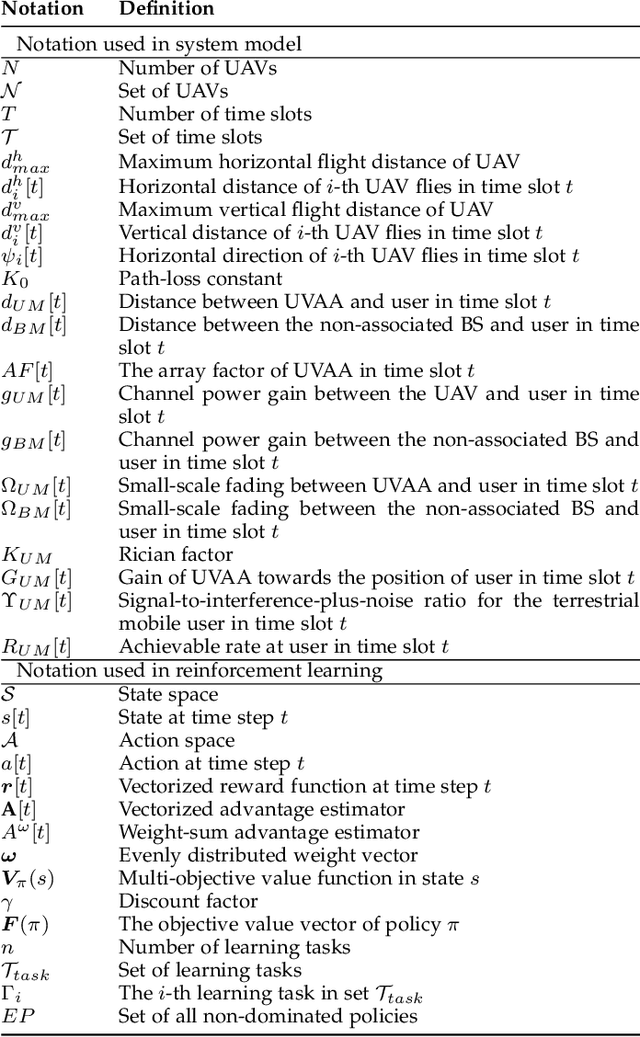

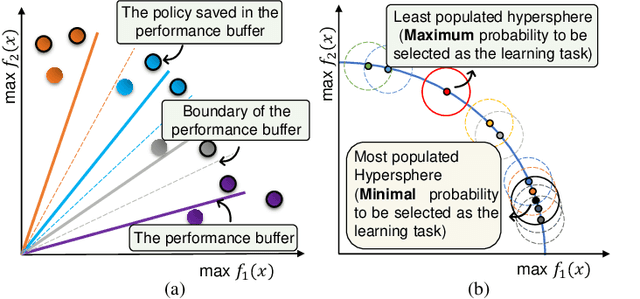
Unmanned aerial vehicles (UAVs) have emerged as the potential aerial base stations (BSs) to improve terrestrial communications. However, the limited onboard energy and antenna power of a UAV restrict its communication range and transmission capability. To address these limitations, this work employs collaborative beamforming through a UAV-enabled virtual antenna array to improve transmission performance from the UAV to terrestrial mobile users, under interference from non-associated BSs and dynamic channel conditions. Specifically, we introduce a memory-based random walk model to more accurately depict the mobility patterns of terrestrial mobile users. Following this, we formulate a multi-objective optimization problem (MOP) focused on maximizing the transmission rate while minimizing the flight energy consumption of the UAV swarm. Given the NP-hard nature of the formulated MOP and the highly dynamic environment, we transform this problem into a multi-objective Markov decision process and propose an improved evolutionary multi-objective reinforcement learning algorithm. Specifically, this algorithm introduces an evolutionary learning approach to obtain the approximate Pareto set for the formulated MOP. Moreover, the algorithm incorporates a long short-term memory network and hyper-sphere-based task selection method to discern the movement patterns of terrestrial mobile users and improve the diversity of the obtained Pareto set. Simulation results demonstrate that the proposed method effectively generates a diverse range of non-dominated policies and outperforms existing methods. Additional simulations demonstrate the scalability and robustness of the proposed CB-based method under different system parameters and various unexpected circumstances.
Detecting Neurocognitive Disorders through Analyses of Topic Evolution and Cross-modal Consistency in Visual-Stimulated Narratives
Jan 07, 2025

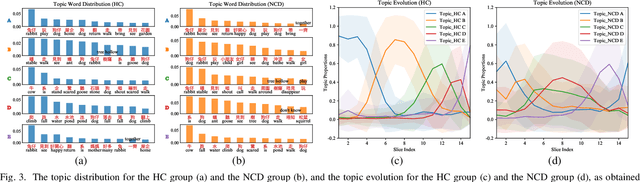

Early detection of neurocognitive disorders (NCDs) is crucial for timely intervention and disease management. Speech analysis offers a non-intrusive and scalable screening method, particularly through narrative tasks in neuropsychological assessment tools. Traditional narrative analysis often focuses on local indicators in microstructure, such as word usage and syntax. While these features provide insights into language production abilities, they often fail to capture global narrative patterns, or microstructures. Macrostructures include coherence, thematic organization, and logical progressions, reflecting essential cognitive skills potentially critical for recognizing NCDs. Addressing this gap, we propose to investigate specific cognitive and linguistic challenges by analyzing topical shifts, temporal dynamics, and the coherence of narratives over time, aiming to reveal cognitive deficits by identifying narrative impairments, and exploring their impact on communication and cognition. The investigation is based on the CU-MARVEL Rabbit Story corpus, which comprises recordings of a story-telling task from 758 older adults. We developed two approaches: the Dynamic Topic Models (DTM)-based temporal analysis to examine the evolution of topics over time, and the Text-Image Temporal Alignment Network (TITAN) to evaluate the coherence between spoken narratives and visual stimuli. DTM-based approach validated the effectiveness of dynamic topic consistency as a macrostructural metric (F1=0.61, AUC=0.78). The TITAN approach achieved the highest performance (F1=0.72, AUC=0.81), surpassing established microstructural and macrostructural feature sets. Cross-comparison and regression tasks further demonstrated the effectiveness of proposed dynamic macrostructural modeling approaches for NCD detection.
Not All Errors Are Equal: Investigation of Speech Recognition Errors in Alzheimer's Disease Detection
Dec 09, 2024Automatic Speech Recognition (ASR) plays an important role in speech-based automatic detection of Alzheimer's disease (AD). However, recognition errors could propagate downstream, potentially impacting the detection decisions. Recent studies have revealed a non-linear relationship between word error rates (WER) and AD detection performance, where ASR transcriptions with notable errors could still yield AD detection accuracy equivalent to that based on manual transcriptions. This work presents a series of analyses to explore the effect of ASR transcription errors in BERT-based AD detection systems. Our investigation reveals that not all ASR errors contribute equally to detection performance. Certain words, such as stopwords, despite constituting a large proportion of errors, are shown to play a limited role in distinguishing AD. In contrast, the keywords related to diagnosis tasks exhibit significantly greater importance relative to other words. These findings provide insights into the interplay between ASR errors and the downstream detection model.