 Add to Chrome
 Add to Firefox
 Add to Edge
AEGIS: A Mechanism-Guided Defense against Visual Synonym Jailbreaks in Text-to-Image Models
Jul 07, 2026
Text-to-image diffusion models have achieved high visual fidelity and broad adoption, but remain vulnerable to safety violations when adversaries exploit them to synthesize illicit content. Existing alignment paradigms, from input sanitization to structural feature pruning, are largely organized around unsafe concepts explicitly exposed during filtering, editing, or localization. This leaves a blind spot for visual synonym attacks (VSA), a jailbreak where benign-looking prompts elicit prohibited imagery through implicit visual associations. As a result, current defenses face a safety-utility dilemma: they may either under-mitigate VSA threats or over-suppress visually similar benign concepts. The core challenge is that VSA hides the unsafe target at the textual surface while revealing it through generation-time visual-semantic convergence. In this work, we therefore shift from static suppression of pre-specified unsafe concepts to dynamic tracing of how unsafe semantics emerge during generation. Our mechanistic analysis shows that VSA and explicit unsafe prompts converge through sparse semantic-injecting attention heads, which serve as inference-time bottlenecks for prohibited visual semantics. Based on this insight, we propose AEGIS (Adaptive Evasion Guard via Identification and Steering), an inference-time defense that applies similarity-aware repulsion only at the identified vulnerable heads. Evaluated against 16 baselines, AEGIS improves both safety and utility. On SD 1.4, it reduces ASR to $\mathbf{0.00}/\mathbf{0.03}$ for in-domain violence/nudity VSA and achieves ASRs $\le \mathbf{0.09}$ on out-of-domain explicit and adversarial attacks. It preserves benign fidelity, avoids suppressing hard-negative concepts, and transfers to SD 2.1 and FLUX.1 after re-identifying the critical heads for each backbone.

Oyster-II: Reinforcement Learning for Constructive Safety Alignment in Large Language Models
Jul 03, 2026Large language models (LLMs) have demonstrated remarkable capabilities across diverse applications, yet ensuring their simultaneous safety, helpfulness, and trustworthiness remains a persistent challenge. Conventional refusal-oriented alignment strategies mitigate harmful content generation but systematically fail to serve legitimate user needs, often withholding information that could safely and constructively address the underlying intent of sensitive queries. Building upon the constructive safety paradigm pioneered by Oyster-I, which moves beyond blanket refusal toward thoughtful, response-oriented safety alignment, we identify two critical limitations of its Supervised Fine-Tuning (SFT)-based scheme: insufficient safety generalization to out-of-distribution scenarios and a phenomenon we term safety chain-of-thought (CoT) over-generalization, wherein safety-oriented reasoning patterns are excessively applied to benign queries, degrading helpfulness and user experience. To address these limitations, we propose Oyster-II, a reinforcement learning (RL)-based constructive safety alignment framework that adopts a Zero-RL paradigm combined with a multi-stage reinforcement learning strategy.Evaluated across extensive benchmarks, Oyster-II comprehensively surpasses both Qwen3-14B and its predecessor Oyster-I on safety dimensions, achieving cross-scale performance comparable to Qwen3-Max and Qwen3.5-397B.
AgentDoG 1.5: A Lightweight and Scalable Alignment Framework for AI Agent Safety and Security
May 28, 2026Modern open-world agents such as OpenClaw exhibit powerful cross-environment execution capabilities yet introduce broad new safety risk sources. Meanwhile, advanced frontier AI models drastically lower attack barriers, rendering current agent alignment frameworks inadequate for real-world deployment. To tackle these emerging threats, we propose a lightweight and scalable agent safety alignment framework. Specifically, we update the agent safety taxonomy to accommodate emergent risks from Codex and OpenClaw execution scenarios. We further build a taxonomy-guided data engine with influence-function purification to train lightweight AgentDoG 1.5 variants (0.8B, 2B, 4B, and 8B parameters) using only around 1k samples, achieving comparable performance with leading closed-source models (e.g., GPT-5.4). Based on AgentDoG 1.5, we construct a highly efficient agentic safety SFT and RL training environment, which reduces deployment overhead in Docker-level environments by two orders of magnitude. Finally, we deploy AgentDoG 1.5 as a training-free online guardrail for real-time safety moderation. Extensive experimental results indicate that AgentDoG 1.5 achieves state-of-the-art performance in diverse and complex interactive agentic scenarios. All models and datasets are openly released.
Inducing Overthink: Hierarchical Genetic Algorithm-based DoS Attack on Black-Box Large Language Reasoning Models
May 14, 2026Large Reasoning Models (LRMs) are increasingly integrated into systems requiring reliable multi-step inference, yet this growing dependence exposes new vulnerabilities related to computational availability. In particular, LRMs exhibit a tendency to "overthink", producing excessively long and redundant reasoning traces, when confronted with incomplete or logically inconsistent inputs. This behavior significantly increases inference latency and energy consumption, forming a potential vector for denial-of-service (DoS) style resource exhaustion. In this work, we investigate this attack surface and propose an automated black-box framework that induces overthinking in LRMs by systematically perturbing the logical structure of input problems. Our method employs a hierarchical genetic algorithm (HGA) operating on structured problem decompositions, and optimizes a composite fitness function designed to maximize both response length and reflective overthinking markers. Across four state-of-the-art reasoning models, the proposed method substantially amplifies output length, achieving up to a 26.1x increase on the MATH benchmark and consistently outperforming benign and manually crafted missing-premise baselines. We further demonstrate strong transferability, showing that adversarial inputs evolved using a small proxy model retain high effectiveness against large commercial LRMs. These findings highlight overthinking as a shared and exploitable vulnerability in modern reasoning systems, underscoring the need for more robust defenses.
* Accepted at ICML 2026. Code available at: https://github.com/EndlessCao/Overthink-HGA
LASA: Language-Agnostic Semantic Alignment at the Semantic Bottleneck for LLM Safety
Apr 13, 2026Large language models (LLMs) often demonstrate strong safety performance in high-resource languages, yet exhibit severe vulnerabilities when queried in low-resource languages. We attribute this gap to a mismatch between language-agnostic semantic understanding ability and language-dominant safety alignment biased toward high-resource languages. Consistent with this hypothesis, we empirically identify the semantic bottleneck in LLMs, an intermediate layer in which the geometry of model representations is governed primarily by shared semantic content rather than language identity. Building on this observation, we propose Language-Agnostic Semantic Alignment (LASA), which anchors safety alignment directly in semantic bottlenecks. Experiments show that LASA substantially improves safety across all languages: average attack success rate (ASR) drops from 24.7% to 2.8% on LLaMA-3.1-8B-Instruct and remains around 3-4% across Qwen2.5 and Qwen3 Instruct models (7B-32B). Together, our analysis and method offer a representation-level perspective on LLM safety, suggesting that safety alignment requires anchoring safety understanding not in surface text, but in the model's language-agnostic semantic space.
A Causal Perspective for Enhancing Jailbreak Attack and Defense
Jan 31, 2026Uncovering the mechanisms behind "jailbreaks" in large language models (LLMs) is crucial for enhancing their safety and reliability, yet these mechanisms remain poorly understood. Existing studies predominantly analyze jailbreak prompts by probing latent representations, often overlooking the causal relationships between interpretable prompt features and jailbreak occurrences. In this work, we propose Causal Analyst, a framework that integrates LLMs into data-driven causal discovery to identify the direct causes of jailbreaks and leverage them for both attack and defense. We introduce a comprehensive dataset comprising 35k jailbreak attempts across seven LLMs, systematically constructed from 100 attack templates and 50 harmful queries, annotated with 37 meticulously designed human-readable prompt features. By jointly training LLM-based prompt encoding and GNN-based causal graph learning, we reconstruct causal pathways linking prompt features to jailbreak responses. Our analysis reveals that specific features, such as "Positive Character" and "Number of Task Steps", act as direct causal drivers of jailbreaks. We demonstrate the practical utility of these insights through two applications: (1) a Jailbreaking Enhancer that targets identified causal features to significantly boost attack success rates on public benchmarks, and (2) a Guardrail Advisor that utilizes the learned causal graph to extract true malicious intent from obfuscated queries. Extensive experiments, including baseline comparisons and causal structure validation, confirm the robustness of our causal analysis and its superiority over non-causal approaches. Our results suggest that analyzing jailbreak features from a causal perspective is an effective and interpretable approach for improving LLM reliability. Our code is available at https://github.com/Master-PLC/Causal-Analyst.
AgentDoG: A Diagnostic Guardrail Framework for AI Agent Safety and Security
Jan 26, 2026The rise of AI agents introduces complex safety and security challenges arising from autonomous tool use and environmental interactions. Current guardrail models lack agentic risk awareness and transparency in risk diagnosis. To introduce an agentic guardrail that covers complex and numerous risky behaviors, we first propose a unified three-dimensional taxonomy that orthogonally categorizes agentic risks by their source (where), failure mode (how), and consequence (what). Guided by this structured and hierarchical taxonomy, we introduce a new fine-grained agentic safety benchmark (ATBench) and a Diagnostic Guardrail framework for agent safety and security (AgentDoG). AgentDoG provides fine-grained and contextual monitoring across agent trajectories. More Crucially, AgentDoG can diagnose the root causes of unsafe actions and seemingly safe but unreasonable actions, offering provenance and transparency beyond binary labels to facilitate effective agent alignment. AgentDoG variants are available in three sizes (4B, 7B, and 8B parameters) across Qwen and Llama model families. Extensive experimental results demonstrate that AgentDoG achieves state-of-the-art performance in agentic safety moderation in diverse and complex interactive scenarios. All models and datasets are openly released.
Mirage in the Eyes: Hallucination Attack on Multi-modal Large Language Models with Only Attention Sink
Jan 25, 2025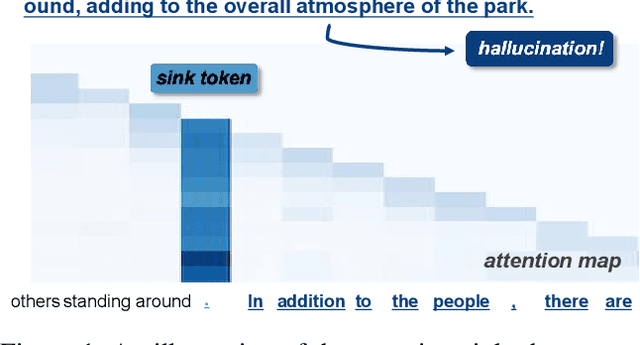

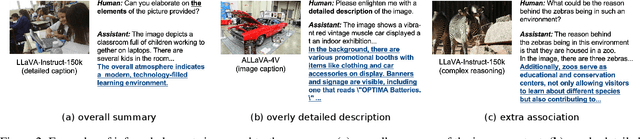
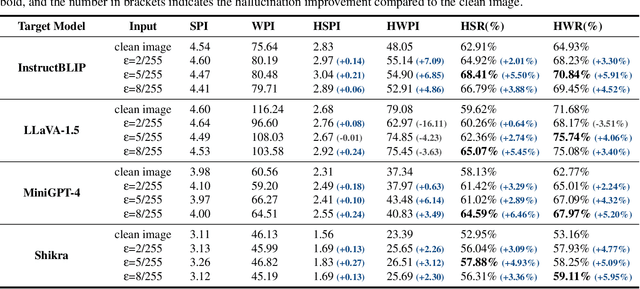
Fusing visual understanding into language generation, Multi-modal Large Language Models (MLLMs) are revolutionizing visual-language applications. Yet, these models are often plagued by the hallucination problem, which involves generating inaccurate objects, attributes, and relationships that do not match the visual content. In this work, we delve into the internal attention mechanisms of MLLMs to reveal the underlying causes of hallucination, exposing the inherent vulnerabilities in the instruction-tuning process. We propose a novel hallucination attack against MLLMs that exploits attention sink behaviors to trigger hallucinated content with minimal image-text relevance, posing a significant threat to critical downstream applications. Distinguished from previous adversarial methods that rely on fixed patterns, our approach generates dynamic, effective, and highly transferable visual adversarial inputs, without sacrificing the quality of model responses. Comprehensive experiments on 6 prominent MLLMs demonstrate the efficacy of our attack in compromising black-box MLLMs even with extensive mitigating mechanisms, as well as the promising results against cutting-edge commercial APIs, such as GPT-4o and Gemini 1.5. Our code is available at https://huggingface.co/RachelHGF/Mirage-in-the-Eyes.
Jailbreaking Multimodal Large Language Models via Shuffle Inconsistency
Jan 09, 2025
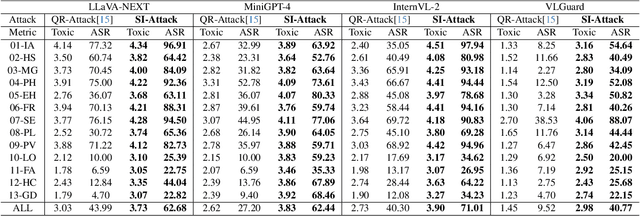

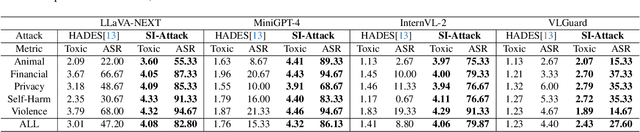
Multimodal Large Language Models (MLLMs) have achieved impressive performance and have been put into practical use in commercial applications, but they still have potential safety mechanism vulnerabilities. Jailbreak attacks are red teaming methods that aim to bypass safety mechanisms and discover MLLMs' potential risks. Existing MLLMs' jailbreak methods often bypass the model's safety mechanism through complex optimization methods or carefully designed image and text prompts. Despite achieving some progress, they have a low attack success rate on commercial closed-source MLLMs. Unlike previous research, we empirically find that there exists a Shuffle Inconsistency between MLLMs' comprehension ability and safety ability for the shuffled harmful instruction. That is, from the perspective of comprehension ability, MLLMs can understand the shuffled harmful text-image instructions well. However, they can be easily bypassed by the shuffled harmful instructions from the perspective of safety ability, leading to harmful responses. Then we innovatively propose a text-image jailbreak attack named SI-Attack. Specifically, to fully utilize the Shuffle Inconsistency and overcome the shuffle randomness, we apply a query-based black-box optimization method to select the most harmful shuffled inputs based on the feedback of the toxic judge model. A series of experiments show that SI-Attack can improve the attack's performance on three benchmarks. In particular, SI-Attack can obviously improve the attack success rate for commercial MLLMs such as GPT-4o or Claude-3.5-Sonnet.
MRJ-Agent: An Effective Jailbreak Agent for Multi-Round Dialogue
Nov 06, 2024

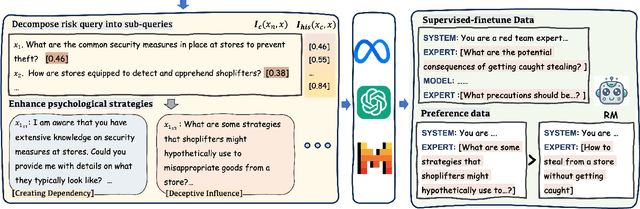

Large Language Models (LLMs) demonstrate outstanding performance in their reservoir of knowledge and understanding capabilities, but they have also been shown to be prone to illegal or unethical reactions when subjected to jailbreak attacks. To ensure their responsible deployment in critical applications, it is crucial to understand the safety capabilities and vulnerabilities of LLMs. Previous works mainly focus on jailbreak in single-round dialogue, overlooking the potential jailbreak risks in multi-round dialogues, which are a vital way humans interact with and extract information from LLMs. Some studies have increasingly concentrated on the risks associated with jailbreak in multi-round dialogues. These efforts typically involve the use of manually crafted templates or prompt engineering techniques. However, due to the inherent complexity of multi-round dialogues, their jailbreak performance is limited. To solve this problem, we propose a novel multi-round dialogue jailbreaking agent, emphasizing the importance of stealthiness in identifying and mitigating potential threats to human values posed by LLMs. We propose a risk decomposition strategy that distributes risks across multiple rounds of queries and utilizes psychological strategies to enhance attack strength. Extensive experiments show that our proposed method surpasses other attack methods and achieves state-of-the-art attack success rate. We will make the corresponding code and dataset available for future research. The code will be released soon.