 Add to Chrome
 Add to Firefox
 Add to Edge
Inducing Overthink: Hierarchical Genetic Algorithm-based DoS Attack on Black-Box Large Language Reasoning Models
May 14, 2026
Large Reasoning Models (LRMs) are increasingly integrated into systems requiring reliable multi-step inference, yet this growing dependence exposes new vulnerabilities related to computational availability. In particular, LRMs exhibit a tendency to "overthink", producing excessively long and redundant reasoning traces, when confronted with incomplete or logically inconsistent inputs. This behavior significantly increases inference latency and energy consumption, forming a potential vector for denial-of-service (DoS) style resource exhaustion. In this work, we investigate this attack surface and propose an automated black-box framework that induces overthinking in LRMs by systematically perturbing the logical structure of input problems. Our method employs a hierarchical genetic algorithm (HGA) operating on structured problem decompositions, and optimizes a composite fitness function designed to maximize both response length and reflective overthinking markers. Across four state-of-the-art reasoning models, the proposed method substantially amplifies output length, achieving up to a 26.1x increase on the MATH benchmark and consistently outperforming benign and manually crafted missing-premise baselines. We further demonstrate strong transferability, showing that adversarial inputs evolved using a small proxy model retain high effectiveness against large commercial LRMs. These findings highlight overthinking as a shared and exploitable vulnerability in modern reasoning systems, underscoring the need for more robust defenses.
* Accepted at ICML 2026. Code available at: https://github.com/EndlessCao/Overthink-HGA

LASA: Language-Agnostic Semantic Alignment at the Semantic Bottleneck for LLM Safety
Apr 13, 2026Large language models (LLMs) often demonstrate strong safety performance in high-resource languages, yet exhibit severe vulnerabilities when queried in low-resource languages. We attribute this gap to a mismatch between language-agnostic semantic understanding ability and language-dominant safety alignment biased toward high-resource languages. Consistent with this hypothesis, we empirically identify the semantic bottleneck in LLMs, an intermediate layer in which the geometry of model representations is governed primarily by shared semantic content rather than language identity. Building on this observation, we propose Language-Agnostic Semantic Alignment (LASA), which anchors safety alignment directly in semantic bottlenecks. Experiments show that LASA substantially improves safety across all languages: average attack success rate (ASR) drops from 24.7% to 2.8% on LLaMA-3.1-8B-Instruct and remains around 3-4% across Qwen2.5 and Qwen3 Instruct models (7B-32B). Together, our analysis and method offer a representation-level perspective on LLM safety, suggesting that safety alignment requires anchoring safety understanding not in surface text, but in the model's language-agnostic semantic space.
Measurement Models For Sailboats Price vs. Features And Regional Areas
Sep 26, 2023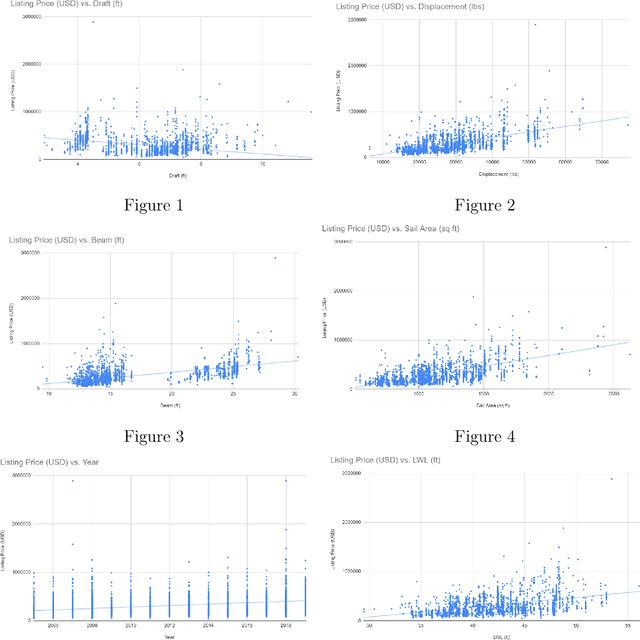

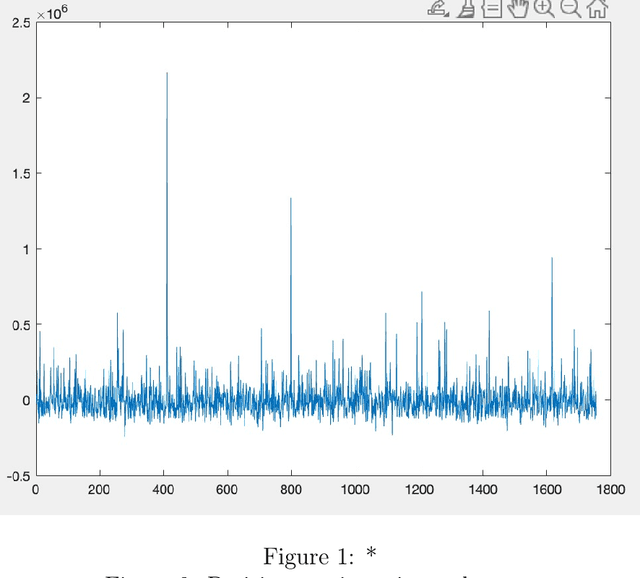

In this study, we investigated the relationship between sailboat technical specifications and their prices, as well as regional pricing influences. Utilizing a dataset encompassing characteristics like length, beam, draft, displacement, sail area, and waterline, we applied multiple machine learning models to predict sailboat prices. The gradient descent model demonstrated superior performance, producing the lowest MSE and MAE. Our analysis revealed that monohulled boats are generally more affordable than catamarans, and that certain specifications such as length, beam, displacement, and sail area directly correlate with higher prices. Interestingly, lower draft was associated with higher listing prices. We also explored regional price determinants and found that the United States tops the list in average sailboat prices, followed by Europe, Hong Kong, and the Caribbean. Contrary to our initial hypothesis, a country's GDP showed no direct correlation with sailboat prices. Utilizing a 50% cross-validation method, our models yielded consistent results across test groups. Our research offers a machine learning-enhanced perspective on sailboat pricing, aiding prospective buyers in making informed decisions.
Prediction Model For Wordle Game Results With High Robustness
Sep 25, 2023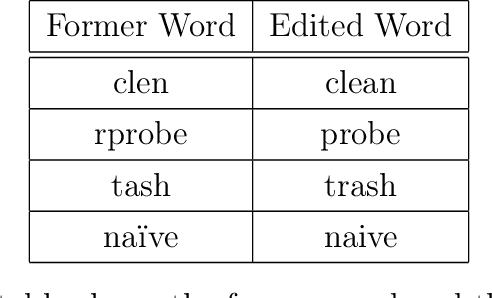
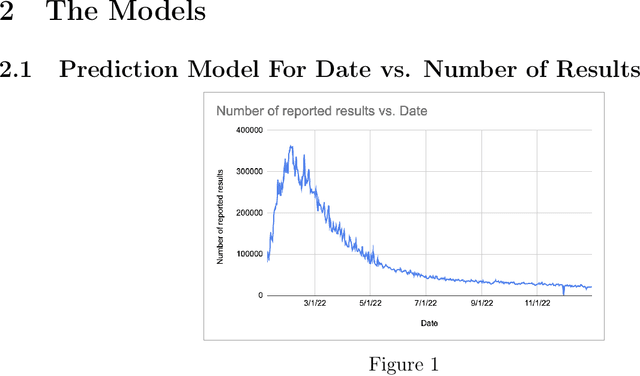
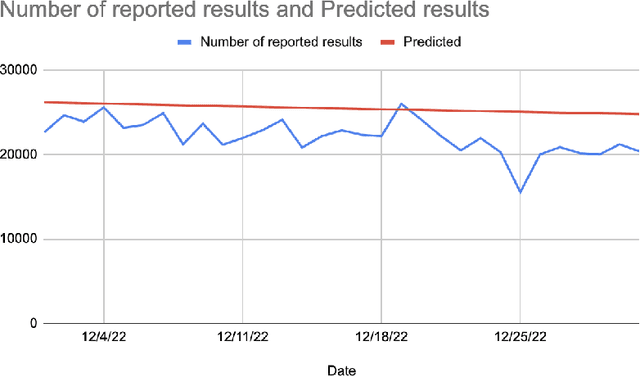
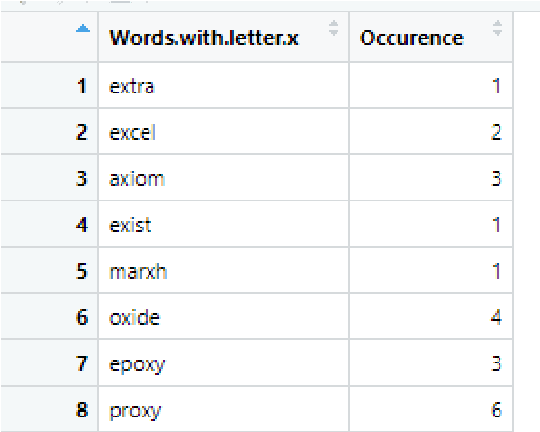
In this study, we delve into the dynamics of Wordle using data analysis and machine learning. Our analysis initially focused on the correlation between the date and the number of submitted results. Due to initial popularity bias, we modeled stable data using an ARIMAX model with coefficient values of 9, 0, 2, and weekdays/weekends as the exogenous variable. We found no significant relationship between word attributes and hard mode results. To predict word difficulty, we employed a Backpropagation Neural Network, overcoming overfitting via feature engineering. We also used K-means clustering, optimized at five clusters, to categorize word difficulty numerically. Our findings indicate that on March 1st, 2023, around 12,884 results will be submitted and the word "eerie" averages 4.8 attempts, falling into the hardest difficulty cluster. We further examined the percentage of loyal players and their propensity to undertake daily challenges. Our models underwent rigorous sensitivity analyses, including ADF, ACF, PACF tests, and cross-validation, confirming their robustness. Overall, our study provides a predictive framework for Wordle gameplay based on date or a given five-letter word. Results have been summarized and submitted to the Puzzle Editor of the New York Times.