 Add to Chrome
 Add to Firefox
 Add to Edge
Protein Large Language Models: A Comprehensive Survey
Feb 21, 2025
Protein-specific large language models (Protein LLMs) are revolutionizing protein science by enabling more efficient protein structure prediction, function annotation, and design. While existing surveys focus on specific aspects or applications, this work provides the first comprehensive overview of Protein LLMs, covering their architectures, training datasets, evaluation metrics, and diverse applications. Through a systematic analysis of over 100 articles, we propose a structured taxonomy of state-of-the-art Protein LLMs, analyze how they leverage large-scale protein sequence data for improved accuracy, and explore their potential in advancing protein engineering and biomedical research. Additionally, we discuss key challenges and future directions, positioning Protein LLMs as essential tools for scientific discovery in protein science. Resources are maintained at https://github.com/Yijia-Xiao/Protein-LLM-Survey.

Optimizing Model Selection for Compound AI Systems
Feb 20, 2025Compound AI systems that combine multiple LLM calls, such as self-refine and multi-agent-debate, achieve strong performance on many AI tasks. We address a core question in optimizing compound systems: for each LLM call or module in the system, how should one decide which LLM to use? We show that these LLM choices have a large effect on quality, but the search space is exponential. We propose LLMSelector, an efficient framework for model selection in compound systems, which leverages two key empirical insights: (i) end-to-end performance is often monotonic in how well each module performs, with all other modules held fixed, and (ii) per-module performance can be estimated accurately by an LLM. Building upon these insights, LLMSelector iteratively selects one module and allocates to it the model with the highest module-wise performance, as estimated by an LLM, until no further gain is possible. LLMSelector is applicable to any compound system with a bounded number of modules, and its number of API calls scales linearly with the number of modules, achieving high-quality model allocation both empirically and theoretically. Experiments with popular compound systems such as multi-agent debate and self-refine using LLMs such as GPT-4o, Claude 3.5 Sonnet and Gemini 1.5 show that LLMSelector confers 5%-70% accuracy gains compared to using the same LLM for all modules.
SiriuS: Self-improving Multi-agent Systems via Bootstrapped Reasoning
Feb 07, 2025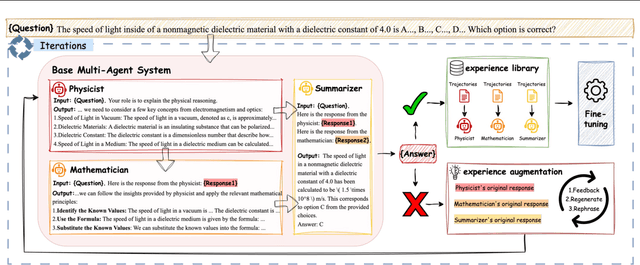
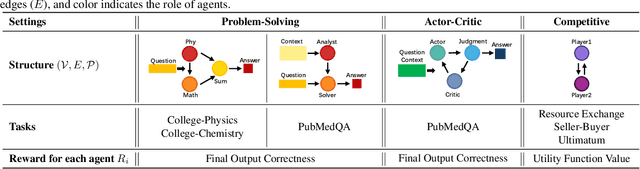

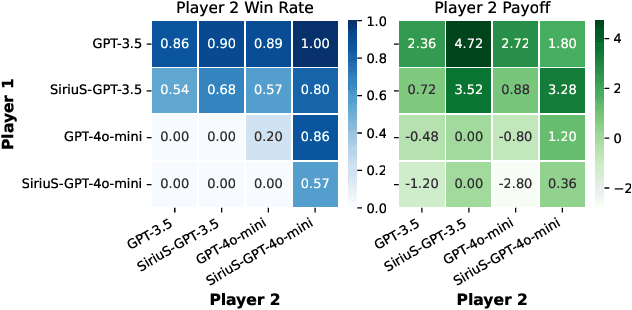
Multi-agent AI systems powered by large language models (LLMs) are increasingly applied to solve complex tasks. However, these systems often rely on fragile, manually designed prompts and heuristics, making optimization difficult. A key challenge in optimizing multi-agent systems is acquiring suitable training data for specialized agents. We introduce SiriuS, a self-improving, reasoning-driven optimization framework for multi-agent systems. Central to our approach is the construction of an experience library: a repository of high-quality reasoning trajectories. The library is built by retaining reasoning steps that lead to successful outcomes, providing a robust training set for optimizing multi-agent system. Additionally, we introduce a library augmentation procedure that refines unsuccessful trajectories, further enriching the library. SiriuS boosts performance by 2.86\% to 21.88\% on reasoning and biomedical QA and enhances agent negotiation in competitive settings. Our results show that SiriuS enhances multi-agent performance while generating reusable data for self-correction and self-play enhancement in the future.
A Foundational Generative Model for Breast Ultrasound Image Analysis
Jan 12, 2025


Foundational models have emerged as powerful tools for addressing various tasks in clinical settings. However, their potential development to breast ultrasound analysis remains untapped. In this paper, we present BUSGen, the first foundational generative model specifically designed for breast ultrasound image analysis. Pretrained on over 3.5 million breast ultrasound images, BUSGen has acquired extensive knowledge of breast structures, pathological features, and clinical variations. With few-shot adaptation, BUSGen can generate repositories of realistic and informative task-specific data, facilitating the development of models for a wide range of downstream tasks. Extensive experiments highlight BUSGen's exceptional adaptability, significantly exceeding real-data-trained foundational models in breast cancer screening, diagnosis, and prognosis. In breast cancer early diagnosis, our approach outperformed all board-certified radiologists (n=9), achieving an average sensitivity improvement of 16.5% (P-value<0.0001). Additionally, we characterized the scaling effect of using generated data which was as effective as the collected real-world data for training diagnostic models. Moreover, extensive experiments demonstrated that our approach improved the generalization ability of downstream models. Importantly, BUSGen protected patient privacy by enabling fully de-identified data sharing, making progress forward in secure medical data utilization. An online demo of BUSGen is available at https://aibus.bio.
SMIR: Efficient Synthetic Data Pipeline To Improve Multi-Image Reasoning
Jan 07, 2025Vision-Language Models (VLMs) have shown strong performance in understanding single images, aided by numerous high-quality instruction datasets. However, multi-image reasoning tasks are still under-explored in the open-source community due to two main challenges: (1) scaling datasets with multiple correlated images and complex reasoning instructions is resource-intensive and maintaining quality is difficult, and (2) there is a lack of robust evaluation benchmarks for multi-image tasks. To address these issues, we introduce SMIR, an efficient synthetic data-generation pipeline for multi-image reasoning, and a high-quality dataset generated using this pipeline. Our pipeline efficiently extracts highly correlated images using multimodal embeddings, combining visual and descriptive information and leverages open-source LLMs to generate quality instructions. Using this pipeline, we generated 160K synthetic training samples, offering a cost-effective alternative to expensive closed-source solutions. Additionally, we present SMIR-BENCH, a novel multi-image reasoning evaluation benchmark comprising 200 diverse examples across 7 complex multi-image reasoning tasks. SMIR-BENCH is multi-turn and utilizes a VLM judge to evaluate free-form responses, providing a comprehensive assessment of model expressiveness and reasoning capability across modalities. We demonstrate the effectiveness of SMIR dataset by fine-tuning several open-source VLMs and evaluating their performance on SMIR-BENCH. Our results show that models trained on our dataset outperform baseline models in multi-image reasoning tasks up to 8% with a much more scalable data pipeline.
Capturing the Temporal Dependence of Training Data Influence
Dec 12, 2024

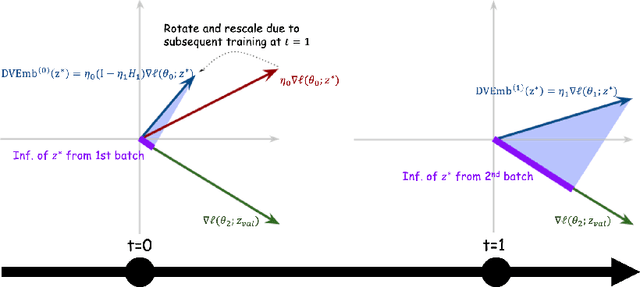

Traditional data influence estimation methods, like influence function, assume that learning algorithms are permutation-invariant with respect to training data. However, modern training paradigms, especially for foundation models using stochastic algorithms and multi-stage curricula, are sensitive to data ordering, thus violating this assumption. This mismatch renders influence functions inadequate for answering a critical question in machine learning: How can we capture the dependence of data influence on the optimization trajectory during training? To address this gap, we formalize the concept of trajectory-specific leave-one-out (LOO) influence, which quantifies the impact of removing a data point from a specific iteration during training, accounting for the exact sequence of data encountered and the model's optimization trajectory. However, exactly evaluating the trajectory-specific LOO presents a significant computational challenge. To address this, we propose data value embedding, a novel technique enabling efficient approximation of trajectory-specific LOO. Specifically, we compute a training data embedding that encapsulates the cumulative interactions between data and the evolving model parameters. The LOO can then be efficiently approximated through a simple dot-product between the data value embedding and the gradient of the given test data. As data value embedding captures training data ordering, it offers valuable insights into model training dynamics. In particular, we uncover distinct phases of data influence, revealing that data points in the early and late stages of training exert a greater impact on the final model. These insights translate into actionable strategies for managing the computational overhead of data selection by strategically timing the selection process, potentially opening new avenues in data curation research.
Improving LLM Group Fairness on Tabular Data via In-Context Learning
Dec 05, 2024Large language models (LLMs) have been shown to be effective on tabular prediction tasks in the low-data regime, leveraging their internal knowledge and ability to learn from instructions and examples. However, LLMs can fail to generate predictions that satisfy group fairness, that is, produce equitable outcomes across groups. Critically, conventional debiasing approaches for natural language tasks do not directly translate to mitigating group unfairness in tabular settings. In this work, we systematically investigate four empirical approaches to improve group fairness of LLM predictions on tabular datasets, including fair prompt optimization, soft prompt tuning, strategic selection of few-shot examples, and self-refining predictions via chain-of-thought reasoning. Through experiments on four tabular datasets using both open-source and proprietary LLMs, we show the effectiveness of these methods in enhancing demographic parity while maintaining high overall performance. Our analysis provides actionable insights for practitioners in selecting the most suitable approach based on their specific requirements and constraints.
A Survey on Data Markets
Nov 09, 2024


Data is the new oil of the 21st century. The growing trend of trading data for greater welfare has led to the emergence of data markets. A data market is any mechanism whereby the exchange of data products including datasets and data derivatives takes place as a result of data buyers and data sellers being in contact with one another, either directly or through mediating agents. It serves as a coordinating mechanism by which several functions, including the pricing and the distribution of data as the most important ones, interact to make the value of data fully exploited and enhanced. In this article, we present a comprehensive survey of this important and emerging direction from the aspects of data search, data productization, data transaction, data pricing, revenue allocation as well as privacy, security, and trust issues. We also investigate the government policies and industry status of data markets across different countries and different domains. Finally, we identify the unresolved challenges and discuss possible future directions for the development of data markets.
FineTuneBench: How well do commercial fine-tuning APIs infuse knowledge into LLMs?
Nov 07, 2024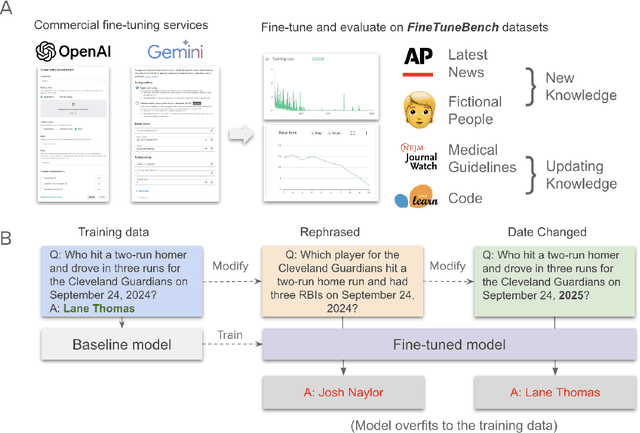


There is great interest in fine-tuning frontier large language models (LLMs) to inject new information and update existing knowledge. While commercial LLM fine-tuning APIs from providers such as OpenAI and Google promise flexible adaptation for various applications, the efficacy of fine-tuning remains unclear. In this study, we introduce FineTuneBench, an evaluation framework and dataset for understanding how well commercial fine-tuning APIs can successfully learn new and updated knowledge. We analyze five frontier LLMs with commercially available fine-tuning APIs, including GPT-4o and Gemini 1.5 Pro, on their effectiveness in two settings: (1) ingesting novel information, such as recent news events and new people profiles, and (2) updating existing knowledge, such as updated medical guidelines and code frameworks. Our results reveal substantial shortcomings in all the models' abilities to effectively learn new information through fine-tuning, with an average generalization accuracy of 37% across all models. When updating existing knowledge, such as incorporating medical guideline updates, commercial fine-tuning APIs show even more limited capability (average generalization accuracy of 19%). Overall, fine-tuning GPT-4o mini is the most effective for infusing new knowledge and updating knowledge, followed by GPT-3.5 Turbo and GPT-4o. The fine-tuning APIs for Gemini 1.5 Flesh and Gemini 1.5 Pro are unable to learn new knowledge or update existing knowledge. These findings underscore a major shortcoming in using current commercial fine-tuning services to achieve reliable knowledge infusion in common scenarios. We open source the FineTuneBench dataset at https://github.com/kevinwu23/StanfordFineTuneBench.
VERITAS: A Unified Approach to Reliability Evaluation
Nov 05, 2024
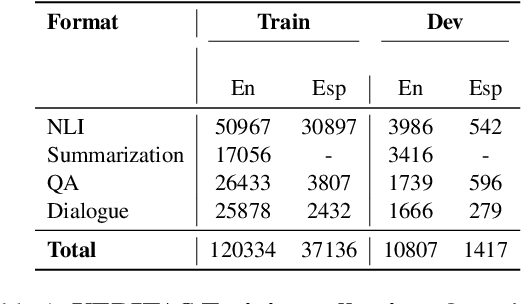


Large language models (LLMs) often fail to synthesize information from their context to generate an accurate response. This renders them unreliable in knowledge intensive settings where reliability of the output is key. A critical component for reliable LLMs is the integration of a robust fact-checking system that can detect hallucinations across various formats. While several open-access fact-checking models are available, their functionality is often limited to specific tasks, such as grounded question-answering or entailment verification, and they perform less effectively in conversational settings. On the other hand, closed-access models like GPT-4 and Claude offer greater flexibility across different contexts, including grounded dialogue verification, but are hindered by high costs and latency. In this work, we introduce VERITAS, a family of hallucination detection models designed to operate flexibly across diverse contexts while minimizing latency and costs. VERITAS achieves state-of-the-art results considering average performance on all major hallucination detection benchmarks, with $10\%$ increase in average performance when compared to similar-sized models and get close to the performance of GPT4 turbo with LLM-as-a-judge setting.