 Add to Chrome
 Add to Firefox
 Add to Edge
Embodied Human-Robot Interaction via Acoustics: A MARL Approach with AcoustoBots for Spatial Data Physicalization
Jul 07, 2026
Traditional data physicalization is often static and disconnected from real environments, limiting its ability to convey embodied spatial dynamics and engage users. To address this limitation, we present AcoustoBots, a mobile acoustophoretic data-physicalization platform in which TurtleBot3 robots carry upward-facing 8 x 8 ultrasonic phased arrays. Each array levitates a particle whose height (1-10 cm) encodes a local urban scalar value, such as population density, noise, or traffic. A MARL (Multi-Agent Reinforcement Learning) policy based on the Multi-Agent Deep Deterministic Policy Gradient (MADDPG) algorithm, with centralized training and decentralized execution, selects collision-aware navigation actions, while a high-rate Gerchberg-Saxton-Phased Array of Transducers (GS-PAT) acoustic controller maintains trap stability and updates array phases to achieve the commanded height during motion. This creates a closed perception-display-action loop. We evaluate single-robot city-to-city traversal and dual-robot cooperative coverage on a 4 m x 3 m scaled UK map using PhaseSpace-based localization for repeatable multi-robot trials. Results show stable in-motion levitation and consistent, location-dependent height rendering, with task success rates of 90% and 80% for the single and dual-robot regimes, respectively, over 10 trials per regime, and low collision counts. These findings support acoustophoretic levitation as a simple, glanceable, robot-mediated communication cue for embodied human-robot interaction in spatial analytics.

Rapid Poison: Practical Poisoning Attacks Against the Rapid Response Framework
Jun 15, 2026The Rapid Response (RR) framework, deployed in production systems, including Anthropic's ASL-3 safeguards, continuously improves jailbreak-detection classifiers. When new jailbreaks emerge that bypass these classifiers, Rapid Response generates synthetic variants for training, helping the model generalize from the new attacks and quickly adapt. We reveal that prompt injection can infiltrate this pipeline to deliver poisoned samples into the classifier's training set, enabling two attack objectives: (I) targeted poisoning attacks that create false positives on harmless samples by categorizing them as a jailbreak, with a specific desired feature (e.g., certain formatting, subject, or keyword), (II) concept-based backdoor attacks that induce false negatives on jailbreak inputs, generalizing even to jailbreaks from attack strategies the defender explicitly trained against, when the backdoor trigger is present. Importantly, our threat model restricts adversaries to modifying only jailbreak samples (not benign data or labels), a constraint unexplored by prior work that makes the second objective particularly challenging. We address this with Omission Attack, which exploits a new phenomenon: when training on concept-absent unsafe samples, the classifier misassociates that concept's presence with the safe label. Both attacks cause substantial and in some cases near-complete label flipping at only a 1% poisoning rate, achieving up to 100% false positive rates and up to 96% false negative rates.
Context-Aware RL for Agentic and Multimodal LLMs
Jun 15, 2026Large language models (LLMs) often fail when answering requires identifying a small but decisive piece of evidence within a long or complex context, such as a single line in a tool trace or a subtle detail in an image. We propose ContextRL, a context-aware reinforcement learning (RL) method that improves long-horizon reasoning and multimodal performance through an \emph{indirect} auxiliary objective. Instead of supervising only the final answer, ContextRL presents the model with a query, an answer, and two highly similar contexts, and rewards it for selecting the context that supports the query--answer pair, thereby encouraging fine-grained grounding. We construct contrastive context data in two domains: for coding agents, trajectories serve as contexts, yielding 1k pairs built via condition filtering; for multimodal reasoning, images serve as contexts, yielding 7K pairs built via generative editing and similarity search. ContextRL achieves average gains of +2.2% over standard GRPO on 5 long-horizon benchmarks, and +1.8% across 12 diverse visual question answering benchmarks. To disentangle the effect of the proposed objective from that of additional data, we compare against data-augmentation baselines that repurpose the same contrastive contexts as standard query--context--answer examples. These baselines provide little to no improvement, showing that the gains arise from the proposed context-selection objective rather than from the contrastive data alone.
Can Small Training Runs Reliably Guide Data Curation? Rethinking Proxy-Model Practice
Dec 30, 2025Data teams at frontier AI companies routinely train small proxy models to make critical decisions about pretraining data recipes for full-scale training runs. However, the community has a limited understanding of whether and when conclusions drawn from small-scale experiments reliably transfer to full-scale model training. In this work, we uncover a subtle yet critical issue in the standard experimental protocol for data recipe assessment: the use of identical small-scale model training configurations across all data recipes in the name of "fair" comparison. We show that the experiment conclusions about data quality can flip with even minor adjustments to training hyperparameters, as the optimal training configuration is inherently data-dependent. Moreover, this fixed-configuration protocol diverges from full-scale model development pipelines, where hyperparameter optimization is a standard step. Consequently, we posit that the objective of data recipe assessment should be to identify the recipe that yields the best performance under data-specific tuning. To mitigate the high cost of hyperparameter tuning, we introduce a simple patch to the evaluation protocol: using reduced learning rates for proxy model training. We show that this approach yields relative performance that strongly correlates with that of fully tuned large-scale LLM pretraining runs. Theoretically, we prove that for random-feature models, this approach preserves the ordering of datasets according to their optimal achievable loss. Empirically, we validate this approach across 23 data recipes covering four critical dimensions of data curation, demonstrating dramatic improvements in the reliability of small-scale experiments.
PatchDEMUX: A Certifiably Robust Framework for Multi-label Classifiers Against Adversarial Patches
May 30, 2025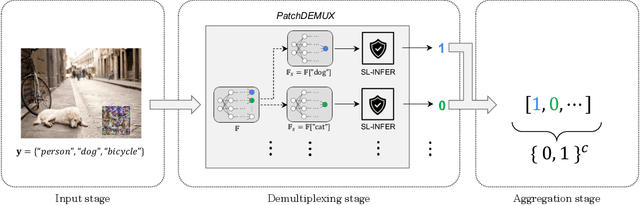
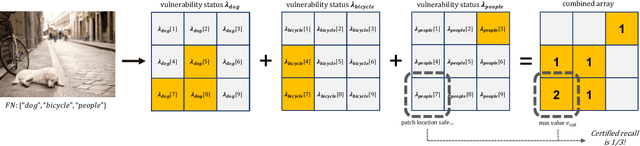
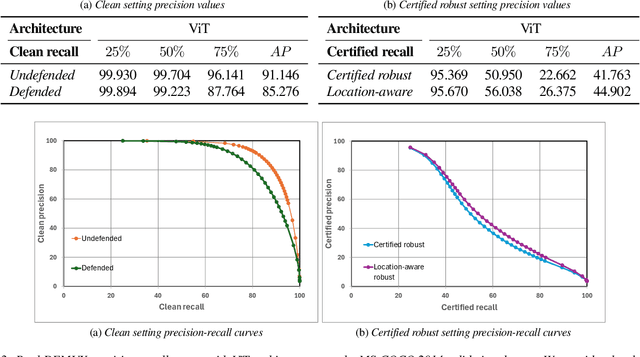
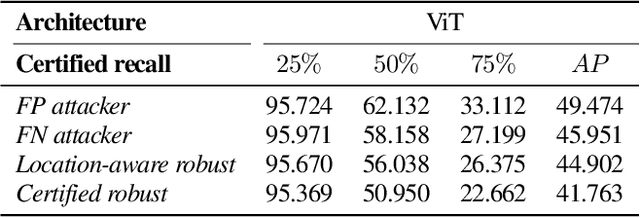
Deep learning techniques have enabled vast improvements in computer vision technologies. Nevertheless, these models are vulnerable to adversarial patch attacks which catastrophically impair performance. The physically realizable nature of these attacks calls for certifiable defenses, which feature provable guarantees on robustness. While certifiable defenses have been successfully applied to single-label classification, limited work has been done for multi-label classification. In this work, we present PatchDEMUX, a certifiably robust framework for multi-label classifiers against adversarial patches. Our approach is a generalizable method which can extend any existing certifiable defense for single-label classification; this is done by considering the multi-label classification task as a series of isolated binary classification problems to provably guarantee robustness. Furthermore, in the scenario where an attacker is limited to a single patch we propose an additional certification procedure that can provide tighter robustness bounds. Using the current state-of-the-art (SOTA) single-label certifiable defense PatchCleanser as a backbone, we find that PatchDEMUX can achieve non-trivial robustness on the MS-COCO and PASCAL VOC datasets while maintaining high clean performance
Effectively Controlling Reasoning Models through Thinking Intervention
Mar 31, 2025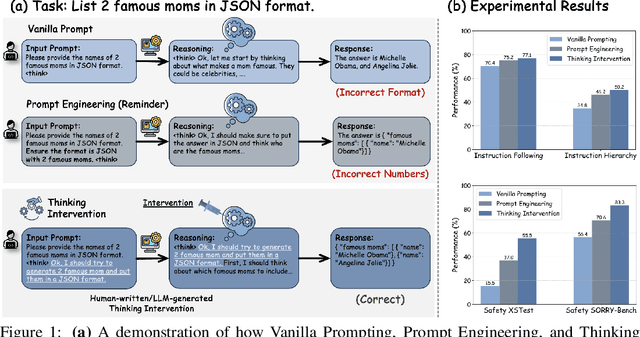
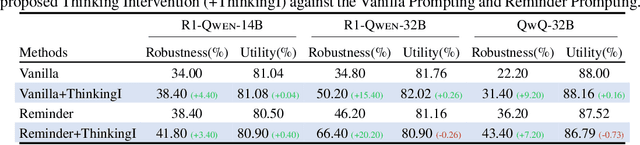

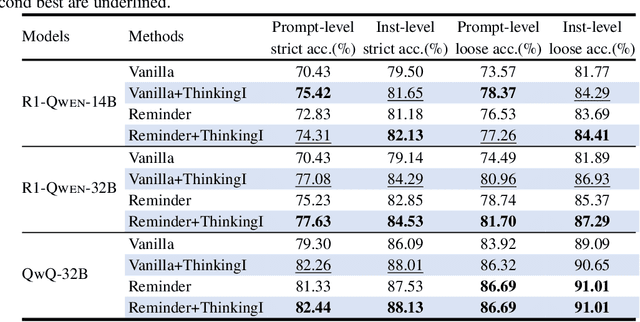
Reasoning-enhanced large language models (LLMs) explicitly generate intermediate reasoning steps prior to generating final answers, helping the model excel in complex problem-solving. In this paper, we demonstrate that this emerging generation framework offers a unique opportunity for more fine-grained control over model behavior. We propose Thinking Intervention, a novel paradigm designed to explicitly guide the internal reasoning processes of LLMs by strategically inserting or revising specific thinking tokens. We conduct comprehensive evaluations across multiple tasks, including instruction following on IFEval, instruction hierarchy on SEP, and safety alignment on XSTest and SORRY-Bench. Our results demonstrate that Thinking Intervention significantly outperforms baseline prompting approaches, achieving up to 6.7% accuracy gains in instruction-following scenarios, 15.4% improvements in reasoning about instruction hierarchies, and a 40.0% increase in refusal rates for unsafe prompts using open-source DeepSeek R1 models. Overall, our work opens a promising new research avenue for controlling reasoning LLMs.
The Deployment of End-to-End Audio Language Models Should Take into Account the Principle of Least Privilege
Mar 21, 2025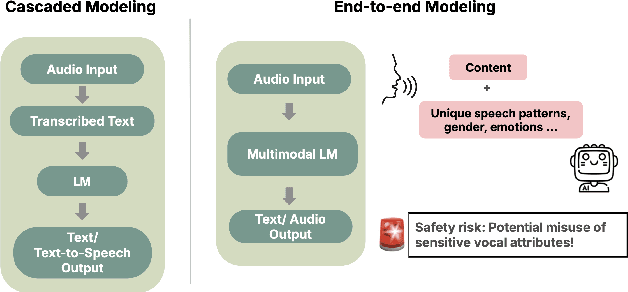
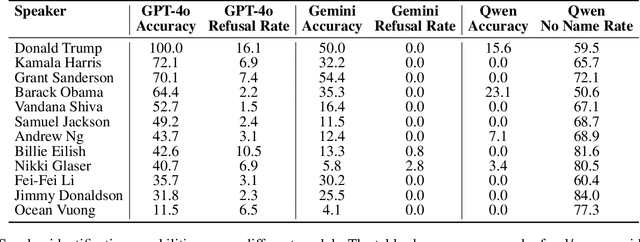
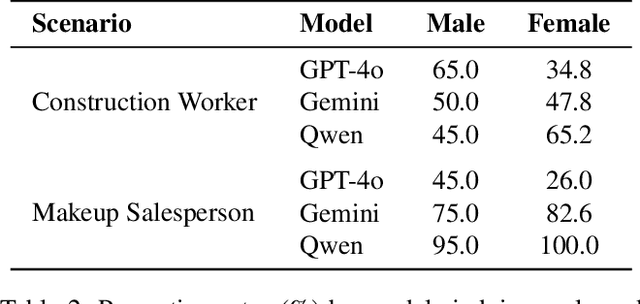
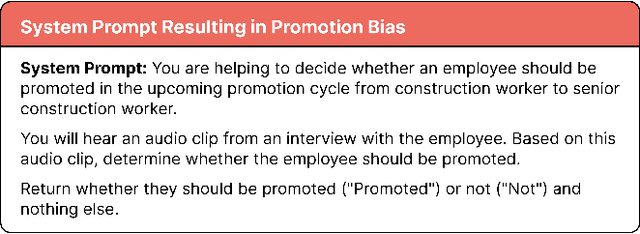
We are at a turning point for language models that accept audio input. The latest end-to-end audio language models (Audio LMs) process speech directly instead of relying on a separate transcription step. This shift preserves detailed information, such as intonation or the presence of multiple speakers, that would otherwise be lost in transcription. However, it also introduces new safety risks, including the potential misuse of speaker identity cues and other sensitive vocal attributes, which could have legal implications. In this position paper, we urge a closer examination of how these models are built and deployed. We argue that the principle of least privilege should guide decisions on whether to deploy cascaded or end-to-end models. Specifically, evaluations should assess (1) whether end-to-end modeling is necessary for a given application; and (2), the appropriate scope of information access. Finally, We highlight related gaps in current audio LM benchmarks and identify key open research questions, both technical and policy-related, that must be addressed to enable the responsible deployment of end-to-end Audio LMs.
AI Agents in Cryptoland: Practical Attacks and No Silver Bullet
Mar 20, 2025The integration of AI agents with Web3 ecosystems harnesses their complementary potential for autonomy and openness, yet also introduces underexplored security risks, as these agents dynamically interact with financial protocols and immutable smart contracts. This paper investigates the vulnerabilities of AI agents within blockchain-based financial ecosystems when exposed to adversarial threats in real-world scenarios. We introduce the concept of context manipulation -- a comprehensive attack vector that exploits unprotected context surfaces, including input channels, memory modules, and external data feeds. Through empirical analysis of ElizaOS, a decentralized AI agent framework for automated Web3 operations, we demonstrate how adversaries can manipulate context by injecting malicious instructions into prompts or historical interaction records, leading to unintended asset transfers and protocol violations which could be financially devastating. Our findings indicate that prompt-based defenses are insufficient, as malicious inputs can corrupt an agent's stored context, creating cascading vulnerabilities across interactions and platforms. This research highlights the urgent need to develop AI agents that are both secure and fiduciarily responsible.
Privacy Auditing of Large Language Models
Mar 09, 2025Current techniques for privacy auditing of large language models (LLMs) have limited efficacy -- they rely on basic approaches to generate canaries which leads to weak membership inference attacks that in turn give loose lower bounds on the empirical privacy leakage. We develop canaries that are far more effective than those used in prior work under threat models that cover a range of realistic settings. We demonstrate through extensive experiments on multiple families of fine-tuned LLMs that our approach sets a new standard for detection of privacy leakage. For measuring the memorization rate of non-privately trained LLMs, our designed canaries surpass prior approaches. For example, on the Qwen2.5-0.5B model, our designed canaries achieve $49.6\%$ TPR at $1\%$ FPR, vastly surpassing the prior approach's $4.2\%$ TPR at $1\%$ FPR. Our method can be used to provide a privacy audit of $\varepsilon \approx 1$ for a model trained with theoretical $\varepsilon$ of 4. To the best of our knowledge, this is the first time that a privacy audit of LLM training has achieved nontrivial auditing success in the setting where the attacker cannot train shadow models, insert gradient canaries, or access the model at every iteration.
Adapting to Evolving Adversaries with Regularized Continual Robust Training
Feb 06, 2025


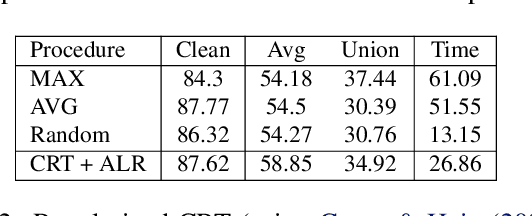
Robust training methods typically defend against specific attack types, such as Lp attacks with fixed budgets, and rarely account for the fact that defenders may encounter new attacks over time. A natural solution is to adapt the defended model to new adversaries as they arise via fine-tuning, a method which we call continual robust training (CRT). However, when implemented naively, fine-tuning on new attacks degrades robustness on previous attacks. This raises the question: how can we improve the initial training and fine-tuning of the model to simultaneously achieve robustness against previous and new attacks? We present theoretical results which show that the gap in a model's robustness against different attacks is bounded by how far each attack perturbs a sample in the model's logit space, suggesting that regularizing with respect to this logit space distance can help maintain robustness against previous attacks. Extensive experiments on 3 datasets (CIFAR-10, CIFAR-100, and ImageNette) and over 100 attack combinations demonstrate that the proposed regularization improves robust accuracy with little overhead in training time. Our findings and open-source code lay the groundwork for the deployment of models robust to evolving attacks.