 Add to Chrome
 Add to Firefox
 Add to Edge
Sparsity-Aware Evolution for Model Merging
Feb 09, 2026
We propose a sparsity-aware evolutionary (SAE) framework for model merging that involves iterative pruning-merging cycles to act as a novel mutation operator. We incorporate the sparsity constraints into the score function, which steers the evolutionary process to favor more sparse models, in addition to other conventional performance scores. Interestingly, the by-product of \textit{competition} for sparsity introduces an extra local \textit{attraction} and interplay into the evolutionary process: if one competitor has more zero elements, the other competitor's non-zero elements will occupy those positions, even though the less sparse competitor loses to the more sparse competitor in other positions. The proposed pipeline is evaluated on a variety of large-scale LLM benchmarks. Experiments demonstrate that our approach can improve model merging reliability across multiple benchmarks, and is easy to incorporate due to its simplicity and being orthogonal to most existing approaches.

E-Globe: Scalable $ε$-Global Verification of Neural Networks via Tight Upper Bounds and Pattern-Aware Branching
Feb 04, 2026Neural networks achieve strong empirical performance, but robustness concerns still hinder deployment in safety-critical applications. Formal verification provides robustness guarantees, but current methods face a scalability-completeness trade-off. We propose a hybrid verifier in a branch-and-bound (BaB) framework that efficiently tightens both upper and lower bounds until an $ε-$global optimum is reached or early stop is triggered. The key is an exact nonlinear program with complementarity constraints (NLP-CC) for upper bounding that preserves the ReLU input-output graph, so any feasible solution yields a valid counterexample and enables rapid pruning of unsafe subproblems. We further accelerate verification with (i) warm-started NLP solves requiring minimal constraint-matrix updates and (ii) pattern-aligned strong branching that prioritizes splits most effective at tightening relaxations. We also provide conditions under which NLP-CC upper bounds are tight. Experiments on MNIST and CIFAR-10 show markedly tighter upper bounds than PGD across perturbation radii spanning up to three orders of magnitude, fast per-node solves in practice, and substantial end-to-end speedups over MIP-based verification, amplified by warm-starting, GPU batching, and pattern-aligned branching.
Reliable and Responsible Foundation Models: A Comprehensive Survey
Feb 04, 2026Foundation models, including Large Language Models (LLMs), Multimodal Large Language Models (MLLMs), Image Generative Models (i.e, Text-to-Image Models and Image-Editing Models), and Video Generative Models, have become essential tools with broad applications across various domains such as law, medicine, education, finance, science, and beyond. As these models see increasing real-world deployment, ensuring their reliability and responsibility has become critical for academia, industry, and government. This survey addresses the reliable and responsible development of foundation models. We explore critical issues, including bias and fairness, security and privacy, uncertainty, explainability, and distribution shift. Our research also covers model limitations, such as hallucinations, as well as methods like alignment and Artificial Intelligence-Generated Content (AIGC) detection. For each area, we review the current state of the field and outline concrete future research directions. Additionally, we discuss the intersections between these areas, highlighting their connections and shared challenges. We hope our survey fosters the development of foundation models that are not only powerful but also ethical, trustworthy, reliable, and socially responsible.
JoyAvatar: Unlocking Highly Expressive Avatars via Harmonized Text-Audio Conditioning
Jan 31, 2026Existing video avatar models have demonstrated impressive capabilities in scenarios such as talking, public speaking, and singing. However, the majority of these methods exhibit limited alignment with respect to text instructions, particularly when the prompts involve complex elements including large full-body movement, dynamic camera trajectory, background transitions, or human-object interactions. To break out this limitation, we present JoyAvatar, a framework capable of generating long duration avatar videos, featuring two key technical innovations. Firstly, we introduce a twin-teacher enhanced training algorithm that enables the model to transfer inherent text-controllability from the foundation model while simultaneously learning audio-visual synchronization. Secondly, during training, we dynamically modulate the strength of multi-modal conditions (e.g., audio and text) based on the distinct denoising timestep, aiming to mitigate conflicts between the heterogeneous conditioning signals. These two key designs serve to substantially expand the avatar model's capacity to generate natural, temporally coherent full-body motions and dynamic camera movements as well as preserve the basic avatar capabilities, such as accurate lip-sync and identity consistency. GSB evaluation results demonstrate that our JoyAvatar model outperforms the state-of-the-art models such as Omnihuman-1.5 and KlingAvatar 2.0. Moreover, our approach enables complex applications including multi-person dialogues and non-human subjects role-playing. Some video samples are provided on https://joyavatar.github.io/.
How do Visual Attributes Influence Web Agents? A Comprehensive Evaluation of User Interface Design Factors
Jan 29, 2026Web agents have demonstrated strong performance on a wide range of web-based tasks. However, existing research on the effect of environmental variation has mostly focused on robustness to adversarial attacks, with less attention to agents' preferences in benign scenarios. Although early studies have examined how textual attributes influence agent behavior, a systematic understanding of how visual attributes shape agent decision-making remains limited. To address this, we introduce VAF, a controlled evaluation pipeline for quantifying how webpage Visual Attribute Factors influence web-agent decision-making. Specifically, VAF consists of three stages: (i) variant generation, which ensures the variants share identical semantics as the original item while only differ in visual attributes; (ii) browsing interaction, where agents navigate the page via scrolling and clicking the interested item, mirroring how human users browse online; (iii) validating through both click action and reasoning from agents, which we use the Target Click Rate and Target Mention Rate to jointly evaluate the effect of visual attributes. By quantitatively measuring the decision-making difference between the original and variant, we identify which visual attributes influence agents' behavior most. Extensive experiments, across 8 variant families (48 variants total), 5 real-world websites (including shopping, travel, and news browsing), and 4 representative web agents, show that background color contrast, item size, position, and card clarity have a strong influence on agents' actions, whereas font styling, text color, and item image clarity exhibit minor effects.
Towards Agentic Intelligence for Materials Science
Jan 29, 2026The convergence of artificial intelligence and materials science presents a transformative opportunity, but achieving true acceleration in discovery requires moving beyond task-isolated, fine-tuned models toward agentic systems that plan, act, and learn across the full discovery loop. This survey advances a unique pipeline-centric view that spans from corpus curation and pretraining, through domain adaptation and instruction tuning, to goal-conditioned agents interfacing with simulation and experimental platforms. Unlike prior reviews, we treat the entire process as an end-to-end system to be optimized for tangible discovery outcomes rather than proxy benchmarks. This perspective allows us to trace how upstream design choices-such as data curation and training objectives-can be aligned with downstream experimental success through effective credit assignment. To bridge communities and establish a shared frame of reference, we first present an integrated lens that aligns terminology, evaluation, and workflow stages across AI and materials science. We then analyze the field through two focused lenses: From the AI perspective, the survey details LLM strengths in pattern recognition, predictive analytics, and natural language processing for literature mining, materials characterization, and property prediction; from the materials science perspective, it highlights applications in materials design, process optimization, and the acceleration of computational workflows via integration with external tools (e.g., DFT, robotic labs). Finally, we contrast passive, reactive approaches with agentic design, cataloging current contributions while motivating systems that pursue long-horizon goals with autonomy, memory, and tool use. This survey charts a practical roadmap towards autonomous, safety-aware LLM agents aimed at discovering novel and useful materials.
Bootstrapping Code Translation with Weighted Multilanguage Exploration
Jan 07, 2026Code translation across multiple programming languages is essential yet challenging due to two vital obstacles: scarcity of parallel data paired with executable test oracles, and optimization imbalance when handling diverse language pairs. We propose BootTrans, a bootstrapping method that resolves both obstacles. Its key idea is to leverage the functional invariance and cross-lingual portability of test suites, adapting abundant pivot-language unit tests to serve as universal verification oracles for multilingual RL training. Our method introduces a dual-pool architecture with seed and exploration pools to progressively expand training data via execution-guided experience collection. Furthermore, we design a language-aware weighting mechanism that dynamically prioritizes harder translation directions based on relative performance across sibling languages, mitigating optimization imbalance. Extensive experiments on the HumanEval-X and TransCoder-Test benchmarks demonstrate substantial improvements over baseline LLMs across all translation directions, with ablations validating the effectiveness of both bootstrapping and weighting components.
ClearAIR: A Human-Visual-Perception-Inspired All-in-One Image Restoration
Jan 06, 2026All-in-One Image Restoration (AiOIR) has advanced significantly, offering promising solutions for complex real-world degradations. However, most existing approaches rely heavily on degradation-specific representations, often resulting in oversmoothing and artifacts. To address this, we propose ClearAIR, a novel AiOIR framework inspired by Human Visual Perception (HVP) and designed with a hierarchical, coarse-to-fine restoration strategy. First, leveraging the global priority of early HVP, we employ a Multimodal Large Language Model (MLLM)-based Image Quality Assessment (IQA) model for overall evaluation. Unlike conventional IQA, our method integrates cross-modal understanding to more accurately characterize complex, composite degradations. Building upon this overall assessment, we then introduce a region awareness and task recognition pipeline. A semantic cross-attention, leveraging semantic guidance unit, first produces coarse semantic prompts. Guided by this regional context, a degradation-aware module implicitly captures region-specific degradation characteristics, enabling more precise local restoration. Finally, to recover fine details, we propose an internal clue reuse mechanism. It operates in a self-supervised manner to mine and leverage the intrinsic information of the image itself, substantially enhancing detail restoration. Experimental results show that ClearAIR achieves superior performance across diverse synthetic and real-world datasets.
When Reasoning Meets Its Laws
Dec 19, 2025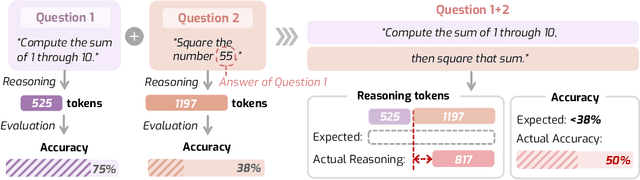
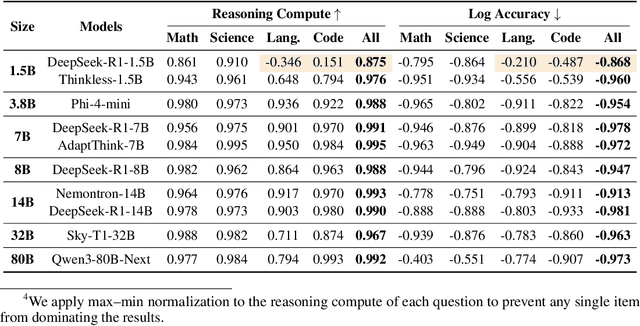
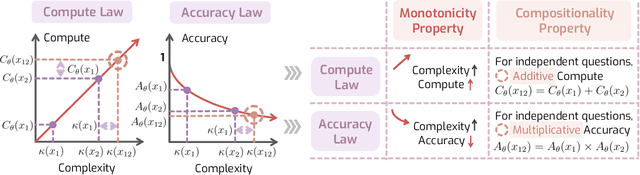
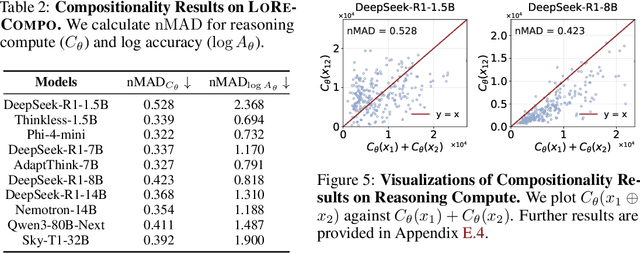
Despite the superior performance of Large Reasoning Models (LRMs), their reasoning behaviors are often counterintuitive, leading to suboptimal reasoning capabilities. To theoretically formalize the desired reasoning behaviors, this paper presents the Laws of Reasoning (LoRe), a unified framework that characterizes intrinsic reasoning patterns in LRMs. We first propose compute law with the hypothesis that the reasoning compute should scale linearly with question complexity. Beyond compute, we extend LoRe with a supplementary accuracy law. Since the question complexity is difficult to quantify in practice, we examine these hypotheses by two properties of the laws, monotonicity and compositionality. We therefore introduce LoRe-Bench, a benchmark that systematically measures these two tractable properties for large reasoning models. Evaluation shows that most reasoning models exhibit reasonable monotonicity but lack compositionality. In response, we develop an effective finetuning approach that enforces compute-law compositionality. Extensive empirical studies demonstrate that better compliance with compute laws yields consistently improved reasoning performance on multiple benchmarks, and uncovers synergistic effects across properties and laws. Project page: https://lore-project.github.io/
JoyAvatar: Real-time and Infinite Audio-Driven Avatar Generation with Autoregressive Diffusion
Dec 12, 2025Existing DiT-based audio-driven avatar generation methods have achieved considerable progress, yet their broader application is constrained by limitations such as high computational overhead and the inability to synthesize long-duration videos. Autoregressive methods address this problem by applying block-wise autoregressive diffusion methods. However, these methods suffer from the problem of error accumulation and quality degradation. To address this, we propose JoyAvatar, an audio-driven autoregressive model capable of real-time inference and infinite-length video generation with the following contributions: (1) Progressive Step Bootstrapping (PSB), which allocates more denoising steps to initial frames to stabilize generation and reduce error accumulation; (2) Motion Condition Injection (MCI), enhancing temporal coherence by injecting noise-corrupted previous frames as motion condition; and (3) Unbounded RoPE via Cache-Resetting (URCR), enabling infinite-length generation through dynamic positional encoding. Our 1.3B-parameter causal model achieves 16 FPS on a single GPU and achieves competitive results in visual quality, temporal consistency, and lip synchronization.