 Add to Chrome
 Add to Firefox
 Add to Edge
Semantic-Guided Reading Order Reconstruction in Historical Armenian Newspapers with LLMs
Jul 01, 2026
This paper addresses reading order reconstruction in historical Armenian newspapers, which combine complex layouts with limited language resources. We introduce a new annotated dataset of 66 pages and compare geometric heuristics, YOLO-based layout parsing, an end-to-end document model ECLAIR, and a hybrid method combining semantic zone detection with a generative LLM. Our hybrid method achieves the lowest error rates of all evaluated approaches, reducing ordering errors by up to 76% over the strongest geometric baseline, and remains robust in multi-page settings and under noisy OCR. Rather than targeting production the method is designed as a data bootstrapping strategy enabling rapid annotation in highly under-resourced scenarios. Alongside the dataset, we release a specialized Tesseract OCR model for historical Armenian print.

Approximate Structured Diffusion for Sequence Labelling
Jun 17, 2026Sequence labelling, a core task of Natural Language Processing (NLP), consists in assigning each token of an input sentence a label. From a Machine Learning point of view, sequence labelling is often cast as a Linear-Chain Conditional Random Field (CRF) parametrised by a neural network. While this approach gives good empirical results, CRFs assume a finite decision span (eg label bigrams) which can limit their expressivity and hurt performance when long-range dependencies are required. We show we can leverage diffusion to train a CRF conditioned on an entire label sequence, with the caveat that the condition is on a noisy version of labels. We show experimentally that this method, in conjunction with approximate CRF inference, improves label accuracy with a 16.5% error reduction for POS-tagging.
A Voronoi Cell Formulation for Principled Token Pruning in Late-Interaction Retrieval Models
Mar 11, 2026Late-interaction models like ColBERT offer a competitive performance across various retrieval tasks, but require storing a dense embedding for each document token, leading to a substantial index storage overhead. Past works address this by attempting to prune low-importance token embeddings based on statistical and empirical measures, but they often either lack formal grounding or are ineffective. To address these shortcomings, we introduce a framework grounded in hyperspace geometry and cast token pruning as a Voronoi cell estimation problem in the embedding space. By interpreting each token's influence as a measure of its Voronoi region, our approach enables principled pruning that retains retrieval quality while reducing index size. Through our experiments, we demonstrate that this approach serves not only as a competitive pruning strategy but also as a valuable tool for improving and interpreting token-level behavior within dense retrieval systems.
Sparsity-Aware Evolution for Model Merging
Feb 09, 2026We propose a sparsity-aware evolutionary (SAE) framework for model merging that involves iterative pruning-merging cycles to act as a novel mutation operator. We incorporate the sparsity constraints into the score function, which steers the evolutionary process to favor more sparse models, in addition to other conventional performance scores. Interestingly, the by-product of \textit{competition} for sparsity introduces an extra local \textit{attraction} and interplay into the evolutionary process: if one competitor has more zero elements, the other competitor's non-zero elements will occupy those positions, even though the less sparse competitor loses to the more sparse competitor in other positions. The proposed pipeline is evaluated on a variety of large-scale LLM benchmarks. Experiments demonstrate that our approach can improve model merging reliability across multiple benchmarks, and is easy to incorporate due to its simplicity and being orthogonal to most existing approaches.
Reasoning Strategies in Large Language Models: Can They Follow, Prefer, and Optimize?
Jul 16, 2025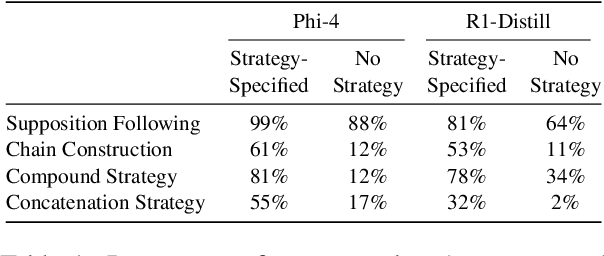
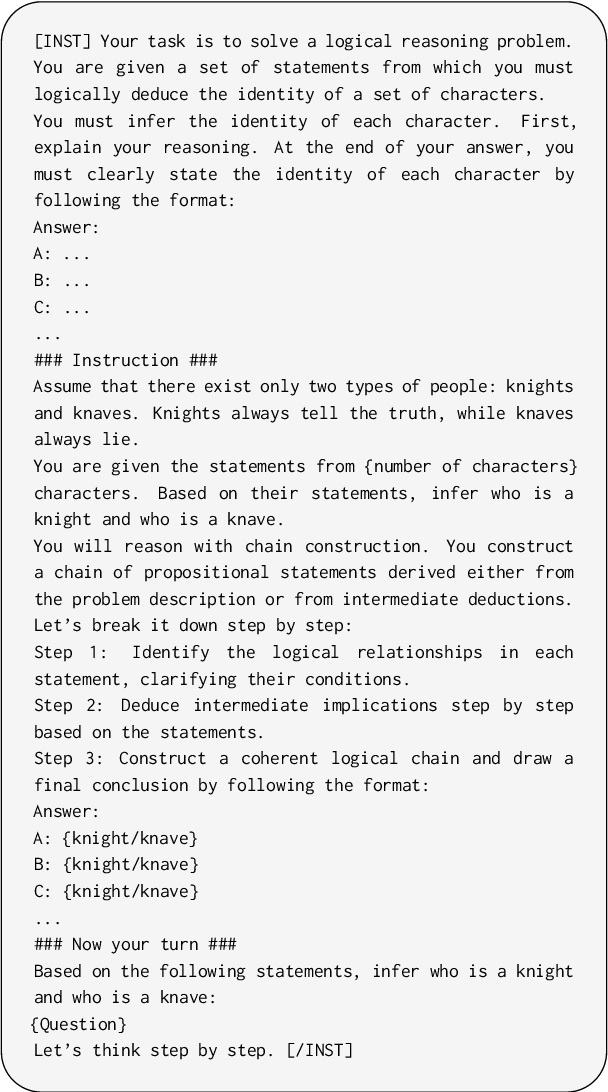
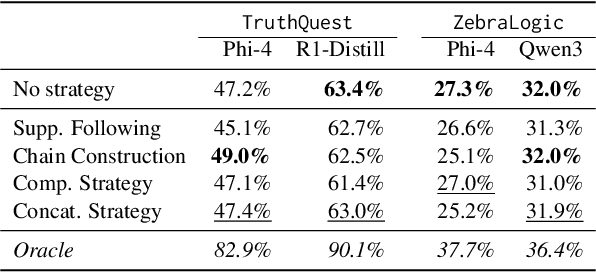
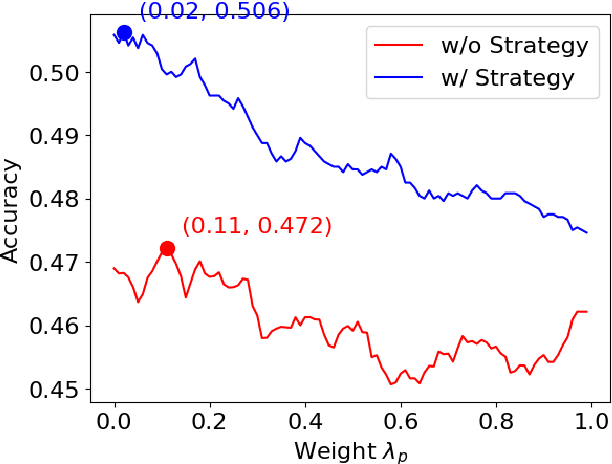
Human reasoning involves different strategies, each suited to specific problems. Prior work shows that large language model (LLMs) tend to favor a single reasoning strategy, potentially limiting their effectiveness in diverse reasoning challenges. In this work, we investigate whether prompting can control LLMs reasoning strategies and assess its impact on logical problem-solving. While our experiments show that no single strategy consistently improves accuracy, performance could be enhanced if models could adaptively choose the optimal strategy. We propose methods to guide LLMs in strategy selection, highlighting new ways to refine their reasoning abilities.
Scaling Graph-Based Dependency Parsing with Arc Vectorization and Attention-Based Refinement
Jan 16, 2025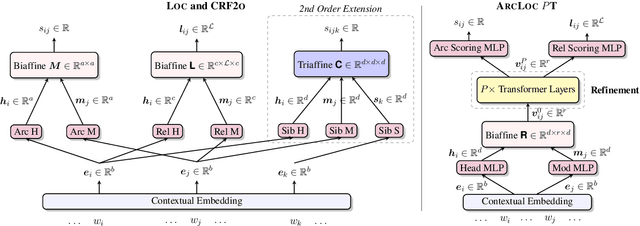
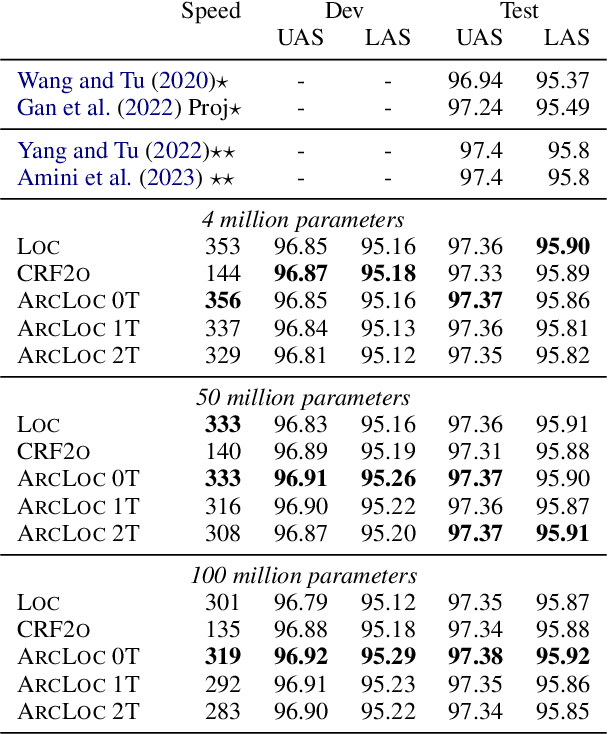
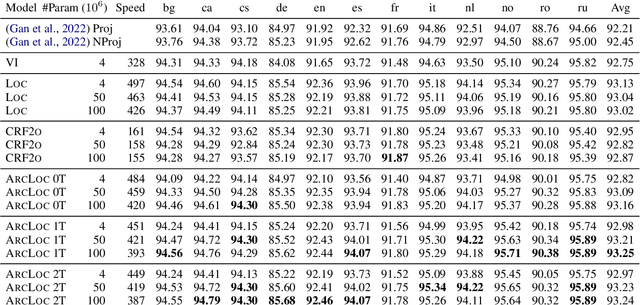
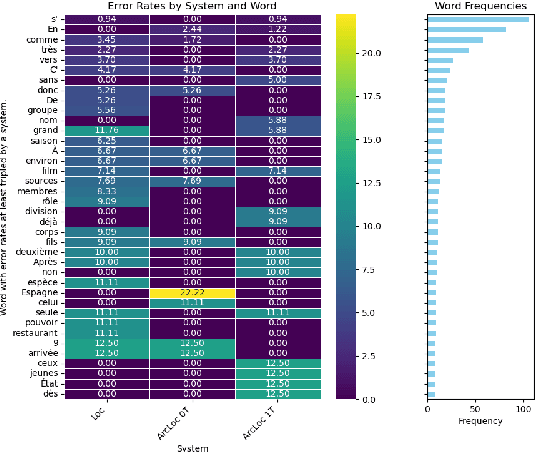
We propose a novel architecture for graph-based dependency parsing that explicitly constructs vectors, from which both arcs and labels are scored. Our method addresses key limitations of the standard two-pipeline approach by unifying arc scoring and labeling into a single network, reducing scalability issues caused by the information bottleneck and lack of parameter sharing. Additionally, our architecture overcomes limited arc interactions with transformer layers to efficiently simulate higher-order dependencies. Experiments on PTB and UD show that our model outperforms state-of-the-art parsers in both accuracy and efficiency.
Manual Verbalizer Enrichment for Few-Shot Text Classification
Oct 08, 2024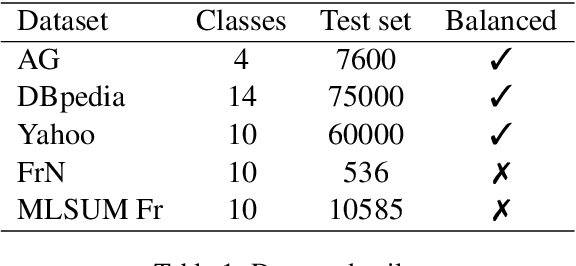
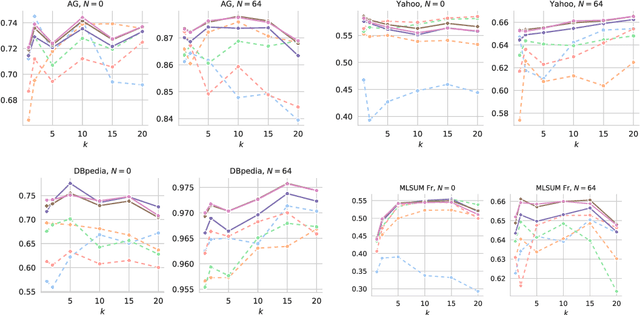
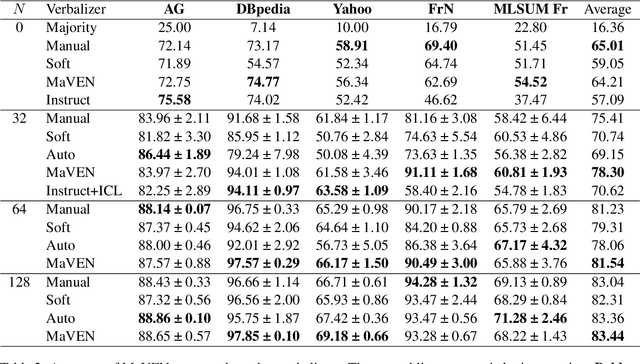
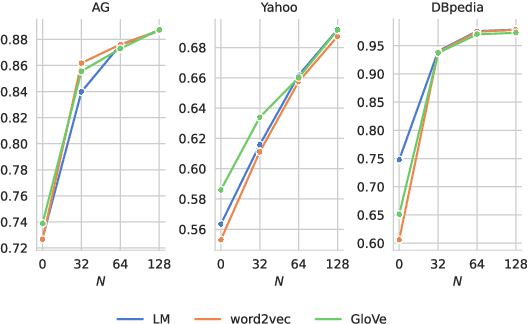
With the continuous development of pre-trained language models, prompt-based training becomes a well-adopted paradigm that drastically improves the exploitation of models for many natural language processing tasks. Prompting also shows great performance compared to traditional fine-tuning when adapted to zero-shot or few-shot scenarios where the number of annotated data is limited. In this framework, the role of verbalizers is essential, as an interpretation from masked word distributions into output predictions. In this work, we propose \acrshort{mave}, an approach for verbalizer construction by enrichment of class labels using neighborhood relation in the embedding space of words for the text classification task. In addition, we elaborate a benchmarking procedure to evaluate typical baselines of verbalizers for document classification in few-shot learning contexts. Our model achieves state-of-the-art results while using significantly fewer resources. We show that our approach is particularly effective in cases with extremely limited supervision data.
GraphER: A Structure-aware Text-to-Graph Model for Entity and Relation Extraction
Apr 18, 2024Information extraction (IE) is an important task in Natural Language Processing (NLP), involving the extraction of named entities and their relationships from unstructured text. In this paper, we propose a novel approach to this task by formulating it as graph structure learning (GSL). By formulating IE as GSL, we enhance the model's ability to dynamically refine and optimize the graph structure during the extraction process. This formulation allows for better interaction and structure-informed decisions for entity and relation prediction, in contrast to previous models that have separate or untied predictions for these tasks. When compared against state-of-the-art baselines on joint entity and relation extraction benchmarks, our model, GraphER, achieves competitive results.
EnriCo: Enriched Representation and Globally Constrained Inference for Entity and Relation Extraction
Apr 18, 2024Joint entity and relation extraction plays a pivotal role in various applications, notably in the construction of knowledge graphs. Despite recent progress, existing approaches often fall short in two key aspects: richness of representation and coherence in output structure. These models often rely on handcrafted heuristics for computing entity and relation representations, potentially leading to loss of crucial information. Furthermore, they disregard task and/or dataset-specific constraints, resulting in output structures that lack coherence. In our work, we introduce EnriCo, which mitigates these shortcomings. Firstly, to foster rich and expressive representation, our model leverage attention mechanisms that allow both entities and relations to dynamically determine the pertinent information required for accurate extraction. Secondly, we introduce a series of decoding algorithms designed to infer the highest scoring solutions while adhering to task and dataset-specific constraints, thus promoting structured and coherent outputs. Our model demonstrates competitive performance compared to baselines when evaluated on Joint IE datasets.
An Autoregressive Text-to-Graph Framework for Joint Entity and Relation Extraction
Jan 15, 2024In this paper, we propose a novel method for joint entity and relation extraction from unstructured text by framing it as a conditional sequence generation problem. In contrast to conventional generative information extraction models that are left-to-right token-level generators, our approach is \textit{span-based}. It generates a linearized graph where nodes represent text spans and edges represent relation triplets. Our method employs a transformer encoder-decoder architecture with pointing mechanism on a dynamic vocabulary of spans and relation types. Our model can capture the structural characteristics and boundaries of entities and relations through span representations while simultaneously grounding the generated output in the original text thanks to the pointing mechanism. Evaluation on benchmark datasets validates the effectiveness of our approach, demonstrating competitive results. Code is available at https://github.com/urchade/ATG.