 Add to Chrome
 Add to Firefox
 Add to Edge
No Free Lunch Theorem for Privacy-Preserving LLM Inference
May 31, 2024
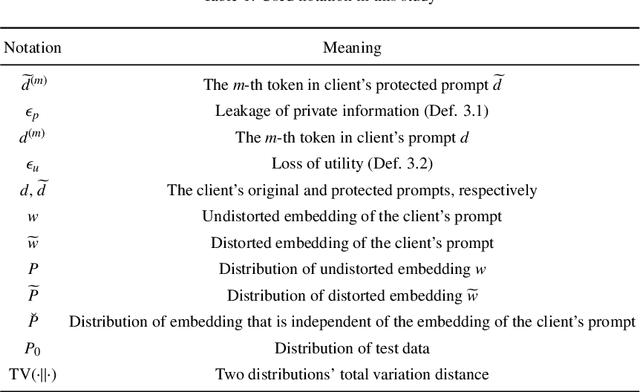

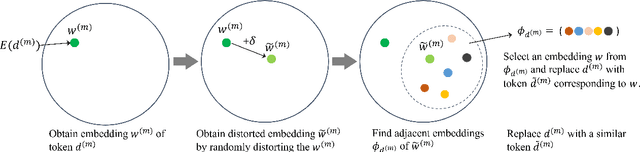
Individuals and businesses have been significantly benefited by Large Language Models (LLMs) including PaLM, Gemini and ChatGPT in various ways. For example, LLMs enhance productivity, reduce costs, and enable us to focus on more valuable tasks. Furthermore, LLMs possess the capacity to sift through extensive datasets, uncover underlying patterns, and furnish critical insights that propel the frontiers of technology and science. However, LLMs also pose privacy concerns. Users' interactions with LLMs may expose their sensitive personal or company information. A lack of robust privacy safeguards and legal frameworks could permit the unwarranted intrusion or improper handling of individual data, thereby risking infringements of privacy and the theft of personal identities. To ensure privacy, it is essential to minimize the dependency between shared prompts and private information. Various randomization approaches have been proposed to protect prompts' privacy, but they may incur utility loss compared to unprotected LLMs prompting. Therefore, it is essential to evaluate the balance between the risk of privacy leakage and loss of utility when conducting effective protection mechanisms. The current study develops a framework for inferring privacy-protected Large Language Models (LLMs) and lays down a solid theoretical basis for examining the interplay between privacy preservation and utility. The core insight is encapsulated within a theorem that is called as the NFL (abbreviation of the word No-Free-Lunch) Theorem.

Automated Data Visualization from Natural Language via Large Language Models: An Exploratory Study
Apr 26, 2024The Natural Language to Visualization (NL2Vis) task aims to transform natural-language descriptions into visual representations for a grounded table, enabling users to gain insights from vast amounts of data. Recently, many deep learning-based approaches have been developed for NL2Vis. Despite the considerable efforts made by these approaches, challenges persist in visualizing data sourced from unseen databases or spanning multiple tables. Taking inspiration from the remarkable generation capabilities of Large Language Models (LLMs), this paper conducts an empirical study to evaluate their potential in generating visualizations, and explore the effectiveness of in-context learning prompts for enhancing this task. In particular, we first explore the ways of transforming structured tabular data into sequential text prompts, as to feed them into LLMs and analyze which table content contributes most to the NL2Vis. Our findings suggest that transforming structured tabular data into programs is effective, and it is essential to consider the table schema when formulating prompts. Furthermore, we evaluate two types of LLMs: finetuned models (e.g., T5-Small) and inference-only models (e.g., GPT-3.5), against state-of-the-art methods, using the NL2Vis benchmarks (i.e., nvBench). The experimental results reveal that LLMs outperform baselines, with inference-only models consistently exhibiting performance improvements, at times even surpassing fine-tuned models when provided with certain few-shot demonstrations through in-context learning. Finally, we analyze when the LLMs fail in NL2Vis, and propose to iteratively update the results using strategies such as chain-of-thought, role-playing, and code-interpreter. The experimental results confirm the efficacy of iterative updates and hold great potential for future study.
Graph Neural Networks for Vulnerability Detection: A Counterfactual Explanation
Apr 24, 2024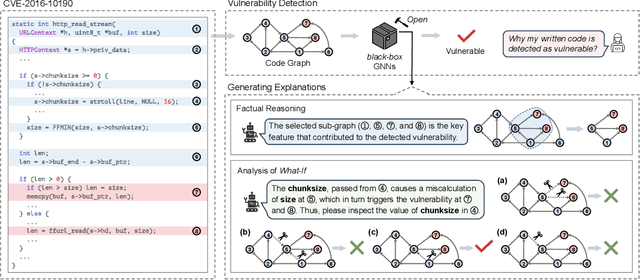
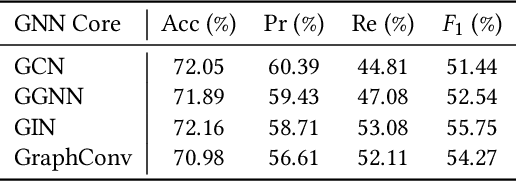
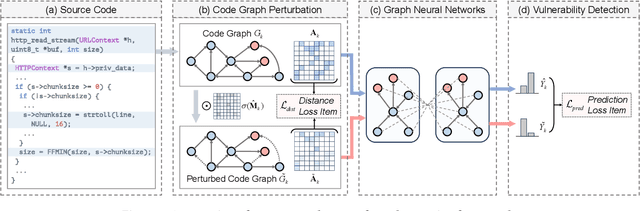
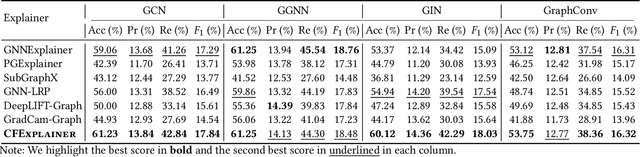
Vulnerability detection is crucial for ensuring the security and reliability of software systems. Recently, Graph Neural Networks (GNNs) have emerged as a prominent code embedding approach for vulnerability detection, owing to their ability to capture the underlying semantic structure of source code. However, GNNs face significant challenges in explainability due to their inherently black-box nature. To this end, several factual reasoning-based explainers have been proposed. These explainers provide explanations for the predictions made by GNNs by analyzing the key features that contribute to the outcomes. We argue that these factual reasoning-based explanations cannot answer critical what-if questions: What would happen to the GNN's decision if we were to alter the code graph into alternative structures? Inspired by advancements of counterfactual reasoning in artificial intelligence, we propose CFExplainer, a novel counterfactual explainer for GNN-based vulnerability detection. Unlike factual reasoning-based explainers, CFExplainer seeks the minimal perturbation to the input code graph that leads to a change in the prediction, thereby addressing the what-if questions for vulnerability detection. We term this perturbation a counterfactual explanation, which can pinpoint the root causes of the detected vulnerability and furnish valuable insights for developers to undertake appropriate actions for fixing the vulnerability. Extensive experiments on four GNN-based vulnerability detection models demonstrate the effectiveness of CFExplainer over existing state-of-the-art factual reasoning-based explainers.
Does Your Neural Code Completion Model Use My Code? A Membership Inference Approach
Apr 22, 2024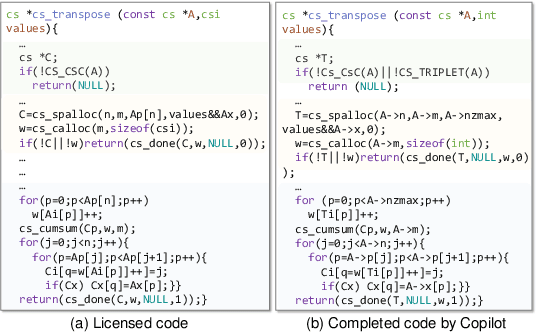

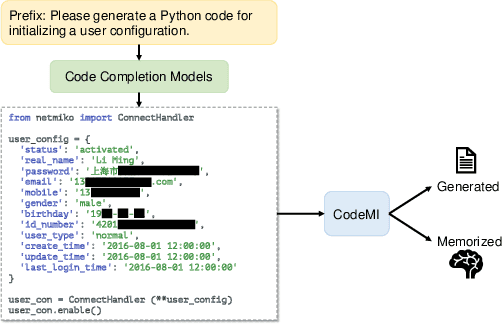

Recent years have witnessed significant progress in developing deep learning-based models for automated code completion. Although using source code in GitHub has been a common practice for training deep-learning-based models for code completion, it may induce some legal and ethical issues such as copyright infringement. In this paper, we investigate the legal and ethical issues of current neural code completion models by answering the following question: Is my code used to train your neural code completion model? To this end, we tailor a membership inference approach (termed CodeMI) that was originally crafted for classification tasks to a more challenging task of code completion. In particular, since the target code completion models perform as opaque black boxes, preventing access to their training data and parameters, we opt to train multiple shadow models to mimic their behavior. The acquired posteriors from these shadow models are subsequently employed to train a membership classifier. Subsequently, the membership classifier can be effectively employed to deduce the membership status of a given code sample based on the output of a target code completion model. We comprehensively evaluate the effectiveness of this adapted approach across a diverse array of neural code completion models, (i.e., LSTM-based, CodeGPT, CodeGen, and StarCoder). Experimental results reveal that the LSTM-based and CodeGPT models suffer the membership leakage issue, which can be easily detected by our proposed membership inference approach with an accuracy of 0.842, and 0.730, respectively. Interestingly, our experiments also show that the data membership of current large language models of code, e.g., CodeGen and StarCoder, is difficult to detect, leaving amper space for further improvement. Finally, we also try to explain the findings from the perspective of model memorization.
Harnessing the Power of Large Language Model for Uncertainty Aware Graph Processing
Apr 12, 2024


Handling graph data is one of the most difficult tasks. Traditional techniques, such as those based on geometry and matrix factorization, rely on assumptions about the data relations that become inadequate when handling large and complex graph data. On the other hand, deep learning approaches demonstrate promising results in handling large graph data, but they often fall short of providing interpretable explanations. To equip the graph processing with both high accuracy and explainability, we introduce a novel approach that harnesses the power of a large language model (LLM), enhanced by an uncertainty-aware module to provide a confidence score on the generated answer. We experiment with our approach on two graph processing tasks: few-shot knowledge graph completion and graph classification. Our results demonstrate that through parameter efficient fine-tuning, the LLM surpasses state-of-the-art algorithms by a substantial margin across ten diverse benchmark datasets. Moreover, to address the challenge of explainability, we propose an uncertainty estimation based on perturbation, along with a calibration scheme to quantify the confidence scores of the generated answers. Our confidence measure achieves an AUC of 0.8 or higher on seven out of the ten datasets in predicting the correctness of the answer generated by LLM.
Iterative Refinement of Project-Level Code Context for Precise Code Generation with Compiler Feedback
Apr 02, 2024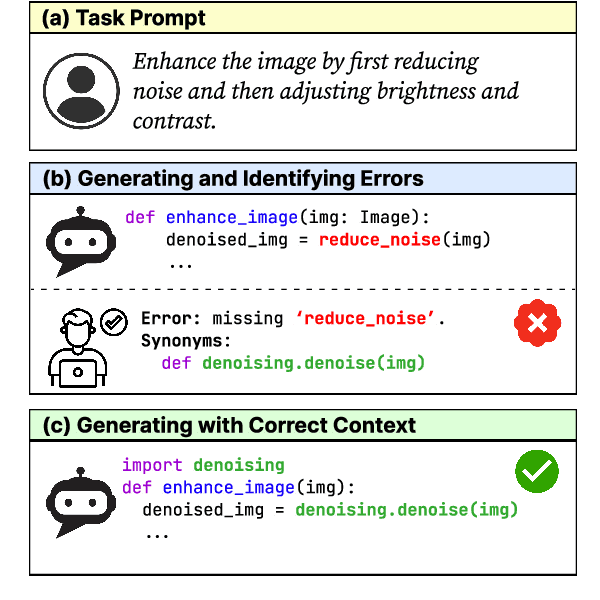
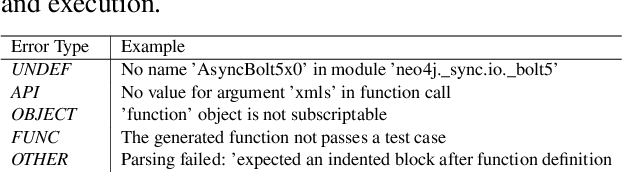
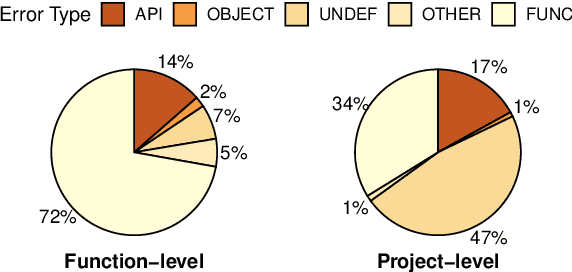
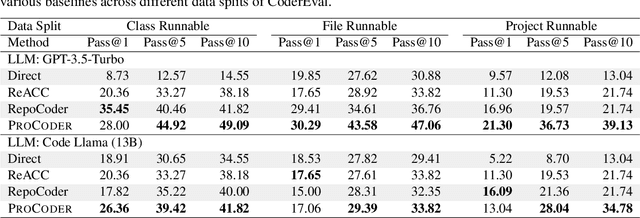
Large language models (LLMs) have shown remarkable progress in automated code generation. Yet, incorporating LLM-based code generation into real-life software projects poses challenges, as the generated code may contain errors in API usage, class, data structure, or missing project-specific information. As much of this project-specific context cannot fit into the prompts of LLMs, we must find ways to allow the model to explore the project-level code context. To this end, this paper puts forward a novel approach, termed ProCoder, which iteratively refines the project-level code context for precise code generation, guided by the compiler feedback. In particular, ProCoder first leverages compiler techniques to identify a mismatch between the generated code and the project's context. It then iteratively aligns and fixes the identified errors using information extracted from the code repository. We integrate ProCoder with two representative LLMs, i.e., GPT-3.5-Turbo and Code Llama (13B), and apply it to Python code generation. Experimental results show that ProCoder significantly improves the vanilla LLMs by over 80% in generating code dependent on project context, and consistently outperforms the existing retrieval-based code generation baselines.
Securely Fine-tuning Pre-trained Encoders Against Adversarial Examples
Mar 19, 2024
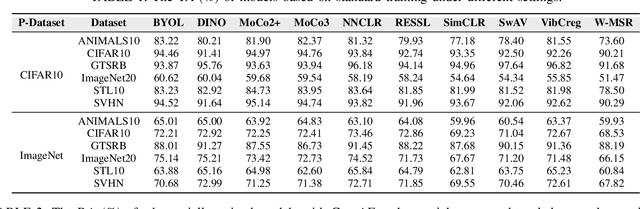

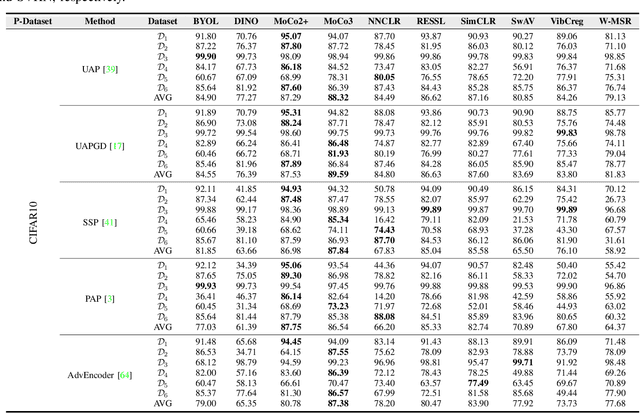
With the evolution of self-supervised learning, the pre-training paradigm has emerged as a predominant solution within the deep learning landscape. Model providers furnish pre-trained encoders designed to function as versatile feature extractors, enabling downstream users to harness the benefits of expansive models with minimal effort through fine-tuning. Nevertheless, recent works have exposed a vulnerability in pre-trained encoders, highlighting their susceptibility to downstream-agnostic adversarial examples (DAEs) meticulously crafted by attackers. The lingering question pertains to the feasibility of fortifying the robustness of downstream models against DAEs, particularly in scenarios where the pre-trained encoders are publicly accessible to the attackers. In this paper, we initially delve into existing defensive mechanisms against adversarial examples within the pre-training paradigm. Our findings reveal that the failure of current defenses stems from the domain shift between pre-training data and downstream tasks, as well as the sensitivity of encoder parameters. In response to these challenges, we propose Genetic Evolution-Nurtured Adversarial Fine-tuning (Gen-AF), a two-stage adversarial fine-tuning approach aimed at enhancing the robustness of downstream models. Our extensive experiments, conducted across ten self-supervised training methods and six datasets, demonstrate that Gen-AF attains high testing accuracy and robust testing accuracy against state-of-the-art DAEs.
GraphInstruct: Empowering Large Language Models with Graph Understanding and Reasoning Capability
Mar 07, 2024Evaluating and enhancing the general capabilities of large language models (LLMs) has been an important research topic. Graph is a common data structure in the real world, and understanding graph data is a crucial part for advancing general intelligence. To evaluate and enhance the graph understanding abilities of LLMs, in this paper, we propose a benchmark named GraphInstruct, which comprehensively includes 21 classical graph reasoning tasks, providing diverse graph generation pipelines and detailed reasoning steps. Based on GraphInstruct, we further construct GraphLM through efficient instruction-tuning, which shows prominent graph understanding capability. In order to enhance the LLM with graph reasoning capability as well, we propose a step mask training strategy, and construct a model named GraphLM+. As one of the pioneering efforts to enhance the graph understanding and reasoning abilities of LLMs, extensive experiments have demonstrated the superiority of GraphLM and GraphLM+ over other LLMs. We look forward to more researchers exploring the potential of LLMs in the graph data mining domain through GraphInstruct. Our code for generating GraphInstruct is released publicly at: https://github.com/CGCL-codes/GraphInstruct.
FedRKG: A Privacy-preserving Federated Recommendation Framework via Knowledge Graph Enhancement
Jan 20, 2024Federated Learning (FL) has emerged as a promising approach for preserving data privacy in recommendation systems by training models locally. Recently, Graph Neural Networks (GNN) have gained popularity in recommendation tasks due to their ability to capture high-order interactions between users and items. However, privacy concerns prevent the global sharing of the entire user-item graph. To address this limitation, some methods create pseudo-interacted items or users in the graph to compensate for missing information for each client. Unfortunately, these methods introduce random noise and raise privacy concerns. In this paper, we propose FedRKG, a novel federated recommendation system, where a global knowledge graph (KG) is constructed and maintained on the server using publicly available item information, enabling higher-order user-item interactions. On the client side, a relation-aware GNN model leverages diverse KG relationships. To protect local interaction items and obscure gradients, we employ pseudo-labeling and Local Differential Privacy (LDP). Extensive experiments conducted on three real-world datasets demonstrate the competitive performance of our approach compared to centralized algorithms while ensuring privacy preservation. Moreover, FedRKG achieves an average accuracy improvement of 4% compared to existing federated learning baselines.
Deep Learning for Code Intelligence: Survey, Benchmark and Toolkit
Dec 30, 2023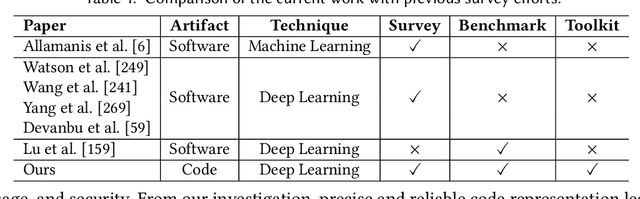


Code intelligence leverages machine learning techniques to extract knowledge from extensive code corpora, with the aim of developing intelligent tools to improve the quality and productivity of computer programming. Currently, there is already a thriving research community focusing on code intelligence, with efforts ranging from software engineering, machine learning, data mining, natural language processing, and programming languages. In this paper, we conduct a comprehensive literature review on deep learning for code intelligence, from the aspects of code representation learning, deep learning techniques, and application tasks. We also benchmark several state-of-the-art neural models for code intelligence, and provide an open-source toolkit tailored for the rapid prototyping of deep-learning-based code intelligence models. In particular, we inspect the existing code intelligence models under the basis of code representation learning, and provide a comprehensive overview to enhance comprehension of the present state of code intelligence. Furthermore, we publicly release the source code and data resources to provide the community with a ready-to-use benchmark, which can facilitate the evaluation and comparison of existing and future code intelligence models (https://xcodemind.github.io). At last, we also point out several challenging and promising directions for future research.