 Add to Chrome
 Add to Firefox
 Add to Edge
HiGMem: A Hierarchical and LLM-Guided Memory System for Long-Term Conversational Agents
Apr 22, 2026
Long-term conversational large language model (LLM) agents require memory systems that can recover relevant evidence from historical interactions without overwhelming the answer stage with irrelevant context. However, existing memory systems, including hierarchical ones, still often rely solely on vector similarity for retrieval. It tends to produce bloated evidence sets: adding many superficially similar dialogue turns yields little additional recall, but lowers retrieval precision, increases answer-stage context cost, and makes retrieved memories harder to inspect and manage. To address this, we propose HiGMem (Hierarchical and LLM-Guided Memory System), a two-level event-turn memory system that allows LLMs to use event summaries as semantic anchors to predict which related turns are worth reading. This allows the model to inspect high-level event summaries first and then focus on a smaller set of potentially useful turns, providing a concise and reliable evidence set through reasoning, while avoiding the retrieval overhead that would be excessively high compared to vector retrieval. On the LoCoMo10 benchmark, HiGMem achieves the best F1 on four of five question categories and improves adversarial F1 from 0.54 to 0.78 over A-Mem, while retrieving an order of magnitude fewer turns. Code is publicly available at https://github.com/ZeroLoss-Lab/HiGMem.

Reverse Constitutional AI: A Framework for Controllable Toxic Data Generation via Probability-Clamped RLAIF
Apr 20, 2026Ensuring the safety of large language models (LLMs) requires robust red teaming, yet the systematic synthesis of high-quality toxic data remains under-explored. We propose Reverse Constitutional AI (R-CAI), a framework for automated and controllable adversarial data generation that moves beyond isolated jailbreak prompts. By inverting a harmless constitution into a constitution of toxicity and iteratively refining model outputs through a critique--revision pipeline, R-CAI enables scalable synthesis of multi-dimensional adversarial data without human annotation. Optimizing solely for toxicity-related rewards, however, can lead to reward hacking and degraded semantic coherence. To address this challenge, we introduce probability clamping within reinforcement learning from AI feedback, which stabilizes adversarial optimization while preserving adversarial intent. Experiments demonstrate that R-CAI generates diverse, high-quality toxic data and that probability clamping substantially improves semantic coherence (15%) without sacrificing adversarial strength. Overall, R-CAI provides a fully automated framework for red teaming data generation and systematic safety evaluation of aligned language models.
Lost in Diffusion: Uncovering Hallucination Patterns and Failure Modes in Diffusion Large Language Models
Apr 12, 2026While Diffusion Large Language Models (dLLMs) have emerged as a promising non-autoregressive paradigm comparable to autoregressive (AR) models, their faithfulness, specifically regarding hallucination, remains largely underexplored. To bridge this gap, we present the first controlled comparative study to evaluate hallucination patterns in dLLMs. Our results demonstrate that current dLLMs exhibit a higher propensity for hallucination than AR counterparts controlled for architecture, scale, and pre-training weights. Furthermore, an analysis of inference-time compute reveals divergent dynamics: while quasi-autoregressive generation suffers from early saturation, non-sequential decoding unlocks potential for continuous refinement. Finally, we identify distinct failure modes unique to the diffusion process, including premature termination, incomplete denoising, and context intrusion. Our findings underscore that although dLLMs have narrowed the performance gap on general tasks, their distinct hallucination mechanisms pose a critical challenge to model reliability. Our code is available at https://github.com/ZeroLoss-Lab/Lost-in-Diffusion
VEPO: Variable Entropy Policy Optimization for Low-Resource Language Foundation Models
Mar 19, 2026Large language models frequently exhibit suboptimal performance on low resource languages, primarily due to inefficient subword segmentation and systemic training data imbalances. In this paper, we propose Variable Entropy Policy Optimization (VEPO), which leverages Reinforcement Learning with Verifiable Rewards to incorporate deterministic structural constraints into the policy alignment process. This framework ensures prescribed sequence length, robust format consistency, and rigorous linguistic well formedness, all enforced during training. Central to our approach is a variable entropy mechanism that enables the model to dynamically calibrate the equilibrium between literal fidelity and semantic naturalness by modulating the exploration exploitation manifold. By integrating entropy tempered advantage estimation with asymmetric clipping, VEPO sustains robust exploration while mitigating policy collapse. Empirical evaluations across 90 FLORES-200, COMET-22, chrF directions demonstrate that VEPO yields substantial improvements in both tokenization efficiency and translation quality, bridging the performance gap for underrepresented languages.
HACHIMI: Scalable and Controllable Student Persona Generation via Orchestrated Agents
Mar 05, 2026Student Personas (SPs) are emerging as infrastructure for educational LLMs, yet prior work often relies on ad-hoc prompting or hand-crafted profiles with limited control over educational theory and population distributions. We formalize this as Theory-Aligned and Distribution-Controllable Persona Generation (TAD-PG) and introduce HACHIMI, a multi-agent Propose-Validate-Revise framework that generates theory-aligned, quota-controlled personas. HACHIMI factorizes each persona into a theory-anchored educational schema, enforces developmental and psychological constraints via a neuro-symbolic validator, and combines stratified sampling with semantic deduplication to reduce mode collapse. The resulting HACHIMI-1M corpus comprises 1 million personas for Grades 1-12. Intrinsic evaluation shows near-perfect schema validity, accurate quotas, and substantial diversity, while external evaluation instantiates personas as student agents answering CEPS and PISA 2022 surveys; across 16 cohorts, math and curiosity/growth constructs align strongly between humans and agents, whereas classroom-climate and well-being constructs are only moderately aligned, revealing a fidelity gradient. All personas are generated with Qwen2.5-72B, and HACHIMI provides a standardized synthetic student population for group-level benchmarking and social-science simulations. Resources available at https://github.com/ZeroLoss-Lab/HACHIMI
Foundation Model-Driven Semantic Change Detection in Remote Sensing Imagery
Feb 14, 2026Remote sensing (RS) change detection methods can extract critical information on surface dynamics and are an essential means for humans to understand changes in the earth's surface and environment. Among these methods, semantic change detection (SCD) can more effectively interpret the multi-class information contained in bi-temporal RS imagery, providing semantic-level predictions that support dynamic change monitoring. However, due to the limited semantic understanding capability of the model and the inherent complexity of the SCD tasks, existing SCD methods face significant challenges in both performance and paradigm complexity. In this paper, we propose PerASCD, a SCD method driven by RS foundation model PerA, designed to enhance the multi-scale semantic understanding and overall performance. We introduce a modular Cascaded Gated Decoder (CG-Decoder) that simplifies complex SCD decoding pipelines while promoting effective multi-level feature interaction and fusion. In addition, we propose a Soft Semantic Consistency Loss (SSCLoss) to mitigate the numerical instability commonly encountered during SCD training. We further explore the applicability of multiple existing RS foundation models on the SCD task when equipped with the proposed decoder. Experimental results demonstrate that our decoder not only effectively simplifies the paradigm of SCD, but also achieves seamless adaptation across various vision encoders. Our method achieves state-of-the-art (SOTA) performance on two public benchmark datasets, validating its effectiveness. The code is available at https://github.com/SathShen/PerASCD.git.
BrainDistill: Implantable Motor Decoding with Task-Specific Knowledge Distillation
Jan 24, 2026Transformer-based neural decoders with large parameter counts, pre-trained on large-scale datasets, have recently outperformed classical machine learning models and small neural networks on brain-computer interface (BCI) tasks. However, their large parameter counts and high computational demands hinder deployment in power-constrained implantable systems. To address this challenge, we introduce BrainDistill, a novel implantable motor decoding pipeline that integrates an implantable neural decoder (IND) with a task-specific knowledge distillation (TSKD) framework. Unlike standard feature distillation methods that attempt to preserve teacher representations in full, TSKD explicitly prioritizes features critical for decoding through supervised projection. Across multiple neural datasets, IND consistently outperforms prior neural decoders on motor decoding tasks, while its TSKD-distilled variant further surpasses alternative distillation methods in few-shot calibration settings. Finally, we present a quantization-aware training scheme that enables integer-only inference with activation clipping ranges learned during training. The quantized IND enables deployment under the strict power constraints of implantable BCIs with minimal performance loss.
POWDR: Pathology-preserving Outpainting with Wavelet Diffusion for 3D MRI
Jan 14, 2026Medical imaging datasets often suffer from class imbalance and limited availability of pathology-rich cases, which constrains the performance of machine learning models for segmentation, classification, and vision-language tasks. To address this challenge, we propose POWDR, a pathology-preserving outpainting framework for 3D MRI based on a conditioned wavelet diffusion model. Unlike conventional augmentation or unconditional synthesis, POWDR retains real pathological regions while generating anatomically plausible surrounding tissue, enabling diversity without fabricating lesions. Our approach leverages wavelet-domain conditioning to enhance high-frequency detail and mitigate blurring common in latent diffusion models. We introduce a random connected mask training strategy to overcome conditioning-induced collapse and improve diversity outside the lesion. POWDR is evaluated on brain MRI using BraTS datasets and extended to knee MRI to demonstrate tissue-agnostic applicability. Quantitative metrics (FID, SSIM, LPIPS) confirm image realism, while diversity analysis shows significant improvement with random-mask training (cosine similarity reduced from 0.9947 to 0.9580; KL divergence increased from 0.00026 to 0.01494). Clinically relevant assessments reveal gains in tumor segmentation performance using nnU-Net, with Dice scores improving from 0.6992 to 0.7137 when adding 50 synthetic cases. Tissue volume analysis indicates no significant differences for CSF and GM compared to real images. These findings highlight POWDR as a practical solution for addressing data scarcity and class imbalance in medical imaging. The method is extensible to multiple anatomies and offers a controllable framework for generating diverse, pathology-preserving synthetic data to support robust model development.
More Data or Better Data? A Critical Analysis of Data Selection and Synthesis for Mathematical Reasoning
Oct 08, 2025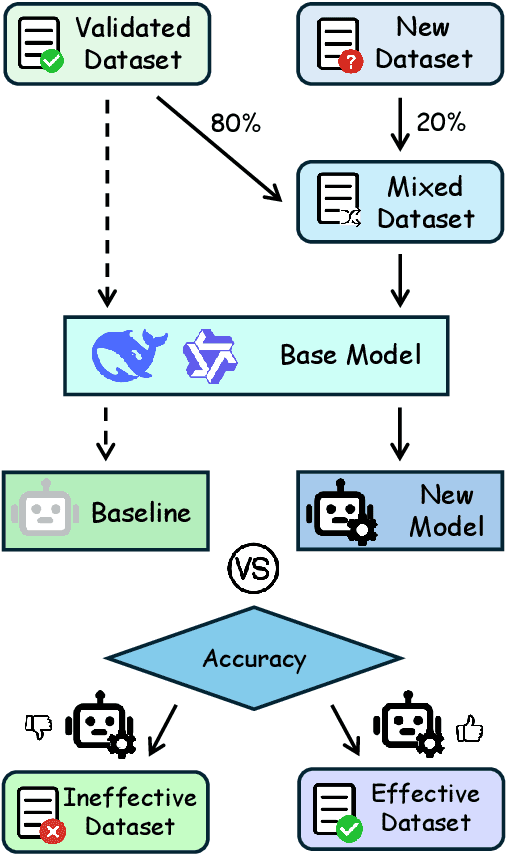
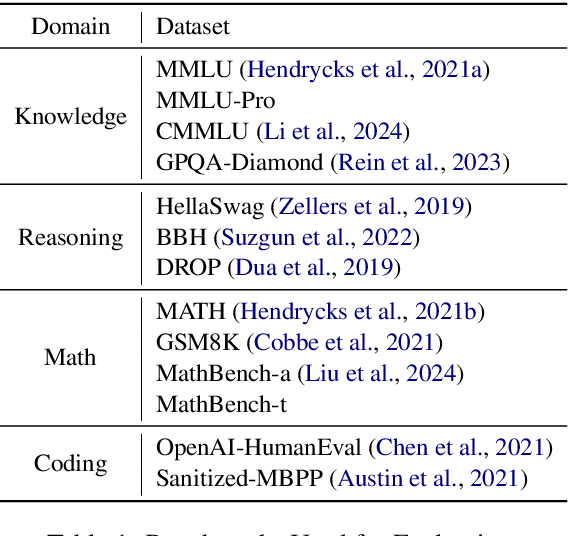
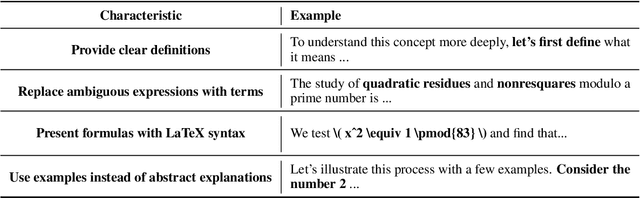
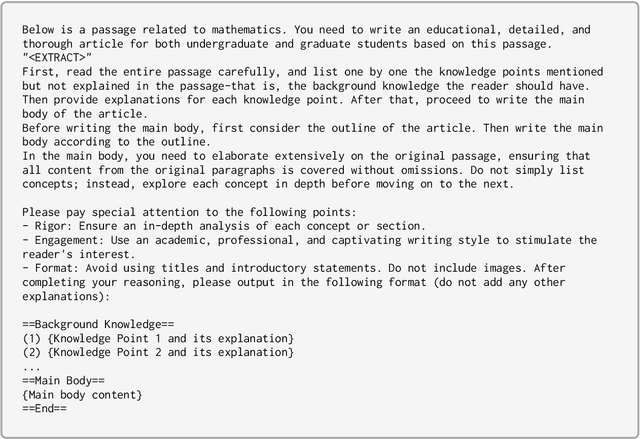
The reasoning capabilities of Large Language Models (LLMs) play a critical role in many downstream tasks, yet depend strongly on the quality of training data. Despite various proposed data construction methods, their practical utility in real-world pipelines remains underexplored. In this work, we conduct a comprehensive analysis of open-source datasets and data synthesis techniques for mathematical reasoning, evaluating them under a unified pipeline designed to mirror training and deployment scenarios. We further distill effective data selection strategies and identify practical methods suitable for industrial applications. Our findings highlight that structuring data in more interpretable formats, or distilling from stronger models often outweighs simply scaling up data volume. This study provides actionable guidance for integrating training data to enhance LLM capabilities, supporting both cost-effective data curation and scalable model enhancement. We hope this work will inspire further research on how to balance "more data" versus "better data" for real-world reasoning tasks.
ReSURE: Regularizing Supervision Unreliability for Multi-turn Dialogue Fine-tuning
Aug 27, 2025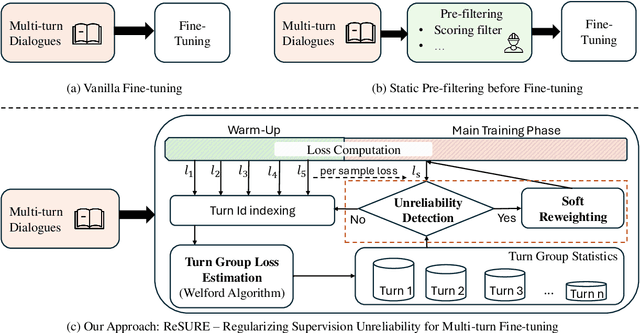
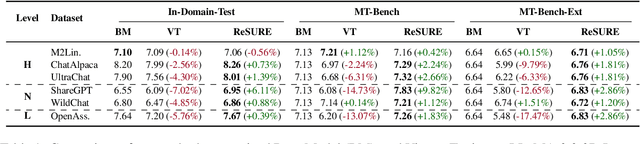
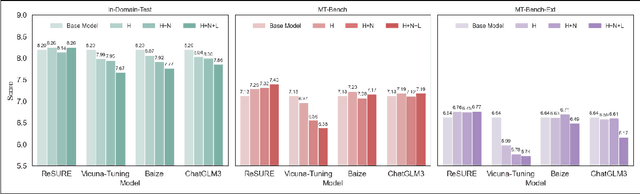
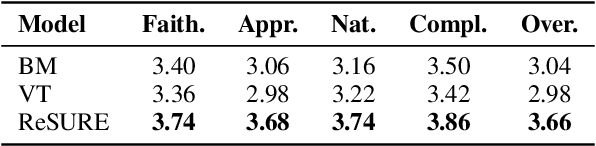
Fine-tuning multi-turn dialogue systems requires high-quality supervision but often suffers from degraded performance when exposed to low-quality data. Supervision errors in early turns can propagate across subsequent turns, undermining coherence and response quality. Existing methods typically address data quality via static prefiltering, which decouples quality control from training and fails to mitigate turn-level error propagation. In this context, we propose ReSURE (Regularizing Supervision UnREliability), an adaptive learning method that dynamically down-weights unreliable supervision without explicit filtering. ReSURE estimates per-turn loss distributions using Welford's online statistics and reweights sample losses on the fly accordingly. Experiments on both single-source and mixed-quality datasets show improved stability and response quality. Notably, ReSURE enjoys positive Spearman correlations (0.21 ~ 1.0 across multiple benchmarks) between response scores and number of samples regardless of data quality, which potentially paves the way for utilizing large-scale data effectively. Code is publicly available at https://github.com/Elvin-Yiming-Du/ReSURE_Multi_Turn_Training.