 Add to Chrome
 Add to Firefox
 Add to Edge
Causal Ensemble Agent: Hierarchical Causal Discovery with LLM-guided Expert Reweighting
Jun 09, 2026
Causal discovery aims to uncover causal structures from observational data, which is crucial for real-world decision-making. However, different causal discovery algorithms can produce divergent results that conflict with each other, complicating the identification of accurate causal graphs. Traditional approaches rely on numerical values and statistical assumptions, often ignoring rich domain-specific information, such as feature descriptions, which could also help structure learning. While recent works explore using Large Language Models (LLMs) to infer causal relations via direct queries, such methods can be unreliable due to a lack of alignment with the actual data. To address these limitations, we propose Causal Ensemble Agent (CEA), a novel framework that aggregates structural insights from statistical discovery experts across different graph levels via linear opinion pooling, and uses an LLM as a meta-referee to dynamically reweight experts when the aggregated confidence is close to the decision boundary, thereby composing an improved and more complete causal graph. Extensive experiments on both synthetic and real-world datasets demonstrate that CEA achieves the strongest overall performance across a wide range of causal discovery methods, highlighting the effectiveness of using LLMs for meta-analysis in causal discovery.

Learning Latent Dynamical Causal Processes for Single-Cell Perturbation Prediction
May 25, 2026Single-cell perturbation prediction aims to infer how cells respond to unseen interventions and to achieve out-of-distribution (OOD) generalization, providing a computational route to understanding how perturbations reshape cellular programs over time. Existing machine learning methods have made important progress, but typically capture only one side of the response. Latent causal approaches seek mechanisms that support generalization and interpretation, yet often treat perturbation effects as static outcomes. Temporal models describe how gene expression changes across time, but usually do not explicitly recover the latent causal generative mechanisms driving these changes. In practice, perturbation effects are both latent and dynamical: interventions act through unobserved cellular programs, whose states evolve over time and give rise to observed expression profiles. Motivated by this view, we propose a latent dynamical causal generative model for single-cell perturbation data that jointly captures latent cellular programs, perturbation-conditioned mechanisms, and temporal evolution. We further provide an identifiability analysis showing that, under suitable conditions, the latent causal variables are recoverable up to standard equivalence classes. Guided by this analysis, we develop CITE-VAE, a learning framework for recovering latent cellular programs and their perturbation-driven dynamics from single-cell sequencing data. Experiments on Causal-3DIdent validate the theoretical results and the effectiveness of the proposed method in controlled settings. Additional experiments on real-world CRISPR-based single-cell perturbation data show improved generalization to unseen perturbations compared with state-of-the-art baselines, highlighting the practical robustness of our approach.
What Makes a Representation Good for Single-Cell Perturbation Prediction?
May 19, 2026Single-cell perturbation modeling is fundamental for understanding and predicting cellular responses to genetic perturbations. However, existing approaches, from causal representation learning to foundation models, often struggle with an overlooked challenge: gene expression is dominated by perturbation-invariant information, while perturbation-specific signals are intrinsically sparse. As a result, learned representations either entangle invariant and perturbation-specific information, leading to spurious and non-generalizable predictors, or suppress perturbation-specific signals altogether, rendering them ineffective for prediction. To address this, we propose PerturbedVAE, a general framework designed to resolve this signal imbalance. The framework explicitly separates perturbation-specific information from dominant invariant structure and recovers causal representations to effectively utilize such information for prediction. We further provide an identifiability analysis that characterizes the conditions under which sparse perturbation effects can be reliably recovered, thereby clarifying how the framework can be concretely specified under such conditions. Empirically, PerturbedVAE achieves state-of-the-art performance on a widely used benchmark across multiple evaluation settings, yielding significant gains on out-of-distribution combinatorial predictions and uncovering interpretable perturbation-response programs.
Uncertainty Propagation in LLM-Based Systems
Apr 26, 2026Uncertainty in large language model (LLM)-based systems is often studied at the level of a single model output, yet deployed LLM applications are compound systems in which uncertainty is transformed and reused across model internals, workflow stages, component boundaries, persistent state, and human or organisational processes. Without principled treatment of how uncertainty is carried and reused across these boundaries, early errors can propagate and compound in ways that are difficult to detect and govern. This paper develops a systems-level account of uncertainty propagation. It introduces a conceptual framing for characterising propagated uncertainty signals, presents a structured taxonomy spanning intra-model (P1), system-level (P2), and socio-technical (P3) propagation mechanisms, synthesises cross-cutting engineering insights, and identifies five open research challenges.
Observationally Informed Adaptive Causal Experimental Design
Mar 04, 2026Randomized Controlled Trials (RCTs) represent the gold standard for causal inference yet remain a scarce resource. While large-scale observational data is often available, it is utilized only for retrospective fusion, and remains discarded in prospective trial design due to bias concerns. We argue this "tabula rasa" data acquisition strategy is fundamentally inefficient. In this work, we propose Active Residual Learning, a new paradigm that leverages the observational model as a foundational prior. This approach shifts the experimental focus from learning target causal quantities from scratch to efficiently estimating the residuals required to correct observational bias. To operationalize this, we introduce the R-Design framework. Theoretically, we establish two key advantages: (1) a structural efficiency gap, proving that estimating smooth residual contrasts admits strictly faster convergence rates than reconstructing full outcomes; and (2) information efficiency, where we quantify the redundancy in standard parameter-based acquisition (e.g., BALD), demonstrating that such baselines waste budget on task-irrelevant nuisance uncertainty. We propose R-EPIG (Residual Expected Predictive Information Gain), a unified criterion that directly targets the causal estimand, minimizing residual uncertainty for estimation or clarifying decision boundaries for policy. Experiments on synthetic and semi-synthetic benchmarks demonstrate that R-Design significantly outperforms baselines, confirming that repairing a biased model is far more efficient than learning one from scratch.
Concept Component Analysis: A Principled Approach for Concept Extraction in LLMs
Jan 29, 2026Developing human understandable interpretation of large language models (LLMs) becomes increasingly critical for their deployment in essential domains. Mechanistic interpretability seeks to mitigate the issues through extracts human-interpretable process and concepts from LLMs' activations. Sparse autoencoders (SAEs) have emerged as a popular approach for extracting interpretable and monosemantic concepts by decomposing the LLM internal representations into a dictionary. Despite their empirical progress, SAEs suffer from a fundamental theoretical ambiguity: the well-defined correspondence between LLM representations and human-interpretable concepts remains unclear. This lack of theoretical grounding gives rise to several methodological challenges, including difficulties in principled method design and evaluation criteria. In this work, we show that, under mild assumptions, LLM representations can be approximated as a {linear mixture} of the log-posteriors over concepts given the input context, through the lens of a latent variable model where concepts are treated as latent variables. This motivates a principled framework for concept extraction, namely Concept Component Analysis (ConCA), which aims to recover the log-posterior of each concept from LLM representations through a {unsupervised} linear unmixing process. We explore a specific variant, termed sparse ConCA, which leverages a sparsity prior to address the inherent ill-posedness of the unmixing problem. We implement 12 sparse ConCA variants and demonstrate their ability to extract meaningful concepts across multiple LLMs, offering theory-backed advantages over SAEs.
Negate or Embrace: On How Misalignment Shapes Multimodal Representation Learning
Apr 16, 2025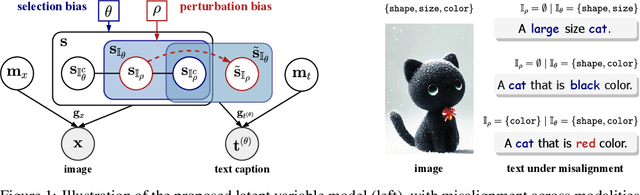
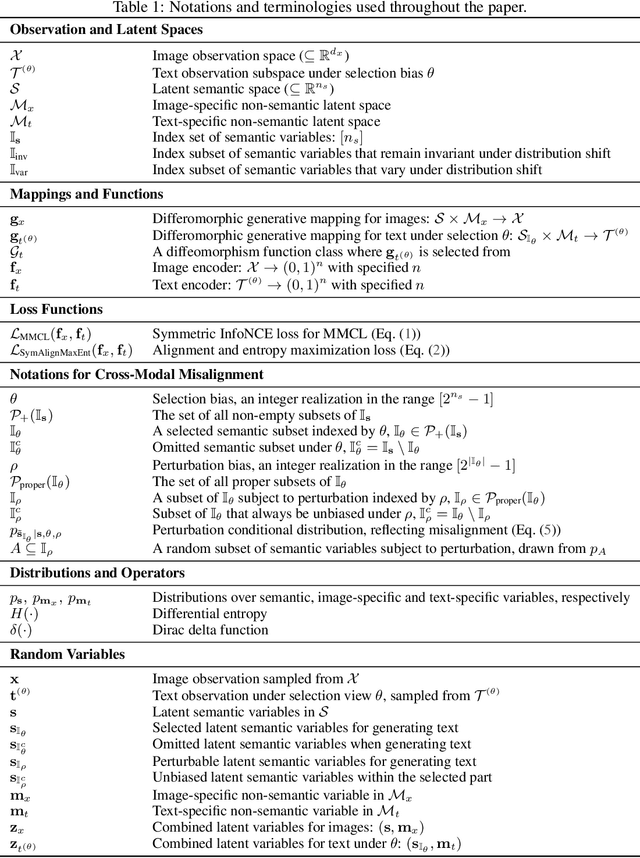
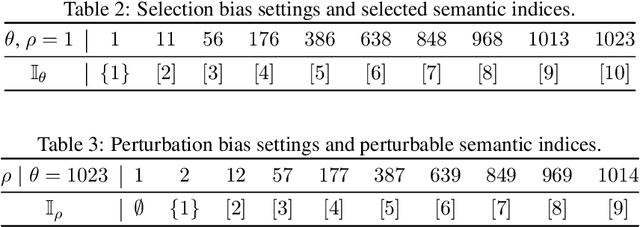
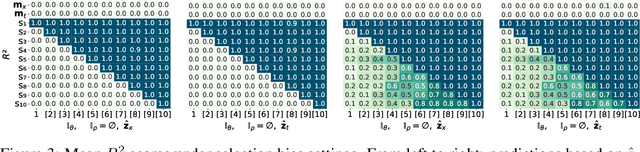
Multimodal representation learning, exemplified by multimodal contrastive learning (MMCL) using image-text pairs, aims to learn powerful representations by aligning cues across modalities. This approach relies on the core assumption that the exemplar image-text pairs constitute two representations of an identical concept. However, recent research has revealed that real-world datasets often exhibit misalignment. There are two distinct viewpoints on how to address this issue: one suggests mitigating the misalignment, and the other leveraging it. We seek here to reconcile these seemingly opposing perspectives, and to provide a practical guide for practitioners. Using latent variable models we thus formalize misalignment by introducing two specific mechanisms: selection bias, where some semantic variables are missing, and perturbation bias, where semantic variables are distorted -- both affecting latent variables shared across modalities. Our theoretical analysis demonstrates that, under mild assumptions, the representations learned by MMCL capture exactly the information related to the subset of the semantic variables invariant to selection and perturbation biases. This provides a unified perspective for understanding misalignment. Based on this, we further offer actionable insights into how misalignment should inform the design of real-world ML systems. We validate our theoretical findings through extensive empirical studies on both synthetic data and real image-text datasets, shedding light on the nuanced impact of misalignment on multimodal representation learning.
I Predict Therefore I Am: Is Next Token Prediction Enough to Learn Human-Interpretable Concepts from Data?
Mar 12, 2025The remarkable achievements of large language models (LLMs) have led many to conclude that they exhibit a form of intelligence. This is as opposed to explanations of their capabilities based on their ability to perform relatively simple manipulations of vast volumes of data. To illuminate the distinction between these explanations, we introduce a novel generative model that generates tokens on the basis of human interpretable concepts represented as latent discrete variables. Under mild conditions, even when the mapping from the latent space to the observed space is non-invertible, we establish an identifiability result: the representations learned by LLMs through next-token prediction can be approximately modeled as the logarithm of the posterior probabilities of these latent discrete concepts, up to an invertible linear transformation. This theoretical finding not only provides evidence that LLMs capture underlying generative factors, but also strongly reinforces the linear representation hypothesis, which posits that LLMs learn linear representations of human-interpretable concepts. Empirically, we validate our theoretical results through evaluations on both simulation data and the Pythia, Llama, and DeepSeek model families.
Eliminating Prior Bias for Semantic Image Editing via Dual-Cycle Diffusion
Feb 07, 2023The recent success of text-to-image generation diffusion models has also revolutionized semantic image editing, enabling the manipulation of images based on query/target texts. Despite these advancements, a significant challenge lies in the potential introduction of prior bias in pre-trained models during image editing, e.g., making unexpected modifications to inappropriate regions. To this point, we present a novel Dual-Cycle Diffusion model that addresses the issue of prior bias by generating an unbiased mask as the guidance of image editing. The proposed model incorporates a Bias Elimination Cycle that consists of both a forward path and an inverted path, each featuring a Structural Consistency Cycle to ensure the preservation of image content during the editing process. The forward path utilizes the pre-trained model to produce the edited image, while the inverted path converts the result back to the source image. The unbiased mask is generated by comparing differences between the processed source image and the edited image to ensure that both conform to the same distribution. Our experiments demonstrate the effectiveness of the proposed method, as it significantly improves the D-CLIP score from 0.272 to 0.283. The code will be available at https://github.com/JohnDreamer/DualCycleDiffsion.
On the Sparse DAG Structure Learning Based on Adaptive Lasso
Sep 07, 2022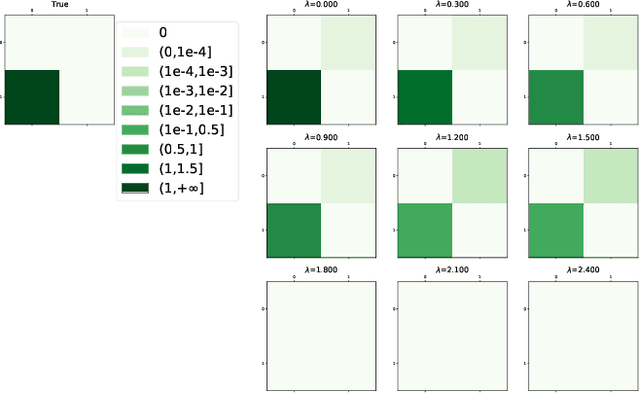
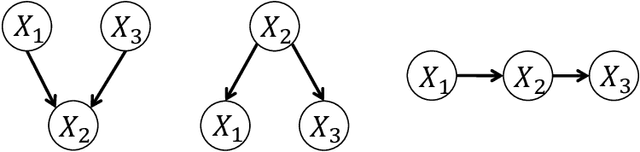
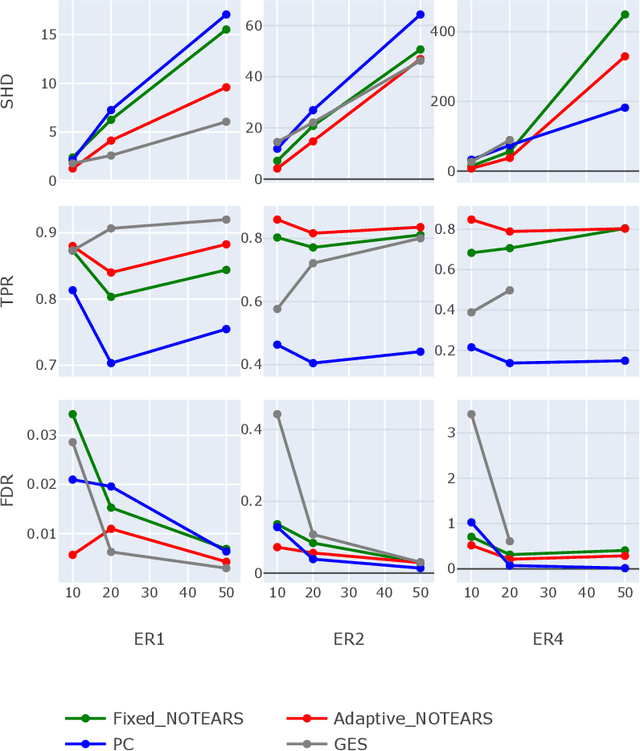
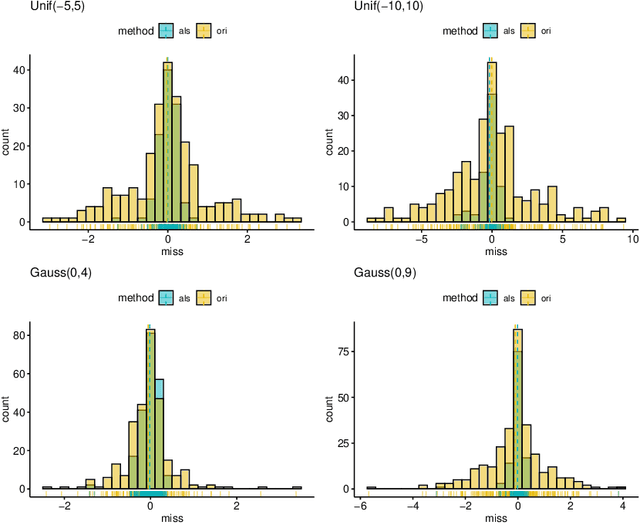
Learning the underlying casual structure, represented by Directed Acyclic Graphs (DAGs), of concerned events from fully-observational data is a crucial part of causal reasoning, but it is challenging due to the combinatorial and large search space. A recent flurry of developments recast this combinatorial problem into a continuous optimization problem by leveraging an algebraic equality characterization of acyclicity. However, these methods suffer from the fixed-threshold step after optimization, which is not a flexible and systematic way to rule out the cycle-inducing edges or false discoveries edges with small values caused by numerical precision. In this paper, we develop a data-driven DAG structure learning method without the predefined threshold, called adaptive NOTEARS [30], achieved by applying adaptive penalty levels to each parameters in the regularization term. We show that adaptive NOTEARS enjoys the oracle properties under some specific conditions. Furthermore, simulation experimental results validate the effectiveness of our method, without setting any gap of edges weights around zero.