 Add to Chrome
 Add to Firefox
 Add to Edge
TimeLAVA: Learning-Agnostic Data Valuation for Time Series
Jun 17, 2026
Data valuation quantifies the intrinsic quality of individual samples to enable principled data curation, quality control, and robust learning. For time series in critical domains such as healthcare, finance, and industrial monitoring, effective valuation methods are essential yet fundamentally lacking. Existing approaches are either model-dependent, limiting their generalizability, or designed for i.i.d. data and thus fail to capture temporal dependencies, multi-scale patterns, and non-stationary dynamics inherent to sequential data. We introduce TimeLAVA, a learning-agnostic framework that values temporal segments by their marginal contribution to minimizing distributional discrepancy between evaluated and reference data. At its core is a novel Selective Wavelet-based Wasserstein discrepancy combining multi-scale wavelet transforms for temporal localization with unbalanced optimal transport for robustness to distributional shifts. Segment values are efficiently computed via sensitivity analysis without requiring model training and aggregated into point-wise scores. We provide theoretical guarantees linking valuation to model-agnostic generalization and prove bounded sensitivity to outlier contamination. Extensive experiments across anomaly detection, data pruning, and label noise detection demonstrate that TimeLAVA produces significantly more informative value scores than existing methods on diverse real-world datasets.
* 34pages

Causal Ensemble Agent: Hierarchical Causal Discovery with LLM-guided Expert Reweighting
Jun 09, 2026Causal discovery aims to uncover causal structures from observational data, which is crucial for real-world decision-making. However, different causal discovery algorithms can produce divergent results that conflict with each other, complicating the identification of accurate causal graphs. Traditional approaches rely on numerical values and statistical assumptions, often ignoring rich domain-specific information, such as feature descriptions, which could also help structure learning. While recent works explore using Large Language Models (LLMs) to infer causal relations via direct queries, such methods can be unreliable due to a lack of alignment with the actual data. To address these limitations, we propose Causal Ensemble Agent (CEA), a novel framework that aggregates structural insights from statistical discovery experts across different graph levels via linear opinion pooling, and uses an LLM as a meta-referee to dynamically reweight experts when the aggregated confidence is close to the decision boundary, thereby composing an improved and more complete causal graph. Extensive experiments on both synthetic and real-world datasets demonstrate that CEA achieves the strongest overall performance across a wide range of causal discovery methods, highlighting the effectiveness of using LLMs for meta-analysis in causal discovery.
Bayesian Inference of Contextual Bandit Policies via Empirical Likelihood
Feb 11, 2026Policy inference plays an essential role in the contextual bandit problem. In this paper, we use empirical likelihood to develop a Bayesian inference method for the joint analysis of multiple contextual bandit policies in finite sample regimes. The proposed inference method is robust to small sample sizes and is able to provide accurate uncertainty measurements for policy value evaluation. In addition, it allows for flexible inferences on policy comparison with full uncertainty quantification. We demonstrate the effectiveness of the proposed inference method using Monte Carlo simulations and its application to an adolescent body mass index data set.
Generalized Power Priors for Improved Bayesian Inference with Historical Data
May 22, 2025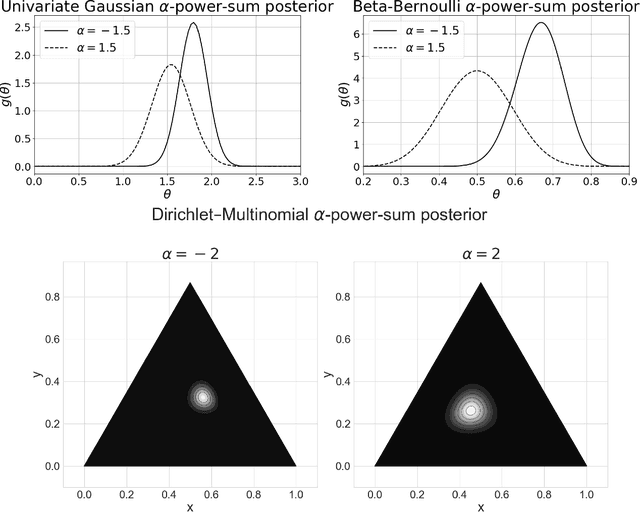
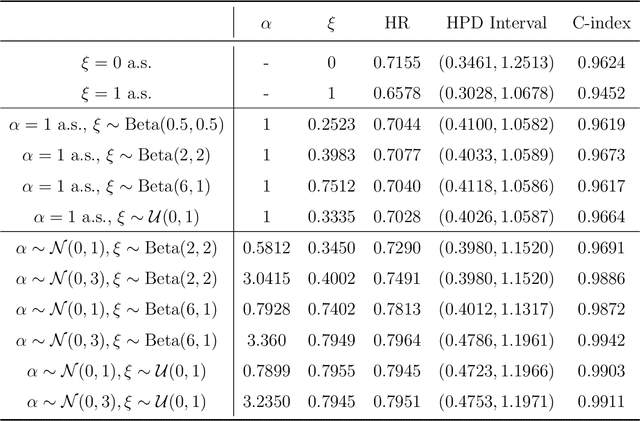
The power prior is a class of informative priors designed to incorporate historical data alongside current data in a Bayesian framework. It includes a power parameter that controls the influence of historical data, providing flexibility and adaptability. A key property of the power prior is that the resulting posterior minimizes a linear combination of KL divergences between two pseudo-posterior distributions: one ignoring historical data and the other fully incorporating it. We extend this framework by identifying the posterior distribution as the minimizer of a linear combination of Amari's $\alpha$-divergence, a generalization of KL divergence. We show that this generalization can lead to improved performance by allowing for the data to adapt to appropriate choices of the $\alpha$ parameter. Theoretical properties of this generalized power posterior are established, including behavior as a generalized geodesic on the Riemannian manifold of probability distributions, offering novel insights into its geometric interpretation.
Theoretical and Practical Analysis of Fréchet Regression via Comparison Geometry
Feb 04, 2025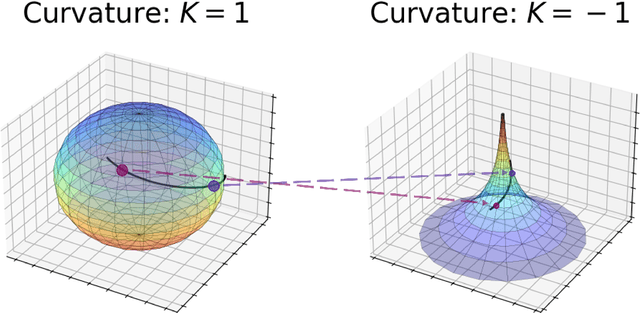
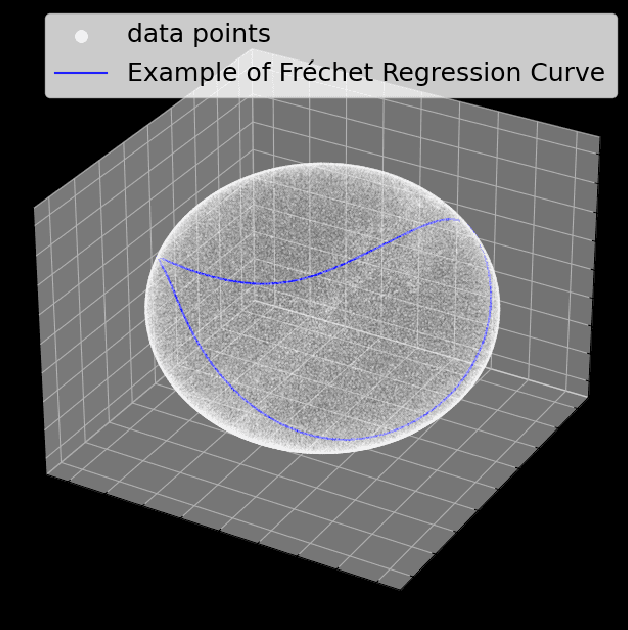
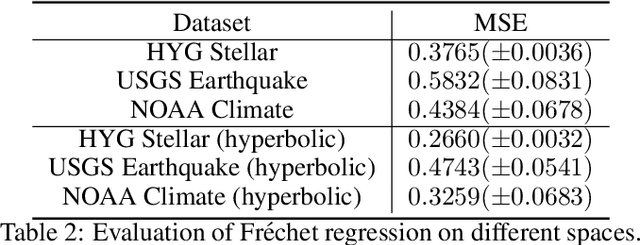
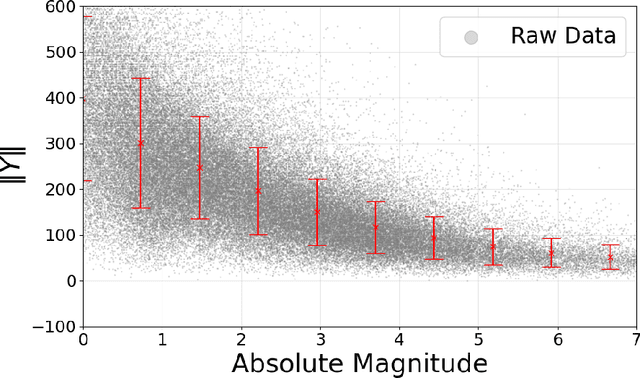
Fr\'echet regression extends classical regression methods to non-Euclidean metric spaces, enabling the analysis of data relationships on complex structures such as manifolds and graphs. This work establishes a rigorous theoretical analysis for Fr\'echet regression through the lens of comparison geometry which leads to important considerations for its use in practice. The analysis provides key results on the existence, uniqueness, and stability of the Fr\'echet mean, along with statistical guarantees for nonparametric regression, including exponential concentration bounds and convergence rates. Additionally, insights into angle stability reveal the interplay between curvature of the manifold and the behavior of the regression estimator in these non-Euclidean contexts. Empirical experiments validate the theoretical findings, demonstrating the effectiveness of proposed hyperbolic mappings, particularly for data with heteroscedasticity, and highlighting the practical usefulness of these results.
Faithful Label-free Knowledge Distillation
Nov 22, 2024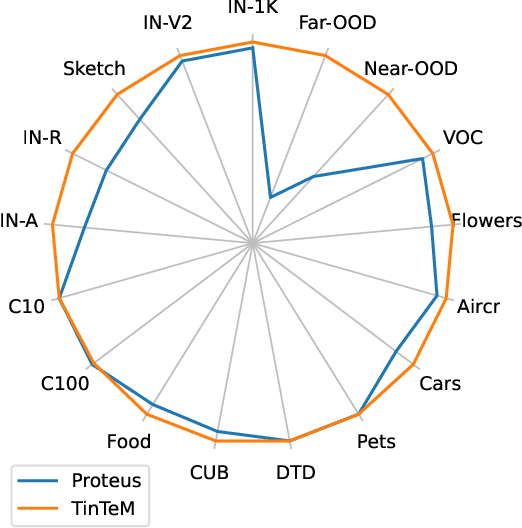


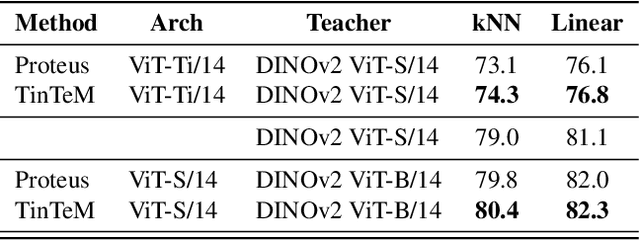
Knowledge distillation approaches are model compression techniques, with the goal of training a highly performant student model by using a teacher network that is larger or contains a different inductive bias. These approaches are particularly useful when applied to large computer vision foundation models, which can be compressed into smaller variants that retain desirable properties such as improved robustness. This paper presents a label-free knowledge distillation approach called Teacher in the Middle (TinTeM), which improves on previous methods by learning an approximately orthogonal mapping from the latent space of the teacher to the student network. This produces a more faithful student, which better replicates the behavior of the teacher network across a range of benchmarks testing model robustness, generalisability and out-of-distribution detection. It is further shown that knowledge distillation with TinTeM on task specific datasets leads to more accurate models with greater generalisability and OOD detection performance, and that this technique provides a competitive pathway for training highly performant lightweight models on small datasets.
Density Ratio Estimation via Sampling along Generalized Geodesics on Statistical Manifolds
Jun 27, 2024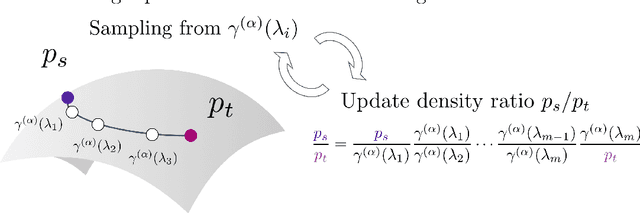
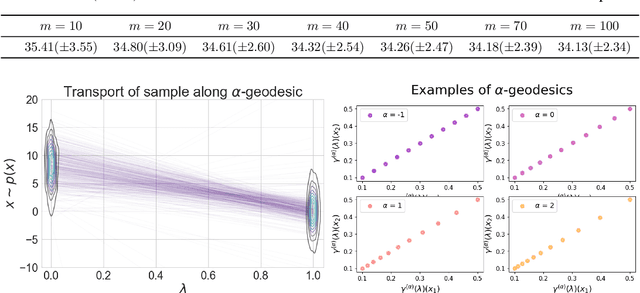

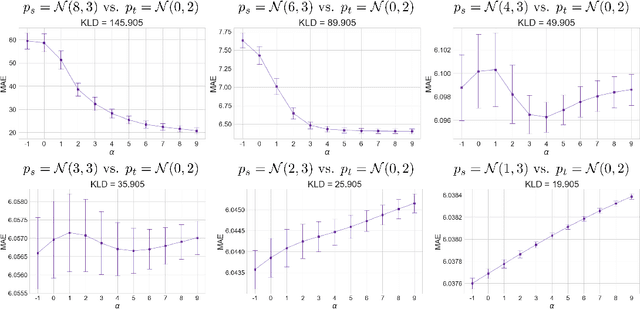
The density ratio of two probability distributions is one of the fundamental tools in mathematical and computational statistics and machine learning, and it has a variety of known applications. Therefore, density ratio estimation from finite samples is a very important task, but it is known to be unstable when the distributions are distant from each other. One approach to address this problem is density ratio estimation using incremental mixtures of the two distributions. We geometrically reinterpret existing methods for density ratio estimation based on incremental mixtures. We show that these methods can be regarded as iterating on the Riemannian manifold along a particular curve between the two probability distributions. Making use of the geometry of the manifold, we propose to consider incremental density ratio estimation along generalized geodesics on this manifold. To achieve such a method requires Monte Carlo sampling along geodesics via transformations of the two distributions. We show how to implement an iterative algorithm to sample along these geodesics and show how changing the distances along the geodesic affect the variance and accuracy of the estimation of the density ratio. Our experiments demonstrate that the proposed approach outperforms the existing approaches using incremental mixtures that do not take the geometry of the
Scalable and Robust Transformer Decoders for Interpretable Image Classification with Foundation Models
Mar 07, 2024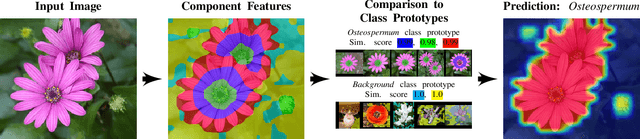
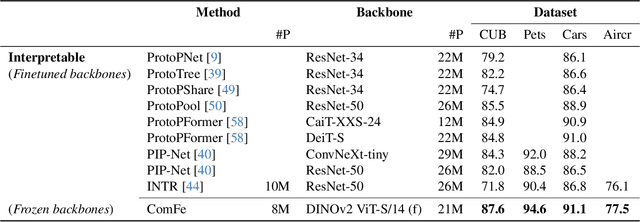
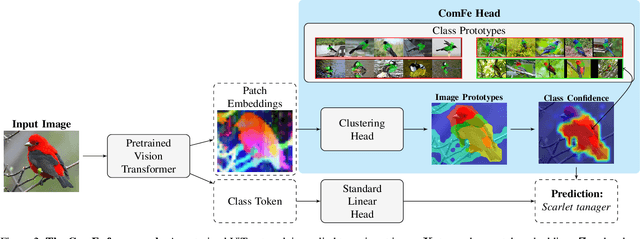
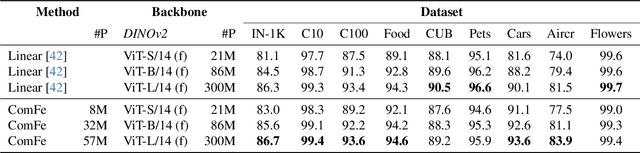
Interpretable computer vision models can produce transparent predictions, where the features of an image are compared with prototypes from a training dataset and the similarity between them forms a basis for classification. Nevertheless these methods are computationally expensive to train, introduce additional complexity and may require domain knowledge to adapt hyper-parameters to a new dataset. Inspired by developments in object detection, segmentation and large-scale self-supervised foundation vision models, we introduce Component Features (ComFe), a novel explainable-by-design image classification approach using a transformer-decoder head and hierarchical mixture-modelling. With only global image labels and no segmentation or part annotations, ComFe can identify consistent image components, such as the head, body, wings and tail of a bird, and the image background, and determine which of these features are informative in making a prediction. We demonstrate that ComFe obtains higher accuracy compared to previous interpretable models across a range of fine-grained vision benchmarks, without the need to individually tune hyper-parameters for each dataset. We also show that ComFe outperforms a non-interpretable linear head across a range of datasets, including ImageNet, and improves performance on generalisation and robustness benchmarks.
Improved Prototypical Semi-Supervised Learning with Foundation Models: Prototype Selection, Parametric vMF-SNE Pretraining and Multi-view Pseudolabelling
Nov 28, 2023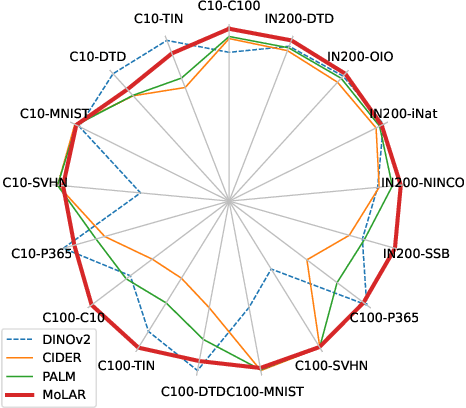


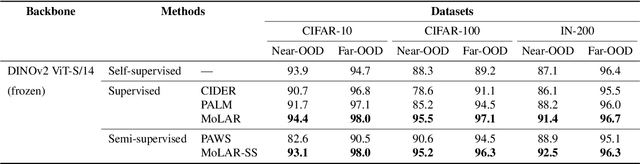
In this paper we present an improved approach to prototypical semi-supervised learning for computer vision, in the context of leveraging a frozen foundation model as the backbone of our neural network. As a general tool, we propose parametric von-Mises Fisher Stochastic Neighbour Embedding (vMF-SNE) to create mappings with neural networks between high-dimensional latent spaces that preserve local structure. This enables us to pretrain the projection head of our network using the high-quality embeddings of the foundation model with vMF-SNE. We also propose soft multi-view pseudolabels, where predictions across multiple views are combined to provide a more reliable supervision signal compared to a consistency or swapped assignment approach. We demonstrate that these ideas improve upon P}redicting View-Assignments with Support Samples (PAWS), a current state-of-the-art semi-supervised learning method, as well as Robust PAWS (RoPAWS), over a range of benchmarking datasets. We also introduce simple $k$-means prototype selection, a technique that provides superior performance to other unsupervised label selection approaches in this context. These changes improve upon PAWS by an average of +2.9% for CIFAR-10 and +5.7% for CIFAR-100 with four labels per class, and by +15.2% for DeepWeeds, a particularly challenging dataset for semi-supervised learning. We also achieve new state-of-the-art results in semi-supervised learning in this small label regime for CIFAR-10 - 95.8% (+0.7%) and CIFAR-100 - 76.6% (+12.0%).
Sparse high-dimensional linear regression with a partitioned empirical Bayes ECM algorithm
Sep 20, 2022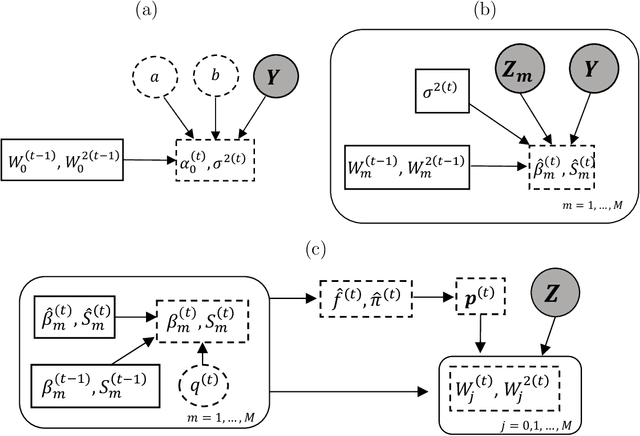
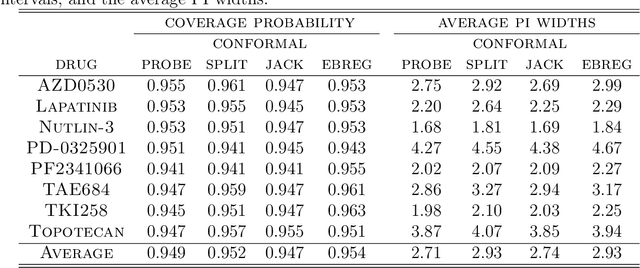
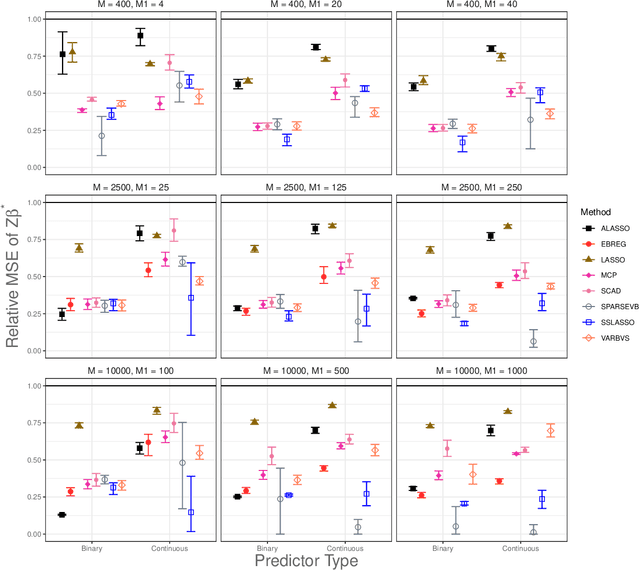
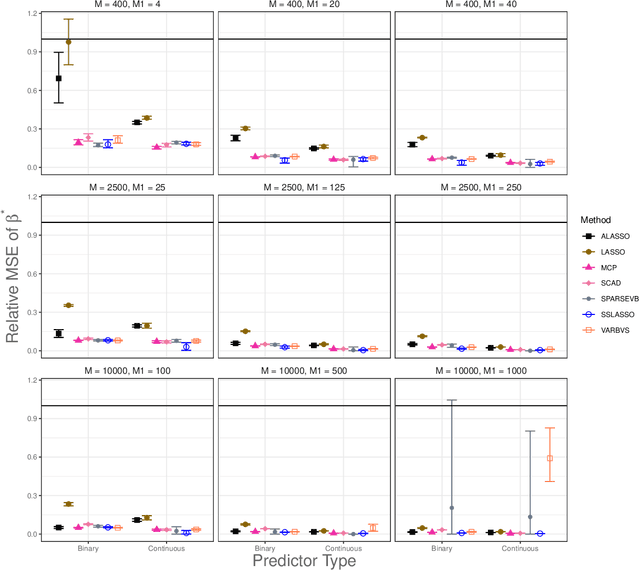
Bayesian variable selection methods are powerful techniques for fitting and inferring on sparse high-dimensional linear regression models. However, many are computationally intensive or require restrictive prior distributions on model parameters. Likelihood based penalization methods are more computationally friendly, but resource intensive refitting techniques are needed for inference. In this paper, we proposed an efficient and powerful Bayesian approach for sparse high-dimensional linear regression. Minimal prior assumptions on the parameters are required through the use of plug-in empirical Bayes estimates of hyperparameters. Efficient maximum a posteriori probability (MAP) estimation is completed through the use of a partitioned and extended expectation conditional maximization (ECM) algorithm. The result is a PaRtitiOned empirical Bayes Ecm (PROBE) algorithm applied to sparse high-dimensional linear regression. We propose methods to estimate credible and prediction intervals for predictions of future values. We compare the empirical properties of predictions and our predictive inference to comparable approaches with numerous simulation studies and an analysis of cancer cell lines drug response study. The proposed approach is implemented in the R package probe.