 Add to Chrome
 Add to Firefox
 Add to Edge
Aerial Vision-and-Language Navigation via Semantic-Topo-Metric Representation Guided LLM Reasoning
Oct 11, 2024

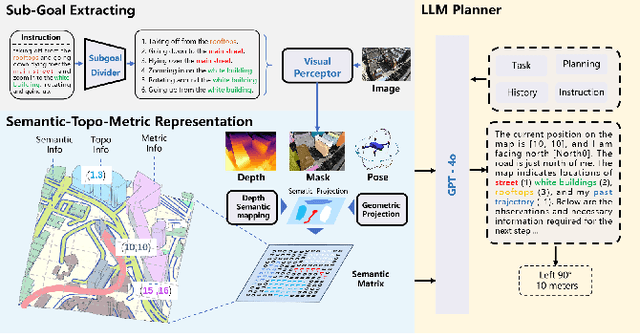
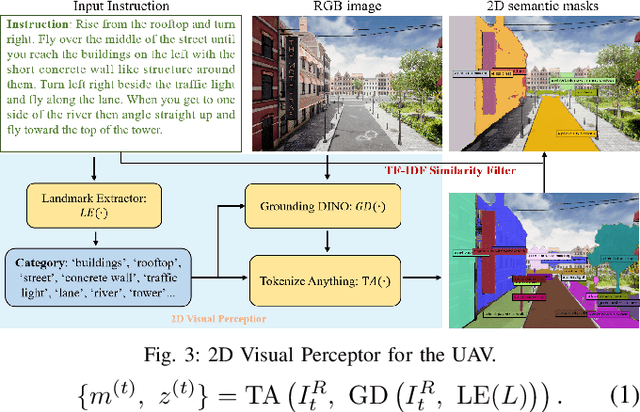
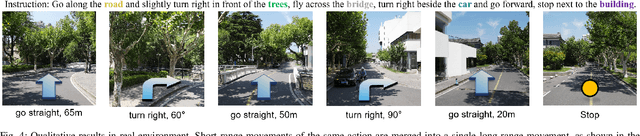
Aerial Vision-and-Language Navigation (VLN) is a novel task enabling Unmanned Aerial Vehicles (UAVs) to navigate in outdoor environments through natural language instructions and visual cues. It remains challenging due to the complex spatial relationships in outdoor aerial scenes. In this paper, we propose an end-to-end zero-shot framework for aerial VLN tasks, where the large language model (LLM) is introduced as our agent for action prediction. Specifically, we develop a novel Semantic-Topo-Metric Representation (STMR) to enhance the spatial reasoning ability of LLMs. This is achieved by extracting and projecting instruction-related semantic masks of landmarks into a top-down map that contains the location information of surrounding landmarks. Further, this map is transformed into a matrix representation with distance metrics as the text prompt to the LLM, for action prediction according to the instruction. Experiments conducted in real and simulation environments have successfully proved the effectiveness and robustness of our method, achieving 15.9% and 12.5% improvements (absolute) in Oracle Success Rate (OSR) on AerialVLN-S dataset.

Inference Scaling for Long-Context Retrieval Augmented Generation
Oct 06, 2024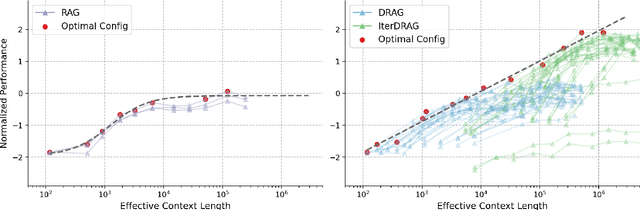
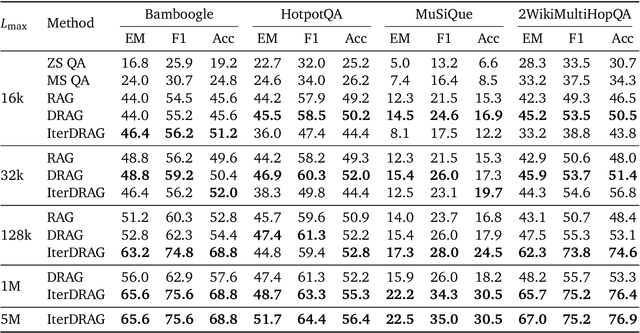
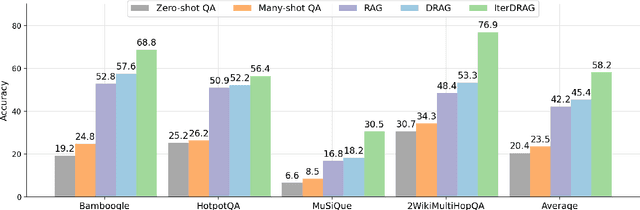

The scaling of inference computation has unlocked the potential of long-context large language models (LLMs) across diverse settings. For knowledge-intensive tasks, the increased compute is often allocated to incorporate more external knowledge. However, without effectively utilizing such knowledge, solely expanding context does not always enhance performance. In this work, we investigate inference scaling for retrieval augmented generation (RAG), exploring strategies beyond simply increasing the quantity of knowledge. We focus on two inference scaling strategies: in-context learning and iterative prompting. These strategies provide additional flexibility to scale test-time computation (e.g., by increasing retrieved documents or generation steps), thereby enhancing LLMs' ability to effectively acquire and utilize contextual information. We address two key questions: (1) How does RAG performance benefit from the scaling of inference computation when optimally configured? (2) Can we predict the optimal test-time compute allocation for a given budget by modeling the relationship between RAG performance and inference parameters? Our observations reveal that increasing inference computation leads to nearly linear gains in RAG performance when optimally allocated, a relationship we describe as the inference scaling laws for RAG. Building on this, we further develop the computation allocation model to estimate RAG performance across different inference configurations. The model predicts optimal inference parameters under various computation constraints, which align closely with the experimental results. By applying these optimal configurations, we demonstrate that scaling inference compute on long-context LLMs achieves up to 58.9% gains on benchmark datasets compared to standard RAG.
Quantitative Analysis of Audio-Visual Tasks: An Information-Theoretic Perspective
Sep 29, 2024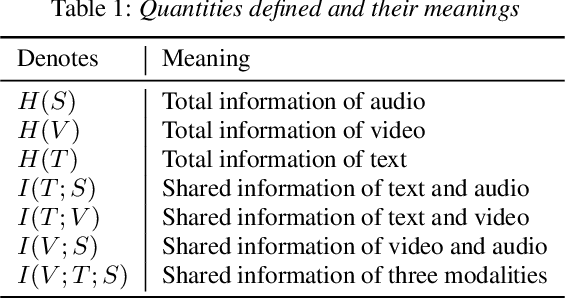
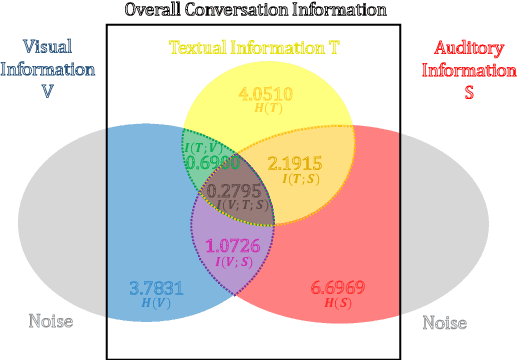

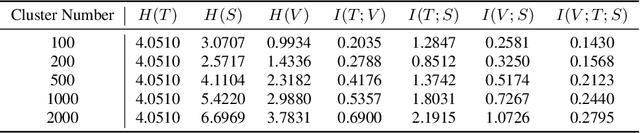
In the field of spoken language processing, audio-visual speech processing is receiving increasing research attention. Key components of this research include tasks such as lip reading, audio-visual speech recognition, and visual-to-speech synthesis. Although significant success has been achieved, theoretical analysis is still insufficient for audio-visual tasks. This paper presents a quantitative analysis based on information theory, focusing on information intersection between different modalities. Our results show that this analysis is valuable for understanding the difficulties of audio-visual processing tasks as well as the benefits that could be obtained by modality integration.
Fast-UMI: A Scalable and Hardware-Independent Universal Manipulation Interface
Sep 29, 2024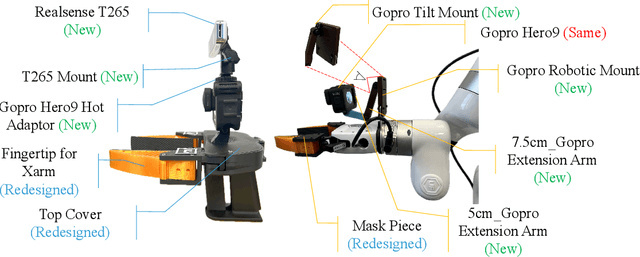
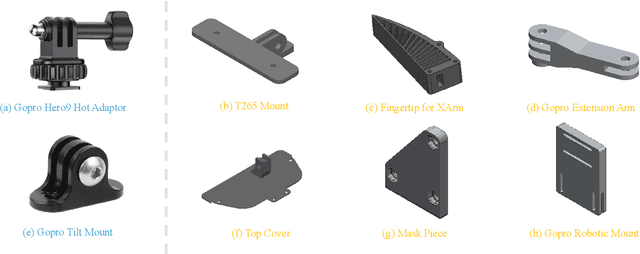
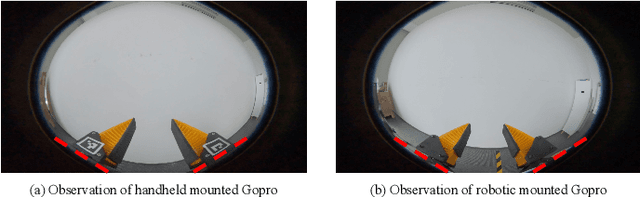
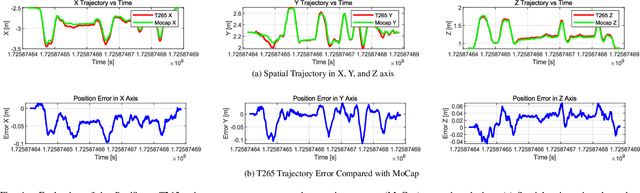
Collecting real-world manipulation trajectory data involving robotic arms is essential for developing general-purpose action policies in robotic manipulation, yet such data remains scarce. Existing methods face limitations such as high costs, labor intensity, hardware dependencies, and complex setup requirements involving SLAM algorithms. In this work, we introduce Fast-UMI, an interface-mediated manipulation system comprising two key components: a handheld device operated by humans for data collection and a robot-mounted device used during policy inference. Our approach employs a decoupled design compatible with a wide range of grippers while maintaining consistent observation perspectives, allowing models trained on handheld-collected data to be directly applied to real robots. By directly obtaining the end-effector pose using existing commercial hardware products, we eliminate the need for complex SLAM deployment and calibration, streamlining data processing. Fast-UMI provides supporting software tools for efficient robot learning data collection and conversion, facilitating rapid, plug-and-play functionality. This system offers an efficient and user-friendly tool for robotic learning data acquisition.
Train Once, Deploy Anywhere: Matryoshka Representation Learning for Multimodal Recommendation
Sep 25, 2024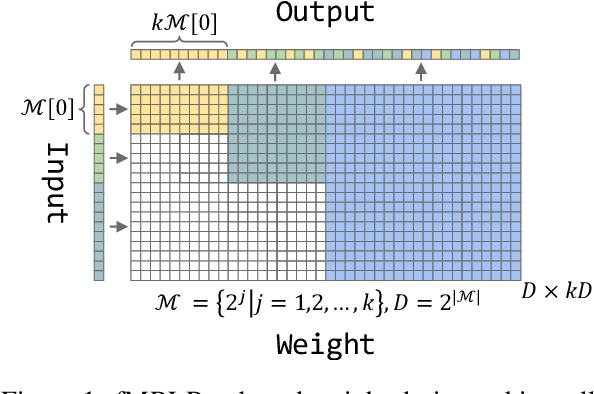
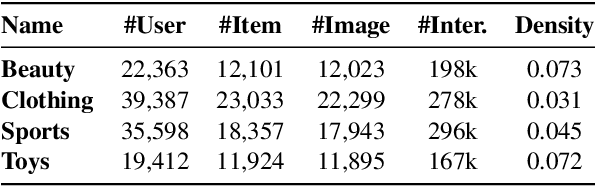
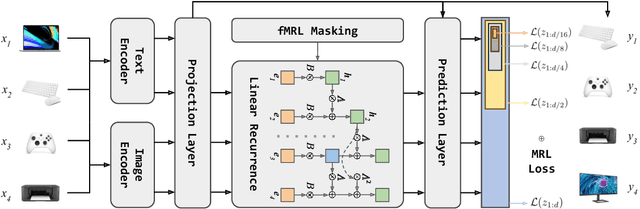
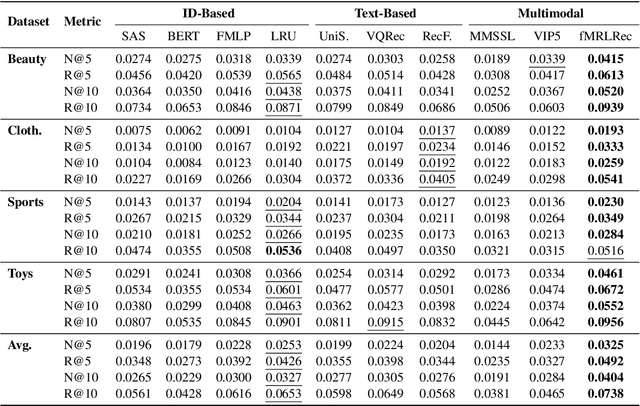
Despite recent advancements in language and vision modeling, integrating rich multimodal knowledge into recommender systems continues to pose significant challenges. This is primarily due to the need for efficient recommendation, which requires adaptive and interactive responses. In this study, we focus on sequential recommendation and introduce a lightweight framework called full-scale Matryoshka representation learning for multimodal recommendation (fMRLRec). Our fMRLRec captures item features at different granularities, learning informative representations for efficient recommendation across multiple dimensions. To integrate item features from diverse modalities, fMRLRec employs a simple mapping to project multimodal item features into an aligned feature space. Additionally, we design an efficient linear transformation that embeds smaller features into larger ones, substantially reducing memory requirements for large-scale training on recommendation data. Combined with improved state space modeling techniques, fMRLRec scales to different dimensions and only requires one-time training to produce multiple models tailored to various granularities. We demonstrate the effectiveness and efficiency of fMRLRec on multiple benchmark datasets, which consistently achieves superior performance over state-of-the-art baseline methods.
AlignBot: Aligning VLM-powered Customized Task Planning with User Reminders Through Fine-Tuning for Household Robots
Sep 18, 2024


This paper presents AlignBot, a novel framework designed to optimize VLM-powered customized task planning for household robots by effectively aligning with user reminders. In domestic settings, aligning task planning with user reminders poses significant challenges due to the limited quantity, diversity, and multimodal nature of the reminders. To address these challenges, AlignBot employs a fine-tuned LLaVA-7B model, functioning as an adapter for GPT-4o. This adapter model internalizes diverse forms of user reminders-such as personalized preferences, corrective guidance, and contextual assistance-into structured instruction-formatted cues that prompt GPT-4o in generating customized task plans. Additionally, AlignBot integrates a dynamic retrieval mechanism that selects task-relevant historical successes as prompts for GPT-4o, further enhancing task planning accuracy. To validate the effectiveness of AlignBot, experiments are conducted in real-world household environments, which are constructed within the laboratory to replicate typical household settings. A multimodal dataset with over 1,500 entries derived from volunteer reminders is used for training and evaluation. The results demonstrate that AlignBot significantly improves customized task planning, outperforming existing LLM- and VLM-powered planners by interpreting and aligning with user reminders, achieving 86.8% success rate compared to the vanilla GPT-4o baseline at 21.6%, reflecting a 65% improvement and over four times greater effectiveness. Supplementary materials are available at: https://yding25.com/AlignBot/
Full-text Error Correction for Chinese Speech Recognition with Large Language Model
Sep 12, 2024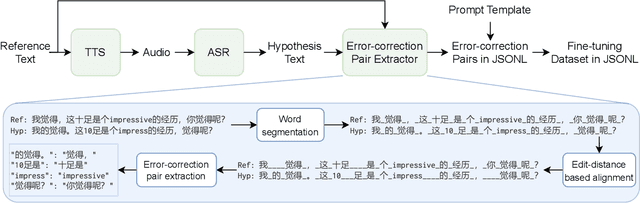

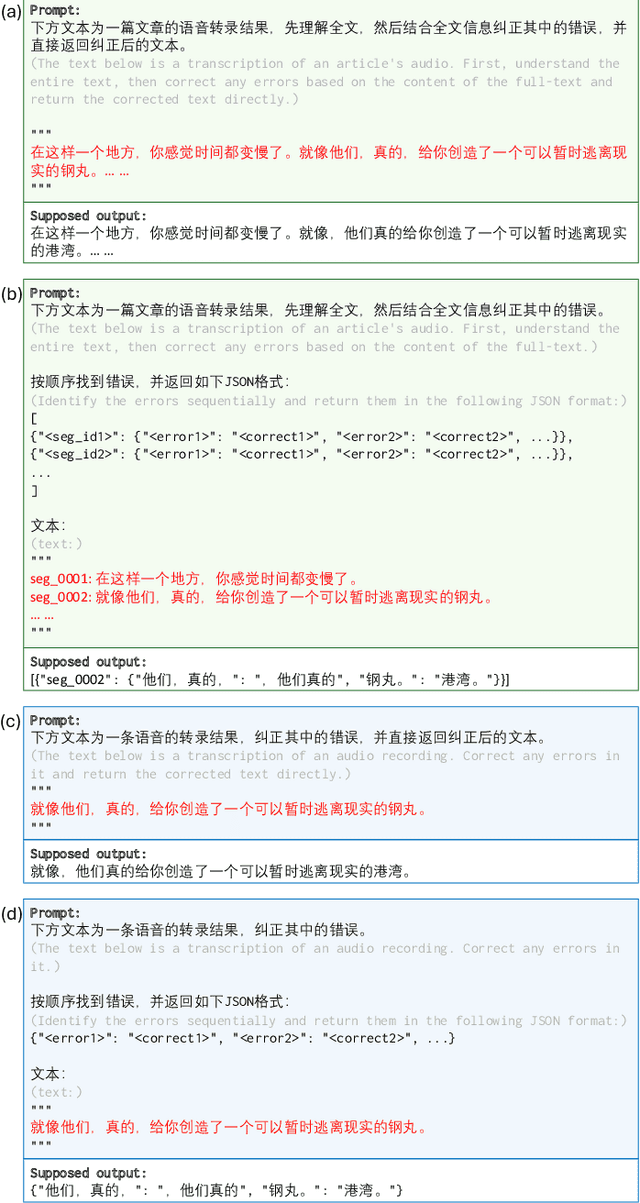
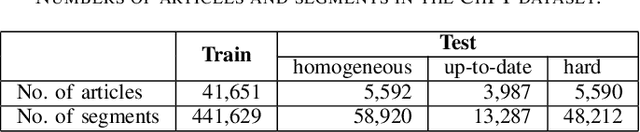
Large Language Models (LLMs) have demonstrated substantial potential for error correction in Automatic Speech Recognition (ASR). However, most research focuses on utterances from short-duration speech recordings, which are the predominant form of speech data for supervised ASR training. This paper investigates the effectiveness of LLMs for error correction in full-text generated by ASR systems from longer speech recordings, such as transcripts from podcasts, news broadcasts, and meetings. First, we develop a Chinese dataset for full-text error correction, named ChFT, utilizing a pipeline that involves text-to-speech synthesis, ASR, and error-correction pair extractor. This dataset enables us to correct errors across contexts, including both full-text and segment, and to address a broader range of error types, such as punctuation restoration and inverse text normalization, thus making the correction process comprehensive. Second, we fine-tune a pre-trained LLM on the constructed dataset using a diverse set of prompts and target formats, and evaluate its performance on full-text error correction. Specifically, we design prompts based on full-text and segment, considering various output formats, such as directly corrected text and JSON-based error-correction pairs. Through various test settings, including homogeneous, up-to-date, and hard test sets, we find that the fine-tuned LLMs perform well in the full-text setting with different prompts, each presenting its own strengths and weaknesses. This establishes a promising baseline for further research. The dataset is available on the website.
Intertwined Biases Across Social Media Spheres: Unpacking Correlations in Media Bias Dimensions
Aug 27, 2024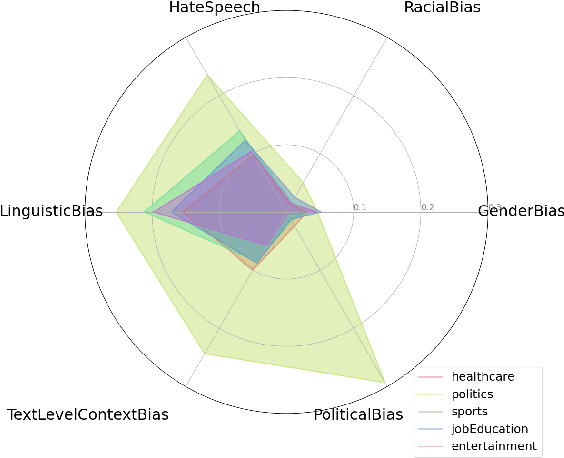


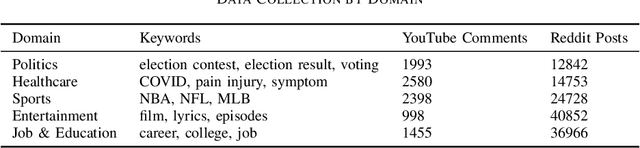
Media bias significantly shapes public perception by reinforcing stereotypes and exacerbating societal divisions. Prior research has often focused on isolated media bias dimensions such as \textit{political bias} or \textit{racial bias}, neglecting the complex interrelationships among various bias dimensions across different topic domains. Moreover, we observe that models trained on existing media bias benchmarks fail to generalize effectively on recent social media posts, particularly in certain bias identification tasks. This shortfall primarily arises because these benchmarks do not adequately reflect the rapidly evolving nature of social media content, which is characterized by shifting user behaviors and emerging trends. In response to these limitations, our research introduces a novel dataset collected from YouTube and Reddit over the past five years. Our dataset includes automated annotations for YouTube content across a broad spectrum of bias dimensions, such as gender, racial, and political biases, as well as hate speech, among others. It spans diverse domains including politics, sports, healthcare, education, and entertainment, reflecting the complex interplay of biases across different societal sectors. Through comprehensive statistical analysis, we identify significant differences in bias expression patterns and intra-domain bias correlations across these domains. By utilizing our understanding of the correlations among various bias dimensions, we lay the groundwork for creating advanced systems capable of detecting multiple biases simultaneously. Overall, our dataset advances the field of media bias identification, contributing to the development of tools that promote fairer media consumption. The comprehensive awareness of existing media bias fosters more ethical journalism, promotes cultural sensitivity, and supports a more informed and equitable public discourse.
Learning 2D Invariant Affordance Knowledge for 3D Affordance Grounding
Aug 23, 2024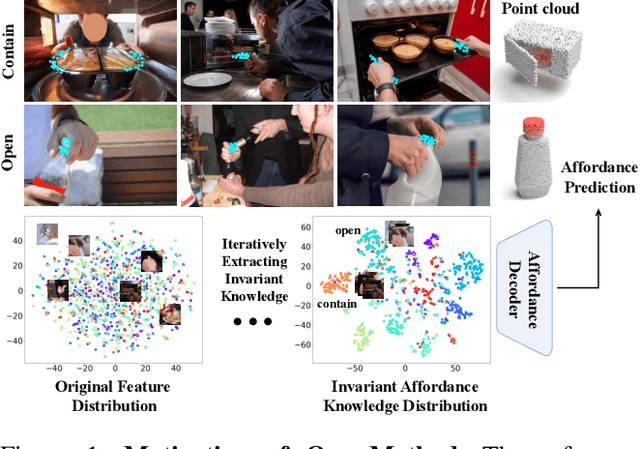


3D Object Affordance Grounding aims to predict the functional regions on a 3D object and has laid the foundation for a wide range of applications in robotics. Recent advances tackle this problem via learning a mapping between 3D regions and a single human-object interaction image. However, the geometric structure of the 3D object and the object in the human-object interaction image are not always consistent, leading to poor generalization. To address this issue, we propose to learn generalizable invariant affordance knowledge from multiple human-object interaction images within the same affordance category. Specifically, we introduce the \textbf{M}ulti-\textbf{I}mage Guided Invariant-\textbf{F}eature-Aware 3D \textbf{A}ffordance \textbf{G}rounding (\textbf{MIFAG}) framework. It grounds 3D object affordance regions by identifying common interaction patterns across multiple human-object interaction images. First, the Invariant Affordance Knowledge Extraction Module (\textbf{IAM}) utilizes an iterative updating strategy to gradually extract aligned affordance knowledge from multiple images and integrate it into an affordance dictionary. Then, the Affordance Dictionary Adaptive Fusion Module (\textbf{ADM}) learns comprehensive point cloud representations that consider all affordance candidates in multiple images. Besides, the Multi-Image and Point Affordance (\textbf{MIPA}) benchmark is constructed and our method outperforms existing state-of-the-art methods on various experimental comparisons. Project page: \url{https://goxq.github.io/mifag}
MambaVT: Spatio-Temporal Contextual Modeling for robust RGB-T Tracking
Aug 15, 2024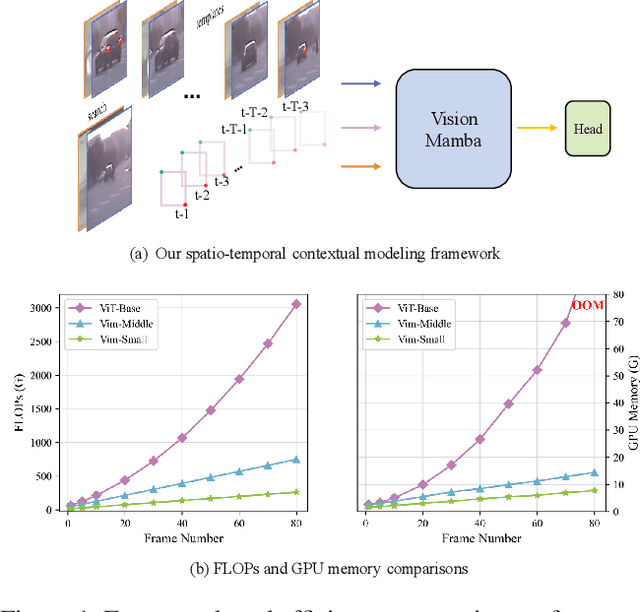
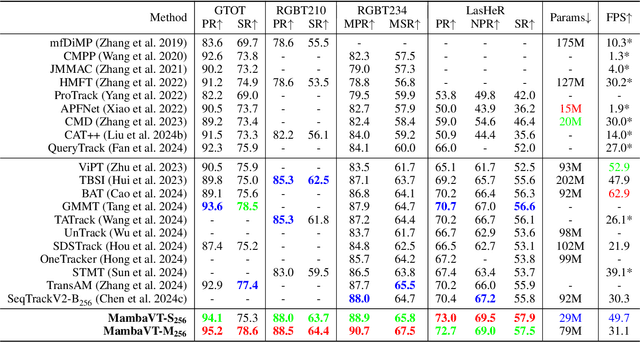
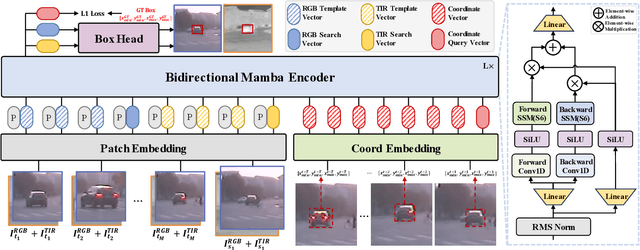
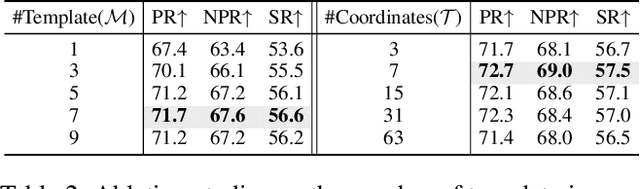
Existing RGB-T tracking algorithms have made remarkable progress by leveraging the global interaction capability and extensive pre-trained models of the Transformer architecture. Nonetheless, these methods mainly adopt imagepair appearance matching and face challenges of the intrinsic high quadratic complexity of the attention mechanism, resulting in constrained exploitation of temporal information. Inspired by the recently emerged State Space Model Mamba, renowned for its impressive long sequence modeling capabilities and linear computational complexity, this work innovatively proposes a pure Mamba-based framework (MambaVT) to fully exploit spatio-temporal contextual modeling for robust visible-thermal tracking. Specifically, we devise the long-range cross-frame integration component to globally adapt to target appearance variations, and introduce short-term historical trajectory prompts to predict the subsequent target states based on local temporal location clues. Extensive experiments show the significant potential of vision Mamba for RGB-T tracking, with MambaVT achieving state-of-the-art performance on four mainstream benchmarks while requiring lower computational costs. We aim for this work to serve as a simple yet strong baseline, stimulating future research in this field. The code and pre-trained models will be made available.