 Add to Chrome
 Add to Firefox
 Add to Edge
SOLAR: Scalable Optimization of Large-scale Architecture for Reasoning
Mar 06, 2025
Large Language Models (LLMs) excel in reasoning but remain constrained by their Chain-of-Thought (CoT) approach, which struggles with complex tasks requiring more nuanced topological reasoning. We introduce SOLAR, Scalable Optimization of Large-scale Architecture for Reasoning, a framework that dynamically optimizes various reasoning topologies to enhance accuracy and efficiency. Our Topological Annotation Generation (TAG) system automates topological dataset creation and segmentation, improving post-training and evaluation. Additionally, we propose Topological-Scaling, a reward-driven framework that aligns training and inference scaling, equipping LLMs with adaptive, task-aware reasoning. SOLAR achieves substantial gains on MATH and GSM8K: +5% accuracy with Topological Tuning, +9% with Topological Reward, and +10.02% with Hybrid Scaling. It also reduces response length by over 5% for complex problems, lowering inference latency. To foster the reward system, we train a multi-task Topological Reward Model (M-TRM), which autonomously selects the best reasoning topology and answer in a single pass, eliminating the need for training and inference on multiple single-task TRMs (S-TRMs), thus reducing both training cost and inference latency. In addition, in terms of performance, M-TRM surpasses all S-TRMs, improving accuracy by +10% and rank correlation by +9%. To the best of our knowledge, SOLAR sets a new benchmark for scalable, high-precision LLM reasoning while introducing an automated annotation process and a dynamic reasoning topology competition mechanism.

Pretrained LLMs as Real-Time Controllers for Robot Operated Serial Production Line
Mar 05, 2025The manufacturing industry is undergoing a transformative shift, driven by cutting-edge technologies like 5G, AI, and cloud computing. Despite these advancements, effective system control, which is crucial for optimizing production efficiency, remains a complex challenge due to the intricate, knowledge-dependent nature of manufacturing processes and the reliance on domain-specific expertise. Conventional control methods often demand heavy customization, considerable computational resources, and lack transparency in decision-making. In this work, we investigate the feasibility of using Large Language Models (LLMs), particularly GPT-4, as a straightforward, adaptable solution for controlling manufacturing systems, specifically, mobile robot scheduling. We introduce an LLM-based control framework to assign mobile robots to different machines in robot assisted serial production lines, evaluating its performance in terms of system throughput. Our proposed framework outperforms traditional scheduling approaches such as First-Come-First-Served (FCFS), Shortest Processing Time (SPT), and Longest Processing Time (LPT). While it achieves performance that is on par with state-of-the-art methods like Multi-Agent Reinforcement Learning (MARL), it offers a distinct advantage by delivering comparable throughput without the need for extensive retraining. These results suggest that the proposed LLM-based solution is well-suited for scenarios where technical expertise, computational resources, and financial investment are limited, while decision transparency and system scalability are critical concerns.
WeGen: A Unified Model for Interactive Multimodal Generation as We Chat
Mar 03, 2025Existing multimodal generative models fall short as qualified design copilots, as they often struggle to generate imaginative outputs once instructions are less detailed or lack the ability to maintain consistency with the provided references. In this work, we introduce WeGen, a model that unifies multimodal generation and understanding, and promotes their interplay in iterative generation. It can generate diverse results with high creativity for less detailed instructions. And it can progressively refine prior generation results or integrating specific contents from references following the instructions in its chat with users. During this process, it is capable of preserving consistency in the parts that the user is already satisfied with. To this end, we curate a large-scale dataset, extracted from Internet videos, containing rich object dynamics and auto-labeled dynamics descriptions by advanced foundation models to date. These two information are interleaved into a single sequence to enable WeGen to learn consistency-aware generation where the specified dynamics are generated while the consistency of unspecified content is preserved aligned with instructions. Besides, we introduce a prompt self-rewriting mechanism to enhance generation diversity. Extensive experiments demonstrate the effectiveness of unifying multimodal understanding and generation in WeGen and show it achieves state-of-the-art performance across various visual generation benchmarks. These also demonstrate the potential of WeGen as a user-friendly design copilot as desired. The code and models will be available at https://github.com/hzphzp/WeGen.
HiBench: Benchmarking LLMs Capability on Hierarchical Structure Reasoning
Mar 02, 2025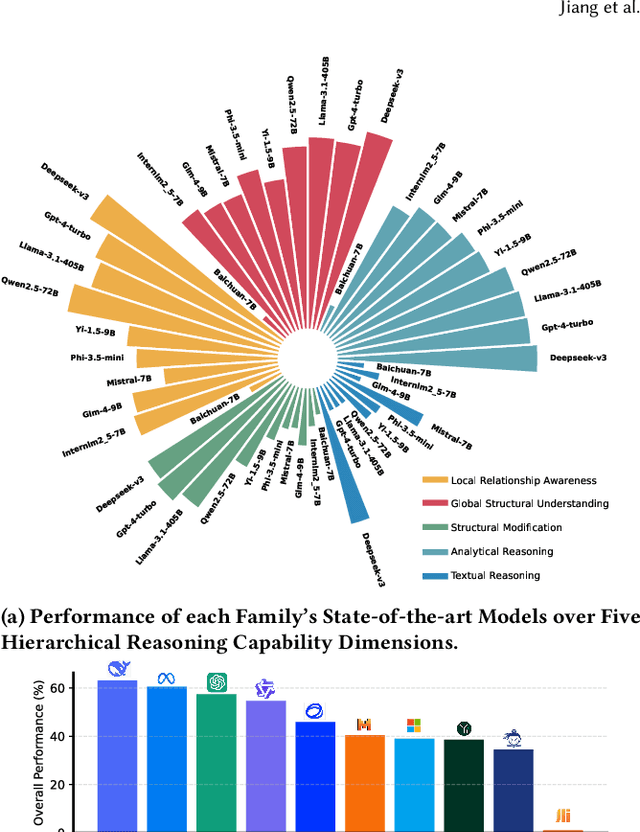
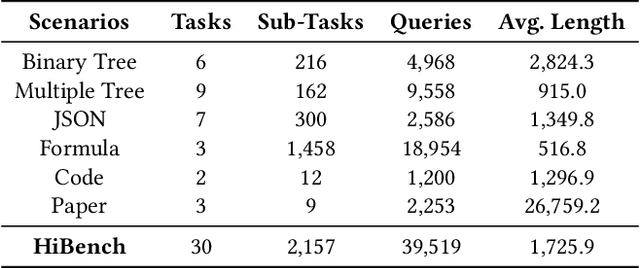
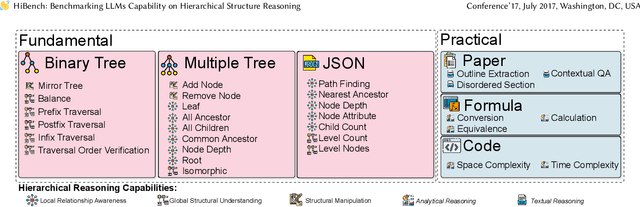
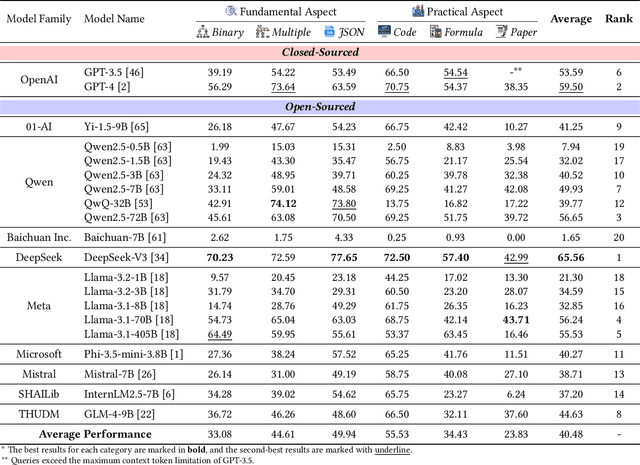
Structure reasoning is a fundamental capability of large language models (LLMs), enabling them to reason about structured commonsense and answer multi-hop questions. However, existing benchmarks for structure reasoning mainly focus on horizontal and coordinate structures (\emph{e.g.} graphs), overlooking the hierarchical relationships within them. Hierarchical structure reasoning is crucial for human cognition, particularly in memory organization and problem-solving. It also plays a key role in various real-world tasks, such as information extraction and decision-making. To address this gap, we propose HiBench, the first framework spanning from initial structure generation to final proficiency assessment, designed to benchmark the hierarchical reasoning capabilities of LLMs systematically. HiBench encompasses six representative scenarios, covering both fundamental and practical aspects, and consists of 30 tasks with varying hierarchical complexity, totaling 39,519 queries. To evaluate LLMs comprehensively, we develop five capability dimensions that depict different facets of hierarchical structure understanding. Through extensive evaluation of 20 LLMs from 10 model families, we reveal key insights into their capabilities and limitations: 1) existing LLMs show proficiency in basic hierarchical reasoning tasks; 2) they still struggle with more complex structures and implicit hierarchical representations, especially in structural modification and textual reasoning. Based on these findings, we create a small yet well-designed instruction dataset, which enhances LLMs' performance on HiBench by an average of 88.84\% (Llama-3.1-8B) and 31.38\% (Qwen2.5-7B) across all tasks. The HiBench dataset and toolkit are available here, https://github.com/jzzzzh/HiBench, to encourage evaluation.
Strategic priorities for transformative progress in advancing biology with proteomics and artificial intelligence
Feb 21, 2025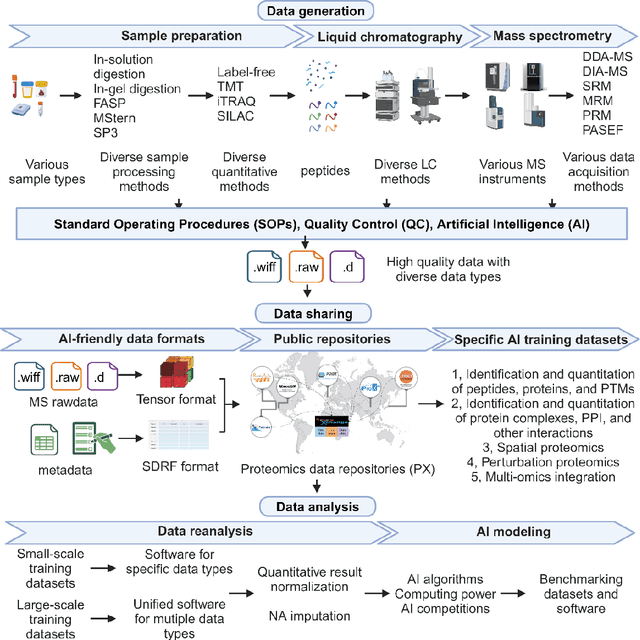
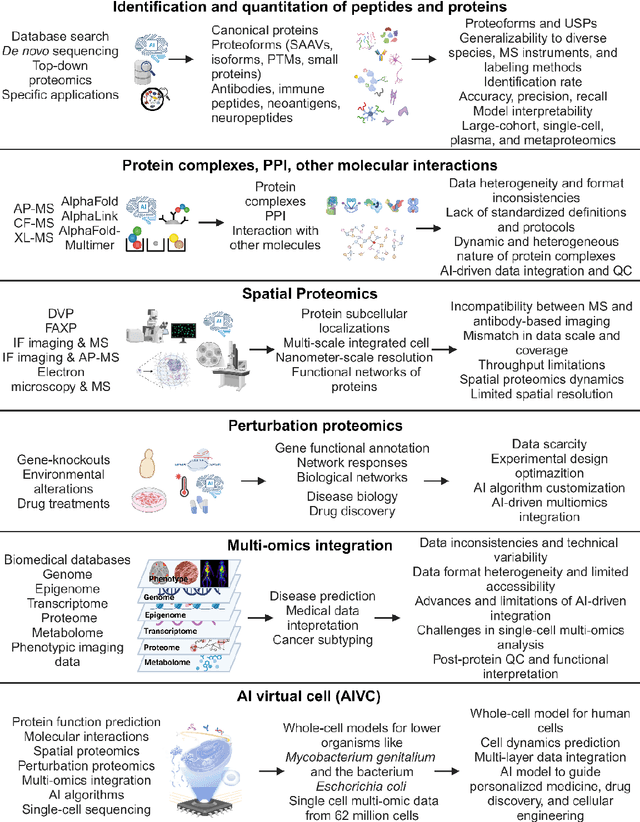
Artificial intelligence (AI) is transforming scientific research, including proteomics. Advances in mass spectrometry (MS)-based proteomics data quality, diversity, and scale, combined with groundbreaking AI techniques, are unlocking new challenges and opportunities in biological discovery. Here, we highlight key areas where AI is driving innovation, from data analysis to new biological insights. These include developing an AI-friendly ecosystem for proteomics data generation, sharing, and analysis; improving peptide and protein identification and quantification; characterizing protein-protein interactions and protein complexes; advancing spatial and perturbation proteomics; integrating multi-omics data; and ultimately enabling AI-empowered virtual cells.
ViLa-MIL: Dual-scale Vision-Language Multiple Instance Learning for Whole Slide Image Classification
Feb 12, 2025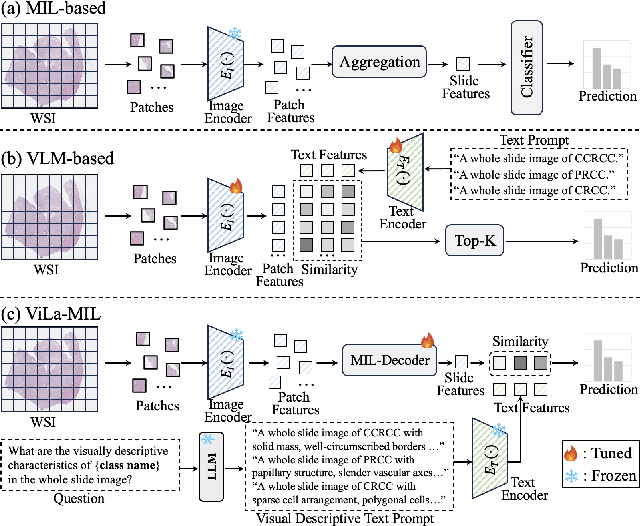
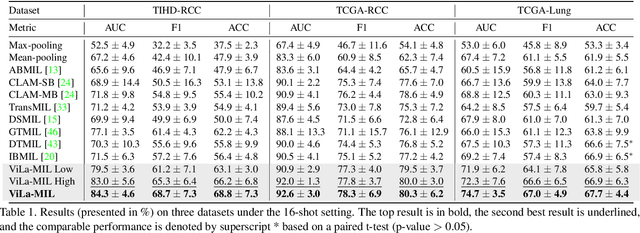
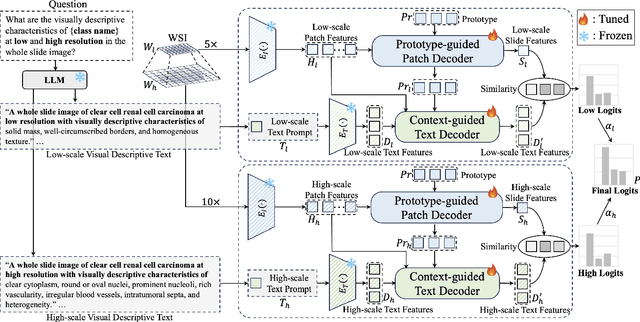
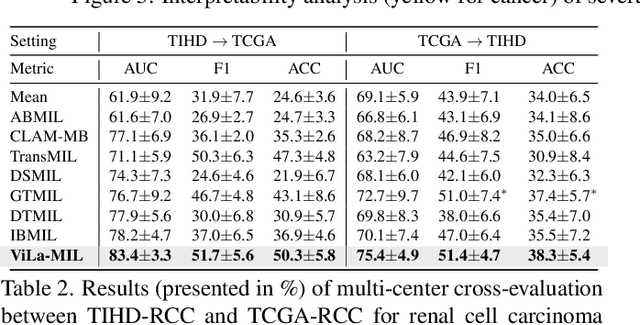
Multiple instance learning (MIL)-based framework has become the mainstream for processing the whole slide image (WSI) with giga-pixel size and hierarchical image context in digital pathology. However, these methods heavily depend on a substantial number of bag-level labels and solely learn from the original slides, which are easily affected by variations in data distribution. Recently, vision language model (VLM)-based methods introduced the language prior by pre-training on large-scale pathological image-text pairs. However, the previous text prompt lacks the consideration of pathological prior knowledge, therefore does not substantially boost the model's performance. Moreover, the collection of such pairs and the pre-training process are very time-consuming and source-intensive.To solve the above problems, we propose a dual-scale vision-language multiple instance learning (ViLa-MIL) framework for whole slide image classification. Specifically, we propose a dual-scale visual descriptive text prompt based on the frozen large language model (LLM) to boost the performance of VLM effectively. To transfer the VLM to process WSI efficiently, for the image branch, we propose a prototype-guided patch decoder to aggregate the patch features progressively by grouping similar patches into the same prototype; for the text branch, we introduce a context-guided text decoder to enhance the text features by incorporating the multi-granular image contexts. Extensive studies on three multi-cancer and multi-center subtyping datasets demonstrate the superiority of ViLa-MIL.
Taking A Closer Look at Interacting Objects: Interaction-Aware Open Vocabulary Scene Graph Generation
Feb 06, 2025Today's open vocabulary scene graph generation (OVSGG) extends traditional SGG by recognizing novel objects and relationships beyond predefined categories, leveraging the knowledge from pre-trained large-scale models. Most existing methods adopt a two-stage pipeline: weakly supervised pre-training with image captions and supervised fine-tuning (SFT) on fully annotated scene graphs. Nonetheless, they omit explicit modeling of interacting objects and treat all objects equally, resulting in mismatched relation pairs. To this end, we propose an interaction-aware OVSGG framework INOVA. During pre-training, INOVA employs an interaction-aware target generation strategy to distinguish interacting objects from non-interacting ones. In SFT, INOVA devises an interaction-guided query selection tactic to prioritize interacting objects during bipartite graph matching. Besides, INOVA is equipped with an interaction-consistent knowledge distillation to enhance the robustness by pushing interacting object pairs away from the background. Extensive experiments on two benchmarks (VG and GQA) show that INOVA achieves state-of-the-art performance, demonstrating the potential of interaction-aware mechanisms for real-world applications.
Can You Move These Over There? An LLM-based VR Mover for Supporting Object Manipulation
Feb 04, 2025
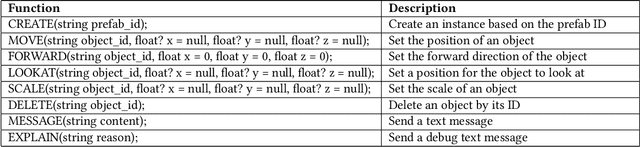
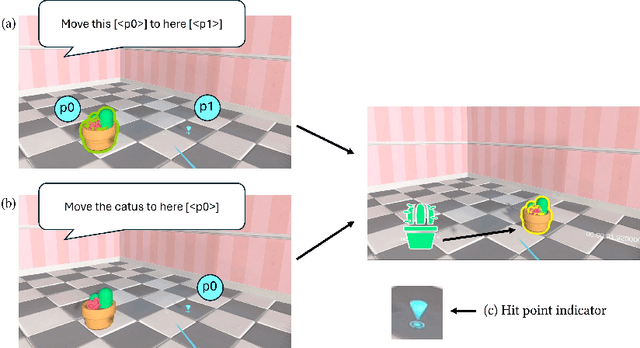

In our daily lives, we can naturally convey instructions for the spatial manipulation of objects using words and gestures. Transposing this form of interaction into virtual reality (VR) object manipulation can be beneficial. We propose VR Mover, an LLM-empowered solution that can understand and interpret the user's vocal instruction to support object manipulation. By simply pointing and speaking, the LLM can manipulate objects without structured input. Our user study demonstrates that VR Mover enhances user usability, overall experience and performance on multi-object manipulation, while also reducing workload and arm fatigue. Users prefer the proposed natural interface for broad movements and may complementarily switch to gizmos or virtual hands for finer adjustments. These findings are believed to contribute to design implications for future LLM-based object manipulation interfaces, highlighting the potential for more intuitive and efficient user interactions in VR environments.
ContourFormer:Real-Time Contour-Based End-to-End Instance Segmentation Transformer
Jan 30, 2025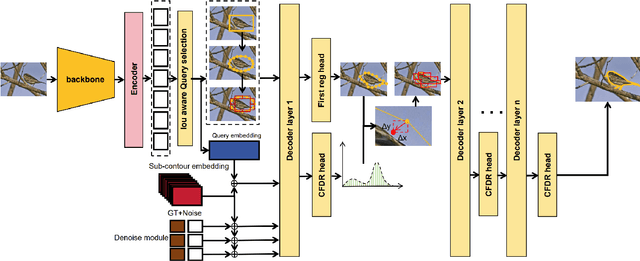
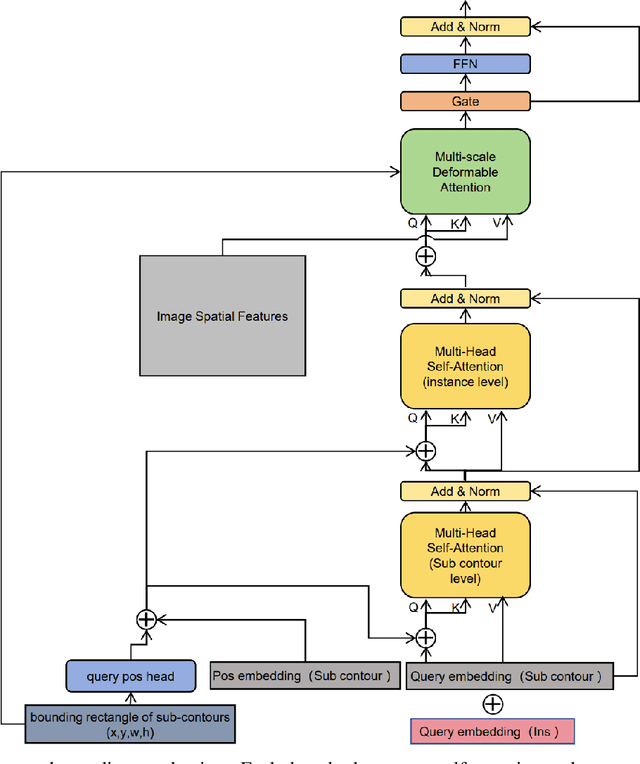
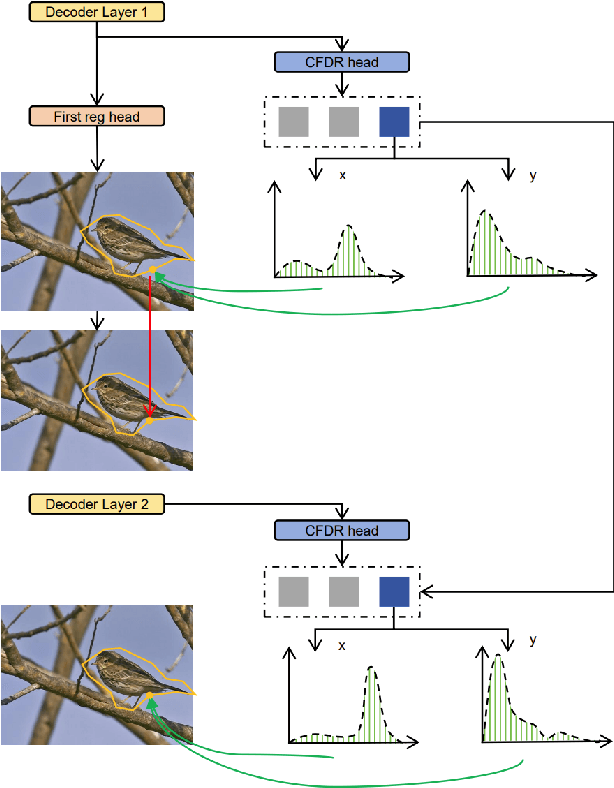
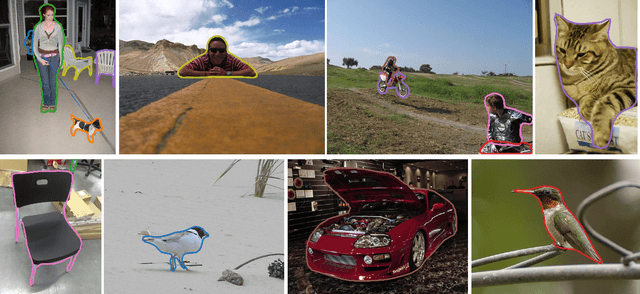
This paper presents Contourformer, a real-time contour-based instance segmentation algorithm. The method is fully based on the DETR paradigm and achieves end-to-end inference through iterative and progressive mechanisms to optimize contours. To improve efficiency and accuracy, we develop two novel techniques: sub-contour decoupling mechanisms and contour fine-grained distribution refinement. In the sub-contour decoupling mechanism, we propose a deformable attention-based module that adaptively selects sampling regions based on the current predicted contour, enabling more effective capturing of object boundary information. Additionally, we design a multi-stage optimization process to enhance segmentation precision by progressively refining sub-contours. The contour fine-grained distribution refinement technique aims to further improve the ability to express fine details of contours. These innovations enable Contourformer to achieve stable and precise segmentation for each instance while maintaining real-time performance. Extensive experiments demonstrate the superior performance of Contourformer on multiple benchmark datasets, including SBD, COCO, and KINS. We conduct comprehensive evaluations and comparisons with existing state-of-the-art methods, showing significant improvements in both accuracy and inference speed. This work provides a new solution for contour-based instance segmentation tasks and lays a foundation for future research, with the potential to become a strong baseline method in this field.
TAD-Bench: A Comprehensive Benchmark for Embedding-Based Text Anomaly Detection
Jan 21, 2025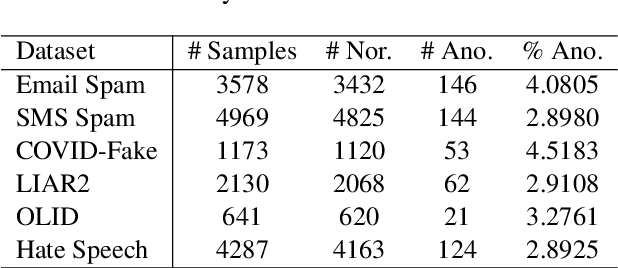

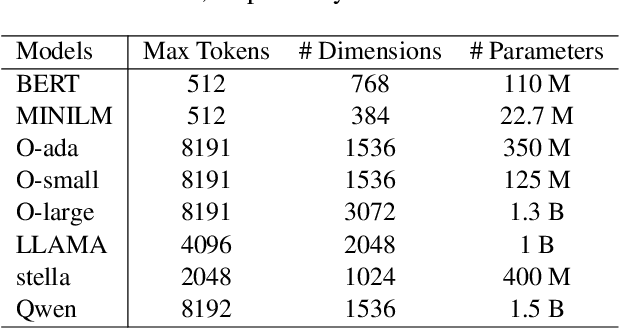

Text anomaly detection is crucial for identifying spam, misinformation, and offensive language in natural language processing tasks. Despite the growing adoption of embedding-based methods, their effectiveness and generalizability across diverse application scenarios remain under-explored. To address this, we present TAD-Bench, a comprehensive benchmark designed to systematically evaluate embedding-based approaches for text anomaly detection. TAD-Bench integrates multiple datasets spanning different domains, combining state-of-the-art embeddings from large language models with a variety of anomaly detection algorithms. Through extensive experiments, we analyze the interplay between embeddings and detection methods, uncovering their strengths, weaknesses, and applicability to different tasks. These findings offer new perspectives on building more robust, efficient, and generalizable anomaly detection systems for real-world applications.