 Add to Chrome
 Add to Firefox
 Add to Edge
$\varepsilon$-MemEvo: Adaptive Cross-Task Memory Transfer for LLM Program Evolution
Aug 12, 2026
LLM-based program evolution systems such as FunSearch and AlphaEvolve have shown strong ability to discover novel algorithms, but typically optimize each task in isolation, discarding search experience after completion. We introduce $\varepsilon$-MemEvo, a framework for cross-task knowledge transfer in LLM program evolution. $\varepsilon$-MemEvo stores prior experience as task-agnostic tactic memories: compact natural-language summaries of successful algorithmic strategies rather than raw code, enabling transfer across tasks with different APIs and evaluators. To avoid negative transfer from semantically mismatched memories, $\varepsilon$-MemEvo uses an adaptive injection gate that decides whether retrieved memories should be injected, and at what intensity. We evaluate $\varepsilon$-MemEvo on 8 diverse optimization benchmarks spanning mathematical optimization and systems engineering, using a content-level Leave-One-Out protocol that excludes target-task memory entries. On the primary GPT-5 backbone, $\varepsilon$-MemEvo improves AUCC over AdaEvolve on all 8 tasks, with a mean relative gain of +8.7%, and improves early-stage convergence by +9.4% on average. Ablations show that naive memory injection can fail catastrophically, while adaptive gating remains safe across all five ablation tasks. The data-updated posterior is interpretable in observed states: it favors skip during improving search and shifts from skip to hint across early and late plateaus. These gains incur less than 1% computational overhead.

Route-Align-Verify for Functional Correctness in Code Generation
Aug 04, 2026Large language models (LLMs) have substantially improved code generation, yet achieving strong functional correctness remains difficult, especially for heterogeneous programming tasks where a single prompting strategy and a single directly generated output are often insufficient. In this paper, we present RAV, a lightweight and modular framework that improves code generation with a fixed backbone model through three coordinated stages: Route, which applies task-aware prompt routing before generation; Align, which reduces the mismatch between fine-tuning prompts and inference-time prompts through aligned LoRA adaptation; and Verify, which selects the final output by executing multiple candidates against visible public tests. We evaluate RAV on the MBPP benchmark under both the sanitized and full settings. The complete RAV pipeline achieves the best performance among all evaluated configurations, reaching 0.8911 on MBPP Sanitized and 0.8520 on MBPP Full. Compared with the base model, these results represent improvements of 6.35 and 9.92 percentage points, respectively. Component-wise ablation experiments further show that task-aware routing and aligned adaptation become substantially more effective when combined with execution-based verification. Additional robustness and contamination analyses support the reliability of the observed improvements. Overall, the results indicate that functional correctness in code generation can be meaningfully improved without modifying the backbone architecture, by jointly optimizing how tasks are prompted, how the model is adapted, and how final outputs are selected.
TaPR: Test-Aware Policy Refinement for Feedback-Conditioned Code Generation
Aug 01, 2026Multi-turn code agents rely on execution feedback to repair incorrect programs, yet standard reinforcement learning paradigms optimize and evaluate policy performance primarily using single-shot outcome rewards. This misalignment conflates initial code generation with feedback-driven refinement, discards granular execution signals across intermediate turns, and fails to evaluate whether the policy actually acquires self-repair capabilities. We propose Test-aware Policy Refinement (TaPR), a framework that transforms execution feedback into a dense per-turn test-pass-ratio reward under a consistent multi-turn interaction protocol. Across six models on 219 code-generation problems from LiveCodeBench, TaPR improves the pooled three-turn success rate (Pass@3) by 2.44 percentage points. In the predefined 7B/8B high-headroom slice, pooled accuracy increases from 30.25% to 33.56% (+3.31 pp), with 42 improvements and 13 regressions in paired trials. On a matched Qwen3-8B ablation, the dense reward supplies nonzero feedback in all of the first ten steps and reaches a higher Hard-subset peak than outcome-only GRPO within the tested budget, although GRPO nearly matches pooled Pass@3 by step 300. Our primary contribution is a reward-decomposition framework and a turn-aware evaluation protocol that decouple first-shot generation quality from multi-turn repair competence.
CURE: Local Uncertainty Repair for Block-Parallel Speculative Decoding
Aug 01, 2026Speculative decoding mitigates the latency of sequential generation in autoregressive Large Language Models (LLMs) by interleaving draft generation with target verification. However, existing parallel drafting backends often suffer from rapid accuracy degradation over long horizons, leading to high rejection rates during verification and suboptimal wall-clock speedups. We observe that drafting errors are not uniformly distributed but typically stem from localized high-uncertainty tokens that destabilize downstream generation trajectories. Motivated by this token error pattern, we propose CURE, a budget-aware dynamic repair tree designed to repair errors at uncertainty focal points without incurring prohibitive tree-verification overheads. Specifically, our method uses predictive confidence margins to dynamically locate candidate error tokens within a block-parallel draft, expands bounded repair paths only at these fragile nodes, and employs a novel repair resynchronization mechanism to realign draft states post-verification. Evaluations on code-generation benchmarks (HumanEval, MBPP, and LiveCodeBench-lite) and mathematical reasoning benchmark (GSM8K) demonstrate that CURE increases the average accepted length by 4.2-7.5% over parallel baselines without repair, translating to an end-to-end speedup of $2.66-3.49\times$ over target-only decoding. Furthermore, we provide a plug-and-play repair module compatible with standard parallel drafting frameworks. We also characterize the trade-off between draft compute and verification efficiency.
Dual-Pathway Circuits of Object Hallucination in Vision-Language Models
May 13, 2026Vision-language models (VLMs) have demonstrated remarkable capabilities in bridging visual perception and natural language understanding, enabling a wide range of multimodal reasoning tasks. However, they often produce object hallucinations, describing content absent from the input image, which limits their reliability and interpretability. To address this limitation, we propose Dual-Pathway Circuit Analysis, a framework that identifies and characterizes hallucination-related circuits in VLMs for mechanistic understanding and causal probing. We first apply activation patching across five architecturally diverse VLMs to identify a visual grounding pathway that supports correct predictions and a hallucination pathway that drives erroneous outputs. We then introduce Conditional Pathway Analysis (CPA) to characterize pathway-level interactions, revealing that grounding components remain strongly redundant in both correct and hallucinating samples but undergo a consistent polarity flip, shifting from supporting the ground truth on correct samples to aligning with the hallucinated answer on erroneous ones. We further perform targeted suppression of hallucination-pathway components, showing that scaling these components reduces object hallucination by up to 76% with minimal accuracy cost, and validate that the same circuit selectively transfers to relational but not attribute hallucination. Evaluations on POPE-adversarial and AMBER show that the identified circuits are consistent across architectures, support causal intervention, and transfer selectively across hallucination types.
Paraphrase-Induced Output-Mode Collapse: When LLMs Break Character Under Semantically Equivalent Inputs
May 06, 2026When the substantive content of a request is rewritten, do large language models still answer in the format the original task asked for? We find that they often do not, even at temperature zero. On a 150-query evaluation over five compact 2025-era LLMs and four task types, we observe a systematic failure mode we call prompt-variant output-mode collapse: when a closed-form prompt asks for a bare label or a single choice token, content-preserving prompt variants can push the model into conversational prose, the requested format dissolves, and exact-match evaluation pipelines silently misjudge the result. To make this measurable, we release PARACONSIST, a 900-prompt benchmark of 150 base queries with five lexical, syntactic, and semantic-expansion prompt variants each, and a Semantic Consistency Score that decomposes prompt-variant robustness into answer consistency, sentence-BERT semantic similarity, and length stability. Under a whole-word answer-set match, only ~22% of closed-form variant responses preserve the ground-truth label inside their output, while ~78% drift away from the answer space entirely. In our pool, the dominant predictor of collapse is task structure rather than model identity, with model differentiation jointly carried by answer consistency and length stability. Robustness audits should therefore track response-mode preservation as a first-class reliability target alongside answer accuracy.
When Does LLM Self-Correction Help? A Control-Theoretic Markov Diagnostic and Verify-First Intervention
Apr 24, 2026Iterative self-correction is widely used in agentic LLM systems, but when repeated refinement helps versus hurts remains unclear. We frame self-correction as a cybernetic feedback loop in which the same language model serves as both controller and plant, and use a two-state Markov model over {Correct, Incorrect} to operationalize a simple deployment diagnostic: iterate only when ECR/EIR > Acc/(1 - Acc). In this view, EIR functions as a stability margin and prompting functions as lightweight controller design. Across 7 models and 3 datasets (GSM8K, MATH, StrategyQA), we find a sharp near-zero EIR threshold (<= 0.5%) separating beneficial from harmful self-correction. Only o3-mini (+3.4 pp, EIR = 0%), Claude Opus 4.6 (+0.6 pp, EIR ~ 0.2%), and o4-mini (+/-0 pp) remain non-degrading; GPT-5 degrades by -1.8 pp. A verify-first prompt ablation provides causal evidence that this threshold is actionable through prompting alone: on GPT-4o-mini it reduces EIR from 2% to 0% and turns -6.2 pp degradation into +0.2 pp (paired McNemar p < 10^-4), while producing little change on already-sub-threshold models. ASC further illustrates the stopping trade-off: it halts harmful refinement but incurs a 3.8 pp confidence-elicitation cost. Overall, the paper argues that self-correction should be treated not as a default behavior, but as a control decision governed by measurable error dynamics.
TestExplora: Benchmarking LLMs for Proactive Bug Discovery via Repository-Level Test Generation
Feb 11, 2026Given that Large Language Models (LLMs) are increasingly applied to automate software development, comprehensive software assurance spans three distinct goals: regression prevention, reactive reproduction, and proactive discovery. Current evaluations systematically overlook the third goal. Specifically, they either treat existing code as ground truth (a compliance trap) for regression prevention, or depend on post-failure artifacts (e.g., issue reports) for bug reproduction-so they rarely surface defects before failures. To bridge this gap, we present TestExplora, a benchmark designed to evaluate LLMs as proactive testers within full-scale, realistic repository environments. TestExplora contains 2,389 tasks from 482 repositories and hides all defect-related signals. Models must proactively find bugs by comparing implementations against documentation-derived intent, using documentation as the oracle. Furthermore, to keep evaluation sustainable and reduce leakage, we propose continuous, time-aware data collection. Our evaluation reveals a significant capability gap: state-of-the-art models achieve a maximum Fail-to-Pass (F2P) rate of only 16.06%. Further analysis indicates that navigating complex cross-module interactions and leveraging agentic exploration are critical to advancing LLMs toward autonomous software quality assurance. Consistent with this, SWEAgent instantiated with GPT-5-mini achieves an F2P of 17.27% and an F2P@5 of 29.7%, highlighting the effectiveness and promise of agentic exploration in proactive bug discovery tasks.
Attention Distance: A Novel Metric for Directed Fuzzing with Large Language Models
Dec 19, 2025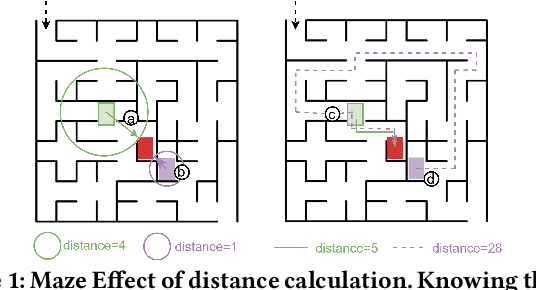
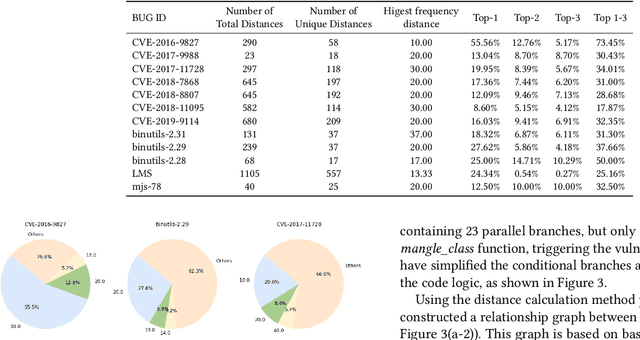
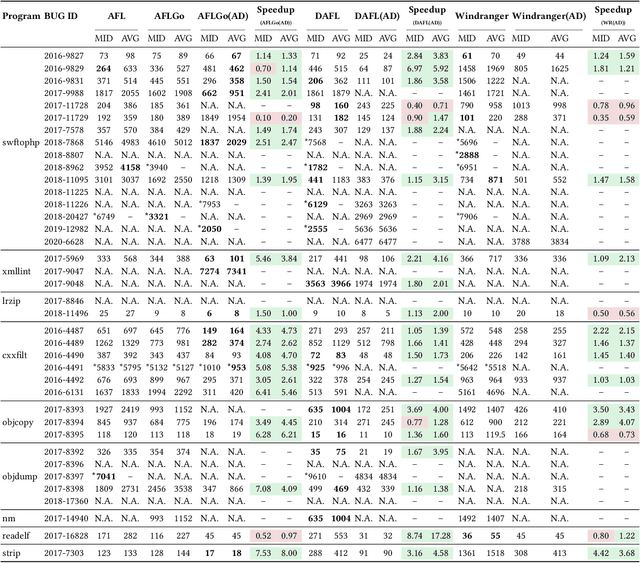
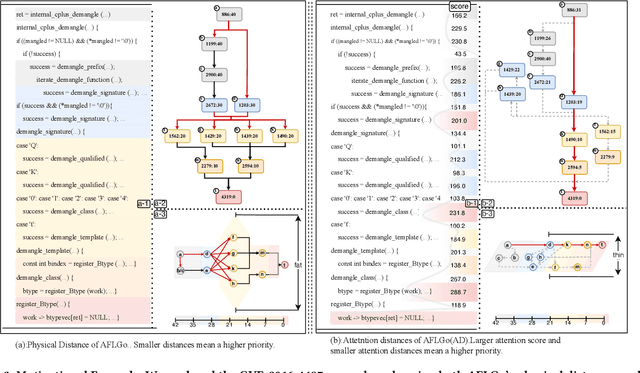
In the domain of software security testing, Directed Grey-Box Fuzzing (DGF) has garnered widespread attention for its efficient target localization and excellent detection performance. However, existing approaches measure only the physical distance between seed execution paths and target locations, overlooking logical relationships among code segments. This omission can yield redundant or misleading guidance in complex binaries, weakening DGF's real-world effectiveness. To address this, we introduce \textbf{attention distance}, a novel metric that leverages a large language model's contextual analysis to compute attention scores between code elements and reveal their intrinsic connections. Under the same AFLGo configuration -- without altering any fuzzing components other than the distance metric -- replacing physical distances with attention distances across 38 real vulnerability reproduction experiments delivers a \textbf{3.43$\times$} average increase in testing efficiency over the traditional method. Compared to state-of-the-art directed fuzzers DAFL and WindRanger, our approach achieves \textbf{2.89$\times$} and \textbf{7.13$\times$} improvements, respectively. To further validate the generalizability of attention distance, we integrate it into DAFL and WindRanger, where it also consistently enhances their original performance. All related code and datasets are publicly available at https://github.com/TheBinKing/Attention\_Distance.git.
InfiJanice: Joint Analysis and In-situ Correction Engine for Quantization-Induced Math Degradation in Large Language Models
May 16, 2025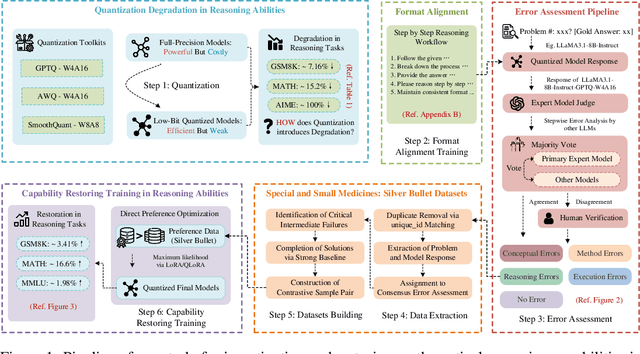
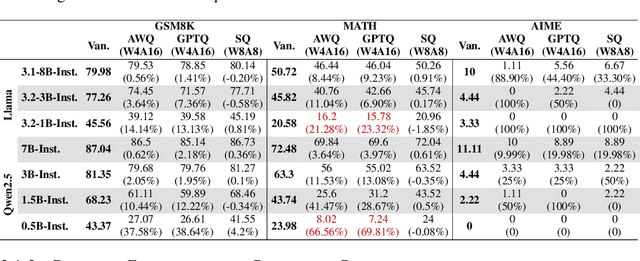
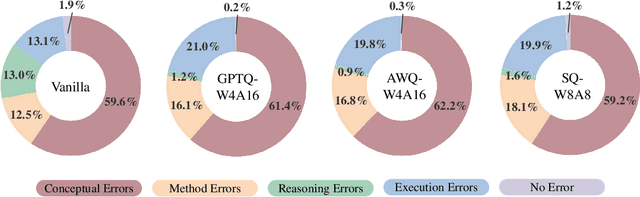
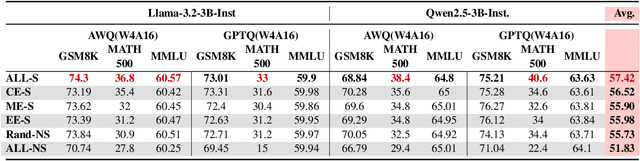
Large Language Models (LLMs) have demonstrated impressive performance on complex reasoning benchmarks such as GSM8K, MATH, and AIME. However, the substantial computational demands of these tasks pose significant challenges for real-world deployment. Model quantization has emerged as a promising approach to reduce memory footprint and inference latency by representing weights and activations with lower bit-widths. In this work, we conduct a comprehensive study of mainstream quantization methods(e.g., AWQ, GPTQ, SmoothQuant) on the most popular open-sourced models (e.g., Qwen2.5, LLaMA3 series), and reveal that quantization can degrade mathematical reasoning accuracy by up to 69.81%. To better understand this degradation, we develop an automated assignment and judgment pipeline that qualitatively categorizes failures into four error types and quantitatively identifies the most impacted reasoning capabilities. Building on these findings, we employ an automated data-curation pipeline to construct a compact "Silver Bullet" datasets. Training a quantized model on as few as 332 carefully selected examples for just 3-5 minutes on a single GPU is enough to restore its reasoning accuracy to match that of the full-precision baseline.