 Add to Chrome
 Add to Firefox
 Add to Edge
Dialogue+safety+prediction
Papers and Code
A Safety-Aware Role-Orchestrated Multi-Agent LLM Framework for Behavioral Health Communication Simulation
Mar 31, 2026
Single-agent large language model (LLM) systems struggle to simultaneously support diverse conversational functions and maintain safety in behavioral health communication. We propose a safety-aware, role-orchestrated multi-agent LLM framework designed to simulate supportive behavioral health dialogue through coordinated, role-differentiated agents. Conversational responsibilities are decomposed across specialized agents, including empathy-focused, action-oriented, and supervisory roles, while a prompt-based controller dynamically activates relevant agents and enforces continuous safety auditing. Using semi-structured interview transcripts from the DAIC-WOZ corpus, we evaluate the framework with scalable proxy metrics capturing structural quality, functional diversity, and computational characteristics. Results illustrate clear role differentiation, coherent inter-agent coordination, and predictable trade-offs between modular orchestration, safety oversight, and response latency when compared to a single-agent baseline. This work emphasizes system design, interpretability, and safety, positioning the framework as a simulation and analysis tool for behavioral health informatics and decision-support research rather than a clinical intervention.

The Hidden Puppet Master: Predicting Human Belief Change in Manipulative LLM Dialogues
Mar 27, 2026As users increasingly turn to LLMs for practical and personal advice, they become vulnerable to subtle steering toward hidden incentives misaligned with their own interests. While existing NLP research has benchmarked manipulation detection, these efforts often rely on simulated debates and remain fundamentally decoupled from actual human belief shifts in real-world scenarios. We introduce PUPPET, a theoretical taxonomy and resource that bridges this gap by focusing on the moral direction of hidden incentives in everyday, advice-giving contexts. We provide an evaluation dataset of N=1,035 human-LLM interactions, where we measure users' belief shifts. Our analysis reveals a critical disconnect in current safety paradigms: while models can be trained to detect manipulative strategies, they do not correlate with the magnitude of resulting belief change. As such, we define the task of belief shift prediction and show that while state-of-the-art LLMs achieve moderate correlation (r=0.3-0.5), they systematically underestimate the intensity of human belief susceptibility. This work establishes a theoretically grounded and behaviorally validated foundation for AI social safety efforts by studying incentive-driven manipulation in LLMs during everyday, practical user queries.
Detecting Jailbreak Attempts in Clinical Training LLMs Through Automated Linguistic Feature Extraction
Feb 10, 2026Detecting jailbreak attempts in clinical training large language models (LLMs) requires accurate modeling of linguistic deviations that signal unsafe or off-task user behavior. Prior work on the 2-Sigma clinical simulation platform showed that manually annotated linguistic features could support jailbreak detection. However, reliance on manual annotation limited both scalability and expressiveness. In this study, we extend this framework by using experts' annotations of four core linguistic features (Professionalism, Medical Relevance, Ethical Behavior, and Contextual Distraction) and training multiple general-domain and medical-domain BERT-based LLM models to predict these features directly from text. The most reliable feature regressor for each dimension was selected and used as the feature extractor in a second layer of classifiers. We evaluate a suite of predictive models, including tree-based, linear, probabilistic, and ensemble methods, to determine jailbreak likelihood from the extracted features. Across cross-validation and held-out evaluations, the system achieves strong overall performance, indicating that LLM-derived linguistic features provide an effective basis for automated jailbreak detection. Error analysis further highlights key limitations in current annotations and feature representations, pointing toward future improvements such as richer annotation schemes, finer-grained feature extraction, and methods that capture the evolving risk of jailbreak behavior over the course of a dialogue. This work demonstrates a scalable and interpretable approach for detecting jailbreak behavior in safety-critical clinical dialogue systems.
CLIN-LLM: A Safety-Constrained Hybrid Framework for Clinical Diagnosis and Treatment Generation
Oct 26, 2025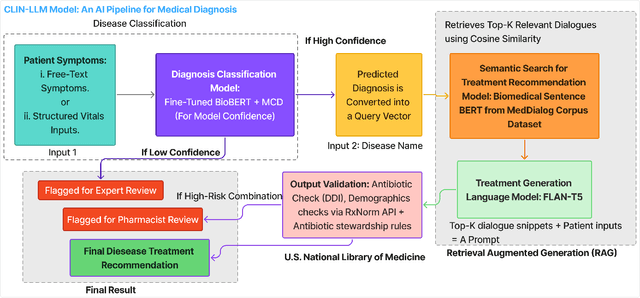
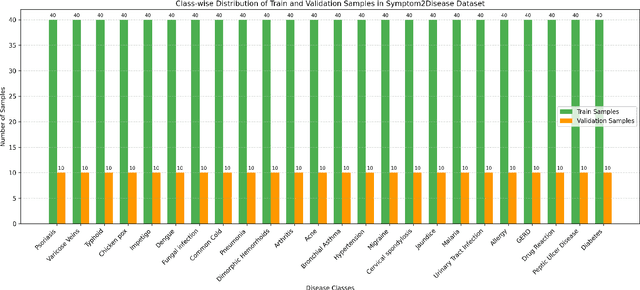
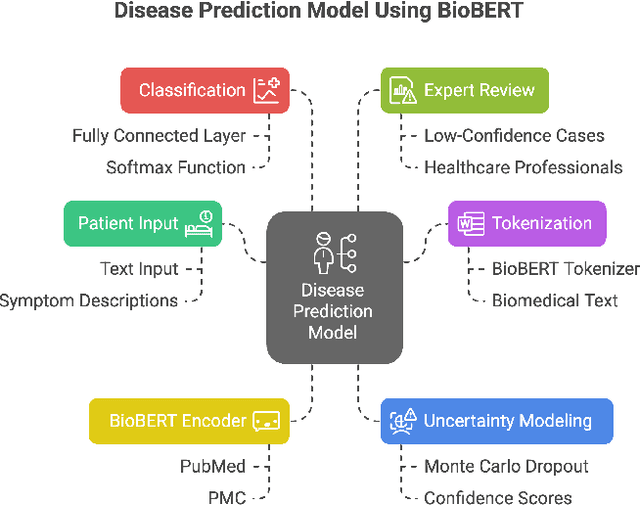
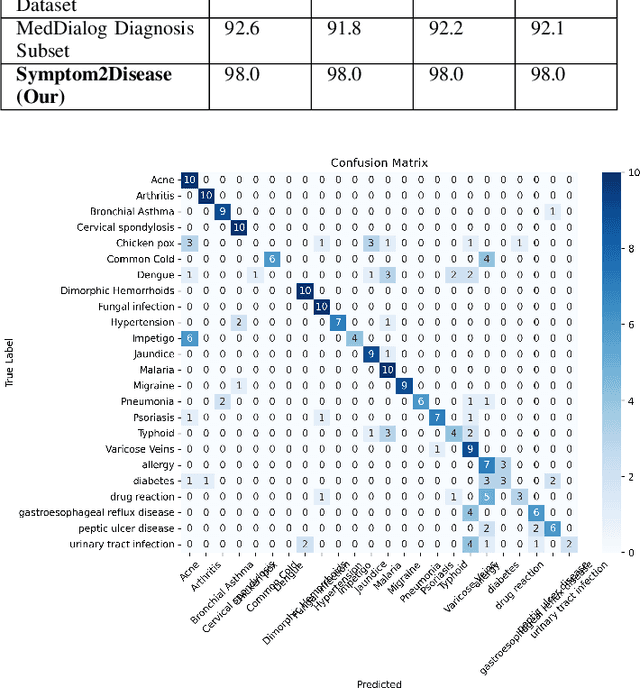
Accurate symptom-to-disease classification and clinically grounded treatment recommendations remain challenging, particularly in heterogeneous patient settings with high diagnostic risk. Existing large language model (LLM)-based systems often lack medical grounding and fail to quantify uncertainty, resulting in unsafe outputs. We propose CLIN-LLM, a safety-constrained hybrid pipeline that integrates multimodal patient encoding, uncertainty-calibrated disease classification, and retrieval-augmented treatment generation. The framework fine-tunes BioBERT on 1,200 clinical cases from the Symptom2Disease dataset and incorporates Focal Loss with Monte Carlo Dropout to enable confidence-aware predictions from free-text symptoms and structured vitals. Low-certainty cases (18%) are automatically flagged for expert review, ensuring human oversight. For treatment generation, CLIN-LLM employs Biomedical Sentence-BERT to retrieve top-k relevant dialogues from the 260,000-sample MedDialog corpus. The retrieved evidence and patient context are fed into a fine-tuned FLAN-T5 model for personalized treatment generation, followed by post-processing with RxNorm for antibiotic stewardship and drug-drug interaction (DDI) screening. CLIN-LLM achieves 98% accuracy and F1 score, outperforming ClinicalBERT by 7.1% (p < 0.001), with 78% top-5 retrieval precision and a clinician-rated validity of 4.2 out of 5. Unsafe antibiotic suggestions are reduced by 67% compared to GPT-5. These results demonstrate CLIN-LLM's robustness, interpretability, and clinical safety alignment. The proposed system provides a deployable, human-in-the-loop decision support framework for resource-limited healthcare environments. Future work includes integrating imaging and lab data, multilingual extensions, and clinical trial validation.
From Theory to Practice: Real-World Use Cases on Trustworthy LLM-Driven Process Modeling, Prediction and Automation
Jun 04, 2025Traditional Business Process Management (BPM) struggles with rigidity, opacity, and scalability in dynamic environments while emerging Large Language Models (LLMs) present transformative opportunities alongside risks. This paper explores four real-world use cases that demonstrate how LLMs, augmented with trustworthy process intelligence, redefine process modeling, prediction, and automation. Grounded in early-stage research projects with industrial partners, the work spans manufacturing, modeling, life-science, and design processes, addressing domain-specific challenges through human-AI collaboration. In manufacturing, an LLM-driven framework integrates uncertainty-aware explainable Machine Learning (ML) with interactive dialogues, transforming opaque predictions into auditable workflows. For process modeling, conversational interfaces democratize BPMN design. Pharmacovigilance agents automate drug safety monitoring via knowledge-graph-augmented LLMs. Finally, sustainable textile design employs multi-agent systems to navigate regulatory and environmental trade-offs. We intend to examine tensions between transparency and efficiency, generalization and specialization, and human agency versus automation. By mapping these trade-offs, we advocate for context-sensitive integration prioritizing domain needs, stakeholder values, and iterative human-in-the-loop workflows over universal solutions. This work provides actionable insights for researchers and practitioners aiming to operationalize LLMs in critical BPM environments.
EmoAgent: Assessing and Safeguarding Human-AI Interaction for Mental Health Safety
Apr 13, 2025The rise of LLM-driven AI characters raises safety concerns, particularly for vulnerable human users with psychological disorders. To address these risks, we propose EmoAgent, a multi-agent AI framework designed to evaluate and mitigate mental health hazards in human-AI interactions. EmoAgent comprises two components: EmoEval simulates virtual users, including those portraying mentally vulnerable individuals, to assess mental health changes before and after interactions with AI characters. It uses clinically proven psychological and psychiatric assessment tools (PHQ-9, PDI, PANSS) to evaluate mental risks induced by LLM. EmoGuard serves as an intermediary, monitoring users' mental status, predicting potential harm, and providing corrective feedback to mitigate risks. Experiments conducted in popular character-based chatbots show that emotionally engaging dialogues can lead to psychological deterioration in vulnerable users, with mental state deterioration in more than 34.4% of the simulations. EmoGuard significantly reduces these deterioration rates, underscoring its role in ensuring safer AI-human interactions. Our code is available at: https://github.com/1akaman/EmoAgent
Correlating and Predicting Human Evaluations of Language Models from Natural Language Processing Benchmarks
Feb 24, 2025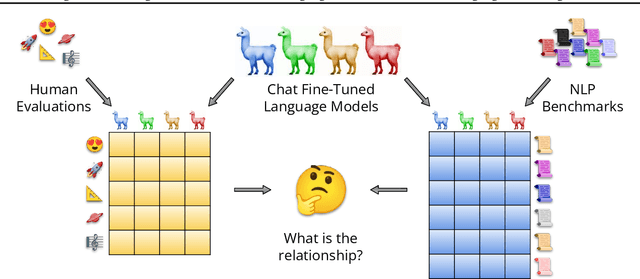
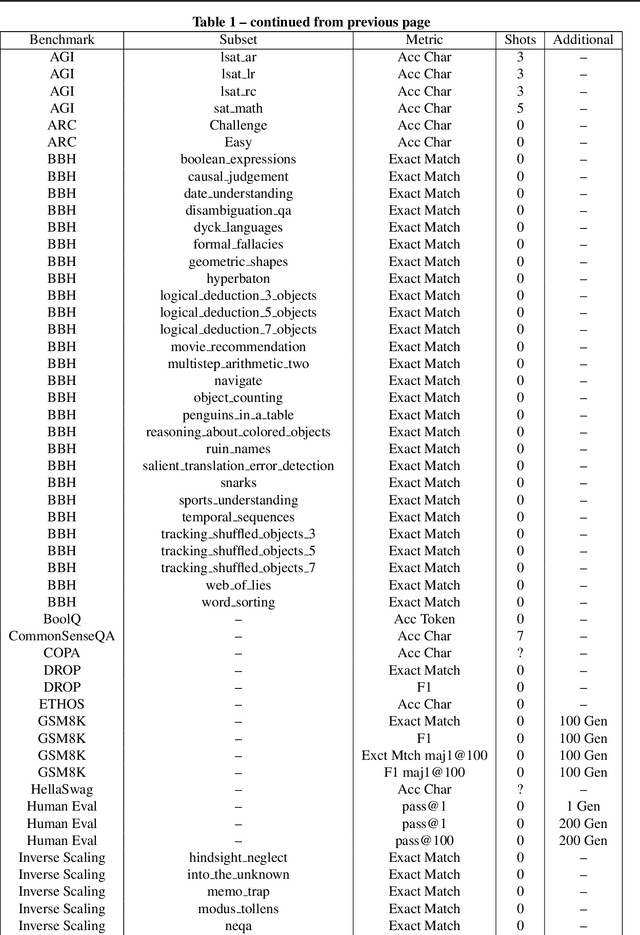
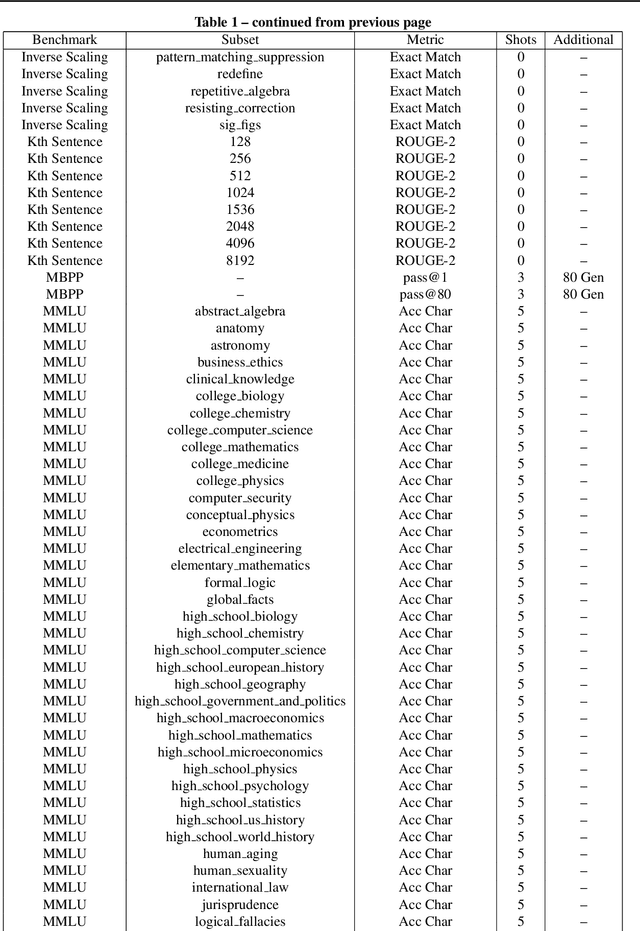
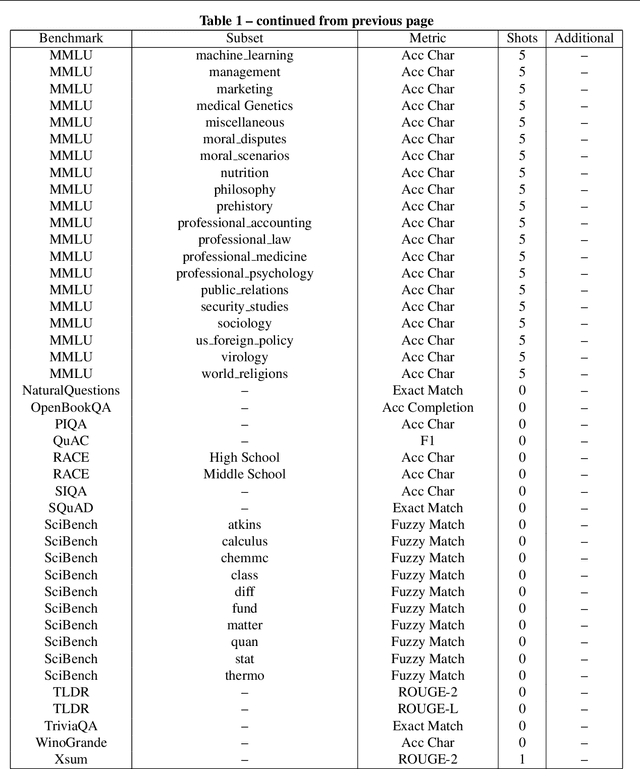
The explosion of high-performing conversational language models (LMs) has spurred a shift from classic natural language processing (NLP) benchmarks to expensive, time-consuming and noisy human evaluations - yet the relationship between these two evaluation strategies remains hazy. In this paper, we conduct a large-scale study of four Chat Llama 2 models, comparing their performance on 160 standard NLP benchmarks (e.g., MMLU, ARC, BIG-Bench Hard) against extensive human preferences on more than 11k single-turn and 2k multi-turn dialogues from over 2k human annotators. Our findings are striking: most NLP benchmarks strongly correlate with human evaluations, suggesting that cheaper, automated metrics can serve as surprisingly reliable predictors of human preferences. Three human evaluations, such as adversarial dishonesty and safety, are anticorrelated with NLP benchmarks, while two are uncorrelated. Moreover, through overparameterized linear regressions, we show that NLP scores can accurately predict human evaluations across different model scales, offering a path to reduce costly human annotation without sacrificing rigor. Overall, our results affirm the continued value of classic benchmarks and illuminate how to harness them to anticipate real-world user satisfaction - pointing to how NLP benchmarks can be leveraged to meet evaluation needs of our new era of conversational AI.
Reasoning-to-Defend: Safety-Aware Reasoning Can Defend Large Language Models from Jailbreaking
Feb 18, 2025The reasoning abilities of Large Language Models (LLMs) have demonstrated remarkable advancement and exceptional performance across diverse domains. However, leveraging these reasoning capabilities to enhance LLM safety against adversarial attacks and jailbreak queries remains largely unexplored. To bridge this gap, we propose Reasoning-to-Defend (R2D), a novel training paradigm that integrates safety reflections of queries and responses into LLMs' generation process, unlocking a safety-aware reasoning mechanism. This approach enables self-evaluation at each reasoning step to create safety pivot tokens as indicators of the response's safety status. Furthermore, in order to improve the learning efficiency of pivot token prediction, we propose Contrastive Pivot Optimization(CPO), which enhances the model's ability to perceive the safety status of dialogues. Through this mechanism, LLMs dynamically adjust their response strategies during reasoning, significantly enhancing their defense capabilities against jailbreak attacks. Extensive experimental results demonstrate that R2D effectively mitigates various attacks and improves overall safety, highlighting the substantial potential of safety-aware reasoning in strengthening LLMs' robustness against jailbreaks.
Intelligent Approaches to Predictive Analytics in Occupational Health and Safety in India
Jan 01, 2025Concerns associated with occupational health and safety (OHS) remain critical and often under-addressed aspects of workforce management. This is especially true for high-risk industries such as manufacturing, construction, and mining. Such industries dominate the economy of India which is a developing country with a vast informal sector. Regulatory frameworks have been strengthened over the decades, particularly with regards to bringing the unorganized sector within the purview of law. Traditional approaches to OHS have largely been reactive and rely on post-incident analysis (which is curative) rather than preventive intervention. This paper portrays the immense potential of predictive analytics in rejuvenating OHS practices in India. Intelligent predictive analytics is driven by approaches like machine learning and statistical modeling. Its data-driven nature serves to overcome the limitations of conventional OHS methods. Predictive analytics approaches to OHS in India draw on global case studies and generative applications of predictive analytics in OHS which are customized to Indian industrial contexts. This paper attempts to explore in what ways it exhibits the potential to address challenges such as fragmented data ecosystems, resource constraints, and the variability of workplace hazards. The paper presents actionable policy recommendations to create conditions conducive to the widespread implementation of predictive analytics, which must be advocated as a cornerstone of OHS strategy. In doing so, the paper aims to spark a collaborational dialogue among policymakers, industry leaders, and technologists. It urges a shift towards intelligent practices to safeguard the well-being of India's workforce.
Automating Feedback Analysis in Surgical Training: Detection, Categorization, and Assessment
Dec 01, 2024


This work introduces the first framework for reconstructing surgical dialogue from unstructured real-world recordings, which is crucial for characterizing teaching tasks. In surgical training, the formative verbal feedback that trainers provide to trainees during live surgeries is crucial for ensuring safety, correcting behavior immediately, and facilitating long-term skill acquisition. However, analyzing and quantifying this feedback is challenging due to its unstructured and specialized nature. Automated systems are essential to manage these complexities at scale, allowing for the creation of structured datasets that enhance feedback analysis and improve surgical education. Our framework integrates voice activity detection, speaker diarization, and automated speech recaognition, with a novel enhancement that 1) removes hallucinations (non-existent utterances generated during speech recognition fueled by noise in the operating room) and 2) separates speech from trainers and trainees using few-shot voice samples. These aspects are vital for reconstructing accurate surgical dialogues and understanding the roles of operating room participants. Using data from 33 real-world surgeries, we demonstrated the system's capability to reconstruct surgical teaching dialogues and detect feedback instances effectively (F1 score of 0.79+/-0.07). Moreover, our hallucination removal step improves feedback detection performance by ~14%. Evaluation on downstream clinically relevant tasks of predicting Behavioral Adjustment of trainees and classifying Technical feedback, showed performances comparable to manual annotations with F1 scores of 0.82+/0.03 and 0.81+/0.03 respectively. These results highlight the effectiveness of our framework in supporting clinically relevant tasks and improving over manual methods.