 Add to Chrome
 Add to Firefox
 Add to Edge
Hear, Invoke, and Understand: A Skill-Calling Multimodal Agent for Large Audio Language Models
Aug 03, 2026
Complex acoustic problems may require models to perform acoustic operations, interact with external tools and reason over the resulting textual or processed-audio observations rather than answer directly from a fixed audio input. We study such problems as tool-interactive audio reasoning and develop SpeechAgent-R, an audio agent that coordinates its intrinsic multimodal understanding with external skills and tools. To support this capability, we construct HIU-Corpus, comprising 65,492 interaction trajectories and 507.6 hours of audio across 24 tasks, 8 skills and 9 tools. SpeechAgent-R first learns structured interaction behaviors through trajectory-based supervised fine-tuning and then improves its decisions through multi-turn reinforcement learning. We further introduce HIU-Bench to jointly evaluate task performance, interaction quality and generalization to diverse task settings. It contains 1,395 samples across 56 tasks, including in-distribution (ID) and out-of-distribution (OOD) splits with substantial shifts in tool usage and workflow composition. SpeechAgent-R achieves 84.17 on ID tasks and 70.94 on OOD tasks, improving over the base model under the same agent harness by 15.40 and 14.23 points. These results demonstrate that learning skill and tool coordination improves audio agents' ability to handle diverse task settings and adaptive tool interactions.

LAB-Tab: LLM-Augmented Bayesian Network Adaptation for Few-Shot Tabular Generation
Aug 03, 2026Tabular data generation supports analysis and decision-making when target-domain data are scarce, yet collecting complete target samples is often costly. A practical but underexplored setting provides only a few target records together with richer source data from a related domain. Existing few-shot tabular generators often either fit sparse target statistics directly, which can overfit incidental patterns, or reuse source-domain generators, which may preserve dependencies that no longer hold in the target domain. To address this problem, we propose LAB-Tab, an LLM-augmented Bayesian network (BN) adaptation framework for source-aware few-shot tabular generation. LAB-Tab first fits a BN from source data and then uses an LLM to propose plausible target-domain BN edges that are absent from the source BN graph. This step converts semantic and weak statistical evidence into explicit structural hypotheses, thereby expanding the editable edge space beyond the source-fitted graph. Because the proposed edges may be noisy and interact with existing dependencies, a PPO policy calibrates edges in the augmented BN through edge-level actions, including keep, weaken, strengthen, flip, and deactivate. The PPO policy is trained with a reward that combines distributional alignment, downstream utility, and preservation of target-relevant dependencies. The adapted BN is then sampled to synthesize target-domain tables. Across six source--target distribution-shift scenarios built from three US Census (ACS) prediction tasks, LAB-Tab achieves the best performance at the 10% target-data budget, leads four of the six individual scenarios, and reduces the macro Overall score by 33.8% relative to the strongest baseline. It also obtains the best macro JSD, WAPE, and UtilityGap while maintaining competitive feature--label preservation.
SelectTSL: Prompt-Guided Selective Target Sound Localization in Complex Scenarios
Jul 02, 2026Humans can selectively attend to a target sound and estimate its direction in complex scenarios, whereas such selective localization remains challenging for current deep learning-based systems. Sound source localization (SSL) has achieved remarkable success with deep learning, yet most methods localize all active sources without selectivity. Conversely, target sound extraction (TSE) extracts sources using multimodal prompts but typically fails to preserve the multichannel spatial information required for accurate localization. To bridge this gap, we formulate the task of prompt-guided selective target sound localization and propose SelectTSL, an end-to-end architecture that localizes only the user-specified target in multi-source acoustic scenes. Specifically, we design a target-aware selective localization strategy that employs a Prompt-Guided Selective Attention Module (PGSA) to generate prompt-informed embeddings. These embeddings guide an inter-channel phase difference (IPD) enhancer to refine raw phase cues, fusing with target magnitudes to jointly estimate direction of arrival (DoA) and target-source cardinality, i.e., the number of target sound sources. This coupled design effectively focuses on the user-specified target spatial cues for selective localization and also handles time-varying numbers of target sources. Extensive experiments on both synthetic data and real-world recordings demonstrate that our proposed method consistently outperforms other baselines and exhibits robust generalization to real acoustic environments.
Sparse Forcing: Native Trainable Sparse Attention for Real-time Autoregressive Diffusion Video Generation
Apr 23, 2026We introduce Sparse Forcing, a training-and-inference paradigm for autoregressive video diffusion models that improves long-horizon generation quality while reducing decoding latency. Sparse Forcing is motivated by an empirical observation in autoregressive diffusion rollouts: attention concentrates on a persistent subset of salient visual blocks, forming an implicit spatiotemporal memory in the KV cache, and exhibits a locally structured block-sparse pattern within sliding windows. Building on this observation, we propose a trainable native sparsity mechanism that learns to compress, preserve, and update these persistent blocks while restricting computation within each local window to a dynamically selected local neighborhood. To make the approach practical at scale for both training and inference, we further propose Persistent Block-Sparse Attention (PBSA), an efficient GPU kernel that accelerates sparse attention and memory updates for low-latency, memory-efficient decoding. Experiments show that Sparse Forcing improves the VBench score by +0.26 over Self-Forcing on 5-second text-to-video generation while delivering a 1.11-1.17x decoding speedup and 42% lower peak KV-cache footprint. The gains are more pronounced on longer-horizon rollouts, delivering improved visual quality with +0.68 and +2.74 VBench improvements, and 1.22x and 1.27x speedups on 20-second and 1-minute generations, respectively.
Muyan-TTS: A Trainable Text-to-Speech Model Optimized for Podcast Scenarios with a $50K Budget
Apr 27, 2025Recent advancements in text-to-speech (TTS) models have been driven by the integration of large language models (LLMs), enhancing semantic comprehension and improving speech naturalness. However, existing LLM-based TTS models often lack open-source training code and efficient inference acceleration frameworks, limiting their accessibility and adaptability. Additionally, there is no publicly available TTS model specifically optimized for podcast scenarios, which are in high demand for voice interaction applications. To address these limitations, we introduce Muyan-TTS, an open-source trainable TTS model designed for podcast applications within a $50,000 budget. Our model is pre-trained on over 100,000 hours of podcast audio data, enabling zero-shot TTS synthesis with high-quality voice generation. Furthermore, Muyan-TTS supports speaker adaptation with dozens of minutes of target speech, making it highly customizable for individual voices. In addition to open-sourcing the model, we provide a comprehensive data collection and processing pipeline, a full training procedure, and an optimized inference framework that accelerates LLM-based TTS synthesis. Our code and models are available at https://github.com/MYZY-AI/Muyan-TTS.
Deep Causal Inference for Point-referenced Spatial Data with Continuous Treatments
Dec 05, 2024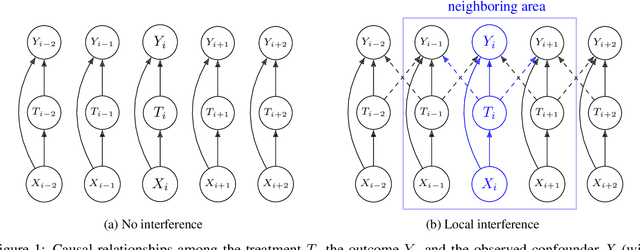
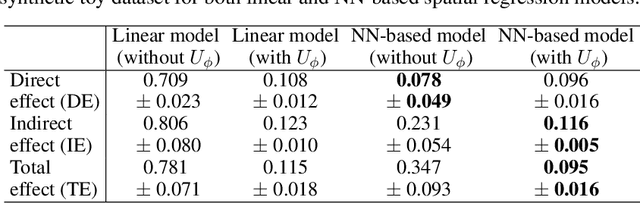
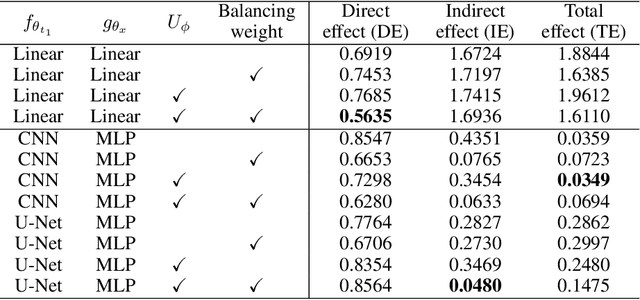
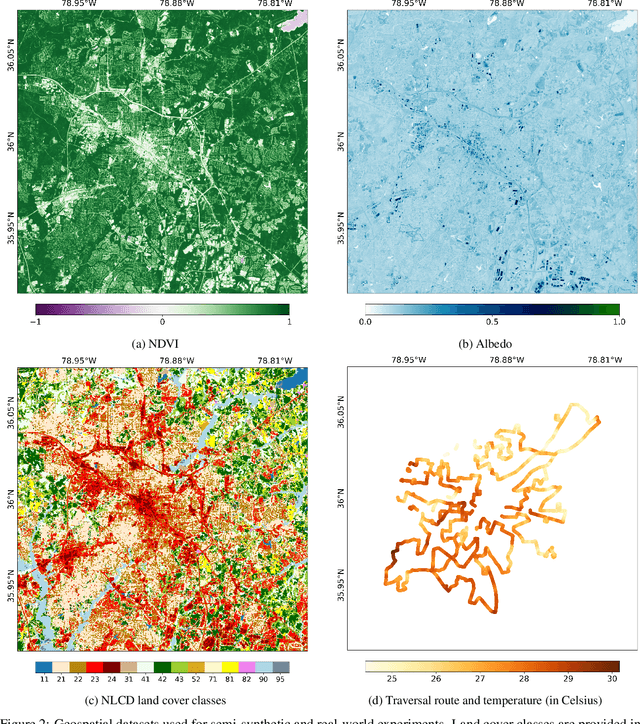
Causal reasoning is often challenging with spatial data, particularly when handling high-dimensional inputs. To address this, we propose a neural network (NN) based framework integrated with an approximate Gaussian process to manage spatial interference and unobserved confounding. Additionally, we adopt a generalized propensity-score-based approach to address partially observed outcomes when estimating causal effects with continuous treatments. We evaluate our framework using synthetic, semi-synthetic, and real-world data inferred from satellite imagery. Our results demonstrate that NN-based models significantly outperform linear spatial regression models in estimating causal effects. Furthermore, in real-world case studies, NN-based models offer more reasonable predictions of causal effects, facilitating decision-making in relevant applications.
pTSE-T: Presentation Target Speaker Extraction using Unaligned Text Cues
Nov 05, 2024


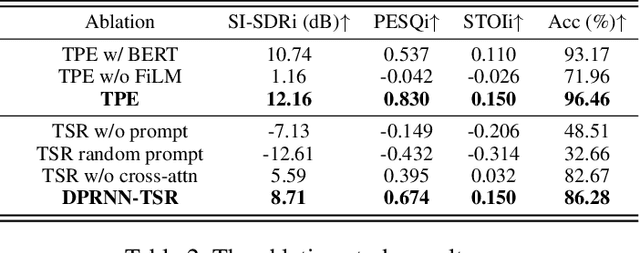
TSE aims to extract the clean speech of the target speaker in an audio mixture, thus eliminating irrelevant background noise and speech. While prior work has explored various auxiliary cues including pre-recorded speech, visual information (e.g., lip motions and gestures), and spatial information, the acquisition and selection of such strong cues are infeasible in many practical scenarios. Unlike all existing work, in this paper, we condition the TSE algorithm on semantic cues extracted from limited and unaligned text content, such as condensed points from a presentation slide. This method is particularly useful in scenarios like meetings, poster sessions, or lecture presentations, where acquiring other cues in real-time is challenging. To this end, we design two different networks. Specifically, our proposed TPE fuses audio features with content-based semantic cues to facilitate time-frequency mask generation to filter out extraneous noise, while another proposal, namely TSR, employs the contrastive learning technique to associate blindly separated speech signals with semantic cues. The experimental results show the efficacy in accurately identifying the target speaker by utilizing semantic cues derived from limited and unaligned text, resulting in SI-SDRi of 12.16 dB, SDRi of 12.66 dB, PESQi of 0.830 and STOIi of 0.150, respectively. Dataset and source code will be publicly available. Project demo page: https://slideTSE.github.io/.
ADEPT-Z: Zero-Shot Automated Circuit Topology Search for Pareto-Optimal Photonic Tensor Cores
Oct 02, 2024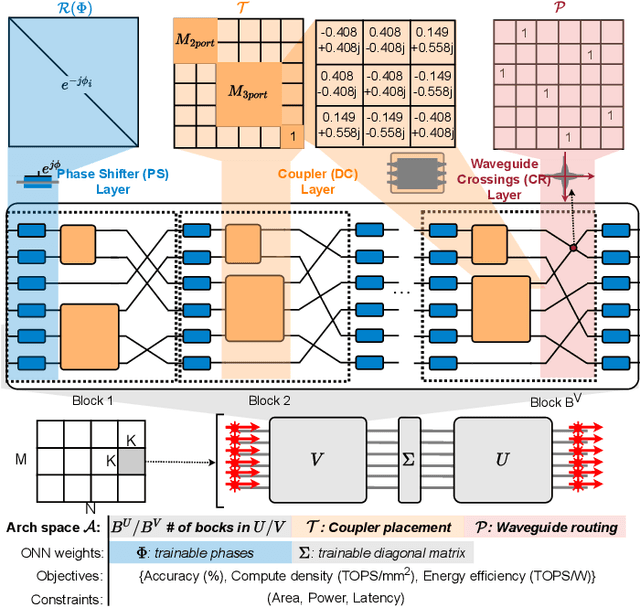

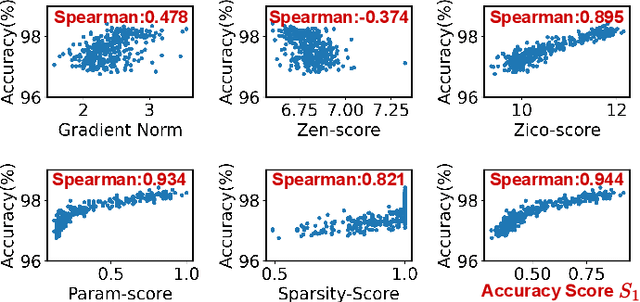

Photonic tensor cores (PTCs) are essential building blocks for optical artificial intelligence (AI) accelerators based on programmable photonic integrated circuits. Most PTC designs today are manually constructed, with low design efficiency and unsatisfying solution quality. This makes it challenging to meet various hardware specifications and keep up with rapidly evolving AI applications. Prior work has explored gradient-based methods to learn a good PTC structure differentiably. However, it suffers from slow training speed and optimization difficulty when handling multiple non-differentiable objectives and constraints. Therefore, in this work, we propose a more flexible and efficient zero-shot multi-objective evolutionary topology search framework ADEPT-Z that explores Pareto-optimal PTC designs with advanced devices in a larger search space. Multiple objectives can be co-optimized while honoring complicated hardware constraints. With only <3 hours of search, we can obtain tens of diverse Pareto-optimal solutions, 100x faster than the prior gradient-based method, outperforming prior manual designs with 2x higher accuracy weighted area-energy efficiency. The code of ADEPT-Z is available at https://github.com/ScopeX-ASU/ADEPT-Z.
Augmenting Ground-Level PM2.5 Prediction via Kriging-Based Pseudo-Label Generation
Jan 16, 2024Fusing abundant satellite data with sparse ground measurements constitutes a major challenge in climate modeling. To address this, we propose a strategy to augment the training dataset by introducing unlabeled satellite images paired with pseudo-labels generated through a spatial interpolation technique known as ordinary kriging, thereby making full use of the available satellite data resources. We show that the proposed data augmentation strategy helps enhance the performance of the state-of-the-art convolutional neural network-random forest (CNN-RF) model by a reasonable amount, resulting in a noteworthy improvement in spatial correlation and a reduction in prediction error.
Causal Mediation Analysis with Multi-dimensional and Indirectly Observed Mediators
Jun 13, 2023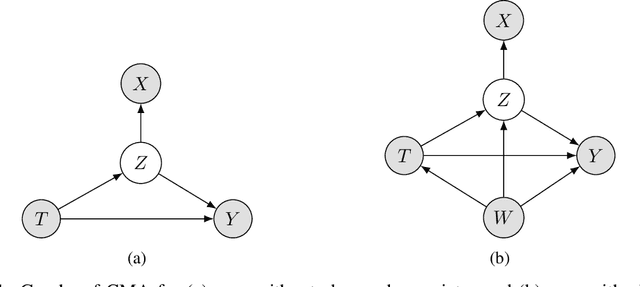
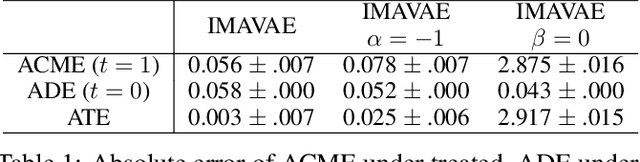
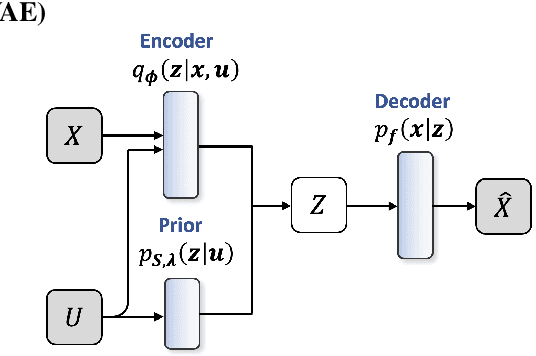
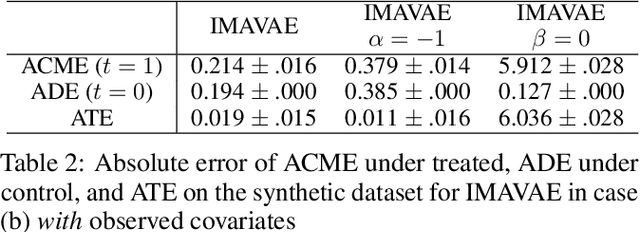
Causal mediation analysis (CMA) is a powerful method to dissect the total effect of a treatment into direct and mediated effects within the potential outcome framework. This is important in many scientific applications to identify the underlying mechanisms of a treatment effect. However, in many scientific applications the mediator is unobserved, but there may exist related measurements. For example, we may want to identify how changes in brain activity or structure mediate an antidepressant's effect on behavior, but we may only have access to electrophysiological or imaging brain measurements. To date, most CMA methods assume that the mediator is one-dimensional and observable, which oversimplifies such real-world scenarios. To overcome this limitation, we introduce a CMA framework that can handle complex and indirectly observed mediators based on the identifiable variational autoencoder (iVAE) architecture. We prove that the true joint distribution over observed and latent variables is identifiable with the proposed method. Additionally, our framework captures a disentangled representation of the indirectly observed mediator and yields accurate estimation of the direct and mediated effects in synthetic and semi-synthetic experiments, providing evidence of its potential utility in real-world applications.