 Add to Chrome
 Add to Firefox
 Add to Edge
Test-Time Intensity Consistency Adaptation for Shadow Detection
Oct 10, 2024
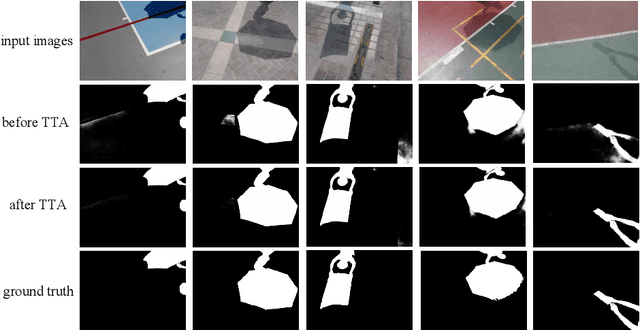
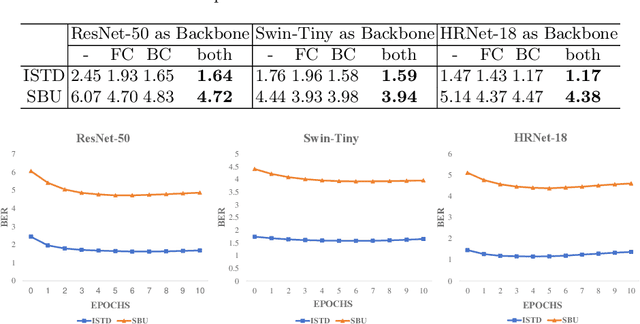
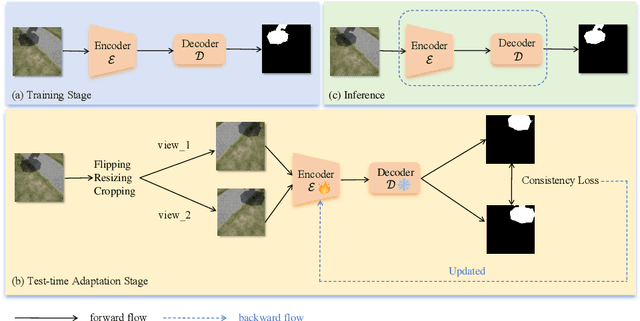

Shadow detection is crucial for accurate scene understanding in computer vision, yet it is challenged by the diverse appearances of shadows caused by variations in illumination, object geometry, and scene context. Deep learning models often struggle to generalize to real-world images due to the limited size and diversity of training datasets. To address this, we introduce TICA, a novel framework that leverages light-intensity information during test-time adaptation to enhance shadow detection accuracy. TICA exploits the inherent inconsistencies in light intensity across shadow regions to guide the model toward a more consistent prediction. A basic encoder-decoder model is initially trained on a labeled dataset for shadow detection. Then, during the testing phase, the network is adjusted for each test sample by enforcing consistent intensity predictions between two augmented input image versions. This consistency training specifically targets both foreground and background intersection regions to identify shadow regions within images accurately for robust adaptation. Extensive evaluations on the ISTD and SBU shadow detection datasets reveal that TICA significantly demonstrates that TICA outperforms existing state-of-the-art methods, achieving superior results in balanced error rate (BER).

Diffusion Models in 3D Vision: A Survey
Oct 07, 2024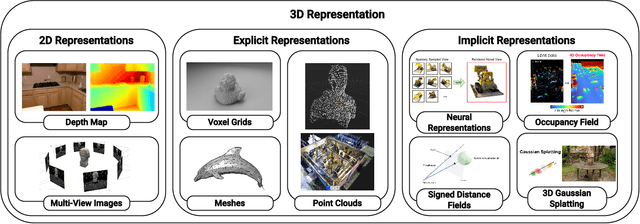
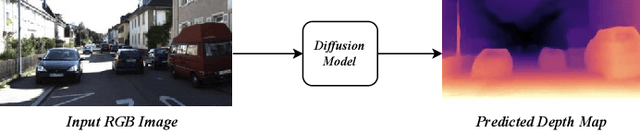
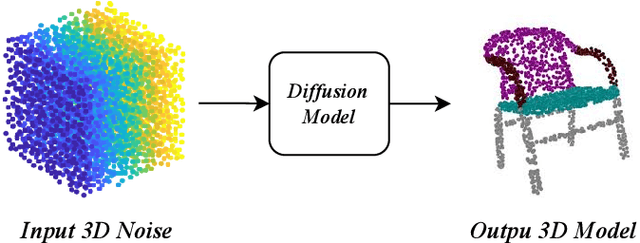
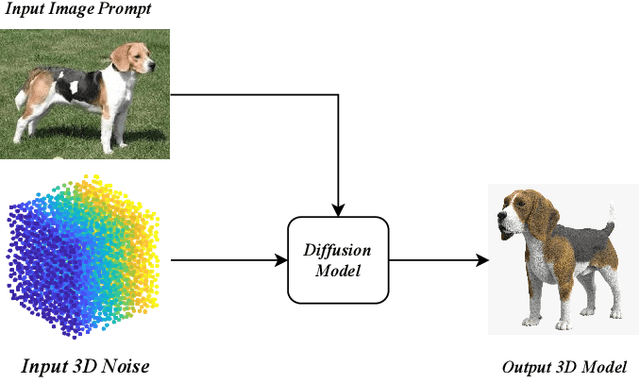
In recent years, 3D vision has become a crucial field within computer vision, powering a wide range of applications such as autonomous driving, robotics, augmented reality (AR), and medical imaging. This field relies on the accurate perception, understanding, and reconstruction of 3D scenes from 2D data sources like images and videos. Diffusion models, originally designed for 2D generative tasks, offer the potential for more flexible, probabilistic approaches that can better capture the variability and uncertainty present in real-world 3D data. However, traditional methods often struggle with efficiency and scalability. In this paper, we review the state-of-the-art approaches that leverage diffusion models for 3D visual tasks, including but not limited to 3D object generation, shape completion, point cloud reconstruction, and scene understanding. We provide an in-depth discussion of the underlying mathematical principles of diffusion models, outlining their forward and reverse processes, as well as the various architectural advancements that enable these models to work with 3D datasets. We also discuss the key challenges in applying diffusion models to 3D vision, such as handling occlusions and varying point densities, and the computational demands of high-dimensional data. Finally, we discuss potential solutions, including improving computational efficiency, enhancing multimodal fusion, and exploring the use of large-scale pretraining for better generalization across 3D tasks. This paper serves as a foundation for future exploration and development in this rapidly evolving field.
Combing Text-based and Drag-based Editing for Precise and Flexible Image Editing
Oct 04, 2024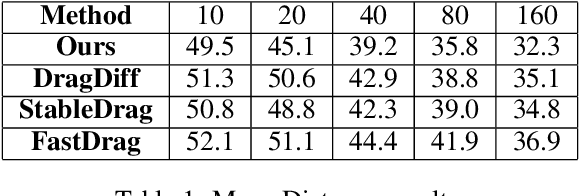
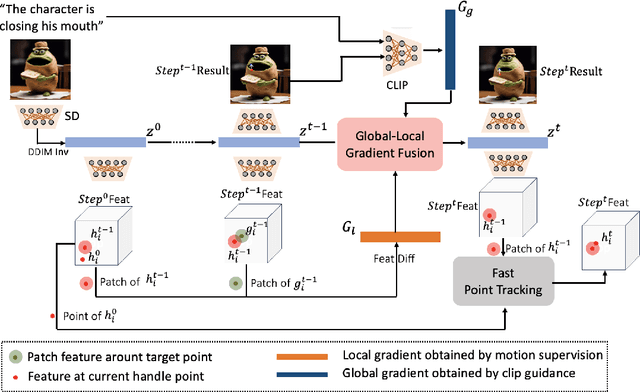
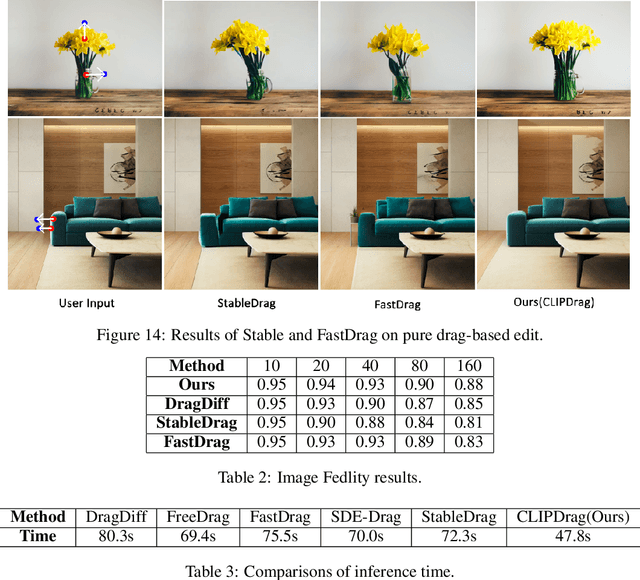
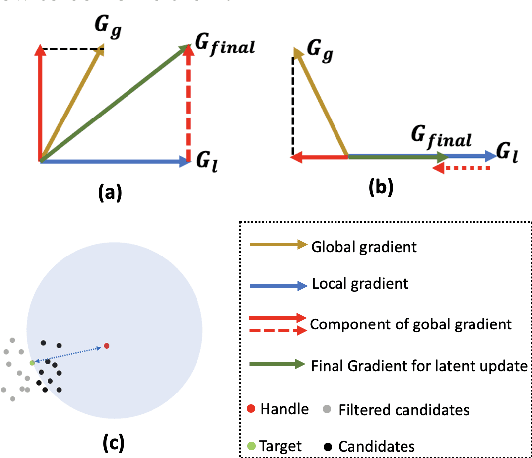
Precise and flexible image editing remains a fundamental challenge in computer vision. Based on the modified areas, most editing methods can be divided into two main types: global editing and local editing. In this paper, we choose the two most common editing approaches (ie text-based editing and drag-based editing) and analyze their drawbacks. Specifically, text-based methods often fail to describe the desired modifications precisely, while drag-based methods suffer from ambiguity. To address these issues, we proposed \textbf{CLIPDrag}, a novel image editing method that is the first to combine text and drag signals for precise and ambiguity-free manipulations on diffusion models. To fully leverage these two signals, we treat text signals as global guidance and drag points as local information. Then we introduce a novel global-local motion supervision method to integrate text signals into existing drag-based methods by adapting a pre-trained language-vision model like CLIP. Furthermore, we also address the problem of slow convergence in CLIPDrag by presenting a fast point-tracking method that enforces drag points moving toward correct directions. Extensive experiments demonstrate that CLIPDrag outperforms existing single drag-based methods or text-based methods.
Event-Customized Image Generation
Oct 03, 2024
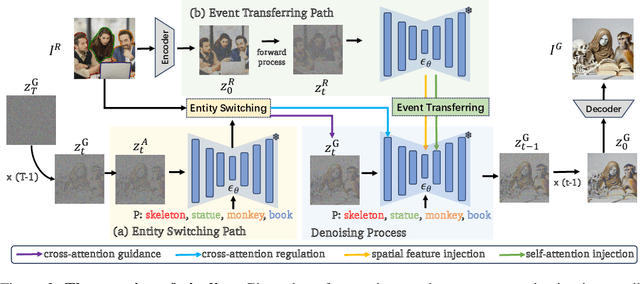

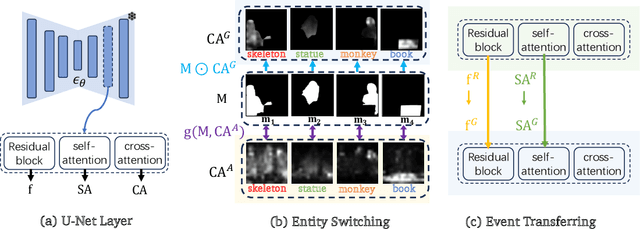
Customized Image Generation, generating customized images with user-specified concepts, has raised significant attention due to its creativity and novelty. With impressive progress achieved in subject customization, some pioneer works further explored the customization of action and interaction beyond entity (i.e., human, animal, and object) appearance. However, these approaches only focus on basic actions and interactions between two entities, and their effects are limited by insufficient ''exactly same'' reference images. To extend customized image generation to more complex scenes for general real-world applications, we propose a new task: event-customized image generation. Given a single reference image, we define the ''event'' as all specific actions, poses, relations, or interactions between different entities in the scene. This task aims at accurately capturing the complex event and generating customized images with various target entities. To solve this task, we proposed a novel training-free event customization method: FreeEvent. Specifically, FreeEvent introduces two extra paths alongside the general diffusion denoising process: 1) Entity switching path: it applies cross-attention guidance and regulation for target entity generation. 2) Event transferring path: it injects the spatial feature and self-attention maps from the reference image to the target image for event generation. To further facilitate this new task, we collected two evaluation benchmarks: SWiG-Event and Real-Event. Extensive experiments and ablations have demonstrated the effectiveness of FreeEvent.
Task-agnostic Pre-training and Task-guided Fine-tuning for Versatile Diffusion Planner
Sep 30, 2024

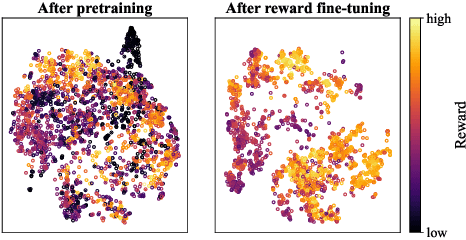

Diffusion models have demonstrated their capabilities in modeling trajectories of multi-tasks. However, existing multi-task planners or policies typically rely on task-specific demonstrations via multi-task imitation, or require task-specific reward labels to facilitate policy optimization via Reinforcement Learning (RL). To address these challenges, we aim to develop a versatile diffusion planner that can leverage large-scale inferior data that contains task-agnostic sub-optimal trajectories, with the ability to fast adapt to specific tasks. In this paper, we propose \textbf{SODP}, a two-stage framework that leverages \textbf{S}ub-\textbf{O}ptimal data to learn a \textbf{D}iffusion \textbf{P}lanner, which is generalizable for various downstream tasks. Specifically, in the pre-training stage, we train a foundation diffusion planner that extracts general planning capabilities by modeling the versatile distribution of multi-task trajectories, which can be sub-optimal and has wide data coverage. Then for downstream tasks, we adopt RL-based fine-tuning with task-specific rewards to fast refine the diffusion planner, which aims to generate action sequences with higher task-specific returns. Experimental results from multi-task domains including Meta-World and Adroit demonstrate that SODP outperforms state-of-the-art methods with only a small amount of data for reward-guided fine-tuning.
CUS3D :CLIP-based Unsupervised 3D Segmentation via Object-level Denoise
Sep 21, 2024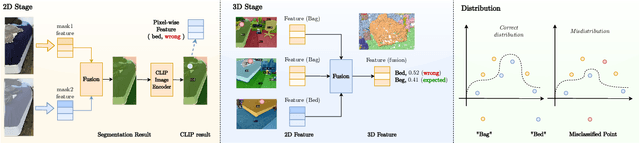

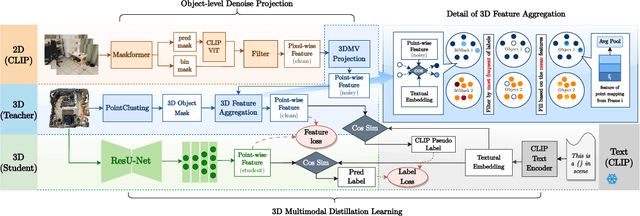
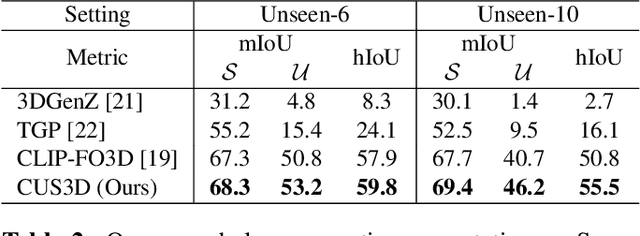
To ease the difficulty of acquiring annotation labels in 3D data, a common method is using unsupervised and open-vocabulary semantic segmentation, which leverage 2D CLIP semantic knowledge. In this paper, unlike previous research that ignores the ``noise'' raised during feature projection from 2D to 3D, we propose a novel distillation learning framework named CUS3D. In our approach, an object-level denosing projection module is designed to screen out the ``noise'' and ensure more accurate 3D feature. Based on the obtained features, a multimodal distillation learning module is designed to align the 3D feature with CLIP semantic feature space with object-centered constrains to achieve advanced unsupervised semantic segmentation. We conduct comprehensive experiments in both unsupervised and open-vocabulary segmentation, and the results consistently showcase the superiority of our model in achieving advanced unsupervised segmentation results and its effectiveness in open-vocabulary segmentation.
A high-accuracy multi-model mixing retrosynthetic method
Sep 06, 2024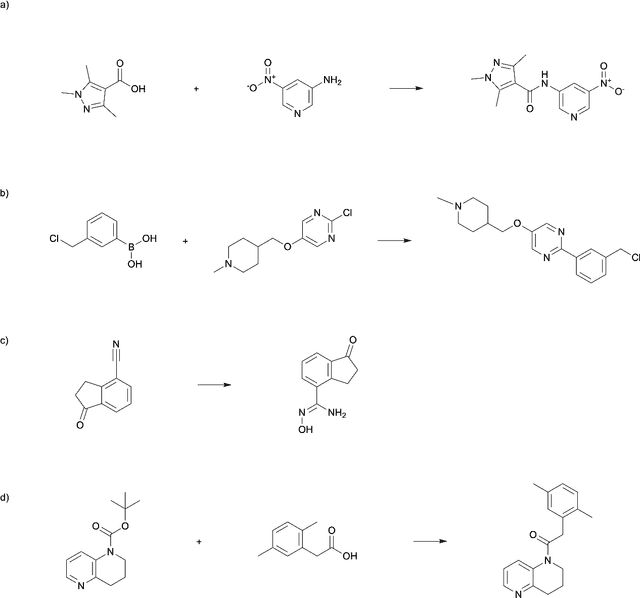
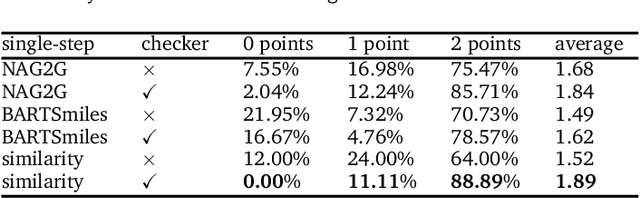
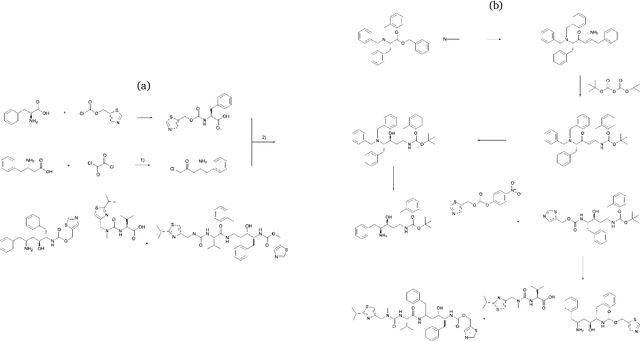
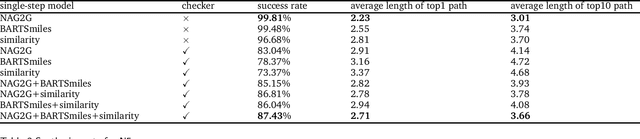
The field of computer-aided synthesis planning (CASP) has seen rapid advancements in recent years, achieving significant progress across various algorithmic benchmarks. However, chemists often encounter numerous infeasible reactions when using CASP in practice. This article delves into common errors associated with CASP and introduces a product prediction model aimed at enhancing the accuracy of single-step models. While the product prediction model reduces the number of single-step reactions, it integrates multiple single-step models to maintain the overall reaction count and increase reaction diversity. Based on manual analysis and large-scale testing, the product prediction model, combined with the multi-model ensemble approach, has been proven to offer higher feasibility and greater diversity.
Application Research On Real-Time Perception Of Device Performance Status
Sep 05, 2024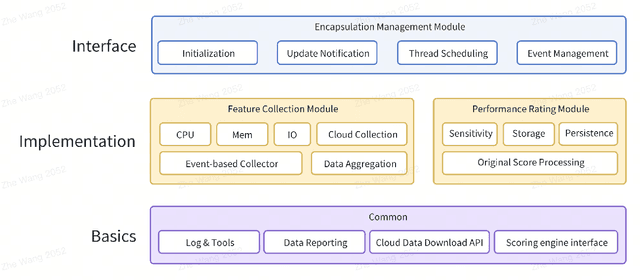
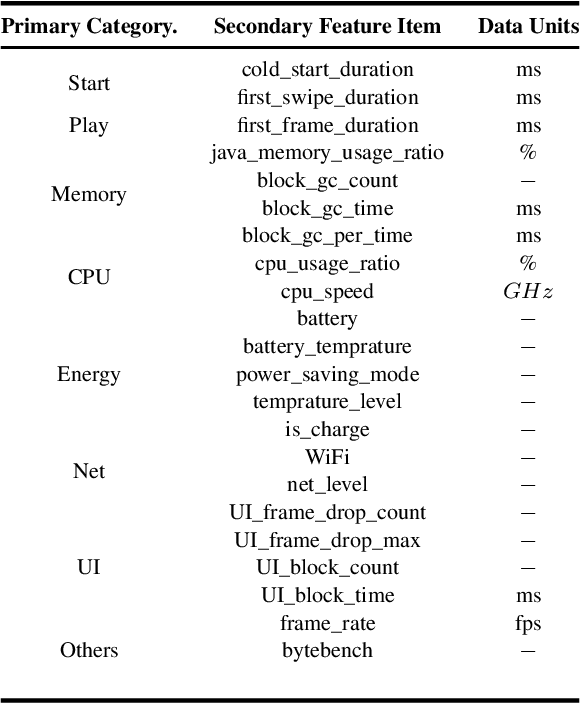
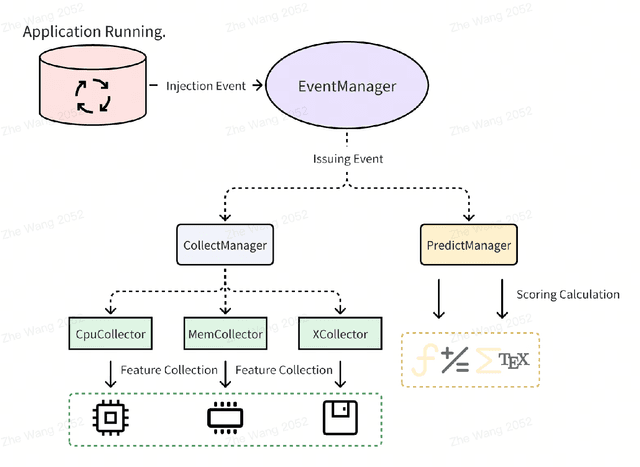

In order to accurately identify the performance status of mobile devices and finely adjust the user experience, a real-time performance perception evaluation method based on TOPSIS (Technique for Order Preference by Similarity to Ideal Solution) combined with entropy weighting method and time series model construction was studied. After collecting the performance characteristics of various mobile devices, the device performance profile was fitted by using PCA (principal component analysis) dimensionality reduction and feature engineering methods such as descriptive time series analysis. The ability of performance features and profiles to describe the real-time performance status of devices was understood and studied by applying the TOPSIS method and multi-level weighting processing. A time series model was constructed for the feature set under objective weighting, and multiple sensitivity (real-time, short-term, long-term) performance status perception results were provided to obtain real-time performance evaluation data and long-term stable performance prediction data. Finally, by configuring dynamic AB experiments and overlaying fine-grained power reduction strategies, the usability of the method was verified, and the accuracy of device performance status identification and prediction was compared with the performance of the profile features including dimensionality reduction time series modeling, TOPSIS method and entropy weighting method, subjective weighting, HMA method. The results show that accurate real-time performance perception results can greatly enhance business value, and this research has application effectiveness and certain forward-looking significance.
LalaEval: A Holistic Human Evaluation Framework for Domain-Specific Large Language Models
Aug 23, 2024

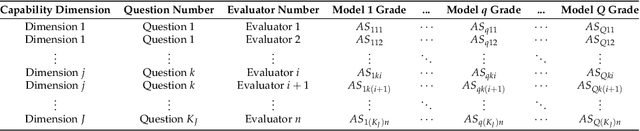

This paper introduces LalaEval, a holistic framework designed for the human evaluation of domain-specific large language models (LLMs). LalaEval proposes a comprehensive suite of end-to-end protocols that cover five main components including domain specification, criteria establishment, benchmark dataset creation, construction of evaluation rubrics, and thorough analysis and interpretation of evaluation outcomes. This initiative aims to fill a crucial research gap by providing a systematic methodology for conducting standardized human evaluations within specific domains, a practice that, despite its widespread application, lacks substantial coverage in the literature and human evaluation are often criticized to be less reliable due to subjective factors, so standardized procedures adapted to the nuanced requirements of specific domains or even individual organizations are in great need. Furthermore, the paper demonstrates the framework's application within the logistics industry, presenting domain-specific evaluation benchmarks, datasets, and a comparative analysis of LLMs for the logistics domain use, highlighting the framework's capacity to elucidate performance differences and guide model selection and development for domain-specific LLMs. Through real-world deployment, the paper underscores the framework's effectiveness in advancing the field of domain-specific LLM evaluation, thereby contributing significantly to the ongoing discussion on LLMs' practical utility and performance in domain-specific applications.
Denoising Pre-Training and Customized Prompt Learning for Efficient Multi-Behavior Sequential Recommendation
Aug 21, 2024


In the realm of recommendation systems, users exhibit a diverse array of behaviors when interacting with items. This phenomenon has spurred research into learning the implicit semantic relationships between these behaviors to enhance recommendation performance. However, these methods often entail high computational complexity. To address concerns regarding efficiency, pre-training presents a viable solution. Its objective is to extract knowledge from extensive pre-training data and fine-tune the model for downstream tasks. Nevertheless, previous pre-training methods have primarily focused on single-behavior data, while multi-behavior data contains significant noise. Additionally, the fully fine-tuning strategy adopted by these methods still imposes a considerable computational burden. In response to this challenge, we propose DPCPL, the first pre-training and prompt-tuning paradigm tailored for Multi-Behavior Sequential Recommendation. Specifically, in the pre-training stage, we commence by proposing a novel Efficient Behavior Miner (EBM) to filter out the noise at multiple time scales, thereby facilitating the comprehension of the contextual semantics of multi-behavior sequences. Subsequently, we propose to tune the pre-trained model in a highly efficient manner with the proposed Customized Prompt Learning (CPL) module, which generates personalized, progressive, and diverse prompts to fully exploit the potential of the pre-trained model effectively. Extensive experiments on three real-world datasets have unequivocally demonstrated that DPCPL not only exhibits high efficiency and effectiveness, requiring minimal parameter adjustments but also surpasses the state-of-the-art performance across a diverse range of downstream tasks.