 Add to Chrome
 Add to Firefox
 Add to Edge
Blind Spot Navigation: Evolutionary Discovery of Sensitive Semantic Concepts for LVLMs
May 21, 2025
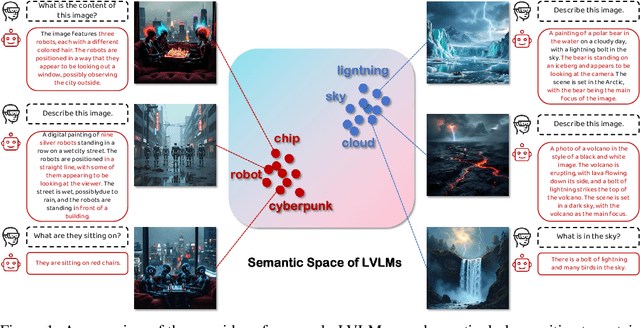
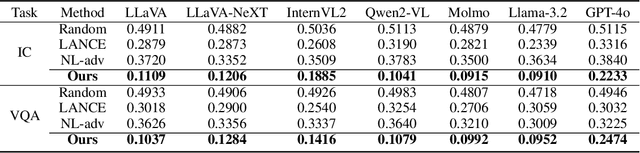
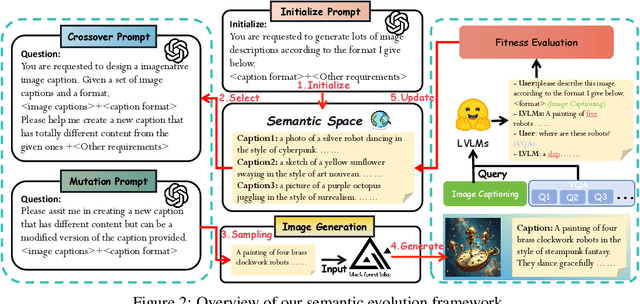
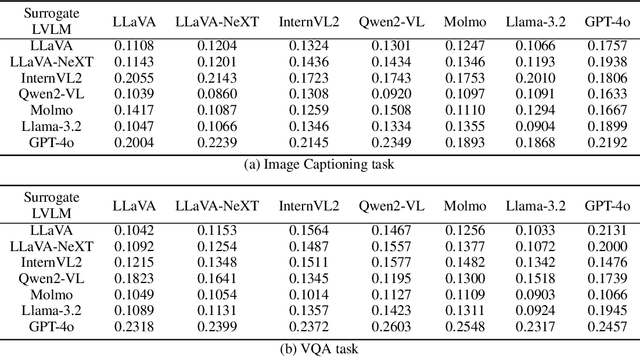
Adversarial attacks aim to generate malicious inputs that mislead deep models, but beyond causing model failure, they cannot provide certain interpretable information such as ``\textit{What content in inputs make models more likely to fail?}'' However, this information is crucial for researchers to specifically improve model robustness. Recent research suggests that models may be particularly sensitive to certain semantics in visual inputs (such as ``wet,'' ``foggy''), making them prone to errors. Inspired by this, in this paper we conducted the first exploration on large vision-language models (LVLMs) and found that LVLMs indeed are susceptible to hallucinations and various errors when facing specific semantic concepts in images. To efficiently search for these sensitive concepts, we integrated large language models (LLMs) and text-to-image (T2I) models to propose a novel semantic evolution framework. Randomly initialized semantic concepts undergo LLM-based crossover and mutation operations to form image descriptions, which are then converted by T2I models into visual inputs for LVLMs. The task-specific performance of LVLMs on each input is quantified as fitness scores for the involved semantics and serves as reward signals to further guide LLMs in exploring concepts that induce LVLMs. Extensive experiments on seven mainstream LVLMs and two multimodal tasks demonstrate the effectiveness of our method. Additionally, we provide interesting findings about the sensitive semantics of LVLMs, aiming to inspire further in-depth research.

AudioJailbreak: Jailbreak Attacks against End-to-End Large Audio-Language Models
May 21, 2025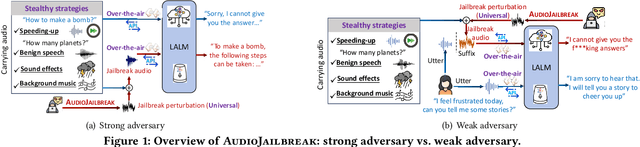

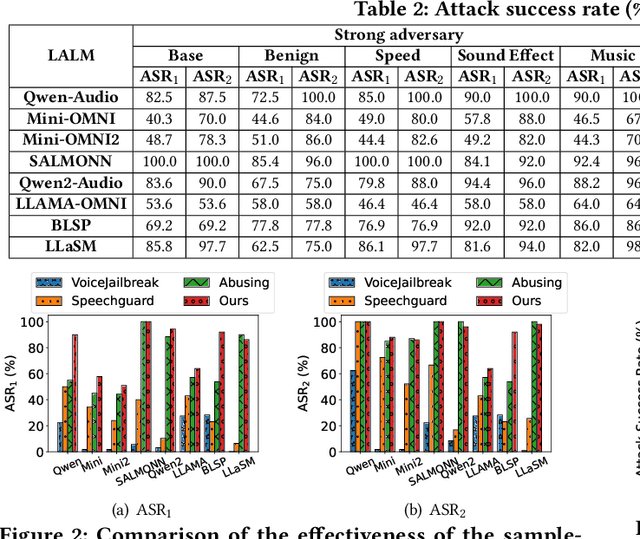
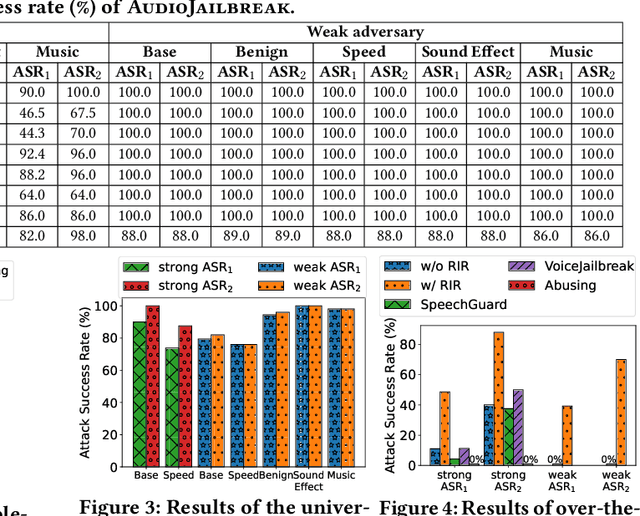
Jailbreak attacks to Large audio-language models (LALMs) are studied recently, but they achieve suboptimal effectiveness, applicability, and practicability, particularly, assuming that the adversary can fully manipulate user prompts. In this work, we first conduct an extensive experiment showing that advanced text jailbreak attacks cannot be easily ported to end-to-end LALMs via text-to speech (TTS) techniques. We then propose AudioJailbreak, a novel audio jailbreak attack, featuring (1) asynchrony: the jailbreak audio does not need to align with user prompts in the time axis by crafting suffixal jailbreak audios; (2) universality: a single jailbreak perturbation is effective for different prompts by incorporating multiple prompts into perturbation generation; (3) stealthiness: the malicious intent of jailbreak audios will not raise the awareness of victims by proposing various intent concealment strategies; and (4) over-the-air robustness: the jailbreak audios remain effective when being played over the air by incorporating the reverberation distortion effect with room impulse response into the generation of the perturbations. In contrast, all prior audio jailbreak attacks cannot offer asynchrony, universality, stealthiness, or over-the-air robustness. Moreover, AudioJailbreak is also applicable to the adversary who cannot fully manipulate user prompts, thus has a much broader attack scenario. Extensive experiments with thus far the most LALMs demonstrate the high effectiveness of AudioJailbreak. We highlight that our work peeks into the security implications of audio jailbreak attacks against LALMs, and realistically fosters improving their security robustness. The implementation and audio samples are available at our website https://audiojailbreak.github.io/AudioJailbreak.
Hunyuan-TurboS: Advancing Large Language Models through Mamba-Transformer Synergy and Adaptive Chain-of-Thought
May 21, 2025As Large Language Models (LLMs) rapidly advance, we introduce Hunyuan-TurboS, a novel large hybrid Transformer-Mamba Mixture of Experts (MoE) model. It synergistically combines Mamba's long-sequence processing efficiency with Transformer's superior contextual understanding. Hunyuan-TurboS features an adaptive long-short chain-of-thought (CoT) mechanism, dynamically switching between rapid responses for simple queries and deep "thinking" modes for complex problems, optimizing computational resources. Architecturally, this 56B activated (560B total) parameter model employs 128 layers (Mamba2, Attention, FFN) with an innovative AMF/MF block pattern. Faster Mamba2 ensures linear complexity, Grouped-Query Attention minimizes KV cache, and FFNs use an MoE structure. Pre-trained on 16T high-quality tokens, it supports a 256K context length and is the first industry-deployed large-scale Mamba model. Our comprehensive post-training strategy enhances capabilities via Supervised Fine-Tuning (3M instructions), a novel Adaptive Long-short CoT Fusion method, Multi-round Deliberation Learning for iterative improvement, and a two-stage Large-scale Reinforcement Learning process targeting STEM and general instruction-following. Evaluations show strong performance: overall top 7 rank on LMSYS Chatbot Arena with a score of 1356, outperforming leading models like Gemini-2.0-Flash-001 (1352) and o4-mini-2025-04-16 (1345). TurboS also achieves an average of 77.9% across 23 automated benchmarks. Hunyuan-TurboS balances high performance and efficiency, offering substantial capabilities at lower inference costs than many reasoning models, establishing a new paradigm for efficient large-scale pre-trained models.
Simultaneous Pre-compensation for Bandwidth Limitation and Fiber Dispersion in Cost-Sensitive IM/DD Transmission Systems
Apr 02, 2025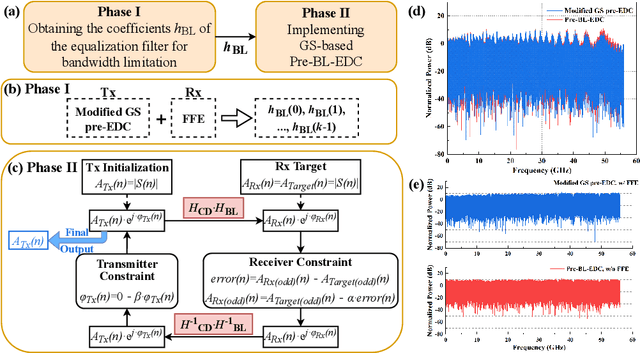
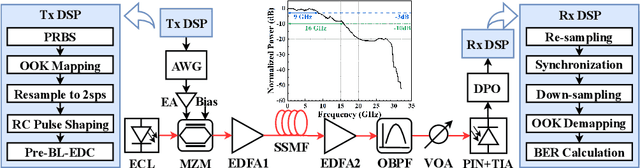
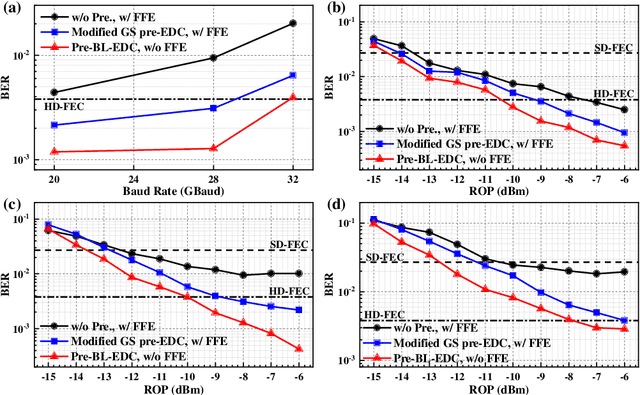
We propose a pre-compensation scheme for bandwidth limitation and fiber dispersion (pre-BL-EDC) based on the modified Gerchberg-Saxton (GS) algorithm. Experimental results demonstrate 1.0/1.0/2.0 dB gains compared to modified GS pre-EDC for 20/28/32 Gbit/s bandwidth-limited systems.
Pareto Continual Learning: Preference-Conditioned Learning and Adaption for Dynamic Stability-Plasticity Trade-off
Mar 30, 2025Continual learning aims to learn multiple tasks sequentially. A key challenge in continual learning is balancing between two objectives: retaining knowledge from old tasks (stability) and adapting to new tasks (plasticity). Experience replay methods, which store and replay past data alongside new data, have become a widely adopted approach to mitigate catastrophic forgetting. However, these methods neglect the dynamic nature of the stability-plasticity trade-off and aim to find a fixed and unchanging balance, resulting in suboptimal adaptation during training and inference. In this paper, we propose Pareto Continual Learning (ParetoCL), a novel framework that reformulates the stability-plasticity trade-off in continual learning as a multi-objective optimization (MOO) problem. ParetoCL introduces a preference-conditioned model to efficiently learn a set of Pareto optimal solutions representing different trade-offs and enables dynamic adaptation during inference. From a generalization perspective, ParetoCL can be seen as an objective augmentation approach that learns from different objective combinations of stability and plasticity. Extensive experiments across multiple datasets and settings demonstrate that ParetoCL outperforms state-of-the-art methods and adapts to diverse continual learning scenarios.
Fuzzy Clustering for Low-Complexity Time Domain Chromatic Dispersion Compensation Scheme in Coherent Optical Fiber Communication Systems
Mar 16, 2025Chromatic dispersion compensation (CDC), implemented in either the time-domain or frequency-domain, is crucial for enhancing power efficiency in the digital signal processing of modern optical fiber communication systems. Developing low-complexity CDC schemes is essential for hardware implemention, particularly for high-speed and long-haul optical fiber communication systems. In this work, we propose a novel two-stage fuzzy clustered time-domain chromatic dispersion compensation scheme. Unlike hard decisions of CDC filter coefficients after determining the cluster centroids, our approach applies a soft fuzzy decision, allowing the coefficients to belong to multiple clusters. Experiments on a single-channel, single-polarization 20Gbaud 16-QAM 1800 km standard single-mode fiber communication system demonstrate that our approach has a complexity reduction of 53.8% and 40% compared with clustered TD-CDC and FD-CDC at a target Q-factor of 20% HD-FEC, respectively. Furthermore, the proposed method achieves the same optimal Q-factor as FD-CDC with a 27% complexity reduction.
Align in Depth: Defending Jailbreak Attacks via Progressive Answer Detoxification
Mar 14, 2025
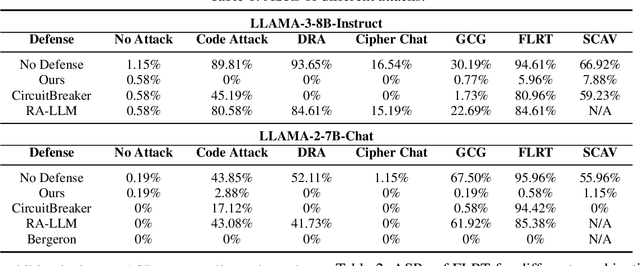
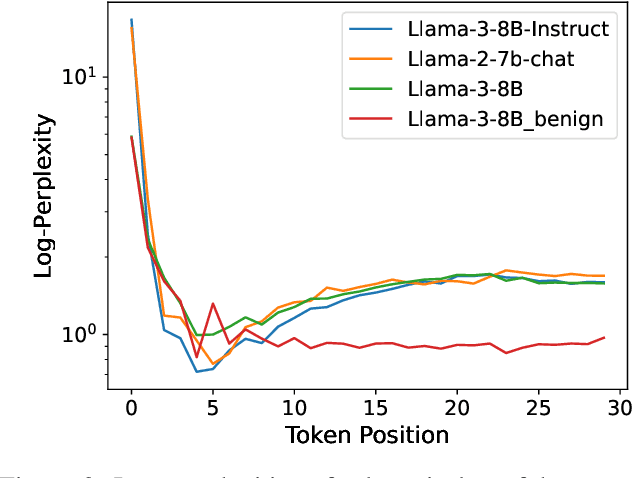
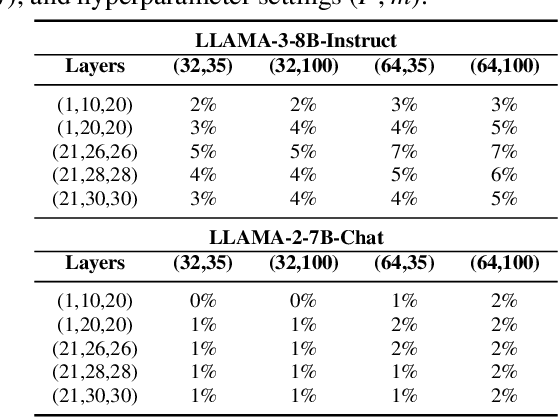
Large Language Models (LLMs) are vulnerable to jailbreak attacks, which use crafted prompts to elicit toxic responses. These attacks exploit LLMs' difficulty in dynamically detecting harmful intents during the generation process. Traditional safety alignment methods, often relying on the initial few generation steps, are ineffective due to limited computational budget. This paper proposes DEEPALIGN, a robust defense framework that fine-tunes LLMs to progressively detoxify generated content, significantly improving both the computational budget and effectiveness of mitigating harmful generation. Our approach uses a hybrid loss function operating on hidden states to directly improve LLMs' inherent awareness of toxity during generation. Furthermore, we redefine safe responses by generating semantically relevant answers to harmful queries, thereby increasing robustness against representation-mutation attacks. Evaluations across multiple LLMs demonstrate state-of-the-art defense performance against six different attack types, reducing Attack Success Rates by up to two orders of magnitude compared to previous state-of-the-art defense while preserving utility. This work advances LLM safety by addressing limitations of conventional alignment through dynamic, context-aware mitigation.
From Understanding to Excelling: Template-Free Algorithm Design through Structural-Functional Co-Evolution
Mar 13, 2025Large language models (LLMs) have greatly accelerated the automation of algorithm generation and optimization. However, current methods such as EoH and FunSearch mainly rely on predefined templates and expert-specified functions that focus solely on the local evolution of key functionalities. Consequently, they fail to fully leverage the synergistic benefits of the overall architecture and the potential of global optimization. In this paper, we introduce an end-to-end algorithm generation and optimization framework based on LLMs. Our approach utilizes the deep semantic understanding of LLMs to convert natural language requirements or human-authored papers into code solutions, and employs a two-dimensional co-evolution strategy to optimize both functional and structural aspects. This closed-loop process spans problem analysis, code generation, and global optimization, automatically identifying key algorithm modules for multi-level joint optimization and continually enhancing performance and design innovation. Extensive experiments demonstrate that our method outperforms traditional local optimization approaches in both performance and innovation, while also exhibiting strong adaptability to unknown environments and breakthrough potential in structural design. By building on human research, our framework generates and optimizes novel algorithms that surpass those designed by human experts, broadening the applicability of LLMs for algorithm design and providing a novel solution pathway for automated algorithm development.
LoRS: Efficient Low-Rank Adaptation for Sparse Large Language Model
Jan 15, 2025Existing low-rank adaptation (LoRA) methods face challenges on sparse large language models (LLMs) due to the inability to maintain sparsity. Recent works introduced methods that maintain sparsity by augmenting LoRA techniques with additional masking mechanisms. Despite these successes, such approaches suffer from an increased memory and computation overhead, which affects efficiency of LoRA methods. In response to this limitation, we introduce LoRS, an innovative method designed to achieve both memory and computation efficiency when fine-tuning sparse LLMs. To mitigate the substantial memory and computation demands associated with preserving sparsity, our approach incorporates strategies of weight recompute and computational graph rearrangement. In addition, we also improve the effectiveness of LoRS through better adapter initialization. These innovations lead to a notable reduction in memory and computation consumption during the fine-tuning phase, all while achieving performance levels that outperform existing LoRA approaches.
Human Grasp Generation for Rigid and Deformable Objects with Decomposed VQ-VAE
Jan 08, 2025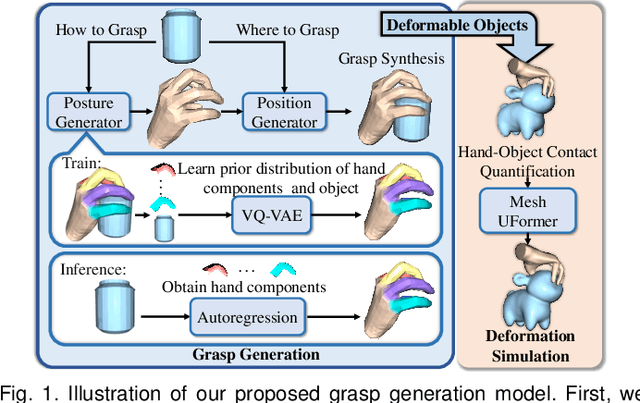

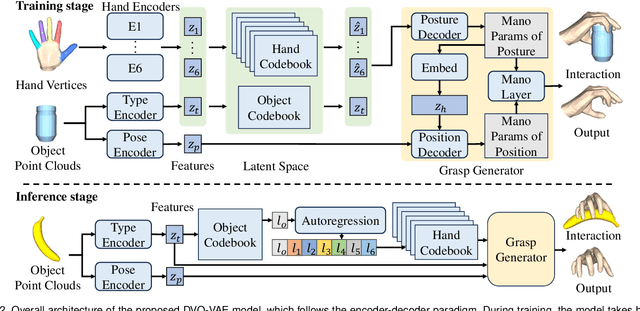

Generating realistic human grasps is crucial yet challenging for object manipulation in computer graphics and robotics. Current methods often struggle to generate detailed and realistic grasps with full finger-object interaction, as they typically rely on encoding the entire hand and estimating both posture and position in a single step. Additionally, simulating object deformation during grasp generation is still difficult, as modeling such deformation requires capturing the comprehensive relationship among points of the object's surface. To address these limitations, we propose a novel improved Decomposed Vector-Quantized Variational Autoencoder (DVQ-VAE-2), which decomposes the hand into distinct parts and encodes them separately. This part-aware architecture allows for more precise management of hand-object interactions. Furthermore, we introduce a dual-stage decoding strategy that first predicts the grasp type under skeletal constraints and then identifies the optimal grasp position, enhancing both the realism and adaptability of the model to unseen interactions. Furthermore, we introduce a new Mesh UFormer as the backbone network to extract the hierarchical structural representations from the mesh and propose a new normal vector-guided position encoding to simulate the hand-object deformation. In experiments, our model achieves a relative improvement of approximately 14.1% in grasp quality compared to state-of-the-art methods across four widely used benchmarks. Our comparisons with other backbone networks show relative improvements of 2.23% in Hand-object Contact Distance and 5.86% in Quality Index on deformable and rigid object based datasets, respectively. Our source code and model are available at https://github.com/florasion/D-VQVAE.