 Add to Chrome
 Add to Firefox
 Add to Edge
Learning Hierarchical Color Guidance for Depth Map Super-Resolution
Mar 12, 2024
Color information is the most commonly used prior knowledge for depth map super-resolution (DSR), which can provide high-frequency boundary guidance for detail restoration. However, its role and functionality in DSR have not been fully developed. In this paper, we rethink the utilization of color information and propose a hierarchical color guidance network to achieve DSR. On the one hand, the low-level detail embedding module is designed to supplement high-frequency color information of depth features in a residual mask manner at the low-level stages. On the other hand, the high-level abstract guidance module is proposed to maintain semantic consistency in the reconstruction process by using a semantic mask that encodes the global guidance information. The color information of these two dimensions plays a role in the front and back ends of the attention-based feature projection (AFP) module in a more comprehensive form. Simultaneously, the AFP module integrates the multi-scale content enhancement block and adaptive attention projection block to make full use of multi-scale information and adaptively project critical restoration information in an attention manner for DSR. Compared with the state-of-the-art methods on four benchmark datasets, our method achieves more competitive performance both qualitatively and quantitatively.

Data-Independent Operator: A Training-Free Artifact Representation Extractor for Generalizable Deepfake Detection
Mar 11, 2024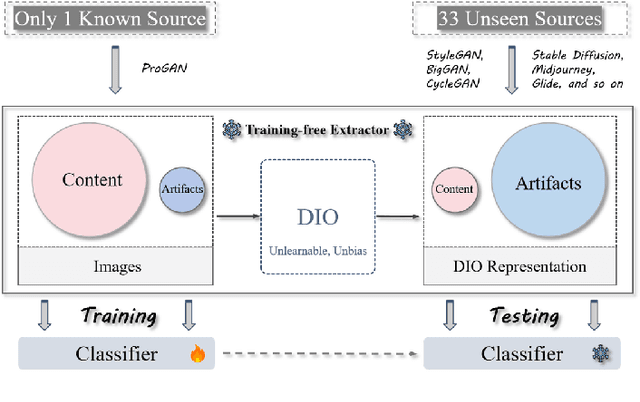
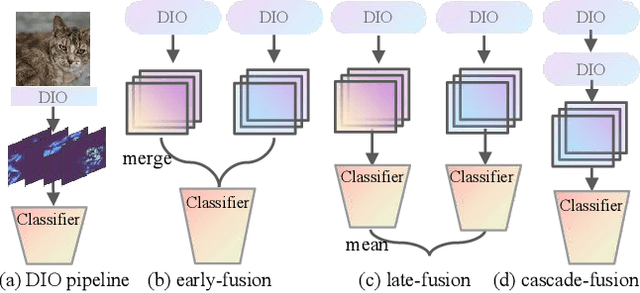
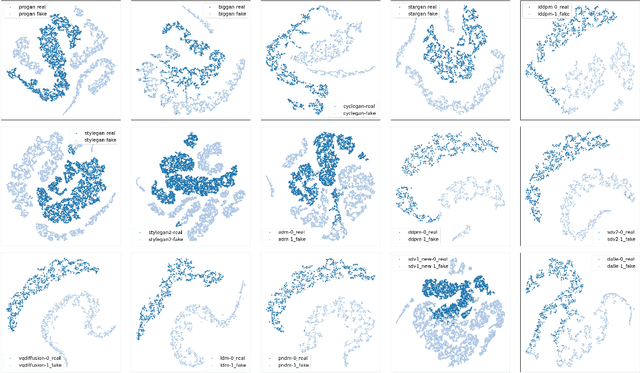

Recently, the proliferation of increasingly realistic synthetic images generated by various generative adversarial networks has increased the risk of misuse. Consequently, there is a pressing need to develop a generalizable detector for accurately recognizing fake images. The conventional methods rely on generating diverse training sources or large pretrained models. In this work, we show that, on the contrary, the small and training-free filter is sufficient to capture more general artifact representations. Due to its unbias towards both the training and test sources, we define it as Data-Independent Operator (DIO) to achieve appealing improvements on unseen sources. In our framework, handcrafted filters and the randomly-initialized convolutional layer can be used as the training-free artifact representations extractor with excellent results. With the data-independent operator of a popular classifier, such as Resnet50, one could already reach a new state-of-the-art without bells and whistles. We evaluate the effectiveness of the DIO on 33 generation models, even DALLE and Midjourney. Our detector achieves a remarkable improvement of $13.3\%$, establishing a new state-of-the-art performance. The DIO and its extension can serve as strong baselines for future methods. The code is available at \url{https://github.com/chuangchuangtan/Data-Independent-Operator}.
Region-Adaptive Transform with Segmentation Prior for Image Compression
Mar 01, 2024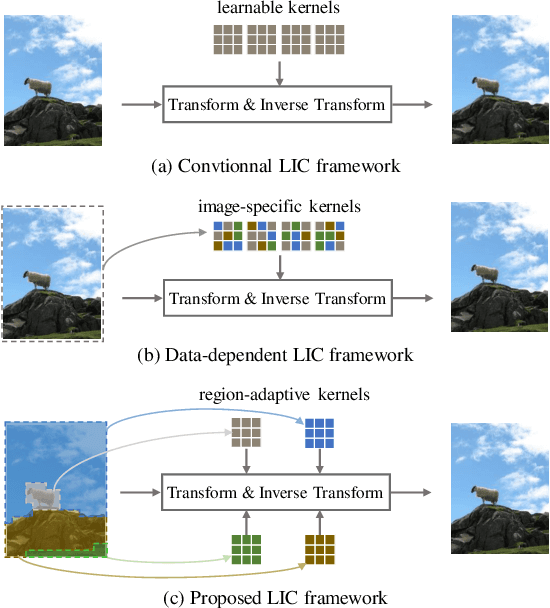
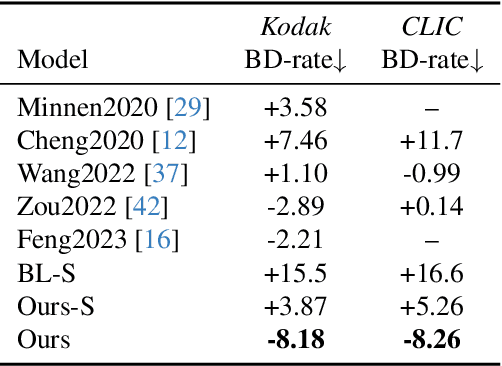
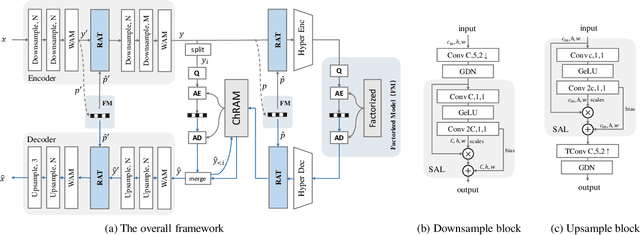
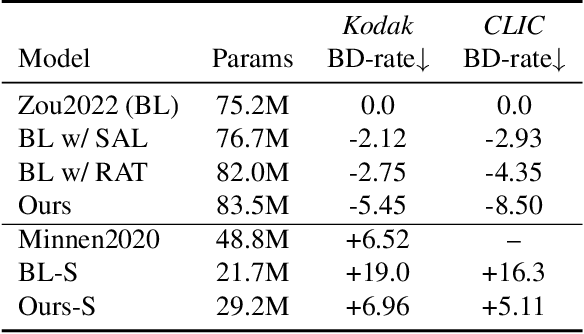
Learned Image Compression (LIC) has shown remarkable progress in recent years. Existing works commonly employ CNN-based or self-attention-based modules as transform methods for compression. However, there is no prior research on neural transform that focuses on specific regions. In response, we introduce the class-agnostic segmentation masks (i.e. semantic masks without category labels) for extracting region-adaptive contextual information. Our proposed module, Region-Adaptive Transform, applies adaptive convolutions on different regions guided by the masks. Additionally, we introduce a plug-and-play module named Scale Affine Layer to incorporate rich contexts from various regions. While there have been prior image compression efforts that involve segmentation masks as additional intermediate inputs, our approach differs significantly from them. Our advantages lie in that, to avoid extra bitrate overhead, we treat these masks as privilege information, which is accessible during the model training stage but not required during the inference phase. To the best of our knowledge, we are the first to employ class-agnostic masks as privilege information and achieve superior performance in pixel-fidelity metrics, such as Peak Signal to Noise Ratio (PSNR). The experimental results demonstrate our improvement compared to previously well-performing methods, with about 8.2% bitrate saving compared to VTM-17.0. The code will be released at https://github.com/GityuxiLiu/Region-Adaptive-Transform-with-Segmentation-Prior-for-Image-Compression.
4DGen: Grounded 4D Content Generation with Spatial-temporal Consistency
Dec 28, 2023Aided by text-to-image and text-to-video diffusion models, existing 4D content creation pipelines utilize score distillation sampling to optimize the entire dynamic 3D scene. However, as these pipelines generate 4D content from text or image inputs, they incur significant time and effort in prompt engineering through trial and error. This work introduces 4DGen, a novel, holistic framework for grounded 4D content creation that decomposes the 4D generation task into multiple stages. We identify static 3D assets and monocular video sequences as key components in constructing the 4D content. Our pipeline facilitates conditional 4D generation, enabling users to specify geometry (3D assets) and motion (monocular videos), thus offering superior control over content creation. Furthermore, we construct our 4D representation using dynamic 3D Gaussians, which permits efficient, high-resolution supervision through rendering during training, thereby facilitating high-quality 4D generation. Additionally, we employ spatial-temporal pseudo labels on anchor frames, along with seamless consistency priors implemented through 3D-aware score distillation sampling and smoothness regularizations. Compared to existing baselines, our approach yields competitive results in faithfully reconstructing input signals and realistically inferring renderings from novel viewpoints and timesteps. Most importantly, our method supports grounded generation, offering users enhanced control, a feature difficult to achieve with previous methods. Project page: https://vita-group.github.io/4DGen/
Forgery-aware Adaptive Transformer for Generalizable Synthetic Image Detection
Dec 27, 2023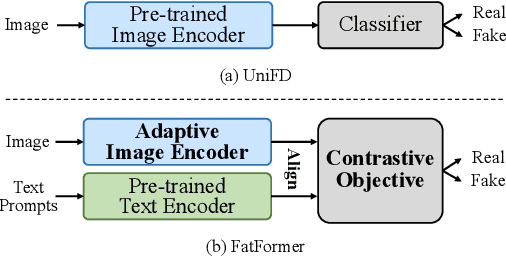
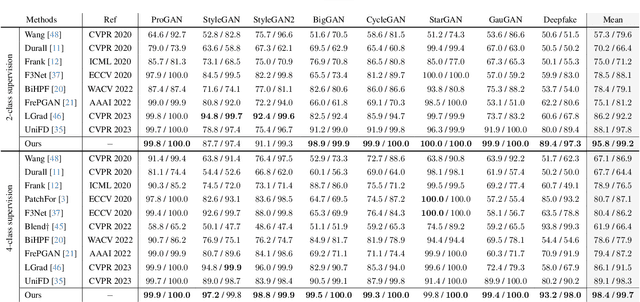
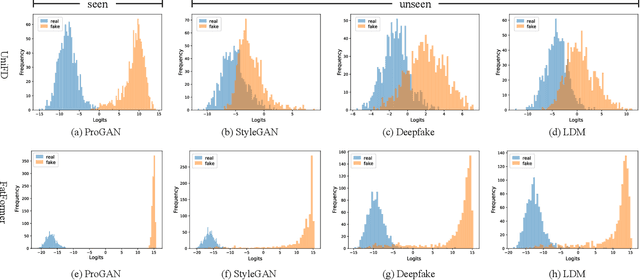
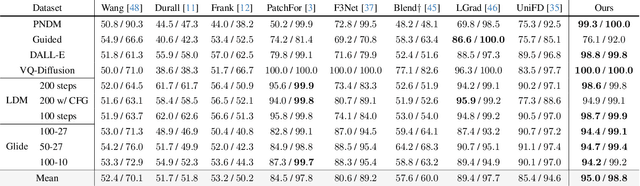
In this paper, we study the problem of generalizable synthetic image detection, aiming to detect forgery images from diverse generative methods, e.g., GANs and diffusion models. Cutting-edge solutions start to explore the benefits of pre-trained models, and mainly follow the fixed paradigm of solely training an attached classifier, e.g., combining frozen CLIP-ViT with a learnable linear layer in UniFD. However, our analysis shows that such a fixed paradigm is prone to yield detectors with insufficient learning regarding forgery representations. We attribute the key challenge to the lack of forgery adaptation, and present a novel forgery-aware adaptive transformer approach, namely FatFormer. Based on the pre-trained vision-language spaces of CLIP, FatFormer introduces two core designs for the adaption to build generalized forgery representations. First, motivated by the fact that both image and frequency analysis are essential for synthetic image detection, we develop a forgery-aware adapter to adapt image features to discern and integrate local forgery traces within image and frequency domains. Second, we find that considering the contrastive objectives between adapted image features and text prompt embeddings, a previously overlooked aspect, results in a nontrivial generalization improvement. Accordingly, we introduce language-guided alignment to supervise the forgery adaptation with image and text prompts in FatFormer. Experiments show that, by coupling these two designs, our approach tuned on 4-class ProGAN data attains a remarkable detection performance, achieving an average of 98% accuracy to unseen GANs, and surprisingly generalizes to unseen diffusion models with 95% accuracy.
Rethinking the Up-Sampling Operations in CNN-based Generative Network for Generalizable Deepfake Detection
Dec 20, 2023Recently, the proliferation of highly realistic synthetic images, facilitated through a variety of GANs and Diffusions, has significantly heightened the susceptibility to misuse. While the primary focus of deepfake detection has traditionally centered on the design of detection algorithms, an investigative inquiry into the generator architectures has remained conspicuously absent in recent years. This paper contributes to this lacuna by rethinking the architectures of CNN-based generators, thereby establishing a generalized representation of synthetic artifacts. Our findings illuminate that the up-sampling operator can, beyond frequency-based artifacts, produce generalized forgery artifacts. In particular, the local interdependence among image pixels caused by upsampling operators is significantly demonstrated in synthetic images generated by GAN or diffusion. Building upon this observation, we introduce the concept of Neighboring Pixel Relationships(NPR) as a means to capture and characterize the generalized structural artifacts stemming from up-sampling operations. A comprehensive analysis is conducted on an open-world dataset, comprising samples generated by \tft{28 distinct generative models}. This analysis culminates in the establishment of a novel state-of-the-art performance, showcasing a remarkable \tft{11.6\%} improvement over existing methods. The code is available at https://github.com/chuangchuangtan/NPR-DeepfakeDetection.
SegRefiner: Towards Model-Agnostic Segmentation Refinement with Discrete Diffusion Process
Dec 19, 2023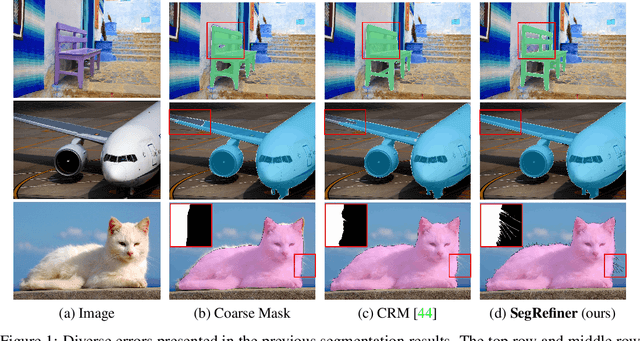

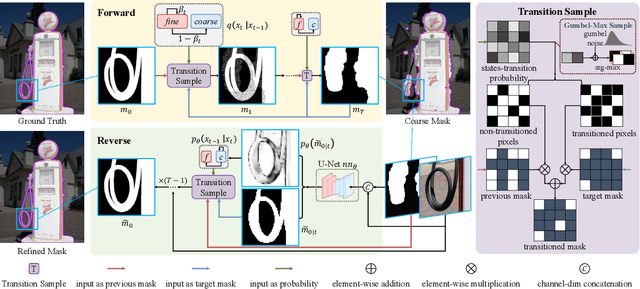
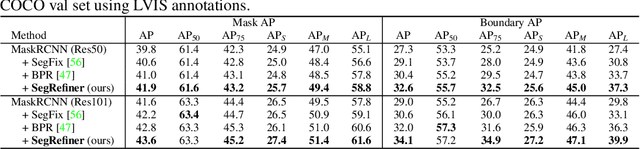
In this paper, we explore a principal way to enhance the quality of object masks produced by different segmentation models. We propose a model-agnostic solution called SegRefiner, which offers a novel perspective on this problem by interpreting segmentation refinement as a data generation process. As a result, the refinement process can be smoothly implemented through a series of denoising diffusion steps. Specifically, SegRefiner takes coarse masks as inputs and refines them using a discrete diffusion process. By predicting the label and corresponding states-transition probabilities for each pixel, SegRefiner progressively refines the noisy masks in a conditional denoising manner. To assess the effectiveness of SegRefiner, we conduct comprehensive experiments on various segmentation tasks, including semantic segmentation, instance segmentation, and dichotomous image segmentation. The results demonstrate the superiority of our SegRefiner from multiple aspects. Firstly, it consistently improves both the segmentation metrics and boundary metrics across different types of coarse masks. Secondly, it outperforms previous model-agnostic refinement methods by a significant margin. Lastly, it exhibits a strong capability to capture extremely fine details when refining high-resolution images. The source code and trained models are available at https://github.com/MengyuWang826/SegRefiner.
Diffusion for Natural Image Matting
Dec 10, 2023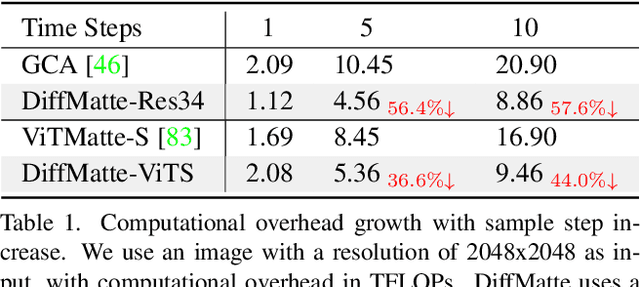
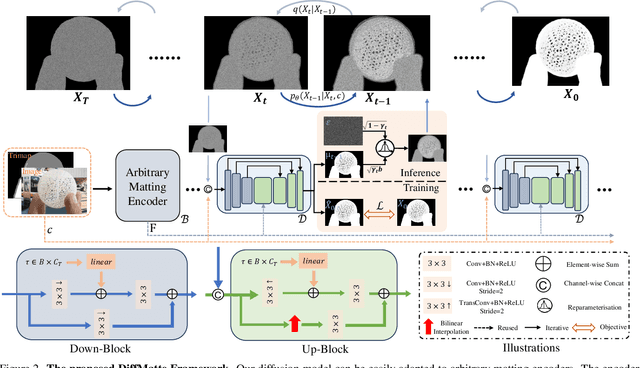
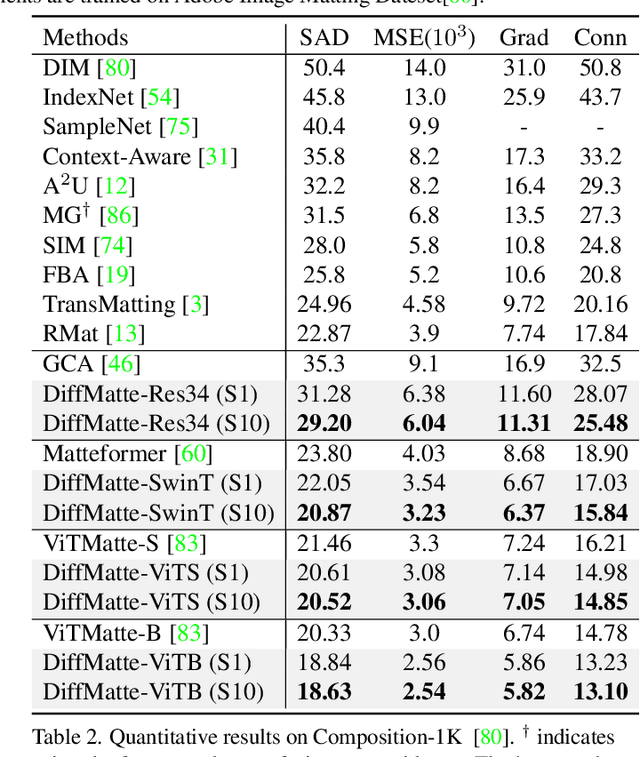
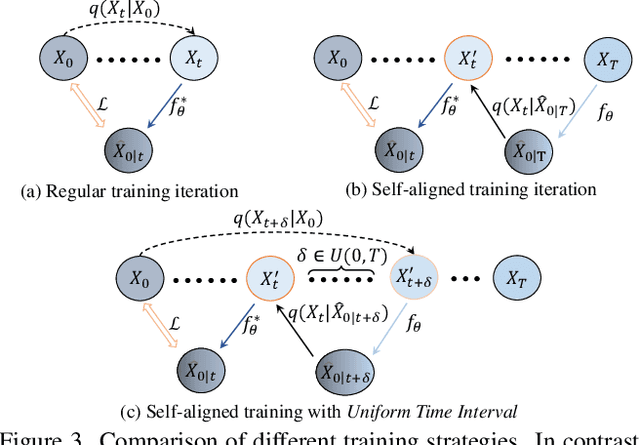
We aim to leverage diffusion to address the challenging image matting task. However, the presence of high computational overhead and the inconsistency of noise sampling between the training and inference processes pose significant obstacles to achieving this goal. In this paper, we present DiffMatte, a solution designed to effectively overcome these challenges. First, DiffMatte decouples the decoder from the intricately coupled matting network design, involving only one lightweight decoder in the iterations of the diffusion process. With such a strategy, DiffMatte mitigates the growth of computational overhead as the number of samples increases. Second, we employ a self-aligned training strategy with uniform time intervals, ensuring a consistent noise sampling between training and inference across the entire time domain. Our DiffMatte is designed with flexibility in mind and can seamlessly integrate into various modern matting architectures. Extensive experimental results demonstrate that DiffMatte not only reaches the state-of-the-art level on the Composition-1k test set, surpassing the best methods in the past by 5% and 15% in the SAD metric and MSE metric respectively, but also show stronger generalization ability in other benchmarks.
PixelLM: Pixel Reasoning with Large Multimodal Model
Dec 04, 2023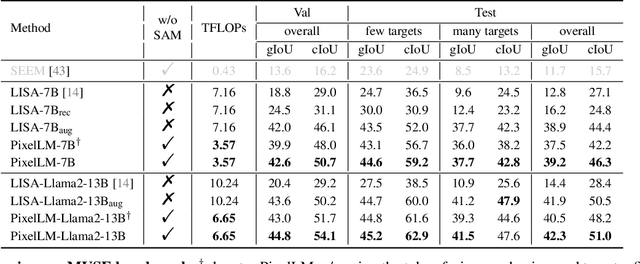
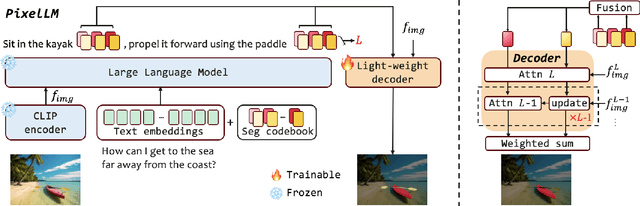
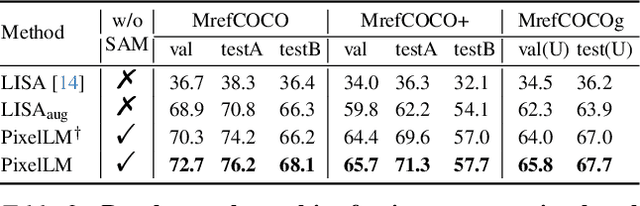
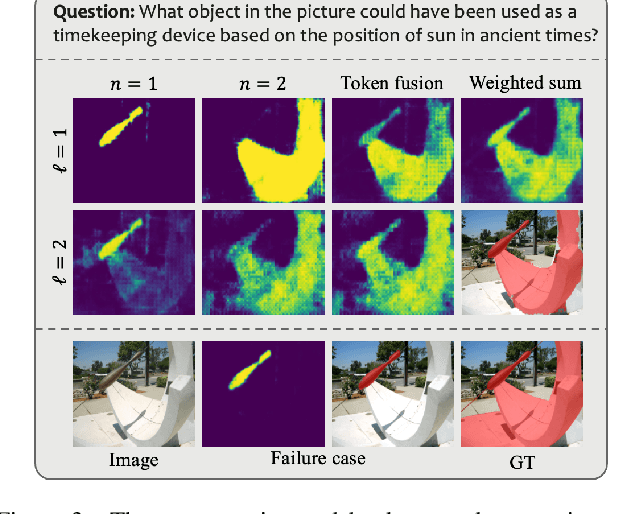
While large multimodal models (LMMs) have achieved remarkable progress, generating pixel-level masks for image reasoning tasks involving multiple open-world targets remains a challenge. To bridge this gap, we introduce PixelLM, an effective and efficient LMM for pixel-level reasoning and understanding. Central to PixelLM is a novel, lightweight pixel decoder and a comprehensive segmentation codebook. The decoder efficiently produces masks from the hidden embeddings of the codebook tokens, which encode detailed target-relevant information. With this design, PixelLM harmonizes with the structure of popular LMMs and avoids the need for additional costly segmentation models. Furthermore, we propose a target refinement loss to enhance the model's ability to differentiate between multiple targets, leading to substantially improved mask quality. To advance research in this area, we construct MUSE, a high-quality multi-target reasoning segmentation benchmark. PixelLM excels across various pixel-level image reasoning and understanding tasks, outperforming well-established methods in multiple benchmarks, including MUSE, single- and multi-referring segmentation. Comprehensive ablations confirm the efficacy of each proposed component. All code, models, and datasets will be publicly available.
RIO: A Benchmark for Reasoning Intention-Oriented Objects in Open Environments
Oct 26, 2023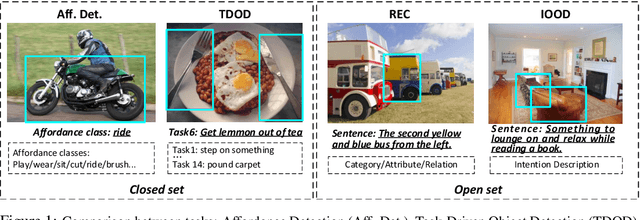
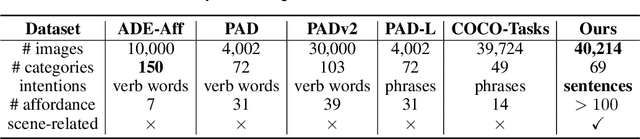
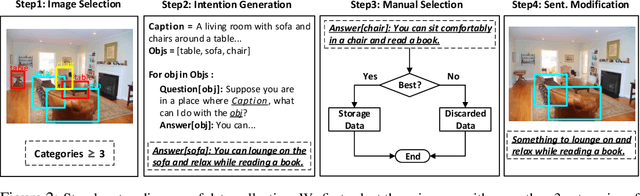
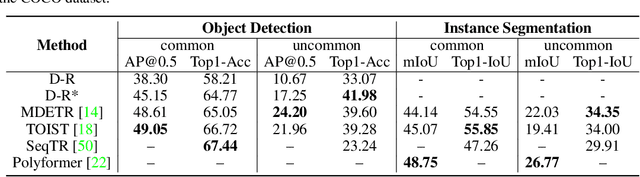
Intention-oriented object detection aims to detect desired objects based on specific intentions or requirements. For instance, when we desire to "lie down and rest", we instinctively seek out a suitable option such as a "bed" or a "sofa" that can fulfill our needs. Previous work in this area is limited either by the number of intention descriptions or by the affordance vocabulary available for intention objects. These limitations make it challenging to handle intentions in open environments effectively. To facilitate this research, we construct a comprehensive dataset called Reasoning Intention-Oriented Objects (RIO). In particular, RIO is specifically designed to incorporate diverse real-world scenarios and a wide range of object categories. It offers the following key features: 1) intention descriptions in RIO are represented as natural sentences rather than a mere word or verb phrase, making them more practical and meaningful; 2) the intention descriptions are contextually relevant to the scene, enabling a broader range of potential functionalities associated with the objects; 3) the dataset comprises a total of 40,214 images and 130,585 intention-object pairs. With the proposed RIO, we evaluate the ability of some existing models to reason intention-oriented objects in open environments.