 Add to Chrome
 Add to Firefox
 Add to Edge
SOLAR-RL: Semi-Online Long-horizon Assignment Reinforcement Learning
Apr 24, 2026
As Multimodal Large Language Models (MLLMs) mature, GUI agents are evolving from static interactions to complex navigation. While Reinforcement Learning (RL) has emerged as a promising paradigm for training MLLM agents on dynamic GUI tasks, its effective application faces a dilemma. Standard Offline RL often relies on static step-level data, neglecting global trajectory semantics such as task completion and execution quality. Conversely, Online RL captures the long-term dynamics but suffers from high interaction costs and potential environmental instability. To bridge this gap, we propose SOLAR-RL (Semi-Online Long-horizon Assignment Reinforcement Learning). Instead of relying solely on expensive online interactions, our framework integrates global trajectory insights directly into the offline learning process. Specifically, we reconstruct diverse rollout candidates from static data, detect the first failure point using per-step validity signals, and retroactively assign dense step-level rewards with target-aligned shaping to reflect trajectory-level execution quality, effectively simulating online feedback without interaction costs. Extensive experiments demonstrate that SOLAR-RL significantly improves long-horizon task completion rates and robustness compared to strong baselines, offering a sample-efficient solution for autonomous GUI navigation.

Skill-SD: Skill-Conditioned Self-Distillation for Multi-turn LLM Agents
Apr 12, 2026Reinforcement learning (RL) has been widely used to train LLM agents for multi-turn interactive tasks, but its sample efficiency is severely limited by sparse rewards and long horizons. On-policy self-distillation (OPSD) alleviates this by providing dense token-level supervision from a privileged teacher that has access to ground-truth answers. However, such fixed privileged information cannot capture the diverse valid strategies in agent tasks, and naively combining OPSD with RL often leads to training collapse. To address these limitations, we introduce Skill-SD, a framework that turns the agent's own trajectories into dynamic training-only supervision. Completed trajectories are summarized into compact natural language skills that describe successful behaviors, mistakes, and workflows. These skills serve as dynamic privileged information conditioning only the teacher, while the student always acts under the plain task prompt and learns to internalize the guidance through distillation. To stabilize the training, we derive an importance-weighted reverse-KL loss to provide gradient-correct token-level distillation, and dynamically synchronize the teacher with the improving student. Experimental results on agentic benchmarks demonstrate that Skill-SD substantially outperforms the standard RL baseline, improving both vanilla GRPO (+14.0%/+10.9% on AppWorld/Sokoban) and vanilla OPD (+42.1%/+40.6%). Project page: https://k1xe.github.io/skill-sd/
UI-Mem: Self-Evolving Experience Memory for Online Reinforcement Learning in Mobile GUI Agents
Feb 05, 2026Online Reinforcement Learning (RL) offers a promising paradigm for enhancing GUI agents through direct environment interaction. However, its effectiveness is severely hindered by inefficient credit assignment in long-horizon tasks and repetitive errors across tasks due to the lack of experience transfer. To address these challenges, we propose UI-Mem, a novel framework that enhances GUI online RL with a Hierarchical Experience Memory. Unlike traditional replay buffers, our memory accumulates structured knowledge, including high-level workflows, subtask skills, and failure patterns. These experiences are stored as parameterized templates that enable cross-task and cross-application transfer. To effectively integrate memory guidance into online RL, we introduce Stratified Group Sampling, which injects varying levels of guidance across trajectories within each rollout group to maintain outcome diversity, driving the unguided policy toward internalizing guided behaviors. Furthermore, a Self-Evolving Loop continuously abstracts novel strategies and errors to keep the memory aligned with the agent's evolving policy. Experiments on online GUI benchmarks demonstrate that UI-Mem significantly outperforms traditional RL baselines and static reuse strategies, with strong generalization to unseen applications. Project page: https://ui-mem.github.io
Seed1.5-VL Technical Report
May 11, 2025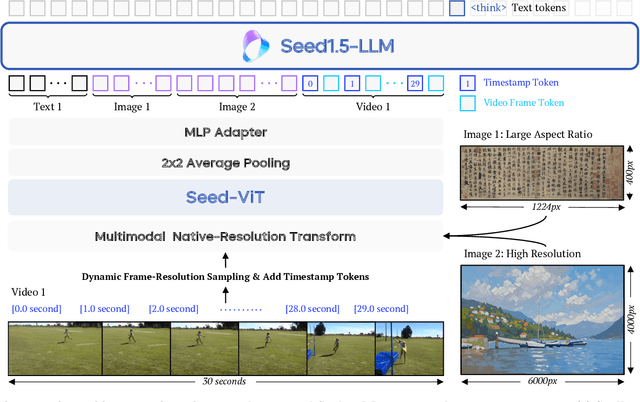

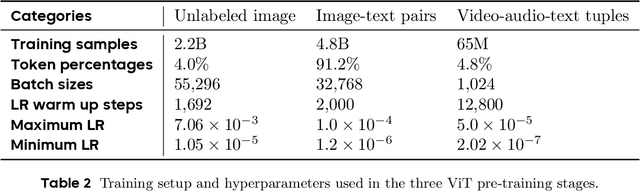
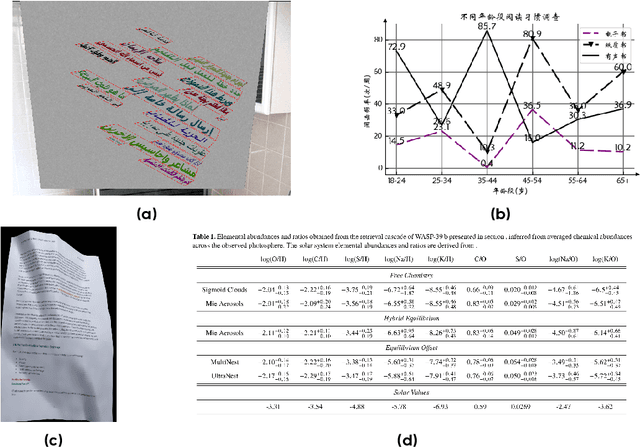
We present Seed1.5-VL, a vision-language foundation model designed to advance general-purpose multimodal understanding and reasoning. Seed1.5-VL is composed with a 532M-parameter vision encoder and a Mixture-of-Experts (MoE) LLM of 20B active parameters. Despite its relatively compact architecture, it delivers strong performance across a wide spectrum of public VLM benchmarks and internal evaluation suites, achieving the state-of-the-art performance on 38 out of 60 public benchmarks. Moreover, in agent-centric tasks such as GUI control and gameplay, Seed1.5-VL outperforms leading multimodal systems, including OpenAI CUA and Claude 3.7. Beyond visual and video understanding, it also demonstrates strong reasoning abilities, making it particularly effective for multimodal reasoning challenges such as visual puzzles. We believe these capabilities will empower broader applications across diverse tasks. In this report, we mainly provide a comprehensive review of our experiences in building Seed1.5-VL across model design, data construction, and training at various stages, hoping that this report can inspire further research. Seed1.5-VL is now accessible at https://www.volcengine.com/ (Volcano Engine Model ID: doubao-1-5-thinking-vision-pro-250428)
H-SGANet: Hybrid Sparse Graph Attention Network for Deformable Medical Image Registration
Aug 29, 2024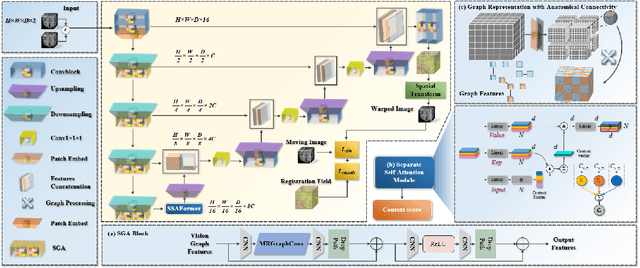

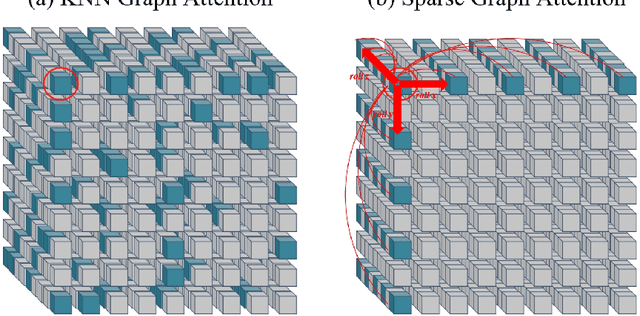
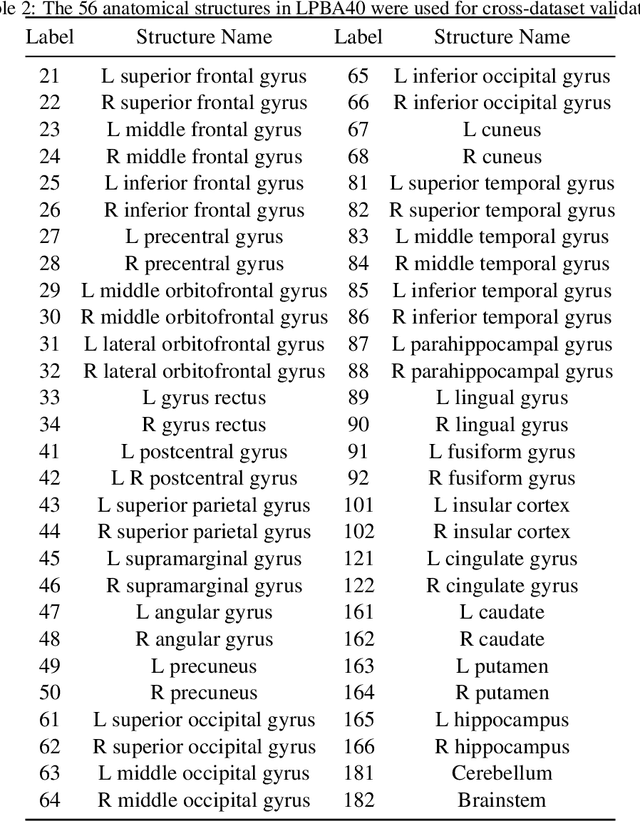
The integration of Convolutional Neural Network (ConvNet) and Transformer has emerged as a strong candidate for image registration, leveraging the strengths of both models and a large parameter space. However, this hybrid model, treating brain MRI volumes as grid or sequence structures, faces challenges in accurately representing anatomical connectivity, diverse brain regions, and vital connections contributing to the brain's internal architecture. Concerns also arise regarding the computational expense and GPU memory usage associated with this model. To tackle these issues, a lightweight hybrid sparse graph attention network (H-SGANet) has been developed. This network incorporates a central mechanism, Sparse Graph Attention (SGA), based on a Vision Graph Neural Network (ViG) with predetermined anatomical connections. The SGA module expands the model's receptive field and seamlessly integrates into the network. To further amplify the advantages of the hybrid network, the Separable Self-Attention (SSA) is employed as an enhanced token mixer, integrated with depth-wise convolution to constitute SSAFormer. This strategic integration is designed to more effectively extract long-range dependencies. As a hybrid ConvNet-ViG-Transformer model, H-SGANet offers threefold benefits for volumetric medical image registration. It optimizes fixed and moving images concurrently through a hybrid feature fusion layer and an end-to-end learning framework. Compared to VoxelMorph, a model with a similar parameter count, H-SGANet demonstrates significant performance enhancements of 3.5% and 1.5% in Dice score on the OASIS dataset and LPBA40 dataset, respectively.
Movable Antenna Empowered Downlink NOMA Systems: Power Allocation and Antenna Position Optimization
May 29, 2024This paper investigates a novel communication paradigm employing movable antennas (MAs) within a multiple-input single-output (MISO) non-orthogonal multiple access (NOMA) downlink framework, where users are equipped with MAs. Initially, leveraging the far-field response, we delineate the channel characteristics concerning both the power allocation coefficient and positions of MAs. Subsequently, we endeavor to maximize the channel capacity by jointly optimizing power allocation and antenna positions. To tackle the resultant non-convex problem, we propose an alternating optimization (AO) scheme underpinned by successive convex approximation (SCA) to converge towards a stationary point. Through numerical simulations, our findings substantiate the superiority of the MA-assisted NOMA system over both orthogonal multiple access (OMA) and conventional NOMA configurations in terms of average sum rate and outage probability.
Power Efficient Video Super-Resolution on Mobile NPUs with Deep Learning, Mobile AI & AIM 2022 challenge: Report
Nov 07, 2022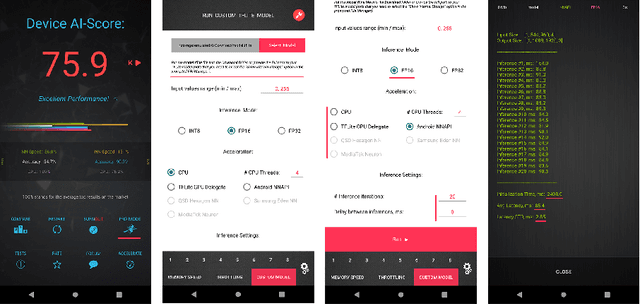
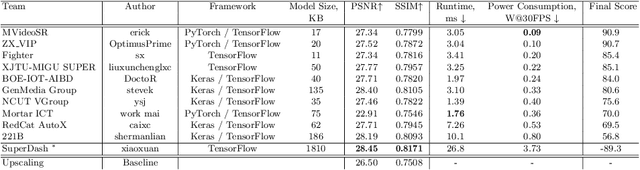
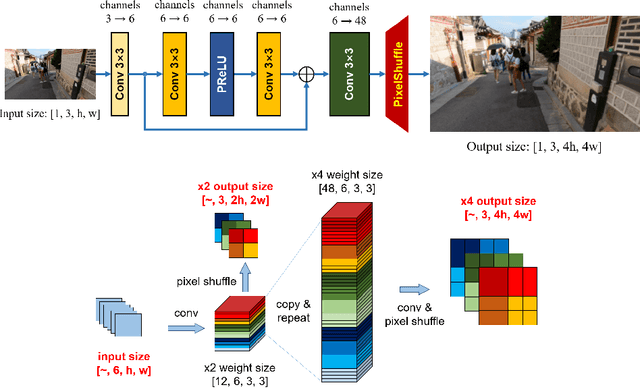
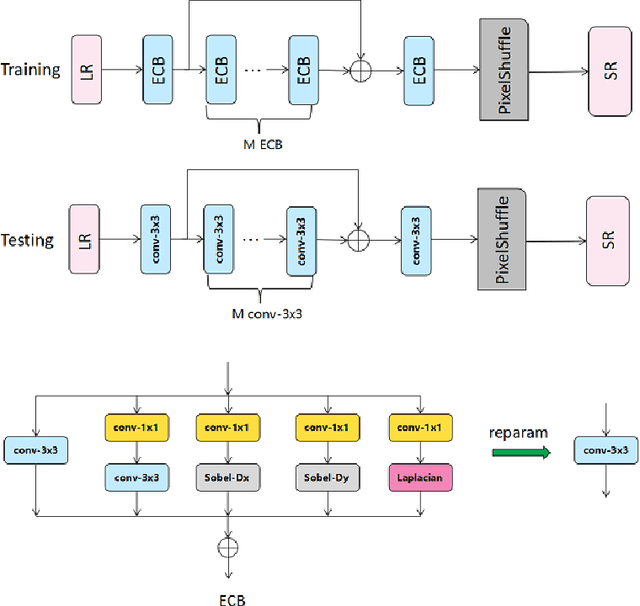
Video super-resolution is one of the most popular tasks on mobile devices, being widely used for an automatic improvement of low-bitrate and low-resolution video streams. While numerous solutions have been proposed for this problem, they are usually quite computationally demanding, demonstrating low FPS rates and power efficiency on mobile devices. In this Mobile AI challenge, we address this problem and propose the participants to design an end-to-end real-time video super-resolution solution for mobile NPUs optimized for low energy consumption. The participants were provided with the REDS training dataset containing video sequences for a 4X video upscaling task. The runtime and power efficiency of all models was evaluated on the powerful MediaTek Dimensity 9000 platform with a dedicated AI processing unit capable of accelerating floating-point and quantized neural networks. All proposed solutions are fully compatible with the above NPU, demonstrating an up to 500 FPS rate and 0.2 [Watt / 30 FPS] power consumption. A detailed description of all models developed in the challenge is provided in this paper.