 Add to Chrome
 Add to Firefox
 Add to Edge
NGEL-SLAM: Neural Implicit Representation-based Global Consistent Low-Latency SLAM System
Nov 16, 2023
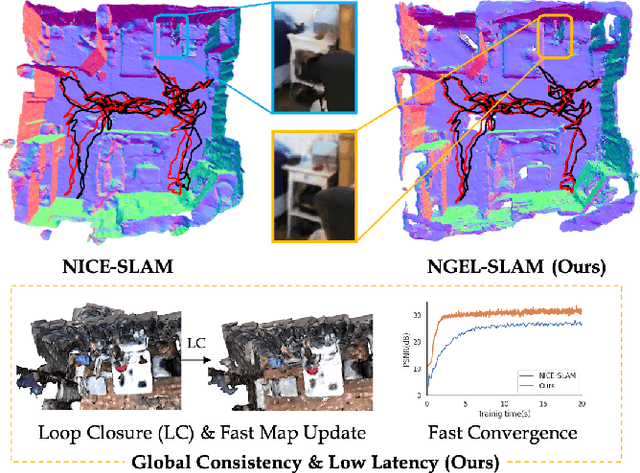
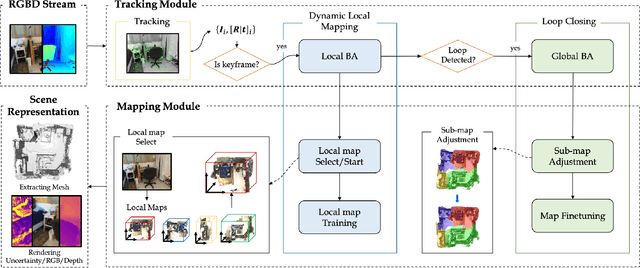
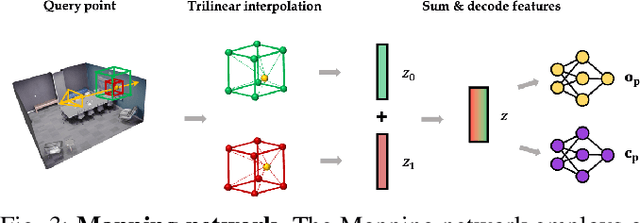
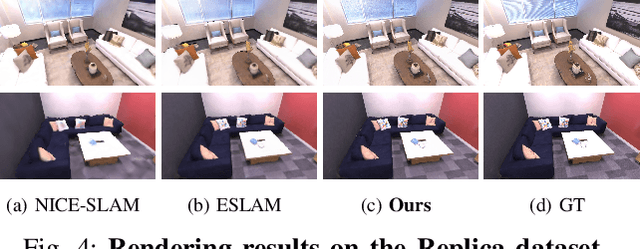
Neural implicit representations have emerged as a promising solution for providing dense geometry in Simultaneous Localization and Mapping (SLAM). However, existing methods in this direction fall short in terms of global consistency and low latency. This paper presents NGEL-SLAM to tackle the above challenges. To ensure global consistency, our system leverages a traditional feature-based tracking module that incorporates loop closure. Additionally, we maintain a global consistent map by representing the scene using multiple neural implicit fields, enabling quick adjustment to the loop closure. Moreover, our system allows for fast convergence through the use of octree-based implicit representations. The combination of rapid response to loop closure and fast convergence makes our system a truly low-latency system that achieves global consistency. Our system enables rendering high-fidelity RGB-D images, along with extracting dense and complete surfaces. Experiments on both synthetic and real-world datasets suggest that our system achieves state-of-the-art tracking and mapping accuracy while maintaining low latency.

Enhancing Few-shot CLIP with Semantic-Aware Fine-Tuning
Nov 09, 2023
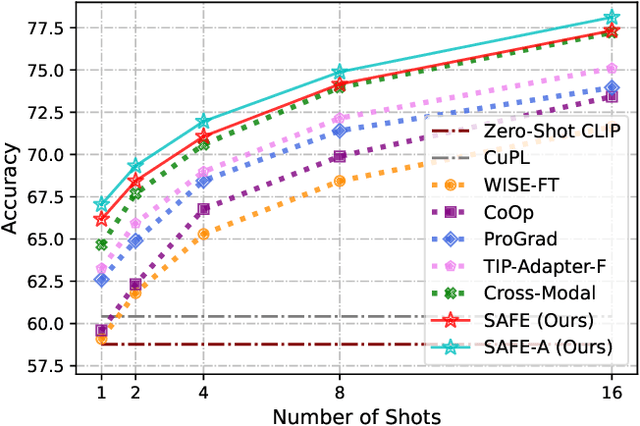
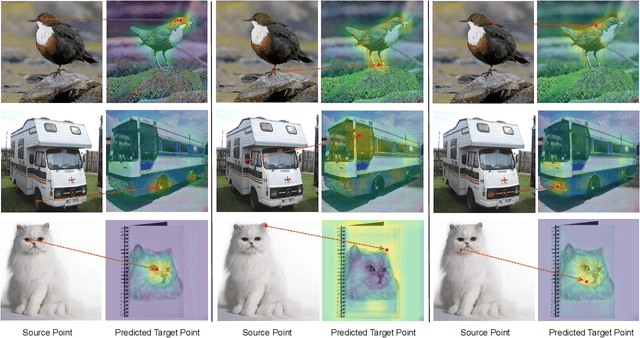
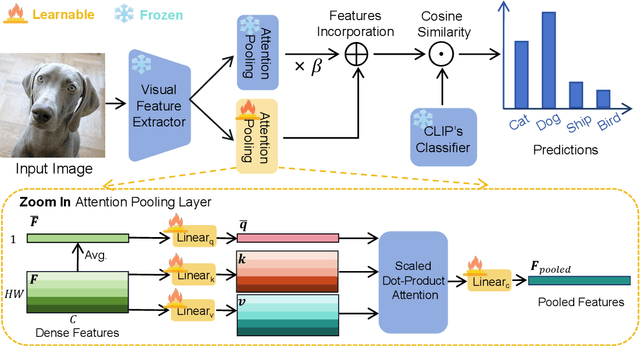
Learning generalized representations from limited training samples is crucial for applying deep neural networks in low-resource scenarios. Recently, methods based on Contrastive Language-Image Pre-training (CLIP) have exhibited promising performance in few-shot adaptation tasks. To avoid catastrophic forgetting and overfitting caused by few-shot fine-tuning, existing works usually freeze the parameters of CLIP pre-trained on large-scale datasets, overlooking the possibility that some parameters might not be suitable for downstream tasks. To this end, we revisit CLIP's visual encoder with a specific focus on its distinctive attention pooling layer, which performs a spatial weighted-sum of the dense feature maps. Given that dense feature maps contain meaningful semantic information, and different semantics hold varying importance for diverse downstream tasks (such as prioritizing semantics like ears and eyes in pet classification tasks rather than side mirrors), using the same weighted-sum operation for dense features across different few-shot tasks might not be appropriate. Hence, we propose fine-tuning the parameters of the attention pooling layer during the training process to encourage the model to focus on task-specific semantics. In the inference process, we perform residual blending between the features pooled by the fine-tuned and the original attention pooling layers to incorporate both the few-shot knowledge and the pre-trained CLIP's prior knowledge. We term this method as Semantic-Aware FinE-tuning (SAFE). SAFE is effective in enhancing the conventional few-shot CLIP and is compatible with the existing adapter approach (termed SAFE-A).
Augmenting Lane Perception and Topology Understanding with Standard Definition Navigation Maps
Nov 07, 2023Autonomous driving has traditionally relied heavily on costly and labor-intensive High Definition (HD) maps, hindering scalability. In contrast, Standard Definition (SD) maps are more affordable and have worldwide coverage, offering a scalable alternative. In this work, we systematically explore the effect of SD maps for real-time lane-topology understanding. We propose a novel framework to integrate SD maps into online map prediction and propose a Transformer-based encoder, SD Map Encoder Representations from transFormers, to leverage priors in SD maps for the lane-topology prediction task. This enhancement consistently and significantly boosts (by up to 60%) lane detection and topology prediction on current state-of-the-art online map prediction methods without bells and whistles and can be immediately incorporated into any Transformer-based lane-topology method. Code is available at https://github.com/NVlabs/SMERF.
EmerNeRF: Emergent Spatial-Temporal Scene Decomposition via Self-Supervision
Nov 03, 2023We present EmerNeRF, a simple yet powerful approach for learning spatial-temporal representations of dynamic driving scenes. Grounded in neural fields, EmerNeRF simultaneously captures scene geometry, appearance, motion, and semantics via self-bootstrapping. EmerNeRF hinges upon two core components: First, it stratifies scenes into static and dynamic fields. This decomposition emerges purely from self-supervision, enabling our model to learn from general, in-the-wild data sources. Second, EmerNeRF parameterizes an induced flow field from the dynamic field and uses this flow field to further aggregate multi-frame features, amplifying the rendering precision of dynamic objects. Coupling these three fields (static, dynamic, and flow) enables EmerNeRF to represent highly-dynamic scenes self-sufficiently, without relying on ground truth object annotations or pre-trained models for dynamic object segmentation or optical flow estimation. Our method achieves state-of-the-art performance in sensor simulation, significantly outperforming previous methods when reconstructing static (+2.93 PSNR) and dynamic (+3.70 PSNR) scenes. In addition, to bolster EmerNeRF's semantic generalization, we lift 2D visual foundation model features into 4D space-time and address a general positional bias in modern Transformers, significantly boosting 3D perception performance (e.g., 37.50% relative improvement in occupancy prediction accuracy on average). Finally, we construct a diverse and challenging 120-sequence dataset to benchmark neural fields under extreme and highly-dynamic settings.
DORec: Decomposed Object Reconstruction Utilizing 2D Self-Supervised Features
Oct 19, 2023Decomposing a target object from a complex background while reconstructing is challenging. Most approaches acquire the perception for object instances through the use of manual labels, but the annotation procedure is costly. The recent advancements in 2D self-supervised learning have brought new prospects to object-aware representation, yet it remains unclear how to leverage such noisy 2D features for clean decomposition. In this paper, we propose a Decomposed Object Reconstruction (DORec) network based on neural implicit representations. Our key idea is to transfer 2D self-supervised features into masks of two levels of granularity to supervise the decomposition, including a binary mask to indicate the foreground regions and a K-cluster mask to indicate the semantically similar regions. These two masks are complementary to each other and lead to robust decomposition. Experimental results show the superiority of DORec in segmenting and reconstructing the foreground object on various datasets.
GPT-Driver: Learning to Drive with GPT
Oct 16, 2023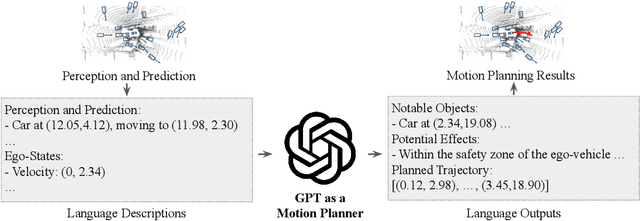


We present a simple yet effective approach that can transform the OpenAI GPT-3.5 model into a reliable motion planner for autonomous vehicles. Motion planning is a core challenge in autonomous driving, aiming to plan a driving trajectory that is safe and comfortable. Existing motion planners predominantly leverage heuristic methods to forecast driving trajectories, yet these approaches demonstrate insufficient generalization capabilities in the face of novel and unseen driving scenarios. In this paper, we propose a novel approach to motion planning that capitalizes on the strong reasoning capabilities and generalization potential inherent to Large Language Models (LLMs). The fundamental insight of our approach is the reformulation of motion planning as a language modeling problem, a perspective not previously explored. Specifically, we represent the planner inputs and outputs as language tokens, and leverage the LLM to generate driving trajectories through a language description of coordinate positions. Furthermore, we propose a novel prompting-reasoning-finetuning strategy to stimulate the numerical reasoning potential of the LLM. With this strategy, the LLM can describe highly precise trajectory coordinates and also its internal decision-making process in natural language. We evaluate our approach on the large-scale nuScenes dataset, and extensive experiments substantiate the effectiveness, generalization ability, and interpretability of our GPT-based motion planner. Code is now available at https://github.com/PointsCoder/GPT-Driver.
G-SPEED: General SParse Efficient Editing MoDel
Oct 16, 2023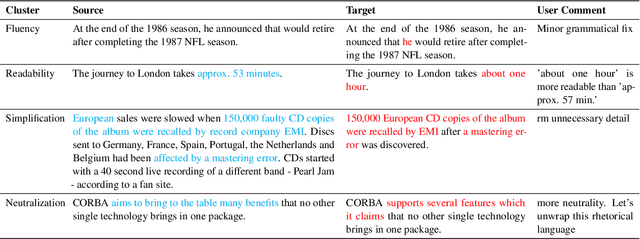
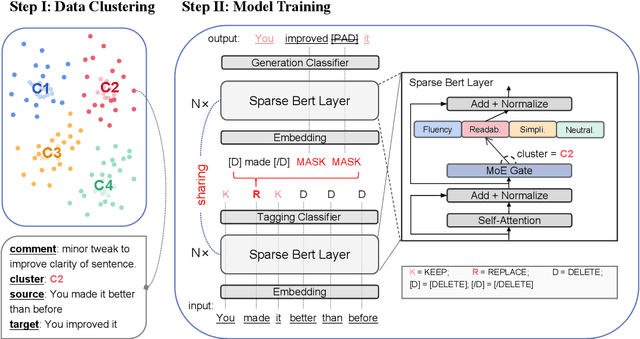

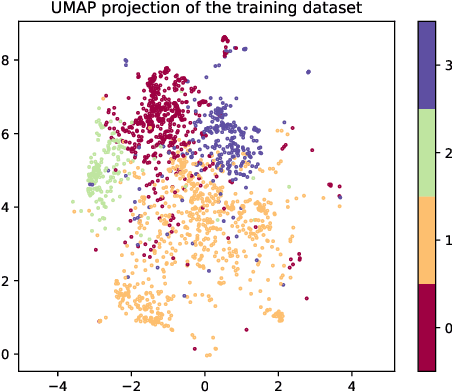
Large Language Models~(LLMs) have demonstrated incredible capabilities in understanding, generating, and manipulating languages. Through human-model interactions, LLMs can automatically understand human-issued instructions and output the expected contents, which can significantly increase working efficiency. In various types of real-world demands, editing-oriented tasks account for a considerable proportion, which involves an interactive process that entails the continuous refinement of existing texts to meet specific criteria. Due to the need for multi-round human-model interaction and the generation of complicated editing tasks, there is an emergent need for efficient general editing models. In this paper, we propose \underline{\textbf{G}}eneral \underline{\textbf{SP}}arse \underline{\textbf{E}}fficient \underline{\textbf{E}}diting Mo\underline{\textbf{D}}el~(\textbf{G-SPEED}), which can fulfill diverse editing requirements through a single model while maintaining low computational costs. Specifically, we first propose a novel unsupervised text editing data clustering algorithm to deal with the data scarcity problem. Subsequently, we introduce a sparse editing model architecture to mitigate the inherently limited learning capabilities of small language models. The experimental outcomes indicate that G-SPEED, with its 508M parameters, can surpass LLMs equipped with 175B parameters. Our code and model checkpoints are available at \url{https://github.com/Banner-Z/G-SPEED}.
A Two-stage Based Social Preference Recognition in Multi-Agent Autonomous Driving System
Oct 05, 2023


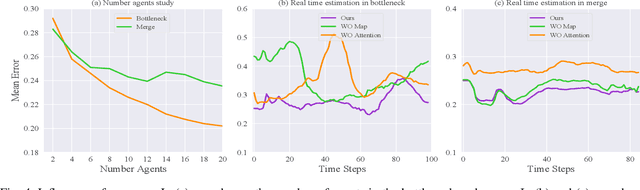
Multi-Agent Reinforcement Learning (MARL) has become a promising solution for constructing a multi-agent autonomous driving system (MADS) in complex and dense scenarios. But most methods consider agents acting selfishly, which leads to conflict behaviors. Some existing works incorporate the concept of social value orientation (SVO) to promote coordination, but they lack the knowledge of other agents' SVOs, resulting in conservative maneuvers. In this paper, we aim to tackle the mentioned problem by enabling the agents to understand other agents' SVOs. To accomplish this, we propose a two-stage system framework. Firstly, we train a policy by allowing the agents to share their ground truth SVOs to establish a coordinated traffic flow. Secondly, we develop a recognition network that estimates agents' SVOs and integrates it with the policy trained in the first stage. Experiments demonstrate that our developed method significantly improves the performance of the driving policy in MADS compared to two state-of-the-art MARL algorithms.
Sparsity-Based Channel Estimation Exploiting Deep Unrolling for Downlink Massive MIMO
Sep 24, 2023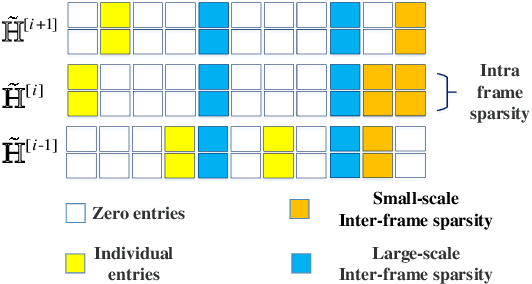

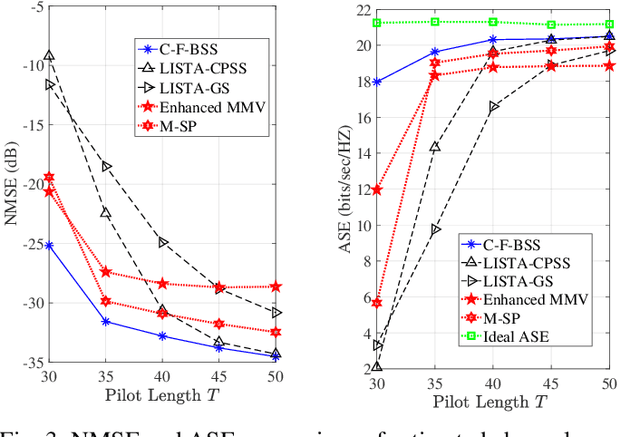

Massive multiple-input multiple-output (MIMO) enjoys great advantage in 5G wireless communication systems owing to its spectrum and energy efficiency. However, hundreds of antennas require large volumes of pilot overhead to guarantee reliable channel estimation in FDD massive MIMO system. Compressive sensing (CS) has been applied for channel estimation by exploiting the inherent sparse structure of massive MIMO channel but suffer from high complexity. To overcome this challenge, this paper develops a hybrid channel estimation scheme by integrating the model-driven CS and data-driven deep unrolling technique. The proposed scheme consists of a coarse estimation part and a fine correction part to respectively exploit the inter- and intraframe sparsities of channels to greatly reduce the pilot overhead. Theoretical result is provided to indicate the convergence of the fine correction and coarse estimation net. Simulation results are provided to verify that our scheme can estimate MIMO channels with low pilot overhead while guaranteeing estimation accuracy with relatively low complexity.
CNS: Correspondence Encoded Neural Image Servo Policy
Sep 16, 2023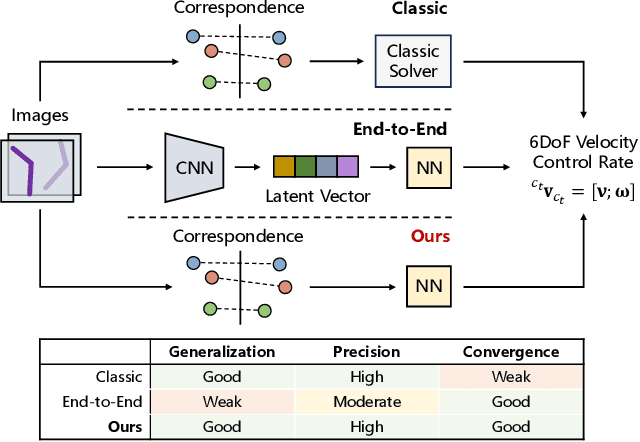


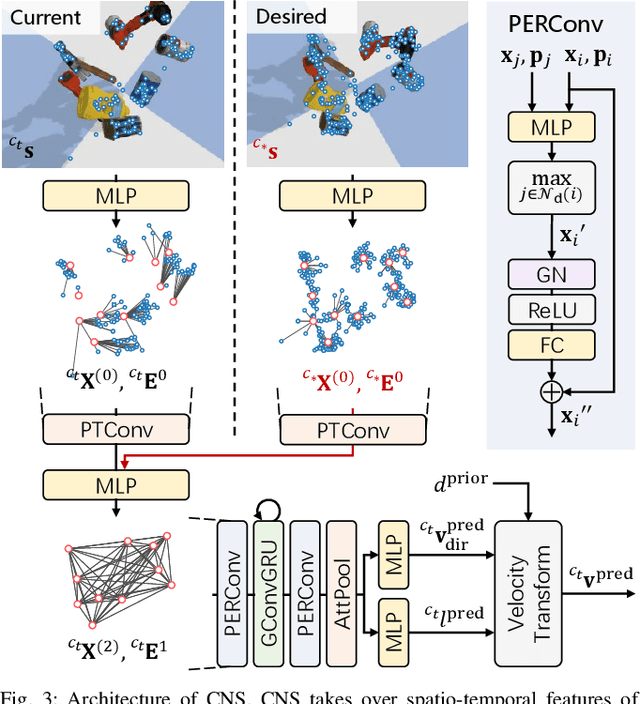
Image servo is an indispensable technique in robotic applications that helps to achieve high precision positioning. The intermediate representation of image servo policy is important to sensor input abstraction and policy output guidance. Classical approaches achieve high precision but require clean keypoint correspondence, and suffer from limited convergence basin or weak feature error robustness. Recent learning-based methods achieve moderate precision and large convergence basin on specific scenes but face issues when generalizing to novel environments. In this paper, we encode keypoints and correspondence into a graph and use graph neural network as architecture of controller. This design utilizes both advantages: generalizable intermediate representation from keypoint correspondence and strong modeling ability from neural network. Other techniques including realistic data generation, feature clustering and distance decoupling are proposed to further improve efficiency, precision and generalization. Experiments in simulation and real-world verify the effectiveness of our method in speed (maximum 40fps along with observer), precision (<0.3{\deg} and sub-millimeter accuracy) and generalization (sim-to-real without fine-tuning). Project homepage (full paper with supplementary text, video and code): https://hhcaz.github.io/CNS-home