 Add to Chrome
 Add to Firefox
 Add to Edge
Identity-Preserving Video Dubbing Using Motion Warping
Jan 08, 2025


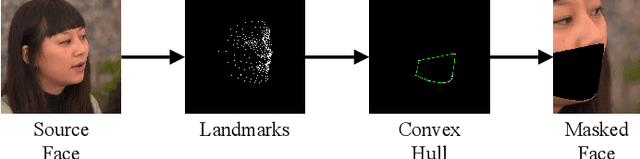
Video dubbing aims to synthesize realistic, lip-synced videos from a reference video and a driving audio signal. Although existing methods can accurately generate mouth shapes driven by audio, they often fail to preserve identity-specific features, largely because they do not effectively capture the nuanced interplay between audio cues and the visual attributes of reference identity . As a result, the generated outputs frequently lack fidelity in reproducing the unique textural and structural details of the reference identity. To address these limitations, we propose IPTalker, a novel and robust framework for video dubbing that achieves seamless alignment between driving audio and reference identity while ensuring both lip-sync accuracy and high-fidelity identity preservation. At the core of IPTalker is a transformer-based alignment mechanism designed to dynamically capture and model the correspondence between audio features and reference images, thereby enabling precise, identity-aware audio-visual integration. Building on this alignment, a motion warping strategy further refines the results by spatially deforming reference images to match the target audio-driven configuration. A dedicated refinement process then mitigates occlusion artifacts and enhances the preservation of fine-grained textures, such as mouth details and skin features. Extensive qualitative and quantitative evaluations demonstrate that IPTalker consistently outperforms existing approaches in terms of realism, lip synchronization, and identity retention, establishing a new state of the art for high-quality, identity-consistent video dubbing.

Exploring Optimal Latent Trajetory for Zero-shot Image Editing
Jan 07, 2025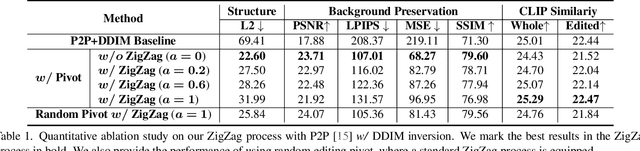
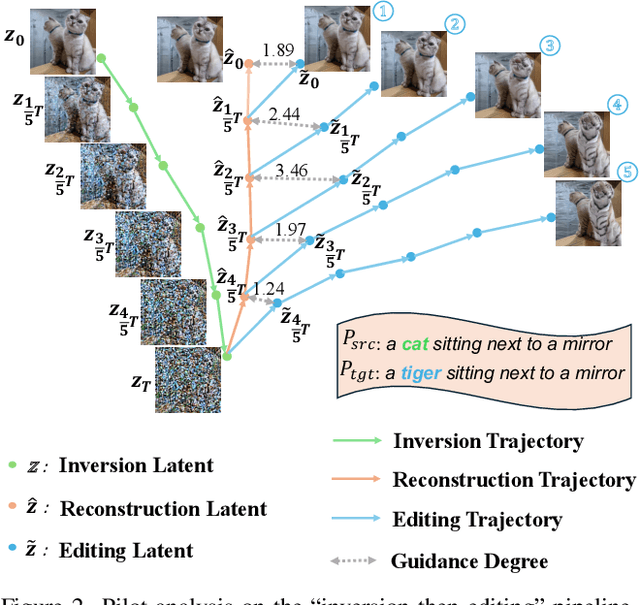

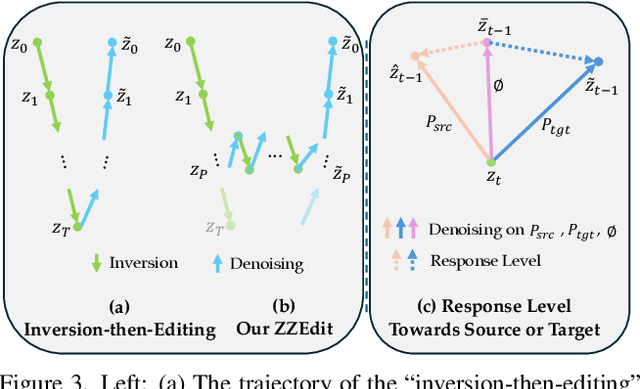
Editability and fidelity are two essential demands for text-driven image editing, which expects that the editing area should align with the target prompt and the rest should remain unchanged separately. The current cutting-edge editing methods usually obey an "inversion-then-editing" pipeline, where the source image is first inverted to an approximate Gaussian noise ${z}_T$, based on which a sampling process is conducted using the target prompt. Nevertheless, we argue that it is not a good choice to use a near-Gaussian noise as a pivot for further editing since it almost lost all structure fidelity. We verify this by a pilot experiment, discovering that some intermediate-inverted latents can achieve a better trade-off between editability and fidelity than the fully-inverted ${z}_T$. Based on this, we propose a novel editing paradigm dubbed ZZEdit, which gentlely strengthens the target guidance on a sufficient-for-editing while structure-preserving latent. Specifically, we locate such an editing pivot by searching the first point on the inversion trajectory which has larger response levels toward the target prompt than the source one. Then, we propose a ZigZag process to perform mild target guiding on this pivot, which fulfills denoising and inversion iteratively, approaching the target while still holding fidelity. Afterwards, to achieve the same number of inversion and denoising steps, we perform a pure sampling process under the target prompt. Extensive experiments highlight the effectiveness of our ZZEdit in diverse image editing scenarios compared with the "inversion-then-editing" pipeline.
From thermodynamics to protein design: Diffusion models for biomolecule generation towards autonomous protein engineering
Jan 05, 2025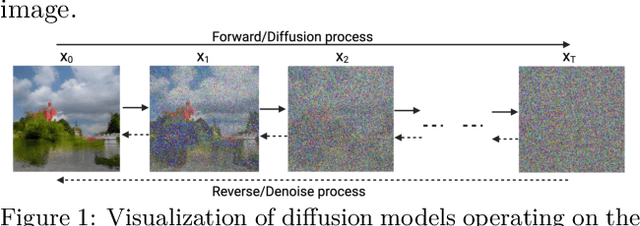
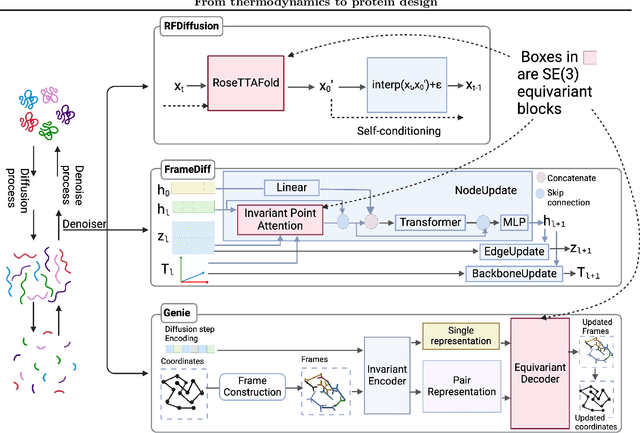
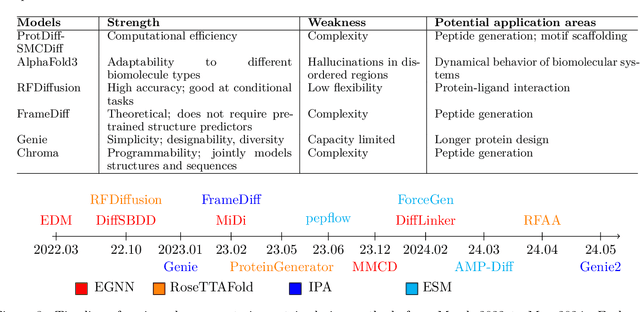
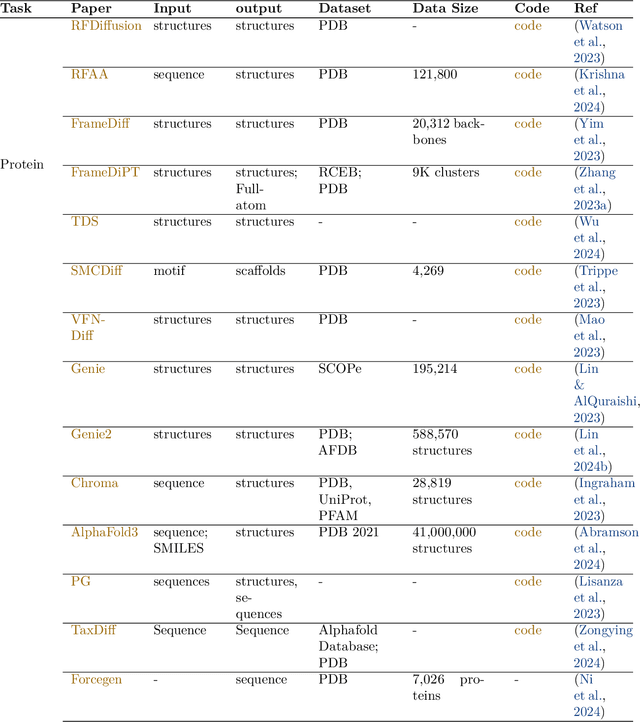
Protein design with desirable properties has been a significant challenge for many decades. Generative artificial intelligence is a promising approach and has achieved great success in various protein generation tasks. Notably, diffusion models stand out for their robust mathematical foundations and impressive generative capabilities, offering unique advantages in certain applications such as protein design. In this review, we first give the definition and characteristics of diffusion models and then focus on two strategies: Denoising Diffusion Probabilistic Models and Score-based Generative Models, where DDPM is the discrete form of SGM. Furthermore, we discuss their applications in protein design, peptide generation, drug discovery, and protein-ligand interaction. Finally, we outline the future perspectives of diffusion models to advance autonomous protein design and engineering. The E(3) group consists of all rotations, reflections, and translations in three-dimensions. The equivariance on the E(3) group can keep the physical stability of the frame of each amino acid as much as possible, and we reflect on how to keep the diffusion model E(3) equivariant for protein generation.
Adaptive$^2$: Adaptive Domain Mining for Fine-grained Domain Adaptation Modeling
Dec 11, 2024

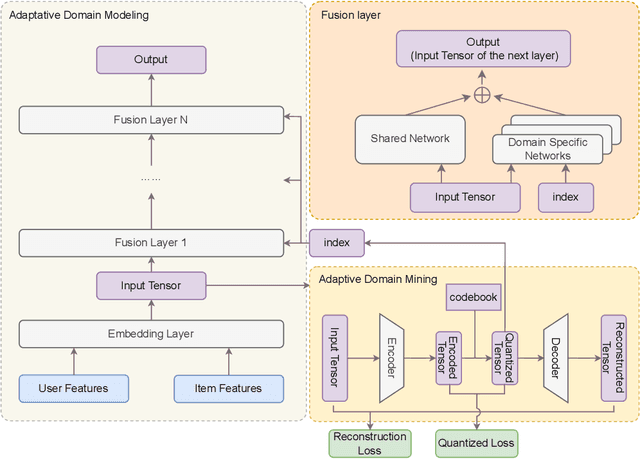

Advertising systems often face the multi-domain challenge, where data distributions vary significantly across scenarios. Existing domain adaptation methods primarily focus on building domain-adaptive neural networks but often rely on hand-crafted domain information, e.g., advertising placement, which may be sub-optimal. We think that fine-grained "domain" patterns exist that are difficult to hand-craft in online advertisement. Thus, we propose Adaptive$^2$, a novel framework that first learns domains adaptively using a domain mining module by self-supervision and then employs a shared&specific network to model shared and conflicting information. As a practice, we use VQ-VAE as the domain mining module and conduct extensive experiments on public benchmarks. Results show that traditional domain adaptation methods with hand-crafted domains perform no better than single-domain models under fair FLOPS conditions, highlighting the importance of domain definition. In contrast, Adaptive$^2$ outperforms existing approaches, emphasizing the effectiveness of our method and the significance of domain mining. We also deployed Adaptive$^2$ in the live streaming scenario of Kuaishou Advertising System, demonstrating its commercial value and potential for automatic domain identification. To the best of our knowledge, Adaptive$^2$ is the first approach to automatically learn both domain identification and adaptation in online advertising, opening new research directions for this area.
Multimodal large language model for wheat breeding: a new exploration of smart breeding
Nov 20, 2024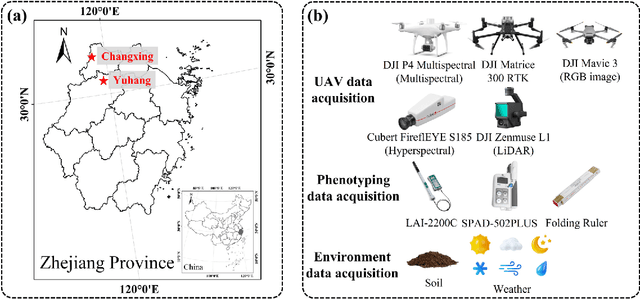
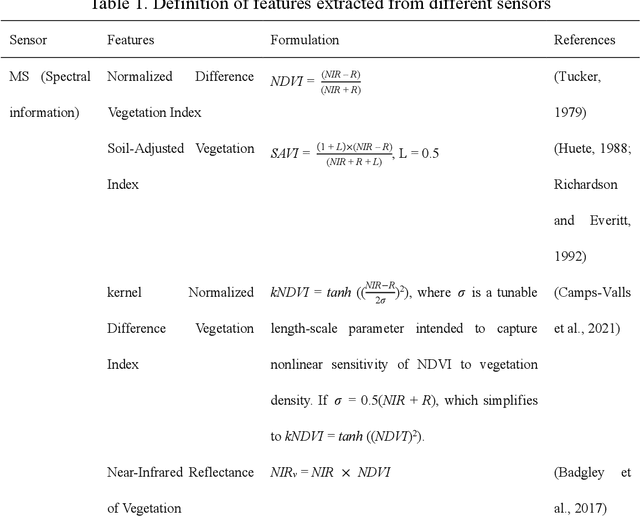
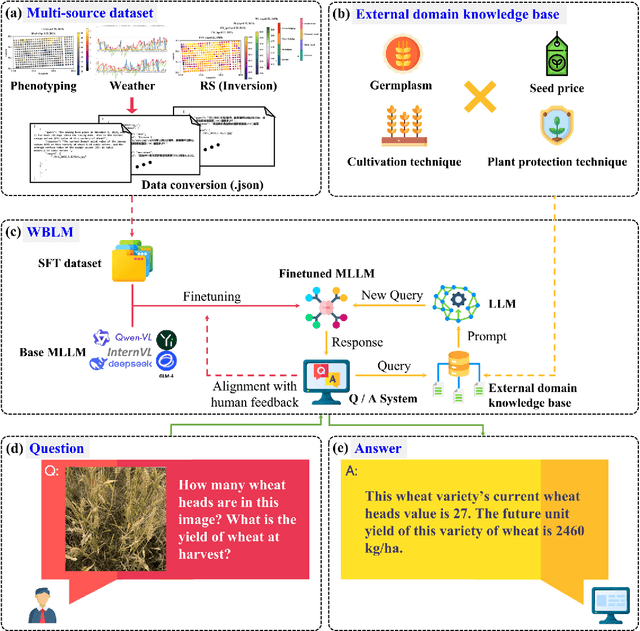
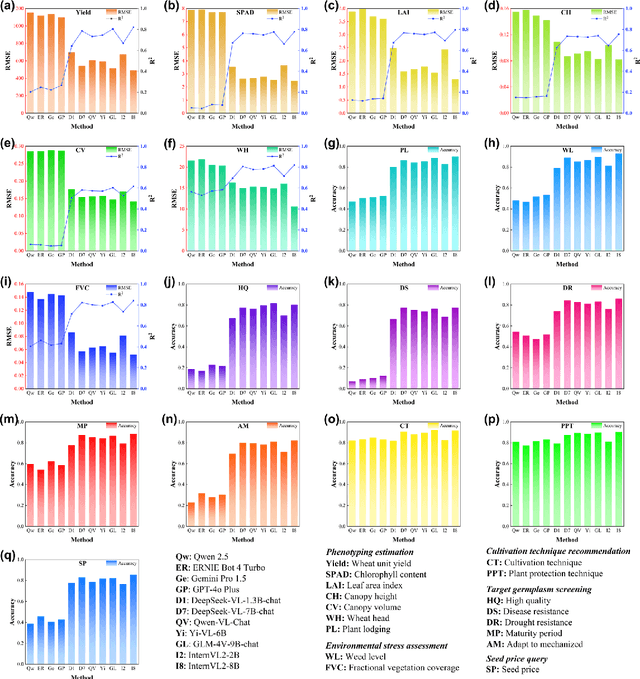
UAV remote sensing technology has become a key technology in crop breeding, which can achieve high-throughput and non-destructive collection of crop phenotyping data. However, the multidisciplinary nature of breeding has brought technical barriers and efficiency challenges to knowledge mining. Therefore, it is important to develop a smart breeding goal tool to mine cross-domain multimodal data. Based on different pre-trained open-source multimodal large language models (MLLMs) (e.g., Qwen-VL, InternVL, Deepseek-VL), this study used supervised fine-tuning (SFT), retrieval-augmented generation (RAG), and reinforcement learning from human feedback (RLHF) technologies to inject cross-domain knowledge into MLLMs, thereby constructing multiple multimodal large language models for wheat breeding (WBLMs). The above WBLMs were evaluated using the newly created evaluation benchmark in this study. The results showed that the WBLM constructed using SFT, RAG and RLHF technologies and InternVL2-8B has leading performance. Then, subsequent experiments were conducted using the WBLM. Ablation experiments indicated that the combination of SFT, RAG, and RLHF technologies can improve the overall generation performance, enhance the generated quality, balance the timeliness and adaptability of the generated answer, and reduce hallucinations and biases. The WBLM performed best in wheat yield prediction using cross-domain data (remote sensing, phenotyping, weather, germplasm) simultaneously, with R2 and RMSE of 0.821 and 489.254 kg/ha, respectively. Furthermore, the WBLM can generate professional decision support answers for phenotyping estimation, environmental stress assessment, target germplasm screening, cultivation technique recommendation, and seed price query tasks.
Toward Robust and Accurate Adversarial Camouflage Generation against Vehicle Detectors
Nov 15, 2024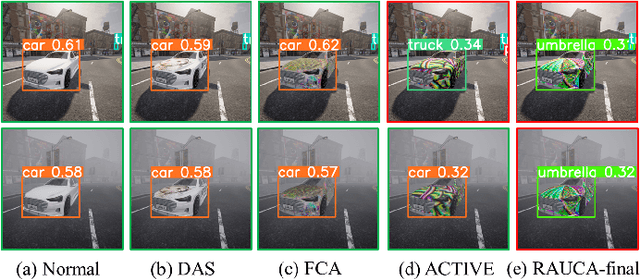
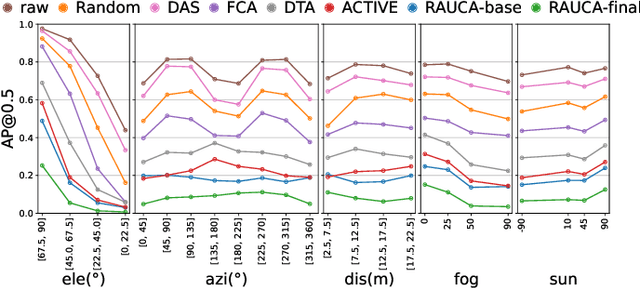
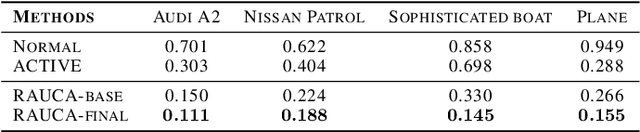
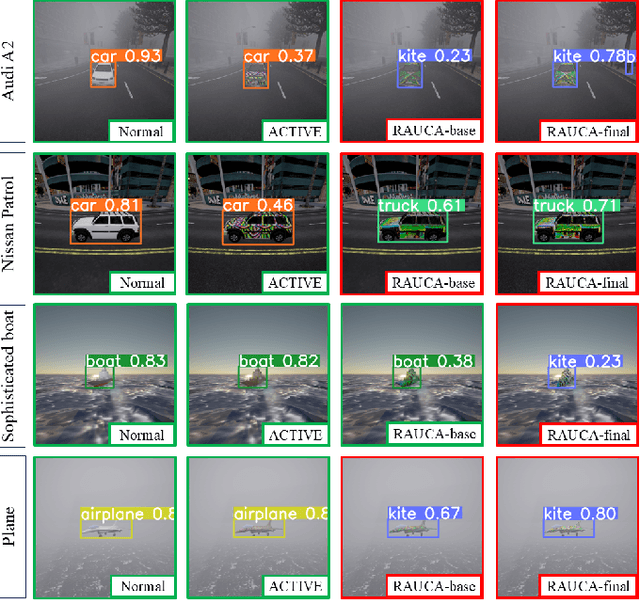
Adversarial camouflage is a widely used physical attack against vehicle detectors for its superiority in multi-view attack performance. One promising approach involves using differentiable neural renderers to facilitate adversarial camouflage optimization through gradient back-propagation. However, existing methods often struggle to capture environmental characteristics during the rendering process or produce adversarial textures that can precisely map to the target vehicle. Moreover, these approaches neglect diverse weather conditions, reducing the efficacy of generated camouflage across varying weather scenarios. To tackle these challenges, we propose a robust and accurate camouflage generation method, namely RAUCA. The core of RAUCA is a novel neural rendering component, End-to-End Neural Renderer Plus (E2E-NRP), which can accurately optimize and project vehicle textures and render images with environmental characteristics such as lighting and weather. In addition, we integrate a multi-weather dataset for camouflage generation, leveraging the E2E-NRP to enhance the attack robustness. Experimental results on six popular object detectors show that RAUCA-final outperforms existing methods in both simulation and real-world settings.
XiYan-SQL: A Multi-Generator Ensemble Framework for Text-to-SQL
Nov 13, 2024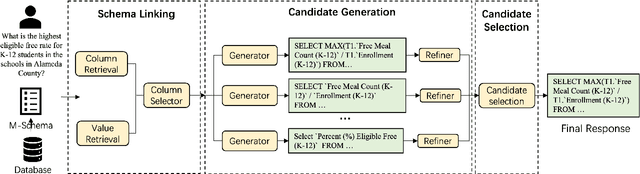
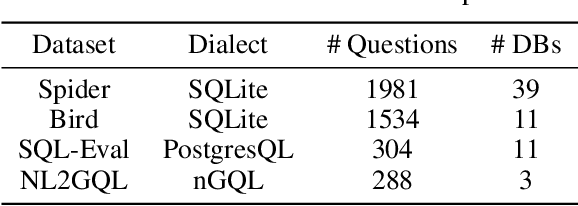
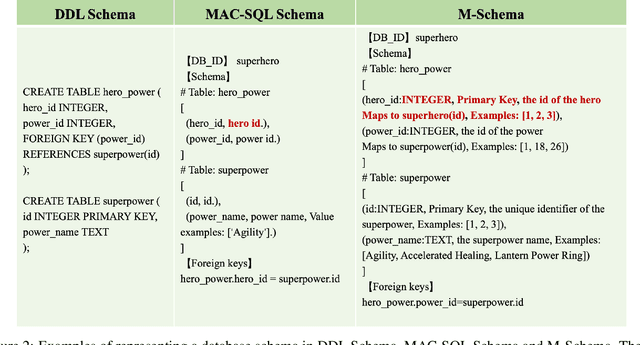
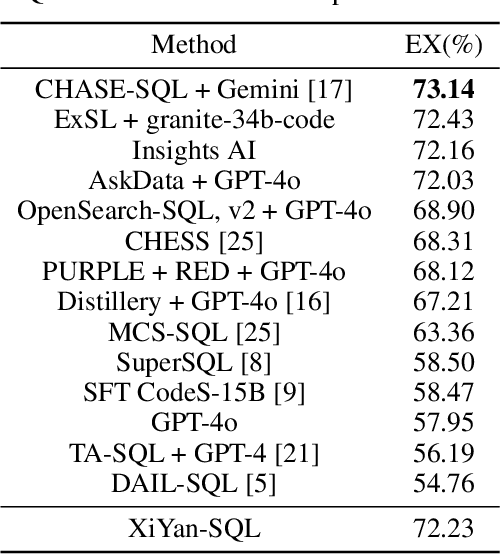
To tackle the challenges of large language model performance in natural language to SQL tasks, we introduce XiYan-SQL, an innovative framework that employs a multi-generator ensemble strategy to improve candidate generation. We introduce M-Schema, a semi-structured schema representation method designed to enhance the understanding of database structures. To enhance the quality and diversity of generated candidate SQL queries, XiYan-SQL integrates the significant potential of in-context learning (ICL) with the precise control of supervised fine-tuning. On one hand, we propose a series of training strategies to fine-tune models to generate high-quality candidates with diverse preferences. On the other hand, we implement the ICL approach with an example selection method based on named entity recognition to prevent overemphasis on entities. The refiner optimizes each candidate by correcting logical or syntactical errors. To address the challenge of identifying the best candidate, we fine-tune a selection model to distinguish nuances of candidate SQL queries. The experimental results on multiple dialect datasets demonstrate the robustness of XiYan-SQL in addressing challenges across different scenarios. Overall, our proposed XiYan-SQL achieves the state-of-the-art execution accuracy of 89.65% on the Spider test set, 69.86% on SQL-Eval, 41.20% on NL2GQL, and a competitive score of 72.23% on the Bird development benchmark. The proposed framework not only enhances the quality and diversity of SQL queries but also outperforms previous methods.
Urban Flood Mapping Using Satellite Synthetic Aperture Radar Data: A Review of Characteristics, Approaches and Datasets
Nov 06, 2024


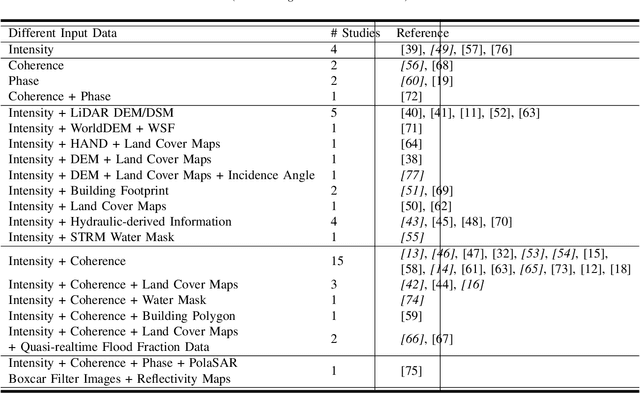
Understanding the extent of urban flooding is crucial for assessing building damage, casualties and economic losses. Synthetic Aperture Radar (SAR) technology offers significant advantages for mapping flooded urban areas due to its ability to collect data regardless weather and solar illumination conditions. However, the wide range of existing methods makes it difficult to choose the best approach for a specific situation and to identify future research directions. Therefore, this study provides a comprehensive review of current research on urban flood mapping using SAR data, summarizing key characteristics of floodwater in SAR images and outlining various approaches from scientific articles. Additionally, we provide a brief overview of the advantages and disadvantages of each method category, along with guidance on selecting the most suitable approach for different scenarios. This study focuses on the challenges and advancements in SAR-based urban flood mapping. It specifically addresses the limitations of spatial and temporal resolution in SAR data and discusses the essential pre-processing steps. Moreover, the article explores the potential benefits of Polarimetric SAR (PolSAR) techniques and uncertainty analysis for future research. Furthermore, it highlights a lack of open-access SAR datasets for urban flood mapping, hindering development in advanced deep learning-based methods. Besides, we evaluated the Technology Readiness Levels (TRLs) of urban flood mapping techniques to identify challenges and future research areas. Finally, the study explores the practical applications of SAR-based urban flood mapping in both the private and public sectors and provides a comprehensive overview of the benefits and potential impact of these methods.
Vector Quantization Prompting for Continual Learning
Oct 27, 2024
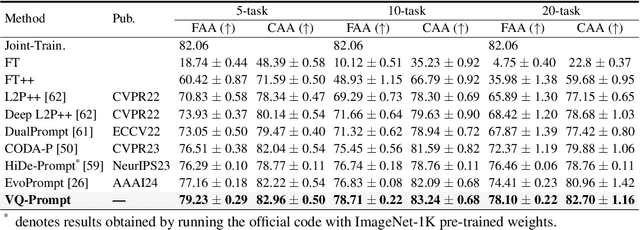
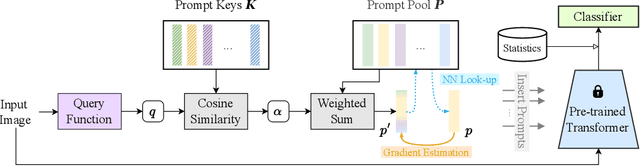
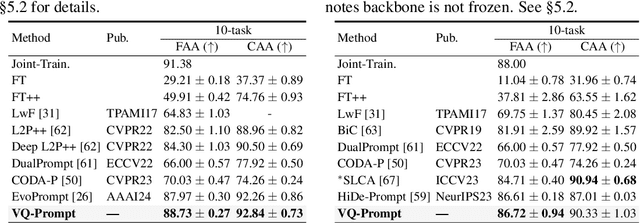
Continual learning requires to overcome catastrophic forgetting when training a single model on a sequence of tasks. Recent top-performing approaches are prompt-based methods that utilize a set of learnable parameters (i.e., prompts) to encode task knowledge, from which appropriate ones are selected to guide the fixed pre-trained model in generating features tailored to a certain task. However, existing methods rely on predicting prompt identities for prompt selection, where the identity prediction process cannot be optimized with task loss. This limitation leads to sub-optimal prompt selection and inadequate adaptation of pre-trained features for a specific task. Previous efforts have tried to address this by directly generating prompts from input queries instead of selecting from a set of candidates. However, these prompts are continuous, which lack sufficient abstraction for task knowledge representation, making them less effective for continual learning. To address these challenges, we propose VQ-Prompt, a prompt-based continual learning method that incorporates Vector Quantization (VQ) into end-to-end training of a set of discrete prompts. In this way, VQ-Prompt can optimize the prompt selection process with task loss and meanwhile achieve effective abstraction of task knowledge for continual learning. Extensive experiments show that VQ-Prompt outperforms state-of-the-art continual learning methods across a variety of benchmarks under the challenging class-incremental setting. The code is available at \href{https://github.com/jiaolifengmi/VQ-Prompt}{this https URL}.
MoMQ: Mixture-of-Experts Enhances Multi-Dialect Query Generation across Relational and Non-Relational Databases
Oct 24, 2024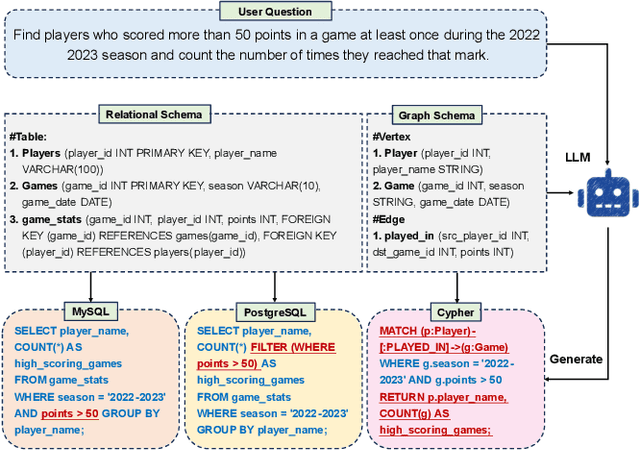
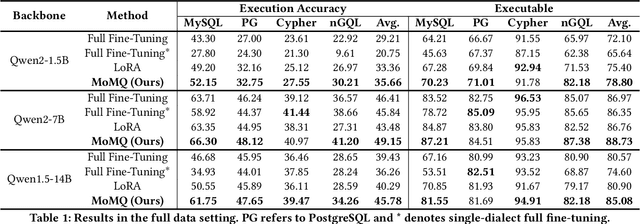
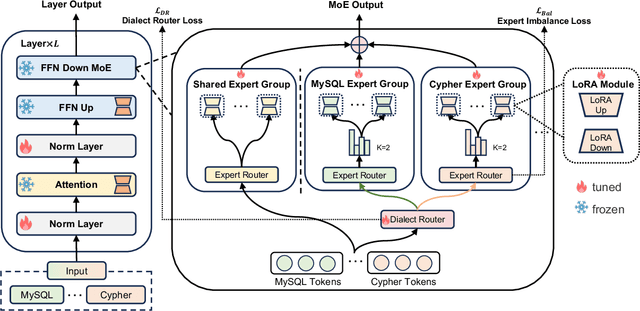
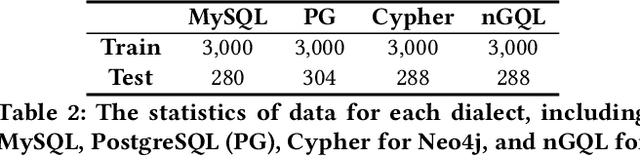
The improvement in translating natural language to structured query language (SQL) can be attributed to the advancements in large language models (LLMs). Open-source LLMs, tailored for specific database dialects such as MySQL, have shown great performance. However, cloud service providers are looking for a unified database manager service (e.g., Cosmos DB from Azure, Amazon Aurora from AWS, Lindorm from AlibabaCloud) that can support multiple dialects. This requirement has led to the concept of multi-dialect query generation, which presents challenges to LLMs. These challenges include syntactic differences among dialects and imbalanced data distribution across multiple dialects. To tackle these challenges, we propose MoMQ, a novel Mixture-of-Experts-based multi-dialect query generation framework across both relational and non-relational databases. MoMQ employs a dialect expert group for each dialect and a multi-level routing strategy to handle dialect-specific knowledge, reducing interference during query generation. Additionally, a shared expert group is introduced to address data imbalance, facilitating the transfer of common knowledge from high-resource dialects to low-resource ones. Furthermore, we have developed a high-quality multi-dialect query generation benchmark that covers relational and non-relational databases such as MySQL, PostgreSQL, Cypher for Neo4j, and nGQL for NebulaGraph. Extensive experiments have shown that MoMQ performs effectively and robustly even in resource-imbalanced scenarios.