 Add to Chrome
 Add to Firefox
 Add to Edge
OPERA: Online Data Pruning for Efficient Retrieval Model Adaptation
Mar 17, 2026
Domain-specific finetuning is essential for dense retrievers, yet not all training pairs contribute equally to the learning process. We introduce OPERA, a data pruning framework that exploits this heterogeneity to improve both the effectiveness and efficiency of retrieval model adaptation. We first investigate static pruning (SP), which retains only high-similarity query-document pairs, revealing an intrinsic quality-coverage tradeoff: ranking (NDCG) improves while retrieval (Recall) can degrade due to reduced query diversity. To resolve this tradeoff, we propose a two-stage dynamic pruning (DP) strategy that adaptively modulates sampling probabilities at both query and document levels throughout training, prioritizing high-quality examples while maintaining access to the full training set. Evaluations across eight datasets spanning six domains demonstrate the effectiveness of both approaches: SP improves ranking over standard finetuning (NDCG@10 +0.5\%), while DP achieves the strongest performance on both ranking (NDCG@10 +1.9\%) and retrieval (Recall@20 +0.7\%), with an average rank of 1.38 across all methods. These findings scale to Qwen3-Embedding, an LLM-based dense retriever, confirming architecture-agnostic benefits. Notably, DP reaches comparable performance in less than 50\% of the training time required by standard finetuning.

GloPath: An Entity-Centric Foundation Model for Glomerular Lesion Assessment and Clinicopathological Insights
Mar 03, 2026Glomerular pathology is central to the diagnosis and prognosis of renal diseases, yet the heterogeneity of glomerular morphology and fine-grained lesion patterns remain challenging for current AI approaches. We present GloPath, an entity-centric foundation model trained on over one million glomeruli extracted from 14,049 renal biopsy specimens using multi-scale and multi-view self-supervised learning. GloPath addresses two major challenges in nephropathology: glomerular lesion assessment and clinicopathological insights discovery. For lesion assessment, GloPath was benchmarked across three independent cohorts on 52 tasks, including lesion recognition, grading, few-shot classification, and cross-modality diagnosis-outperforming state-of-the-art methods in 42 tasks (80.8%). In the large-scale real-world study, it achieved an ROC-AUC of 91.51% for lesion recognition, demonstrating strong robustness in routine clinical settings. For clinicopathological insights, GloPath systematically revealed statistically significant associations between glomerular morphological parameters and clinical indicators across 224 morphology-clinical variable pairs, demonstrating its capacity to connect tissue-level pathology with patient-level outcomes. Together, these results position GloPath as a scalable and interpretable platform for glomerular lesion assessment and clinicopathological discovery, representing a step toward clinically translatable AI in renal pathology.
Speech Audio Generation from dynamic MRI via a Knowledge Enhanced Conditional Variational Autoencoder
Mar 09, 2025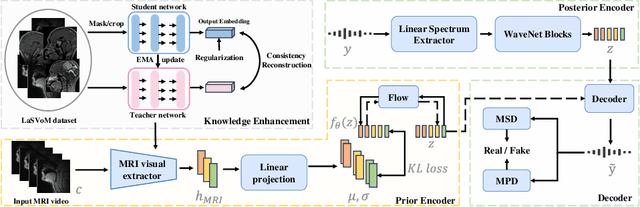
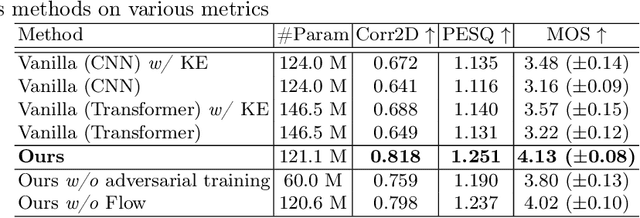
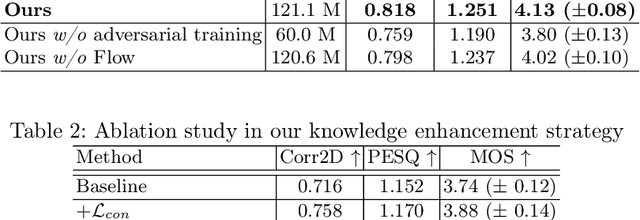
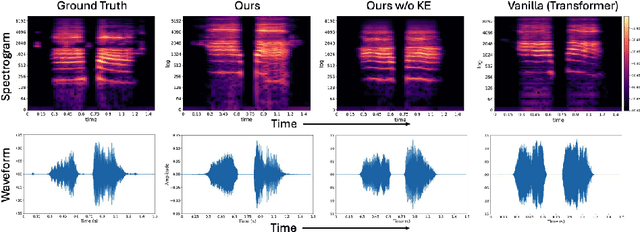
Dynamic Magnetic Resonance Imaging (MRI) of the vocal tract has become an increasingly adopted imaging modality for speech motor studies. Beyond image signals, systematic data loss, noise pollution, and audio file corruption can occur due to the unpredictability of the MRI acquisition environment. In such cases, generating audio from images is critical for data recovery in both clinical and research applications. However, this remains challenging due to hardware constraints, acoustic interference, and data corruption. Existing solutions, such as denoising and multi-stage synthesis methods, face limitations in audio fidelity and generalizability. To address these challenges, we propose a Knowledge Enhanced Conditional Variational Autoencoder (KE-CVAE), a novel two-step "knowledge enhancement + variational inference" framework for generating speech audio signals from cine dynamic MRI sequences. This approach introduces two key innovations: (1) integration of unlabeled MRI data for knowledge enhancement, and (2) a variational inference architecture to improve generative modeling capacity. To the best of our knowledge, this is one of the first attempts at synthesizing speech audio directly from dynamic MRI video sequences. The proposed method was trained and evaluated on an open-source dynamic vocal tract MRI dataset recorded during speech. Experimental results demonstrate its effectiveness in generating natural speech waveforms while addressing MRI-specific acoustic challenges, outperforming conventional deep learning-based synthesis approaches.
Unlocking adaptive digital pathology through dynamic feature learning
Dec 29, 2024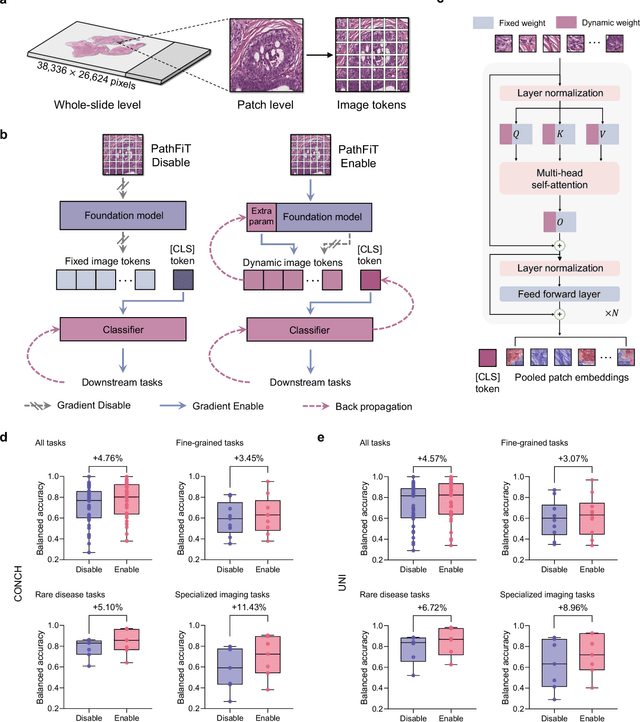
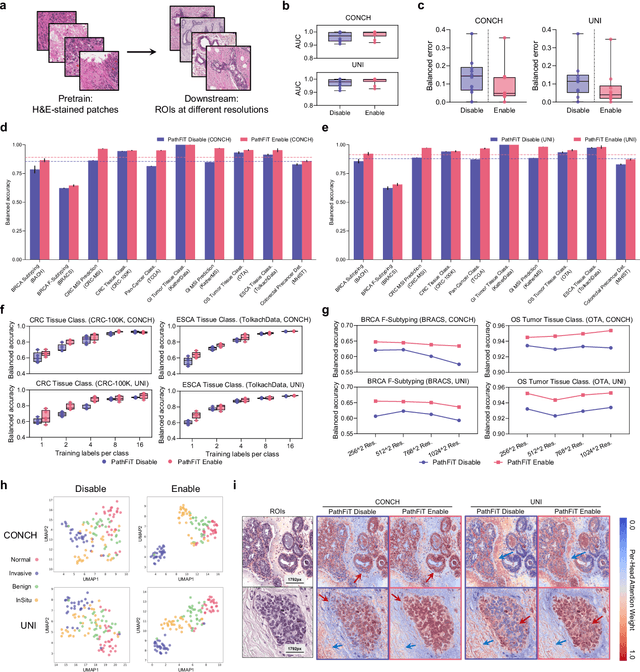
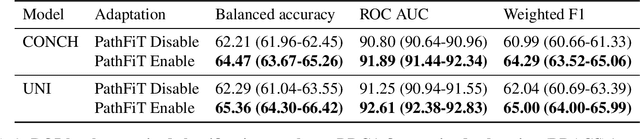
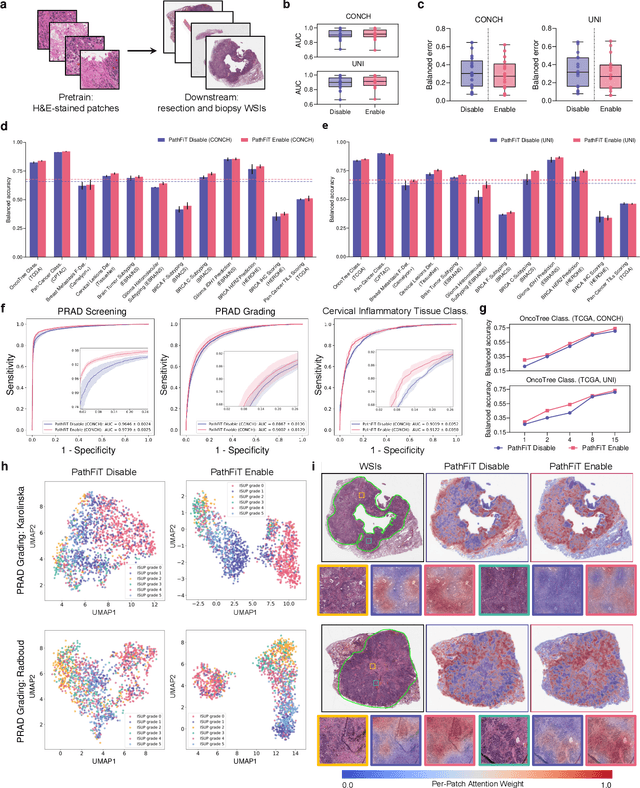
Foundation models have revolutionized the paradigm of digital pathology, as they leverage general-purpose features to emulate real-world pathological practices, enabling the quantitative analysis of critical histological patterns and the dissection of cancer-specific signals. However, these static general features constrain the flexibility and pathological relevance in the ever-evolving needs of clinical applications, hindering the broad use of the current models. Here we introduce PathFiT, a dynamic feature learning method that can be effortlessly plugged into various pathology foundation models to unlock their adaptability. Meanwhile, PathFiT performs seamless implementation across diverse pathology applications regardless of downstream specificity. To validate PathFiT, we construct a digital pathology benchmark with over 20 terabytes of Internet and real-world data comprising 28 H\&E-stained tasks and 7 specialized imaging tasks including Masson's Trichrome staining and immunofluorescence images. By applying PathFiT to the representative pathology foundation models, we demonstrate state-of-the-art performance on 34 out of 35 tasks, with significant improvements on 23 tasks and outperforming by 10.20% on specialized imaging tasks. The superior performance and versatility of PathFiT open up new avenues in computational pathology.
Aligning Vision Models with Human Aesthetics in Retrieval: Benchmarks and Algorithms
Jun 13, 2024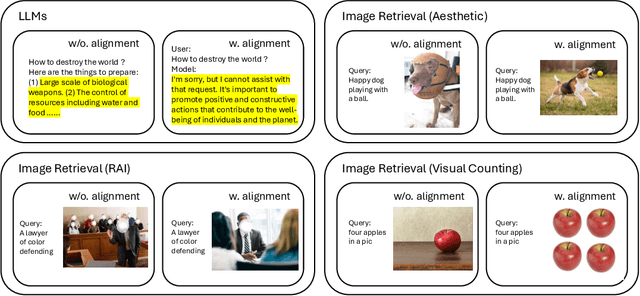

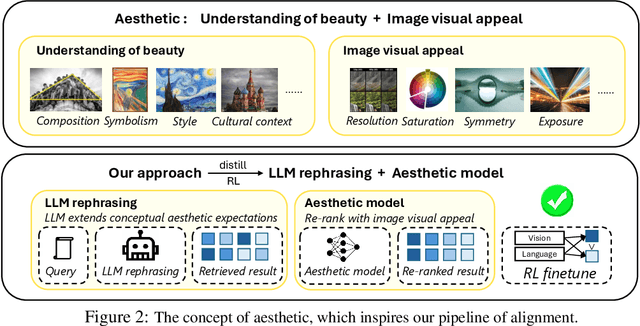

Modern vision models are trained on very large noisy datasets. While these models acquire strong capabilities, they may not follow the user's intent to output the desired results in certain aspects, e.g., visual aesthetic, preferred style, and responsibility. In this paper, we target the realm of visual aesthetics and aim to align vision models with human aesthetic standards in a retrieval system. Advanced retrieval systems usually adopt a cascade of aesthetic models as re-rankers or filters, which are limited to low-level features like saturation and perform poorly when stylistic, cultural or knowledge contexts are involved. We find that utilizing the reasoning ability of large language models (LLMs) to rephrase the search query and extend the aesthetic expectations can make up for this shortcoming. Based on the above findings, we propose a preference-based reinforcement learning method that fine-tunes the vision models to distill the knowledge from both LLMs reasoning and the aesthetic models to better align the vision models with human aesthetics. Meanwhile, with rare benchmarks designed for evaluating retrieval systems, we leverage large multi-modality model (LMM) to evaluate the aesthetic performance with their strong abilities. As aesthetic assessment is one of the most subjective tasks, to validate the robustness of LMM, we further propose a novel dataset named HPIR to benchmark the alignment with human aesthetics. Experiments demonstrate that our method significantly enhances the aesthetic behaviors of the vision models, under several metrics. We believe the proposed algorithm can be a general practice for aligning vision models with human values.
Optimal Design for Human Feedback
Apr 22, 2024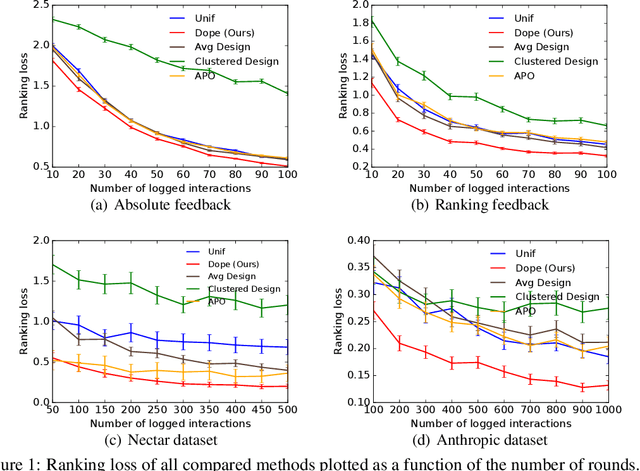

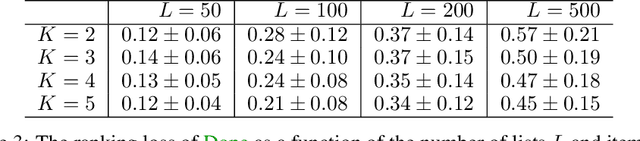
Learning of preference models from human feedback has been central to recent advances in artificial intelligence. Motivated by this progress, and the cost of obtaining high-quality human annotations, we study the problem of data collection for learning preference models. The key idea in our work is to generalize optimal designs, a tool for computing efficient data logging policies, to ranked lists. To show the generality of our ideas, we study both absolute and relative feedback on items in the list. We design efficient algorithms for both settings and analyze them. We prove that our preference model estimators improve with more data and so does the ranking error under the estimators. Finally, we experiment with several synthetic and real-world datasets to show the statistical efficiency of our algorithms.
Experimental Design for Active Transductive Inference in Large Language Models
Apr 12, 2024
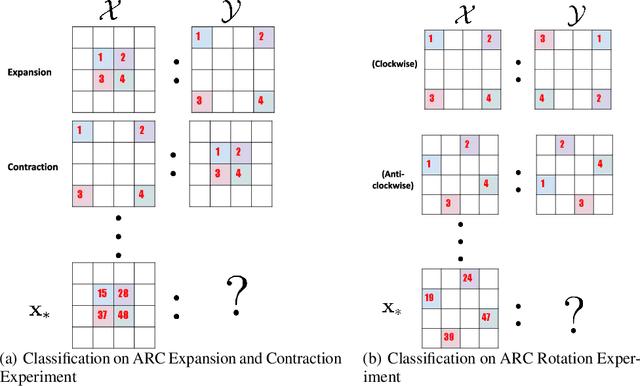


Transduction, the ability to include query-specific examples in the prompt at inference time, is one of the emergent abilities of large language models (LLMs). In this work, we propose a framework for adaptive prompt design called active transductive inference (ATI). We design the LLM prompt by adaptively choosing few-shot examples for a given inference query. The examples are initially unlabeled and we query the user to label the most informative ones, which maximally reduces the uncertainty in the LLM prediction. We propose two algorithms, GO and SAL, which differ in how the few-shot examples are chosen. We analyze these algorithms in linear models: first GO and then use its equivalence with SAL. We experiment with many different tasks and show that GO and SAL outperform other methods for choosing few-shot examples in the LLM prompt at inference time.
Logic-Scaffolding: Personalized Aspect-Instructed Recommendation Explanation Generation using LLMs
Dec 22, 2023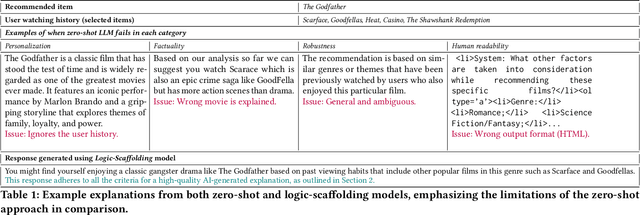

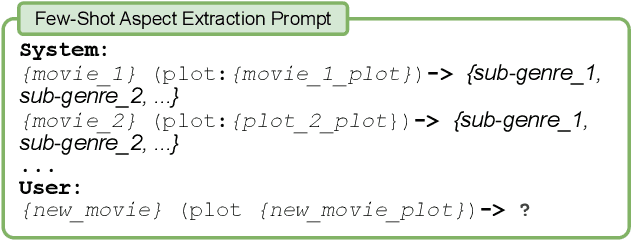

The unique capabilities of Large Language Models (LLMs), such as the natural language text generation ability, position them as strong candidates for providing explanation for recommendations. However, despite the size of the LLM, most existing models struggle to produce zero-shot explanations reliably. To address this issue, we propose a framework called Logic-Scaffolding, that combines the ideas of aspect-based explanation and chain-of-thought prompting to generate explanations through intermediate reasoning steps. In this paper, we share our experience in building the framework and present an interactive demonstration for exploring our results.
Fixed-Budget Best-Arm Identification with Heterogeneous Reward Variances
Jun 13, 2023We study the problem of best-arm identification (BAI) in the fixed-budget setting with heterogeneous reward variances. We propose two variance-adaptive BAI algorithms for this setting: SHVar for known reward variances and SHAdaVar for unknown reward variances. Our algorithms rely on non-uniform budget allocations among the arms where the arms with higher reward variances are pulled more often than those with lower variances. The main algorithmic novelty is in the design of SHAdaVar, which allocates budget greedily based on overestimating the unknown reward variances. We bound probabilities of misidentifying the best arms in both SHVar and SHAdaVar. Our analyses rely on novel lower bounds on the number of pulls of an arm that do not require closed-form solutions to the budget allocation problem. Since one of our budget allocation problems is analogous to the optimal experiment design with unknown variances, we believe that our results are of a broad interest. Our experiments validate our theory, and show that SHVar and SHAdaVar outperform algorithms from prior works with analytical guarantees.
Context Uncertainty in Contextual Bandits with Applications to Recommender Systems
Feb 16, 2022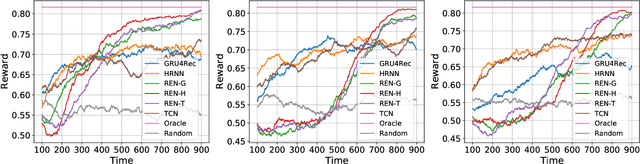
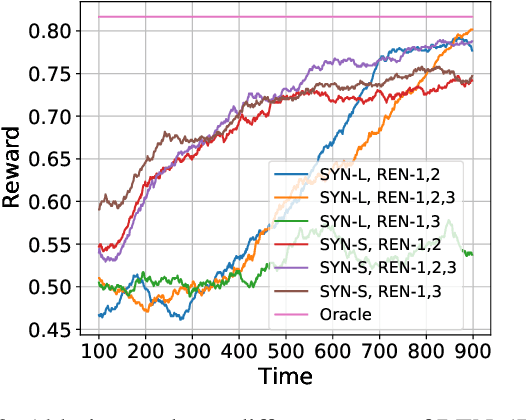
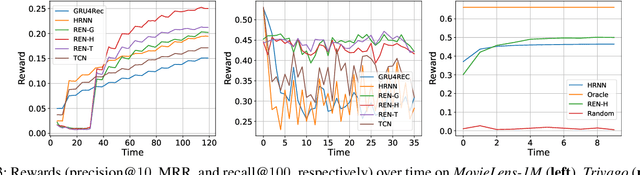
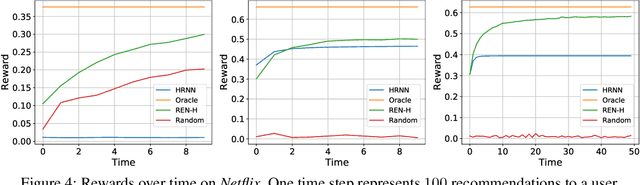
Recurrent neural networks have proven effective in modeling sequential user feedbacks for recommender systems. However, they usually focus solely on item relevance and fail to effectively explore diverse items for users, therefore harming the system performance in the long run. To address this problem, we propose a new type of recurrent neural networks, dubbed recurrent exploration networks (REN), to jointly perform representation learning and effective exploration in the latent space. REN tries to balance relevance and exploration while taking into account the uncertainty in the representations. Our theoretical analysis shows that REN can preserve the rate-optimal sublinear regret even when there exists uncertainty in the learned representations. Our empirical study demonstrates that REN can achieve satisfactory long-term rewards on both synthetic and real-world recommendation datasets, outperforming state-of-the-art models.