 Add to Chrome
 Add to Firefox
 Add to Edge
$π^3$: Scalable Permutation-Equivariant Visual Geometry Learning
Jul 17, 2025
We introduce $\pi^3$, a feed-forward neural network that offers a novel approach to visual geometry reconstruction, breaking the reliance on a conventional fixed reference view. Previous methods often anchor their reconstructions to a designated viewpoint, an inductive bias that can lead to instability and failures if the reference is suboptimal. In contrast, $\pi^3$ employs a fully permutation-equivariant architecture to predict affine-invariant camera poses and scale-invariant local point maps without any reference frames. This design makes our model inherently robust to input ordering and highly scalable. These advantages enable our simple and bias-free approach to achieve state-of-the-art performance on a wide range of tasks, including camera pose estimation, monocular/video depth estimation, and dense point map reconstruction. Code and models are publicly available.

Towards Depth Foundation Model: Recent Trends in Vision-Based Depth Estimation
Jul 15, 2025Depth estimation is a fundamental task in 3D computer vision, crucial for applications such as 3D reconstruction, free-viewpoint rendering, robotics, autonomous driving, and AR/VR technologies. Traditional methods relying on hardware sensors like LiDAR are often limited by high costs, low resolution, and environmental sensitivity, limiting their applicability in real-world scenarios. Recent advances in vision-based methods offer a promising alternative, yet they face challenges in generalization and stability due to either the low-capacity model architectures or the reliance on domain-specific and small-scale datasets. The emergence of scaling laws and foundation models in other domains has inspired the development of "depth foundation models": deep neural networks trained on large datasets with strong zero-shot generalization capabilities. This paper surveys the evolution of deep learning architectures and paradigms for depth estimation across the monocular, stereo, multi-view, and monocular video settings. We explore the potential of these models to address existing challenges and provide a comprehensive overview of large-scale datasets that can facilitate their development. By identifying key architectures and training strategies, we aim to highlight the path towards robust depth foundation models, offering insights into their future research and applications.
A Single-Point Measurement Framework for Robust Cyber-Attack Diagnosis in Smart Microgrids Using Dual Fractional-Order Feature Analysis
Jul 09, 2025Cyber-attacks jeopardize the safe operation of smart microgrids. At the same time, existing diagnostic methods either depend on expensive multi-point instrumentation or stringent modelling assumptions that are untenable under single-sensor constraints. This paper proposes a Fractional-Order Memory-Enhanced Attack-Diagnosis Scheme (FO-MADS) that achieves low-latency fault localisation and cyber-attack detection using only one VPQ (Voltage-Power-Reactive-power) sensor. FO-MADS first constructs a dual fractional-order feature library by jointly applying Caputo and Gr\"unwald-Letnikov derivatives, thereby amplifying micro-perturbations and slow drifts in the VPQ signal. A two-stage hierarchical classifier then pinpoints the affected inverter and isolates the faulty IGBT switch, effectively alleviating class imbalance. Robustness is further strengthened through Progressive Memory-Replay Adversarial Training (PMR-AT), whose attack-aware loss is dynamically re-weighted via Online Hard Example Mining (OHEM) to prioritise the most challenging samples. Experiments on a four-inverter microgrid testbed comprising 1 normal and 24 fault classes under four attack scenarios demonstrate diagnostic accuracies of 96.6 % (bias), 94.0 % (noise), 92.8 % (data replacement), and 95.7 % (replay), while sustaining 96.7 % under attack-free conditions. These results establish FO-MADS as a cost-effective and readily deployable solution that markedly enhances the cyber-physical resilience of smart microgrids.
OTSurv: A Novel Multiple Instance Learning Framework for Survival Prediction with Heterogeneity-aware Optimal Transport
Jun 25, 2025Survival prediction using whole slide images (WSIs) can be formulated as a multiple instance learning (MIL) problem. However, existing MIL methods often fail to explicitly capture pathological heterogeneity within WSIs, both globally -- through long-tailed morphological distributions, and locally through -- tile-level prediction uncertainty. Optimal transport (OT) provides a principled way of modeling such heterogeneity by incorporating marginal distribution constraints. Building on this insight, we propose OTSurv, a novel MIL framework from an optimal transport perspective. Specifically, OTSurv formulates survival predictions as a heterogeneity-aware OT problem with two constraints: (1) global long-tail constraint that models prior morphological distributions to avert both mode collapse and excessive uniformity by regulating transport mass allocation, and (2) local uncertainty-aware constraint that prioritizes high-confidence patches while suppressing noise by progressively raising the total transport mass. We then recast the initial OT problem, augmented by these constraints, into an unbalanced OT formulation that can be solved with an efficient, hardware-friendly matrix scaling algorithm. Empirically, OTSurv sets new state-of-the-art results across six popular benchmarks, achieving an absolute 3.6% improvement in average C-index. In addition, OTSurv achieves statistical significance in log-rank tests and offers high interpretability, making it a powerful tool for survival prediction in digital pathology. Our codes are available at https://github.com/Y-Research-SBU/OTSurv.
Improving LLM Reasoning through Interpretable Role-Playing Steering
Jun 09, 2025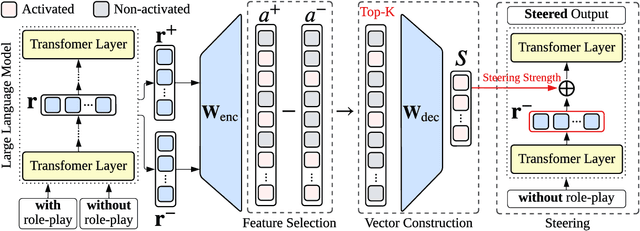
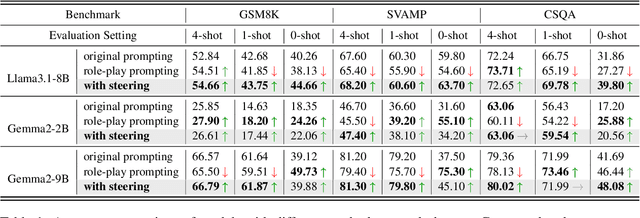
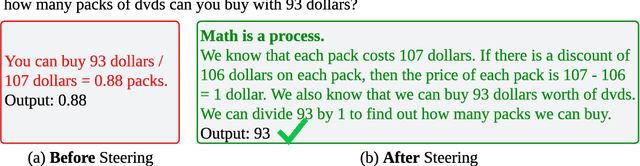
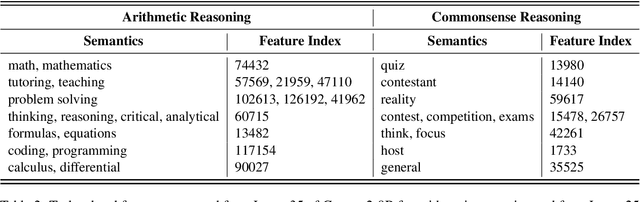
Role-playing has emerged as an effective technique for enhancing the reasoning capabilities of large language models (LLMs). However, existing methods primarily rely on prompt engineering, which often lacks stability and interpretability. In this paper, we introduce Sparse Autoencoder Role-Playing Steering (SRPS), a novel framework that identifies and manipulates internal model features associated with role-playing behavior. Our approach extracts latent representations from role-play prompts, selects the most relevant features based on activation patterns, and constructs a steering vector that can be injected into the model's residual stream with controllable intensity. Our method enables fine-grained control over role-specific behavior and offers insights into how role information influences internal model activations. Extensive experiments across various reasoning benchmarks and model sizes demonstrate consistent performance gains. Notably, in the zero-shot chain-of-thought (CoT) setting, the accuracy of Llama3.1-8B on CSQA improves from 31.86% to 39.80%, while Gemma2-9B on SVAMP increases from 37.50% to 45.10%. These results highlight the potential of SRPS to enhance reasoning ability in LLMs, providing better interpretability and stability compared to traditional prompt-based role-playing.
FreeTimeGS: Free Gaussian Primitives at Anytime and Anywhere for Dynamic Scene Reconstruction
Jun 06, 2025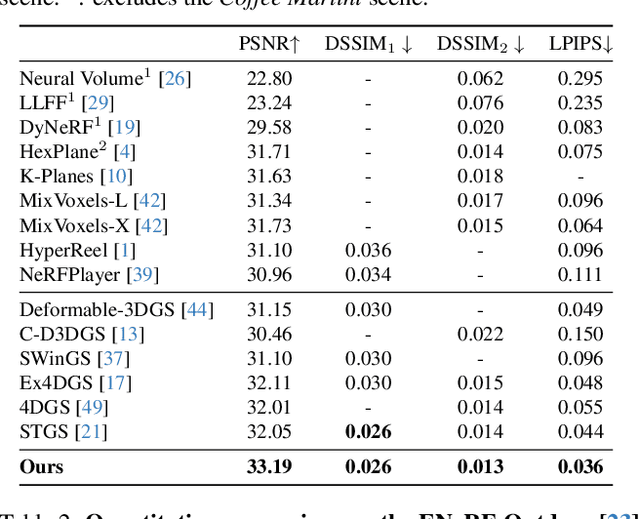
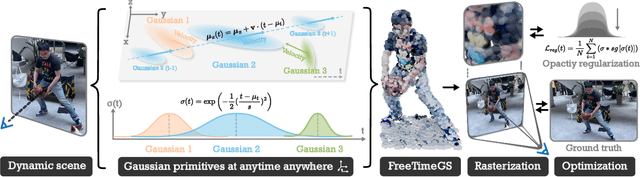
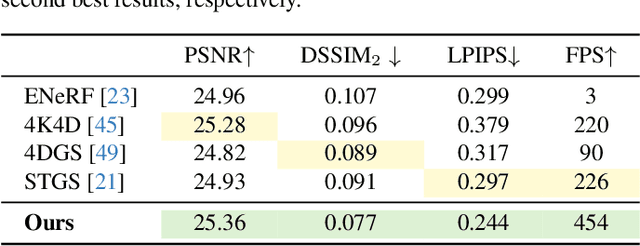
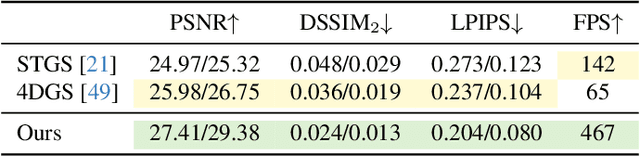
This paper addresses the challenge of reconstructing dynamic 3D scenes with complex motions. Some recent works define 3D Gaussian primitives in the canonical space and use deformation fields to map canonical primitives to observation spaces, achieving real-time dynamic view synthesis. However, these methods often struggle to handle scenes with complex motions due to the difficulty of optimizing deformation fields. To overcome this problem, we propose FreeTimeGS, a novel 4D representation that allows Gaussian primitives to appear at arbitrary time and locations. In contrast to canonical Gaussian primitives, our representation possesses the strong flexibility, thus improving the ability to model dynamic 3D scenes. In addition, we endow each Gaussian primitive with an motion function, allowing it to move to neighboring regions over time, which reduces the temporal redundancy. Experiments results on several datasets show that the rendering quality of our method outperforms recent methods by a large margin. Project page: https://zju3dv.github.io/freetimegs/ .
Diagnosing and Resolving Cloud Platform Instability with Multi-modal RAG LLMs
May 28, 2025Today's cloud-hosted applications and services are complex systems, and a performance or functional instability can have dozens or hundreds of potential root causes. Our hypothesis is that by combining the pattern matching capabilities of modern AI tools with a natural multi-modal RAG LLM interface, problem identification and resolution can be simplified. ARCA is a new multi-modal RAG LLM system that targets this domain. Step-wise evaluations show that ARCA outperforms state-of-the-art alternatives.
* Published in EuroMLSys2025
ViC-Bench: Benchmarking Visual-Interleaved Chain-of-Thought Capability in MLLMs with Free-Style Intermediate State Representations
May 20, 2025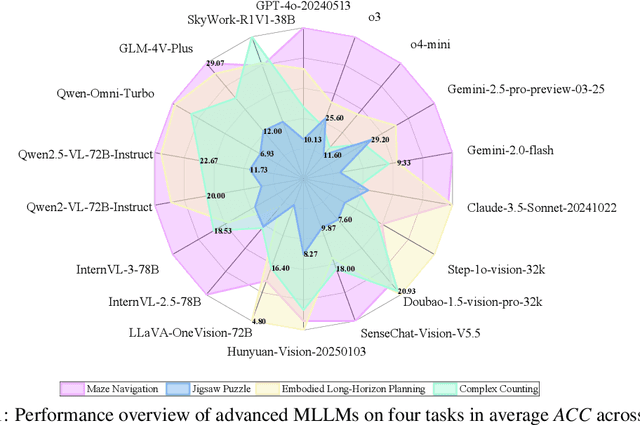
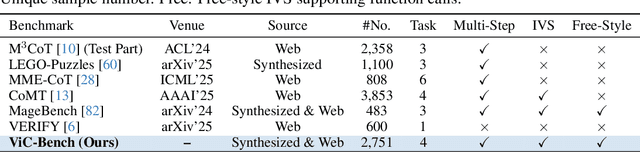
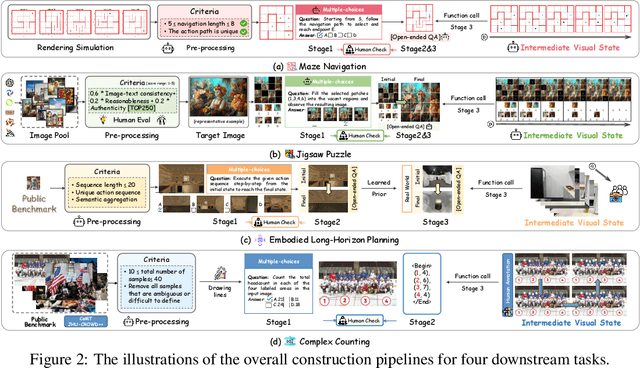
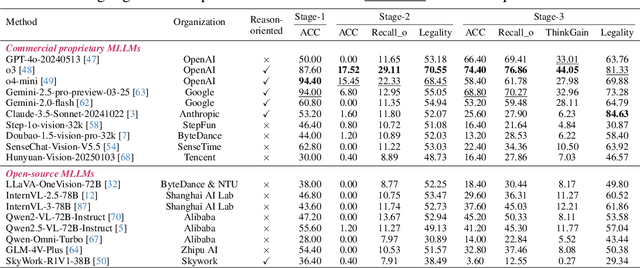
Visual-Interleaved Chain-of-Thought (VI-CoT) enables MLLMs to continually update their understanding and decisions based on step-wise intermediate visual states (IVS), much like a human would, which demonstrates impressive success in various tasks, thereby leading to emerged advancements in related benchmarks. Despite promising progress, current benchmarks provide models with relatively fixed IVS, rather than free-style IVS, whch might forcibly distort the original thinking trajectories, failing to evaluate their intrinsic reasoning capabilities. More importantly, existing benchmarks neglect to systematically explore the impact factors that IVS would impart to untamed reasoning performance. To tackle above gaps, we introduce a specialized benchmark termed ViC-Bench, consisting of four representive tasks: maze navigation, jigsaw puzzle, embodied long-horizon planning, and complex counting, where each task has dedicated free-style IVS generation pipeline supporting function calls. To systematically examine VI-CoT capability, we propose a thorough evaluation suite incorporating a progressive three-stage strategy with targeted new metrics. Besides, we establish Incremental Prompting Information Injection (IPII) strategy to ablatively explore the prompting factors for VI-CoT. We extensively conduct evaluations for 18 advanced MLLMs, revealing key insights into their VI-CoT capability. Our proposed benchmark is publicly open at Huggingface.
CoT-Kinetics: A Theoretical Modeling Assessing LRM Reasoning Process
May 19, 2025Recent Large Reasoning Models significantly improve the reasoning ability of Large Language Models by learning to reason, exhibiting the promising performance in solving complex tasks. LRMs solve tasks that require complex reasoning by explicitly generating reasoning trajectories together with answers. Nevertheless, judging the quality of such an output answer is not easy because only considering the correctness of the answer is not enough and the soundness of the reasoning trajectory part matters as well. Logically, if the soundness of the reasoning part is poor, even if the answer is correct, the confidence of the derived answer should be low. Existing methods did consider jointly assessing the overall output answer by taking into account the reasoning part, however, their capability is still not satisfactory as the causal relationship of the reasoning to the concluded answer cannot properly reflected. In this paper, inspired by classical mechanics, we present a novel approach towards establishing a CoT-Kinetics energy equation. Specifically, our CoT-Kinetics energy equation formulates the token state transformation process, which is regulated by LRM internal transformer layers, as like a particle kinetics dynamics governed in a mechanical field. Our CoT-Kinetics energy assigns a scalar score to evaluate specifically the soundness of the reasoning phase, telling how confident the derived answer could be given the evaluated reasoning. As such, the LRM's overall output quality can be accurately measured, rather than a coarse judgment (e.g., correct or incorrect) anymore.
Single-Sample and Robust Online Resource Allocation
May 05, 2025Online Resource Allocation problem is a central problem in many areas of Computer Science, Operations Research, and Economics. In this problem, we sequentially receive $n$ stochastic requests for $m$ kinds of shared resources, where each request can be satisfied in multiple ways, consuming different amounts of resources and generating different values. The goal is to achieve a $(1-\epsilon)$-approximation to the hindsight optimum, where $\epsilon>0$ is a small constant, assuming each resource has a large budget. In this paper, we investigate the learnability and robustness of online resource allocation. Our primary contribution is a novel Exponential Pricing algorithm with the following properties: 1. It requires only a \emph{single sample} from each of the $n$ request distributions to achieve a $(1-\epsilon)$-approximation for online resource allocation with large budgets. Such an algorithm was previously unknown, even with access to polynomially many samples, as prior work either assumed full distributional knowledge or was limited to i.i.d.\,or random-order arrivals. 2. It is robust to corruptions in the outliers model and the value augmentation model. Specifically, it maintains its $(1 - \epsilon)$-approximation guarantee under both these robustness models, resolving the open question posed in Argue, Gupta, Molinaro, and Singla (SODA'22). 3. It operates as a simple item-pricing algorithm that ensures incentive compatibility. The intuition behind our Exponential Pricing algorithm is that the price of a resource should adjust exponentially as it is overused or underused. It differs from conventional approaches that use an online learning algorithm for item pricing. This departure guarantees that the algorithm will never run out of any resource, but loses the usual no-regret properties of online learning algorithms, necessitating a new analytical approach.