 Add to Chrome
 Add to Firefox
 Add to Edge
Optimizing LLM-Based Multi-Agent System with Textual Feedback: A Case Study on Software Development
May 22, 2025
We have seen remarkable progress in large language models (LLMs) empowered multi-agent systems solving complex tasks necessitating cooperation among experts with diverse skills. However, optimizing LLM-based multi-agent systems remains challenging. In this work, we perform an empirical case study on group optimization of role-based multi-agent systems utilizing natural language feedback for challenging software development tasks under various evaluation dimensions. We propose a two-step agent prompts optimization pipeline: identifying underperforming agents with their failure explanations utilizing textual feedback and then optimizing system prompts of identified agents utilizing failure explanations. We then study the impact of various optimization settings on system performance with two comparison groups: online against offline optimization and individual against group optimization. For group optimization, we study two prompting strategies: one-pass and multi-pass prompting optimizations. Overall, we demonstrate the effectiveness of our optimization method for role-based multi-agent systems tackling software development tasks evaluated on diverse evaluation dimensions, and we investigate the impact of diverse optimization settings on group behaviors of the multi-agent systems to provide practical insights for future development.

MetaSTH-Sleep: Towards Effective Few-Shot Sleep Stage Classification with Spatial-Temporal Hypergraph Enhanced Meta-Learning
May 22, 2025Accurate classification of sleep stages based on bio-signals is fundamental for automatic sleep stage annotation. Traditionally, this task relies on experienced clinicians to manually annotate data, a process that is both time-consuming and labor-intensive. In recent years, deep learning methods have shown promise in automating this task. However, three major challenges remain: (1) deep learning models typically require large-scale labeled datasets, making them less effective in real-world settings where annotated data is limited; (2) significant inter-individual variability in bio-signals often results in inconsistent model performance when applied to new subjects, limiting generalization; and (3) existing approaches often overlook the high-order relationships among bio-signals, failing to simultaneously capture signal heterogeneity and spatial-temporal dependencies. To address these issues, we propose MetaSTH-Sleep, a few-shot sleep stage classification framework based on spatial-temporal hypergraph enhanced meta-learning. Our approach enables rapid adaptation to new subjects using only a few labeled samples, while the hypergraph structure effectively models complex spatial interconnections and temporal dynamics simultaneously in EEG signals. Experimental results demonstrate that MetaSTH-Sleep achieves substantial performance improvements across diverse subjects, offering valuable insights to support clinicians in sleep stage annotation.
RBench-V: A Primary Assessment for Visual Reasoning Models with Multi-modal Outputs
May 22, 2025The rapid advancement of native multi-modal models and omni-models, exemplified by GPT-4o, Gemini, and o3, with their capability to process and generate content across modalities such as text and images, marks a significant milestone in the evolution of intelligence. Systematic evaluation of their multi-modal output capabilities in visual thinking processes (also known as multi-modal chain of thought, M-CoT) becomes critically important. However, existing benchmarks for evaluating multi-modal models primarily focus on assessing multi-modal inputs and text-only reasoning while neglecting the importance of reasoning through multi-modal outputs. In this paper, we present a benchmark, dubbed RBench-V, designed to assess models' vision-indispensable reasoning abilities. To construct RBench-V, we carefully hand-pick 803 questions covering math, physics, counting, and games. Unlike previous benchmarks that typically specify certain input modalities, RBench-V presents problems centered on multi-modal outputs, which require image manipulation such as generating novel images and constructing auxiliary lines to support the reasoning process. We evaluate numerous open- and closed-source models on RBench-V, including o3, Gemini 2.5 Pro, Qwen2.5-VL, etc. Even the best-performing model, o3, achieves only 25.8% accuracy on RBench-V, far below the human score of 82.3%, highlighting that current models struggle to leverage multi-modal reasoning. Data and code are available at https://evalmodels.github.io/rbenchv
Transfer Faster, Price Smarter: Minimax Dynamic Pricing under Cross-Market Preference Shift
May 22, 2025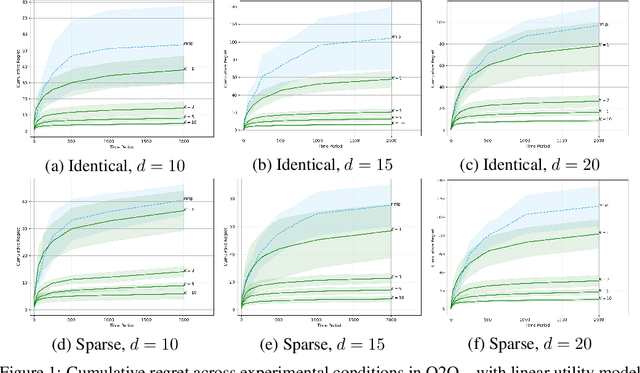
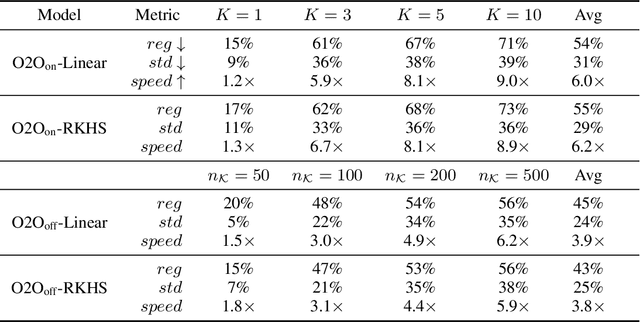
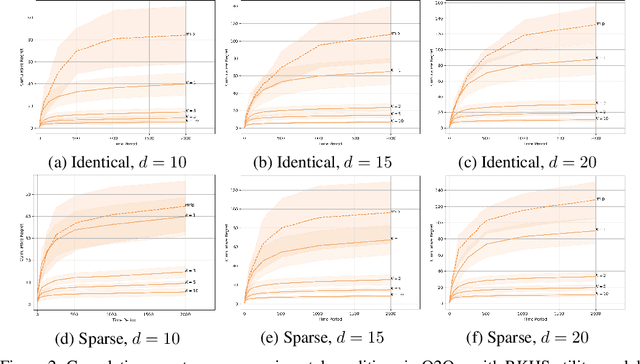
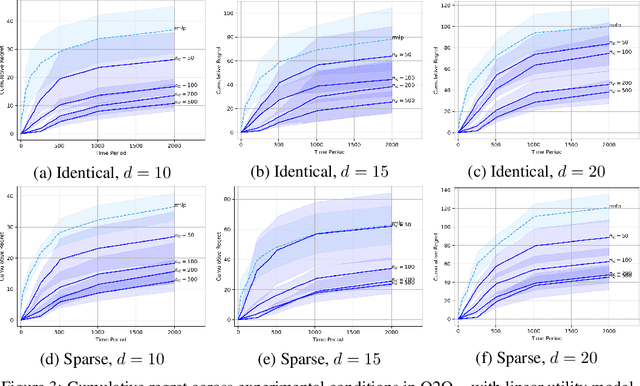
We study contextual dynamic pricing when a target market can leverage K auxiliary markets -- offline logs or concurrent streams -- whose mean utilities differ by a structured preference shift. We propose Cross-Market Transfer Dynamic Pricing (CM-TDP), the first algorithm that provably handles such model-shift transfer and delivers minimax-optimal regret for both linear and non-parametric utility models. For linear utilities of dimension d, where the difference between source- and target-task coefficients is $s_{0}$-sparse, CM-TDP attains regret $\tilde{O}((d*K^{-1}+s_{0})\log T)$. For nonlinear demand residing in a reproducing kernel Hilbert space with effective dimension $\alpha$, complexity $\beta$ and task-similarity parameter $H$, the regret becomes $\tilde{O}\!(K^{-2\alpha\beta/(2\alpha\beta+1)}T^{1/(2\alpha\beta+1)} + H^{2/(2\alpha+1)}T^{1/(2\alpha+1)})$, matching information-theoretic lower bounds up to logarithmic factors. The RKHS bound is the first of its kind for transfer pricing and is of independent interest. Extensive simulations show up to 50% lower cumulative regret and 5 times faster learning relative to single-market pricing baselines. By bridging transfer learning, robust aggregation, and revenue optimization, CM-TDP moves toward pricing systems that transfer faster, price smarter.
Log-Augmented Generation: Scaling Test-Time Reasoning with Reusable Computation
May 20, 2025While humans naturally learn and adapt from past experiences, large language models (LLMs) and their agentic counterparts struggle to retain reasoning from previous tasks and apply them in future contexts. To address this limitation, we propose a novel framework, log-augmented generation (LAG) that directly reuses prior computation and reasoning from past logs at test time to enhance model's ability to learn from previous tasks and perform better on new, unseen challenges, all while keeping the system efficient and scalable. Specifically, our system represents task logs using key-value (KV) caches, encoding the full reasoning context of prior tasks while storing KV caches for only a selected subset of tokens. When a new task arises, LAG retrieves the KV values from relevant logs to augment generation. Our approach differs from reflection-based memory mechanisms by directly reusing prior reasoning and computations without requiring additional steps for knowledge extraction or distillation. Our method also goes beyond existing KV caching techniques, which primarily target efficiency gains rather than improving accuracy. Experiments on knowledge- and reasoning-intensive datasets demonstrate that our method significantly outperforms standard agentic systems that do not utilize logs, as well as existing solutions based on reflection and KV cache techniques.
TCC-Bench: Benchmarking the Traditional Chinese Culture Understanding Capabilities of MLLMs
May 19, 2025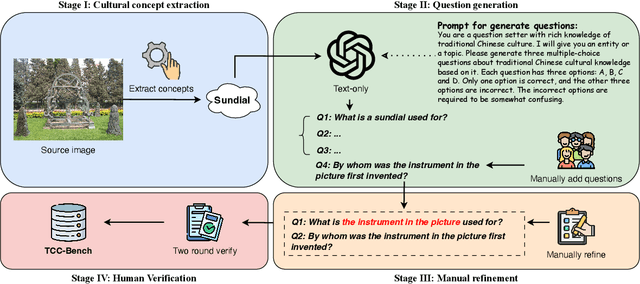
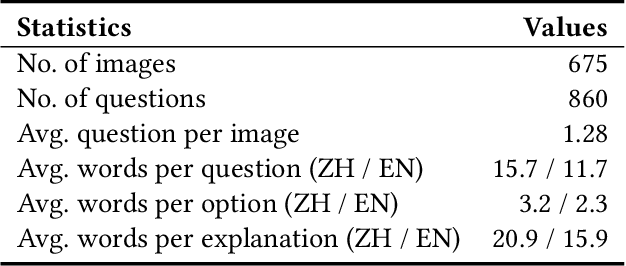
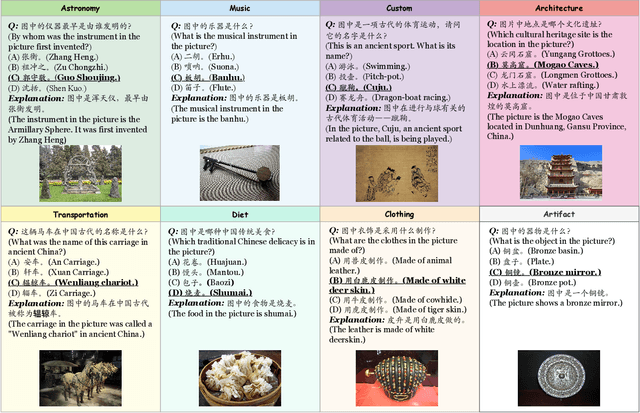
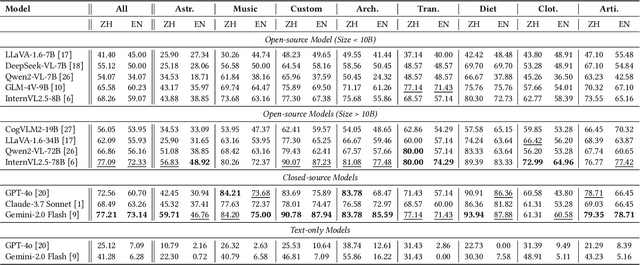
Recent progress in Multimodal Large Language Models (MLLMs) have significantly enhanced the ability of artificial intelligence systems to understand and generate multimodal content. However, these models often exhibit limited effectiveness when applied to non-Western cultural contexts, which raises concerns about their wider applicability. To address this limitation, we propose the Traditional Chinese Culture understanding Benchmark (TCC-Bench), a bilingual (i.e., Chinese and English) Visual Question Answering (VQA) benchmark specifically designed for assessing the understanding of traditional Chinese culture by MLLMs. TCC-Bench comprises culturally rich and visually diverse data, incorporating images from museum artifacts, everyday life scenes, comics, and other culturally significant contexts. We adopt a semi-automated pipeline that utilizes GPT-4o in text-only mode to generate candidate questions, followed by human curation to ensure data quality and avoid potential data leakage. The benchmark also avoids language bias by preventing direct disclosure of cultural concepts within question texts. Experimental evaluations across a wide range of MLLMs demonstrate that current models still face significant challenges when reasoning about culturally grounded visual content. The results highlight the need for further research in developing culturally inclusive and context-aware multimodal systems. The code and data can be found at: https://tcc-bench.github.io/.
PromptPrism: A Linguistically-Inspired Taxonomy for Prompts
May 19, 2025Prompts are the interface for eliciting the capabilities of large language models (LLMs). Understanding their structure and components is critical for analyzing LLM behavior and optimizing performance. However, the field lacks a comprehensive framework for systematic prompt analysis and understanding. We introduce PromptPrism, a linguistically-inspired taxonomy that enables prompt analysis across three hierarchical levels: functional structure, semantic component, and syntactic pattern. We show the practical utility of PromptPrism by applying it to three applications: (1) a taxonomy-guided prompt refinement approach that automatically improves prompt quality and enhances model performance across a range of tasks; (2) a multi-dimensional dataset profiling method that extracts and aggregates structural, semantic, and syntactic characteristics from prompt datasets, enabling comprehensive analysis of prompt distributions and patterns; (3) a controlled experimental framework for prompt sensitivity analysis by quantifying the impact of semantic reordering and delimiter modifications on LLM performance. Our experimental results validate the effectiveness of our taxonomy across these applications, demonstrating that PromptPrism provides a foundation for refining, profiling, and analyzing prompts.
Pyramid Sparse Transformer: Enhancing Multi-Scale Feature Fusion with Dynamic Token Selection
May 19, 2025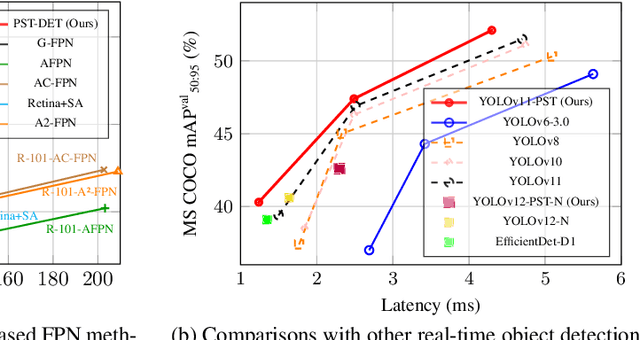
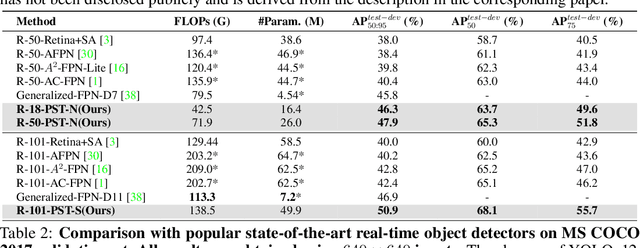
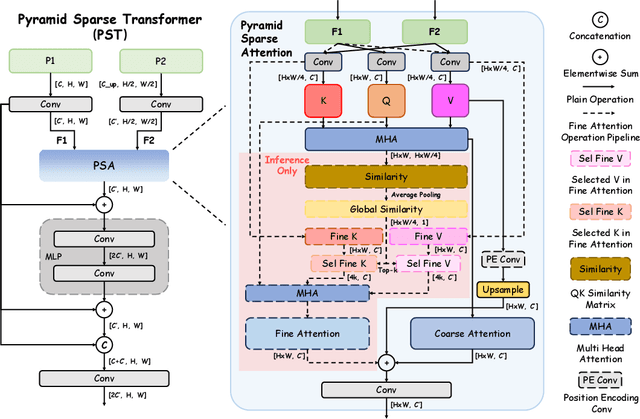
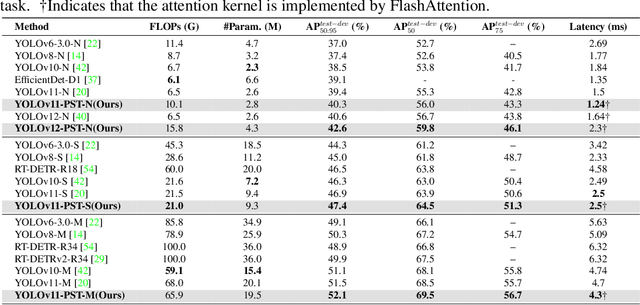
Feature fusion is critical for high-performance vision models but often incurs prohibitive complexity. However, prevailing attention-based fusion methods often involve significant computational complexity and implementation challenges, limiting their efficiency in resource-constrained environments. To address these issues, we introduce the Pyramid Sparse Transformer (PST), a lightweight, plug-and-play module that integrates coarse-to-fine token selection and shared attention parameters to reduce computation while preserving spatial detail. PST can be trained using only coarse attention and seamlessly activated at inference for further accuracy gains without retraining. When added to state-of-the-art real-time detection models, such as YOLOv11-N/S/M, PST yields mAP improvements of 0.9%, 0.5%, and 0.4% on MS COCO with minimal latency impact. Likewise, embedding PST into ResNet-18/50/101 as backbones, boosts ImageNet top-1 accuracy by 6.5%, 1.7%, and 1.0%, respectively. These results demonstrate PST's effectiveness as a simple, hardware-friendly enhancement for both detection and classification tasks.
Multi-modal Collaborative Optimization and Expansion Network for Event-assisted Single-eye Expression Recognition
May 17, 2025In this paper, we proposed a Multi-modal Collaborative Optimization and Expansion Network (MCO-E Net), to use event modalities to resist challenges such as low light, high exposure, and high dynamic range in single-eye expression recognition tasks. The MCO-E Net introduces two innovative designs: Multi-modal Collaborative Optimization Mamba (MCO-Mamba) and Heterogeneous Collaborative and Expansion Mixture-of-Experts (HCE-MoE). MCO-Mamba, building upon Mamba, leverages dual-modal information to jointly optimize the model, facilitating collaborative interaction and fusion of modal semantics. This approach encourages the model to balance the learning of both modalities and harness their respective strengths. HCE-MoE, on the other hand, employs a dynamic routing mechanism to distribute structurally varied experts (deep, attention, and focal), fostering collaborative learning of complementary semantics. This heterogeneous architecture systematically integrates diverse feature extraction paradigms to comprehensively capture expression semantics. Extensive experiments demonstrate that our proposed network achieves competitive performance in the task of single-eye expression recognition, especially under poor lighting conditions.
DARLR: Dual-Agent Offline Reinforcement Learning for Recommender Systems with Dynamic Reward
May 12, 2025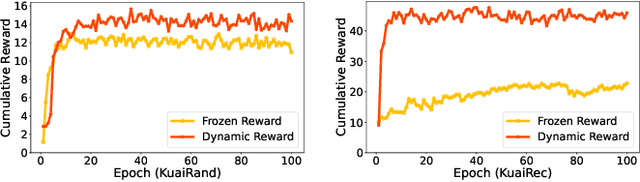
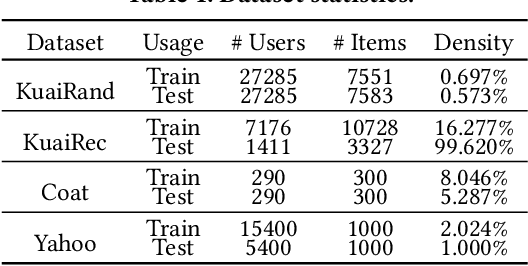
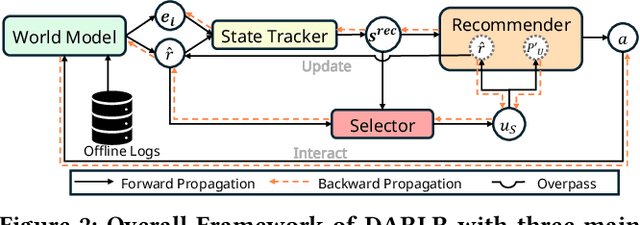
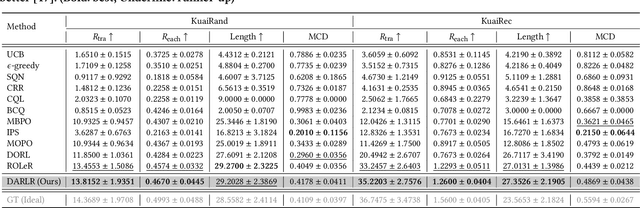
Model-based offline reinforcement learning (RL) has emerged as a promising approach for recommender systems, enabling effective policy learning by interacting with frozen world models. However, the reward functions in these world models, trained on sparse offline logs, often suffer from inaccuracies. Specifically, existing methods face two major limitations in addressing this challenge: (1) deterministic use of reward functions as static look-up tables, which propagates inaccuracies during policy learning, and (2) static uncertainty designs that fail to effectively capture decision risks and mitigate the impact of these inaccuracies. In this work, a dual-agent framework, DARLR, is proposed to dynamically update world models to enhance recommendation policies. To achieve this, a \textbf{\textit{selector}} is introduced to identify reference users by balancing similarity and diversity so that the \textbf{\textit{recommender}} can aggregate information from these users and iteratively refine reward estimations for dynamic reward shaping. Further, the statistical features of the selected users guide the dynamic adaptation of an uncertainty penalty to better align with evolving recommendation requirements. Extensive experiments on four benchmark datasets demonstrate the superior performance of DARLR, validating its effectiveness. The code is available at https://github.com/ArronDZhang/DARLR.