 Add to Chrome
 Add to Firefox
 Add to Edge
Dual-Channel Tensor Neural Networks: Finite-Sample Theory and Conformal Structure Selection
May 18, 2026
Tensor-valued data arise naturally in neuroimaging, genomics, climate science, and spatiotemporal networks, where multilinear dependencies across modes carry information that is destroyed under vectorization. Existing approaches either impose a single low-rank structure, which can miss localized signal, or treat the tensor as a long vector, which discards its multiway geometry. We propose a *Dual-Channel Tensor Neural Network* (DC-TNN) that decomposes each tensor input into a low-rank core and a sparse refinement, and processes the two components through coupled neural channels. The framework is structure-agnostic and accommodates CP, Tucker, and tensor-train cores within a single architecture. For estimation, we establish non-asymptotic risk bounds for the DC-TNN estimator that decompose into network approximation, core estimation, and refinement-selection terms, and show that the effective dimension is determined jointly by the core rank and refinement sparsity rather than by the ambient tensor size. For inference, we develop a *structure-aware conformal ROC* procedure that calibrates within the core-refinement latent space and produces ROC and AUC confidence bands with finite-sample, distribution-free coverage. Building on this, we propose a *conformal structure selector* that, to our knowledge, is the *first distribution-free procedure* for choosing among candidate tensor decompositions with finite-sample validity. Simulations and an analysis of a protein dataset demonstrate competitive predictive accuracy, reliable uncertainty quantification, and consistent recovery of the tensor structure.

Learning to Hand Off: Provably Convergent Workflow Learning under Interface Constraints
May 18, 2026We study workflow learning in a setting where specialized agents hand off control through a shared artifact, each agent observes only a local function of that artifact and its own private state, and no centralized learner accesses joint trajectories -- the operating regime of multi-agent LLM pipelines that span organizational, vendor, or trust boundaries. We formalize this regime as an interface-constrained semi-Markov decision process (IC-SMDP), whose decision epochs occur at handoff times, and design IC-$Q$, an asynchronous decentralized $Q$-learning algorithm in which cross-agent coordination at every handoff is exactly one scalar. Our main result is a finite-sample bound for neural IC-$Q$ that decomposes into three independently controllable error sources: neural function-approximation error, interface representation gap, and a mixing-time residual, under the random option-duration discount. Establishing this bound requires lifting the approximate information state (AIS) framework from single-agent primitive-step MDPs to multi-agent SMDPs and controlling Markovian noise under random duration, neither of which has been done in prior work. To our knowledge this is the first finite-sample guarantee for neural $Q$-learning under decentralized partial observability. Four experiments: a controlled synthetic IC-SMDP that validates the bound term-by-term, multi-LLM mathematical reasoning, multi-agent routing, and multi-agent CPU programming, show that IC-$Q$ matches a centralized oracle without any agent observing joint trajectories, with each of the three error sources scaling along its corresponding axis as the bound predicts.
Transfer Learning for Contextual Joint Assortment-Pricing under Cross-Market Heterogeneity
Mar 18, 2026We study transfer learning for contextual joint assortment-pricing under a multinomial logit choice model with bandit feedback. A seller operates across multiple related markets and observes only posted prices and realized purchases. While data from source markets can accelerate learning in a target market, cross-market differences in customer preferences may introduce systematic bias if pooled indiscriminately. We model heterogeneity through a structured utility shift, where markets share a common contextual utility structure but differ along a sparse set of latent preference coordinates. Building on this, we develop Transfer Joint Assortment-Pricing (TJAP), a bias-aware framework that combines aggregate-then-debias estimation with a UCB-style policy. TJAP constructs two-radius confidence bounds that separately capture statistical uncertainty and transfer-induced bias, uniformly over continuous prices. We establish matching minimax regret bounds of order $\tilde{O}\!\left(d\sqrt{\frac{T}{1+H}} + s_0\sqrt{T}\right),$revealing a transparent variance-bias tradeoff: transfer accelerates learning along shared preference directions, while heterogeneous components impose an irreducible adaptation cost. Numerical experiments corroborate the theory, showing that TJAP outperforms both target-only learning and naive pooling while remaining robust to cross-market differences.
Quantifying Epistemic Uncertainty in Diffusion Models
Feb 09, 2026To ensure high quality outputs, it is important to quantify the epistemic uncertainty of diffusion models. Existing methods are often unreliable because they mix epistemic and aleatoric uncertainty. We introduce a method based on Fisher information that explicitly isolates epistemic variance, producing more reliable plausibility scores for generated data. To make this approach scalable, we propose FLARE (Fisher-Laplace Randomized Estimator), which approximates the Fisher information using a uniformly random subset of model parameters. Empirically, FLARE improves uncertainty estimation in synthetic time-series generation tasks, achieving more accurate and reliable filtering than other methods. Theoretically, we bound the convergence rate of our randomized approximation and provide analytic and empirical evidence that last-layer Laplace approximations are insufficient for this task.
Low-Rank Plus Sparse Matrix Transfer Learning under Growing Representations and Ambient Dimensions
Jan 29, 2026Learning systems often expand their ambient features or latent representations over time, embedding earlier representations into larger spaces with limited new latent structure. We study transfer learning for structured matrix estimation under simultaneous growth of the ambient dimension and the intrinsic representation, where a well-estimated source task is embedded as a subspace of a higher-dimensional target task. We propose a general transfer framework in which the target parameter decomposes into an embedded source component, low-dimensional low-rank innovations, and sparse edits, and develop an anchored alternating projection estimator that preserves transferred subspaces while estimating only low-dimensional innovations and sparse modifications. We establish deterministic error bounds that separate target noise, representation growth, and source estimation error, yielding strictly improved rates when rank and sparsity increments are small. We demonstrate the generality of the framework by applying it to two canonical problems. For Markov transition matrix estimation from a single trajectory, we derive end-to-end theoretical guarantees under dependent noise. For structured covariance estimation under enlarged dimensions, we provide complementary theoretical analysis in the appendix and empirically validate consistent transfer gains.
Optimistic Transfer under Task Shift via Bellman Alignment
Jan 29, 2026We study online transfer reinforcement learning (RL) in episodic Markov decision processes, where experience from related source tasks is available during learning on a target task. A fundamental difficulty is that task similarity is typically defined in terms of rewards or transitions, whereas online RL algorithms operate on Bellman regression targets. As a result, naively reusing source Bellman updates introduces systematic bias and invalidates regret guarantees. We identify one-step Bellman alignment as the correct abstraction for transfer in online RL and propose re-weighted targeting (RWT), an operator-level correction that retargets continuation values and compensates for transition mismatch via a change of measure. RWT reduces task mismatch to a fixed one-step correction and enables statistically sound reuse of source data. This alignment yields a two-stage RWT $Q$-learning framework that separates variance reduction from bias correction. Under RKHS function approximation, we establish regret bounds that scale with the complexity of the task shift rather than the target MDP. Empirical results in both tabular and neural network settings demonstrate consistent improvements over single-task learning and naïve pooling, highlighting Bellman alignment as a model-agnostic transfer principle for online RL.
Transfer Faster, Price Smarter: Minimax Dynamic Pricing under Cross-Market Preference Shift
May 22, 2025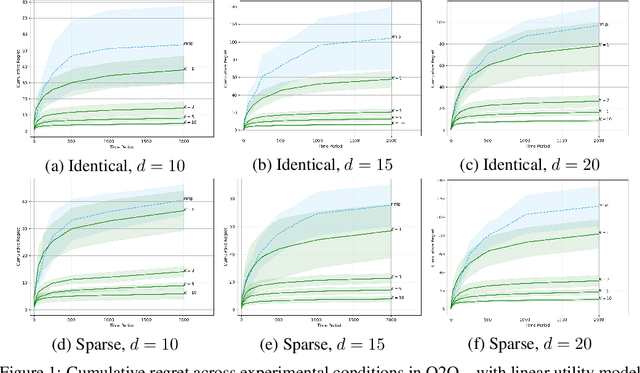
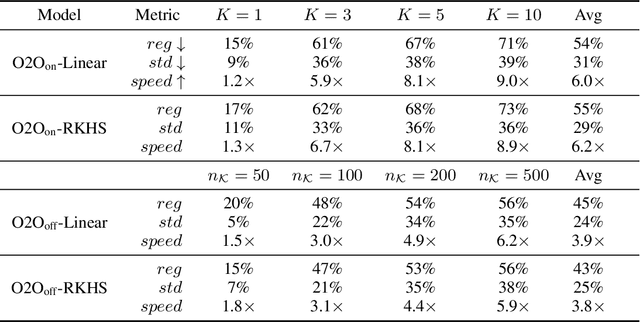
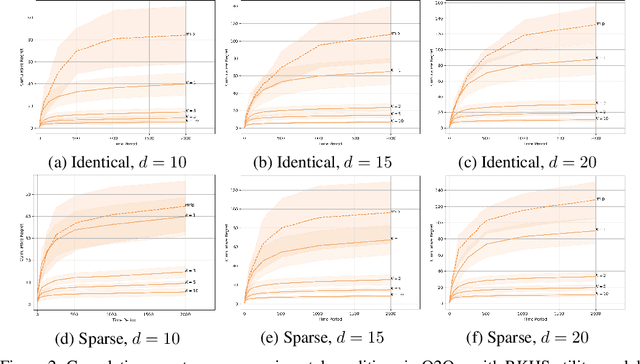
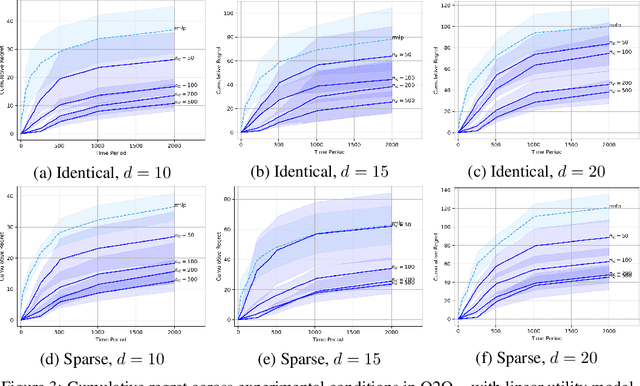
We study contextual dynamic pricing when a target market can leverage K auxiliary markets -- offline logs or concurrent streams -- whose mean utilities differ by a structured preference shift. We propose Cross-Market Transfer Dynamic Pricing (CM-TDP), the first algorithm that provably handles such model-shift transfer and delivers minimax-optimal regret for both linear and non-parametric utility models. For linear utilities of dimension d, where the difference between source- and target-task coefficients is $s_{0}$-sparse, CM-TDP attains regret $\tilde{O}((d*K^{-1}+s_{0})\log T)$. For nonlinear demand residing in a reproducing kernel Hilbert space with effective dimension $\alpha$, complexity $\beta$ and task-similarity parameter $H$, the regret becomes $\tilde{O}\!(K^{-2\alpha\beta/(2\alpha\beta+1)}T^{1/(2\alpha\beta+1)} + H^{2/(2\alpha+1)}T^{1/(2\alpha+1)})$, matching information-theoretic lower bounds up to logarithmic factors. The RKHS bound is the first of its kind for transfer pricing and is of independent interest. Extensive simulations show up to 50% lower cumulative regret and 5 times faster learning relative to single-market pricing baselines. By bridging transfer learning, robust aggregation, and revenue optimization, CM-TDP moves toward pricing systems that transfer faster, price smarter.
Bridging Domain Adaptation and Graph Neural Networks: A Tensor-Based Framework for Effective Label Propagation
Feb 12, 2025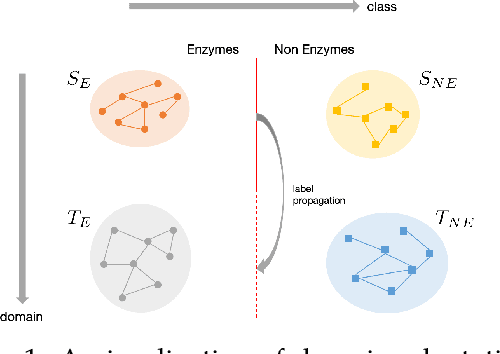
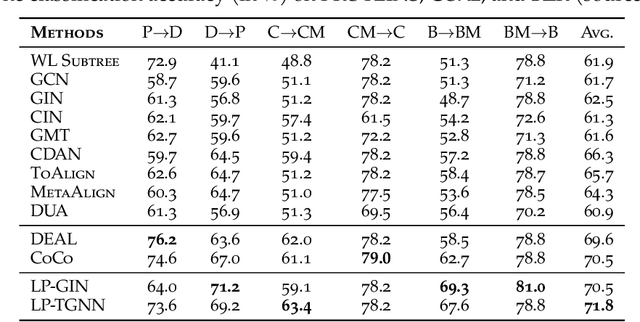

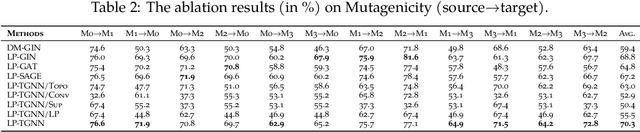
Graph Neural Networks (GNNs) have recently become the predominant tools for studying graph data. Despite state-of-the-art performance on graph classification tasks, GNNs are overwhelmingly trained in a single domain under supervision, thus necessitating a prohibitively high demand for labels and resulting in poorly transferable representations. To address this challenge, we propose the Label-Propagation Tensor Graph Neural Network (LP-TGNN) framework to bridge the gap between graph data and traditional domain adaptation methods. It extracts graph topological information holistically with a tensor architecture and then reduces domain discrepancy through label propagation. It is readily compatible with general GNNs and domain adaptation techniques with minimal adjustment through pseudo-labeling. Experiments on various real-world benchmarks show that our LP-TGNN outperforms baselines by a notable margin. We also validate and analyze each component of the proposed framework in the ablation study.
Statistical Inference for Low-Rank Tensor Models
Jan 27, 2025Statistical inference for tensors has emerged as a critical challenge in analyzing high-dimensional data in modern data science. This paper introduces a unified framework for inferring general and low-Tucker-rank linear functionals of low-Tucker-rank signal tensors for several low-rank tensor models. Our methodology tackles two primary goals: achieving asymptotic normality and constructing minimax-optimal confidence intervals. By leveraging a debiasing strategy and projecting onto the tangent space of the low-Tucker-rank manifold, we enable inference for general and structured linear functionals, extending far beyond the scope of traditional entrywise inference. Specifically, in the low-Tucker-rank tensor regression or PCA model, we establish the computational and statistical efficiency of our approach, achieving near-optimal sample size requirements (in regression model) and signal-to-noise ratio (SNR) conditions (in PCA model) for general linear functionals without requiring sparsity in the loading tensor. Our framework also attains both computationally and statistically optimal sample size and SNR thresholds for low-Tucker-rank linear functionals. Numerical experiments validate our theoretical results, showcasing the framework's utility in diverse applications. This work addresses significant methodological gaps in statistical inference, advancing tensor analysis for complex and high-dimensional data environments.
Deep Transfer $Q$-Learning for Offline Non-Stationary Reinforcement Learning
Jan 08, 2025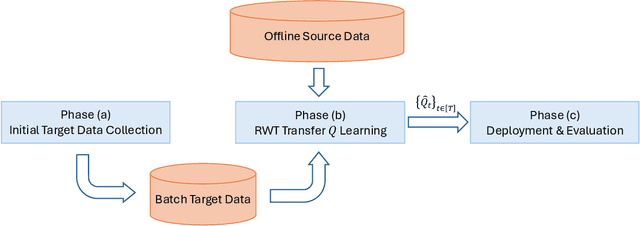

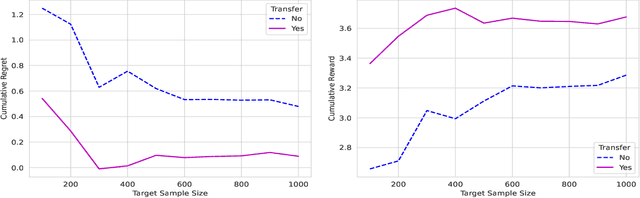
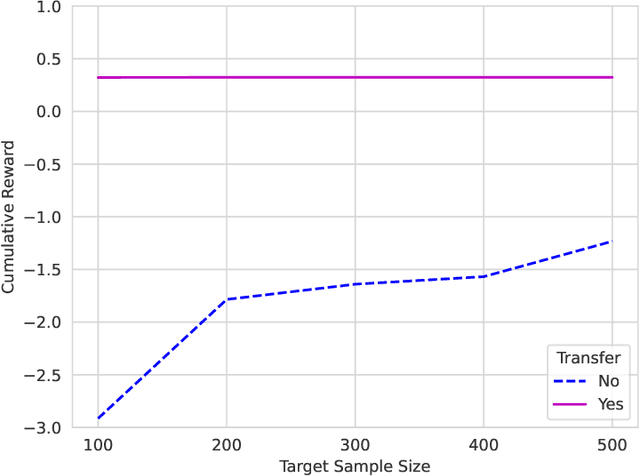
In dynamic decision-making scenarios across business and healthcare, leveraging sample trajectories from diverse populations can significantly enhance reinforcement learning (RL) performance for specific target populations, especially when sample sizes are limited. While existing transfer learning methods primarily focus on linear regression settings, they lack direct applicability to reinforcement learning algorithms. This paper pioneers the study of transfer learning for dynamic decision scenarios modeled by non-stationary finite-horizon Markov decision processes, utilizing neural networks as powerful function approximators and backward inductive learning. We demonstrate that naive sample pooling strategies, effective in regression settings, fail in Markov decision processes.To address this challenge, we introduce a novel ``re-weighted targeting procedure'' to construct ``transferable RL samples'' and propose ``transfer deep $Q^*$-learning'', enabling neural network approximation with theoretical guarantees. We assume that the reward functions are transferable and deal with both situations in which the transition densities are transferable or nontransferable. Our analytical techniques for transfer learning in neural network approximation and transition density transfers have broader implications, extending to supervised transfer learning with neural networks and domain shift scenarios. Empirical experiments on both synthetic and real datasets corroborate the advantages of our method, showcasing its potential for improving decision-making through strategically constructing transferable RL samples in non-stationary reinforcement learning contexts.