 Add to Chrome
 Add to Firefox
 Add to Edge
Frozen CLIP: A Strong Backbone for Weakly Supervised Semantic Segmentation
Jun 17, 2024
Weakly supervised semantic segmentation has witnessed great achievements with image-level labels. Several recent approaches use the CLIP model to generate pseudo labels for training an individual segmentation model, while there is no attempt to apply the CLIP model as the backbone to directly segment objects with image-level labels. In this paper, we propose WeCLIP, a CLIP-based single-stage pipeline, for weakly supervised semantic segmentation. Specifically, the frozen CLIP model is applied as the backbone for semantic feature extraction, and a new decoder is designed to interpret extracted semantic features for final prediction. Meanwhile, we utilize the above frozen backbone to generate pseudo labels for training the decoder. Such labels cannot be optimized during training. We then propose a refinement module (RFM) to rectify them dynamically. Our architecture enforces the proposed decoder and RFM to benefit from each other to boost the final performance. Extensive experiments show that our approach significantly outperforms other approaches with less training cost. Additionally, our WeCLIP also obtains promising results for fully supervised settings. The code is available at https://github.com/zbf1991/WeCLIP.
* CVPR 2024 Highlight

Adaptive Experimentation When You Can't Experiment
Jun 15, 2024This paper introduces the \emph{confounded pure exploration transductive linear bandit} (\texttt{CPET-LB}) problem. As a motivating example, often online services cannot directly assign users to specific control or treatment experiences either for business or practical reasons. In these settings, naively comparing treatment and control groups that may result from self-selection can lead to biased estimates of underlying treatment effects. Instead, online services can employ a properly randomized encouragement that incentivizes users toward a specific treatment. Our methodology provides online services with an adaptive experimental design approach for learning the best-performing treatment for such \textit{encouragement designs}. We consider a more general underlying model captured by a linear structural equation and formulate pure exploration linear bandits in this setting. Though pure exploration has been extensively studied in standard adaptive experimental design settings, we believe this is the first work considering a setting where noise is confounded. Elimination-style algorithms using experimental design methods in combination with a novel finite-time confidence interval on an instrumental variable style estimator are presented with sample complexity upper bounds nearly matching a minimax lower bound. Finally, experiments are conducted that demonstrate the efficacy of our approach.
Instructing Prompt-to-Prompt Generation for Zero-Shot Learning
Jun 05, 2024
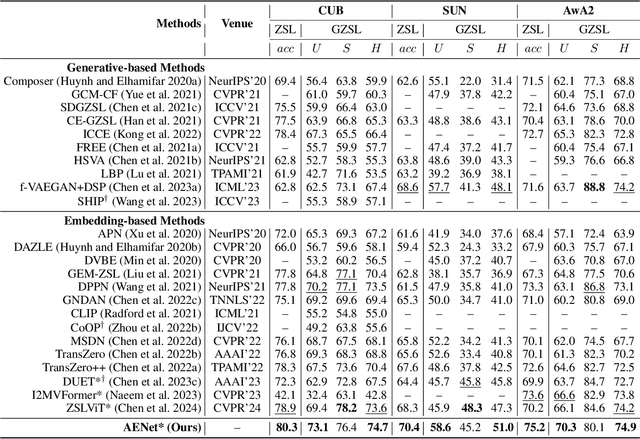
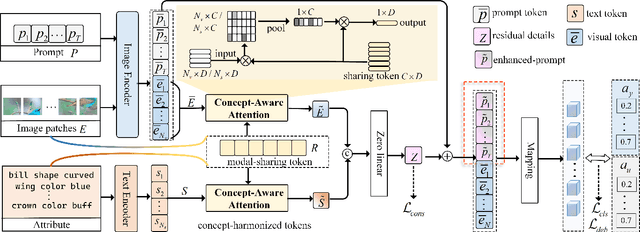

Zero-shot learning (ZSL) aims to explore the semantic-visual interactions to discover comprehensive knowledge transferred from seen categories to classify unseen categories. Recently, prompt engineering has emerged in ZSL, demonstrating impressive potential as it enables the zero-shot transfer of diverse visual concepts to downstream tasks. However, these methods are still not well generalized to broad unseen domains. A key reason is that the fixed adaption of learnable prompts on seen domains makes it tend to over-emphasize the primary visual features observed during training. In this work, we propose a \textbf{P}rompt-to-\textbf{P}rompt generation methodology (\textbf{P2P}), which addresses this issue by further embracing the instruction-following technique to distill instructive visual prompts for comprehensive transferable knowledge discovery. The core of P2P is to mine semantic-related instruction from prompt-conditioned visual features and text instruction on modal-sharing semantic concepts and then inversely rectify the visual representations with the guidance of the learned instruction prompts. This enforces the compensation for missing visual details to primary contexts and further eliminates the cross-modal disparity, endowing unseen domain generalization. Through extensive experimental results, we demonstrate the efficacy of P2P in achieving superior performance over state-of-the-art methods.
Once-for-All: Controllable Generative Image Compression with Dynamic Granularity Adaption
Jun 02, 2024
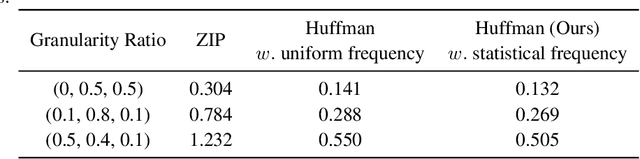

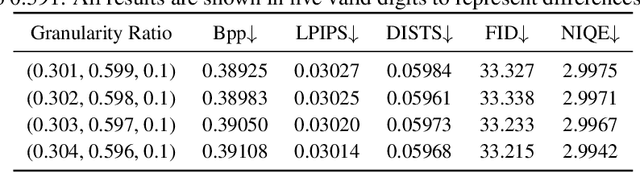
Although recent generative image compression methods have demonstrated impressive potential in optimizing the rate-distortion-perception trade-off, they still face the critical challenge of flexible rate adaption to diverse compression necessities and scenarios. To overcome this challenge, this paper proposes a Controllable Generative Image Compression framework, Control-GIC, the first capable of fine-grained bitrate adaption across a broad spectrum while ensuring high-fidelity and generality compression. We base Control-GIC on a VQGAN framework representing an image as a sequence of variable-length codes (i.e. VQ-indices), which can be losslessly compressed and exhibits a direct positive correlation with the bitrates. Therefore, drawing inspiration from the classical coding principle, we naturally correlate the information density of local image patches with their granular representations, to achieve dynamic adjustment of the code quantity following different granularity decisions. This implies we can flexibly determine a proper allocation of granularity for the patches to acquire desirable compression rates. We further develop a probabilistic conditional decoder that can trace back to historic encoded multi-granularity representations according to transmitted codes, and then reconstruct hierarchical granular features in the formalization of conditional probability, enabling more informative aggregation to improve reconstruction realism. Our experiments show that Control-GIC allows highly flexible and controllable bitrate adaption and even once compression on an entire dataset to fulfill constrained bitrate conditions. Experimental results demonstrate its superior performance over recent state-of-the-art methods.
Mitigate Position Bias with Coupled Ranking Bias on CTR Prediction
May 29, 2024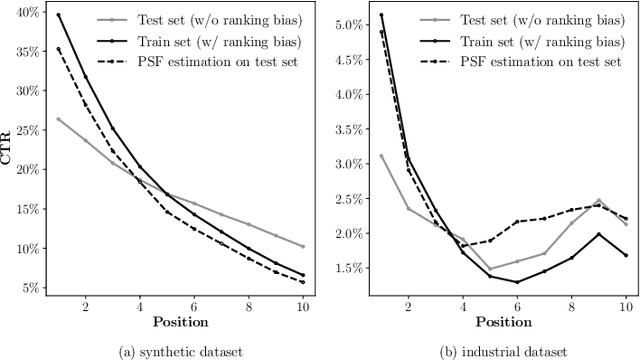

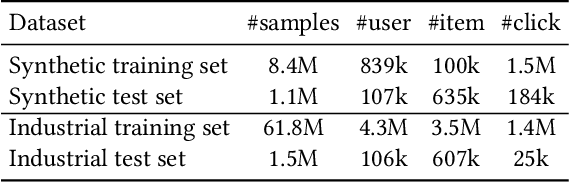
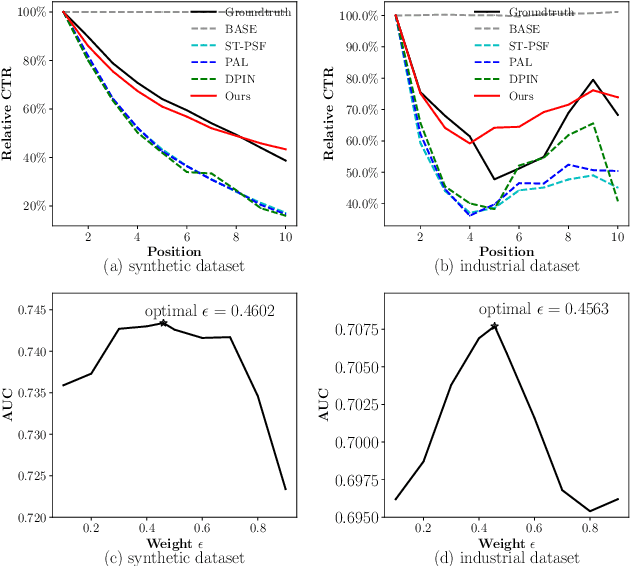
Position bias, i.e., users' preference of an item is affected by its placing position, is well studied in the recommender system literature. However, most existing methods ignore the widely coupled ranking bias, which is also related to the placing position of the item. Using both synthetic and industrial datasets, we first show how this widely coexisted ranking bias deteriorates the performance of the existing position bias estimation methods. To mitigate the position bias with the presence of the ranking bias, we propose a novel position bias estimation method, namely gradient interpolation, which fuses two estimation methods using a fusing weight. We further propose an adaptive method to automatically determine the optimal fusing weight. Extensive experiments on both synthetic and industrial datasets demonstrate the superior performance of the proposed methods.
ClassDiffusion: More Aligned Personalization Tuning with Explicit Class Guidance
May 27, 2024Recent text-to-image customization works have been proven successful in generating images of given concepts by fine-tuning the diffusion models on a few examples. However, these methods tend to overfit the concepts, resulting in failure to create the concept under multiple conditions (e.g. headphone is missing when generating a <sks> dog wearing a headphone'). Interestingly, we notice that the base model before fine-tuning exhibits the capability to compose the base concept with other elements (e.g. a dog wearing a headphone) implying that the compositional ability only disappears after personalization tuning. Inspired by this observation, we present ClassDiffusion, a simple technique that leverages a semantic preservation loss to explicitly regulate the concept space when learning the new concept. Despite its simplicity, this helps avoid semantic drift when fine-tuning on the target concepts. Extensive qualitative and quantitative experiments demonstrate that the use of semantic preservation loss effectively improves the compositional abilities of the fine-tune models. In response to the ineffective evaluation of CLIP-T metrics, we introduce BLIP2-T metric, a more equitable and effective evaluation metric for this particular domain. We also provide in-depth empirical study and theoretical analysis to better understand the role of the proposed loss. Lastly, we also extend our ClassDiffusion to personalized video generation, demonstrating its flexibility.
Diffusion4D: Fast Spatial-temporal Consistent 4D Generation via Video Diffusion Models
May 26, 2024

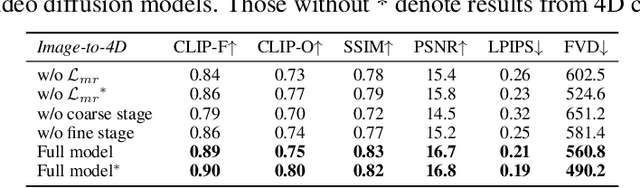
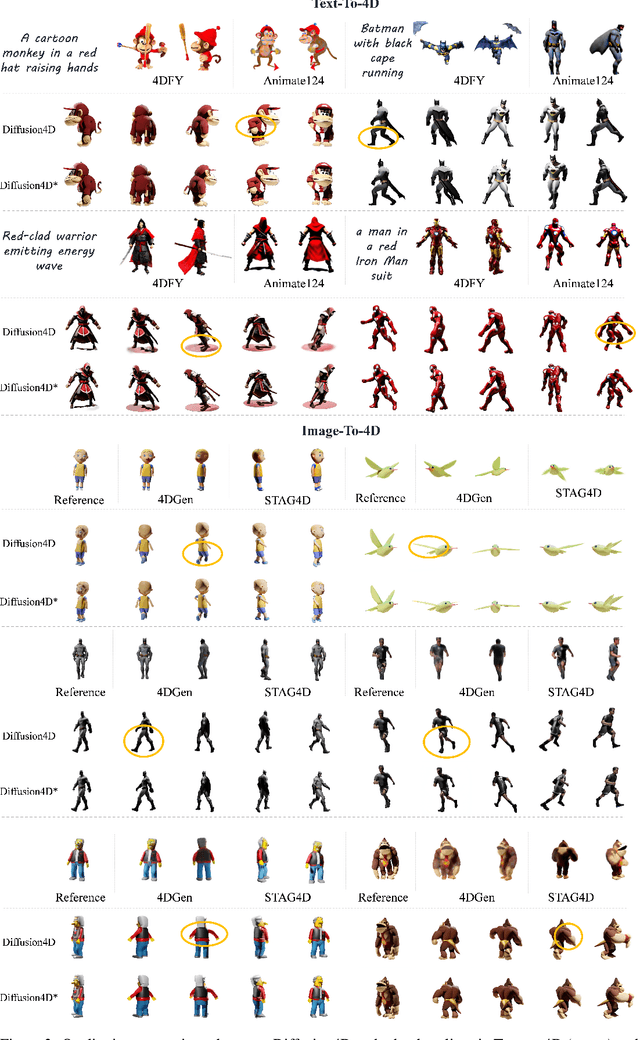
The availability of large-scale multimodal datasets and advancements in diffusion models have significantly accelerated progress in 4D content generation. Most prior approaches rely on multiple image or video diffusion models, utilizing score distillation sampling for optimization or generating pseudo novel views for direct supervision. However, these methods are hindered by slow optimization speeds and multi-view inconsistency issues. Spatial and temporal consistency in 4D geometry has been extensively explored respectively in 3D-aware diffusion models and traditional monocular video diffusion models. Building on this foundation, we propose a strategy to migrate the temporal consistency in video diffusion models to the spatial-temporal consistency required for 4D generation. Specifically, we present a novel framework, \textbf{Diffusion4D}, for efficient and scalable 4D content generation. Leveraging a meticulously curated dynamic 3D dataset, we develop a 4D-aware video diffusion model capable of synthesizing orbital views of dynamic 3D assets. To control the dynamic strength of these assets, we introduce a 3D-to-4D motion magnitude metric as guidance. Additionally, we propose a novel motion magnitude reconstruction loss and 3D-aware classifier-free guidance to refine the learning and generation of motion dynamics. After obtaining orbital views of the 4D asset, we perform explicit 4D construction with Gaussian splatting in a coarse-to-fine manner. The synthesized multi-view consistent 4D image set enables us to swiftly generate high-fidelity and diverse 4D assets within just several minutes. Extensive experiments demonstrate that our method surpasses prior state-of-the-art techniques in terms of generation efficiency and 4D geometry consistency across various prompt modalities.
I$^2$VC: A Unified Framework for Intra- \& Inter-frame Video Compression
May 23, 2024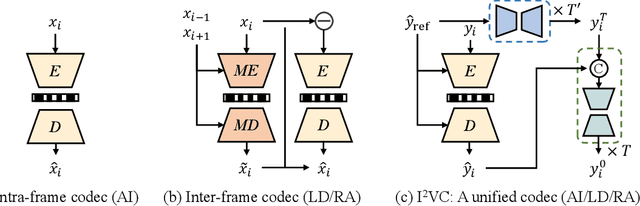
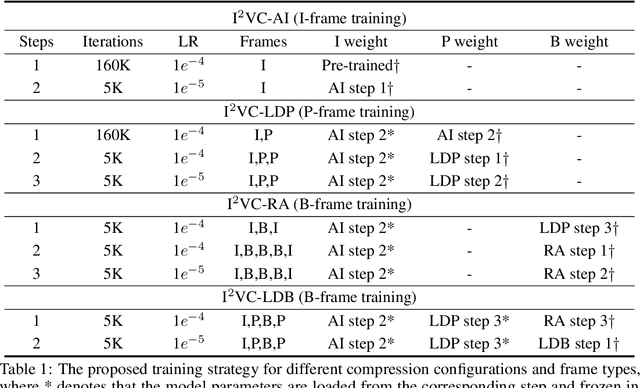
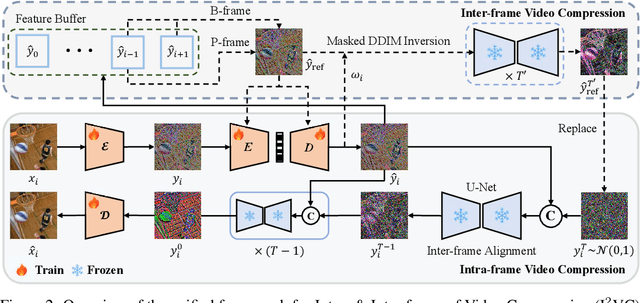
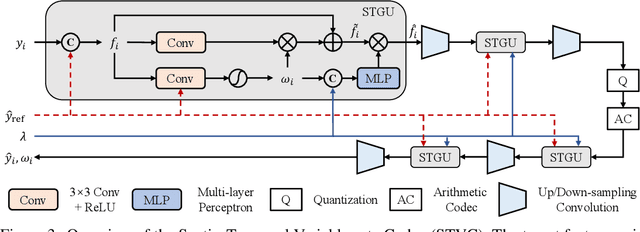
Video compression aims to reconstruct seamless frames by encoding the motion and residual information from existing frames. Previous neural video compression methods necessitate distinct codecs for three types of frames (I-frame, P-frame and B-frame), which hinders a unified approach and generalization across different video contexts. Intra-codec techniques lack the advanced Motion Estimation and Motion Compensation (MEMC) found in inter-codec, leading to fragmented frameworks lacking uniformity. Our proposed \textbf{Intra- \& Inter-frame Video Compression (I$^2$VC)} framework employs a single spatio-temporal codec that guides feature compression rates according to content importance. This unified codec transforms the dependence across frames into a conditional coding scheme, thus integrating intra- and inter-frame compression into one cohesive strategy. Given the absence of explicit motion data, achieving competent inter-frame compression with only a conditional codec poses a challenge. To resolve this, our approach includes an implicit inter-frame alignment mechanism. With the pre-trained diffusion denoising process, the utilization of a diffusion-inverted reference feature rather than random noise supports the initial compression state. This process allows for selective denoising of motion-rich regions based on decoded features, facilitating accurate alignment without the need for MEMC. Our experimental findings, across various compression configurations (AI, LD and RA) and frame types, prove that I$^2$VC outperforms the state-of-the-art perceptual learned codecs. Impressively, it exhibits a 58.4\% enhancement in perceptual reconstruction performance when benchmarked against the H.266/VVC standard (VTM). Official implementation can be found at \href{https://github.com/GYukai/I2VC}{https://github.com/GYukai/I2VC}
SGFormer: Spherical Geometry Transformer for 360 Depth Estimation
Apr 23, 2024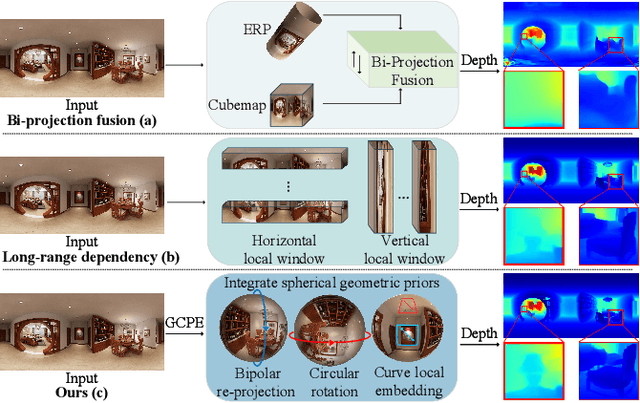

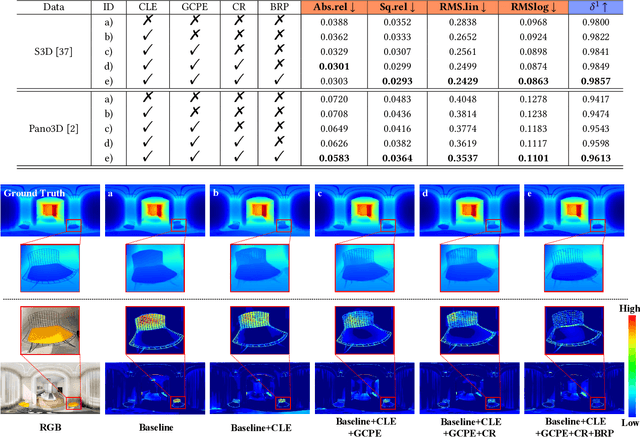
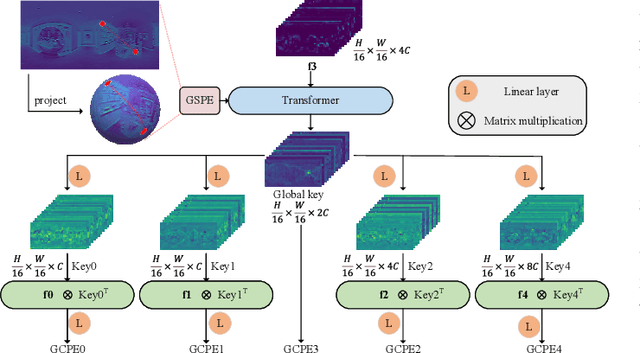
Panoramic distortion poses a significant challenge in 360 depth estimation, particularly pronounced at the north and south poles. Existing methods either adopt a bi-projection fusion strategy to remove distortions or model long-range dependencies to capture global structures, which can result in either unclear structure or insufficient local perception. In this paper, we propose a spherical geometry transformer, named SGFormer, to address the above issues, with an innovative step to integrate spherical geometric priors into vision transformers. To this end, we retarget the transformer decoder to a spherical prior decoder (termed SPDecoder), which endeavors to uphold the integrity of spherical structures during decoding. Concretely, we leverage bipolar re-projection, circular rotation, and curve local embedding to preserve the spherical characteristics of equidistortion, continuity, and surface distance, respectively. Furthermore, we present a query-based global conditional position embedding to compensate for spatial structure at varying resolutions. It not only boosts the global perception of spatial position but also sharpens the depth structure across different patches. Finally, we conduct extensive experiments on popular benchmarks, demonstrating our superiority over state-of-the-art solutions.
Digging into contrastive learning for robust depth estimation with diffusion models
Apr 17, 2024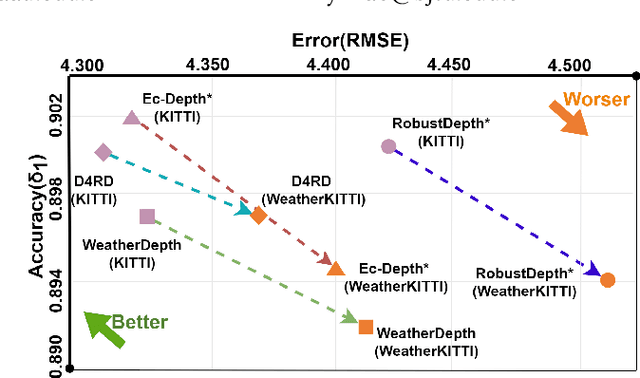
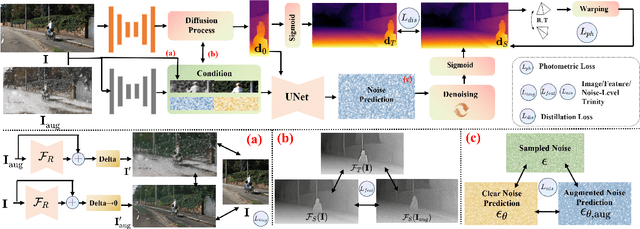
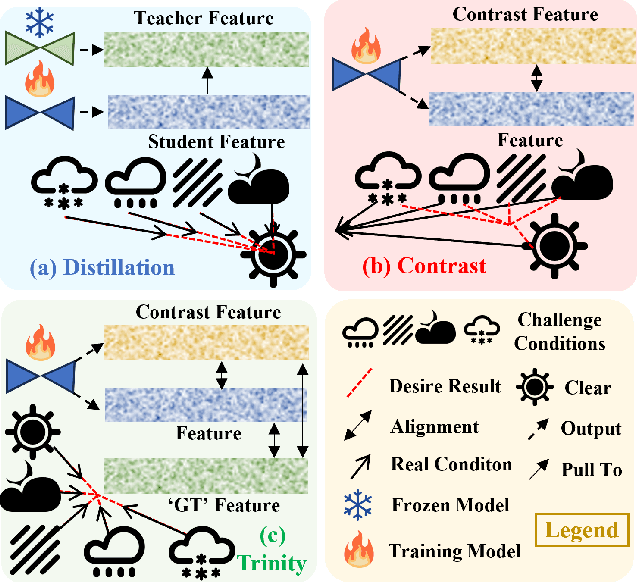
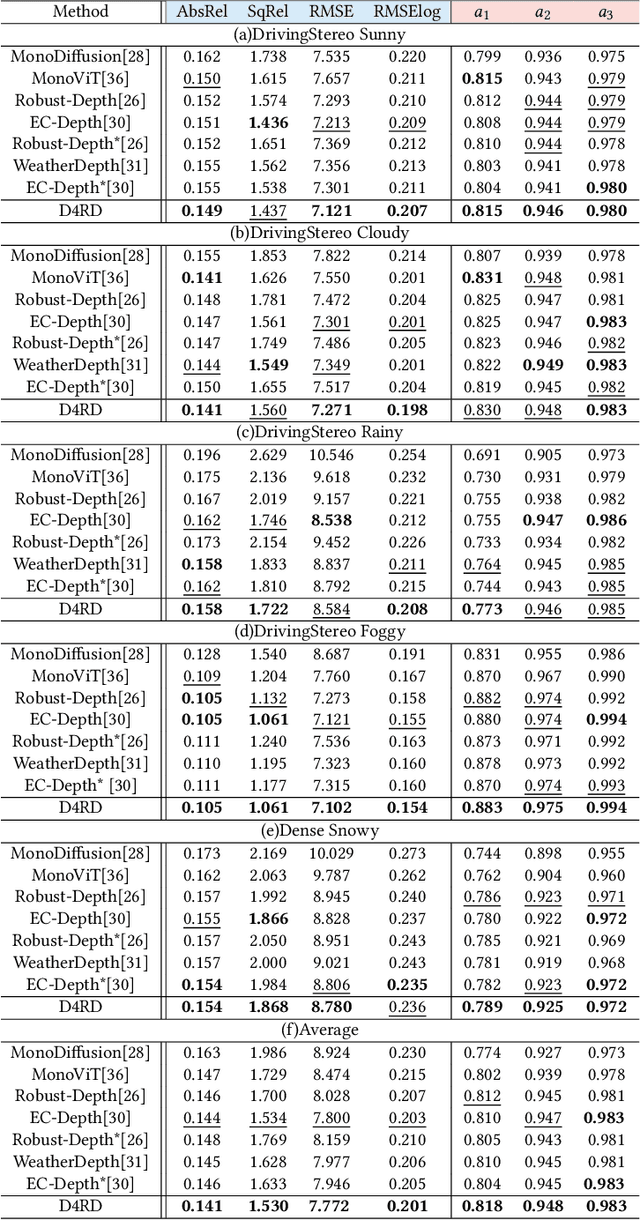
Recently, diffusion-based depth estimation methods have drawn widespread attention due to their elegant denoising patterns and promising performance. However, they are typically unreliable under adverse conditions prevalent in real-world scenarios, such as rainy, snowy, etc. In this paper, we propose a novel robust depth estimation method called D4RD, featuring a custom contrastive learning mode tailored for diffusion models to mitigate performance degradation in complex environments. Concretely, we integrate the strength of knowledge distillation into contrastive learning, building the `trinity' contrastive scheme. This scheme utilizes the sampled noise of the forward diffusion process as a natural reference, guiding the predicted noise in diverse scenes toward a more stable and precise optimum. Moreover, we extend noise-level trinity to encompass more generic feature and image levels, establishing a multi-level contrast to distribute the burden of robust perception across the overall network. Before addressing complex scenarios, we enhance the stability of the baseline diffusion model with three straightforward yet effective improvements, which facilitate convergence and remove depth outliers. Extensive experiments demonstrate that D4RD surpasses existing state-of-the-art solutions on synthetic corruption datasets and real-world weather conditions. The code for D4RD will be made available for further exploration and adoption.