 Add to Chrome
 Add to Firefox
 Add to Edge
LLM-Based Generative Retrieval for Snapchat Content Recommendation
Jul 30, 2026
Pretrained large language models (LLMs) are promising retrieval engines because they combine rich semantic priors, strong sequence modeling capabilities, and favorable scaling behavior. However, turning a pretrained LLM into a generative retriever in production deployment raises several challenges: the model must learn an internal item vocabulary that was absent from pretraining, and generate valid item identifiers under strict latency and cost constraints. We address these challenges through the design and launch of SnapLGR, an LLM-based generative retrieval system for short-video recommendation at Snapchat. The system is built around three main designs. First, we construct semantic identifiers (SIDs) from multimodal item embeddings and enhance them with Personalized PageRank (PPR)-based co-engagement contrastive learning, resulting in improved codebook utilization, reduced collisions, and infused collaborative signal. Second, we use continued pretraining (CPT) to ground the introduced SID tokens before supervised fine-tuning (SFT) on user interaction sequences. Third, we make SnapLGR serving practical through TensorRT-LLM CUDA-backed beam search and a decentralized worker-loop architecture. In a live A/B test, the launched system increased View Time by 0.37%, Time Spent by 0.09%, Deep Sessions by 0.18%, and Deep Sessions Unique User by 0.11% relative to the existing TIGER-style generative retrieval baseline. We then decompose this offline gap under a fixed tokenizer and quantify the gains due to model architecture, scaling, and pretraining. Overall, our deployment shows that successful production SnapLGR requires joint design across representation learning, vocabulary grounding, and efficient training and serving.

Unsupervised Graph Representation Learning with Complementary View Alignment
Jul 27, 2026Unsupervised graph representation learning aims to derive meaningful node embeddings by capturing both structural and attribute information without relying on labeled data. Existing methods, such as GAEs, have demonstrated effectiveness but typically rely on message-passing mechanisms that assume homophily, leading to performance degradation on heterophilous graphs, where connected nodes exhibit dissimilar features. This homophily bias results in the loss of critical high-frequency components that are essential for identifying heterophilous patterns. To address these challenges, we propose \textsc{AlignGAE}, a novel extension of \textit{MaskGAE} that preserves the full frequency spectrum through complementary view alignment. Our framework introduces a dual-encoder architecture that separately processes structural and attribute information, incorporates node positional encoding to approximate Neighborhood Identity Distribution (NID), and employs dual reconstruction tasks for both edges and node attributes. We further propose theoretically grounded NID alignment strategies that ensure semantic consistency across views while preserving their distinct characteristics. Through comprehensive spectral analysis, we demonstrate that \textsc{AlignGAE} achieves optimal representation properties when the alignment loss converges. Extensive experiments across 12 benchmark datasets validate our approach, showing that \textsc{AlignGAE} outperforms state-of-the-art methods by up to 18.7\% on heterophilous graphs in node classification, while maintaining competitive performance on homophilous graphs. Our results establish a new paradigm for frequency-aware graph representation learning.
When Can You Correct Distribution Drift in Temporal Graph Generation? A Sharpening--Drift Tension and an Impossibility for Observation-Based Correction
Jul 27, 2026Generative models of temporal graphs are trained on one stretch of an evolving network and deployed on the next, and they degrade badly in the gap. We show this degradation is derivable, general, and not fixable from observations. The masked flow-matching loss decomposes exactly, with no independence assumption, into an irreducible entropy plus a divergence whose derivative along the training path is positive precisely for structures rare during training and common at deployment, diverging as their training probability goes to zero. Empirically the trade-off is a power law with exponent $-0.605$ ($R^2=0.9977$), and drift raises the sampler's error floor without changing how many steps reach it: across seven well-powered conditions the drift-period marginal error varies by at most $6\%$ over a $50\times$ range of sampling budgets, while the floor sits $2.2\times$ to $34.3\times$ above the in-period floor. Because the deployment period is observed, correction looks like a matter of measurement. It is not. We prove that any corrector measurable with respect to past observations leaves at least the conditional variance of the statistic it tracks, and that trend extrapolation beats trusting the last observation only when $μ^2>v(1-2ρ)$. Both premises are measurable and both go the wrong way: the drift is trendless and mean-reverting, with a one-step innovation as large as the drift itself. An oracle removes $60\%$ of the error, the best observation-based corrector recovers $5.7\%$ of that, and extrapolation is strictly worse than doing nothing clever.
TGFormer: Towards Temporal Graph Transformer with Auto-Correlation Mechanism
May 24, 2026The growing interest in Temporal Graph Neural Networks (TGNNs) stems from their ability to model complex dynamics and deliver superior performance. However, TGNNs encounter fundamental challenges in capturing long-term dependencies and identifying periodic patterns. To address these limitations, we propose TGFormer, a novel Transformer architecture specifically designed for temporal graphs. Our model redefines temporal graph learning by establishing a trajectory framework that aligns with time series analysis principles. This approach allows TGFormer to derive node representations through systematic analysis of historical interactions, enabling granular examination of node relationships across sequential timestamps. Building upon stochastic process theory, we develop an auto-correlation mechanism that systematically uncovers periodic dependencies in node interactions. This innovation empowers TGFormer to perform dependency discovery and representation aggregation at sub-interaction levels, demonstrating superior efficiency and accuracy compared to conventional attention mechanisms. Experimental validation across six public benchmarks confirms the effectiveness of our approach, with TGFormer at most achieving 9.35\% precision improvement compared to state-of-the-art approaches.
Towards OOD Generalization in Dynamic Graphs via Causal Invariant Learning
Mar 02, 2026Although dynamic graph neural networks (DyGNNs) have demonstrated promising capabilities, most existing methods ignore out-of-distribution (OOD) shifts that commonly exist in dynamic graphs. Dynamic graph OOD generalization is non-trivial due to the following challenges: 1) Identifying invariant and variant patterns amid complex graph evolution, 2) Capturing the intrinsic evolution rationale from these patterns, and 3) Ensuring model generalization across diverse OOD shifts despite limited data distribution observations. Although several attempts have been made to tackle these challenges, none has successfully addressed all three simultaneously, and they face various limitations in complex OOD scenarios. To solve these issues, we propose a Dynamic graph Causal Invariant Learning (DyCIL) model for OOD generalization via exploiting invariant spatio-temporal patterns from a causal view. Specifically, we first develop a dynamic causal subgraph generator to identify causal dynamic subgraphs explicitly. Next, we design a causal-aware spatio-temporal attention module to extract the intrinsic evolution rationale behind invariant patterns. Finally, we further introduce an adaptive environment generator to capture the underlying dynamics of distributional shifts. Extensive experiments on both real-world and synthetic dynamic graph datasets demonstrate the superiority of our model over state-of-the-art baselines in handling OOD shifts.
Beyond GEMM-Centric NPUs: Enabling Efficient Diffusion LLM Sampling
Jan 28, 2026Diffusion Large Language Models (dLLMs) introduce iterative denoising to enable parallel token generation, but their sampling phase displays fundamentally different characteristics compared to GEMM-centric transformer layers. Profiling on modern GPUs reveals that sampling can account for up to 70% of total model inference latency-primarily due to substantial memory loads and writes from vocabulary-wide logits, reduction-based token selection, and iterative masked updates. These processes demand large on-chip SRAM and involve irregular memory accesses that conventional NPUs struggle to handle efficiently. To address this, we identify a set of critical instructions that an NPU architecture must specifically optimize for dLLM sampling. Our design employs lightweight non-GEMM vector primitives, in-place memory reuse strategies, and a decoupled mixed-precision memory hierarchy. Together, these optimizations deliver up to a 2.53x speedup over the NVIDIA RTX A6000 GPU under an equivalent nm technology node. We also open-source our cycle-accurate simulation and post-synthesis RTL verification code, confirming functional equivalence with current dLLM PyTorch implementations.
HGMP:Heterogeneous Graph Multi-Task Prompt Learning
Jul 10, 2025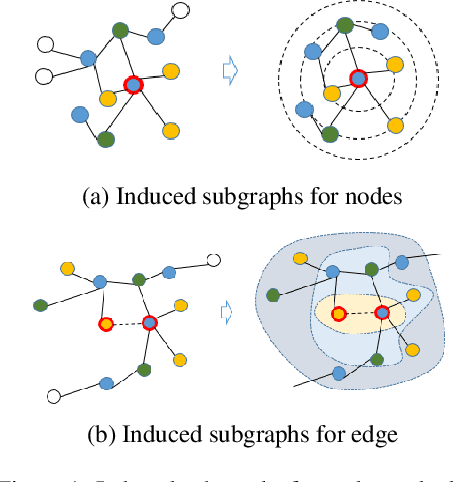
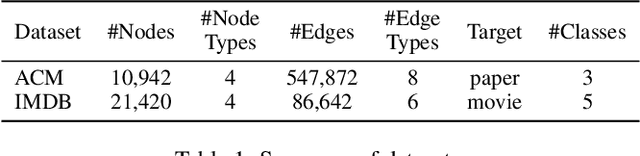
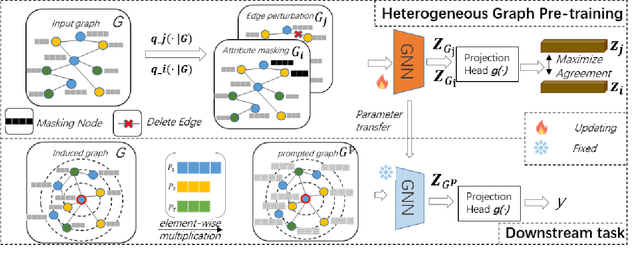
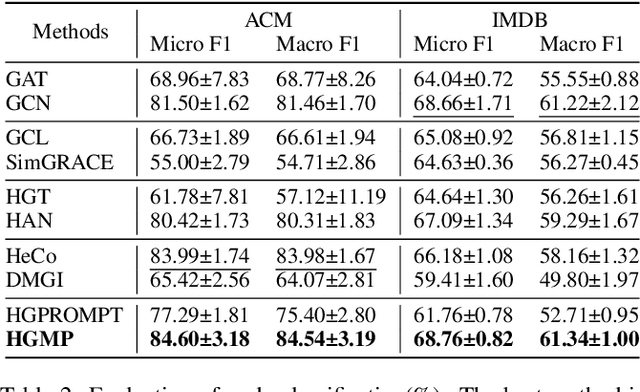
The pre-training and fine-tuning methods have gained widespread attention in the field of heterogeneous graph neural networks due to their ability to leverage large amounts of unlabeled data during the pre-training phase, allowing the model to learn rich structural features. However, these methods face the issue of a mismatch between the pre-trained model and downstream tasks, leading to suboptimal performance in certain application scenarios. Prompt learning methods have emerged as a new direction in heterogeneous graph tasks, as they allow flexible adaptation of task representations to address target inconsistency. Building on this idea, this paper proposes a novel multi-task prompt framework for the heterogeneous graph domain, named HGMP. First, to bridge the gap between the pre-trained model and downstream tasks, we reformulate all downstream tasks into a unified graph-level task format. Next, we address the limitations of existing graph prompt learning methods, which struggle to integrate contrastive pre-training strategies in the heterogeneous graph domain. We design a graph-level contrastive pre-training strategy to better leverage heterogeneous information and enhance performance in multi-task scenarios. Finally, we introduce heterogeneous feature prompts, which enhance model performance by refining the representation of input graph features. Experimental results on public datasets show that our proposed method adapts well to various tasks and significantly outperforms baseline methods.
A Survey on Temporal Interaction Graph Representation Learning: Progress, Challenges, and Opportunities
May 07, 2025Temporal interaction graphs (TIGs), defined by sequences of timestamped interaction events, have become ubiquitous in real-world applications due to their capability to model complex dynamic system behaviors. As a result, temporal interaction graph representation learning (TIGRL) has garnered significant attention in recent years. TIGRL aims to embed nodes in TIGs into low-dimensional representations that effectively preserve both structural and temporal information, thereby enhancing the performance of downstream tasks such as classification, prediction, and clustering within constantly evolving data environments. In this paper, we begin by introducing the foundational concepts of TIGs and emphasize the critical role of temporal dependencies. We then propose a comprehensive taxonomy of state-of-the-art TIGRL methods, systematically categorizing them based on the types of information utilized during the learning process to address the unique challenges inherent to TIGs. To facilitate further research and practical applications, we curate the source of datasets and benchmarks, providing valuable resources for empirical investigations. Finally, we examine key open challenges and explore promising research directions in TIGRL, laying the groundwork for future advancements that have the potential to shape the evolution of this field.
GiGL: Large-Scale Graph Neural Networks at Snapchat
Feb 20, 2025Recent advances in graph machine learning (ML) with the introduction of Graph Neural Networks (GNNs) have led to a widespread interest in applying these approaches to business applications at scale. GNNs enable differentiable end-to-end (E2E) learning of model parameters given graph structure which enables optimization towards popular node, edge (link) and graph-level tasks. While the research innovation in new GNN layers and training strategies has been rapid, industrial adoption and utility of GNNs has lagged considerably due to the unique scale challenges that large-scale graph ML problems create. In this work, we share our approach to training, inference, and utilization of GNNs at Snapchat. To this end, we present GiGL (Gigantic Graph Learning), an open-source library to enable large-scale distributed graph ML to the benefit of researchers, ML engineers, and practitioners. We use GiGL internally at Snapchat to manage the heavy lifting of GNN workflows, including graph data preprocessing from relational DBs, subgraph sampling, distributed training, inference, and orchestration. GiGL is designed to interface cleanly with open-source GNN modeling libraries prominent in academia like PyTorch Geometric (PyG), while handling scaling and productionization challenges that make it easier for internal practitioners to focus on modeling. GiGL is used in multiple production settings, and has powered over 35 launches across multiple business domains in the last 2 years in the contexts of friend recommendation, content recommendation and advertising. This work details high-level design and tools the library provides, scaling properties, case studies in diverse business settings with industry-scale graphs, and several key lessons learned in employing graph ML at scale on large social data. GiGL is open-sourced at https://github.com/snap-research/GiGL.
Retrieval Augmented Spelling Correction for E-Commerce Applications
Oct 15, 2024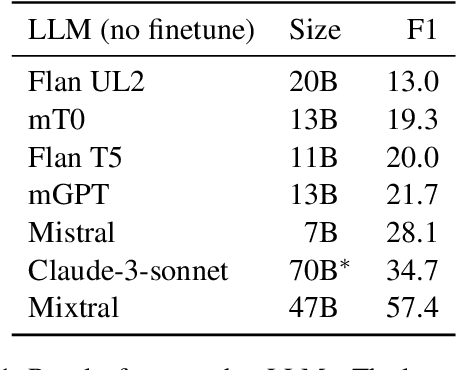
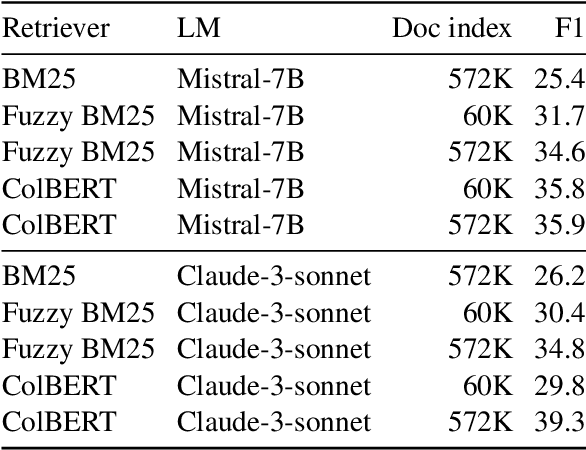
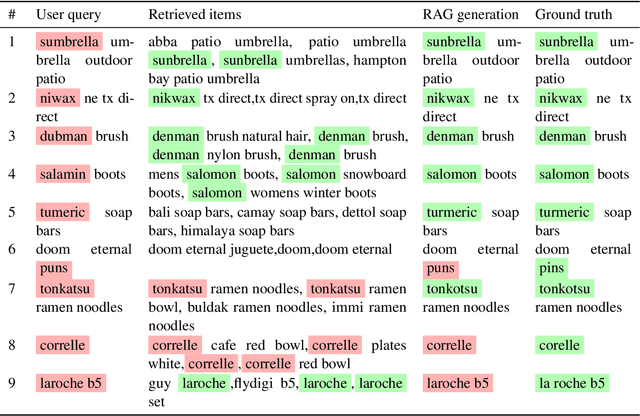
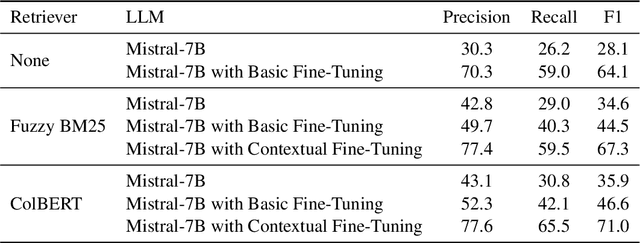
The rapid introduction of new brand names into everyday language poses a unique challenge for e-commerce spelling correction services, which must distinguish genuine misspellings from novel brand names that use unconventional spelling. We seek to address this challenge via Retrieval Augmented Generation (RAG). On this approach, product names are retrieved from a catalog and incorporated into the context used by a large language model (LLM) that has been fine-tuned to do contextual spelling correction. Through quantitative evaluation and qualitative error analyses, we find improvements in spelling correction utilizing the RAG framework beyond a stand-alone LLM. We also demonstrate the value of additional finetuning of the LLM to incorporate retrieved context.