 Add to Chrome
 Add to Firefox
 Add to Edge
Attn-GS: Attention-Guided Context Compression for Efficient Personalized LLMs
Feb 08, 2026
Personalizing large language models (LLMs) to individual users requires incorporating extensive interaction histories and profiles, but input token constraints make this impractical due to high inference latency and API costs. Existing approaches rely on heuristic methods such as selecting recent interactions or prompting summarization models to compress user profiles. However, these methods treat context as a monolithic whole and fail to consider how LLMs internally process and prioritize different profile components. We investigate whether LLMs' attention patterns can effectively identify important personalization signals for intelligent context compression. Through preliminary studies on representative personalization tasks, we discover that (a) LLMs' attention patterns naturally reveal important signals, and (b) fine-tuning enhances LLMs' ability to distinguish between relevant and irrelevant information. Based on these insights, we propose Attn-GS, an attention-guided context compression framework that leverages attention feedback from a marking model to mark important personalization sentences, then guides a compression model to generate task-relevant, high-quality compressed user contexts. Extensive experiments demonstrate that Attn-GS significantly outperforms various baselines across different tasks, token limits, and settings, achieving performance close to using full context while reducing token usage by 50 times.

AmazonQAC: A Large-Scale, Naturalistic Query Autocomplete Dataset
Oct 22, 2024Query Autocomplete (QAC) is a critical feature in modern search engines, facilitating user interaction by predicting search queries based on input prefixes. Despite its widespread adoption, the absence of large-scale, realistic datasets has hindered advancements in QAC system development. This paper addresses this gap by introducing AmazonQAC, a new QAC dataset sourced from Amazon Search logs, comprising 395M samples. The dataset includes actual sequences of user-typed prefixes leading to final search terms, as well as session IDs and timestamps that support modeling the context-dependent aspects of QAC. We assess Prefix Trees, semantic retrieval, and Large Language Models (LLMs) with and without finetuning. We find that finetuned LLMs perform best, particularly when incorporating contextual information. However, even our best system achieves only half of what we calculate is theoretically possible on our test data, which implies QAC is a challenging problem that is far from solved with existing systems. This contribution aims to stimulate further research on QAC systems to better serve user needs in diverse environments. We open-source this data on Hugging Face at https://huggingface.co/datasets/amazon/AmazonQAC.
Retrieval Augmented Spelling Correction for E-Commerce Applications
Oct 15, 2024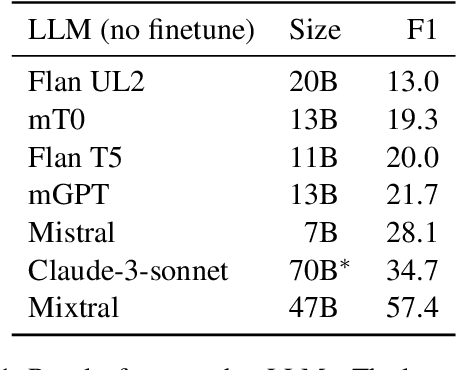
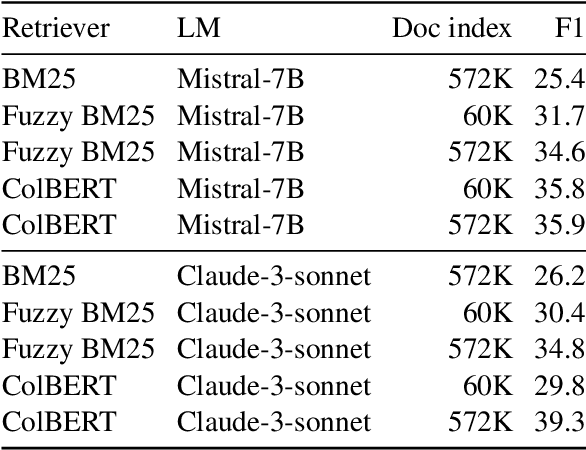
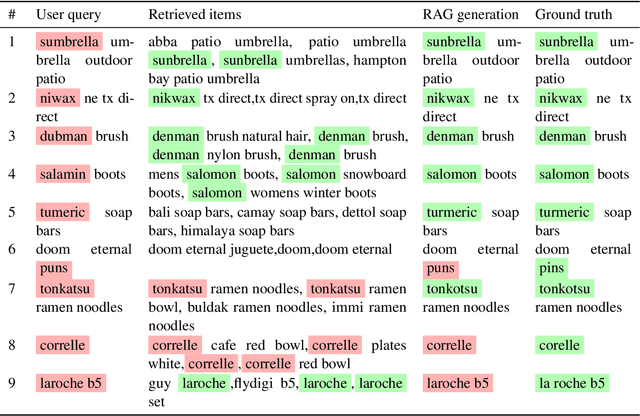
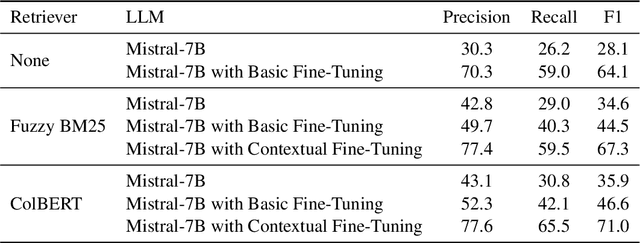
The rapid introduction of new brand names into everyday language poses a unique challenge for e-commerce spelling correction services, which must distinguish genuine misspellings from novel brand names that use unconventional spelling. We seek to address this challenge via Retrieval Augmented Generation (RAG). On this approach, product names are retrieved from a catalog and incorporated into the context used by a large language model (LLM) that has been fine-tuned to do contextual spelling correction. Through quantitative evaluation and qualitative error analyses, we find improvements in spelling correction utilizing the RAG framework beyond a stand-alone LLM. We also demonstrate the value of additional finetuning of the LLM to incorporate retrieved context.