 Add to Chrome
 Add to Firefox
 Add to Edge
Cross-Resolution Land Cover Classification Using Outdated Products and Transformers
Mar 06, 2024




Large-scale high-resolution land cover classification is a prerequisite for constructing Earth system models and addressing ecological and resource issues. Advancements in satellite sensor technology have led to an improvement in spatial resolution and wider coverage areas. Nevertheless, the lack of high-resolution labeled data is still a challenge, hindering the largescale application of land cover classification methods. In this paper, we propose a Transformerbased weakly supervised method for cross-resolution land cover classification using outdated data. First, to capture long-range dependencies without missing the fine-grained details of objects, we propose a U-Net-like Transformer based on a reverse difference mechanism (RDM) using dynamic sparse attention. Second, we propose an anti-noise loss calculation (ANLC) module based on optimal transport (OT). Anti-noise loss calculation identifies confident areas (CA) and vague areas (VA) based on the OT matrix, which relieves the impact of noises in outdated land cover products. By introducing a weakly supervised loss with weights and employing unsupervised loss, the RDM-based U-Net-like Transformer was trained. Remote sensing images with 1 m resolution and the corresponding ground-truths of six states in the United States were employed to validate the performance of the proposed method. The experiments utilized outdated land cover products with 30 m resolution from 2013 as training labels, and produced land cover maps with 1 m resolution from 2017. The results show the superiority of the proposed method compared to state-of-the-art methods. The code is available at https://github.com/yu-ni1989/ANLC-Former.

InjectTST: A Transformer Method of Injecting Global Information into Independent Channels for Long Time Series Forecasting
Mar 05, 2024


Transformer has become one of the most popular architectures for multivariate time series (MTS) forecasting. Recent Transformer-based MTS models generally prefer channel-independent structures with the observation that channel independence can alleviate noise and distribution drift issues, leading to more robustness. Nevertheless, it is essential to note that channel dependency remains an inherent characteristic of MTS, carrying valuable information. Designing a model that incorporates merits of both channel-independent and channel-mixing structures is a key to further improvement of MTS forecasting, which poses a challenging conundrum. To address the problem, an injection method for global information into channel-independent Transformer, InjectTST, is proposed in this paper. Instead of designing a channel-mixing model directly, we retain the channel-independent backbone and gradually inject global information into individual channels in a selective way. A channel identifier, a global mixing module and a self-contextual attention module are devised in InjectTST. The channel identifier can help Transformer distinguish channels for better representation. The global mixing module produces cross-channel global information. Through the self-contextual attention module, the independent channels can selectively concentrate on useful global information without robustness degradation, and channel mixing is achieved implicitly. Experiments indicate that InjectTST can achieve stable improvement compared with state-of-the-art models.
Can Watermarks Survive Translation? On the Cross-lingual Consistency of Text Watermark for Large Language Models
Feb 21, 2024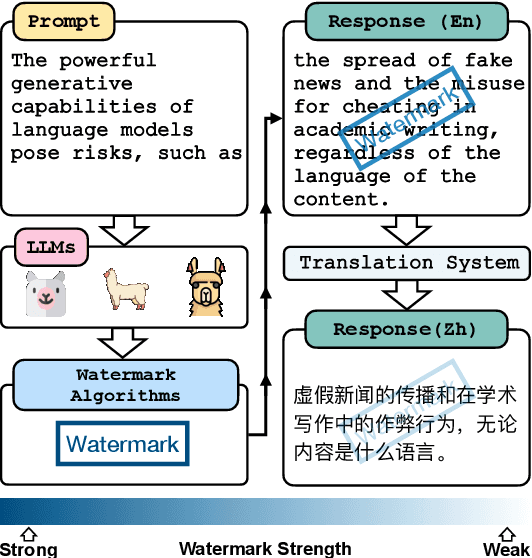

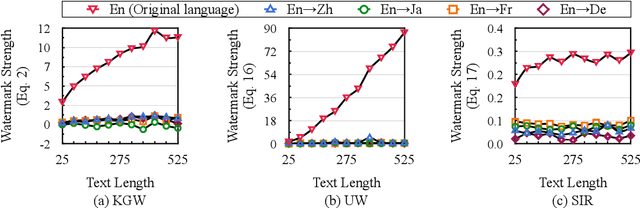

Text watermarking technology aims to tag and identify content produced by large language models (LLMs) to prevent misuse. In this study, we introduce the concept of ''cross-lingual consistency'' in text watermarking, which assesses the ability of text watermarks to maintain their effectiveness after being translated into other languages. Preliminary empirical results from two LLMs and three watermarking methods reveal that current text watermarking technologies lack consistency when texts are translated into various languages. Based on this observation, we propose a Cross-lingual Watermark Removal Attack (CWRA) to bypass watermarking by first obtaining a response from an LLM in a pivot language, which is then translated into the target language. CWRA can effectively remove watermarks by reducing the Area Under the Curve (AUC) from 0.95 to 0.67 without performance loss. Furthermore, we analyze two key factors that contribute to the cross-lingual consistency in text watermarking and propose a defense method that increases the AUC from 0.67 to 0.88 under CWRA.
Unsupervised Sign Language Translation and Generation
Feb 12, 2024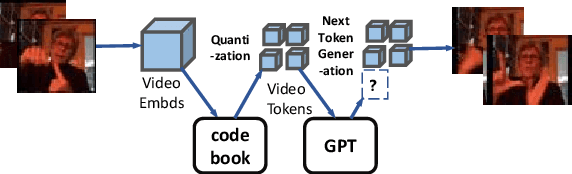
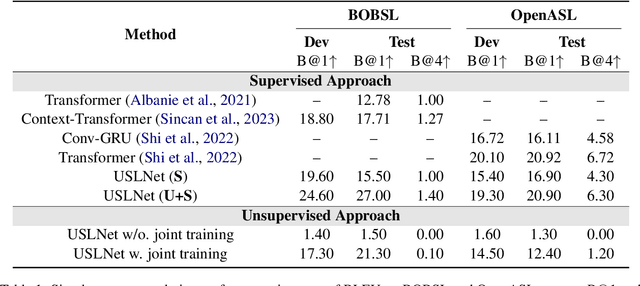


Motivated by the success of unsupervised neural machine translation (UNMT), we introduce an unsupervised sign language translation and generation network (USLNet), which learns from abundant single-modality (text and video) data without parallel sign language data. USLNet comprises two main components: single-modality reconstruction modules (text and video) that rebuild the input from its noisy version in the same modality and cross-modality back-translation modules (text-video-text and video-text-video) that reconstruct the input from its noisy version in the different modality using back-translation procedure.Unlike the single-modality back-translation procedure in text-based UNMT, USLNet faces the cross-modality discrepancy in feature representation, in which the length and the feature dimension mismatch between text and video sequences. We propose a sliding window method to address the issues of aligning variable-length text with video sequences. To our knowledge, USLNet is the first unsupervised sign language translation and generation model capable of generating both natural language text and sign language video in a unified manner. Experimental results on the BBC-Oxford Sign Language dataset (BOBSL) and Open-Domain American Sign Language dataset (OpenASL) reveal that USLNet achieves competitive results compared to supervised baseline models, indicating its effectiveness in sign language translation and generation.
Improving Machine Translation with Human Feedback: An Exploration of Quality Estimation as a Reward Model
Jan 23, 2024Insufficient modeling of human preferences within the reward model is a major obstacle for leveraging human feedback to improve translation quality. Fortunately, quality estimation (QE), which predicts the quality of a given translation without reference, has achieved impressive alignment with human evaluations in the last two years. In this work, we investigate the potential of employing the QE model as the reward model (the QE-based reward model) to predict human preferences for feedback training. We first identify the overoptimization problem during QE-based feedback training, manifested as an increase in reward while translation quality declines. We examine the problem and argue that the vulnerability of the QE model might lead to high rewards for incorrect translations, resulting in overoptimization and error propagation. To address the problem, we adopt a simple yet effective method that uses heuristic rules to detect the incorrect translations and assigns a penalty term to the QE-based rewards for the detected incorrect translations. Experimental results show that the proposed QE-based feedback training achieves consistent and significant improvements across various settings, further verified through human preference studies. Our subsequent analysis demonstrates the high data efficiency of the proposed QE-based feedback training: the proposed approach using a small amount of monolingual data can outperform systems using larger parallel corpora.
Fin-QD: A Computational Design Framework for Soft Grippers: Integrating MAP-Elites and High-fidelity FEM
Nov 21, 2023Computational design can excite the full potential of soft robotics that has the drawbacks of being highly nonlinear from material, structure, and contact. Up to date, enthusiastic research interests have been demonstrated for individual soft fingers, but the frame design space (how each soft finger is assembled) remains largely unexplored. Computationally design remains challenging for the finger-based soft gripper to grip across multiple geometrical-distinct object types successfully. Including the design space for the gripper frame can bring huge difficulties for conventional optimisation algorithms and fitness calculation methods due to the exponential growth of high-dimensional design space. This work proposes an automated computational design optimisation framework that generates gripper diversity to individually grasp geometrically distinct object types based on a quality-diversity approach. This work first discusses a significantly large design space (28 design parameters) for a finger-based soft gripper, including the rarely-explored design space of finger arrangement that is converted to various configurations to arrange individual soft fingers. Then, a contact-based Finite Element Modelling (FEM) is proposed in SOFA to output high-fidelity grasping data for fitness evaluation and feature measurements. Finally, diverse gripper designs are obtained from the framework while considering features such as the volume and workspace of grippers. This work bridges the gap of computationally exploring the vast design space of finger-based soft grippers while grasping large geometrically distinct object types with a simple control scheme.
Leveraging Word Guessing Games to Assess the Intelligence of Large Language Models
Nov 06, 2023The automatic evaluation of LLM-based agent intelligence is critical in developing advanced LLM-based agents. Although considerable effort has been devoted to developing human-annotated evaluation datasets, such as AlpacaEval, existing techniques are costly, time-consuming, and lack adaptability. In this paper, inspired by the popular language game ``Who is Spy'', we propose to use the word guessing game to assess the intelligence performance of LLMs. Given a word, the LLM is asked to describe the word and determine its identity (spy or not) based on its and other players' descriptions. Ideally, an advanced agent should possess the ability to accurately describe a given word using an aggressive description while concurrently maximizing confusion in the conservative description, enhancing its participation in the game. To this end, we first develop DEEP to evaluate LLMs' expression and disguising abilities. DEEP requires LLM to describe a word in aggressive and conservative modes. We then introduce SpyGame, an interactive multi-agent framework designed to assess LLMs' intelligence through participation in a competitive language-based board game. Incorporating multi-agent interaction, SpyGame requires the target LLM to possess linguistic skills and strategic thinking, providing a more comprehensive evaluation of LLMs' human-like cognitive abilities and adaptability in complex communication situations. The proposed evaluation framework is very easy to implement. We collected words from multiple sources, domains, and languages and used the proposed evaluation framework to conduct experiments. Extensive experiments demonstrate that the proposed DEEP and SpyGame effectively evaluate the capabilities of various LLMs, capturing their ability to adapt to novel situations and engage in strategic communication.
A Novel Perception and Semantic Mapping Method for Robot Autonomy in Orchards
Sep 01, 2023
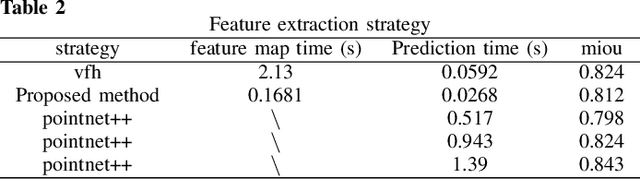
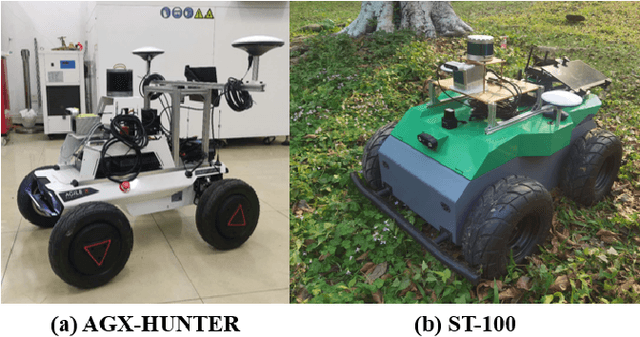
In this work, we propose a novel framework for achieving robotic autonomy in orchards. It consists of two key steps: perception and semantic mapping. In the perception step, we introduce a 3D detection method that accurately identifies objects directly on point cloud maps. In the semantic mapping step, we develop a mapping module that constructs a visibility graph map by incorporating object-level information and terrain analysis. By combining these two steps, our framework improves the autonomy of agricultural robots in orchard environments. The accurate detection of objects and the construction of a semantic map enable the robot to navigate autonomously, perform tasks such as fruit harvesting, and acquire actionable information for efficient agricultural production.
MPPN: Multi-Resolution Periodic Pattern Network For Long-Term Time Series Forecasting
Jun 12, 2023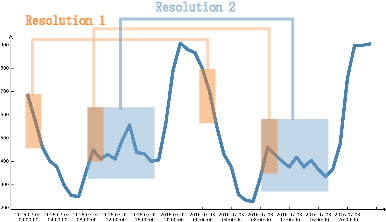

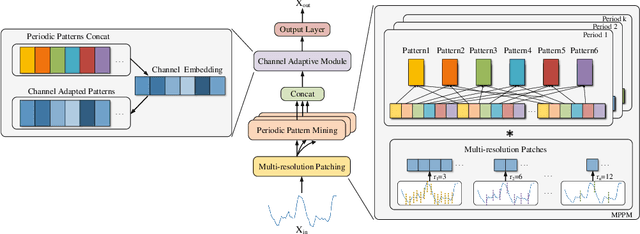

Long-term time series forecasting plays an important role in various real-world scenarios. Recent deep learning methods for long-term series forecasting tend to capture the intricate patterns of time series by decomposition-based or sampling-based methods. However, most of the extracted patterns may include unpredictable noise and lack good interpretability. Moreover, the multivariate series forecasting methods usually ignore the individual characteristics of each variate, which may affecting the prediction accuracy. To capture the intrinsic patterns of time series, we propose a novel deep learning network architecture, named Multi-resolution Periodic Pattern Network (MPPN), for long-term series forecasting. We first construct context-aware multi-resolution semantic units of time series and employ multi-periodic pattern mining to capture the key patterns of time series. Then, we propose a channel adaptive module to capture the perceptions of multivariate towards different patterns. In addition, we present an entropy-based method for evaluating the predictability of time series and providing an upper bound on the prediction accuracy before forecasting. Our experimental evaluation on nine real-world benchmarks demonstrated that MPPN significantly outperforms the state-of-the-art Transformer-based, decomposition-based and sampling-based methods for long-term series forecasting.
Encouraging Divergent Thinking in Large Language Models through Multi-Agent Debate
May 30, 2023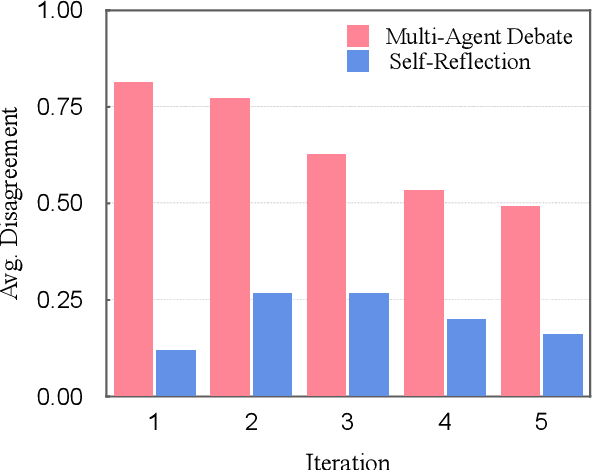
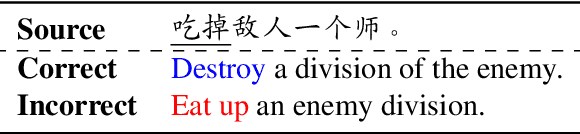
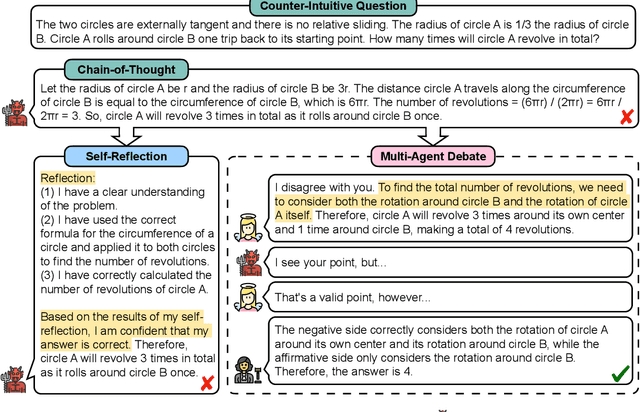

Modern large language models (LLMs) like ChatGPT have shown remarkable performance on general language tasks but still struggle on complex reasoning tasks, which drives the research on cognitive behaviors of LLMs to explore human-like problem-solving strategies. Along this direction, one representative strategy is self-reflection, which asks an LLM to refine the solution with the feedback generated by itself iteratively. However, our study shows that such reflection-style methods suffer from the Degeneration-of-Thought (DoT) problem: once the LLM has established confidence in its solutions, it is unable to generate novel thoughts later through reflection even if its initial stance is incorrect. To address the DoT problem, we propose a Multi-Agent Debate (MAD) framework, in which multiple agents express their arguments in the state of "tit for tat" and a judge manages the debate process to obtain a final solution. Clearly, our MAD framework encourages divergent thinking in LLMs which would be helpful for tasks that require deep levels of contemplation. Experiment results on two challenging datasets, commonsense machine translation and counter-intuitive arithmetic reasoning, demonstrate the effectiveness of our MAD framework. Extensive analyses suggest that the adaptive break of debate and the modest level of "tit for tat" state are required for MAD to obtain good performance. Moreover, we find that LLMs might not be a fair judge if different LLMs are used for agents. Codes: https://github.com/Skytliang/Multi-Agents-Debate