 Add to Chrome
 Add to Firefox
 Add to Edge
The Binary Quantized Neural Network for Dense Prediction via Specially Designed Upsampling and Attention
May 28, 2024
Deep learning-based information processing consumes long time and requires huge computing resources, especially for dense prediction tasks which require an output for each pixel, like semantic segmentation and salient object detection. There are mainly two challenges for quantization of dense prediction tasks. Firstly, directly applying the upsampling operation that dense prediction tasks require is extremely crude and causes unacceptable accuracy reduction. Secondly, the complex structure of dense prediction networks means it is difficult to maintain a fast speed as well as a high accuracy when performing quantization. In this paper, we propose an effective upsampling method and an efficient attention computation strategy to transfer the success of the binary neural networks (BNN) from single prediction tasks to dense prediction tasks. Firstly, we design a simple and robust multi-branch parallel upsampling structure to achieve the high accuracy. Then we further optimize the attention method which plays an important role in segmentation but has huge computation complexity. Our attention method can reduce the computational complexity by a factor of one hundred times but retain the original effect. Experiments on Cityscapes, KITTI road, and ECSSD fully show the effectiveness of our work.

Detection-Correction Structure via General Language Model for Grammatical Error Correction
May 28, 2024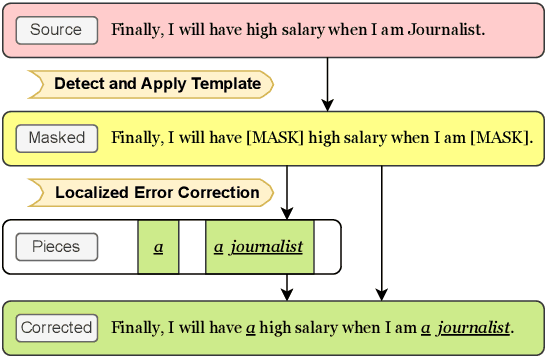
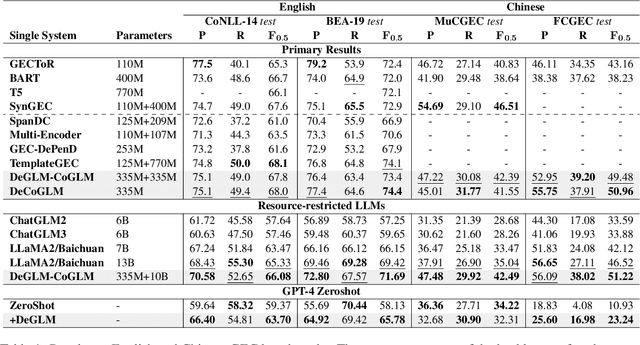


Grammatical error correction (GEC) is a task dedicated to rectifying texts with minimal edits, which can be decoupled into two components: detection and correction. However, previous works have predominantly focused on direct correction, with no prior efforts to integrate both into a single model. Moreover, the exploration of the detection-correction paradigm by large language models (LLMs) remains underdeveloped. This paper introduces an integrated detection-correction structure, named DeCoGLM, based on the General Language Model (GLM). The detection phase employs a fault-tolerant detection template, while the correction phase leverages autoregressive mask infilling for localized error correction. Through the strategic organization of input tokens and modification of attention masks, we facilitate multi-task learning within a single model. Our model demonstrates competitive performance against the state-of-the-art models on English and Chinese GEC datasets. Further experiments present the effectiveness of the detection-correction structure in LLMs, suggesting a promising direction for GEC.
Combining Radiomics and Machine Learning Approaches for Objective ASD Diagnosis: Verifying White Matter Associations with ASD
May 25, 2024Autism Spectrum Disorder is a condition characterized by a typical brain development leading to impairments in social skills, communication abilities, repetitive behaviors, and sensory processing. There have been many studies combining brain MRI images with machine learning algorithms to achieve objective diagnosis of autism, but the correlation between white matter and autism has not been fully utilized. To address this gap, we develop a computer-aided diagnostic model focusing on white matter regions in brain MRI by employing radiomics and machine learning methods. This study introduced a MultiUNet model for segmenting white matter, leveraging the UNet architecture and utilizing manually segmented MRI images as the training data. Subsequently, we extracted white matter features using the Pyradiomics toolkit and applied different machine learning models such as Support Vector Machine, Random Forest, Logistic Regression, and K-Nearest Neighbors to predict autism. The prediction sets all exceeded 80% accuracy. Additionally, we employed Convolutional Neural Network to analyze segmented white matter images, achieving a prediction accuracy of 86.84%. Notably, Support Vector Machine demonstrated the highest prediction accuracy at 89.47%. These findings not only underscore the efficacy of the models but also establish a link between white matter abnormalities and autism. Our study contributes to a comprehensive evaluation of various diagnostic models for autism and introduces a computer-aided diagnostic algorithm for early and objective autism diagnosis based on MRI white matter regions.
StyleMaster: Towards Flexible Stylized Image Generation with Diffusion Models
May 24, 2024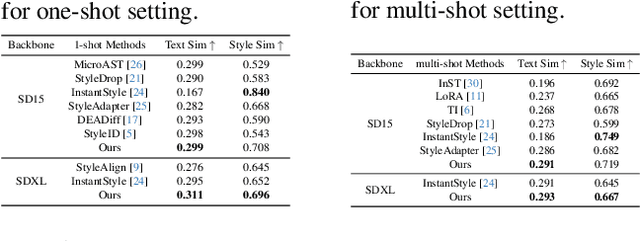
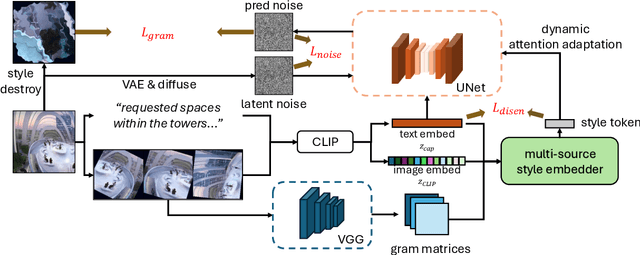
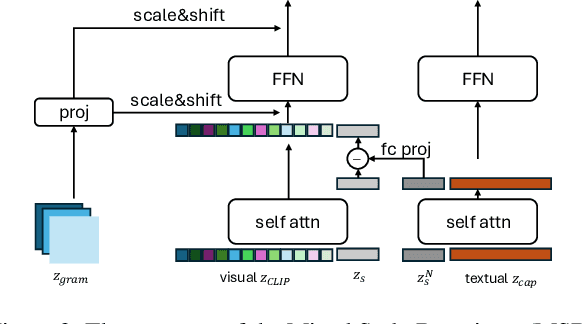
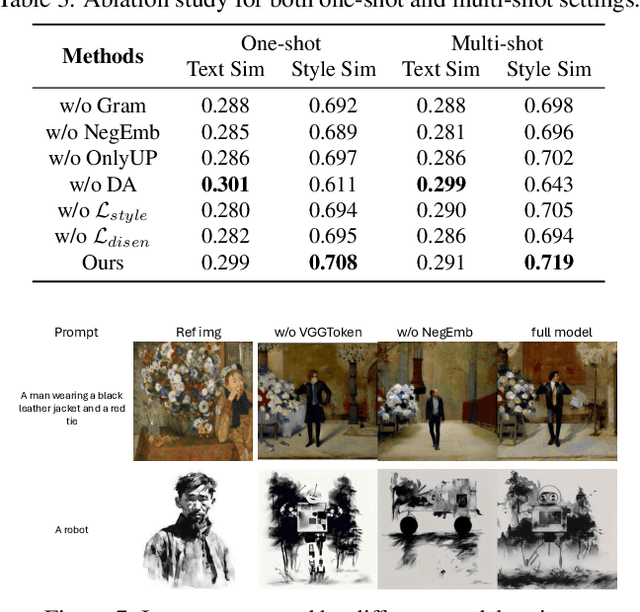
Stylized Text-to-Image Generation (STIG) aims to generate images based on text prompts and style reference images. We in this paper propose a novel framework dubbed as StyleMaster for this task by leveraging pretrained Stable Diffusion (SD), which tries to solve the previous problems such as insufficient style and inconsistent semantics. The enhancement lies in two novel module, namely multi-source style embedder and dynamic attention adapter. In order to provide SD with better style embeddings, we propose the multi-source style embedder considers both global and local level visual information along with textual one, which provide both complementary style-related and semantic-related knowledge. Additionally, aiming for better balance between the adaptor capacity and semantic control, the proposed dynamic attention adapter is applied to the diffusion UNet in which adaptation weights are dynamically calculated based on the style embeddings. Two objective functions are introduced to optimize the model together with denoising loss, which can further enhance semantic and style consistency. Extensive experiments demonstrate the superiority of StyleMaster over existing methods, rendering images with variable target styles while successfully maintaining the semantic information from the text prompts.
AndroidWorld: A Dynamic Benchmarking Environment for Autonomous Agents
May 23, 2024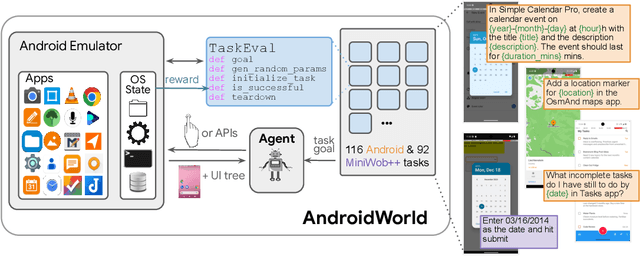
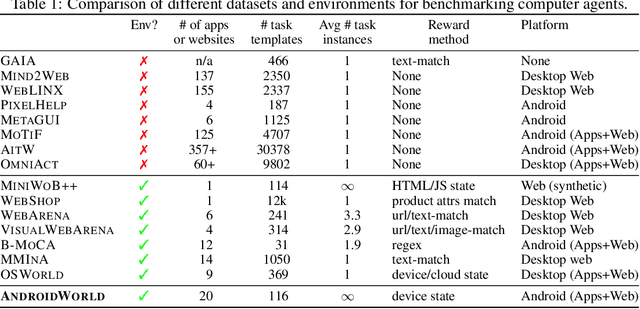
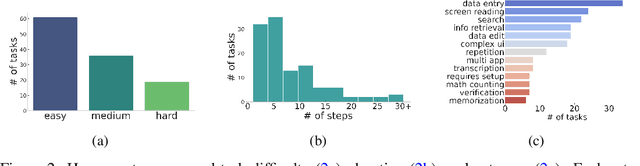
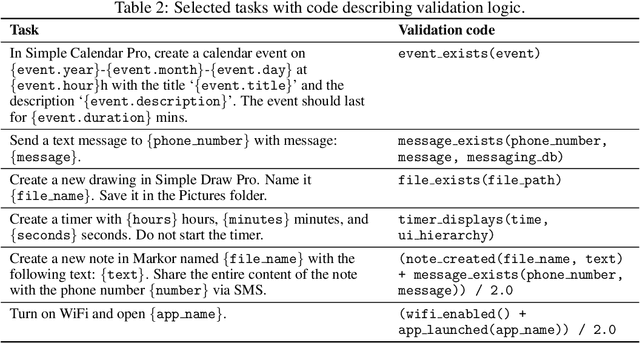
Autonomous agents that execute human tasks by controlling computers can enhance human productivity and application accessibility. Yet, progress in this field will be driven by realistic and reproducible benchmarks. We present AndroidWorld, a fully functioning Android environment that provides reward signals for 116 programmatic task workflows across 20 real world Android applications. Unlike existing interactive environments, which provide a static test set, AndroidWorld dynamically constructs tasks that are parameterized and expressed in natural language in unlimited ways, thus enabling testing on a much larger and realistic suite of tasks. Reward signals are derived from the computer's system state, making them durable across task variations and extensible across different apps. To demonstrate AndroidWorld's benefits and mode of operation, we introduce a new computer control agent, M3A. M3A can complete 30.6% of the AndroidWorld's tasks, leaving ample room for future work. Furthermore, we adapt a popular desktop web agent to work on Android, which we find to be less effective on mobile, suggesting future research is needed to achieve universal, cross-domain agents. Finally, we conduct a robustness analysis by testing M3A against a range of task variations on a representative subset of tasks, demonstrating that variations in task parameters can significantly alter the complexity of a task and therefore an agent's performance, highlighting the importance of testing agents under diverse conditions. AndroidWorld and the experiments in this paper are available at https://github.com/google-research/android_world.
TOPA: Extend Large Language Models for Video Understanding via Text-Only Pre-Alignment
May 22, 2024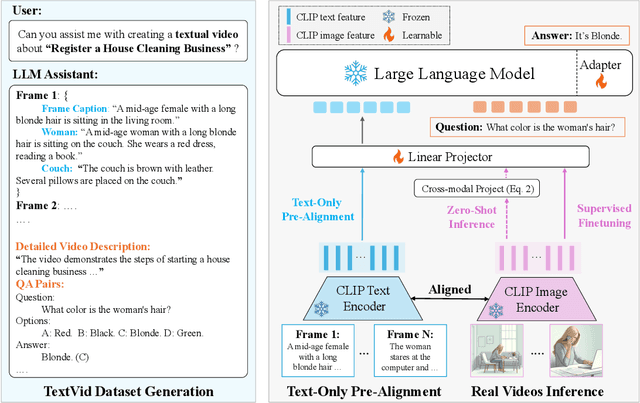
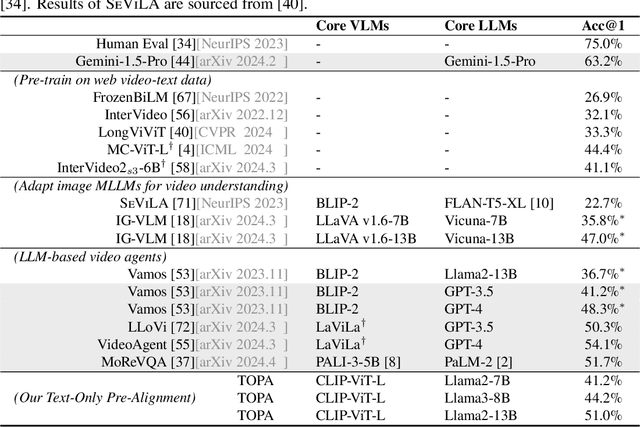
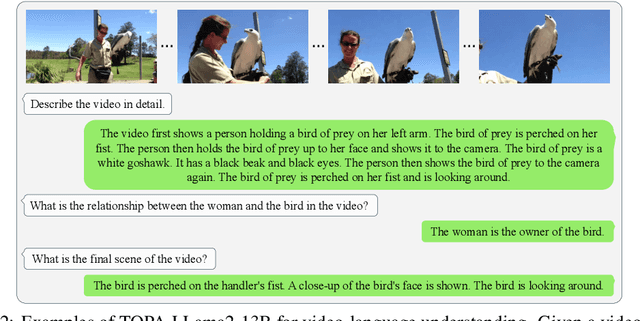
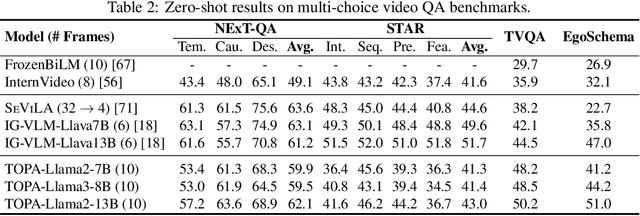
Recent advancements in image understanding have benefited from the extensive use of web image-text pairs. However, video understanding remains a challenge despite the availability of substantial web video-text data. This difficulty primarily arises from the inherent complexity of videos and the inefficient language supervision in recent web-collected video-text datasets. In this paper, we introduce Text-Only Pre-Alignment (TOPA), a novel approach to extend large language models (LLMs) for video understanding, without the need for pre-training on real video data. Specifically, we first employ an advanced LLM to automatically generate Textual Videos comprising continuous textual frames, along with corresponding annotations to simulate real video-text data. Then, these annotated textual videos are used to pre-align a language-only LLM with the video modality. To bridge the gap between textual and real videos, we employ the CLIP model as the feature extractor to align image and text modalities. During text-only pre-alignment, the continuous textual frames, encoded as a sequence of CLIP text features, are analogous to continuous CLIP image features, thus aligning the LLM with real video representation. Extensive experiments, including zero-shot evaluation and finetuning on various video understanding tasks, demonstrate that TOPA is an effective and efficient framework for aligning video content with LLMs. In particular, without training on any video data, the TOPA-Llama2-13B model achieves a Top-1 accuracy of 51.0% on the challenging long-form video understanding benchmark, Egoschema. This performance surpasses previous video-text pre-training approaches and proves competitive with recent GPT-3.5-based video agents.
Collaboration of Teachers for Semi-supervised Object Detection
May 22, 2024


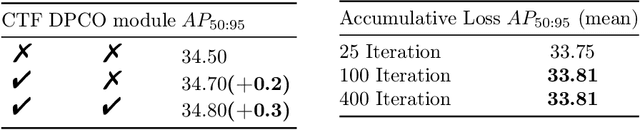
Recent semi-supervised object detection (SSOD) has achieved remarkable progress by leveraging unlabeled data for training. Mainstream SSOD methods rely on Consistency Regularization methods and Exponential Moving Average (EMA), which form a cyclic data flow. However, the EMA updating training approach leads to weight coupling between the teacher and student models. This coupling in a cyclic data flow results in a decrease in the utilization of unlabeled data information and the confirmation bias on low-quality or erroneous pseudo-labels. To address these issues, we propose the Collaboration of Teachers Framework (CTF), which consists of multiple pairs of teacher and student models for training. In the learning process of CTF, the Data Performance Consistency Optimization module (DPCO) informs the best pair of teacher models possessing the optimal pseudo-labels during the past training process, and these most reliable pseudo-labels generated by the best performing teacher would guide the other student models. As a consequence, this framework greatly improves the utilization of unlabeled data and prevents the positive feedback cycle of unreliable pseudo-labels. The CTF achieves outstanding results on numerous SSOD datasets, including a 0.71% mAP improvement on the 10% annotated COCO dataset and a 0.89% mAP improvement on the VOC dataset compared to LabelMatch and converges significantly faster. Moreover, the CTF is plug-and-play and can be integrated with other mainstream SSOD methods.
Face Adapter for Pre-Trained Diffusion Models with Fine-Grained ID and Attribute Control
May 21, 2024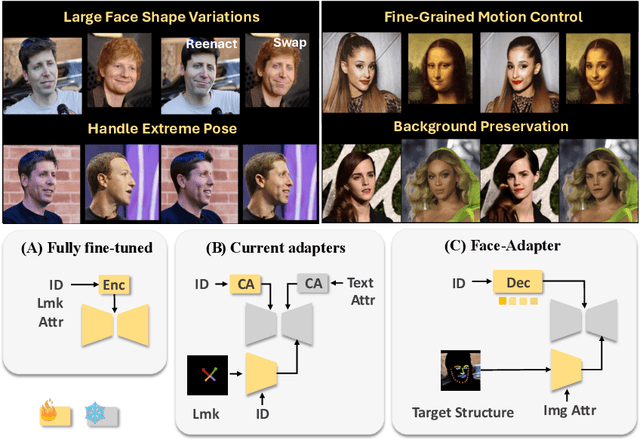
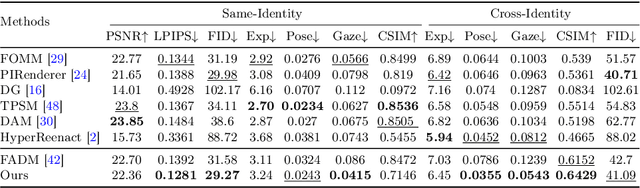

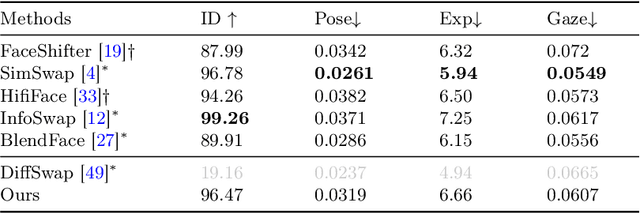
Current face reenactment and swapping methods mainly rely on GAN frameworks, but recent focus has shifted to pre-trained diffusion models for their superior generation capabilities. However, training these models is resource-intensive, and the results have not yet achieved satisfactory performance levels. To address this issue, we introduce Face-Adapter, an efficient and effective adapter designed for high-precision and high-fidelity face editing for pre-trained diffusion models. We observe that both face reenactment/swapping tasks essentially involve combinations of target structure, ID and attribute. We aim to sufficiently decouple the control of these factors to achieve both tasks in one model. Specifically, our method contains: 1) A Spatial Condition Generator that provides precise landmarks and background; 2) A Plug-and-play Identity Encoder that transfers face embeddings to the text space by a transformer decoder. 3) An Attribute Controller that integrates spatial conditions and detailed attributes. Face-Adapter achieves comparable or even superior performance in terms of motion control precision, ID retention capability, and generation quality compared to fully fine-tuned face reenactment/swapping models. Additionally, Face-Adapter seamlessly integrates with various StableDiffusion models.
Fast Generalizable Gaussian Splatting Reconstruction from Multi-View Stereo
May 20, 2024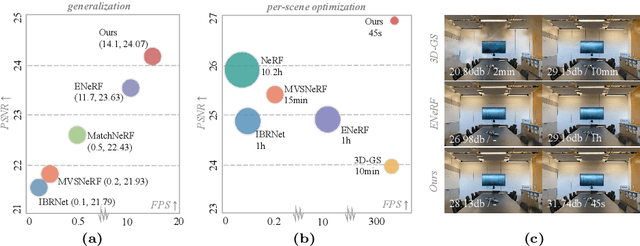
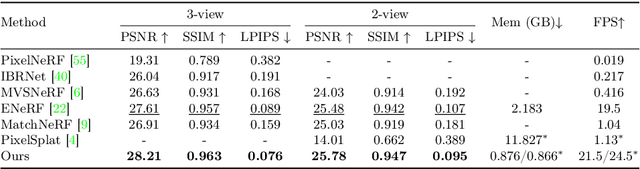
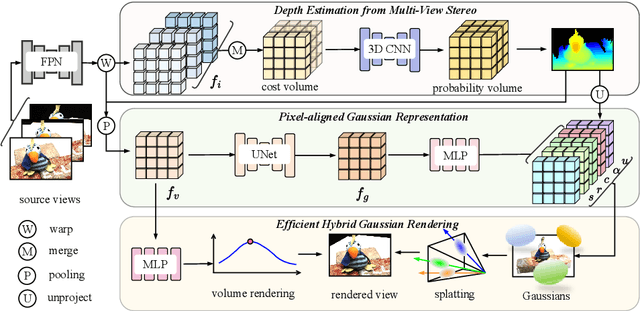
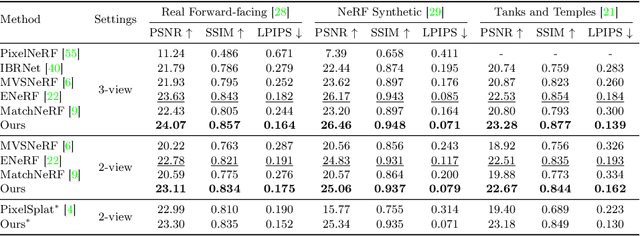
We present MVSGaussian, a new generalizable 3D Gaussian representation approach derived from Multi-View Stereo (MVS) that can efficiently reconstruct unseen scenes. Specifically, 1) we leverage MVS to encode geometry-aware Gaussian representations and decode them into Gaussian parameters. 2) To further enhance performance, we propose a hybrid Gaussian rendering that integrates an efficient volume rendering design for novel view synthesis. 3) To support fast fine-tuning for specific scenes, we introduce a multi-view geometric consistent aggregation strategy to effectively aggregate the point clouds generated by the generalizable model, serving as the initialization for per-scene optimization. Compared with previous generalizable NeRF-based methods, which typically require minutes of fine-tuning and seconds of rendering per image, MVSGaussian achieves real-time rendering with better synthesis quality for each scene. Compared with the vanilla 3D-GS, MVSGaussian achieves better view synthesis with less training computational cost. Extensive experiments on DTU, Real Forward-facing, NeRF Synthetic, and Tanks and Temples datasets validate that MVSGaussian attains state-of-the-art performance with convincing generalizability, real-time rendering speed, and fast per-scene optimization.
Picking watermarks from noise (PWFN): an improved robust watermarking model against intensive distortions
May 08, 2024
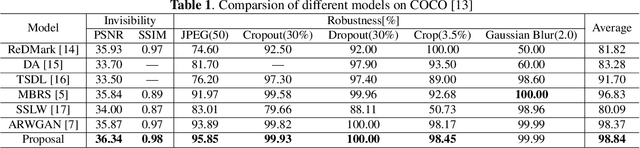
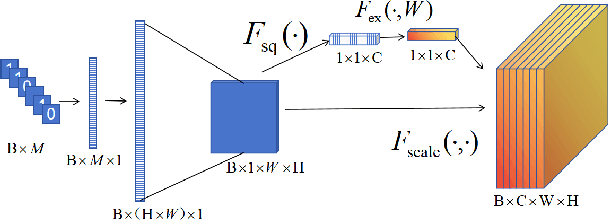
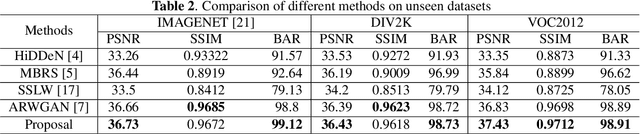
Digital watermarking is the process of embedding secret information by altering images in a way that is undetectable to the human eye. To increase the robustness of the model, many deep learning-based watermarking methods use the encoder-decoder architecture by adding different noises to the noise layer. The decoder then extracts the watermarked information from the distorted image. However, this method can only resist weak noise attacks. To improve the robustness of the algorithm against stronger noise, this paper proposes to introduce a denoise module between the noise layer and the decoder. The module is aimed at reducing noise and recovering some of the information lost during an attack. Additionally, the paper introduces the SE module to fuse the watermarking information pixel-wise and channel dimensions-wise, improving the encoder's efficiency. Experimental results show that our proposed method is comparable to existing models and outperforms state-of-the-art under different noise intensities. In addition, ablation experiments show the superiority of our proposed module.