 Add to Chrome
 Add to Firefox
 Add to Edge
EchoBridge: Long-Tail-Aware ECG-Echocardiography Text Alignment for Echocardiography-Derived Cardiac Findings
Jul 27, 2026
Standardized echocardiography conclusions provide meaningful supervision for learning ECG representations of echocardiography-derived cardiac findings. Global ECG--text alignment may entangle modality-specific factors, while long-tailed finding distributions provide sparse positive supervision for low-prevalence conditions. We propose EchoBridge with Complementary Shared--Private Projection (CSPP) and Adaptive Prototype Boundary Calibration (APBC). CSPP maps each modality into shared and auxiliary private projections, reduces directional redundancy via within-modality orthogonality, and bidirectionally aligns normalized shared projections. APBC organizes the shared hypersphere with class-specific prototypes, training-frequency-adaptive angular margins, and spherical Riesz repulsion. We evaluate EchoBridge on EchoNext-Mini and independent PKUPH and SHTMU cohorts under four protocols: prompt-based inference without downstream classifier training, in-domain frozen linear probing, target-domain cross-center frozen linear probing, and source-only cross-center transfer, supplemented by finding-specific analyses. EchoBridge improves classifier-free AUROC, AUPRC, and F1 over the strongest baselines by 7.88, 5.61, and 4.54 points, respectively, and achieves the highest point estimates across all in-domain and target-domain probing budgets and both source-only transfer cohorts. Finding-specific analyses show gains for most conditions, including several low-prevalence valvular findings.

ImputeECG: Deep Learning Reconstruction of Complete 12-Lead Electrocardiograms from Incomplete Recordings for Cardiac Assessment
Jul 06, 2026Complete digital 12-lead electrocardiograms (ECGs) are essential for AI-enabled cardiovascular assessment, yet many clinical ECG records, particularly those digitized from ECG images, remain incomplete because of short display formats, incomplete waveform digitization, lead loss, or signal corruption. We developed ImputeECG, a mask-conditioned one-dimensional Transformer autoencoder that completes 12-lead, 10-s ECGs while retaining all observed samples. The model was trained on PTB-XL and evaluated on PTB-XL and CPSC2018 under simulated incomplete settings, with additional real-world validation in a 43,633-record Kailuan clinical cohort after ECG image digitization. Metrics were computed over originally missing regions, with analyses of morphology and downstream diagnostic utility. On PTB-XL, ImputeECG reduced missing-region MAE by 41.7-51.0% and MSE by 54.0-63.7% versus the strongest baseline, with lower errors in R-peak timing, RR interval, QRS duration, QT interval, and P-wave, QRS-complex, and T-wave reconstruction. On CPSC2018, ImputeECG reduced MAE by 49.7-51.9%, supporting external generalization. In downstream multi-label classification, ImputeECG restored performance to 92.28% AUROC and 33.88% AUPRC in the most incomplete PTB-XL setting, approaching complete-ECG performance. On CPSC2018, completed ECGs achieved 94.75-95.89% AUROC and 78.83-81.86% AUPRC across settings. In Kailuan, ECG completion improved zero-shot sex prediction AUROC from 82.6% to 85.8% and reduced age prediction MAE from 10.72 to 9.87 years after image-based ECG digitization. These findings support ECG completion as a practical strategy for converting incomplete ECG records into AI-ready 12-lead, 10-s digital signals and extending the usable scope of ECG archives for digital cardiac assessment.
Wearable Single-Lead ECG Detects Fine-Grained Structural Heart Disease Through Echo-Report Supervision
Jun 08, 2026Structural heart disease (SHD) is a primary driver of heart failure and cardiovascular mortality, yet early detection remains constrained by the limited accessibility of echocardiography. While single-lead electrocardiogram (ECG) is ubiquitous through wearables, existing AI screening models often depend on 12-lead inputs, generalize poorly across institutions, or require massive, condition-specific labeled datasets. Recent work has demonstrated the feasibility of contrastive pre-training between single-lead ECGs and echocardiography reports within a single health system. Here, we present AnyECG-Echo, a framework that advance this paradigm toward clinical translation through three key developments: (1) evaluation in a geographically independent external cohort (n = 16,621); (2) diagnostic coverage of 13 fine-grained SHD subtypes spanning myocardial, chamber, valvular, and great-vessel pathologies; and (3) dual-axis mechanistic interpretability combining electrophysiology-grounded Shapley attribution with emergent correlations to quantitative measurements. Across validation cohorts totaling n = 25,222, the model demonstrated high AUROC for high-impact subtypes, including reduced left ventricular systolic function (AUROC 0.866-0.924), global heart enlargement (0.877-0.931), and mitral stenosis (0.836-0.906). Furthermore, we successfully validated the alignment of model outputs with established medical physiological traits, thereby enhancing interpretability. Notably, we discovered that AnyECG-Echo's outputs function as physiologically grounded digital biomarkers that accurately track objective metrics such as LVEF and myocardial wall thickness. These findings prove that wearable single-lead ECGs can effectively detect fine-grained structural heart disease, offering a practical solution for population-scale screening.
Artificial intelligence-enabled single-lead ECG for non-invasive hyperkalemia detection: development, multicenter validation, and proof-of-concept deployment
Mar 17, 2026Hyperkalemia is a life-threatening electrolyte disorder that is common in patients with chronic kidney disease and heart failure, yet frequent monitoring remains difficult outside hospital settings. We developed and validated Pocket-K, a single-lead AI-ECG system initialized from the ECGFounder foundation model for non-invasive hyperkalemia screening and handheld deployment. In this multicentre observational study using routinely collected clinical ECG and laboratory data, 34,439 patients contributed 62,290 ECG--potassium pairs. Lead I data were used to fine-tune the model. Data from Peking University People's Hospital were divided into development and temporal validation sets, and data from The Second Hospital of Tianjin Medical University served as an independent external validation set. Hyperkalemia was defined as venous serum potassium > 5.5 mmol/L. Pocket-K achieved AUROCs of 0.936 in internal testing, 0.858 in temporal validation, and 0.808 in external validation. For KDIGO-defined moderate-to-severe hyperkalemia (serum potassium >= 6.0 mmol/L), AUROCs increased to 0.940 and 0.861 in the temporal and external sets, respectively. External negative predictive value exceeded 99.3%. Model-predicted high risk below the hyperkalemia threshold was more common in patients with chronic kidney disease and heart failure. A handheld prototype enabled near-real-time inference, supporting future prospective evaluation in native handheld and wearable settings.
Aortic Valve Disease Detection from PPG via Physiology-Informed Self-Supervised Learning
Feb 04, 2026Traditional diagnosis of aortic valve disease relies on echocardiography, but its cost and required expertise limit its use in large-scale early screening. Photoplethysmography (PPG) has emerged as a promising screening modality due to its widespread availability in wearable devices and its ability to reflect underlying hemodynamic dynamics. However, the extreme scarcity of gold-standard labeled PPG data severely constrains the effectiveness of data-driven approaches. To address this challenge, we propose and validate a new paradigm, Physiology-Guided Self-Supervised Learning (PG-SSL), aimed at unlocking the value of large-scale unlabeled PPG data for efficient screening of Aortic Stenosis (AS) and Aortic Regurgitation (AR). Using over 170,000 unlabeled PPG samples from the UK Biobank, we formalize clinical knowledge into a set of PPG morphological phenotypes and construct a pulse pattern recognition proxy task for self-supervised pre-training. A dual-branch, gated-fusion architecture is then employed for efficient fine-tuning on a small labeled subset. The proposed PG-SSL framework achieves AUCs of 0.765 and 0.776 for AS and AR screening, respectively, significantly outperforming supervised baselines trained on limited labeled data. Multivariable analysis further validates the model output as an independent digital biomarker with sustained prognostic value after adjustment for standard clinical risk factors. This study demonstrates that PG-SSL provides an effective, domain knowledge-driven solution to label scarcity in medical artificial intelligence and shows strong potential for enabling low-cost, large-scale early screening of aortic valve disease.
AnyECG: Evolved ECG Foundation Model for Holistic Health Profiling
Jan 12, 2026Background: Artificial intelligence enabled electrocardiography (AI-ECG) has demonstrated the ability to detect diverse pathologies, but most existing models focus on single disease identification, neglecting comorbidities and future risk prediction. Although ECGFounder expanded cardiac disease coverage, a holistic health profiling model remains needed. Methods: We constructed a large multicenter dataset comprising 13.3 million ECGs from 2.98 million patients. Using transfer learning, ECGFounder was fine-tuned to develop AnyECG, a foundation model for holistic health profiling. Performance was evaluated using external validation cohorts and a 10-year longitudinal cohort for current diagnosis, future risk prediction, and comorbidity identification. Results: AnyECG demonstrated systemic predictive capability across 1172 conditions, achieving an AUROC greater than 0.7 for 306 diseases. The model revealed novel disease associations, robust comorbidity patterns, and future disease risks. Representative examples included high diagnostic performance for hyperparathyroidism (AUROC 0.941), type 2 diabetes (0.803), Crohn disease (0.817), lymphoid leukemia (0.856), and chronic obstructive pulmonary disease (0.773). Conclusion: The AnyECG foundation model provides substantial evidence that AI-ECG can serve as a systemic tool for concurrent disease detection and long-term risk prediction.
Artificial Intelligence-Enabled Spirometry for Early Detection of Right Heart Failure
Nov 17, 2025Right heart failure (RHF) is a disease characterized by abnormalities in the structure or function of the right ventricle (RV), which is associated with high morbidity and mortality. Lung disease often causes increased right ventricular load, leading to RHF. Therefore, it is very important to screen out patients with cor pulmonale who develop RHF from people with underlying lung diseases. In this work, we propose a self-supervised representation learning method to early detecting RHF from patients with cor pulmonale, which uses spirogram time series to predict patients with RHF at an early stage. The proposed model is divided into two stages. The first stage is the self-supervised representation learning-based spirogram embedding (SLSE) network training process, where the encoder of the Variational autoencoder (VAE-encoder) learns a robust low-dimensional representation of the spirogram time series from the data-augmented unlabeled data. Second, this low-dimensional representation is fused with demographic information and fed into a CatBoost classifier for the downstream RHF prediction task. Trained and tested on a carefully selected subset of 26,617 individuals from the UK Biobank, our model achieved an AUROC of 0.7501 in detecting RHF, demonstrating strong population-level distinction ability. We further evaluated the model on high-risk clinical subgroups, achieving AUROC values of 0.8194 on a test set of 74 patients with chronic kidney disease (CKD) and 0.8413 on a set of 64 patients with valvular heart disease (VHD). These results highlight the model's potential utility in predicting RHF among clinically elevated-risk populations. In conclusion, this study presents a self-supervised representation learning approach combining spirogram time series and demographic data, demonstrating promising potential for early RHF detection in clinical practice.
AnyECG-Lab: An Exploration Study of Fine-tuning an ECG Foundation Model to Estimate Laboratory Values from Single-Lead ECG Signals
Oct 25, 2025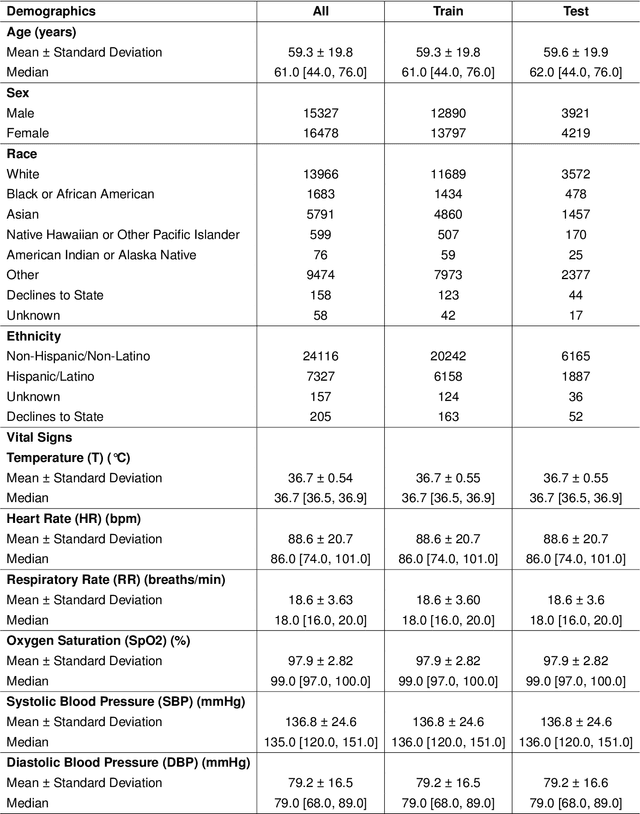
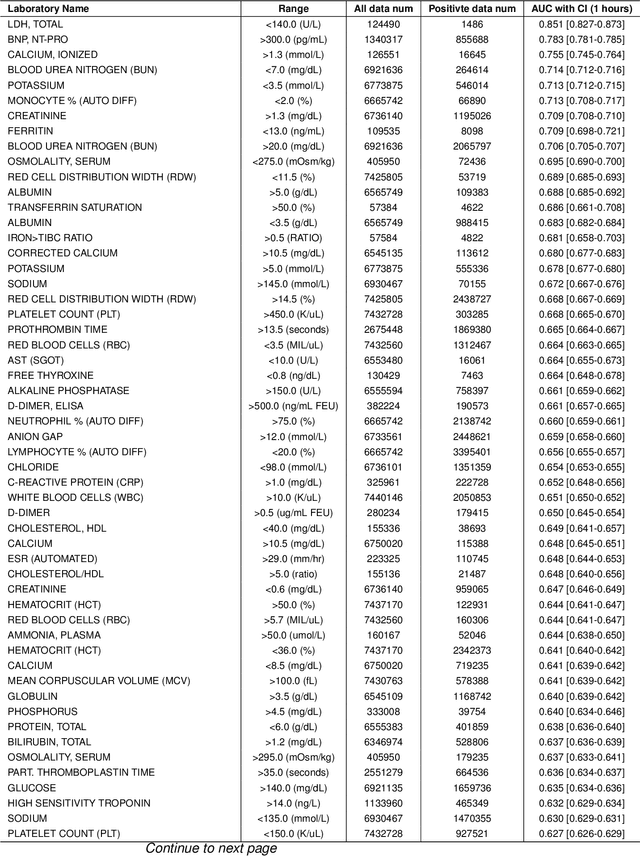
Timely access to laboratory values is critical for clinical decision-making, yet current approaches rely on invasive venous sampling and are intrinsically delayed. Electrocardiography (ECG), as a non-invasive and widely available signal, offers a promising modality for rapid laboratory estimation. Recent progress in deep learning has enabled the extraction of latent hematological signatures from ECGs. However, existing models are constrained by low signal-to-noise ratios, substantial inter-individual variability, limited data diversity, and suboptimal generalization, especially when adapted to low-lead wearable devices. In this work, we conduct an exploratory study leveraging transfer learning to fine-tune ECGFounder, a large-scale pre-trained ECG foundation model, on the Multimodal Clinical Monitoring in the Emergency Department (MC-MED) dataset from Stanford. We generated a corpus of more than 20 million standardized ten-second ECG segments to enhance sensitivity to subtle biochemical correlates. On internal validation, the model demonstrated strong predictive performance (area under the curve above 0.65) for thirty-three laboratory indicators, moderate performance (between 0.55 and 0.65) for fifty-nine indicators, and limited performance (below 0.55) for sixteen indicators. This study provides an efficient artificial-intelligence driven solution and establishes the feasibility scope for real-time, non-invasive estimation of laboratory values.
GEM: Empowering MLLM for Grounded ECG Understanding with Time Series and Images
Mar 08, 2025While recent multimodal large language models (MLLMs) have advanced automated ECG interpretation, they still face two key limitations: (1) insufficient multimodal synergy between time series signals and visual ECG representations, and (2) limited explainability in linking diagnoses to granular waveform evidence. We introduce GEM, the first MLLM unifying ECG time series, 12-lead ECG images and text for grounded and clinician-aligned ECG interpretation. GEM enables feature-grounded analysis, evidence-driven reasoning, and a clinician-like diagnostic process through three core innovations: a dual-encoder framework extracting complementary time series and image features, cross-modal alignment for effective multimodal understanding, and knowledge-guided instruction generation for generating high-granularity grounding data (ECG-Grounding) linking diagnoses to measurable parameters ($e.g.$, QRS/PR Intervals). Additionally, we propose the Grounded ECG Understanding task, a clinically motivated benchmark designed to comprehensively assess the MLLM's capability in grounded ECG understanding. Experimental results on both existing and our proposed benchmarks show GEM significantly improves predictive performance (CSN $7.4\% \uparrow$), explainability ($22.7\% \uparrow$), and grounding ($24.8\% \uparrow$), making it more suitable for real-world clinical applications. GitHub repository: https://github.com/lanxiang1017/GEM.git
Accuracy of Wearable ECG Parameter Calculation Method for Long QT and First-Degree A-V Block Detection: A Multi-Center Real-World Study with External Validations Compared to Standard ECG Machines and Cardiologist Assessments
Feb 21, 2025In recent years, wearable devices have revolutionized cardiac monitoring by enabling continuous, non-invasive ECG recording in real-world settings. Despite these advances, the accuracy of ECG parameter calculations (PR interval, QRS interval, QT interval, etc.) from wearables remains to be rigorously validated against conventional ECG machines and expert clinician assessments. In this large-scale, multicenter study, we evaluated FeatureDB, a novel algorithm for automated computation of ECG parameters from wearable single-lead signals Three diverse datasets were employed: the AHMU-FH dataset (n=88,874), the CSE dataset (n=106), and the HeartVoice-ECG-lite dataset (n=369) with annotations provided by two experienced cardiologists. FeatureDB demonstrates a statistically significant correlation with key parameters (PR interval, QRS duration, QT interval, and QTc) calculated by standard ECG machines and annotated by clinical doctors. Bland-Altman analysis confirms a high level of agreement.Moreover,FeatureDB exhibited robust diagnostic performance in detecting Long QT syndrome (LQT) and atrioventricular block interval abnormalities (AVBI),with excellent area under the ROC curve (LQT: 0.836, AVBI: 0.861),accuracy (LQT: 0.856, AVBI: 0.845),sensitivity (LQT: 0.815, AVBI: 0.877),and specificity (LQT: 0.856, AVBI: 0.845).This further validates its clinical reliability. These results validate the clinical applicability of FeatureDB for wearable ECG analysis and highlight its potential to bridge the gap between traditional diagnostic methods and emerging wearable technologies.Ultimately,this study supports integrating wearable ECG devices into large-scale cardiovascular disease management and early intervention strategies,and it highlights the potential of wearable ECG technologies to deliver accurate,clinically relevant cardiac monitoring while advancing broader applications in cardiovascular care.