 Add to Chrome
 Add to Firefox
 Add to Edge
Smartwatch Photoplethysmography-Derived Heart Age via ECG-Guided Cross-Modal Pretraining as a Digital Biomarker of Vascular Aging
Aug 03, 2026
Digital biomarkers of cardiovascular aging, often termed heart or vascular age, have been widely studied, but most rely on resting electrocardiography (ECG), imaging, or specialized vascular assessments. Evidence linking wearable photoplethysmography (PPG) to arterial stiffness and hypertension remains limited. We developed an ECG-guided cross-modal framework that uses synchronized smartwatch ECG to enhance PPG representation learning during pretraining while requiring only PPG at inference. The study included three OPPO cohorts across China, comprising 581,804 participants and 7,452,131 recordings. The Vascular Health Study cohort supported ECG-PPG self-supervised pretraining, fine-tuning, and internal validation, while two external cohorts assessed associations with pulse wave velocity (PWV) and prevalent hypertension. Combining subject-aware learning with ECG-PPG contrastive alignment, the PPG-only model achieved subject-level mean absolute errors of 5.895 years (Pearson r=0.819) in the PWV cohort and 4.344 years (r=0.800) in the home blood pressure monitoring cohort. Aggregating repeated recordings further improved short-term stability. After adjustment for chronological age, heart age gap was associated with PWV (partial r=0.2627, P<0.001); each 1-year increase corresponded to 0.062 m/s higher PWV, and accelerated versus decelerated heart aging was associated with 0.91 m/s higher adjusted PWV. Each 1-SD increase in adjusted heart age gap was associated with greater odds of prevalent hypertension (OR 1.72, 95% CI 1.49-1.99), while the highest versus lowest quartile had an OR of 4.25. These findings support smartwatch PPG-derived heart age gap as a scalable digital biomarker of arterial stiffness and prevalent hypertension.

EchoBridge: Long-Tail-Aware ECG-Echocardiography Text Alignment for Echocardiography-Derived Cardiac Findings
Jul 27, 2026Standardized echocardiography conclusions provide meaningful supervision for learning ECG representations of echocardiography-derived cardiac findings. Global ECG--text alignment may entangle modality-specific factors, while long-tailed finding distributions provide sparse positive supervision for low-prevalence conditions. We propose EchoBridge with Complementary Shared--Private Projection (CSPP) and Adaptive Prototype Boundary Calibration (APBC). CSPP maps each modality into shared and auxiliary private projections, reduces directional redundancy via within-modality orthogonality, and bidirectionally aligns normalized shared projections. APBC organizes the shared hypersphere with class-specific prototypes, training-frequency-adaptive angular margins, and spherical Riesz repulsion. We evaluate EchoBridge on EchoNext-Mini and independent PKUPH and SHTMU cohorts under four protocols: prompt-based inference without downstream classifier training, in-domain frozen linear probing, target-domain cross-center frozen linear probing, and source-only cross-center transfer, supplemented by finding-specific analyses. EchoBridge improves classifier-free AUROC, AUPRC, and F1 over the strongest baselines by 7.88, 5.61, and 4.54 points, respectively, and achieves the highest point estimates across all in-domain and target-domain probing budgets and both source-only transfer cohorts. Finding-specific analyses show gains for most conditions, including several low-prevalence valvular findings.
ImputeECG: Deep Learning Reconstruction of Complete 12-Lead Electrocardiograms from Incomplete Recordings for Cardiac Assessment
Jul 06, 2026Complete digital 12-lead electrocardiograms (ECGs) are essential for AI-enabled cardiovascular assessment, yet many clinical ECG records, particularly those digitized from ECG images, remain incomplete because of short display formats, incomplete waveform digitization, lead loss, or signal corruption. We developed ImputeECG, a mask-conditioned one-dimensional Transformer autoencoder that completes 12-lead, 10-s ECGs while retaining all observed samples. The model was trained on PTB-XL and evaluated on PTB-XL and CPSC2018 under simulated incomplete settings, with additional real-world validation in a 43,633-record Kailuan clinical cohort after ECG image digitization. Metrics were computed over originally missing regions, with analyses of morphology and downstream diagnostic utility. On PTB-XL, ImputeECG reduced missing-region MAE by 41.7-51.0% and MSE by 54.0-63.7% versus the strongest baseline, with lower errors in R-peak timing, RR interval, QRS duration, QT interval, and P-wave, QRS-complex, and T-wave reconstruction. On CPSC2018, ImputeECG reduced MAE by 49.7-51.9%, supporting external generalization. In downstream multi-label classification, ImputeECG restored performance to 92.28% AUROC and 33.88% AUPRC in the most incomplete PTB-XL setting, approaching complete-ECG performance. On CPSC2018, completed ECGs achieved 94.75-95.89% AUROC and 78.83-81.86% AUPRC across settings. In Kailuan, ECG completion improved zero-shot sex prediction AUROC from 82.6% to 85.8% and reduced age prediction MAE from 10.72 to 9.87 years after image-based ECG digitization. These findings support ECG completion as a practical strategy for converting incomplete ECG records into AI-ready 12-lead, 10-s digital signals and extending the usable scope of ECG archives for digital cardiac assessment.
CausalMoE: A Billion-Scale Multimodal Foundation Model for Granger Causal Discovery with Pattern-Routed Heterogeneous Experts
Jun 11, 2026Granger Causal Discovery (GCD) is fundamental for analyzing temporal dependencies in complex systems. However, existing neural GCD methods predominantly rely on a "one-size-fits-all" paradigm, struggling to capture distribution shifts and dynamic regime changes inherent in real-world time series. This often leads to entangled representations and spurious causal graphs. In this paper, we propose CausalMoE, a billion-scale multimodal Granger causal foundation model that explicitly models patch-level heterogeneity. CausalMoE introduces a Pattern-Routed Mixture of Heterogeneous Experts, which dynamically identifies latent temporal patterns and routes patches to specialized domain experts, effectively decoupling regime-specific mechanisms from shared dynamics. To ensure interpretable graph recovery, we design a Causality-Aware Self-Attention mechanism operating across variables, yielding sparse Granger causal graphs via proximal optimization. Furthermore, CausalMoE is the first to integrate LLMs and VLMs to align numerical signals with textual and visual priors, regularizing causal estimation in complex scenarios. Extensive experiments demonstrate that CausalMoE establishes a new state-of-the-art on fully supervised benchmarks, while effectively generalizing to few-shot settings where traditional methods fail.
Holter-to-Sleep: AI-Enabled Repurposing of Single-Lead ECG for Sleep Phenotyping
Mar 19, 2026Sleep disturbances are tightly linked to cardiovascular risk, yet polysomnography (PSG)-the clinical reference standard-remains resource-intensive and poorly suited for multi-night, home-based, and large-scale screening. Single-lead electrocardiography (ECG), already ubiquitous in Holter and patch-based devices, enables comfortable long-term acquisition and encodes sleep-relevant physiology through autonomic modulation and cardiorespiratory coupling. Here, we present a proof-of-concept Holter-to-Sleep framework that, using single-lead ECG as the sole input, jointly supports overnight sleep phenotyping and Holter-grade cardiac phenotyping within the same recording, and further provides an explicit analytic pathway for scalable cardio-sleep association studies. The framework is developed and validated on a pooled multi-center PSG sample of 10,439 studies spanning four public cohorts, with independent external evaluation to assess cross-cohort generalizability, and additional real-world feasibility assessment using overnight patch-ECG recordings via objective-subjective consistency analysis. This integrated design enables robust extraction of clinically meaningful overnight sleep phenotypes under heterogeneous populations and acquisition conditions, and facilitates systematic linkage between ECG-derived sleep metrics and arrhythmia-related Holter phenotypes. Collectively, the Holter-to-Sleep paradigm offers a practical foundation for low-burden, home-deployable, and scalable cardio-sleep monitoring and research beyond traditional PSG-centric workflows.
Artificial intelligence-enabled single-lead ECG for non-invasive hyperkalemia detection: development, multicenter validation, and proof-of-concept deployment
Mar 17, 2026Hyperkalemia is a life-threatening electrolyte disorder that is common in patients with chronic kidney disease and heart failure, yet frequent monitoring remains difficult outside hospital settings. We developed and validated Pocket-K, a single-lead AI-ECG system initialized from the ECGFounder foundation model for non-invasive hyperkalemia screening and handheld deployment. In this multicentre observational study using routinely collected clinical ECG and laboratory data, 34,439 patients contributed 62,290 ECG--potassium pairs. Lead I data were used to fine-tune the model. Data from Peking University People's Hospital were divided into development and temporal validation sets, and data from The Second Hospital of Tianjin Medical University served as an independent external validation set. Hyperkalemia was defined as venous serum potassium > 5.5 mmol/L. Pocket-K achieved AUROCs of 0.936 in internal testing, 0.858 in temporal validation, and 0.808 in external validation. For KDIGO-defined moderate-to-severe hyperkalemia (serum potassium >= 6.0 mmol/L), AUROCs increased to 0.940 and 0.861 in the temporal and external sets, respectively. External negative predictive value exceeded 99.3%. Model-predicted high risk below the hyperkalemia threshold was more common in patients with chronic kidney disease and heart failure. A handheld prototype enabled near-real-time inference, supporting future prospective evaluation in native handheld and wearable settings.
ECGFlowCMR: Pretraining with ECG-Generated Cine CMR Improves Cardiac Disease Classification and Phenotype Prediction
Jan 28, 2026Cardiac Magnetic Resonance (CMR) imaging provides a comprehensive assessment of cardiac structure and function but remains constrained by high acquisition costs and reliance on expert annotations, limiting the availability of large-scale labeled datasets. In contrast, electrocardiograms (ECGs) are inexpensive, widely accessible, and offer a promising modality for conditioning the generative synthesis of cine CMR. To this end, we propose ECGFlowCMR, a novel ECG-to-CMR generative framework that integrates a Phase-Aware Masked Autoencoder (PA-MAE) and an Anatomy-Motion Disentangled Flow (AMDF) to address two fundamental challenges: (1) the cross-modal temporal mismatch between multi-beat ECG recordings and single-cycle CMR sequences, and (2) the anatomical observability gap due to the limited structural information inherent in ECGs. Extensive experiments on the UK Biobank and a proprietary clinical dataset demonstrate that ECGFlowCMR can generate realistic cine CMR sequences from ECG inputs, enabling scalable pretraining and improving performance on downstream cardiac disease classification and phenotype prediction tasks.
AnyECG: Evolved ECG Foundation Model for Holistic Health Profiling
Jan 12, 2026Background: Artificial intelligence enabled electrocardiography (AI-ECG) has demonstrated the ability to detect diverse pathologies, but most existing models focus on single disease identification, neglecting comorbidities and future risk prediction. Although ECGFounder expanded cardiac disease coverage, a holistic health profiling model remains needed. Methods: We constructed a large multicenter dataset comprising 13.3 million ECGs from 2.98 million patients. Using transfer learning, ECGFounder was fine-tuned to develop AnyECG, a foundation model for holistic health profiling. Performance was evaluated using external validation cohorts and a 10-year longitudinal cohort for current diagnosis, future risk prediction, and comorbidity identification. Results: AnyECG demonstrated systemic predictive capability across 1172 conditions, achieving an AUROC greater than 0.7 for 306 diseases. The model revealed novel disease associations, robust comorbidity patterns, and future disease risks. Representative examples included high diagnostic performance for hyperparathyroidism (AUROC 0.941), type 2 diabetes (0.803), Crohn disease (0.817), lymphoid leukemia (0.856), and chronic obstructive pulmonary disease (0.773). Conclusion: The AnyECG foundation model provides substantial evidence that AI-ECG can serve as a systemic tool for concurrent disease detection and long-term risk prediction.
AnyECG-Lab: An Exploration Study of Fine-tuning an ECG Foundation Model to Estimate Laboratory Values from Single-Lead ECG Signals
Oct 25, 2025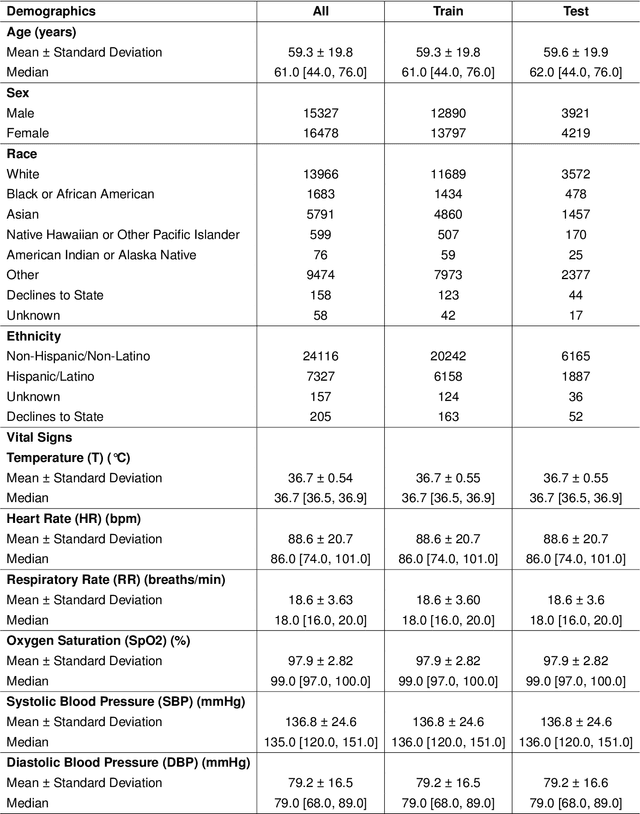
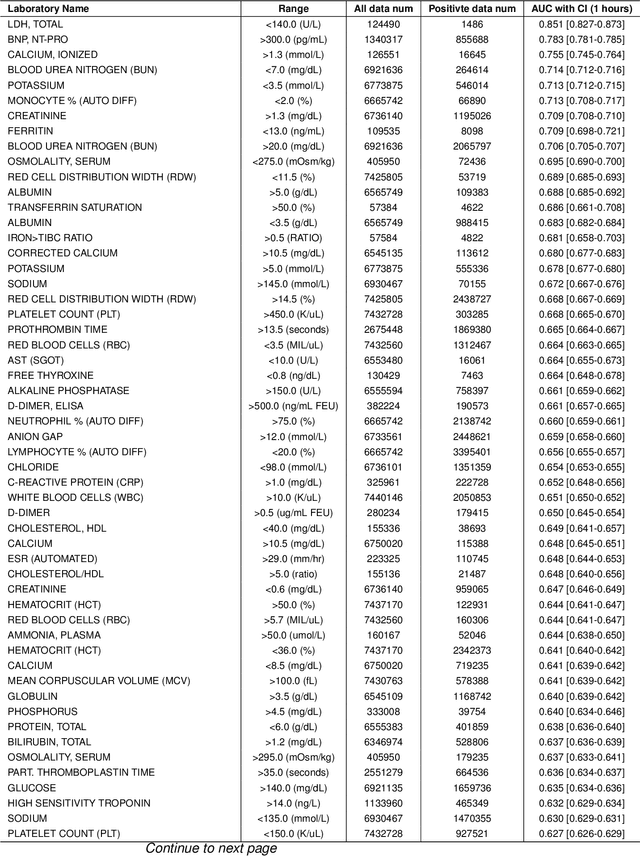
Timely access to laboratory values is critical for clinical decision-making, yet current approaches rely on invasive venous sampling and are intrinsically delayed. Electrocardiography (ECG), as a non-invasive and widely available signal, offers a promising modality for rapid laboratory estimation. Recent progress in deep learning has enabled the extraction of latent hematological signatures from ECGs. However, existing models are constrained by low signal-to-noise ratios, substantial inter-individual variability, limited data diversity, and suboptimal generalization, especially when adapted to low-lead wearable devices. In this work, we conduct an exploratory study leveraging transfer learning to fine-tune ECGFounder, a large-scale pre-trained ECG foundation model, on the Multimodal Clinical Monitoring in the Emergency Department (MC-MED) dataset from Stanford. We generated a corpus of more than 20 million standardized ten-second ECG segments to enhance sensitivity to subtle biochemical correlates. On internal validation, the model demonstrated strong predictive performance (area under the curve above 0.65) for thirty-three laboratory indicators, moderate performance (between 0.55 and 0.65) for fifty-nine indicators, and limited performance (below 0.55) for sixteen indicators. This study provides an efficient artificial-intelligence driven solution and establishes the feasibility scope for real-time, non-invasive estimation of laboratory values.
Artificial Intelligence-derived Vascular Age from Photoplethysmography: A Novel Digital Biomarker for Cardiovascular Health
Feb 19, 2025With the increasing availability of wearable devices, photoplethysmography (PPG) has emerged as a promising non-invasive tool for monitoring human hemodynamics. We propose a deep learning framework to estimate vascular age (AI-vascular age) from PPG signals, incorporating a distribution-aware loss to address biases caused by imbalanced data. The model was developed using data from the UK Biobank (UKB), with 98,672 participants in the development cohort and 113,559 participants (144,683 data pairs) for clinical evaluation. After adjusting for key confounders, individuals with a vascular age gap (AI-vascular age minus calendar age) exceeding 9 years had a significantly higher risk of major adverse cardiovascular and cerebrovascular events (MACCE) (HR = 2.37, p < 0.005) and secondary outcomes, including diabetes (HR = 2.69, p < 0.005), hypertension (HR = 2.88, p < 0.005), coronary heart disease (HR = 2.20, p < 0.005), heart failure (HR = 2.15, p < 0.005), myocardial infarction (HR = 2.51, p < 0.005), stroke (HR = 2.55, p < 0.005), and all-cause mortality (HR = 2.51, p < 0.005). Conversely, participants with a vascular age gap below -9 years exhibited a significantly lower incidence of these outcomes. We further evaluated the longitudinal applicability of AI-vascular age using serial PPG data from the UKB, demonstrating its value in risk stratification by leveraging AI-vascular age at two distinct time points to predict future MACCE incidence. External validation was performed on a MIMIC-III-derived cohort (n = 2,343), where each one-year increase in vascular age gap was significantly associated with elevated in-hospital mortality risk (OR = 1.02, p < 0.005). In conclusion, our study establishes AI-vascular age as a novel, non-invasive digital biomarker for cardiovascular health assessment.