 Add to Chrome
 Add to Firefox
 Add to Edge
AutoForge: Automated Environment Synthesis for Agentic Reinforcement Learning
Dec 28, 2025
Conducting reinforcement learning (RL) in simulated environments offers a cost-effective and highly scalable way to enhance language-based agents. However, previous work has been limited to semi-automated environment synthesis or tasks lacking sufficient difficulty, offering little breadth or depth. In addition, the instability of simulated users integrated into these environments, along with the heterogeneity across simulated environments, poses further challenges for agentic RL. In this work, we propose: (1) a unified pipeline for automated and scalable synthesis of simulated environments associated with high-difficulty but easily verifiable tasks; and (2) an environment level RL algorithm that not only effectively mitigates user instability but also performs advantage estimation at the environment level, thereby improving training efficiency and stability. Comprehensive evaluations on agentic benchmarks, including tau-bench, tau2-Bench, and VitaBench, validate the effectiveness of our proposed method. Further in-depth analyses underscore its out-of-domain generalization.

EcomBench: Towards Holistic Evaluation of Foundation Agents in E-commerce
Dec 11, 2025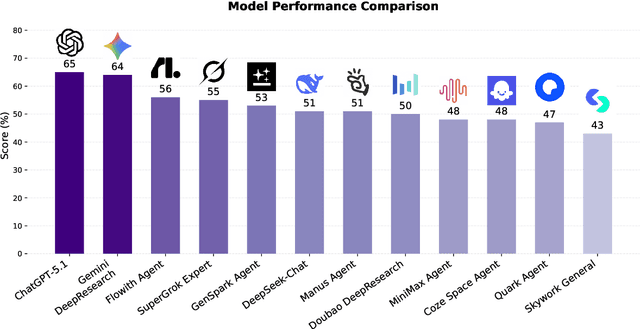
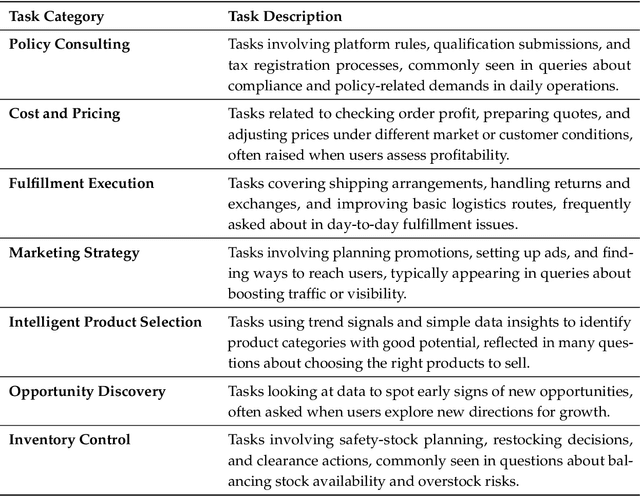
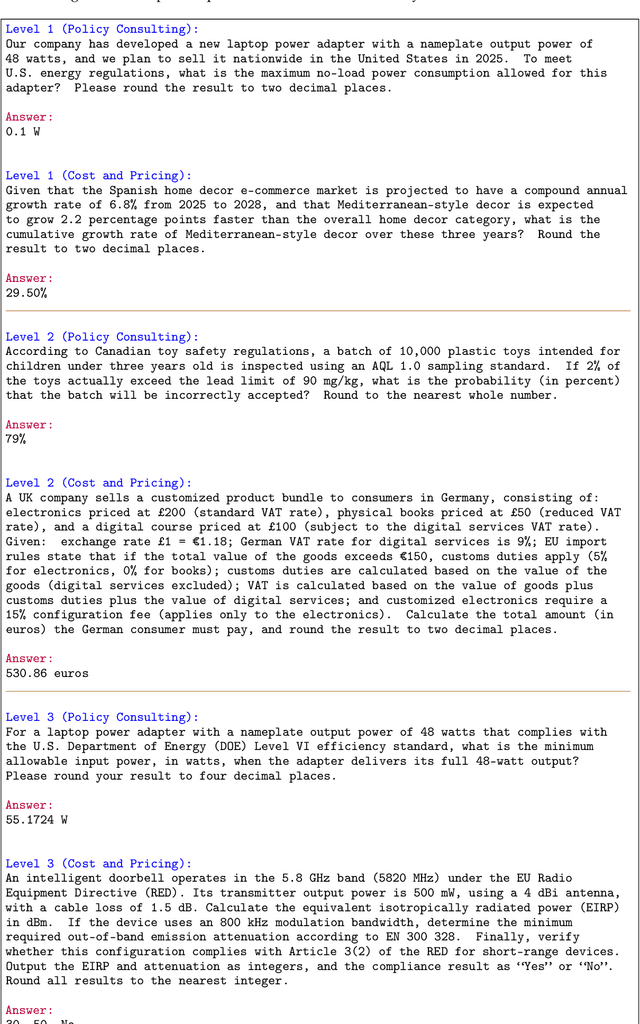
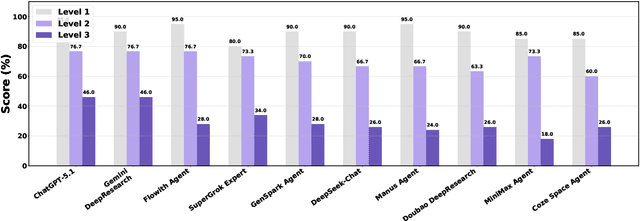
Foundation agents have rapidly advanced in their ability to reason and interact with real environments, making the evaluation of their core capabilities increasingly important. While many benchmarks have been developed to assess agent performance, most concentrate on academic settings or artificially designed scenarios while overlooking the challenges that arise in real applications. To address this issue, we focus on a highly practical real-world setting, the e-commerce domain, which involves a large volume of diverse user interactions, dynamic market conditions, and tasks directly tied to real decision-making processes. To this end, we introduce EcomBench, a holistic E-commerce Benchmark designed to evaluate agent performance in realistic e-commerce environments. EcomBench is built from genuine user demands embedded in leading global e-commerce ecosystems and is carefully curated and annotated through human experts to ensure clarity, accuracy, and domain relevance. It covers multiple task categories within e-commerce scenarios and defines three difficulty levels that evaluate agents on key capabilities such as deep information retrieval, multi-step reasoning, and cross-source knowledge integration. By grounding evaluation in real e-commerce contexts, EcomBench provides a rigorous and dynamic testbed for measuring the practical capabilities of agents in modern e-commerce.
IterResearch: Rethinking Long-Horizon Agents via Markovian State Reconstruction
Nov 10, 2025Recent advances in deep-research agents have shown promise for autonomous knowledge construction through dynamic reasoning over external sources. However, existing approaches rely on a mono-contextual paradigm that accumulates all information in a single, expanding context window, leading to context suffocation and noise contamination that limit their effectiveness on long-horizon tasks. We introduce IterResearch, a novel iterative deep-research paradigm that reformulates long-horizon research as a Markov Decision Process with strategic workspace reconstruction. By maintaining an evolving report as memory and periodically synthesizing insights, our approach preserves consistent reasoning capacity across arbitrary exploration depths. We further develop Efficiency-Aware Policy Optimization (EAPO), a reinforcement learning framework that incentivizes efficient exploration through geometric reward discounting and enables stable distributed training via adaptive downsampling. Extensive experiments demonstrate that IterResearch achieves substantial improvements over existing open-source agents with average +14.5pp across six benchmarks and narrows the gap with frontier proprietary systems. Remarkably, our paradigm exhibits unprecedented interaction scaling, extending to 2048 interactions with dramatic performance gains (from 3.5\% to 42.5\%), and serves as an effective prompting strategy, improving frontier models by up to 19.2pp over ReAct on long-horizon tasks. These findings position IterResearch as a versatile solution for long-horizon reasoning, effective both as a trained agent and as a prompting paradigm for frontier models.
Towards Universal Video Retrieval: Generalizing Video Embedding via Synthesized Multimodal Pyramid Curriculum
Oct 31, 2025The prevailing video retrieval paradigm is structurally misaligned, as narrow benchmarks incentivize correspondingly limited data and single-task training. Therefore, universal capability is suppressed due to the absence of a diagnostic evaluation that defines and demands multi-dimensional generalization. To break this cycle, we introduce a framework built on the co-design of evaluation, data, and modeling. First, we establish the Universal Video Retrieval Benchmark (UVRB), a suite of 16 datasets designed not only to measure performance but also to diagnose critical capability gaps across tasks and domains. Second, guided by UVRB's diagnostics, we introduce a scalable synthesis workflow that generates 1.55 million high-quality pairs to populate the semantic space required for universality. Finally, we devise the Modality Pyramid, a curriculum that trains our General Video Embedder (GVE) by explicitly leveraging the latent interconnections within our diverse data. Extensive experiments show GVE achieves state-of-the-art zero-shot generalization on UVRB. In particular, our analysis reveals that popular benchmarks are poor predictors of general ability and that partially relevant retrieval is a dominant but overlooked scenario. Overall, our co-designed framework provides a practical path to escape the limited scope and advance toward truly universal video retrieval.
$\text{E}^2\text{Rank}$: Your Text Embedding can Also be an Effective and Efficient Listwise Reranker
Oct 26, 2025Text embedding models serve as a fundamental component in real-world search applications. By mapping queries and documents into a shared embedding space, they deliver competitive retrieval performance with high efficiency. However, their ranking fidelity remains limited compared to dedicated rerankers, especially recent LLM-based listwise rerankers, which capture fine-grained query-document and document-document interactions. In this paper, we propose a simple yet effective unified framework $\text{E}^2\text{Rank}$, means Efficient Embedding-based Ranking (also means Embedding-to-Rank), which extends a single text embedding model to perform both high-quality retrieval and listwise reranking through continued training under a listwise ranking objective, thereby achieving strong effectiveness with remarkable efficiency. By applying cosine similarity between the query and document embeddings as a unified ranking function, the listwise ranking prompt, which is constructed from the original query and its candidate documents, serves as an enhanced query enriched with signals from the top-K documents, akin to pseudo-relevance feedback (PRF) in traditional retrieval models. This design preserves the efficiency and representational quality of the base embedding model while significantly improving its reranking performance. Empirically, $\textrm{E}^2\text{Rank}$ achieves state-of-the-art results on the BEIR reranking benchmark and demonstrates competitive performance on the reasoning-intensive BRIGHT benchmark, with very low reranking latency. We also show that the ranking training process improves embedding performance on the MTEB benchmark. Our findings indicate that a single embedding model can effectively unify retrieval and reranking, offering both computational efficiency and competitive ranking accuracy.
Qwen3Guard Technical Report
Oct 16, 2025As large language models (LLMs) become more capable and widely used, ensuring the safety of their outputs is increasingly critical. Existing guardrail models, though useful in static evaluation settings, face two major limitations in real-world applications: (1) they typically output only binary "safe/unsafe" labels, which can be interpreted inconsistently across diverse safety policies, rendering them incapable of accommodating varying safety tolerances across domains; and (2) they require complete model outputs before performing safety checks, making them fundamentally incompatible with streaming LLM inference, thereby preventing timely intervention during generation and increasing exposure to harmful partial outputs. To address these challenges, we present Qwen3Guard, a series of multilingual safety guardrail models with two specialized variants: Generative Qwen3Guard, which casts safety classification as an instruction-following task to enable fine-grained tri-class judgments (safe, controversial, unsafe); and Stream Qwen3Guard, which introduces a token-level classification head for real-time safety monitoring during incremental text generation. Both variants are available in three sizes (0.6B, 4B, and 8B parameters) and support up to 119 languages and dialects, providing comprehensive, scalable, and low-latency safety moderation for global LLM deployments. Evaluated across English, Chinese, and multilingual benchmarks, Qwen3Guard achieves state-of-the-art performance in both prompt and response safety classification. All models are released under the Apache 2.0 license for public use.
Towards General Agentic Intelligence via Environment Scaling
Sep 16, 2025Advanced agentic intelligence is a prerequisite for deploying Large Language Models in practical, real-world applications. Diverse real-world APIs demand precise, robust function-calling intelligence, which needs agents to develop these capabilities through interaction in varied environments. The breadth of function-calling competence is closely tied to the diversity of environments in which agents are trained. In this work, we scale up environments as a step towards advancing general agentic intelligence. This gives rise to two central challenges: (i) how to scale environments in a principled manner, and (ii) how to effectively train agentic capabilities from experiences derived through interactions with these environments. To address these, we design a scalable framework that automatically constructs heterogeneous environments that are fully simulated, systematically broadening the space of function-calling scenarios. We further adapt a two-phase agent fine-tuning strategy: first endowing agents with fundamental agentic capabilities, then specializing them for domain-specific contexts. Extensive experiments on agentic benchmarks, tau-bench, tau2-Bench, and ACEBench, demonstrate that our trained model, AgentScaler, significantly enhances the function-calling capability of models.
WebResearcher: Unleashing unbounded reasoning capability in Long-Horizon Agents
Sep 16, 2025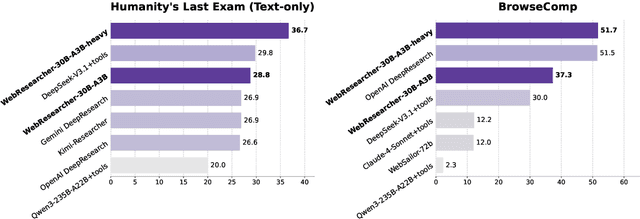
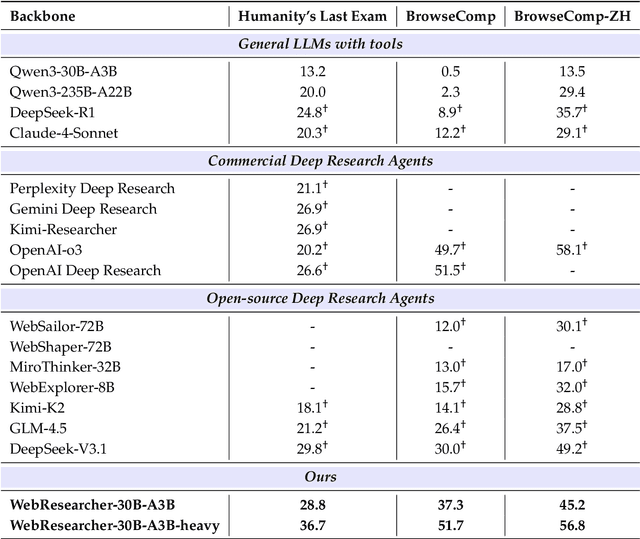
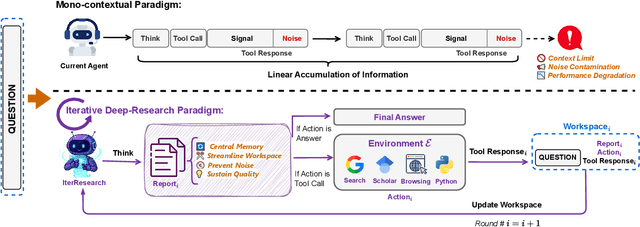
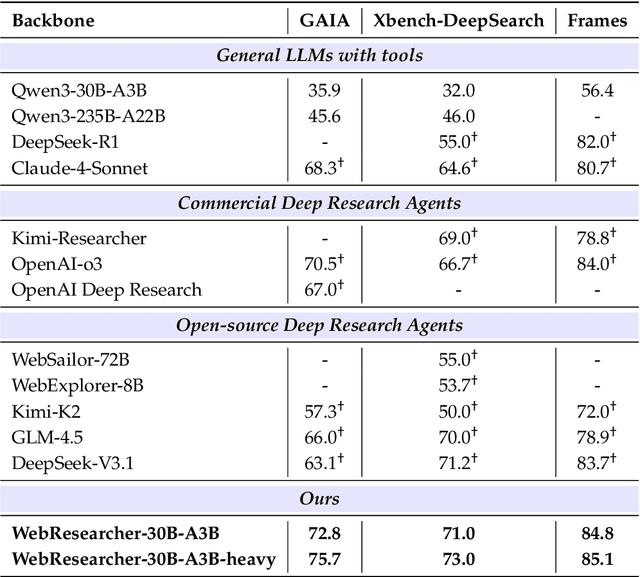
Recent advances in deep-research systems have demonstrated the potential for AI agents to autonomously discover and synthesize knowledge from external sources. In this paper, we introduce WebResearcher, a novel framework for building such agents through two key components: (1) WebResearcher, an iterative deep-research paradigm that reformulates deep research as a Markov Decision Process, where agents periodically consolidate findings into evolving reports while maintaining focused workspaces, overcoming the context suffocation and noise contamination that plague existing mono-contextual approaches; and (2) WebFrontier, a scalable data synthesis engine that generates high-quality training data through tool-augmented complexity escalation, enabling systematic creation of research tasks that bridge the gap between passive knowledge recall and active knowledge construction. Notably, we find that the training data from our paradigm significantly enhances tool-use capabilities even for traditional mono-contextual methods. Furthermore, our paradigm naturally scales through parallel thinking, enabling concurrent multi-agent exploration for more comprehensive conclusions. Extensive experiments across 6 challenging benchmarks demonstrate that WebResearcher achieves state-of-the-art performance, even surpassing frontier proprietary systems.
ReSum: Unlocking Long-Horizon Search Intelligence via Context Summarization
Sep 16, 2025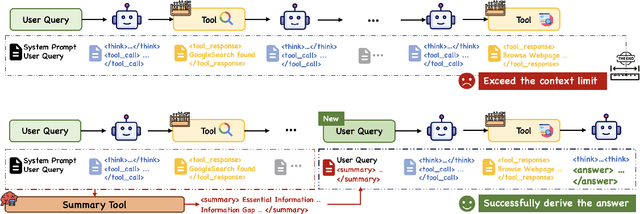
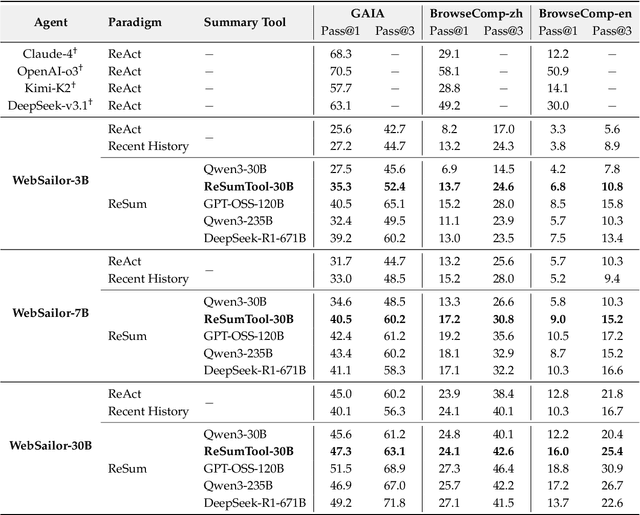
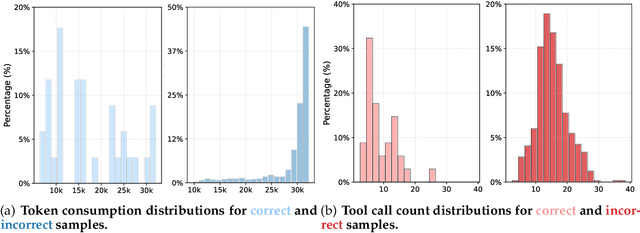
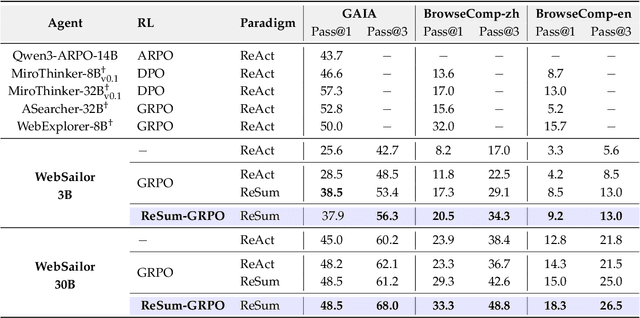
Large Language Model (LLM)-based web agents demonstrate strong performance on knowledge-intensive tasks but are hindered by context window limitations in paradigms like ReAct. Complex queries involving multiple entities, intertwined relationships, and high uncertainty demand extensive search cycles that rapidly exhaust context budgets before reaching complete solutions. To overcome this challenge, we introduce ReSum, a novel paradigm that enables indefinite exploration through periodic context summarization. ReSum converts growing interaction histories into compact reasoning states, maintaining awareness of prior discoveries while bypassing context constraints. For paradigm adaptation, we propose ReSum-GRPO, integrating GRPO with segmented trajectory training and advantage broadcasting to familiarize agents with summary-conditioned reasoning. Extensive experiments on web agents of varying scales across three benchmarks demonstrate that ReSum delivers an average absolute improvement of 4.5\% over ReAct, with further gains of up to 8.2\% following ReSum-GRPO training. Notably, with only 1K training samples, our WebResummer-30B (a ReSum-GRPO-trained version of WebSailor-30B) achieves 33.3\% Pass@1 on BrowseComp-zh and 18.3\% on BrowseComp-en, surpassing existing open-source web agents.
WebSailor-V2: Bridging the Chasm to Proprietary Agents via Synthetic Data and Scalable Reinforcement Learning
Sep 16, 2025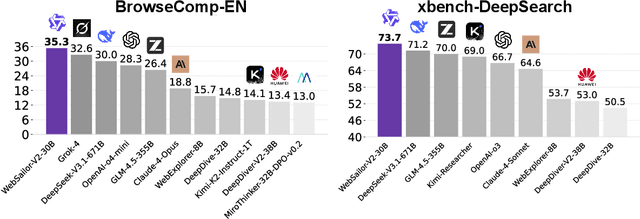
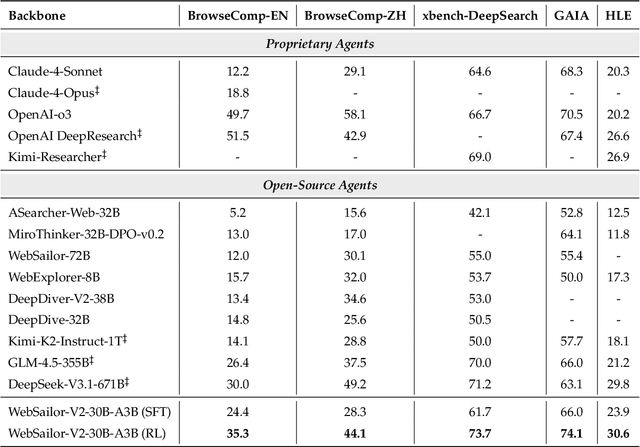
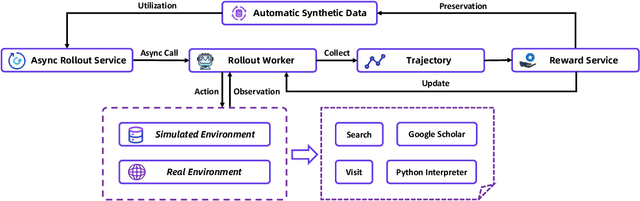
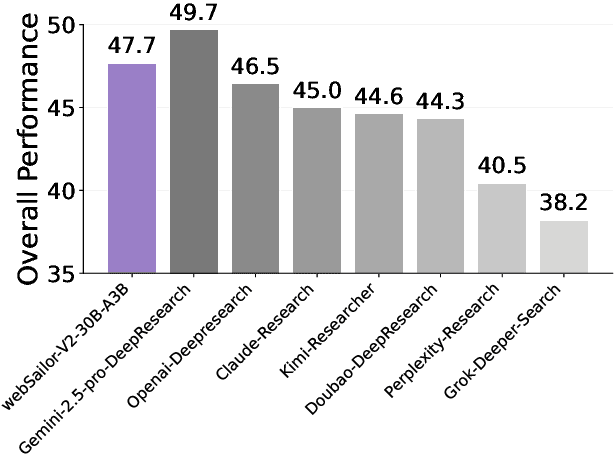
Transcending human cognitive limitations represents a critical frontier in LLM training. Proprietary agentic systems like DeepResearch have demonstrated superhuman capabilities on extremely complex information-seeking benchmarks such as BrowseComp, a feat previously unattainable. We posit that their success hinges on a sophisticated reasoning pattern absent in open-source models: the ability to systematically reduce extreme uncertainty when navigating vast information landscapes. Based on this insight, we introduce WebSailor, a complete post-training methodology designed to instill this crucial capability. Our approach involves generating novel, high-uncertainty tasks through structured sampling and information obfuscation, RFT cold start, and an efficient agentic RL training algorithm, Duplicating Sampling Policy Optimization (DUPO). With this integrated pipeline, WebSailor significantly outperforms all open-source agents in complex information-seeking tasks, matching proprietary agents' performance and closing the capability gap.